
All-Ceramic Crown Retreatment and Front-Tooth Veneers
Hello, I'm Park Jonguk, director of Dream Dental Clinic.
The esthetic role teeth play in a smile
can't be overstated.
A smile is truly completed by the teeth.
They need to be well-aligned, bright, and beautiful.
The shape of the teeth matters a great deal too.
In the course of doing cosmetic dental treatment,
we often see patients who already had treatment done
with veneers or all-ceramic crowns that look far too awkward and artificial, and who now need retreatment.
A common feature of these awkward-looking teeth is
that they're mostly opaque and just plain white,
and the shape has no sense of depth at all,
the whole tooth ending up rounded and shapeless.
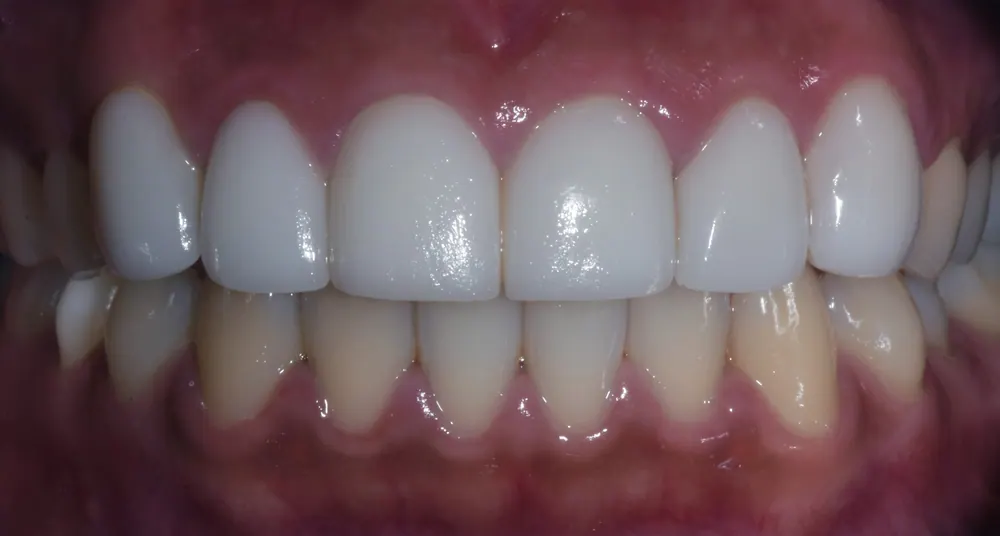
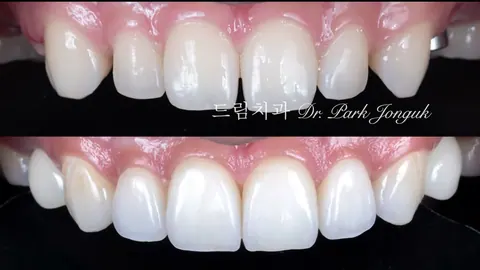
The photo above is one such example.
The teeth have no sense of depth at all, and they're so white and opaque
that they look like a row of xylitol gum stuck on.
Since preferences differ from person to person,
I don't think this kind of design is necessarily bad or wrong,
but it's far from the natural beauty I aim for.
The reason many clinics make veneers like this is
that they're simply much easier to make.
Instead of being crafted by hand,
a computer designs the shape automatically,
and a machine mills the ceramic block on its own,
which saves both time and a considerable amount of cost.
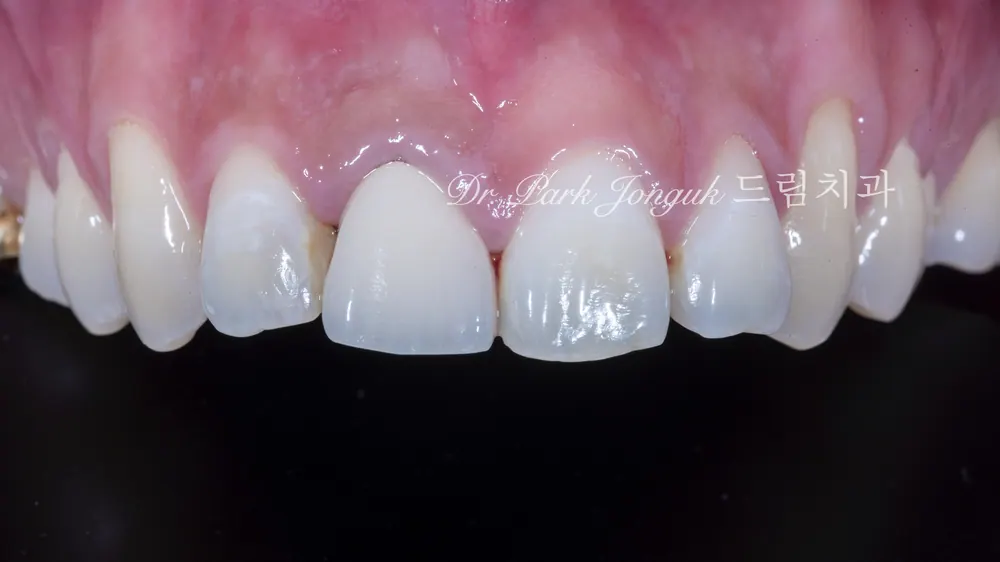
For this patient,
one tooth already had an all-ceramic crown,
but the shapes of the teeth were all over the place,
and since the teeth weren't pretty when she smiled, she came in for retreatment.
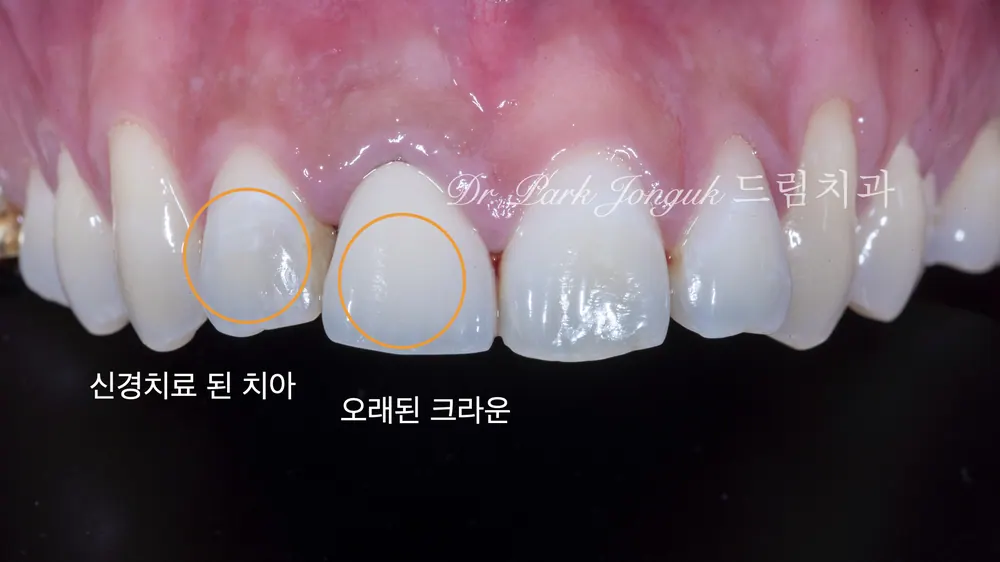
The tooth that had had root canal treatment
and the tooth with an old crown
were both scheduled to be retreated with crowns,
while the other two teeth were to be treated with veneers.
When doing veneers and an all-ceramic crown at the same time,
the hardest part is matching the tooth color between them.
The computer-based, same-day method shown earlier
makes every tooth opaque,
so matching the tooth color isn't difficult with that approach.
But to make teeth that feel natural,
they need a sense of translucency,
and since veneers and all-ceramic crowns are made from different materials,
matching the color while preserving that translucent feel is quite tricky.
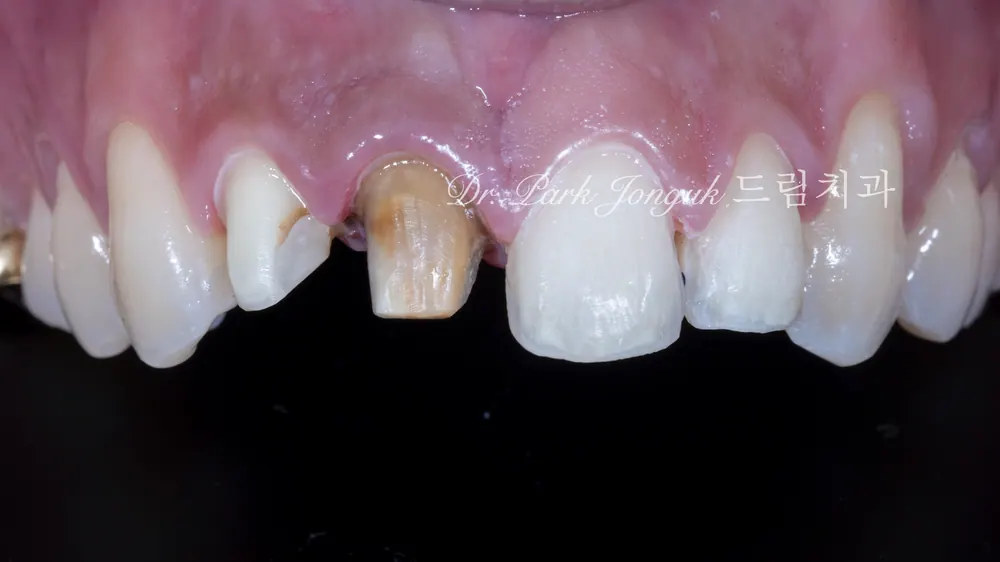
The tooth reduction for the all-ceramic crown
and the amount of reduction for the veneers are clearly different, as you can see.
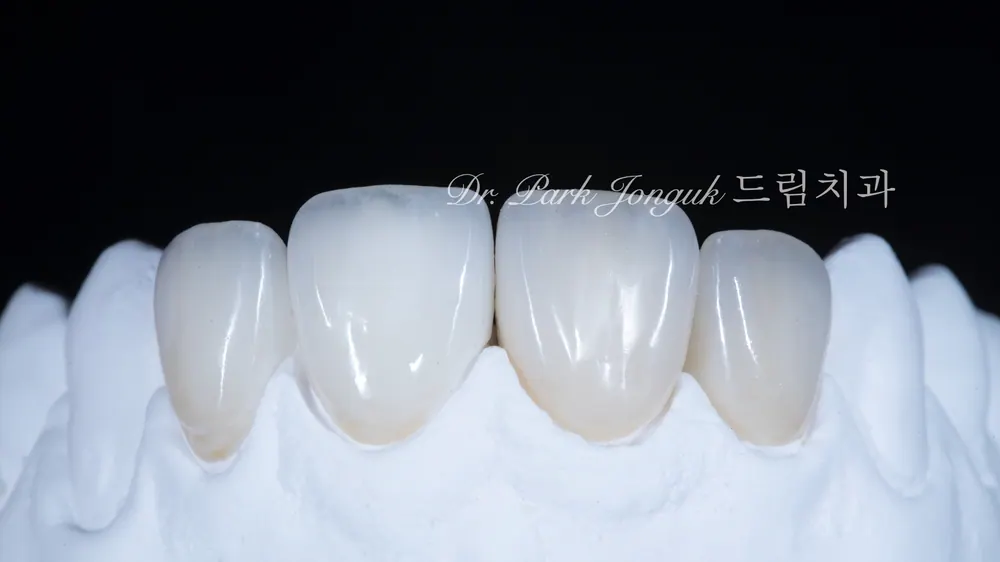
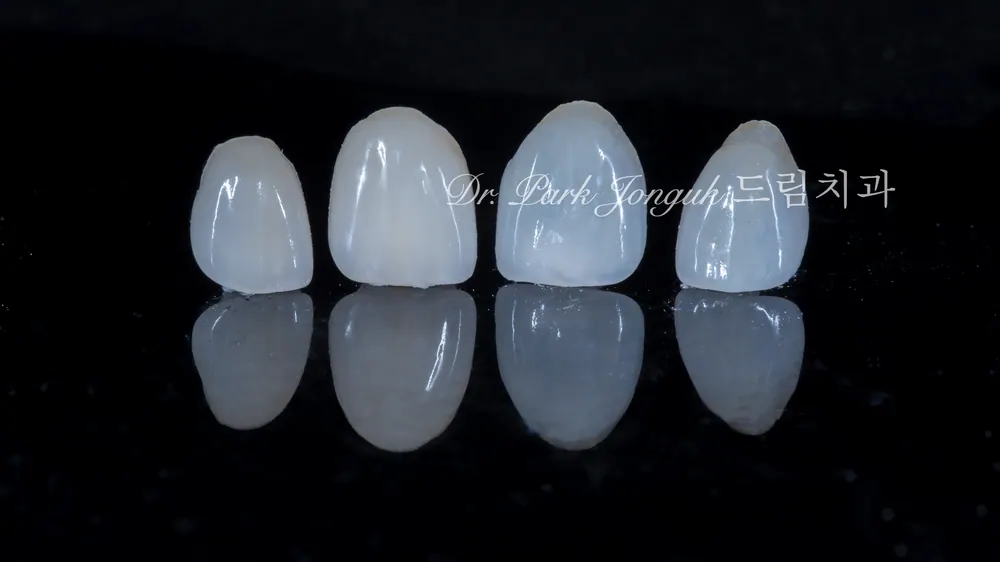
Since veneers let the natural tooth color show through,
a fairly translucent ceramic is used,
made with the expectation that the underlying tooth color will come through.
A crown, on the other hand, has to cover the discolored tooth underneath,
so an opaque material goes on the inside,
and various ceramic layers are built up on top of it
to express the color of a natural tooth.
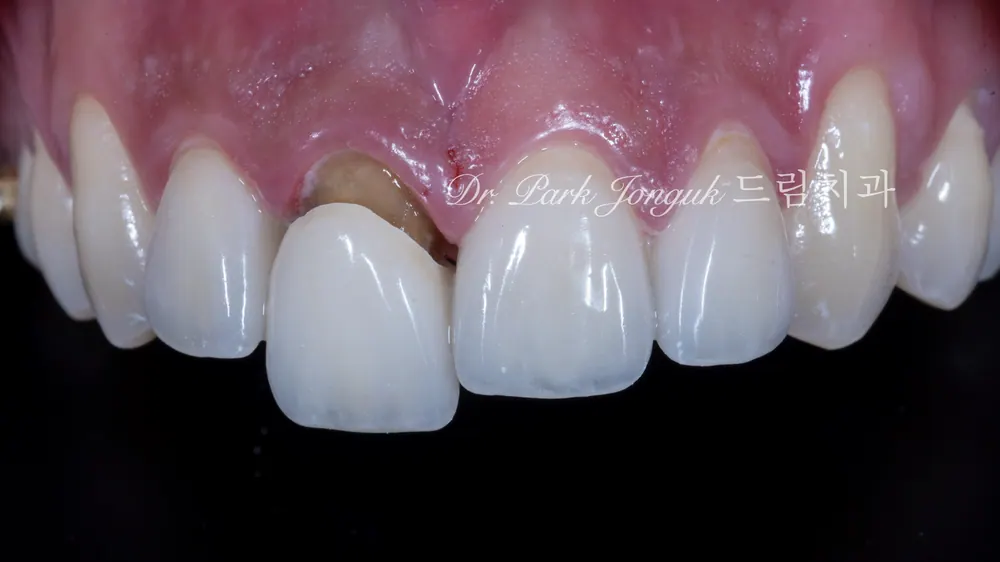
It would be nice if the discolored tooth color could simply be whitened,
but that's impossible when there's a post inside the tooth for reinforcement,
so various ceramics have to be used skillfully to mask the discoloration.
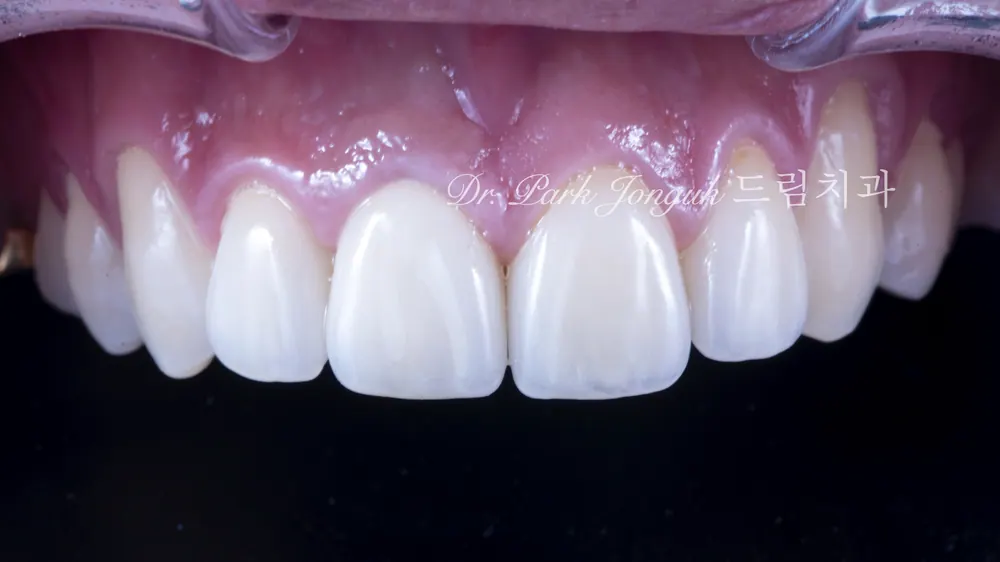
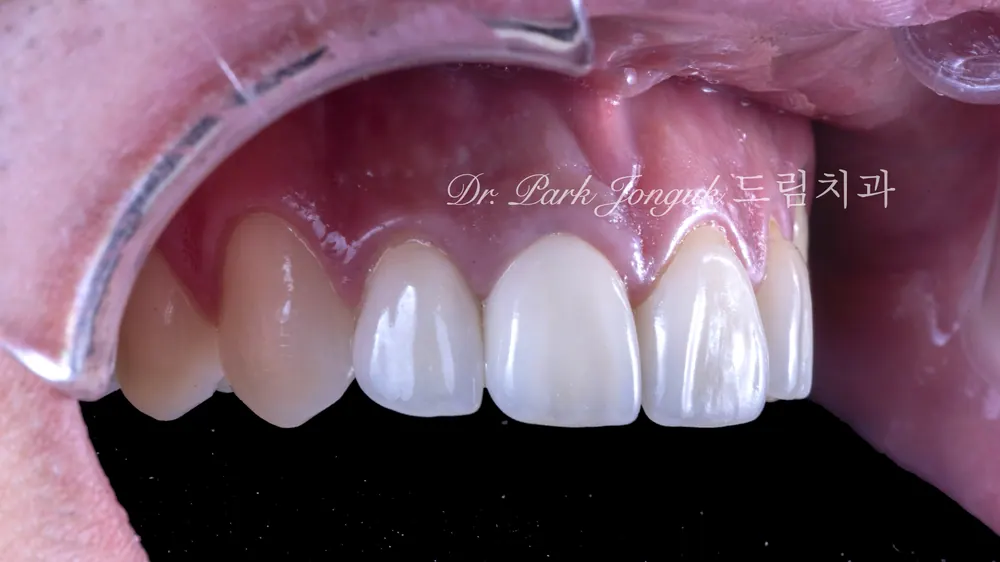
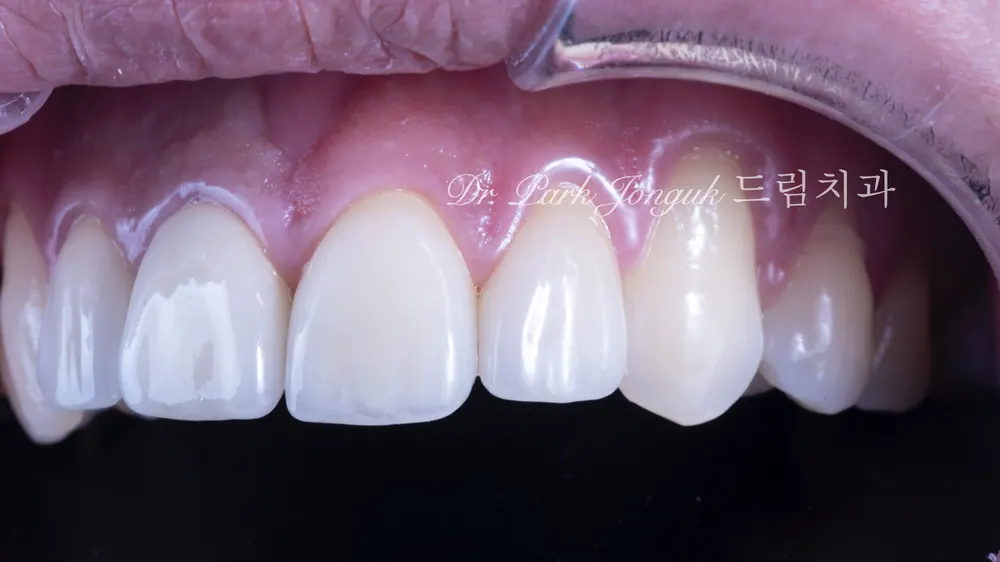
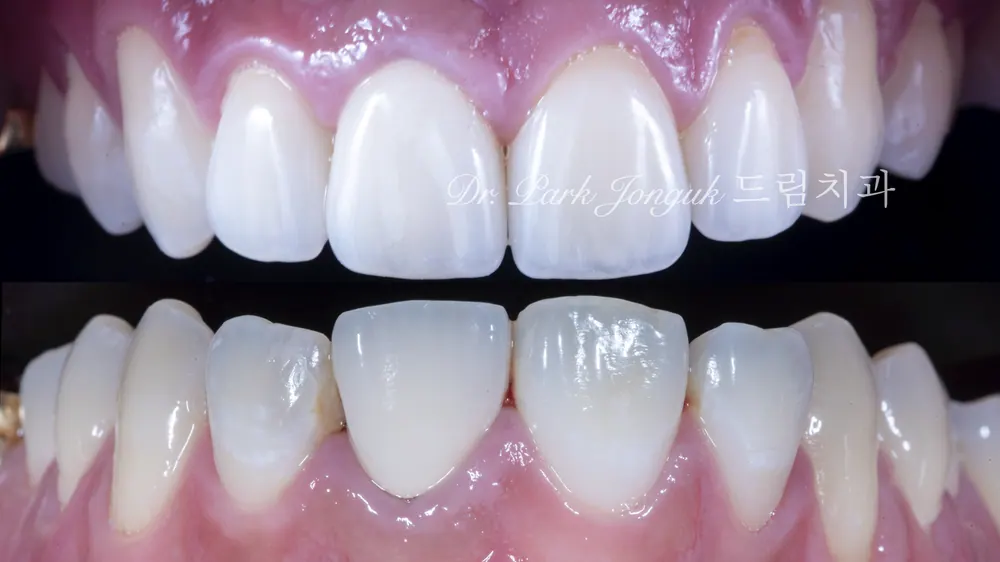
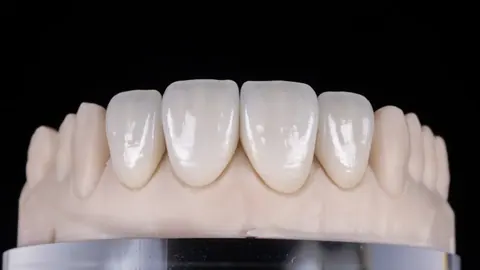
Instead of a flat, opaque whiteness,
you can feel the translucency of the teeth,
and you can see varied expression built into different parts of each tooth.
The veneer side in particular is expressed with the natural tooth color showing through,
giving it a naturalness that a same-day method simply can't match.
We pursue natural beauty.
Since 2006, Dream Dental Clinic
This article is a clinical note written by Dr. Park Jonguk of Dream Dental Clinic, Gangnam; the original was published on his blog. The photographs shown are real cases he treated. Results vary with each patient’s condition, and every procedure carries the possibility of individual variation and side effects.
Quick Consult
Request a Callback
Leave your number and we will call you back during clinic hours.
Request Received
We will contact you during clinic hours. For urgent matters, please call +82-2-3448-0028.