
What Matters When Combining All-Ceramic Crowns and Veneers
Hello, I'm Dr. Park Jonguk, director of Dream Dental Clinic.
Treatment done to make the front teeth more attractive is called tooth reshaping.
Tooth reshaping comes in two forms: all-ceramic crowns and veneers.
An all-ceramic crown fully caps the tooth,
while a veneer bonds ceramic only to the front surface of the tooth.
All-ceramic crowns are used when a tooth has had root canal treatment, is severely discolored,
or has extensive tooth structure loss.
Depending on the situation, there are cases where all-ceramic crowns and veneers need to be done together.
For a dentist, this becomes one of the most technically demanding cases within tooth reshaping.
All-ceramic crowns and veneers differ in material.
In particular, when a crown is placed because of tooth discoloration,
an opaque material has to be used to block that discoloration from showing through.
A veneer, by contrast, mostly uses a translucent material.
This can create a stark difference in color and translucency between the two teeth.
Because of this problem, in cases where only one tooth needs a crown and the rest need veneers,
some dentists end up forcing an all-ceramic crown even onto the tooth meant for a veneer.
Since a veneer requires far less tooth reduction,
it's clearly the better option for tooth health.
This is exactly the part dentists struggle with.
Matching the color and feel of a crown and a veneer is difficult,
but treating everything as a crown means far too much tooth reduction...
It's a real dilemma, and one that gives everyone a hard time.
One of the questions I get asked most often when giving lectures
is for the secret to doing a crown and a veneer together at the same time.
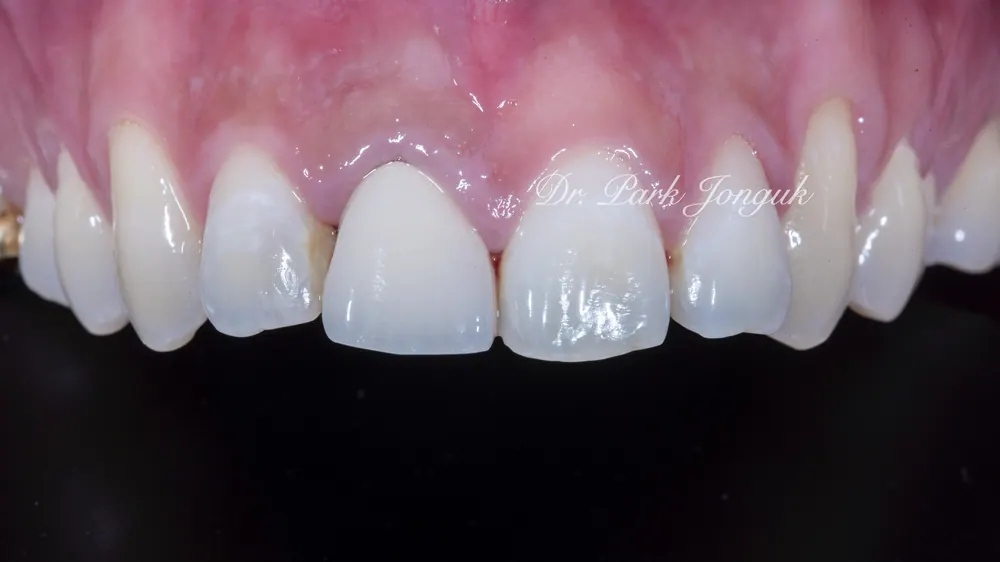
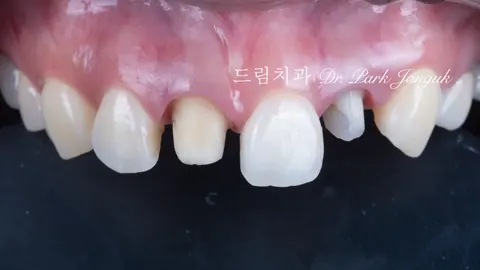
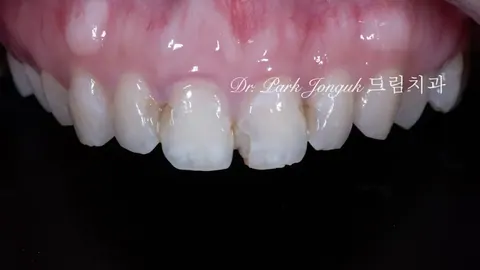
The patient had an old crown in place.
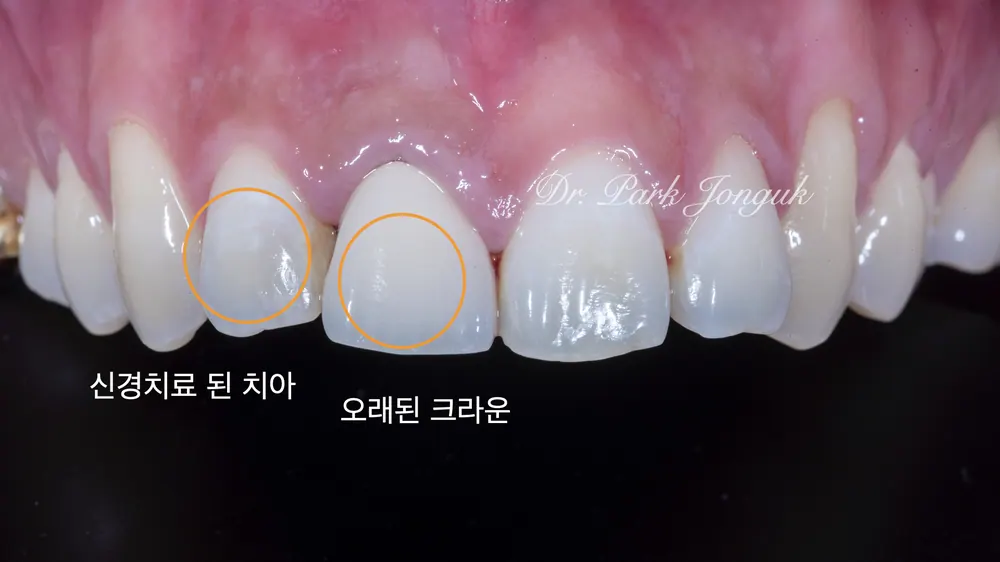
One tooth had an old crown,
and the other had already had root canal treatment and extensive decay,
making it impossible to treat with a veneer.
On top of that, the shape of the teeth on the opposite side wasn't to the patient's liking,
so we proceeded with veneer treatment there as well.
What matters in a case like this
is that with one side a crown and the other a veneer,
matching the symmetry between them becomes difficult.
Split down the middle like this, there can be a noticeable difference in color and translucency.
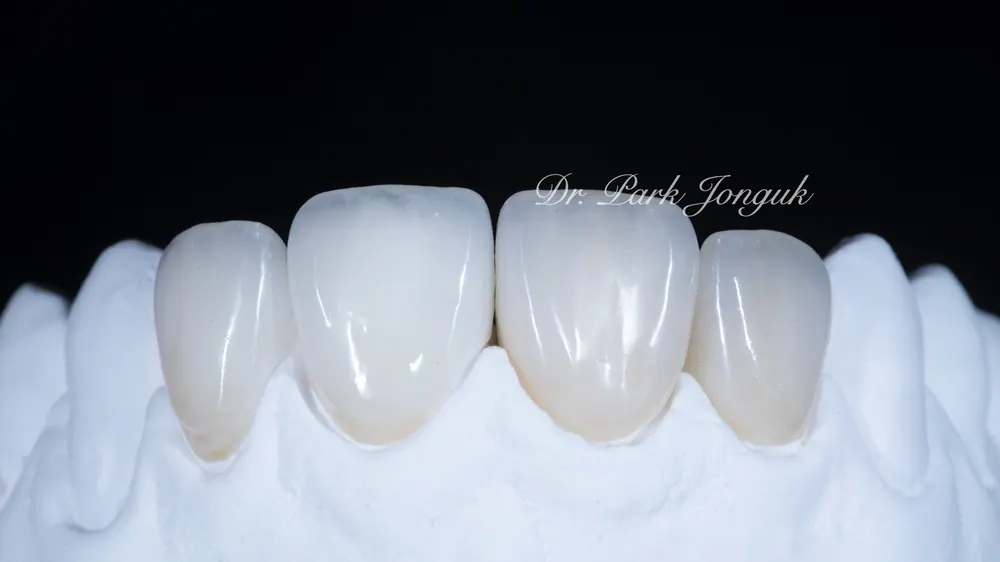
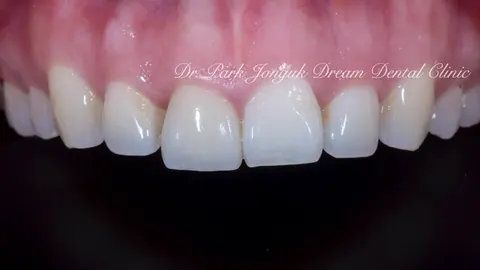
In the photo above, the two on the right are crowns and the two on the left are veneers.
You can see the crown side was made with a slightly more yellow shade.
Because veneers are translucent, the natural tooth color underneath shows through.
The fabrication has to account for that underlying color showing through.
We have to anticipate exactly how it will look once bonded to the actual tooth,
which is why this kind of fabrication demands a great deal of experience.
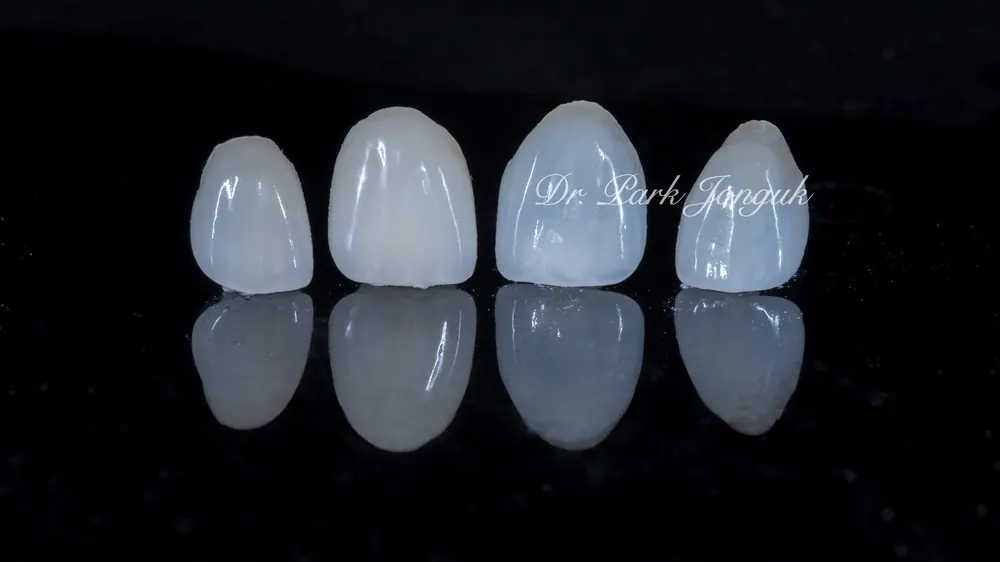
In the photo above, the left is a crown and the right is a veneer.
The difference in translucency is clearly visible.
Even in an extremely thin veneer,
we're able to build in as much varied expression as a crown, which has far more thickness to work with.
The three-dimensional shape of the tooth, its surface texture, the translucency at the tip, and the range of coloring—
all of this is exactly what defines a premium veneer.
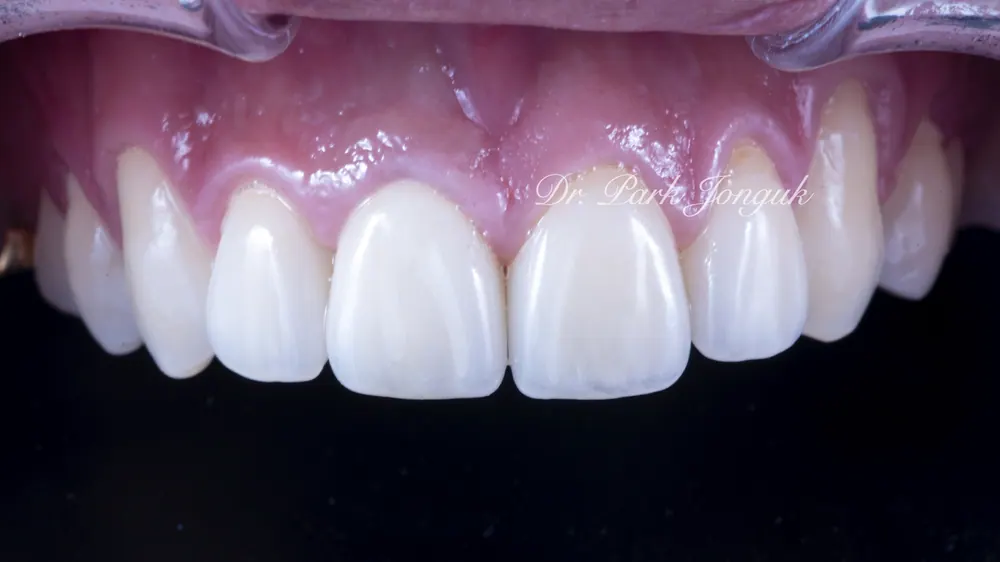
The feel once bonded to the tooth
also gives a unified impression on both sides.
It blends well with the remaining natural teeth,
and it becomes hard to tell
which one is the crown and which is the veneer.
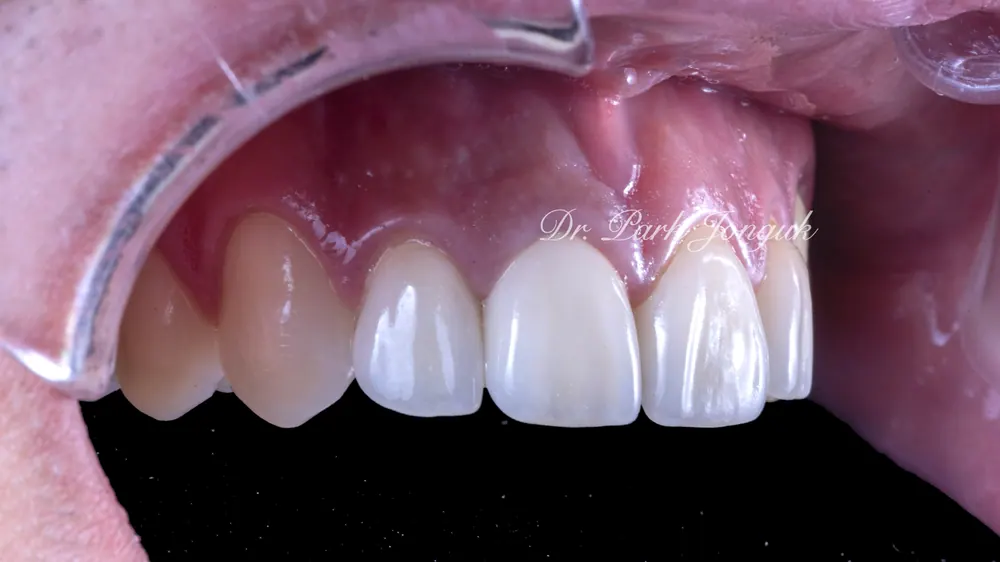
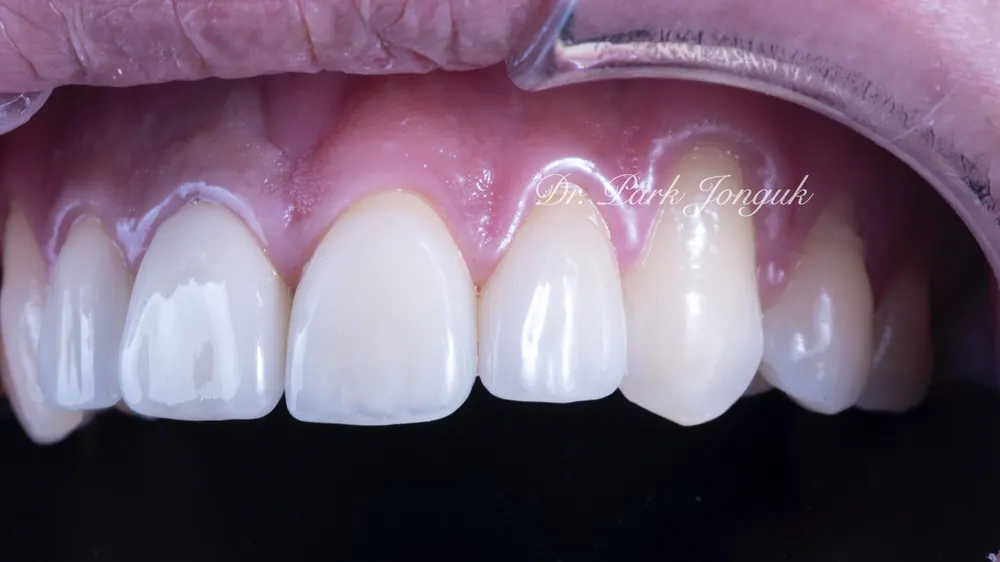
This kind of technically demanding treatment
is something a clinic with real experience handles well.
Since 2006, Dream Dental Clinic
This article is a clinical note written by Dr. Park Jonguk of Dream Dental Clinic, Gangnam; the original was published on his blog. The photographs shown are real cases he treated. Results vary with each patient’s condition, and every procedure carries the possibility of individual variation and side effects.
Quick Consult
Request a Callback
Leave your number and we will call you back during clinic hours.
Request Received
We will contact you during clinic hours. For urgent matters, please call +82-2-3448-0028.