
A Chipped Front Tooth: Resin or Veneer—Which Treatment Is Right?
A chipped front tooth is more common than you'd think.
Biting down on ice, opening a bottle cap with your teeth, getting bumped by a child's head.
These are stories I hear in the clinic every week.
When a front tooth chips, there's really only one question on every patient's mind.
Can this be fixed simply with resin, or does it need a veneer?
Having treated front teeth for over 20 years, let me walk you through the actual criteria I use to decide.
Why Front Teeth Chip So Easily
Front teeth are thinner than molars.
They get even thinner toward the edge—the enamel thickness of a front tooth ranges from about 0.3 to 1.1mm depending on the area.
The edge itself is the thinnest part of all, so it's inevitably more vulnerable to impact.
Add a grinding habit, or enamel weakened by acid reflux or carbonated drinks, and even a small impact can chip the tooth easily.
This is also why so many patients come back with a repeat chip on the same front tooth.
Treatment Depends on the Size of the Chip
There are broadly three ways to treat a chipped front tooth.
Resin, veneer, or crown. The deciding factor is the size and depth of the chip.
First, if it's just a small 1–2mm chip at the edge, resin is enough.
It's finished the same day and costs relatively little.
That said, resin discolors over time,
and since the tip of the front tooth bears a lot of force, it can chip off again.
You should expect to need retreatment every few years.
Second, when a large diagonal piece has broken off the edge, or resin keeps coming loose no matter how many times it's applied,
a veneer becomes the answer.
Ceramic doesn't discolor and can even reproduce the translucency of a natural tooth, so the result often ends up looking even better than before the chip.
Third, when the chipped area is large and close to the nerve.
If there's sensitivity or pain, we first check the condition of the nerve,
and if needed, perform root canal treatment before placing a crown.
To sum it up:
A small chip calls for resin, a noticeable chip calls for a veneer, a deep chip calls for a crown.
Of course, the actual decision requires looking at the direction of the fracture and the bite as well, so diagnosis always comes first.
Let Me Show You With a Real Case
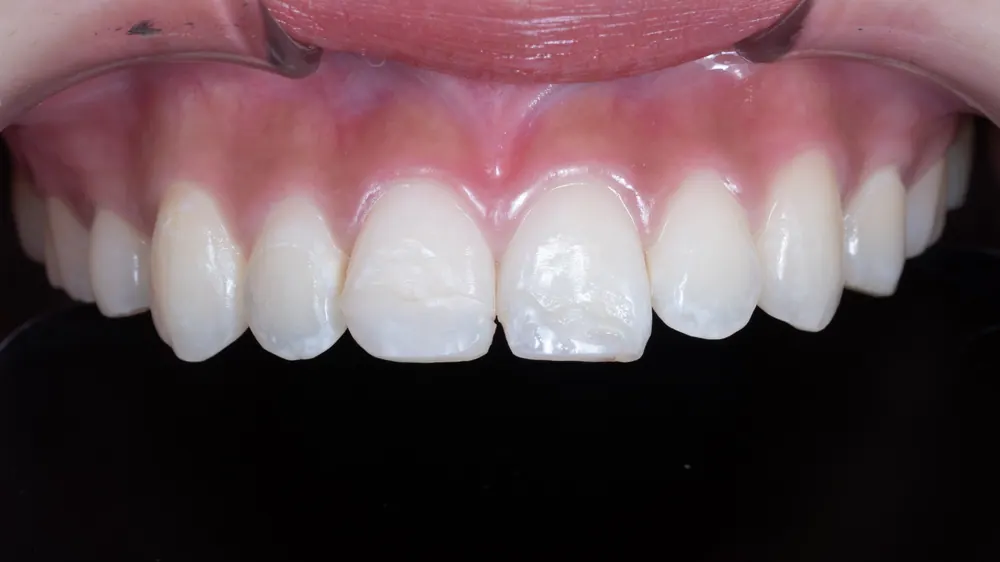
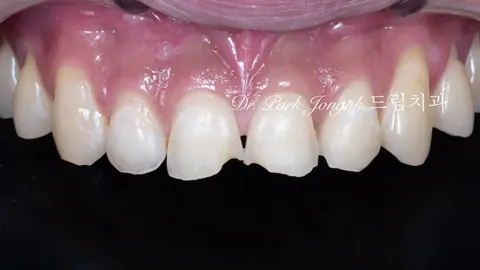
This patient came in after fracturing a front tooth in a fall.
Emergency resin had been applied but kept coming loose, so the patient came in for veneer treatment.
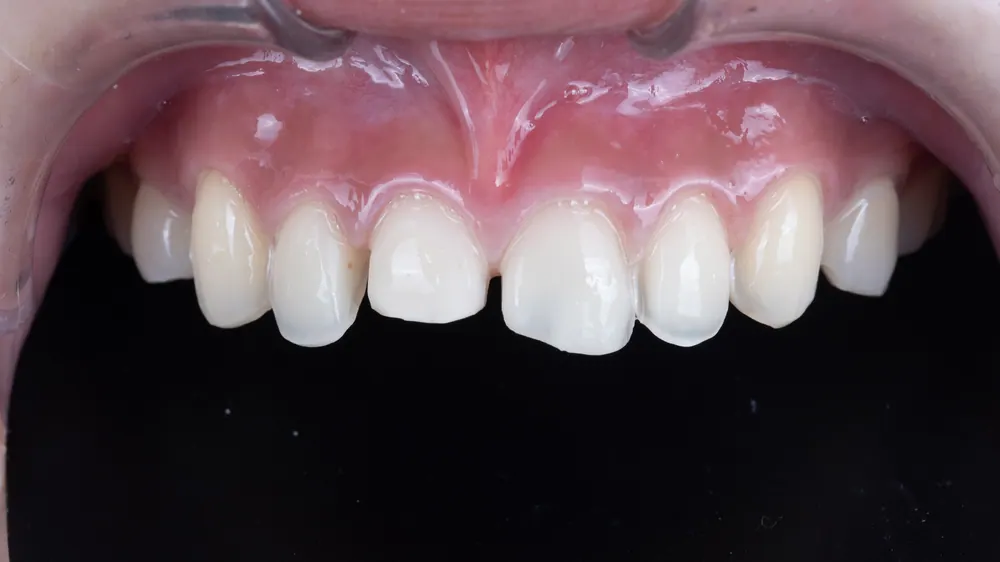
This shows the state after removing the resin along with the fractured and cracked portions of the tooth.
Because the fracture was so large, one tooth was treated with a 3/4 crown while the rest were treated with veneers.
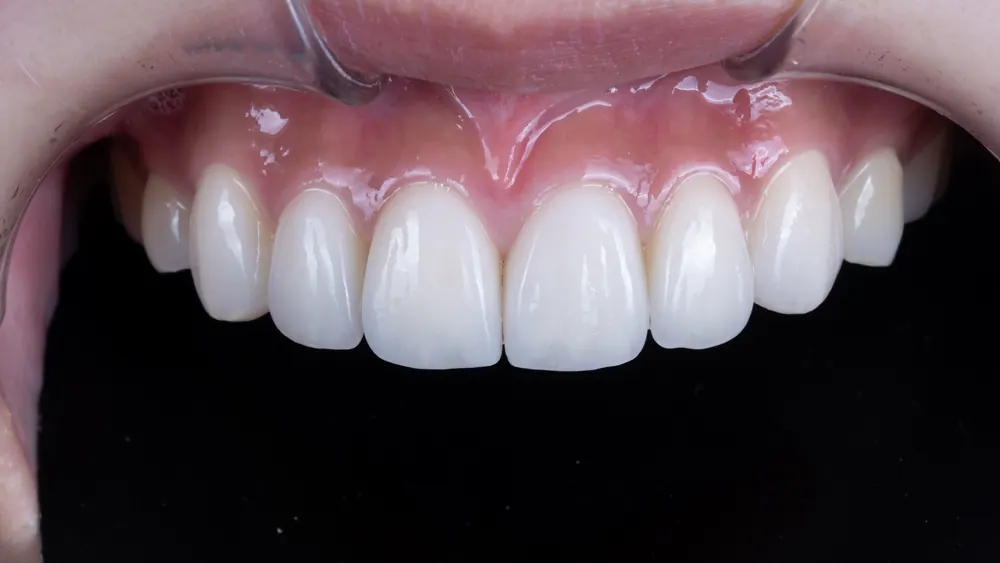
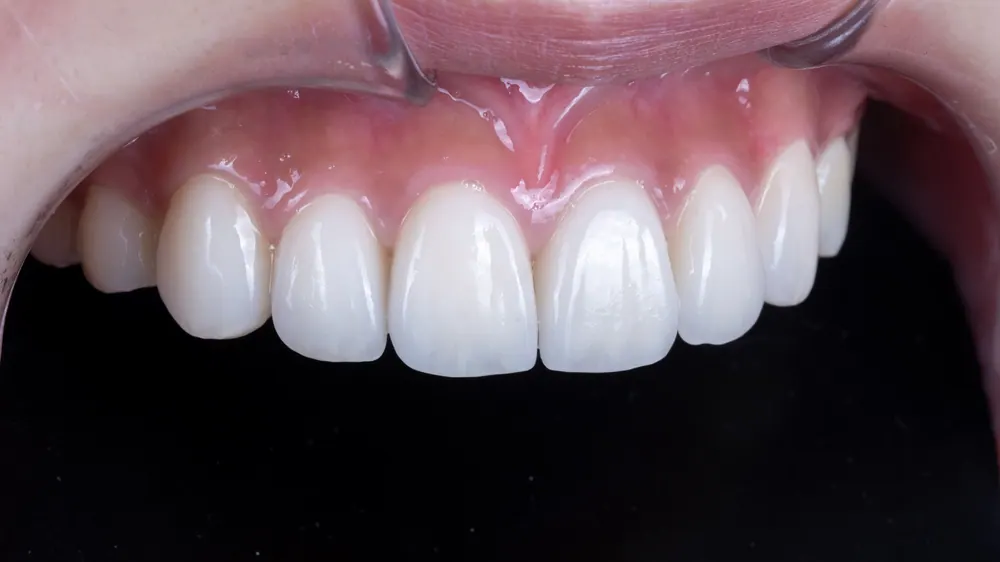
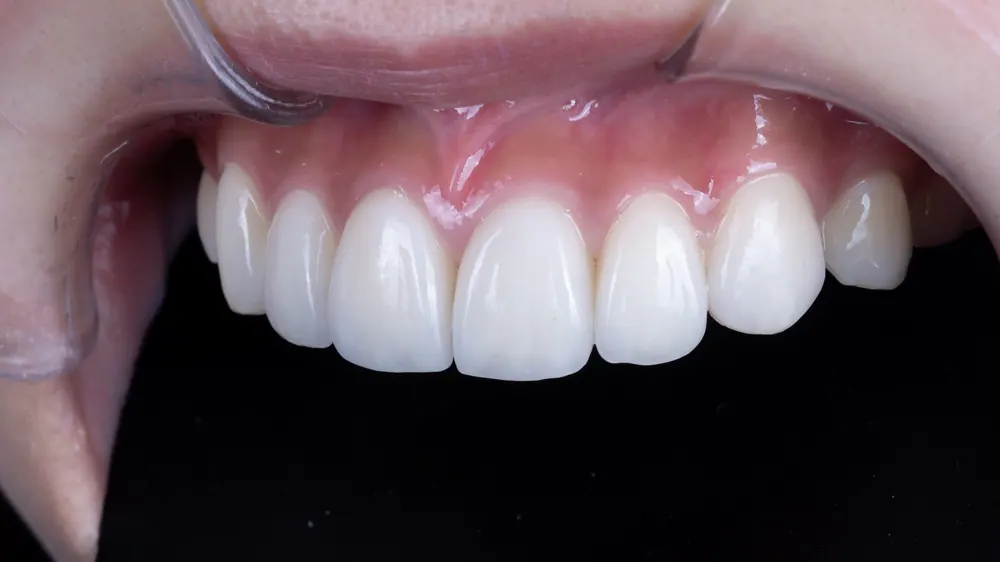
As you can see in the photos, when the color and translucency blend naturally into the adjacent teeth,
it becomes hard to tell the crown from the veneer—so hard, in fact, that even the patient can get confused about which tooth received the crown.
The key lies in how accurately the color of the adjacent tooth is reproduced.
What Happens If You Leave a Chipped Front Tooth Untreated
A chipped surface is one where the enamel has already been lost.
Once the dentin underneath is exposed, sensitivity can develop,
staining accelerates, and cracks can continue to spread starting from the chipped area.
Some patients leave it for months because it isn't painful right away,
but treating a small chip early is a job for resin; let it grow, and you end up needing a crown.
It's a matter of the scope of treatment changing entirely.
Frequently Asked Questions
Q. If I bring in the broken piece, can it be reattached?
If the piece is intact, bonding it back on is sometimes possible. Store it in milk or saline and come in as soon as you can. That said, the bonded area can be weak, so other treatment may be needed in the long run.
Q. Can I just patch it with resin now and get a veneer later?
Yes, that's fine—there's no downside to that order. But if the resin keeps coming off repeatedly, that's a sign the tooth's shape isn't well suited to being maintained with resin.
Q. If only one chipped front tooth gets a veneer, will it be noticeable?
As long as the color match is accurate, it won't be noticeable. In fact, reducing several healthy teeth just for the sake of matching is the bigger loss. I'd recommend getting a diagnosis first to see if treating just the one tooth is possible.
In Closing
Treatment for a chipped front tooth changes completely depending on its size.
So rather than asking which treatment is best in the abstract, the diagnosis suited to your specific tooth comes first.
Even a tooth that's been chipped for a long time, or one where resin keeps falling off, still has options.
At Dream Dental Clinic, we'll give it a thorough diagnosis, backed by 20 years of experience.
This article is a clinical note written by Dr. Park Jonguk of Dream Dental Clinic, Gangnam; the original was published on his blog. The photographs shown are real cases he treated. Results vary with each patient’s condition, and every procedure carries the possibility of individual variation and side effects.
Quick Consult
Request a Callback
Leave your number and we will call you back during clinic hours.
Request Received
We will contact you during clinic hours. For urgent matters, please call +82-2-3448-0028.