
Looking at a Bunny Teeth Veneer Case
Hello, I'm Dr. Park Jonguk, director of Dream Dental Clinic.
In veneer treatment, the thing that always requires the most thought
is adjusting tooth size.
Veneers meant to make teeth larger or smaller tend to be the hardest work of all.
When it comes to making teeth larger with veneers,
there's essentially no technical difficulty.
Most cases where patients ask for larger teeth
are easy to fabricate and comfortable to treat.
The real challenge is that once the teeth are actually larger, it isn't always easy for the patient to adjust.
Sometimes they don't feel large enough, or sometimes they end up too large.
Some patients also struggle to adjust because of the change in tension they feel in their lips.
This is something that has to be fine-tuned using temporary veneers along the way.
The technically harder problem is actually the opposite—making large teeth look smaller.
The teeth have to be reduced past a certain point before the desired result appears.
Proportion control matters a great deal here.
Since there isn't much published research on proportions suited to Asian patients,
over nearly 20 years of veneer treatment,
I've developed my own "beautiful proportion" through various methods, and I work toward that standard.
Some people still talk about the golden ratio, but since the 2000s, numerous papers have shown that no golden ratio actually exists between teeth—
so relying on it is a fairly outdated argument that doesn't account for more recent research.
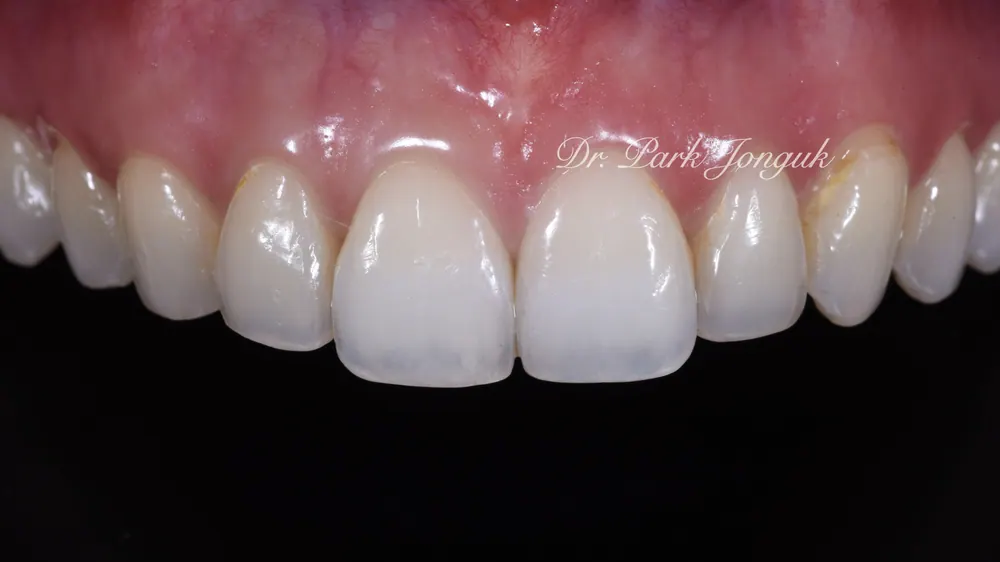
Cases where only the two front teeth stand out as disproportionately large
are usually referred to as bunny teeth.
A great many patients come in for bunny-teeth veneers for exactly this reason.
When only the two front teeth are large and the rest are small,
the results tend to come out looking quite attractive.
This is because we can enlarge the surrounding teeth
while reducing the size of the two front teeth.
The most important part of this process is diagnosis.
Which teeth to reduce, and by how much,
and how much the tooth proportions will improve as a result—
all need to be precisely simulated in advance.
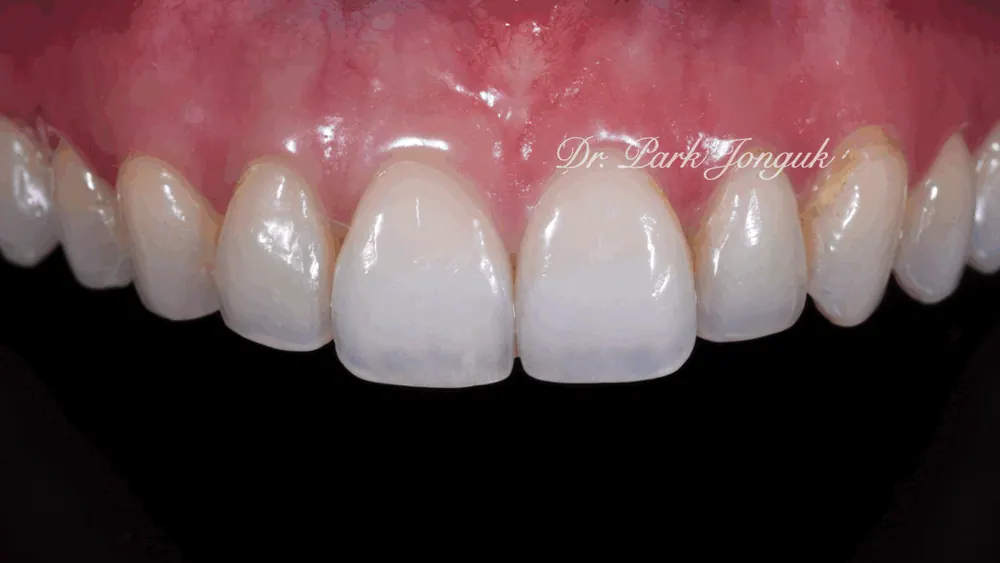
For the change in the teeth,
once we decide how much of a change to make,
the amount of tooth reduction is calculated accordingly.
Based on that, we shape the teeth in wax.
Please see the link below for more detail on this diagnostic process.
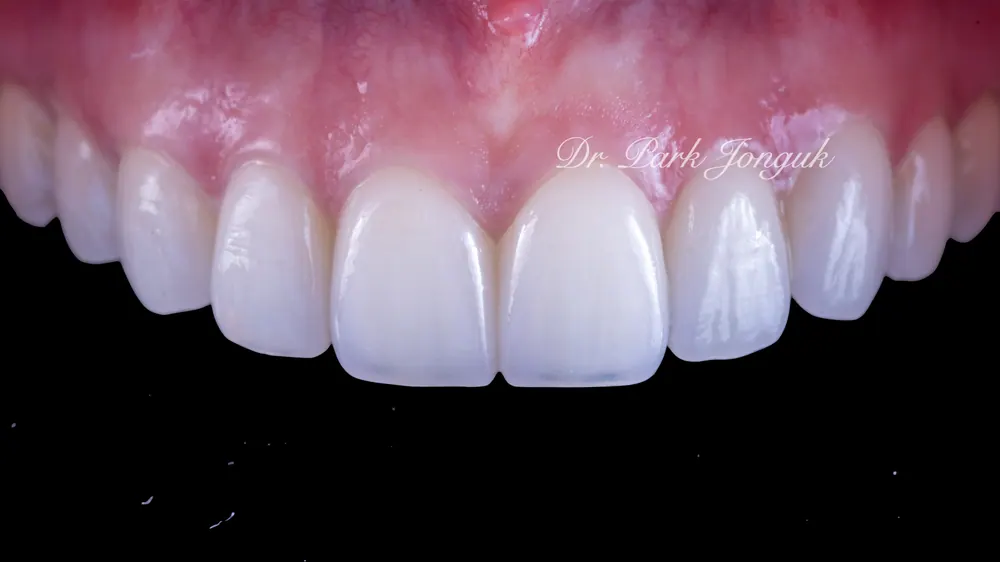
For the front teeth to look smaller
means the other teeth need to look larger.
Because the space left by the front teeth has to be filled entirely,
reducing just a few teeth isn't enough to solve the problem.
For proportionally severe bunny-teeth cases, veneer treatment usually requires 4 to 6 veneers.
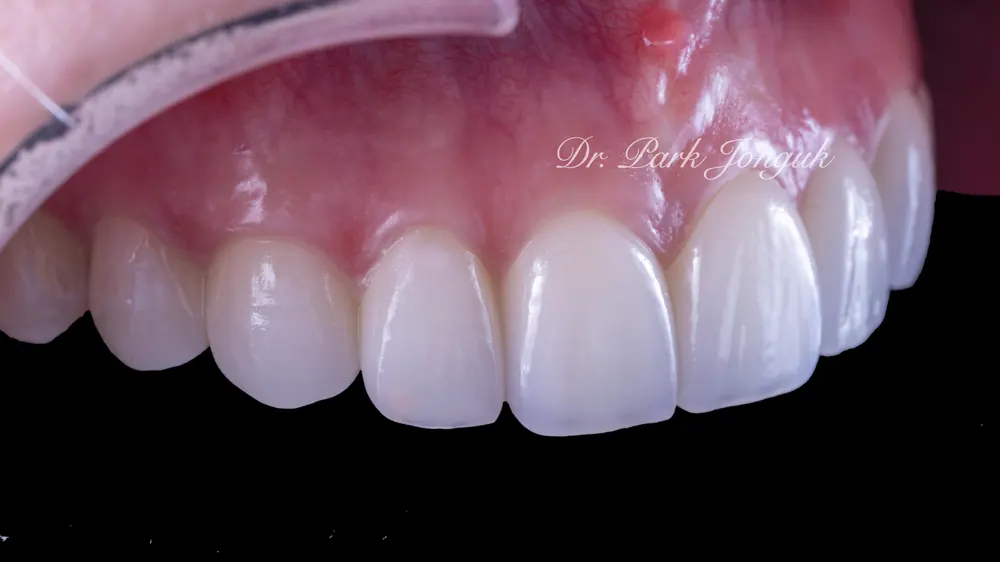
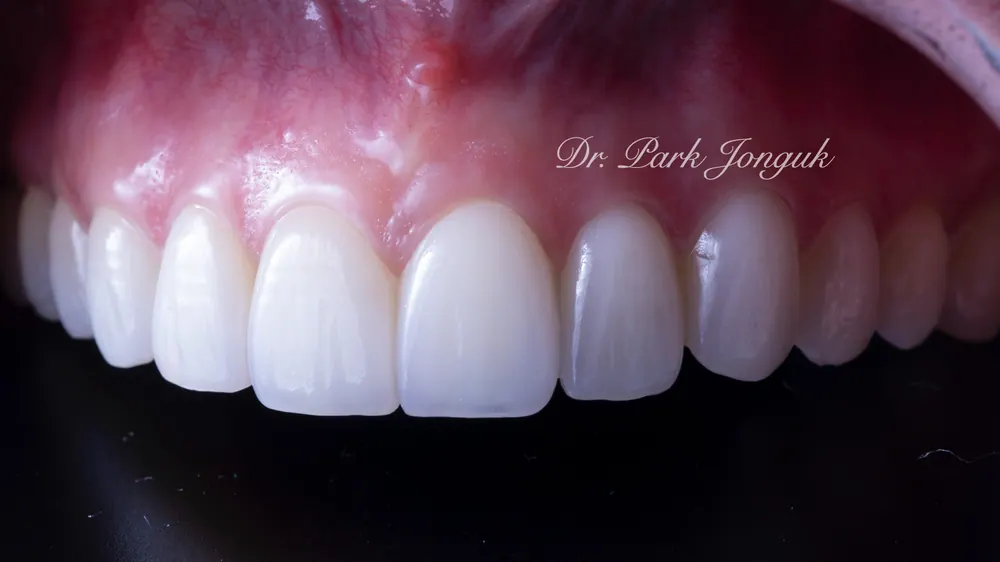
Even from other angles,
the teeth look bright and translucent,
with the varied surface texture and character of natural teeth.
Finishing bunny-teeth veneers so they never look awkward like artificial teeth
is a defining feature of Dream Dental Clinic.
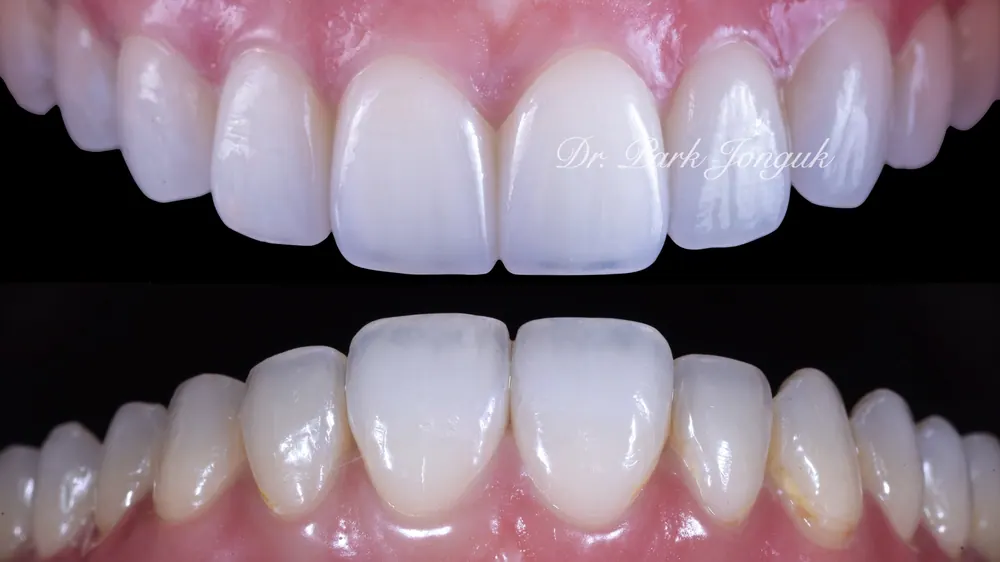
Since 2006, Dream Dental Clinic
This article is a clinical note written by Dr. Park Jonguk of Dream Dental Clinic, Gangnam; the original was published on his blog. The photographs shown are real cases he treated. Results vary with each patient’s condition, and every procedure carries the possibility of individual variation and side effects.
![[Peg Lateral Veneers] From a Strong-Looking Impression to a Soft, Feminine Smile — The Esthetics of Front-Tooth Veneers](/column-media/224178565168/thumb.webp)
Quick Consult
Request a Callback
Leave your number and we will call you back during clinic hours.
Request Received
We will contact you during clinic hours. For urgent matters, please call +82-2-3448-0028.