
Veneer Treatment for Tooth Discoloration Caused by Tetracycline
Hello. I am Park Jonguk, director of Dream Dental Clinic.
There are truly many different reasons why teeth become discolored.
It can range from congenital causes to taking the wrong medication in infancy,
or discoloration can also occur from trauma, cavities, or root canal treatment.
Among these, when the cause is congenital, or when an antibiotic called tetracycline
was taken over a long period during infancy,
the discoloration doesn't affect just one tooth but several teeth at once.
Since these are not cases where the teeth are decayed or broken,
if the discoloration can be covered,
it's best to reduce the teeth as little as possible.
If the bite alignment is good and the teeth are small, there are often cases where almost no reduction is needed,
but in order to cover the tooth color and make it bright,
a certain minimum thickness of veneer ceramic is needed,
so reduction is often required.
In cases where a large amount of reduction is needed, or where the teeth have already been treated with crowns,
an all-ceramic crown may be needed instead.
Please refer to the link below for the process of treating severe discoloration using crowns.
In the end, "cases where the teeth can become noticeably larger than they currently are" can be done as no-prep,
but in most situations, some reduction is needed.
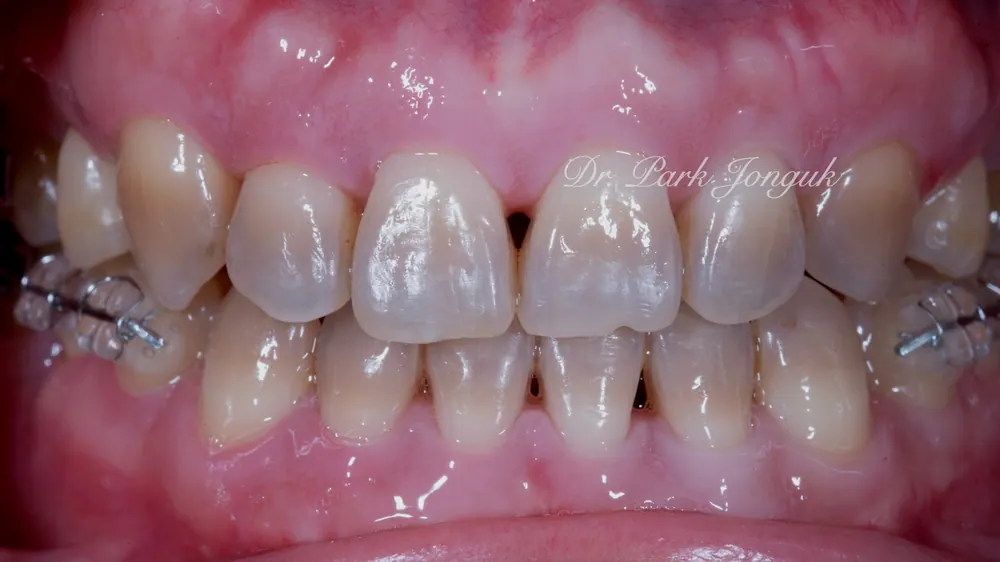
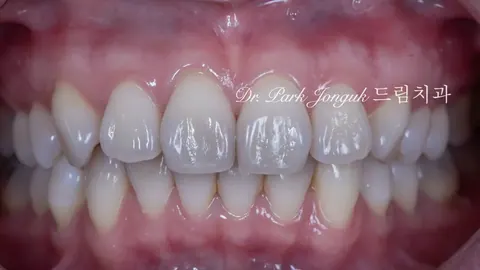
This can be considered a typical example of discoloration caused by antibiotics.
Almost all of the teeth have darkened as if wrapped in a band,
with discoloration visible on both the upper and lower teeth.
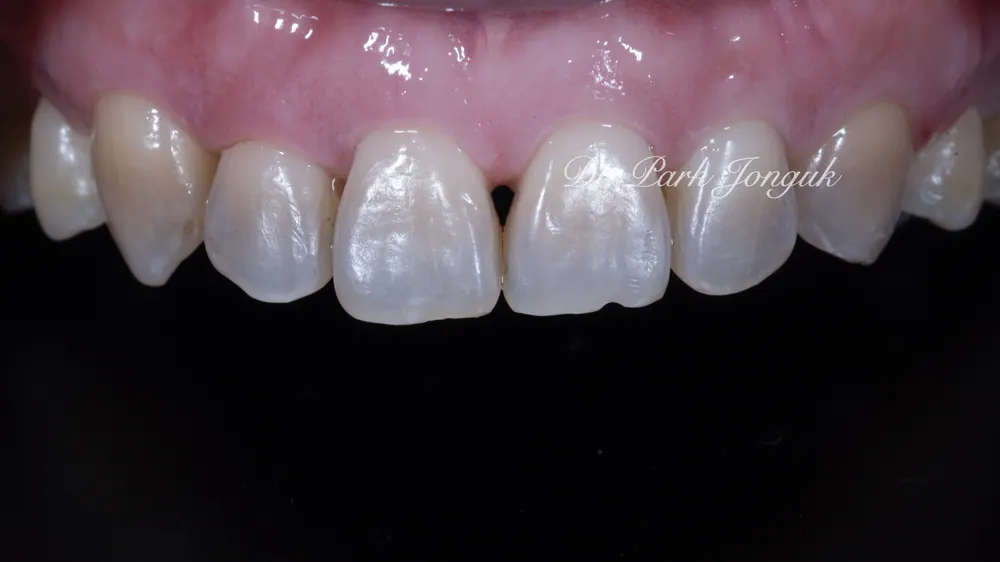
Because the teeth turn a dark brown color,
to block out all of this color with veneers and brighten the teeth,
they inevitably have to be made somewhat more opaque.
To keep a natural feel even while opaque,
the shape of the teeth has to be set to feel more natural,
and while bringing out as much of the teeth's three-dimensional feel and surface texture as possible,
a sense of translucency has to be added at the tooth edges.
All within a thickness of about 0.3–0.8mm,
an opaque layer that can block out the tooth color, together with all the various effects mentioned above, have to be achieved,
so this is a treatment that absolutely requires a considerable level of skill.
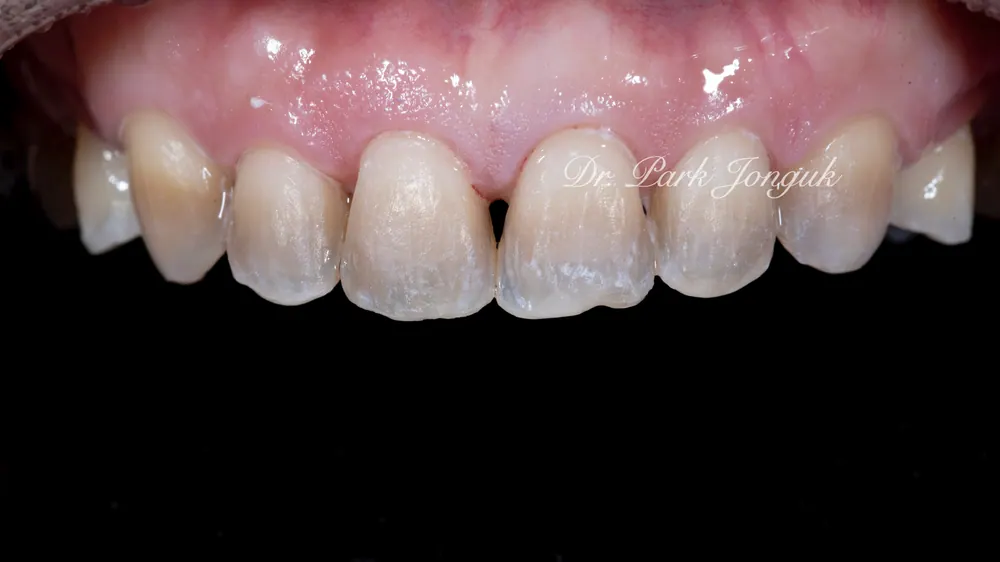
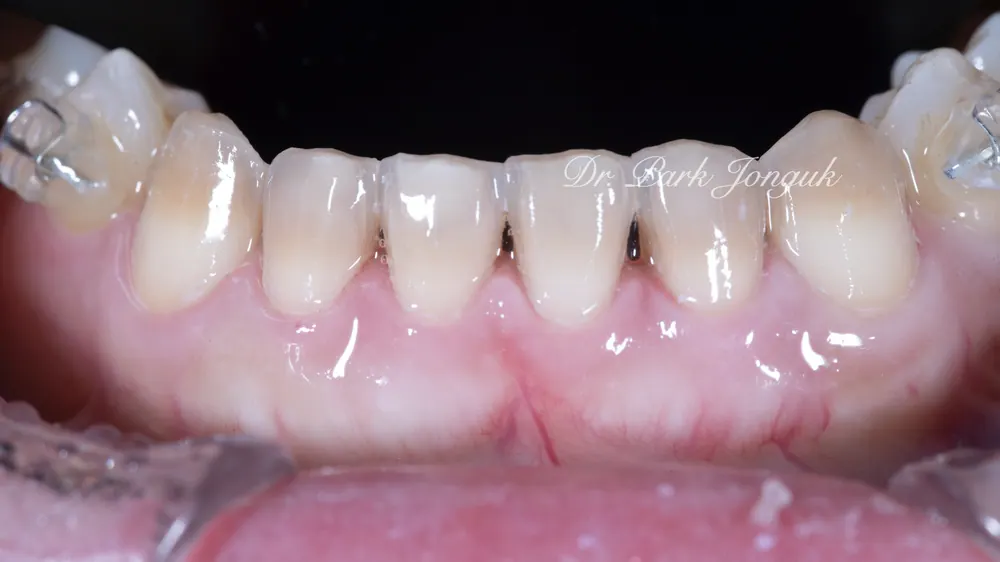
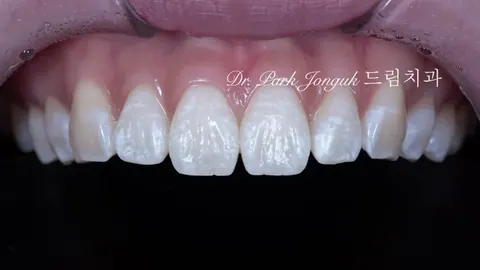
This is what the teeth looked like after reduction.
Since black triangles had also formed from orthodontic treatment,
that had to be resolved with the veneers as well,
and since the shape of the teeth wasn't in great condition either,
shape, color, and spacing all had to be taken into consideration.
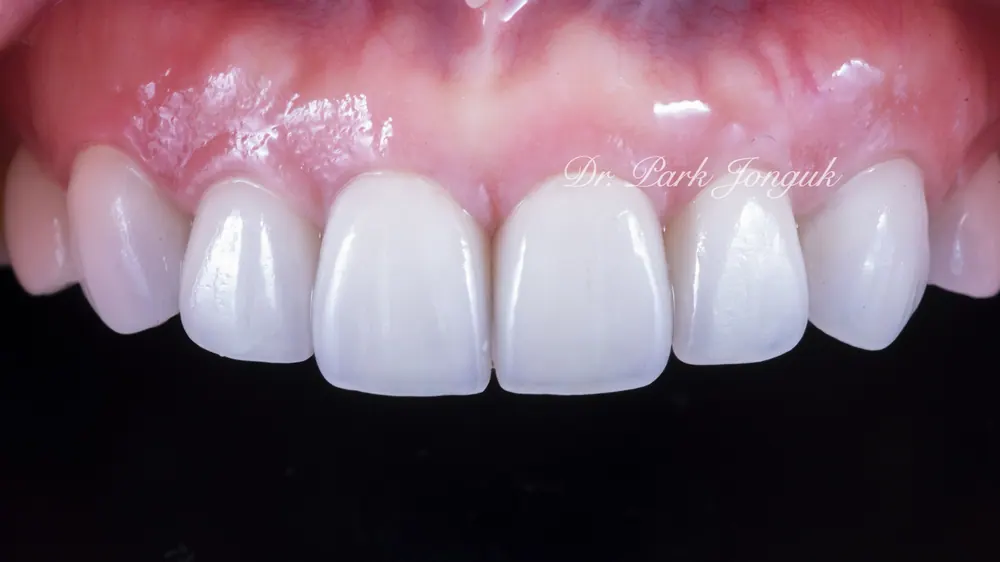
As mentioned earlier,
there's inevitably a slight degree of opacity that can't be avoided.
However, it was fabricated to include as much of the characteristics of natural teeth as possible.
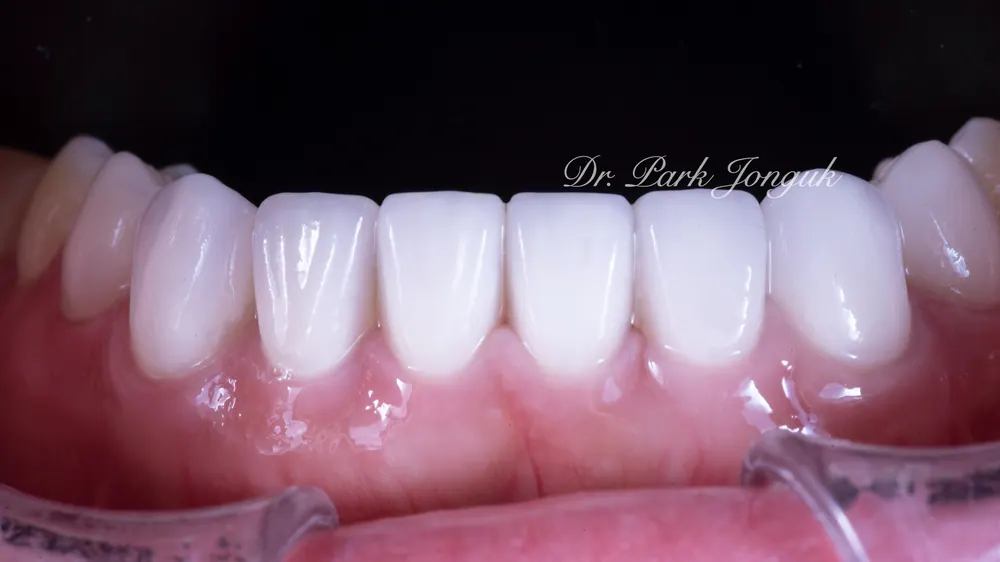
Since the lower teeth are much smaller than the upper teeth,
fabrication is more challenging.
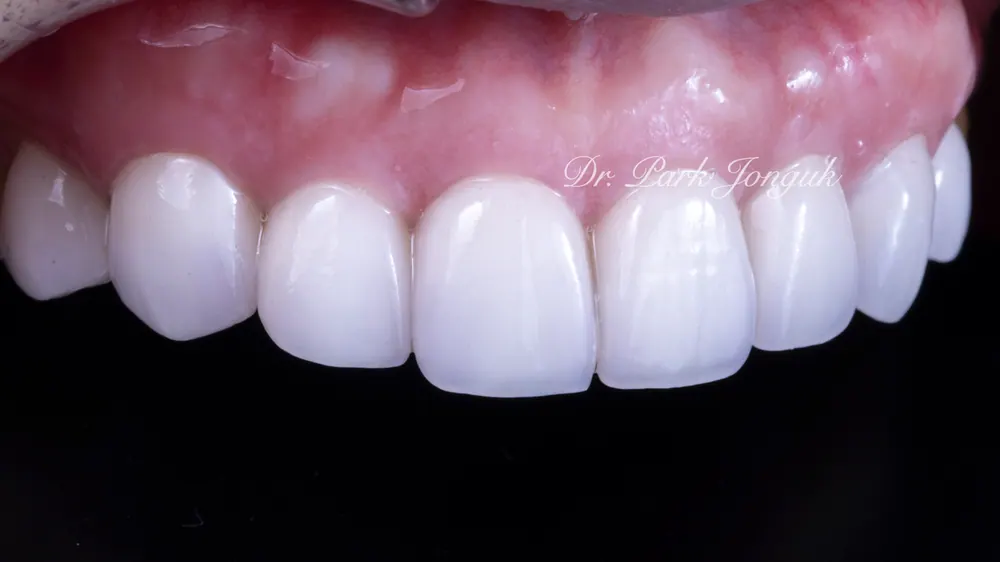
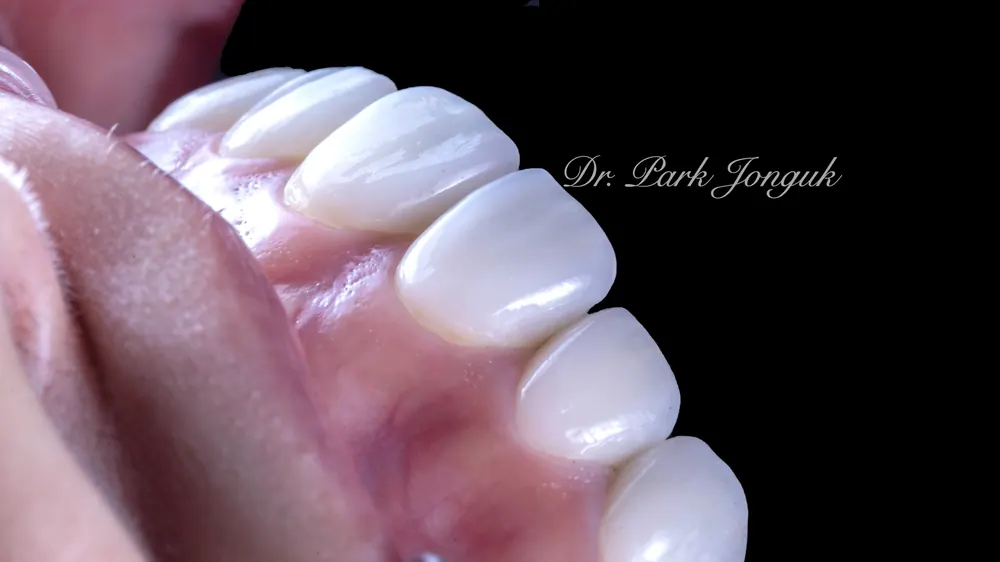
Even the texture of the tooth surface was made to closely capture the feel of natural teeth.
Taking overall dark teeth
and bringing out as much of the natural tooth feel as possible
while effectively blocking out the dark tooth color
is what can be considered the most important part of treating tetracycline discoloration.
Since 2006, Dream Dental Clinic
This article is a clinical note written by Dr. Park Jonguk of Dream Dental Clinic, Gangnam; the original was published on his blog. The photographs shown are real cases he treated. Results vary with each patient’s condition, and every procedure carries the possibility of individual variation and side effects.
Quick Consult
Request a Callback
Leave your number and we will call you back during clinic hours.
Request Received
We will contact you during clinic hours. For urgent matters, please call +82-2-3448-0028.