
Veneer Treatment: Buck Front Teeth Corrected Through Precise Diagnosis
Hello, I'm Dr. Park Jonguk, director of Dream Dental Clinic, specializing in veneer treatment.
When the front teeth are large, like buck teeth,
there's a limit to what orthodontics alone can resolve.
Buck teeth usually involve two front teeth that are both large
and protruded—
two problems happening at once, in most cases.
In cases like this, orthodontics can bring the protruded teeth back in,
but it doesn't resolve the large size.
Front-tooth veneer treatment,
on the other hand, can somewhat improve the alignment
while also correcting the shape of the teeth—handling both roles at once.
The catch is that it requires reducing the tooth structure.
Unlike most tissue in the body, once a tooth is reduced,
it doesn't heal back,
so tooth reduction has to be approached with real caution.
Not every front-tooth veneer requires reduction,
but for buck teeth, some reduction is usually essential.
What matters here
is building a thorough treatment plan,
precisely analyzing how much reduction is needed,
checking for any resulting side effects,
and having a detailed discussion with the patient about the pros and cons
before beginning treatment.
In many cases, patients are given
far too little information about the treatment process beforehand,
which often leads to regret after treatment.
A precise diagnosis is the beginning of good treatment.
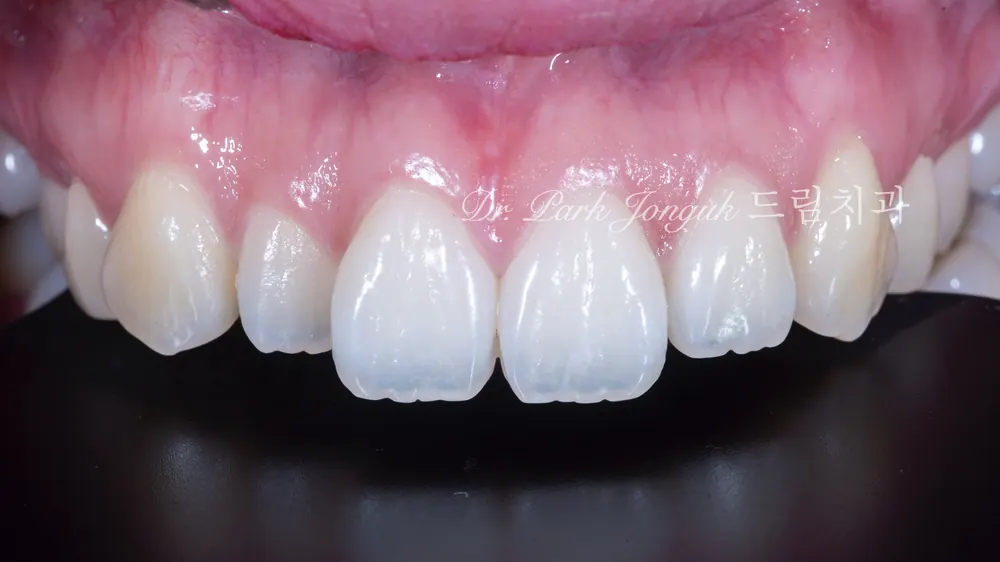
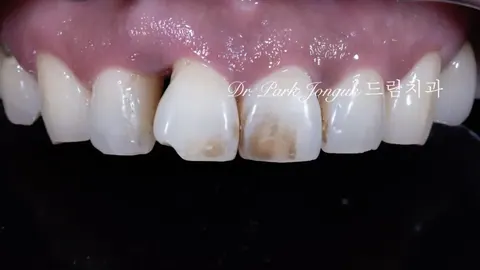
With poor alignment
and two buck teeth that needed correcting,
we decided on front-tooth veneer treatment.
Tooth size was one issue,
but the shape of the teeth was also jar-like,
meaning that even with orthodontic treatment alone,
veneers would still be needed in this case.
Because of time and cost considerations,
we decided to proceed with veneer treatment.
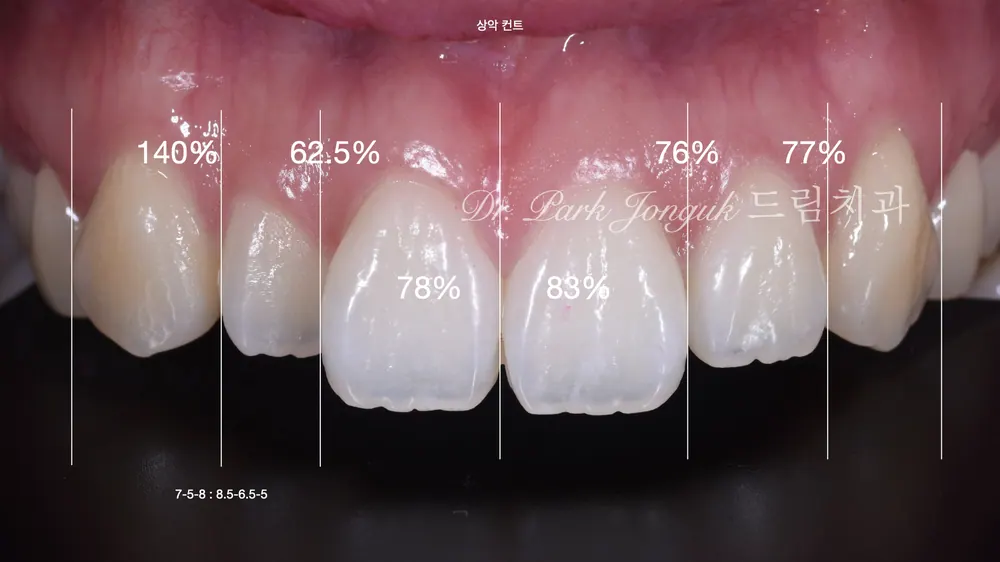
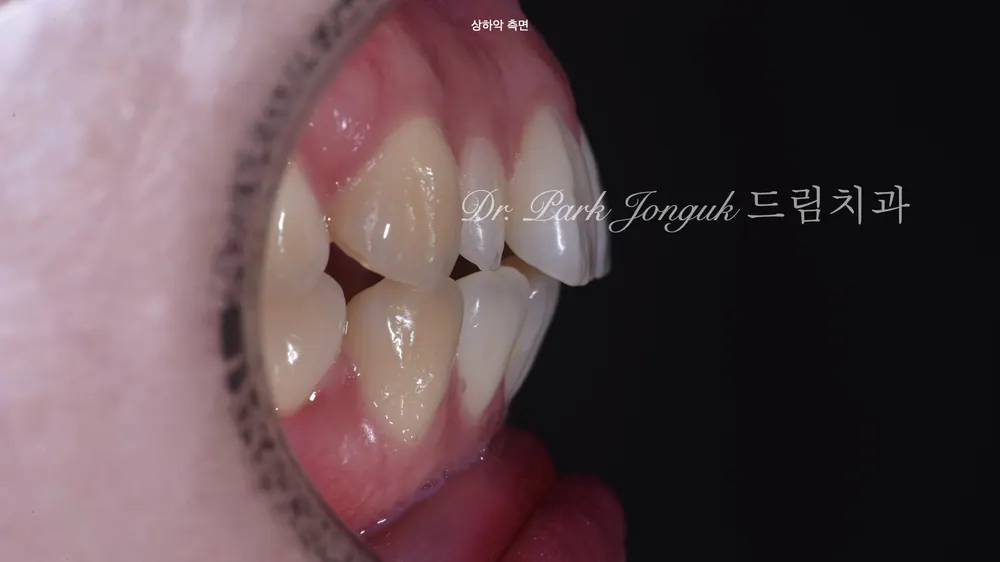
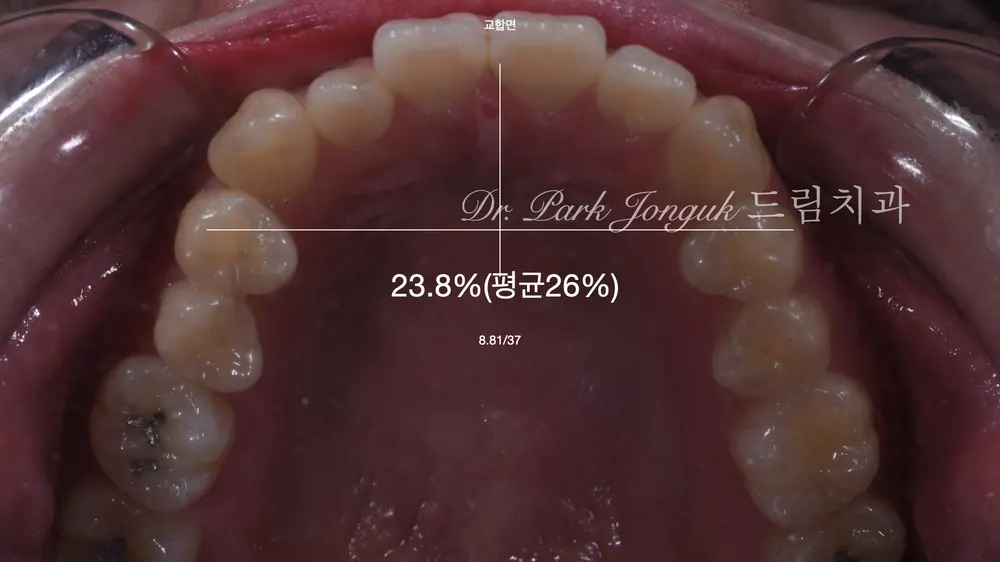
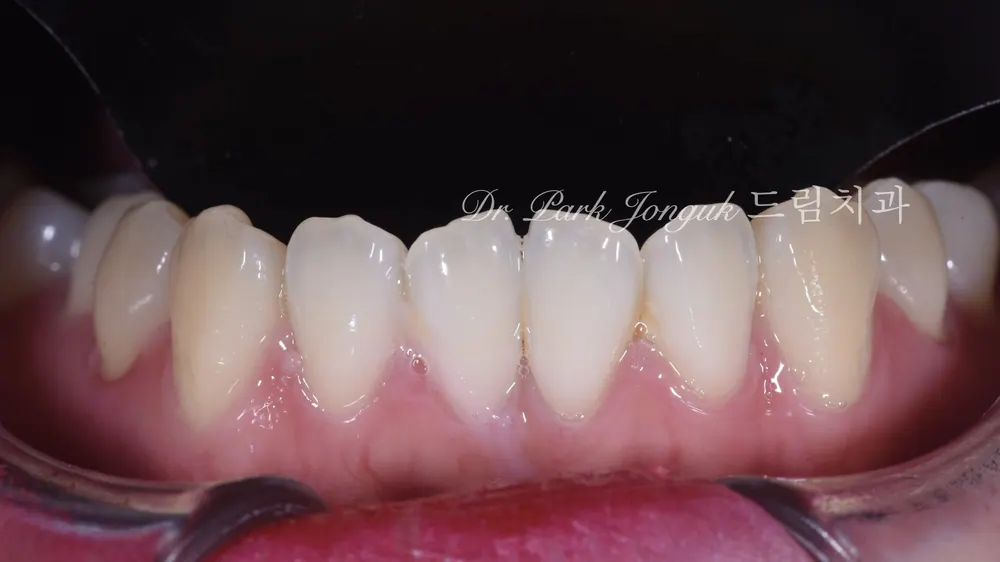
First, we analyze the current condition of the teeth.
Analysis of the current condition
is the first step toward good treatment.
Only once the problem is identified
can we know how to treat it.
And to solve that problem,
we need to simulate in advance how much tooth structure to reduce.
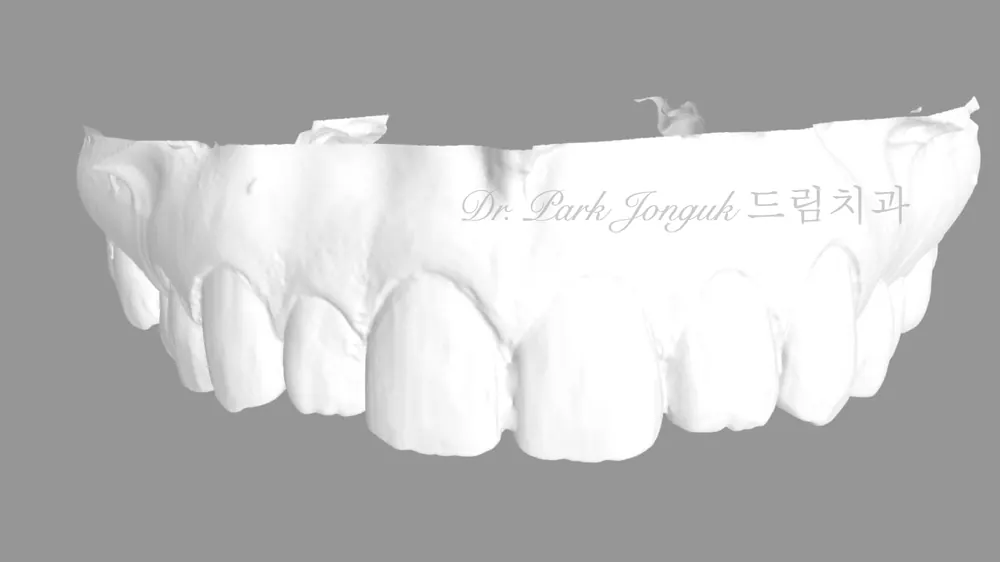
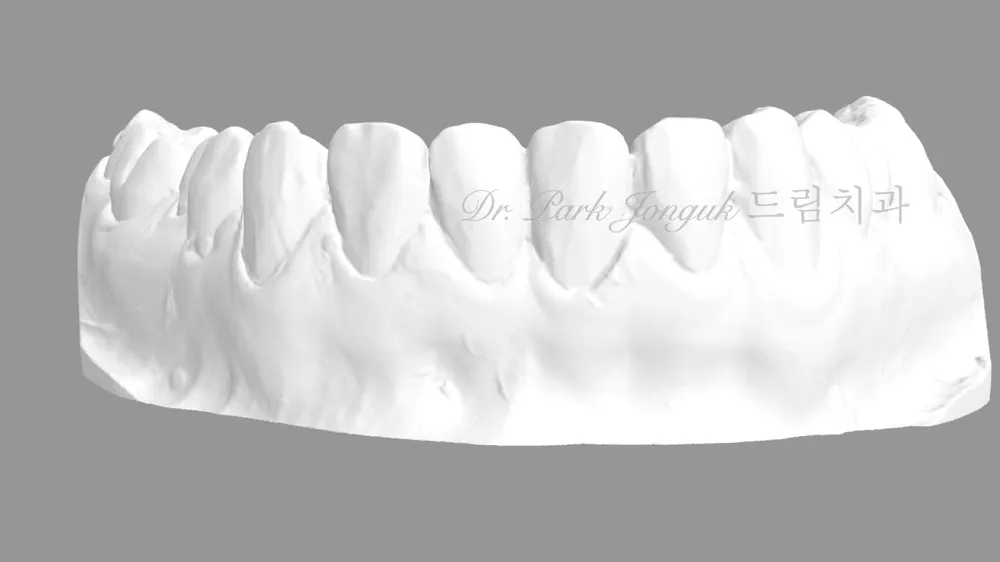
This is how we carry out the tooth-reduction simulation.
Then, to see what shape the teeth will take once the veneers are placed,
we build a preview in wax.
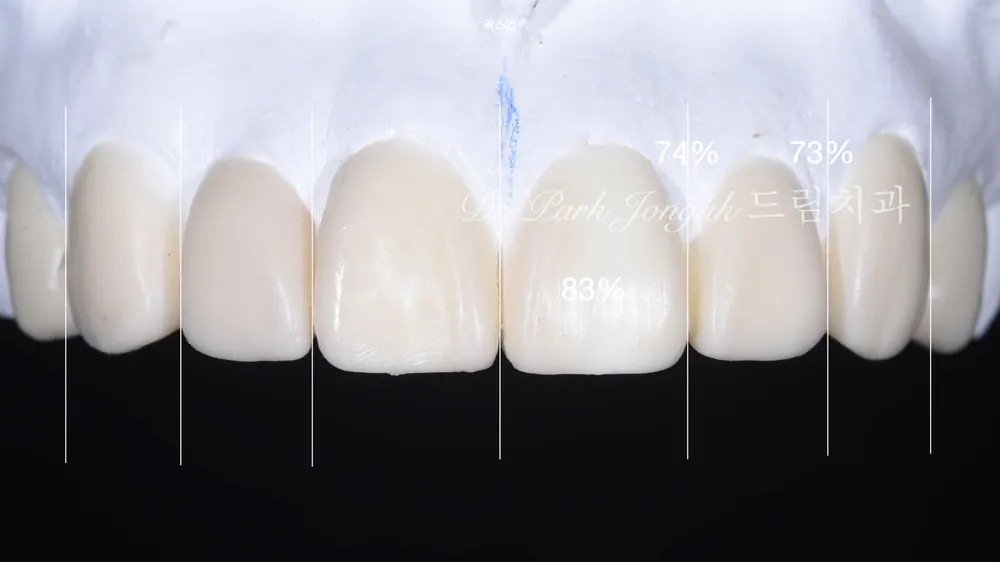
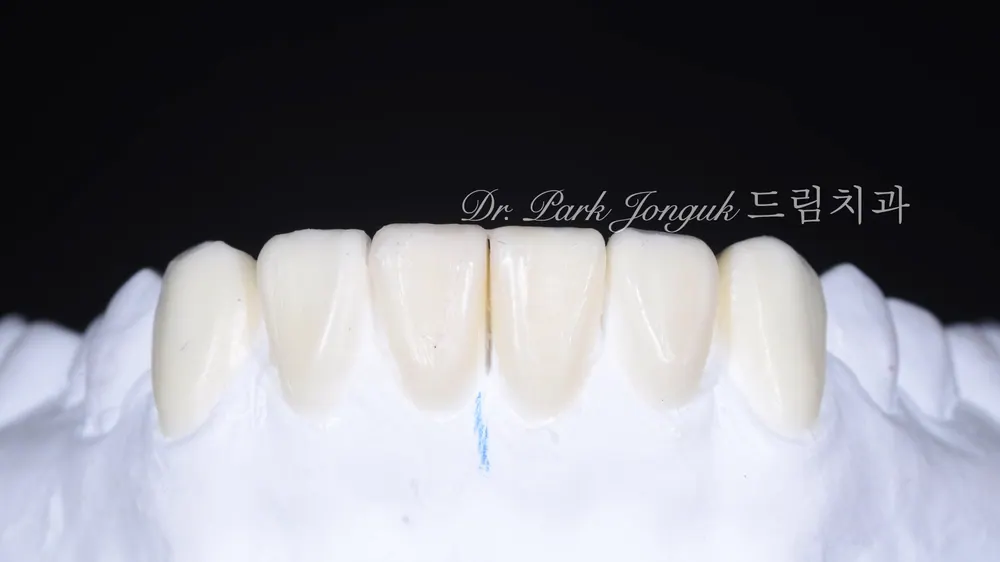
This entire process for front-tooth veneer treatment—
analyzing the current teeth,
simulating the amount of reduction,
and the wax-up process for the result—
is called wax-up precision diagnosis.
This process is important because it anticipates the entire course of treatment,
and the data gathered through it
gets used in various ways throughout the treatment.
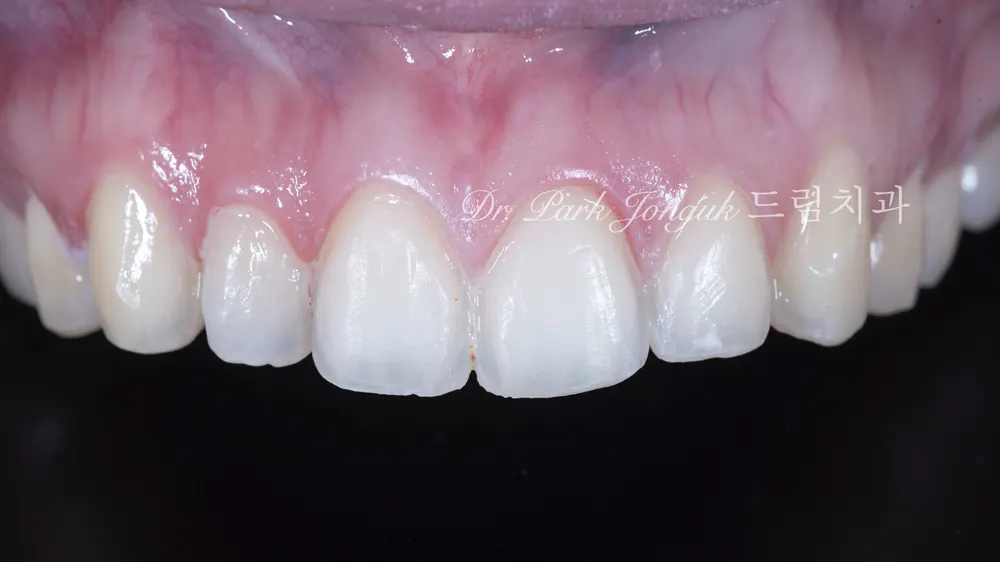
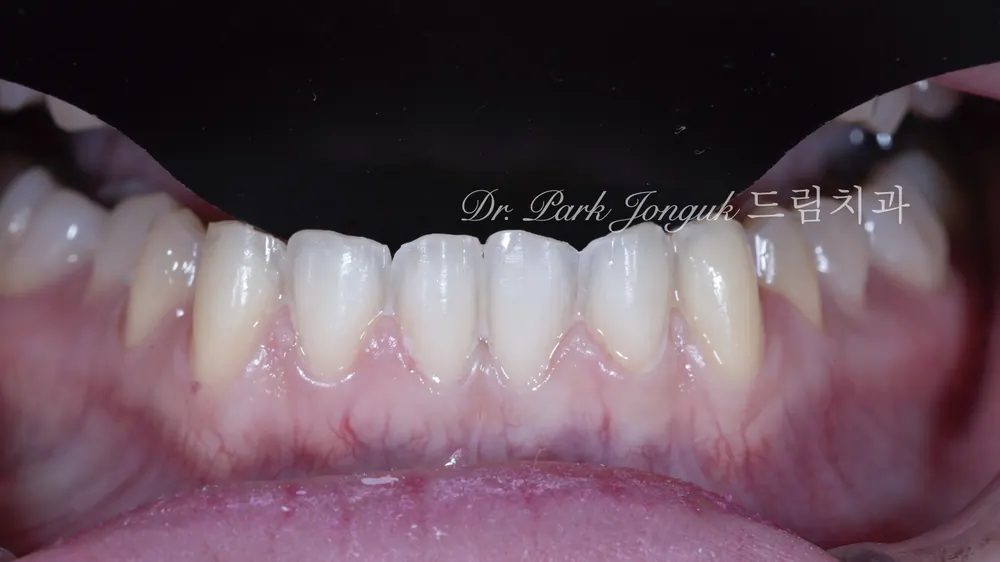
The teeth are reduced according to the precisely diagnosed plan.
Using a guide to reduce precisely according to the plan is important.
In particular, using a microscope is a very important part of veneer reduction.
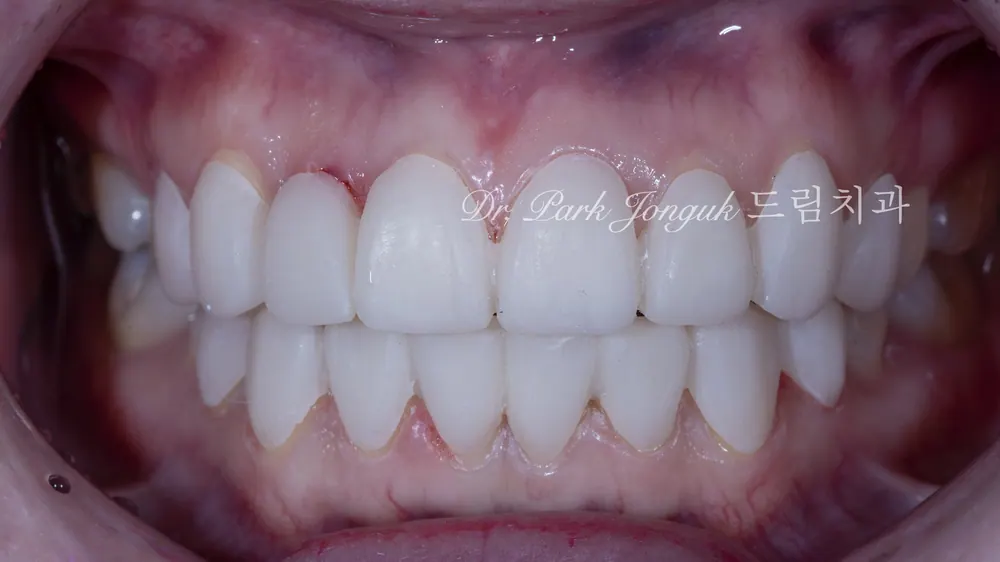
Using the wax-up,
we create the temporary veneers.
In this process, we need to confirm the tooth size, proportion, and degree of protrusion.
Through detailed consultation,
we keep making adjustments until we reach the desired shape,
and once the shape, proportion, size, and degree of protrusion are all finalized to the patient's satisfaction,
we take an impression of the teeth and begin fabricating the veneers in ceramic.
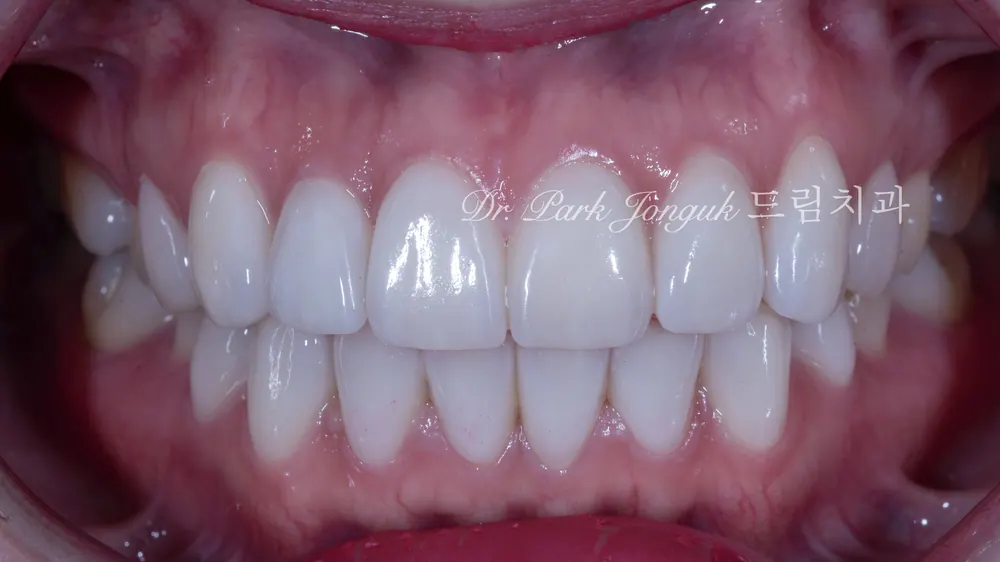
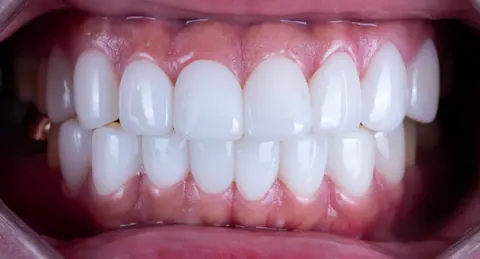
The front-tooth veneer treatment has been completed.
The alignment has improved dramatically,
and you can see that the buck-teeth appearance has been fully resolved.
Through a three-dimensional tooth shape,
we expressed a natural form,
and by adding varied coloring and translucent areas in different parts of the tooth,
the result was finished beautifully.
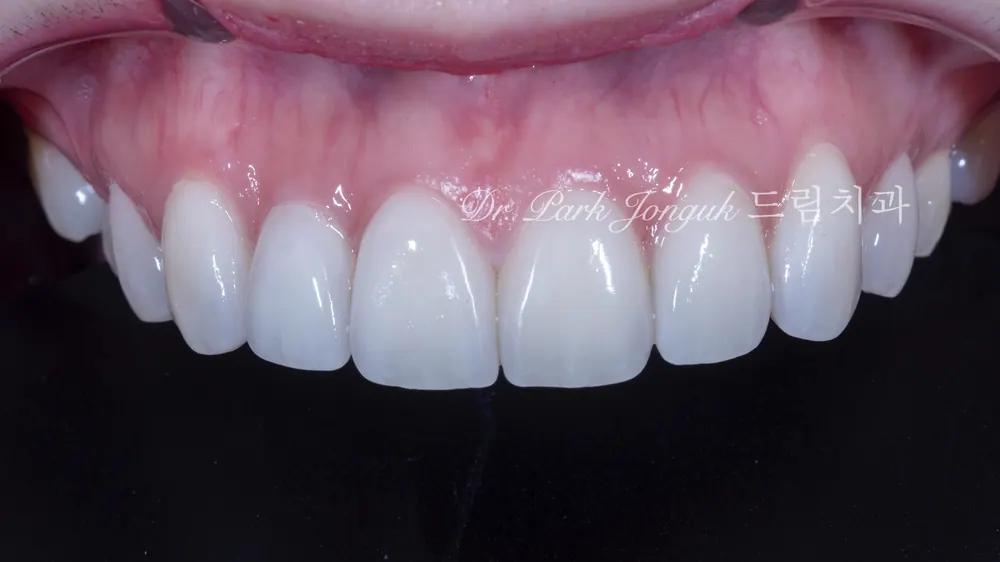
The expression of translucency, a hallmark of young, beautiful teeth,
is a particularly demanding part
of fabricating veneer ceramic.
It's an area same-day methods simply cannot match.
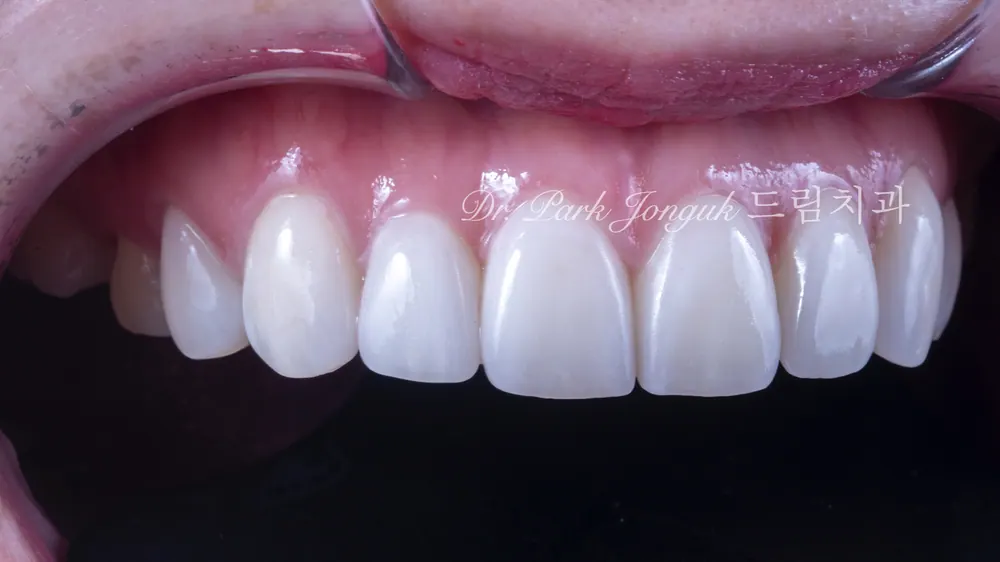
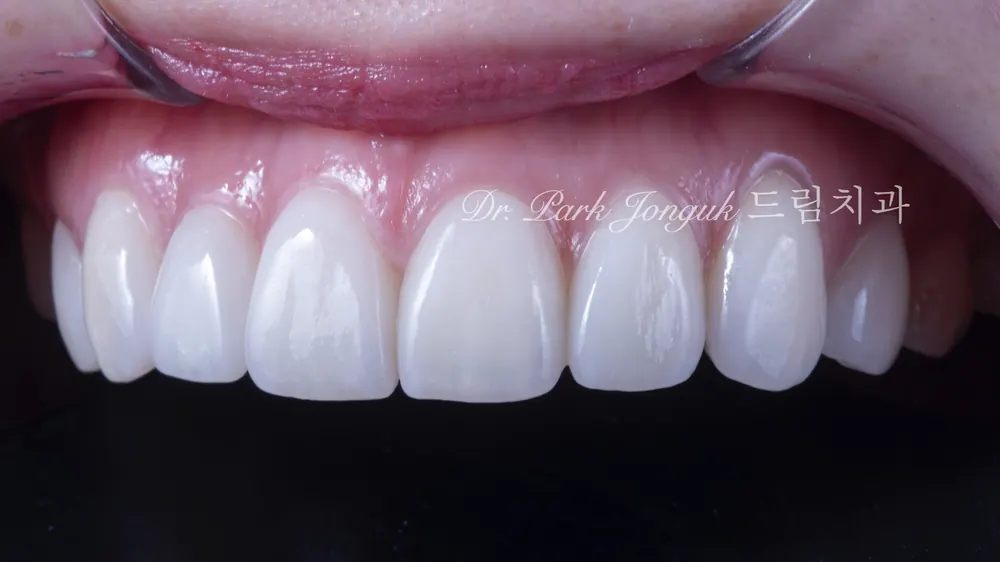
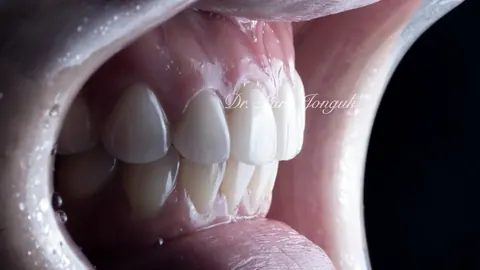
Down to the texture of the tooth surface,
every element of natural beauty was captured.
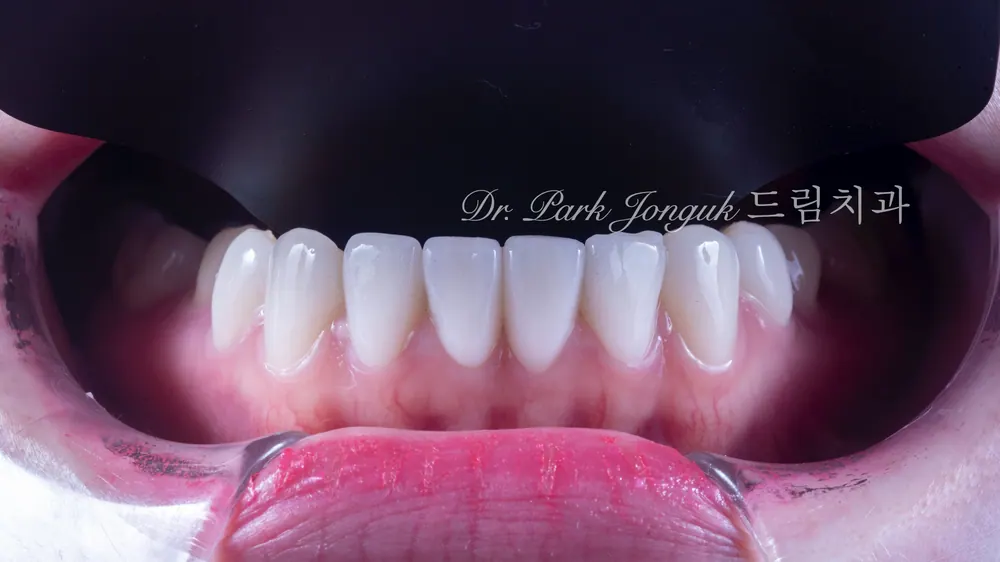
The lower teeth were also finished more even and beautiful.
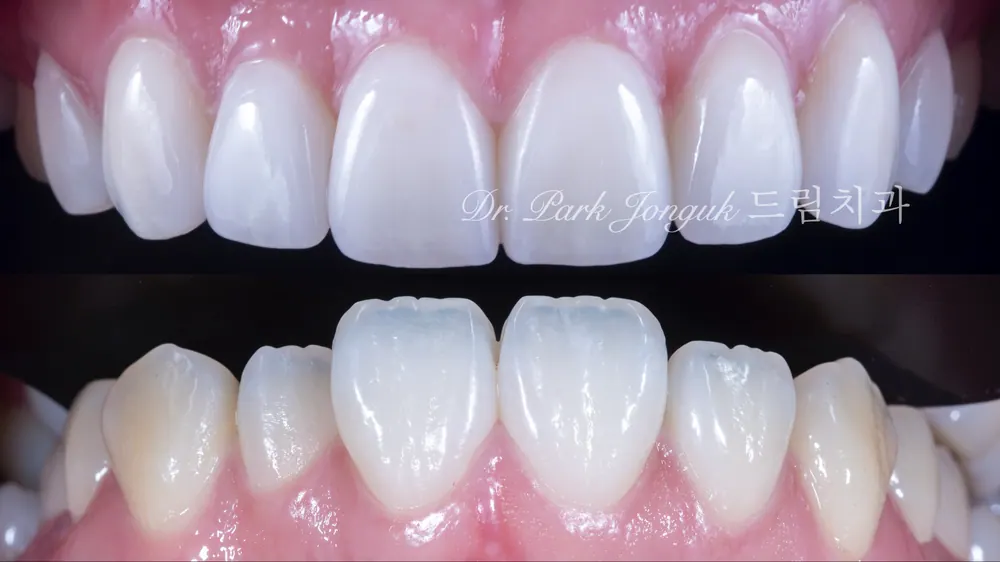
Natural beauty
Since 2006, Dream Dental Clinic
This article is a clinical note written by Dr. Park Jonguk of Dream Dental Clinic, Gangnam; the original was published on his blog. The photographs shown are real cases he treated. Results vary with each patient’s condition, and every procedure carries the possibility of individual variation and side effects.
Quick Consult
Request a Callback
Leave your number and we will call you back during clinic hours.
Request Received
We will contact you during clinic hours. For urgent matters, please call +82-2-3448-0028.