
All-Ceramic Crown Redo: Brightening Even Blackened Teeth
Hello, I am Park Jonguk, director of Dream Dental Clinic in Apgujeong.
Today I'll introduce an all-ceramic crown redo and front tooth re-treatment case.
I'll show you a way to improve even a tooth that has turned black.
The crown doesn't match the natural teeth
This patient had two all-ceramic crowns.
The right front tooth and the small front tooth on the left had crowns.
But there were several problems.
The color didn't match the other teeth.
The crown color was darker and duller than the natural teeth.
It wasn't harmonious overall.
The gum color had darkened.
The gums around the crowns had discolored to a darker tone.
It wasn't a normal pink color.
The patient wanted to redo the front teeth.
Before treatment, the problems are visible
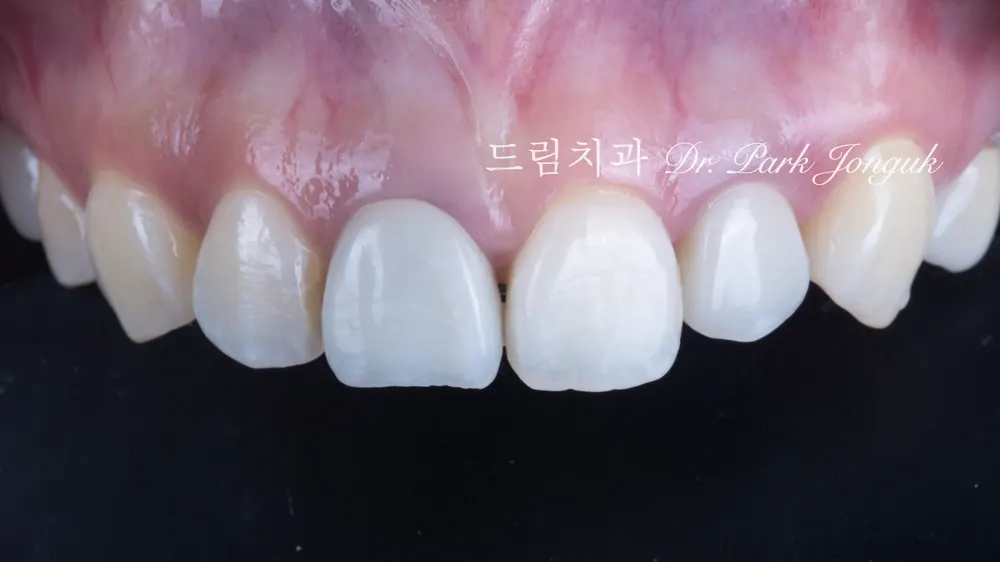
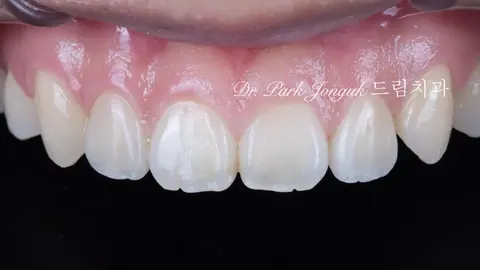
Photo 1 is from the first visit.
The crowns on the right front tooth and the small left front tooth don't match the other natural teeth well.
The crown color is dull and dark.
The natural teeth are bright and translucent, while the crowns are opaque and heavy-looking.
The gum color isn't normal either.
Overall it looks awkward and unnatural.
The patient came in for a redo.
After removing the crowns, a shocking discovery
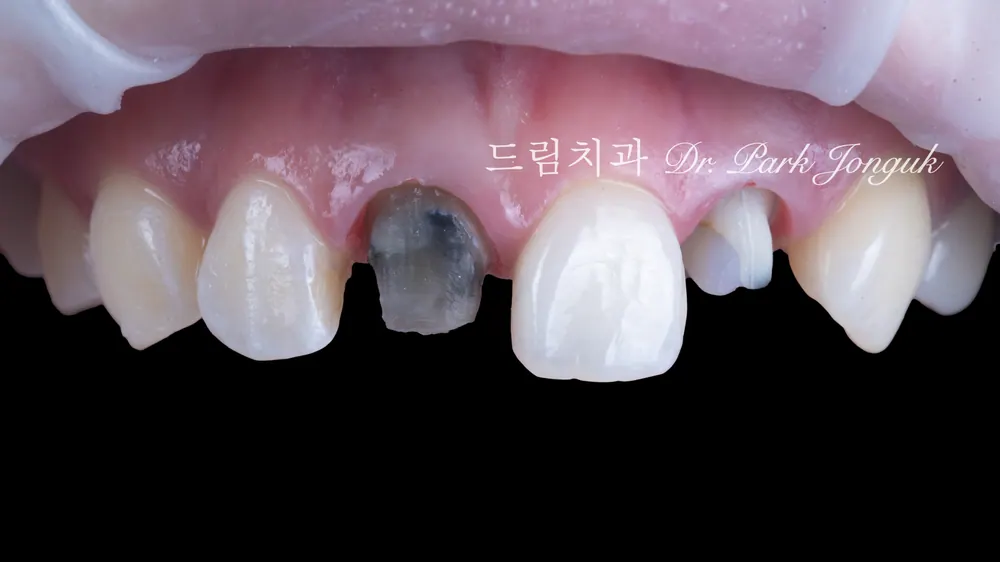
Photo 2 shows the state after the crowns were removed.
We removed both crowns for the redo, and in the case of the right front tooth, the tooth color was almost black.
It's a truly striking sight.
The small left front tooth was still relatively fine, but the right front tooth was almost black.
Why did it turn this dark?
It's because root canal treatment had been done.
After root canal treatment, the tooth discolors over time.
With the blood supply cut off, the tooth dies and darkens.
This case in particular had discolored severely.
The cause of the gum discoloration
This is also the reason the gum color had darkened.
Once gum discoloration occurs due to root canal treatment on a tooth, it is impossible to reverse it perfectly.
The discoloration inside the tooth shows through the gum tissue.
It's a genuinely unfortunate situation.
But we didn't give up.
We decided to do our best to improve it.
Finding hope with non-vital tooth whitening
Leaving the blackened tooth as it is and placing a crown over it just repeats the problem.
The dark color would show through the crown.
So we decided to do non-vital tooth whitening.
What is non-vital tooth whitening?
It's a special whitening method that brightens a root-canal-treated (non-vital) tooth.
A whitening agent is placed inside the tooth to brighten it from the inside out.
It's a completely different method from regular whitening.
It takes time, but it's effective.
After whitening, a remarkable change
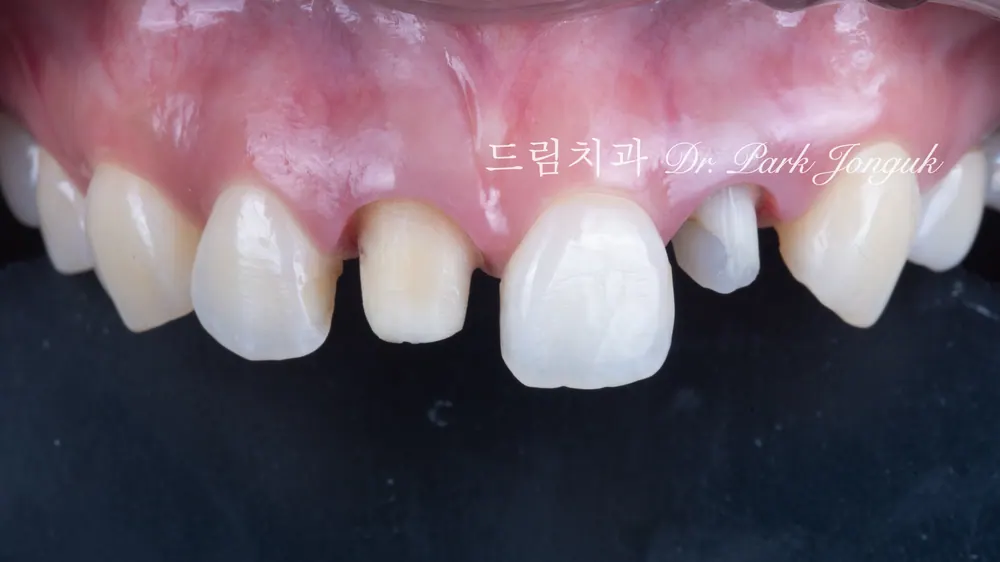
Photo 3 shows the state after non-vital tooth whitening.
It's truly remarkable.
The tooth color improved completely.
The tooth that had been almost black turned into a bright color.
It's not perfectly back to the original color, but it's a tremendous improvement.
At this level, it's now possible to make a natural-looking crown.
The limits and possibilities of non-vital tooth whitening
It doesn't get perfectly as bright as a natural tooth.
But it is the best possible improvement.
Without this process, the dark color would have kept showing through.
Non-vital tooth whitening greatly increased the chance of the redo succeeding.
Completed with a zirconia all-ceramic crown
Now it's time to make the new crown.
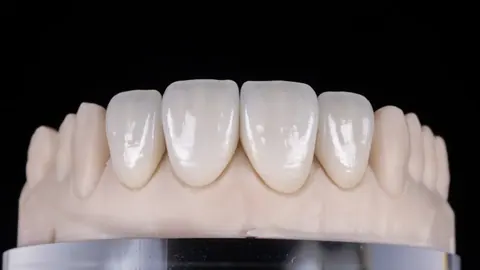
We fabricated it as a zirconia all-ceramic crown.
The advantages of zirconia
Zirconia has a high level of opacity.
It effectively blocks any remaining discoloration in the underlying tooth.
On top of that, an aesthetic porcelain layer is applied to create a natural-looking color.
Its strength is also excellent, making it suitable for front teeth.
Precise color matching
The most important thing is matching the color with the natural teeth.
We precisely analyzed the color of the surrounding natural teeth.
We considered translucency, hue, value, and chroma all together.
We reproduced the natural color through hand-layered build-up.
After treatment, you can hardly tell the difference
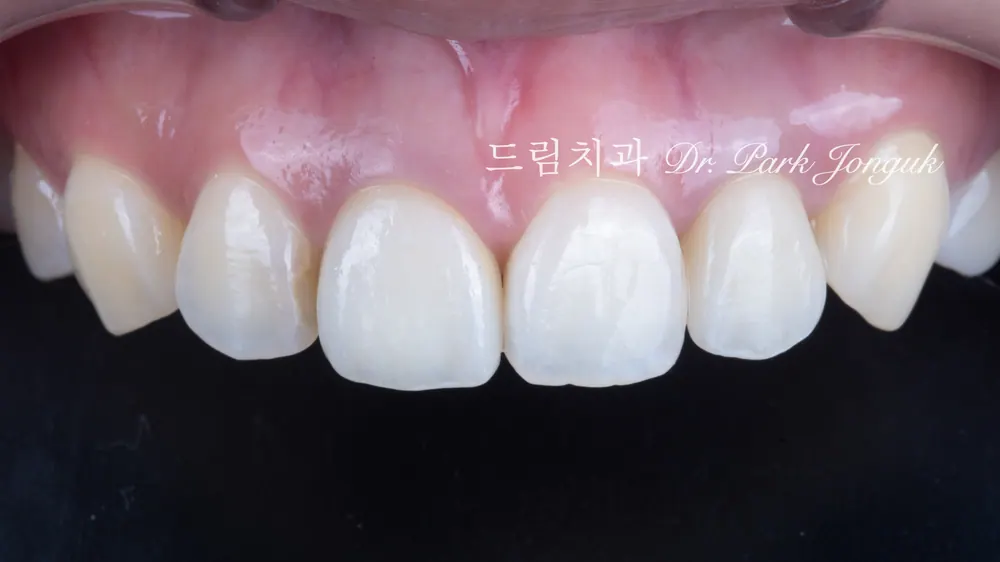
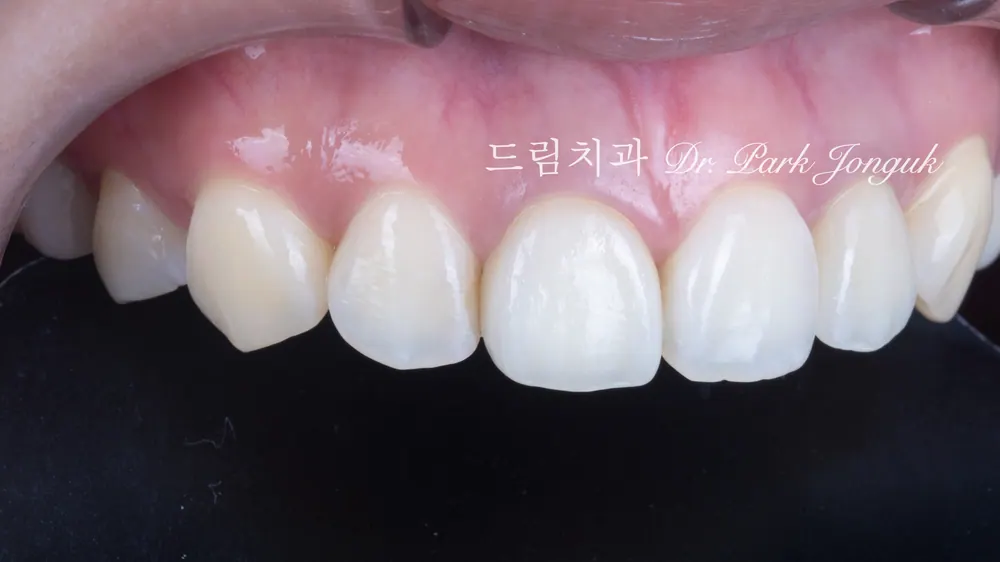
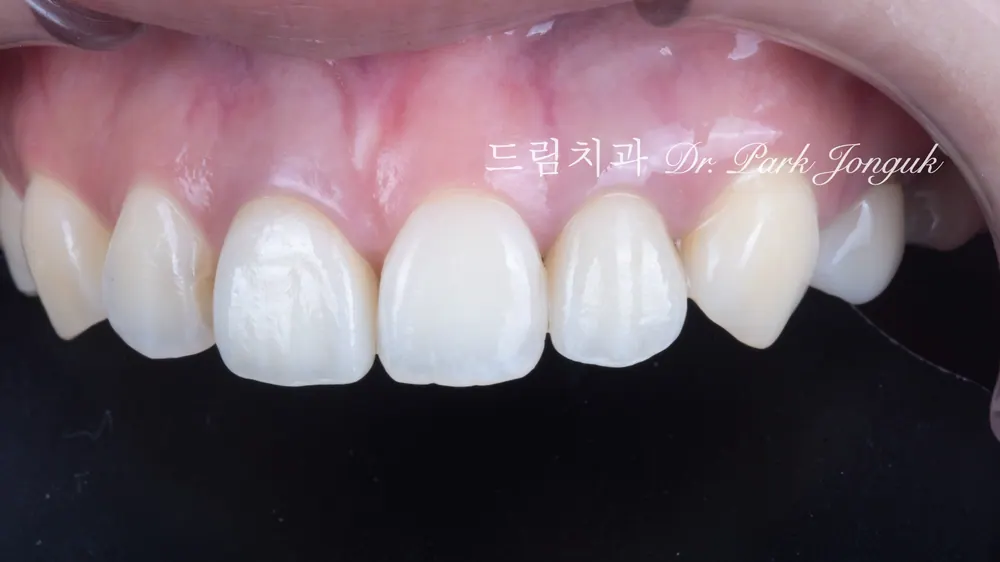
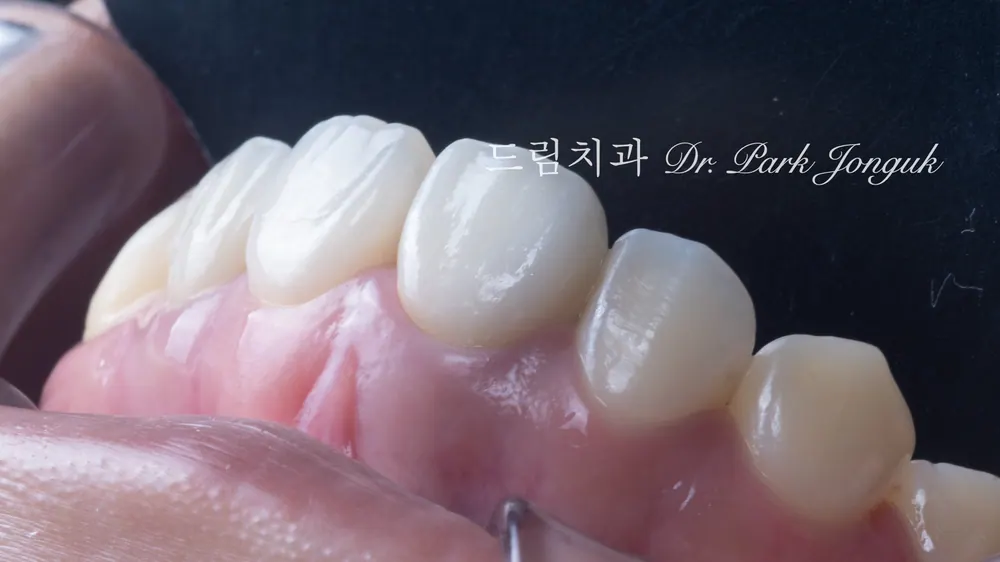
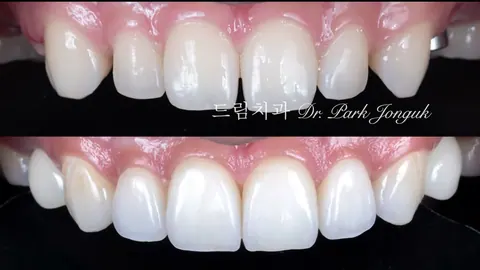
Photos 4, 5, 6, and 7 show the state after treatment.
It's a truly remarkable result.
It's almost impossible to tell them apart from the natural teeth
We made the zirconia all-ceramic crowns so they're almost indistinguishable from the natural teeth.
You can't tell at all which one is the crown.
The color, translucency, and shape are all matched perfectly.
The color is perfect
The dull, dark crown became a bright, natural color.
It blends perfectly with the surrounding natural teeth.
The translucency is also the same as the natural teeth.
The gum color has improved too
It couldn't be perfectly reversed, but it improved as much as possible.
As the tooth brightened from the non-vital whitening, the color showing through the gums also improved.
The margin treatment of the new crown was also designed to be good for gum health.
The shape is natural too
The shape of the crown is as delicate as a natural tooth.
The developmental lobes and surface contours were reproduced.
It's not uniform and flat — it has dimension.
For an all-ceramic crown redo, do it this way
If you're considering a front tooth re-treatment or veneer redo, keep this in mind.
Start discolored teeth with whitening
If a root-canal-treated tooth has discolored, do non-vital tooth whitening first.
If you place a crown straight over a dark tooth, the color will show through.
You need to brighten the tooth as much as possible with whitening before doing the crown, for a natural result.
Use a zirconia base
For discolored teeth, a zirconia base is effective.
Its high opacity blocks the discoloration.
An aesthetic porcelain layer on top creates a natural-looking color.
Precise color analysis is essential
To match perfectly with the surrounding natural teeth, precise color analysis is required.
Translucency, hue, value, and chroma all need to be considered.
Color should be evaluated under several different lighting conditions.
Check whether it's a hand-layered build-up method
A single-block method cannot achieve natural color matching.
A hand-layered, multi-layer build-up is needed, stacking several layers of ceramic.
This is what makes it possible to achieve a result indistinguishable from natural teeth.
Choose an experienced dental clinic
A front tooth redo is far more difficult than initial treatment.
Discolored teeth, root-canal-treated teeth, and gum discoloration all need to be addressed together.
Choose a dentist with more than 20 years of clinical experience.
Gum discoloration can be improved, even if not perfectly
Gum discoloration caused by root canal treatment of a tooth cannot be perfectly reversed.
This is something I have to say honestly.
But it can be improved as much as possible.
Non-vital tooth whitening brightens the tooth.
A zirconia crown blocks the discoloration.
Proper margin treatment improves gum health.
With this kind of effort, the most natural possible result can be achieved.
Frequently Asked Questions (Q&A)
Q1. How effective is non-vital tooth whitening?
A. It varies depending on the degree of tooth discoloration, but
as in this case, even a tooth that was almost black can be made considerably brighter.
It's not a perfectly natural tooth color, but enough of an improvement to make the crown look natural.
Q2. Can gum discoloration really not be reversed?
A. Gum discoloration caused by root canal treatment is difficult to perfectly restore to its original state.
But it can be improved as much as possible through non-vital tooth whitening and proper crown fabrication. It won't be perfect, but it will be much better.
Q3. Won't there be problems again after an all-ceramic crown redo?
A. If non-vital tooth whitening, a zirconia base, precise color matching, and hand-layered build-up are all done properly,
it can be used without problems for more than 10 years.
A properly done redo can actually have a higher long-term success rate than the initial treatment.
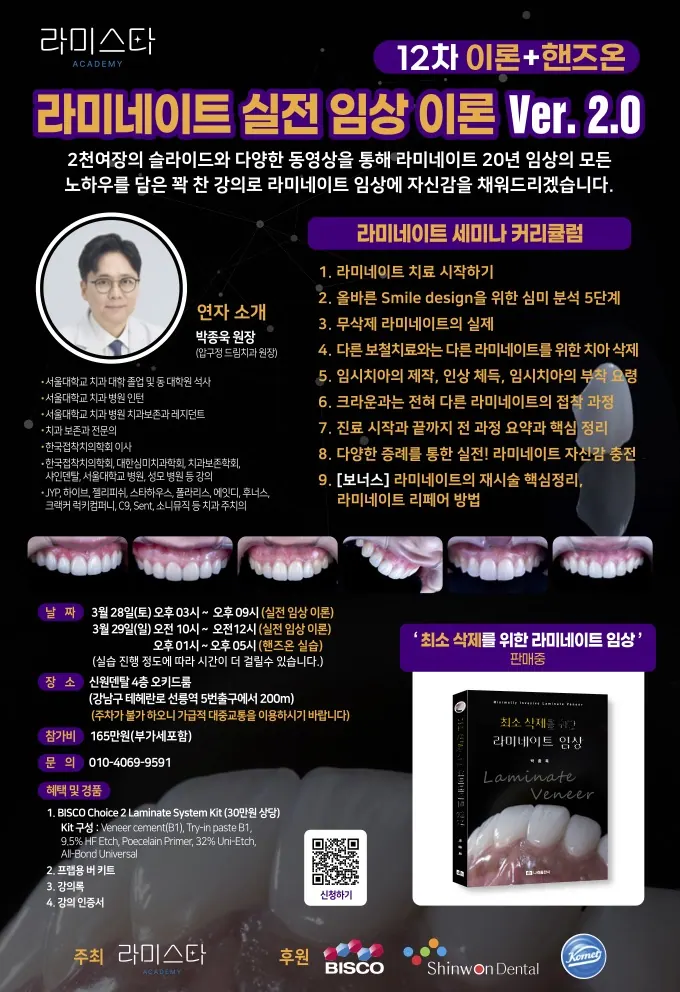
This article is based on the actual clinical experience of Dr. Park Jonguk, director of Dream Dental Clinic in Apgujeong. He has practiced aesthetic dentistry for 20 years, and lectures monthly at Lamista Academy to dentists on all-ceramic crown redo techniques. He has published Korea's first veneer textbook.
This article is a clinical note written by Dr. Park Jonguk of Dream Dental Clinic, Gangnam; the original was published on his blog. The photographs shown are real cases he treated. Results vary with each patient’s condition, and every procedure carries the possibility of individual variation and side effects.
Quick Consult
Request a Callback
Leave your number and we will call you back during clinic hours.
Request Received
We will contact you during clinic hours. For urgent matters, please call +82-2-3448-0028.