
Veneer Redo: Starting Over Safely with Laser Removal
Hello, I'm Park Jonguk, director of Dream Dental Clinic in Apgujeong.
Today I want to introduce a veneer redo case.
It's a story of safe retreatment using laser veneer removal.
My veneers broke not long after I got them
This patient came in because part of her veneer had chipped, not long after receiving veneer treatment.
Only a few months had passed since treatment, and a fracture had already appeared.
A chipped veneer alone is a serious problem, but there was an even bigger one.
The bigger problem: it looked far too awkward and artificial
There was a more serious problem than the fracture.
The veneer looked far too awkward and artificial.
The teeth looked bulky and oversized.
The color was flat and lacked any translucency.
The shape was uniform and lifeless.
The patient told me, "When I redo them, I want them to look natural."
Before treatment, the problems were clear
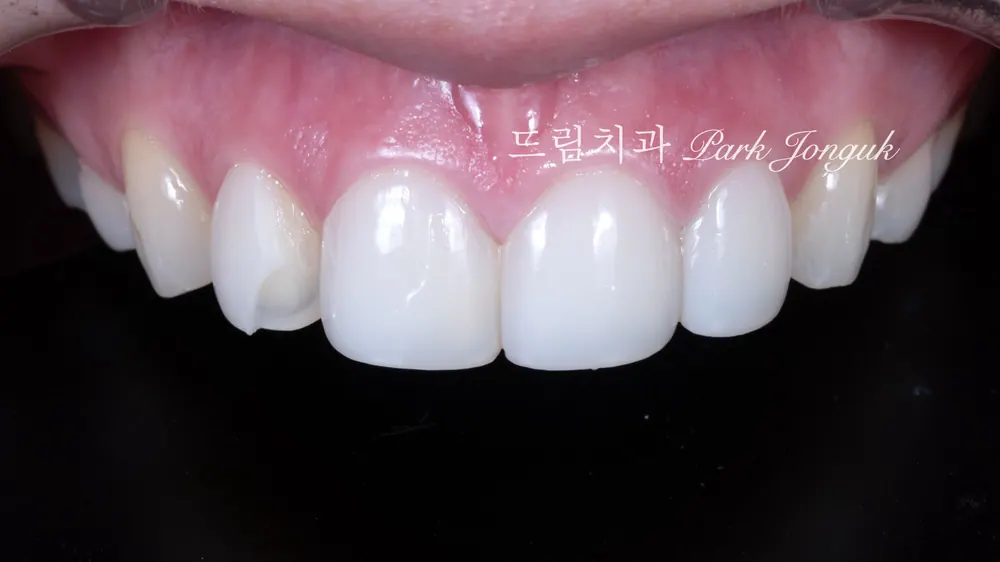
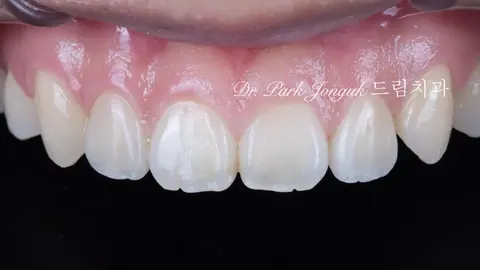
Photo 1 is from her initial visit.
Several problems are visible.
The teeth were too large and bulky.
They were opaque and dull.
The shape was monotonous.
Part of it had chipped.
Precise diagnosis — why did this happen?
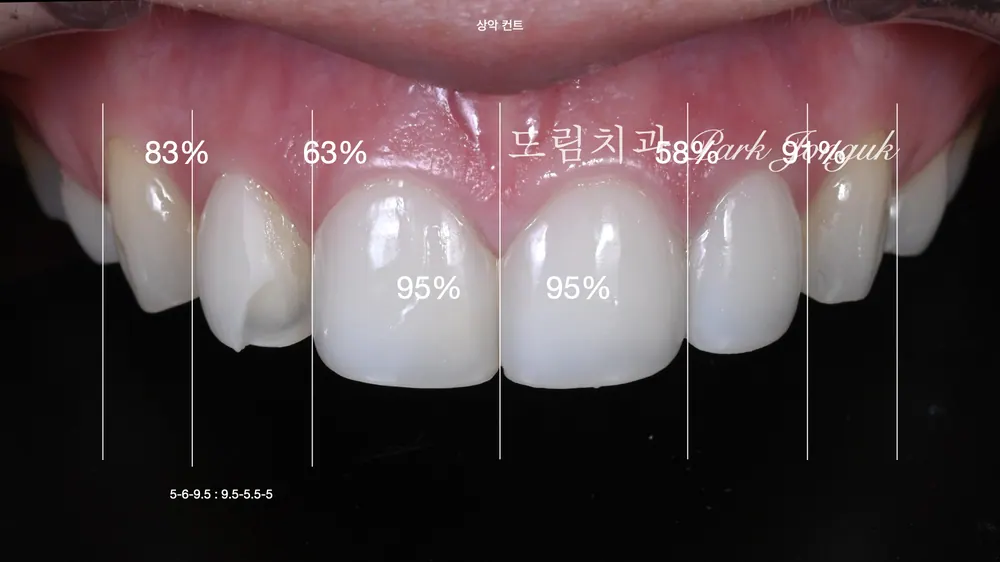
Photo 2 shows the diagnosis — an analysis of the current teeth.
Dr. Park Jonguk of Dream Dental Clinic in Apgujeong carried out a precise analysis.
The teeth were too large
The biggest problem was that the teeth were too large.
The teeth were excessively large for the patient's face and lips.
It looked unnatural and awkward.
If they were going to be made this large, precautions should have been taken
"If they were going to end up this large, appropriate precautions should have been taken for that."
If a veneer is going to be made large, several precautions need to be taken to match.
The gumline should have been adjusted with gum contouring.
The tooth proportions should have been taken into account.
The overall balance should have been matched.
But none of these precautions were taken — the veneer was simply made large.
Precisely redesigning with a wax-up
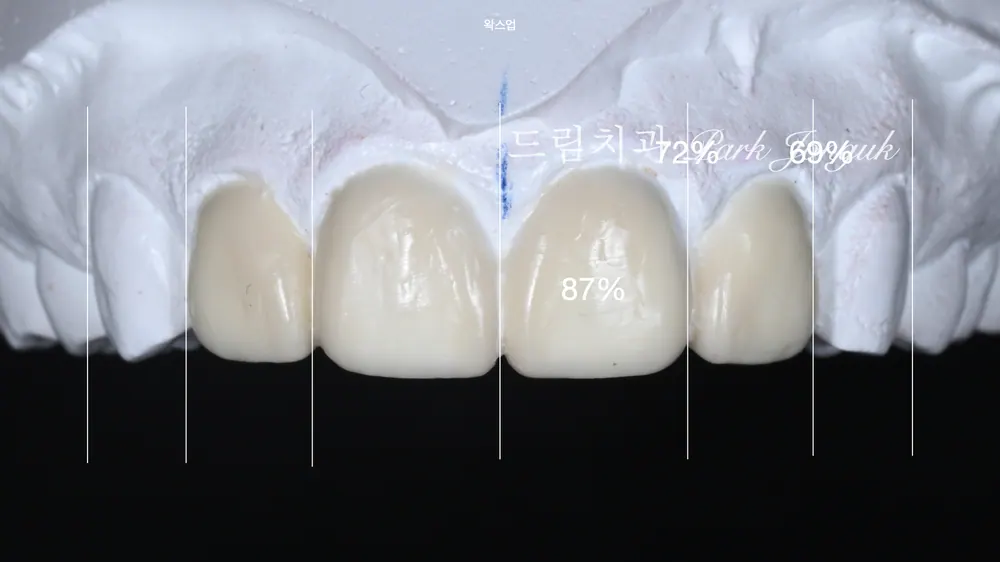
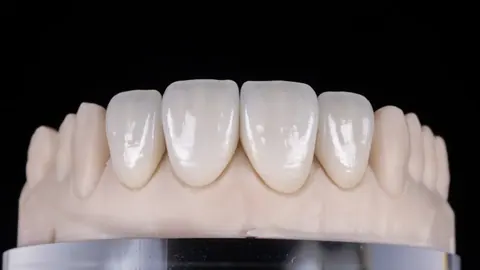
Photo 3 shows the wax-up diagnostic.
This is the process of previewing what the teeth will look like after treatment.
Designing the teeth to look smaller
"I made a design effort so the teeth would look smaller."
While actually making the teeth smaller, we also designed them to look visually smaller and more natural.
The tooth width was reduced.
The tooth edges were made round and delicate.
The left-right proportions were naturally adjusted.
Dimensionality was brought out.
This design effort solved the problem of the teeth looking large and bulky.
Safely removed with a laser
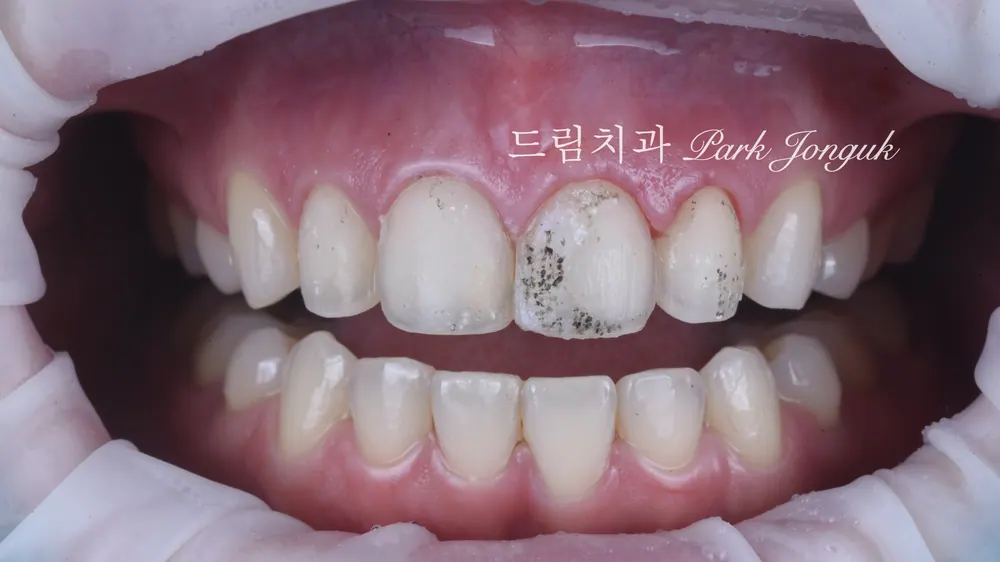
Photo 4 shows the process of removing the veneer using a laser.
The advantages of laser removal
The existing veneer was removed with a laser.
Removing it with an ordinary drill risks further damage to the tooth.
But using a laser is safe.
It allows the bonding layer between the veneer and the tooth to be selectively removed.
It minimizes damage to the tooth.
Only the ceramic is removed from the tooth surface
"Only the ceramic is removed from the tooth surface, while the resin cement remains, having been charred."
When a veneer is removed with a laser, the ceramic portion is removed cleanly.
But the bonding agent (resin cement) remains on the tooth surface, charred.
This also needs to be completely removed.
Looking at the removed veneer
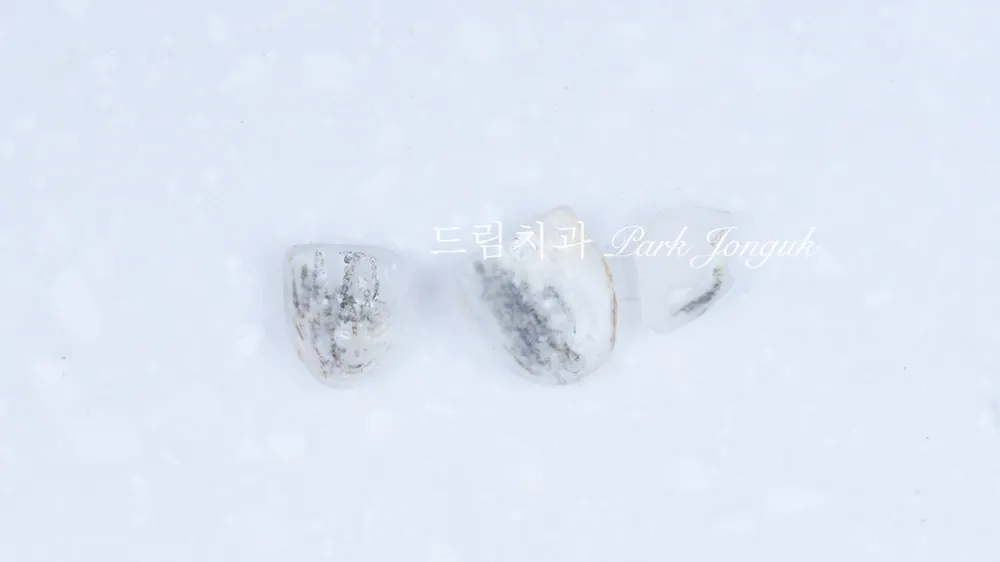
Photo 5 shows the removed veneer.
Looking at the removed veneer reveals several things.
The internal fit wasn't good.
These kinds of problems likely caused the fracture.
Completely removing even the bonding agent
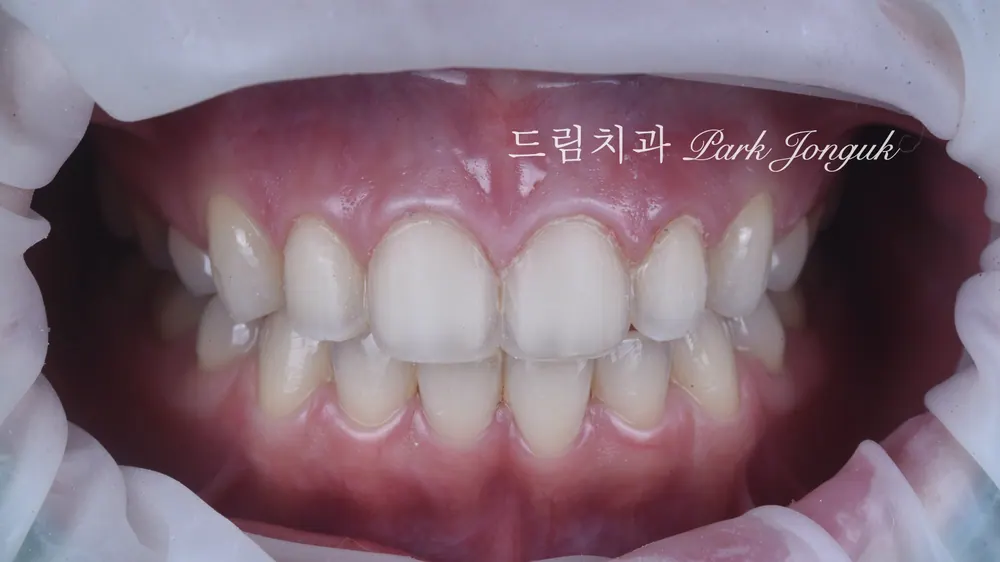
Photo 6 shows the tooth surface after all the remaining resin cement was removed.
After removing the veneer with a laser, the remaining bonding agent on the tooth surface was completely removed.
This step is genuinely important.
If bonding agent is left behind, it causes problems with the new veneer's bond.
It was removed completely, checked under a microscope.
The tooth surface was cleanly prepared.
Discussing the final shape using temporary teeth
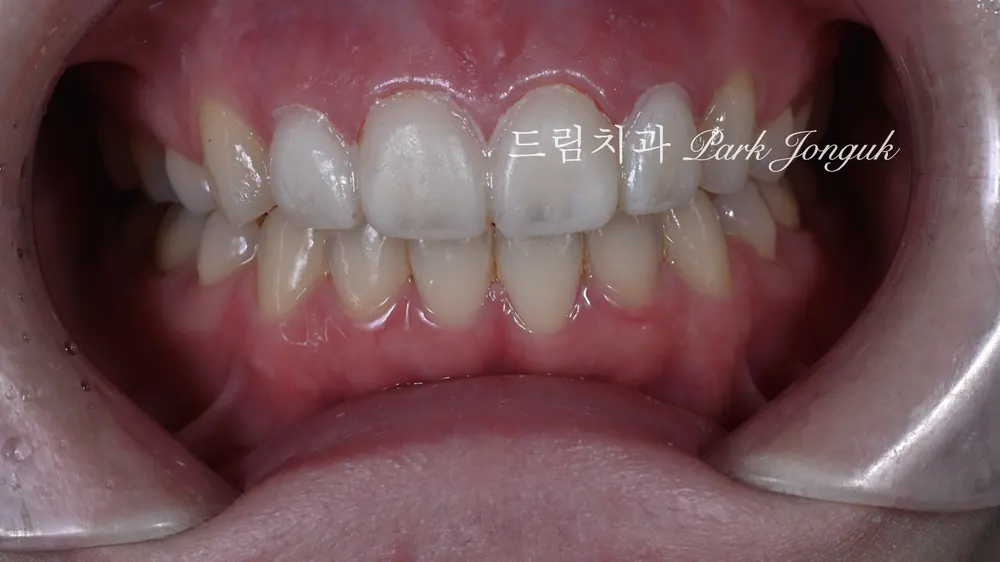
Photo 7 shows the process of discussing the tooth shape using temporary teeth.
Before making the final veneer, temporary teeth are made and shown to the patient.
We check whether the size is right, whether the shape looks natural, and what the color looks like.
We listen to the patient's opinion and make any needed adjustments.
This is how satisfaction with the final result is maximized.
After treatment: natural and beautiful
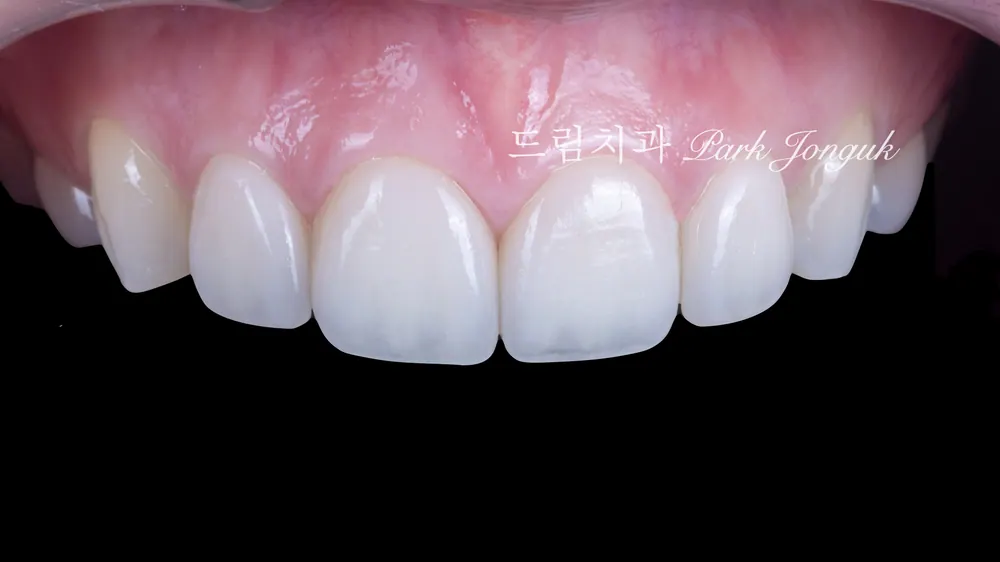
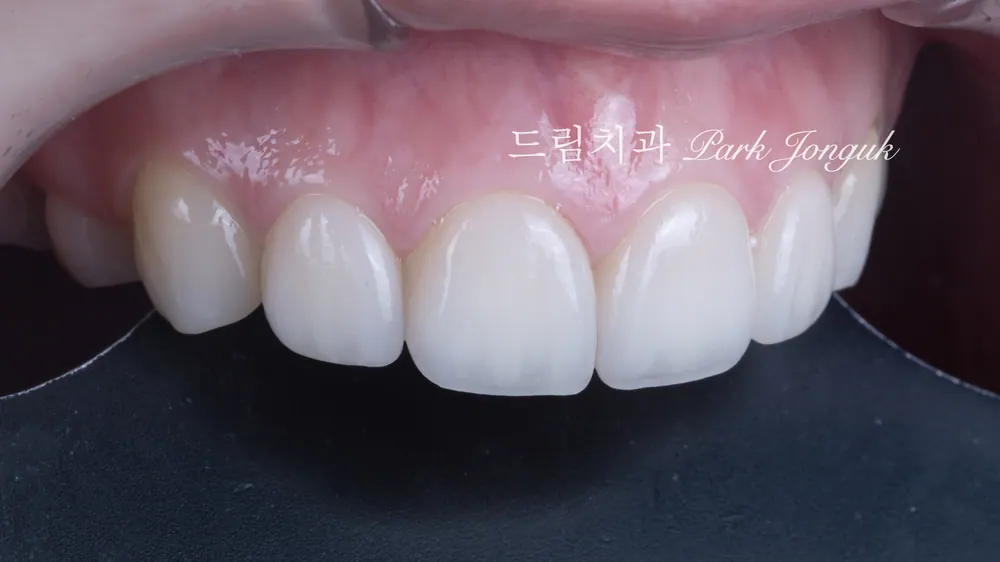
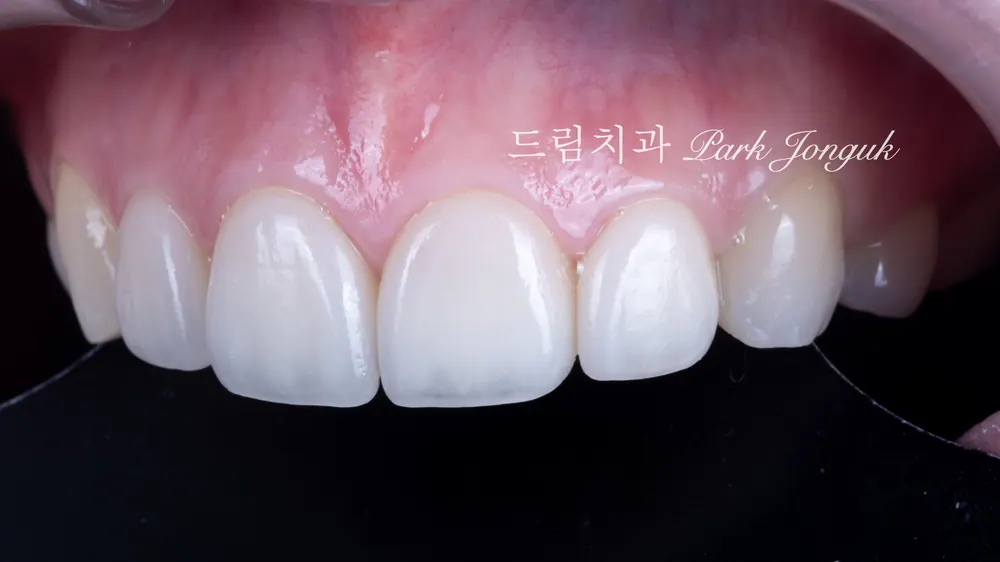
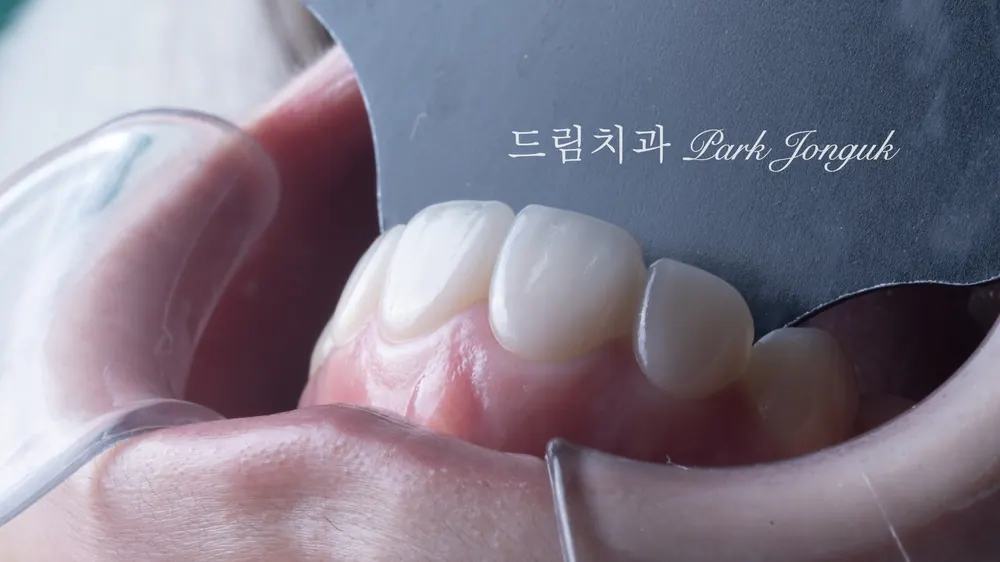
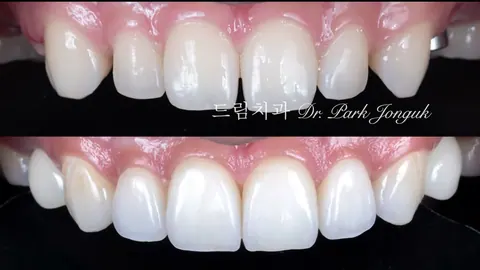
Photos 8, 9, 10, and 11 show the result after treatment.
It's truly a remarkable change.
It became natural
The bulky, artificial-looking veneer changed into something natural.
The tooth size is now appropriate.
It suits the patient's face and lips well.
It's neither too large nor too small.
The shape is beautiful
The tooth shape is delicate and elegant.
Each tooth has its own distinct character.
The developmental lobes and surface contours were naturally reproduced.
It's not uniform — it has real dimensionality.
The translucency is alive
The translucency at the tooth edges was beautifully expressed.
As light passes through, it diffuses softly.
It's completely different from before, when it was opaque and dull.
The color looks natural
The once-flat color changed into a natural color gradient.
Near the root, it's a warm ivory tone.
In the middle, it's a brighter shade.
At the tooth edge, it's translucent.
This subtle color variation is what makes it look like a real tooth.
For a veneer redo, do it this way
If you're considering a veneer redo, follow these steps.
Check for laser removal
Check whether laser veneer removal is available.
Removal with a laser minimizes damage to the tooth.
Removal with an ordinary drill causes further damage to a tooth that's already been reduced.
Request a precise diagnosis
The problems with the existing veneer need to be accurately analyzed.
You need to understand why it failed and what the actual problem was.
Without this process, remaking it the same way just repeats the same problem.
Check for a wax-up and temporary teeth
Previewing the final result in advance is essential.
See the shape with a wax-up, and actually wear temporary teeth to try it out.
This stage requires thorough consultation and adjustment.
Check whether it's a hand-built layering method
If a redo is also done with a single-block method, the same problem repeats.
A natural-looking veneer is only possible with hand-built, multilayer construction.
Translucency, color variation, and dimensionality all need to be reproduced.
Choose a clinic with extensive experience
A redo is more difficult than the initial treatment.
The problem has to be solved on a tooth that's already been reduced.
Choose a dentist with more than 20 years of clinical experience.
Frequently Asked Questions (Q&A)
Q1. Is laser removal really better than an ordinary drill?
A. Yes, much better. A laser selectively removes only the bonding layer, minimizing damage to the tooth.
Especially in a redo, preserving the tooth is very important, which makes laser removal essential.
Q2. Is there a chance of failure again after a veneer redo?
A. If precise diagnosis, a wax-up, a temporary-teeth check, and hand-built layering are all carried out, they can be used without problems for 10 years or more.
A properly done redo actually has a higher success rate than the initial treatment.
Q3. How is the problem of teeth looking too large solved?
A. Along with actually reducing the size, they're also designed to look smaller.
Adjusting tooth width, delicate shaping, appropriate proportions, and dimensionality can all make the teeth look visually smaller and more natural.
This article is based on the real clinical experience of Dr. Park Jonguk, director of Dream Dental Clinic in Apgujeong. He has been practicing esthetic dentistry for 20 years, and teaches veneer redo techniques to other dentists every month at Lamista Academy. He has published Korea's first veneer textbook.
This article is a clinical note written by Dr. Park Jonguk of Dream Dental Clinic, Gangnam; the original was published on his blog. The photographs shown are real cases he treated. Results vary with each patient’s condition, and every procedure carries the possibility of individual variation and side effects.
Quick Consult
Request a Callback
Leave your number and we will call you back during clinic hours.
Request Received
We will contact you during clinic hours. For urgent matters, please call +82-2-3448-0028.