
Veneers in Your 50s: The Treatment You Need When You Look Young but Your Teeth Look Old
Wear and discoloration caused by tooth aging after your 50s can't be solved with whitening.
Through aging-tooth veneers and worn-tooth veneers,
we introduce a real case of veneers in the 50s that restored a youthful tooth shape and impression.
People in their 50s today are completely different from before.
Many live just as young in appearance, physical condition, and lifestyle as people in their 30s and 40s.
Many pay close attention to skin care, exercise, and even their diet, and
it's an era where getting a skin procedure or cosmetic surgery, if needed, is accepted quite naturally.
But there's one thing in particular that can't easily be reversed.
That's the aging of the teeth.
Skin can be made to look younger with care, but
teeth wear down bit by bit over a lifetime of use, becoming discolored and shorter,
and at some point, when smiling,
they start creating a sense of "somehow looking older."
In fact, in veneer consultations with patients in their 50s,
"My face still looks fine, but my teeth make me look older,"
"my smile looks awkward in photos,"
"even after whitening, the tips of my teeth still look yellow and short" —
these are things I hear very often.
In these cases, simple whitening or scaling can't solve the problem.
That's because the tooth itself has already worn down and its shape has changed.
The treatment needed at this point is
aging-tooth veneers,
and worn-tooth veneers.
Case 1 | Male in his 50s – A youthful face, but aged teeth
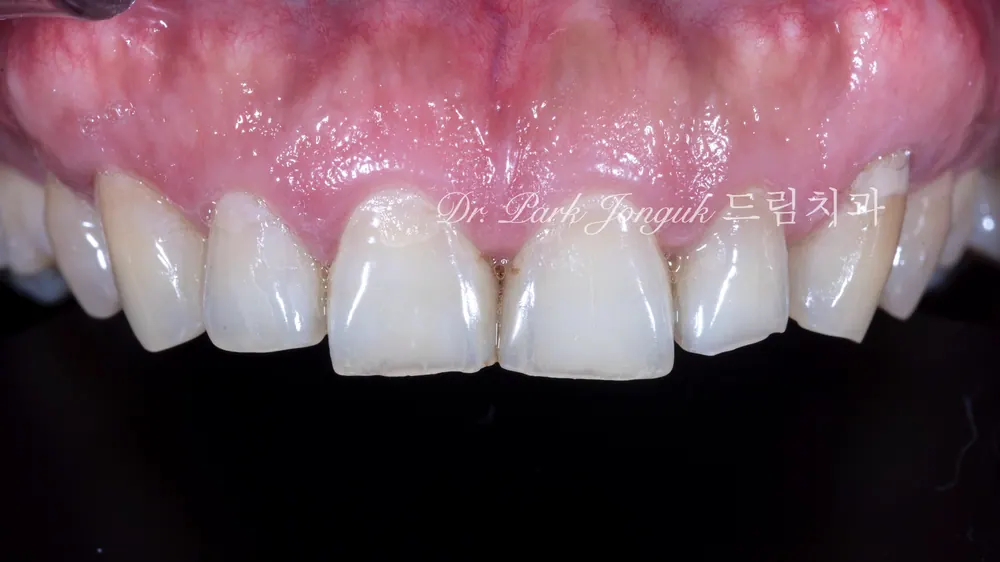
Photo 1 – Before treatment
This patient was a man in his 50s,
and his overall impression was very youthful.
His build was good and his skin condition was good, and
in fact, at first glance he looked like he could be in his early 40s.
But his teeth told a completely different story.
The tips of his front teeth were badly worn, and
the tooth color had turned yellow, and
the surface texture was rough rather than smooth.
It was a classic indication for worn-tooth veneers.
In a condition like this, no matter how much whitening is done,
the yellow color at the tips, the shortened length, and the uneven shape will never come back on their own.
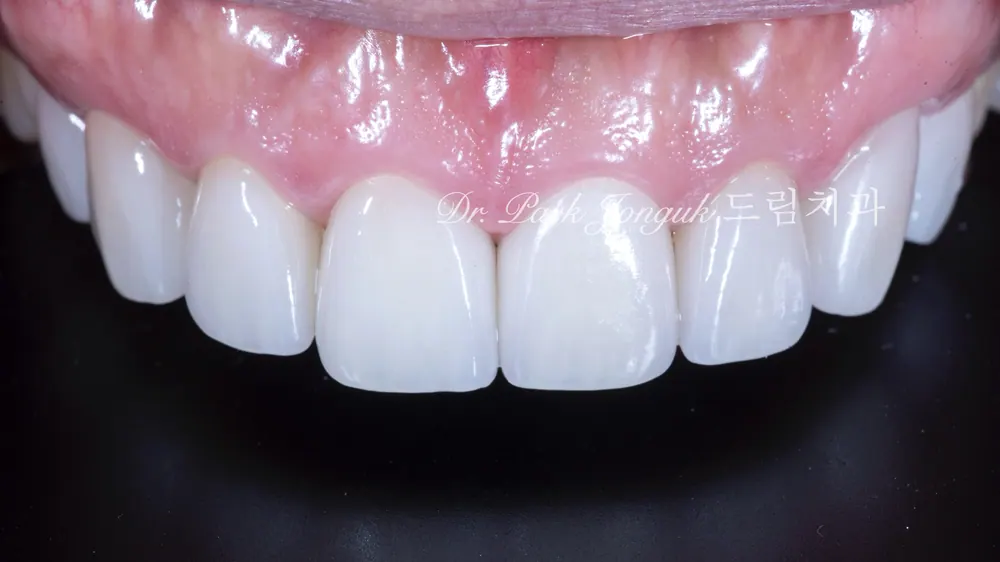
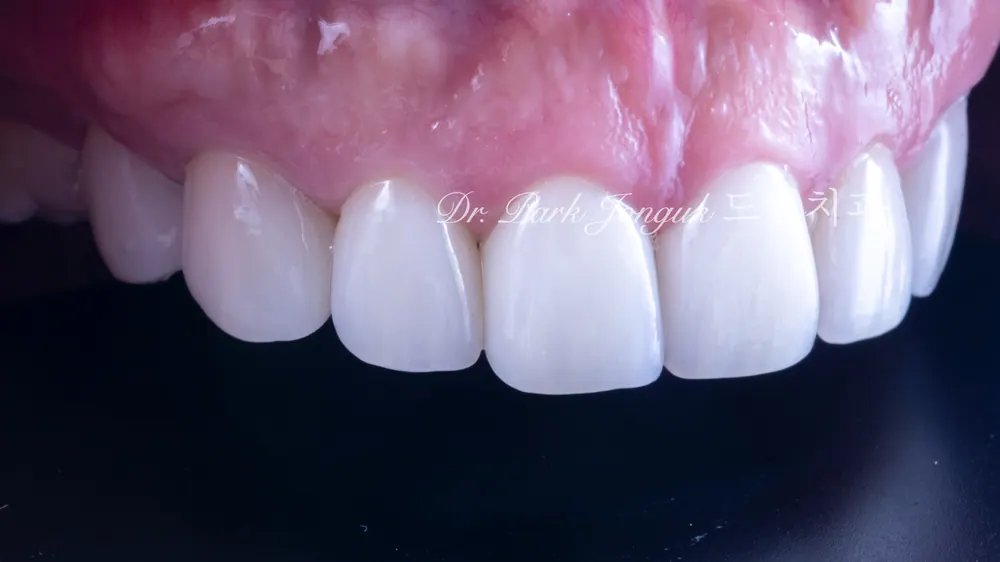
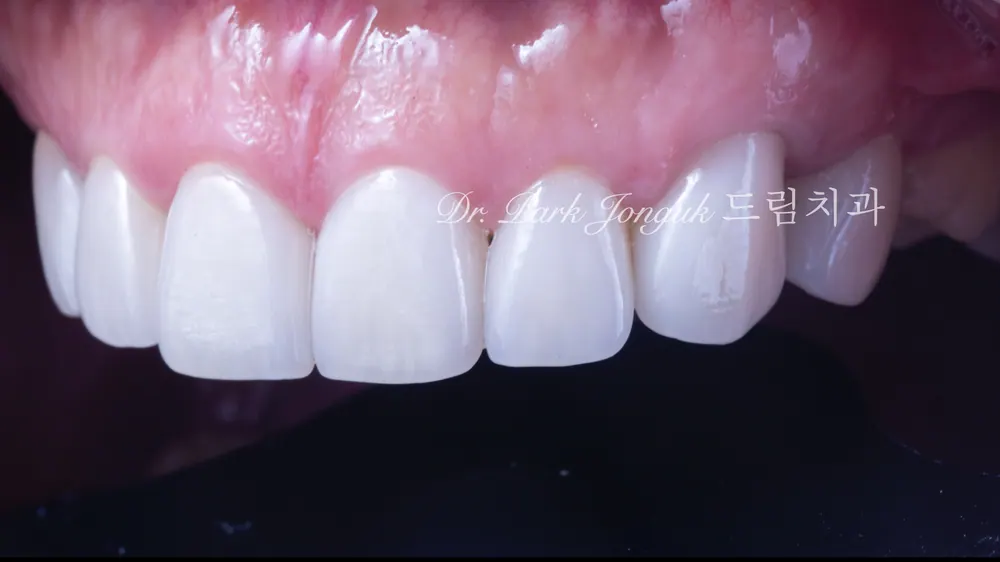
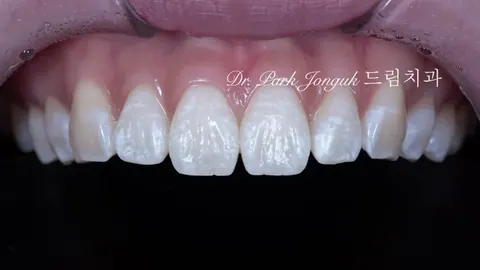
Photos 2, 3, 4 – After veneer treatment in the 50s
After veneer treatment,
as the tooth length was restored,
the amount of tooth visible when smiling naturally increased, and
the translucency at the tips of the teeth came back to life.
This is exactly the core effect of aging-tooth veneers.
It's not simply about making the teeth white —
it's a treatment that restores the shape the teeth had when they were younger.
In fact, the patient said,
"I can tell my face looks younger,
but I can't quite tell what changed."
That's the most ideal kind of reaction.
It's not a treatment that gives itself away —
it's a treatment that makes someone look younger naturally.
Case 2 | Woman in her 40s – Teeth aged by wear
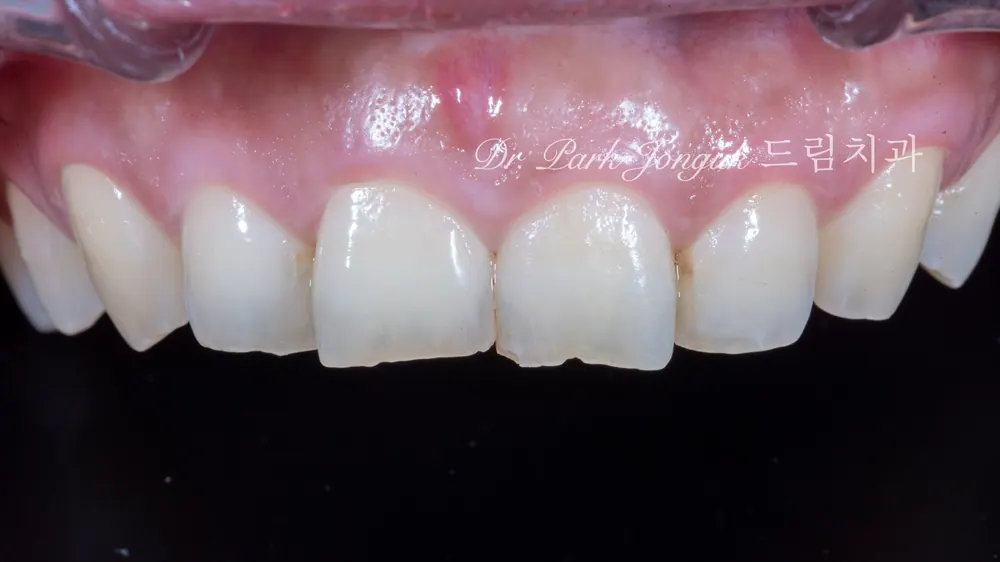
Photo 1 – Before treatment
The second patient was a woman in her 40s.
Her appearance was well cared for and stylish, but
her teeth showed a classic pattern of aging.
The tips of her front teeth had shortened,
the surfaces had worn down and become flat, and
the tooth color looked dull as well.
Teeth like this
always make the mouth look dark in photos, and
make the smile look muted.
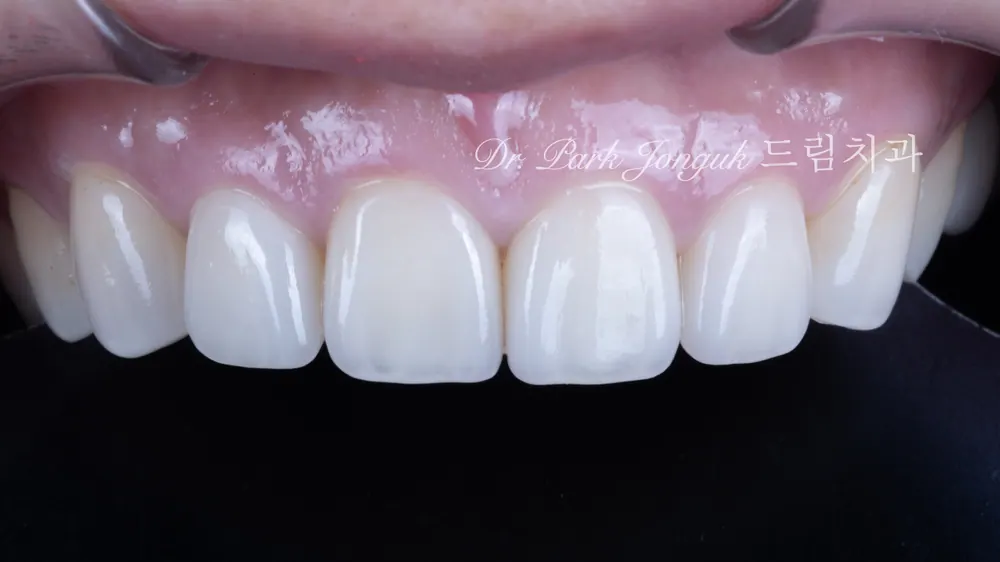
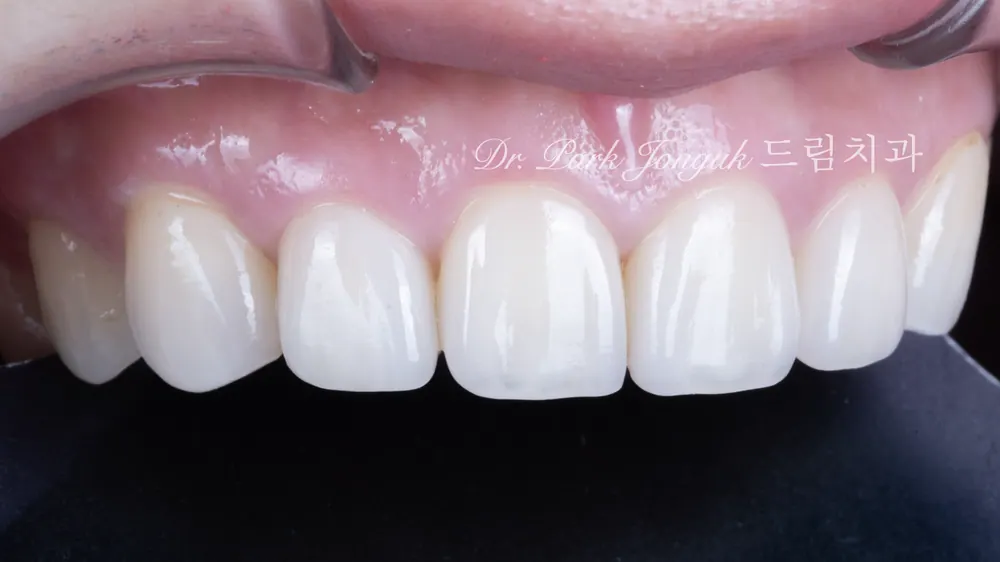
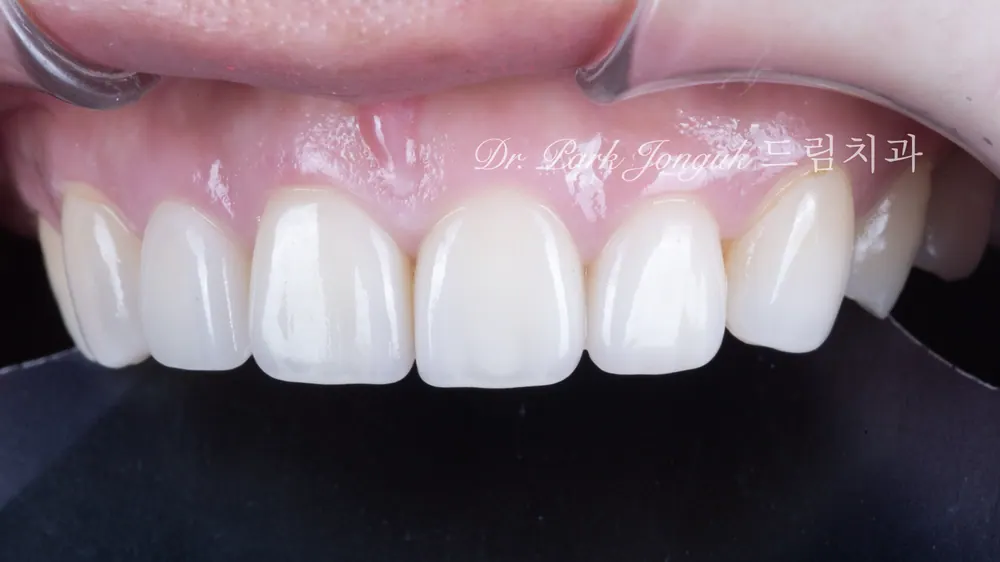
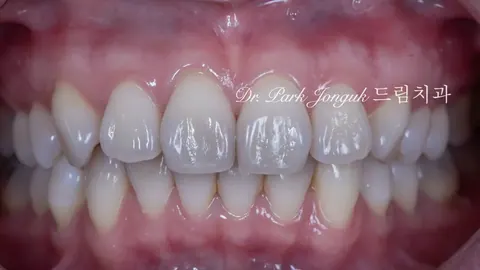
Photos 2, 3, 4 – After treatment
After aging-tooth veneer treatment,
as the length and shape of the tooth tips were restored,
the whole smile became far softer.
The single most important point of worn-tooth veneers is
the translucency at the tips of the teeth.
Young teeth always have a slight translucency at the tip.
Once that translucency disappears,
no matter how white the teeth are, they end up looking artificial.
This patient, too, said,
"Taking photos has become so much more comfortable,"
and "I don't worry about it anymore when I smile."
Why veneers are especially effective in your 50s
?
The reason veneers are especially good in your 50s is simple.
Teeth at this stage of life are typically:
Already significantly reduced in size
Rounded and flattened in shape
Accumulated discoloration
In other words, without making the teeth any bigger,
this is a stage of life when veneers can still create a sufficiently youthful shape.
That's why, compared to people in their 20s and 30s,
no-prep or minimal-reduction veneers are actually often more advantageous in your 50s.
Worn-tooth veneers in particular
aren't a treatment made by cutting down the tooth —
they're closer to a treatment that restores
the already-worn area back to its original shape.
Conclusion
Tooth problems after your 50s
aren't at a stage that can be solved with whitening.
That's because the shape and structure have already changed.
Aging-tooth veneers
aren't a treatment that makes the teeth white —
they're a treatment that brings back youthful teeth.
Worn-tooth veneers
naturally restore the length that was worn away, the translucency that was lost, and the proportions that had collapsed,
in a natural-looking way.
The goal of veneers in your 50s
isn't "an obvious change" —
it's "making it look like this is how it always was."
With well-done veneers,
people don't even notice.
All they say is, "You look better somehow,"
or "You look so much younger."
Q&A
Q1. Do veneers in your 50s require a lot of tooth reduction?
A. In most cases, no.
Because the teeth are already worn down,
no-prep or minimal-reduction is often enough.
Q2. How is this different from whitening?
A. Whitening is a treatment that changes only the color.
Aging-tooth veneers restore not just the color,
but the shape, length, and translucency together as well.
Q3. Do worn-tooth veneers last a long time?
A. If the bite is stable and the veneers are well cared for,
they can easily last more than 10 years.
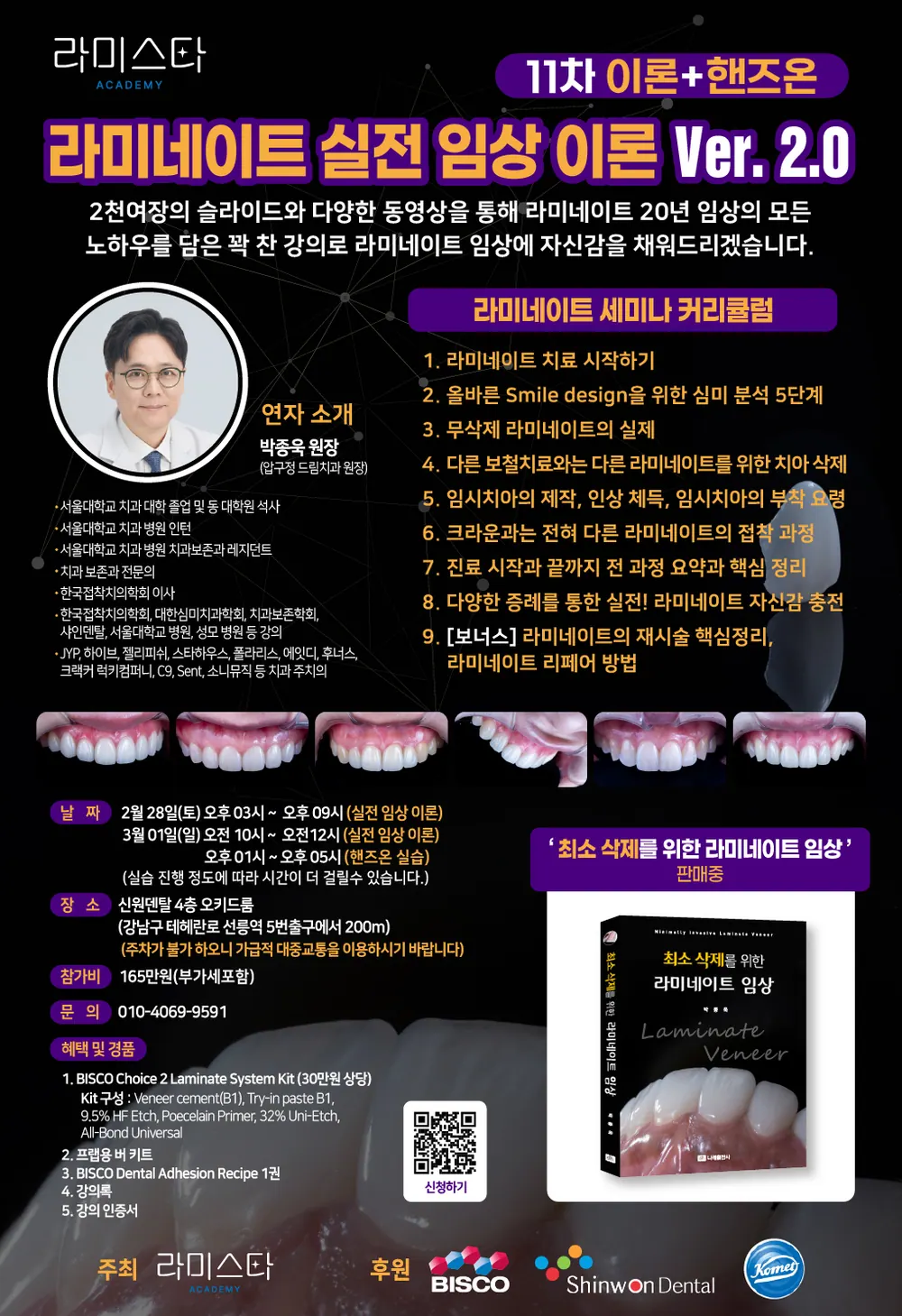
This article is a clinical note written by Dr. Park Jonguk of Dream Dental Clinic, Gangnam; the original was published on his blog. The photographs shown are real cases he treated. Results vary with each patient’s condition, and every procedure carries the possibility of individual variation and side effects.
Quick Consult
Request a Callback
Leave your number and we will call you back during clinic hours.
Request Received
We will contact you during clinic hours. For urgent matters, please call +82-2-3448-0028.