
Discolored Tooth Veneers | Can White Spots and Yellow Teeth Also Look Natural?
This is a case of a patient in her 20s who was under heavy stress because of stained teeth (white spots plus yellow teeth).
We introduce the diagnostic process for veneers on discolored, stained teeth that can't be resolved with simple whitening or resin,
along with the precise ceramic selection and the actual results of minimal-reduction veneers.
Even in her 20s, when the teeth are yellow with white spots mixed in across several areas,
the overall impression of the smile becomes dull and can look like "unclean teeth."
This patient, too, was a typical case of discolored teeth plus white spots,
and in particular, the two central incisors were large and long with a jar-shaped irregularity,
so both the shape and color of the teeth carried a significant aesthetic burden.
Treatment that simply brightens the color alone can never resolve this.
Accurate diagnosis, ceramic selection, determining the amount of reduction, handmade fabrication:
all four of these need to align perfectly for a natural result.
In this article,
we'll show in detail how
"even dark, stained teeth can be changed this naturally with veneers."
Main content
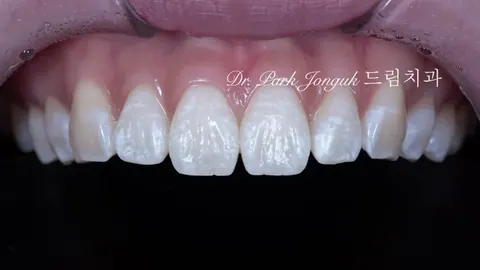
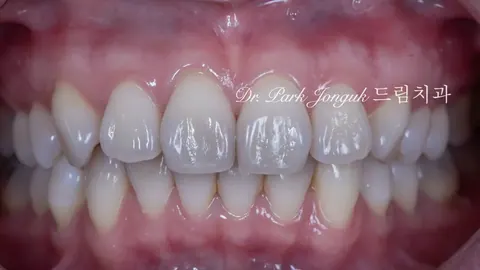
📸 Photo 1: Pre-treatment state
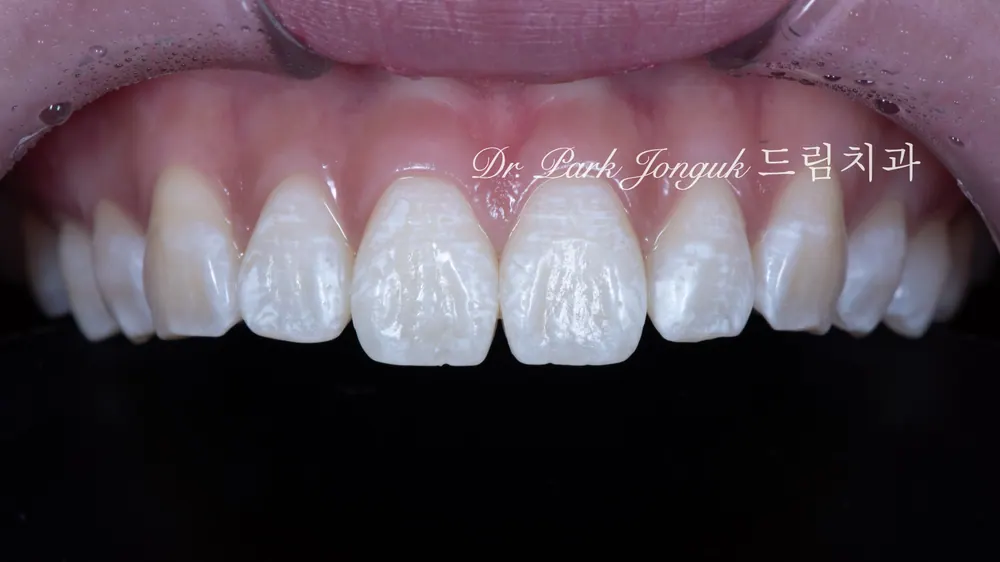
The teeth were yellow overall,
with white spots scattered here and there, giving a stained impression,
and the two central incisors were large and long with a jar-like shape,
the state where the overall harmony was most broken aesthetically.
This is exactly the combination of shape and color that causes the most stress, especially for young women.
📸 Photos 2, 3, 4, 5: Wax-up precision diagnosis process
It's no exaggeration to say this process is "half" of the veneer treatment.
Measuring the current size and proportion of the teeth
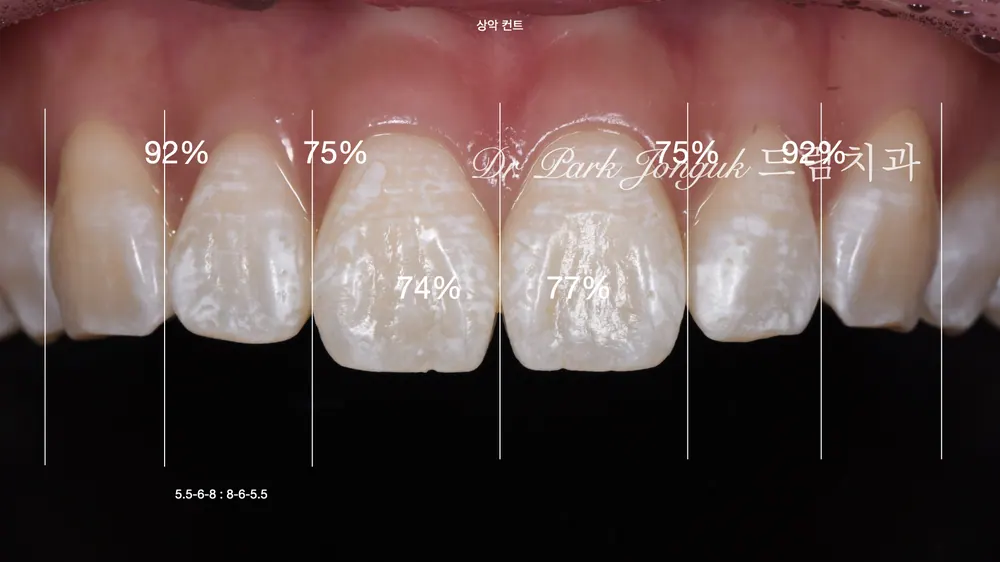
Because the central incisors are large, the overall harmony needs to be reset.
2. Checking the degree of tooth protrusion
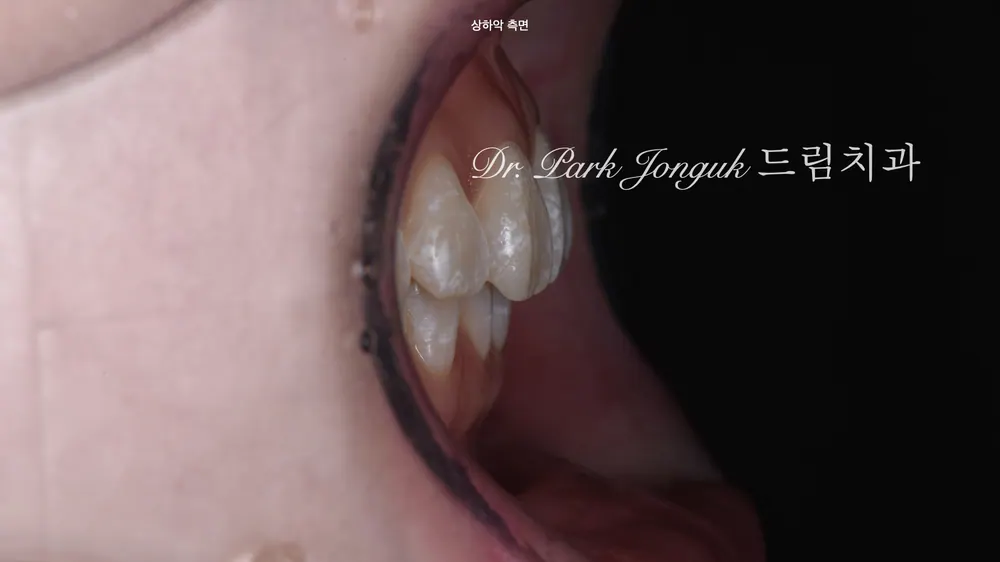
If the shape is too recessed, it needs to be built out; if it's too protruded, it needs to be reduced.
3. Analyzing the shape of the dental arch
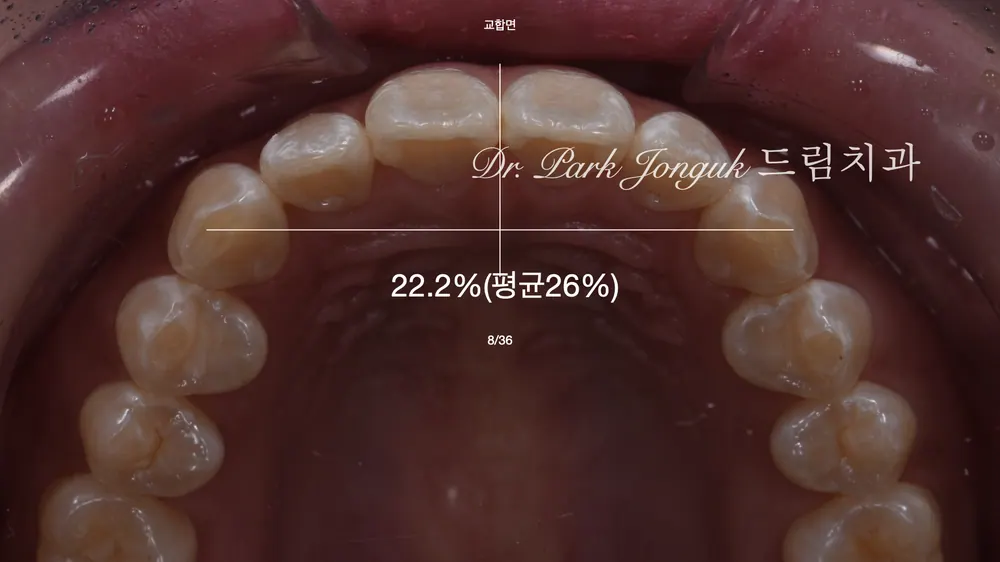
This process is needed to bring harmony to the overall smile line.
4. Simulating the tooth shape in wax
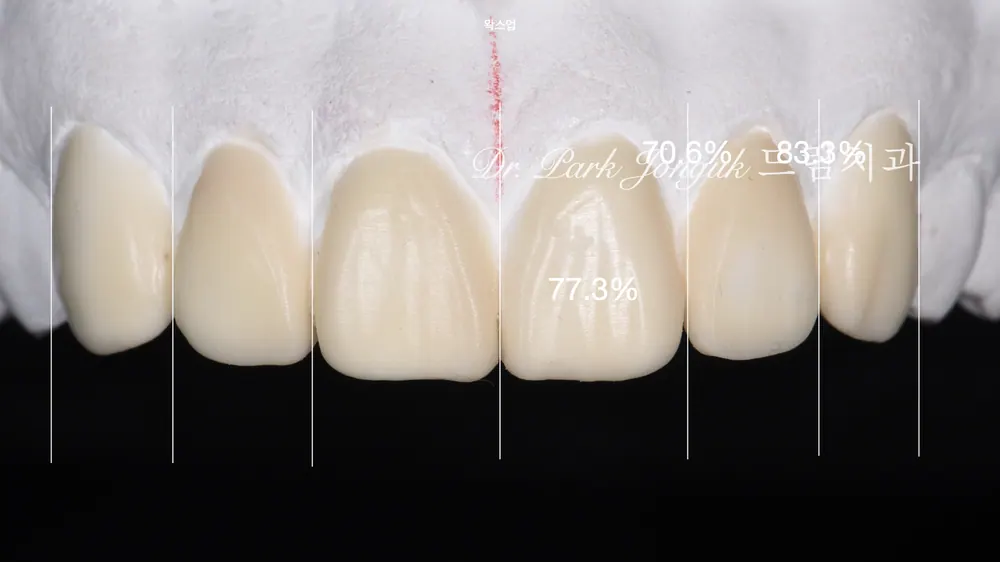
This is the stage that determines the basic framework of the final result.
And the most important thing at this stage:
"the work of accurately determining the amount of reduction"
A mistake here
→ can lead to unnecessary over-reduction
→ exposed dentin
→ opaque veneers
as a result.
📸 Photo 6: State after tooth reduction
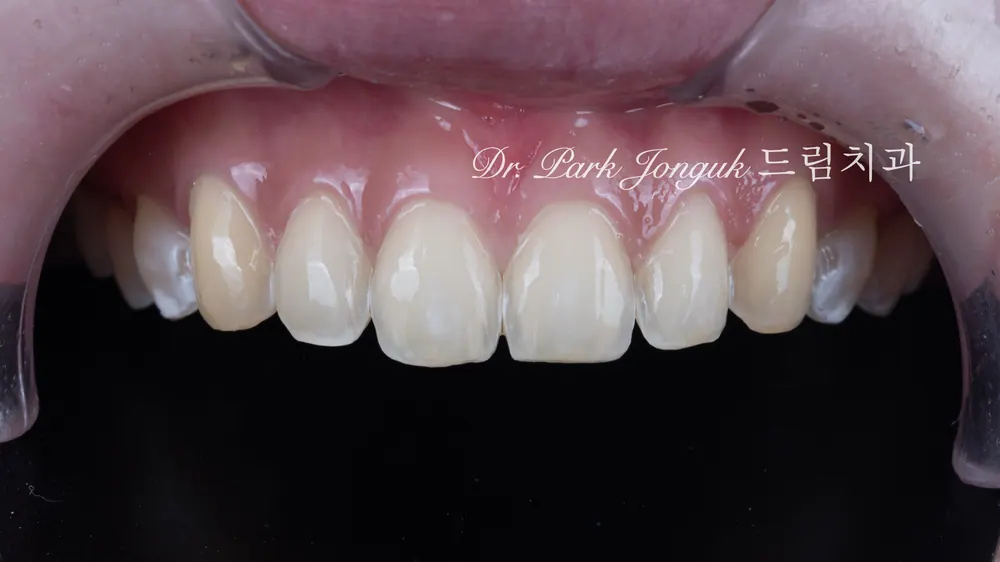
When we actually reduced the teeth,
the dentin color turned out to be far darker than expected.
This is the biggest problem here.
When the dentin is dark:
simple whitening has no effect
a single ceramic layer cannot achieve a sense of translucency
making it too opaque results in an artificial-looking tooth
That's why this case is technically on the more difficult side.
There's only one solution:
a handmade build-up method that blends several different ceramics.
With off-the-shelf single-layer ceramic (CAD/CAM),
a natural result can never be achieved.
📸 Photos 7, 8, 9: After veneer treatment
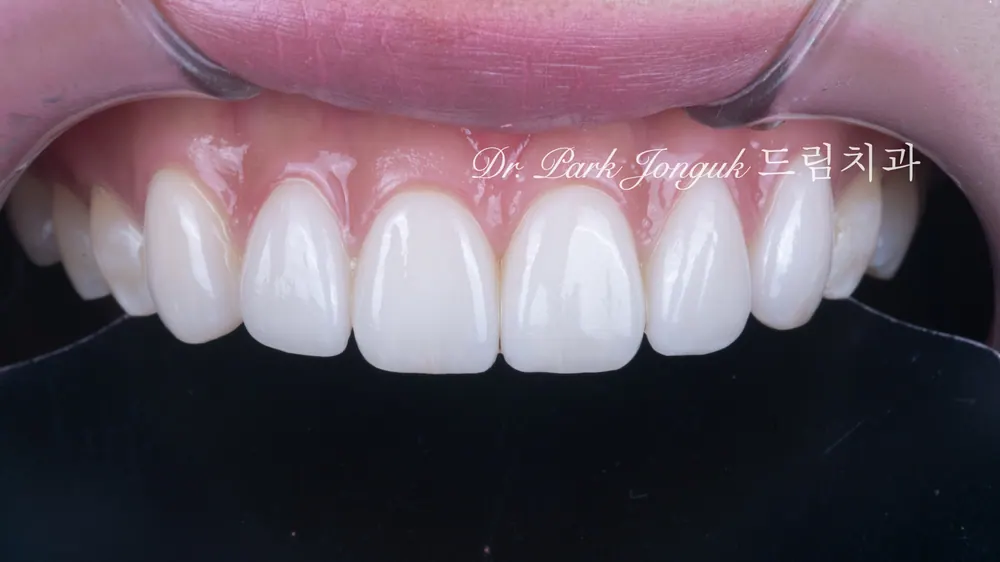
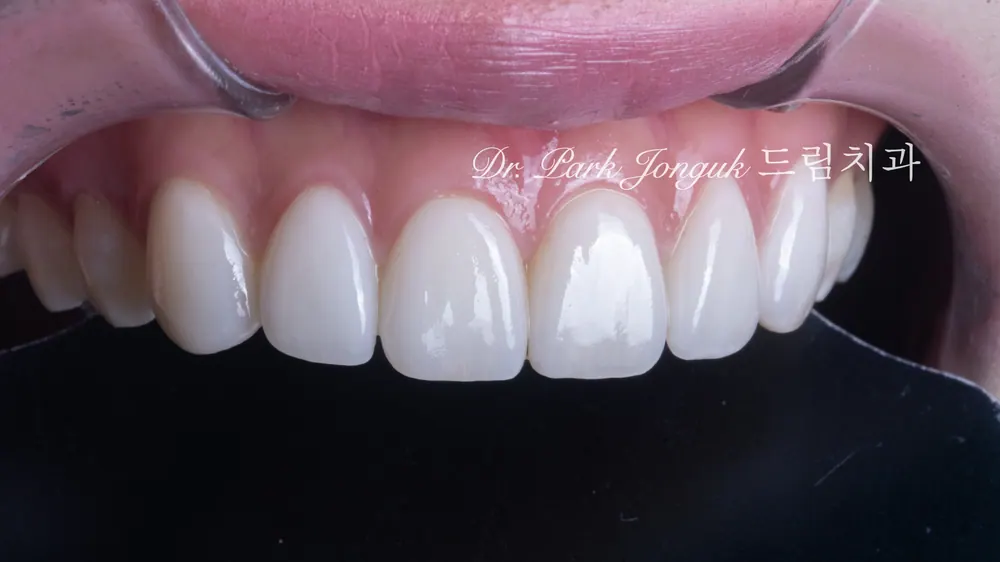
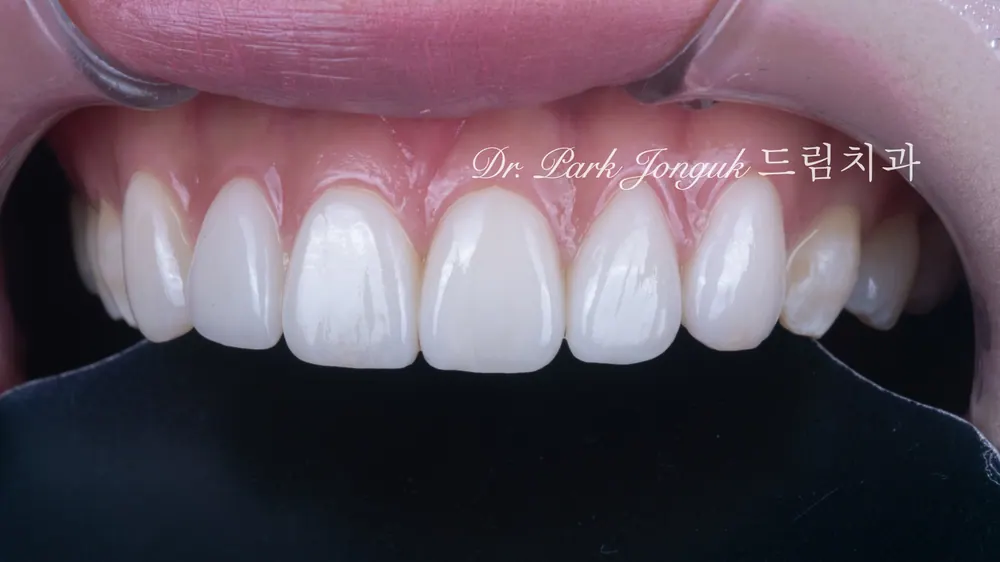
Looking at the final result:
✔ The staining was completely removed
✔ A bright yet not overdone, natural color
✔ Translucency preserved at the tooth edges
✔ The jar-like shape was corrected
✔ The overall proportions were precisely adjusted
You might think that because these were discolored teeth, they'd inevitably have to be made opaque,
but with the handmade build-up, when seen in natural light,
they were reproduced naturally enough that they're almost impossible to tell apart from natural teeth.
The patient herself said:
"I should have done this sooner… now I finally have teeth that look natural and don't stand out,"
and was extremely satisfied.
Conclusion
Veneers for discolored, stained teeth
are not simply a matter of attaching ceramic.
In particular, in a case like this one,
✔ yellow dentin
✔ white spots
✔ jar-like shape
✔ large central incisors
when these elements are present together,
an accurate diagnosis and a handmade build-up method that layers multiple ceramics are essential.
The result changed so much that the patient said, "Smiling feels so comfortable now."
Q&A
Q1. Can discolored teeth also look natural with veneers?
Yes. It's possible with a handmade build-up rather than a single-layer (CAD/CAM) ceramic method.
Q2. Can white spots be covered too?
Yes. Simple whitening actually makes the spots stand out more, and veneers are the most effective option.
Q3. I'm worried about how much of my teeth will be reduced.
Only the minimum necessary amount is reduced, kept within a range where removal later would not cause problems.
Q4. How many teeth need to be treated for a natural look?
It depends on the individual's tooth shape, face size, and proportions. In this case as well, the number of teeth treated was kept to a minimum.
Q5. How long do veneers last?
With accurate fabrication and bonding, they can last 10 to 20 years or more.
Q6. Is aftercare difficult?
You can care for them just like normal teeth. There's nothing especially more difficult about it.
This article is a clinical note written by Dr. Park Jonguk of Dream Dental Clinic, Gangnam; the original was published on his blog. The photographs shown are real cases he treated. Results vary with each patient’s condition, and every procedure carries the possibility of individual variation and side effects.
Quick Consult
Request a Callback
Leave your number and we will call you back during clinic hours.
Request Received
We will contact you during clinic hours. For urgent matters, please call +82-2-3448-0028.