
Veneers for Tetracycline-Discolored Teeth: Can Dark Teeth Really Become Bright?
Teeth darkened by antibiotics in childhood, can veneers improve them?
I am Park Jonguk, a veneer specialist with 28 years of experience in Apgujeong.
I'll share the process and results of treating tetracycline-discolored teeth that I've personally experienced.
Why does tetracycline darken teeth?
Tetracycline is an antibiotic that was widely used in the past.
It was commonly prescribed to treat infections in children during the 1950s-1980s,
but unfortunately, when taken during the period when teeth are forming, it deposits deep inside the tooth and leaves a lifelong discoloration.
Characteristics of tetracycline discoloration
Degree of discoloration: gray, brown, or in severe cases, a dark color close to nearly black
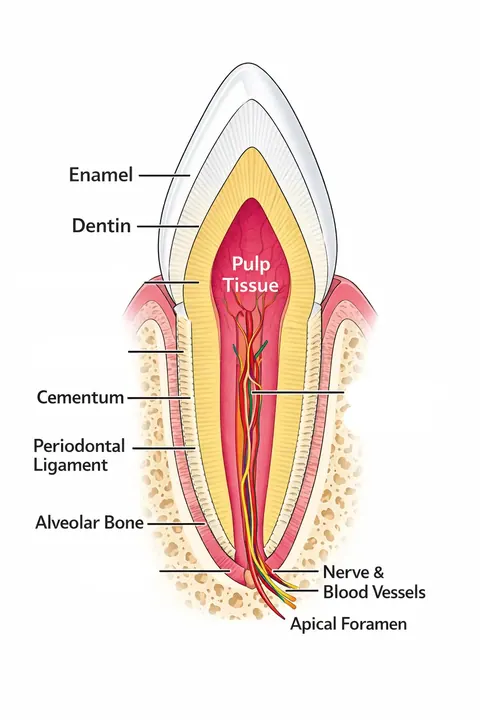
Location of discoloration: deposited deep inside the tooth, not on the surface
Difficulty of treatment: barely improved by ordinary whitening
Psychological impact: covering the teeth when smiling, affecting relationships with others
These days, I often meet people in their 40s to 60s with this kind of discolored teeth.
Patient case: a concern that remained even after orthodontic treatment
Background of the visit
The patient I'll introduce today had teeth that were very darkly discolored from taking tetracycline in childhood.
She had already completed orthodontic treatment to straighten her bite alignment, and now came to our clinic to improve the color of her teeth.
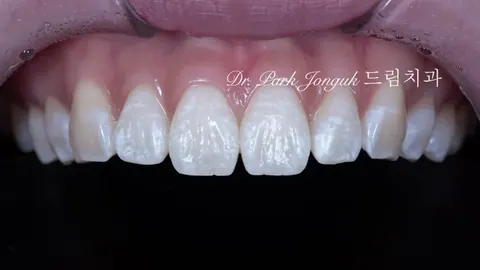
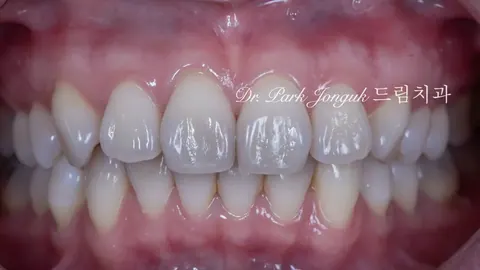
Initial condition (Photo 1)
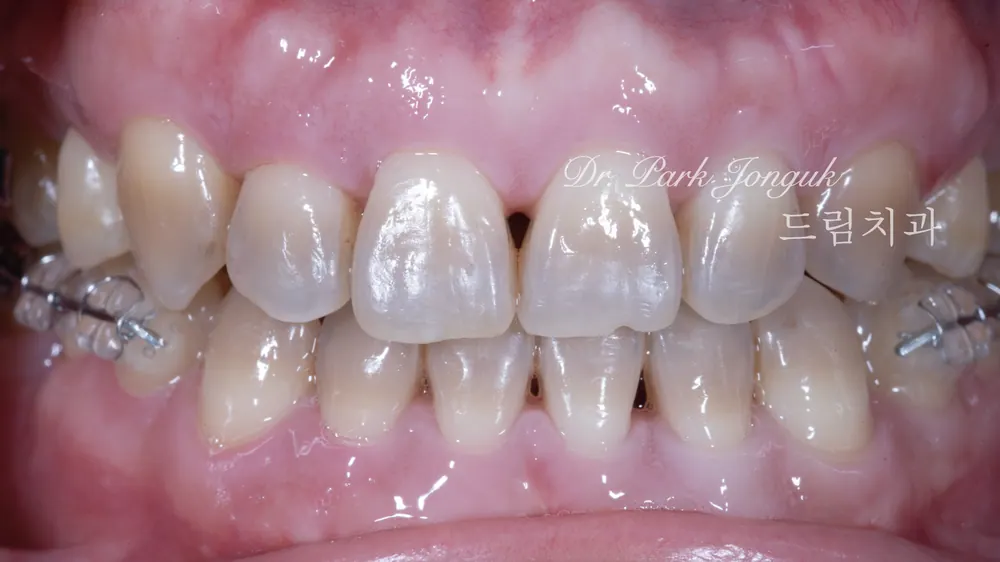
When she first came in, her teeth appeared almost brown.
It was a deep, dark discoloration on a completely different level from ordinary yellow teeth.
The patient's biggest concern:
covering her mouth when smiling for her whole life because of the tooth color
lacking confidence when taking photos
feeling self-conscious even while talking
having been told at multiple dental clinics that "treatment is difficult"
Why is treating tetracycline-discolored teeth so tricky?
1. The limits of ordinary whitening
Tooth whitening works by removing surface staining.
But tetracycline is deposited deep inside the tooth, so whitening agents can't reach it.
As a result, the whitening effect is minimal or very limited.
2. The difficulty with veneers
To brighten the teeth with veneers, the dark underlying color has to be completely covered. Here's why that's not easy:
If too thin: the dark color underneath shows through
If too thick: the teeth become too large or look unnatural
If pushed too far: excessive tooth reduction results
Finding the right balance is the key.
Precision diagnosis: where treatment begins
The wax-up diagnostic process
Before starting full treatment, we carried out a precision diagnosis through a wax-up.
What the wax-up determines:
the final size and shape of the teeth
the required ceramic thickness
the amount of tooth reduction
how well the color can be covered
overall harmony
Tetracycline-discolored teeth require an even more detailed plan than ordinary veneers.
Over 28 years, I've handled countless cases, but I approach every single one carefully.
Treatment process: step-by-step explanation
Step 1: Tooth reduction (Photos 2, 3)
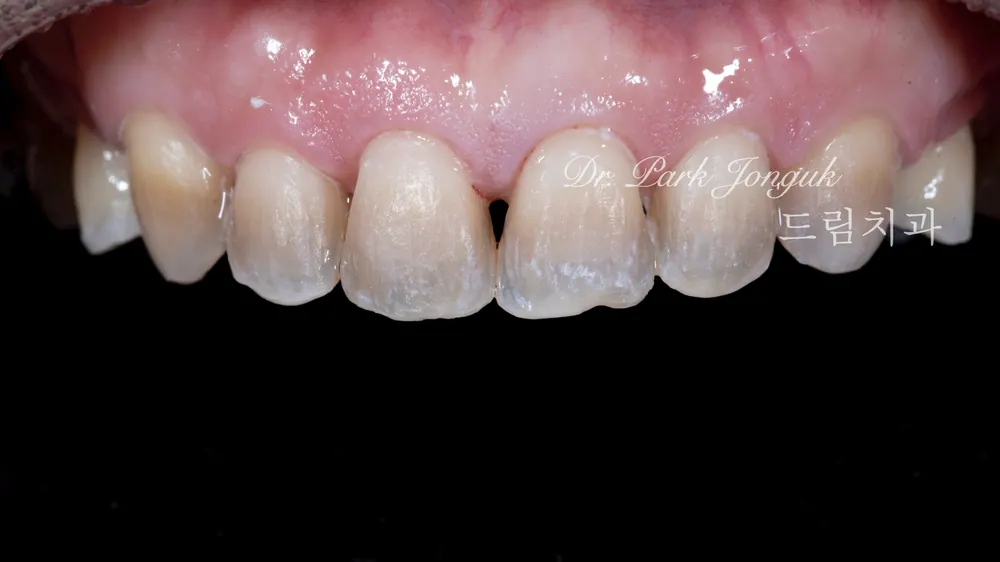
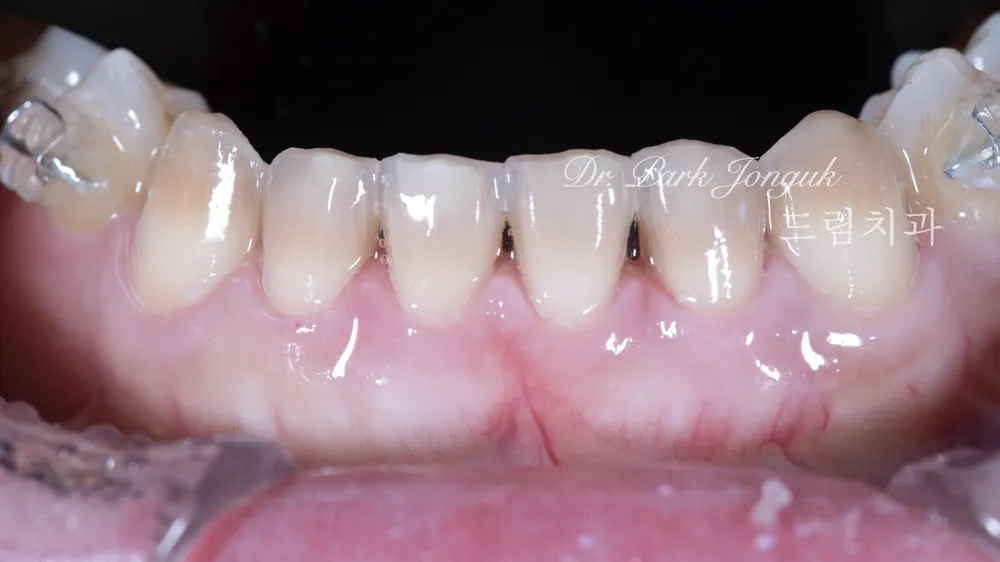
This shows the state after reduction of both the upper and lower teeth was completed.
Differences from ordinary veneers:
For tetracycline-discolored teeth, enough ceramic thickness has to be secured to cover the dark color.
So a bit more reduction is needed than in typical cases.
Why does more reduction need to be done?
If the ceramic is made thin:
the dark color underneath shows through
the result comes out with a grayish tint
patient satisfaction ends up low
Conversely, if reduction is minimized and the ceramic made thick:
the teeth become too large
they look unnatural
the lips can appear to stick out
So it's important to secure enough thickness through appropriate reduction while still keeping a natural tooth size.
Step 2: Fabricating temporary teeth (Photo 4)
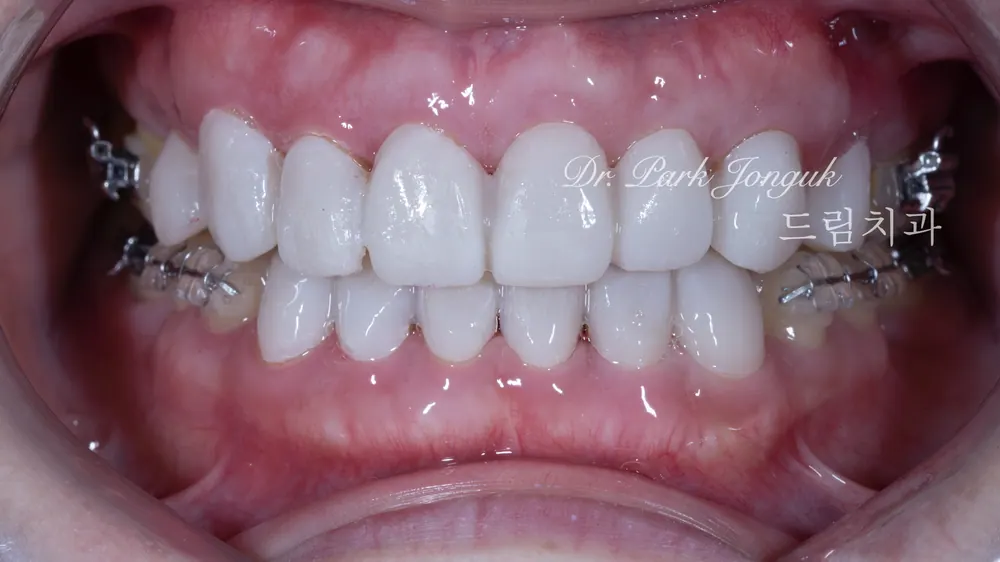
Temporary teeth were made and fitted.
The importance of the temporary-teeth stage:
experiencing the final result in advance
checking the size and shape
adjusting to the feel of speech and chewing
adjusting any uncomfortable points
The patient used the temporary teeth for about two weeks, during which we checked whether there were any inconveniences in daily life
and whether she was aesthetically satisfied.
Step 3: Completion of the upper-teeth veneers (Photos 5, 6)
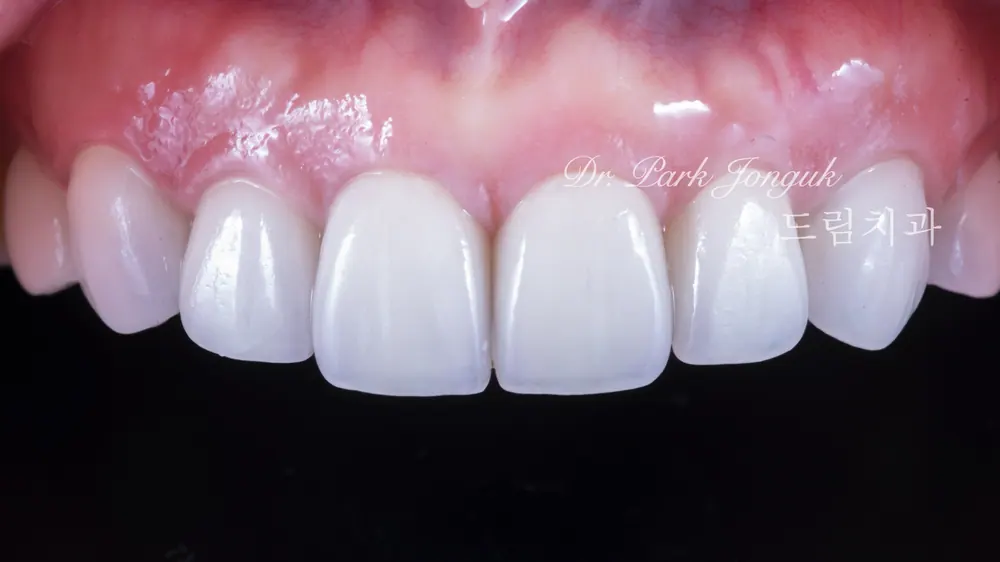
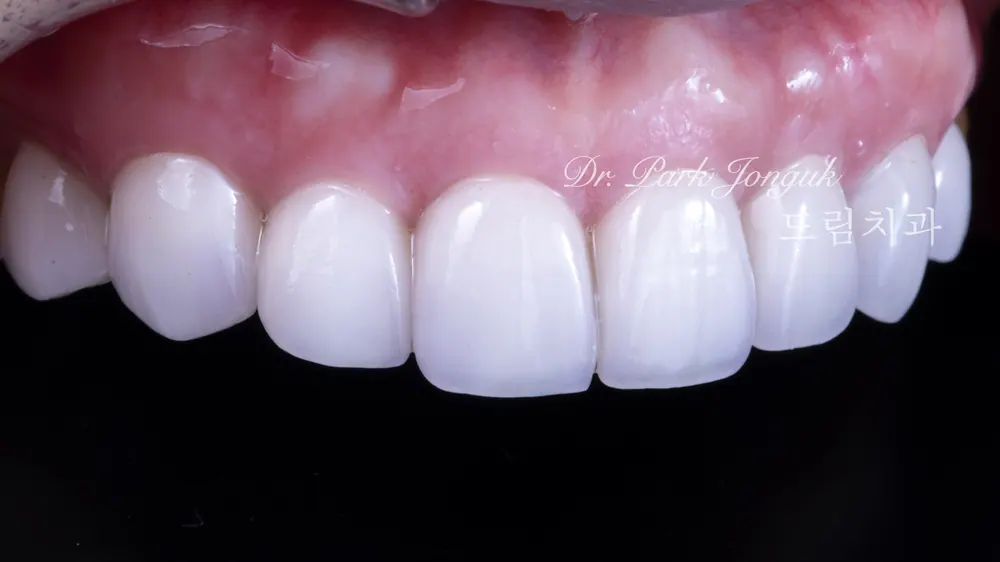
The veneer treatment on the upper teeth was completed.
A surprising change:
teeth that had been almost brown turned into a bright color
a natural shape and size
the patient's expression completely changed
It was such a dramatic change that even the dental staff who had followed the treatment process along with her were surprised.
Step 4: Completion of the lower-teeth veneers (Photo 7)
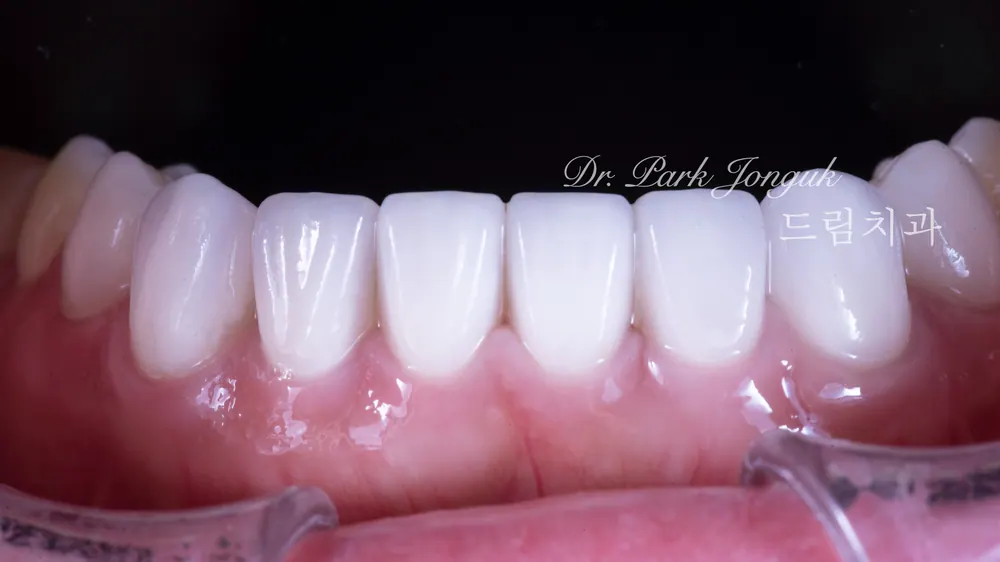
All veneer treatment, including the lower teeth, was completed.
Characteristics of the final result:
No matter how much effort is put in, it's difficult to make tetracycline-discolored teeth completely white.
That's because the underlying color is simply too dark.
Balancing the color adjustment:
trying to make it too bright: turns grayish and looks artificial
keeping a slightly muted tone: a natural yet sufficiently bright result
at the tooth tips: bringing out translucency for an even more natural look
As a result, there's a slight muted quality remaining, but compared to before treatment, it was a remarkable improvement.
Above all, the biggest achievement is that the patient can now smile with confidence.
The limits and reality of veneers for tetracycline-discolored teeth
An honest conversation
Having treated countless cases of tetracycline-discolored teeth over 20 years, there's something I've come to realize.
Why perfect white is difficult:
the underlying color is simply too dark
pushing too hard for white results in a grayish tint or an unnatural look
giving up translucency makes it look artificial
But sufficient improvement is possible:
teeth that were almost brown become bright
being able to smile with confidence
the stress over tooth color in daily life disappears
I always explain honestly to my patients. Setting realistic goals rather than excessive expectations is the path to higher satisfaction.
Conclusion: don't give up
Have you thought of teeth darkened by tetracycline as a lifelong complex?
Treatment is definitely possible:
precise diagnosis and planning
securing appropriate ceramic thickness
choosing a natural color
the hand of an experienced dentist
Over 28 years of doing veneer treatment, I've seen many people who struggled with tetracycline-discolored teeth go on to live a new life after treatment.
Common reactions from patients after treatment:
"I don't cover my mouth when I smile anymore"
"Taking photos has become enjoyable"
"I regret not doing this sooner"
"My life has changed"
Are you hiding your smile because of your tooth color? Don't give up. If you consult with an experienced specialist, you can find a solution.
Q&A: Key questions about tetracycline-discolored teeth
Q1. Can't tetracycline-discolored teeth be fixed with whitening?
A. Unfortunately, ordinary whitening has almost no effect. Tooth whitening works by removing surface staining, but tetracycline is deposited deep inside the tooth, so whitening agents can't reach it. In my experience, it's difficult for patients to get a result they'd be satisfied with this way. Prosthetic treatments like veneers or all-ceramic crowns are the realistic solution.
Q2. I heard more reduction is needed than with ordinary veneers, is that okay?
A. To effectively cover the dark color, the ceramic needs enough thickness. If made thin, the dark color underneath shows through and the result comes out grayish. Conversely, if reduction is minimized and the ceramic made thick, the teeth become too large and look unnatural. So securing enough thickness through appropriate reduction is the key. Since it's carried out within a safe range, sensitivity or nerve problems are rare.
Q3. How long does treatment take and how much does it cost?
A. The whole process usually takes about 3-4 weeks. The first week is for precision diagnosis and the wax-up, the second week for tooth reduction and fitting temporary veneers, the third week for fabricating the final veneers, and the fourth week for final bonding and adjustment. The cost can be somewhat higher than ordinary veneers, because more precise diagnosis is needed and the treatment is more demanding. The exact cost depends on the number of teeth and the difficulty of the case, so please check through a consultation.
Q4. Which dental clinic should I choose?
A. Tetracycline-discolored teeth are a much more demanding case than ordinary veneers. Check whether the clinic has sufficient specialized experience in veneers, experience treating similar cases, and a precision diagnostic system such as a wax-up. Above all, a clinic that honestly explains the limits and possibilities during the consultation is one you can trust. Choose a place that shows realistic results rather than raising excessive expectations.
One last word
In 28 years of working as a dentist, what I feel the most rewarding is seeing patients smile brightly after treatment.
Especially when people who struggled for a lifetime with tetracycline discoloration
say, "Now I can smile," after treatment, I really feel glad I chose this profession.
Don't hide your smile because of your tooth color. You too deserve to smile with confidence.
This article is a clinical note written by Dr. Park Jonguk of Dream Dental Clinic, Gangnam; the original was published on his blog. The photographs shown are real cases he treated. Results vary with each patient’s condition, and every procedure carries the possibility of individual variation and side effects.
Quick Consult
Request a Callback
Leave your number and we will call you back during clinic hours.
Request Received
We will contact you during clinic hours. For urgent matters, please call +82-2-3448-0028.