
Veneers After Orthodontic Treatment: Minimal-Reduction Aesthetic Treatment That Completes Naturalness Without Enlarging the Teeth
Finishing orthodontic treatment doesn't automatically mean the aesthetics are complete.
When the shape and arrangement of the teeth still look awkward after orthodontic treatment,
minimal-reduction veneers can create natural harmony without making the teeth any larger.
Dream Dental Clinic's director Park Jonguk explains, drawing on 27 years of clinical experience.
Once orthodontic treatment is finished, everyone thinks, "Now everything must be perfect," but
in reality, there are cases where the shape and arrangement of the teeth still look somehow off.
This patient was no exception.
After orthodontic treatment was finished, there was no functional problem, but
she came in for veneer treatment because she wasn't happy with the shape and arrangement of her teeth.
In a case like this, no-prep veneers might seem possible, but
the diagnosis showed that the patient's face was small and her teeth were already above average size,
so proceeding with no-prep would have made the teeth even larger and look awkward instead.
I always emphasize this in my lectures to dentists:
"No-prep isn't automatically better. What matters is reducing only the necessary areas, minimally and precisely."
What makes that possible is treatment under a microscope.
Only by controlling reduction to a 0.1mm scale, invisible to the naked eye,
can a natural shape and proportion be achieved.
For this case, to improve the aesthetics after orthodontic treatment,
we proceeded with 'minimal-reduction veneers that create the most beautiful proportions without enlarging the teeth.'
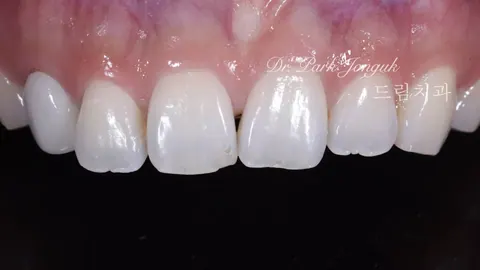
Photo 1. Condition at the visit after orthodontic treatment
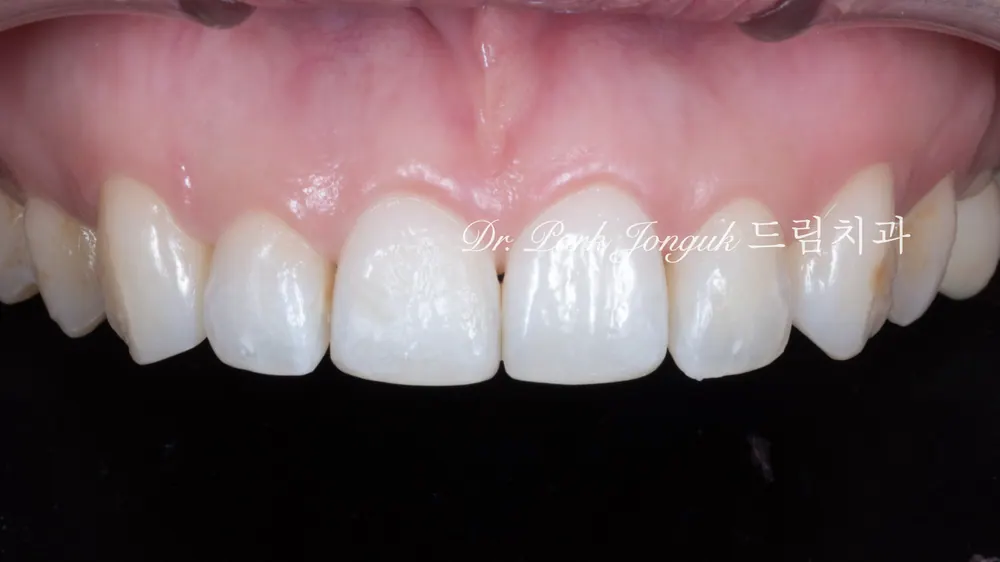
No functional problem, but the shape and arrangement of the teeth gave a somewhat flat, cramped impression.
Photos 2–5. Wax-up precision diagnosis
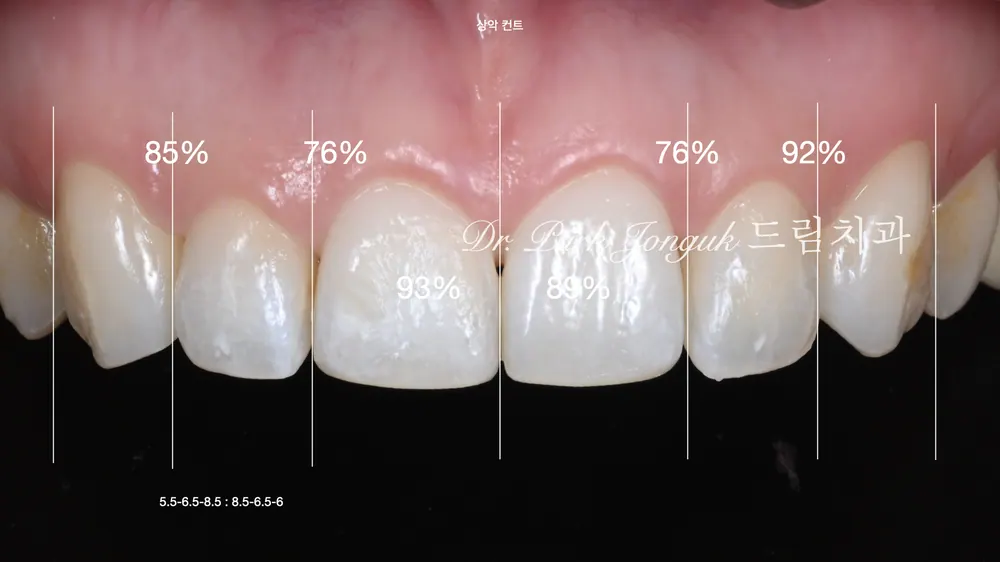
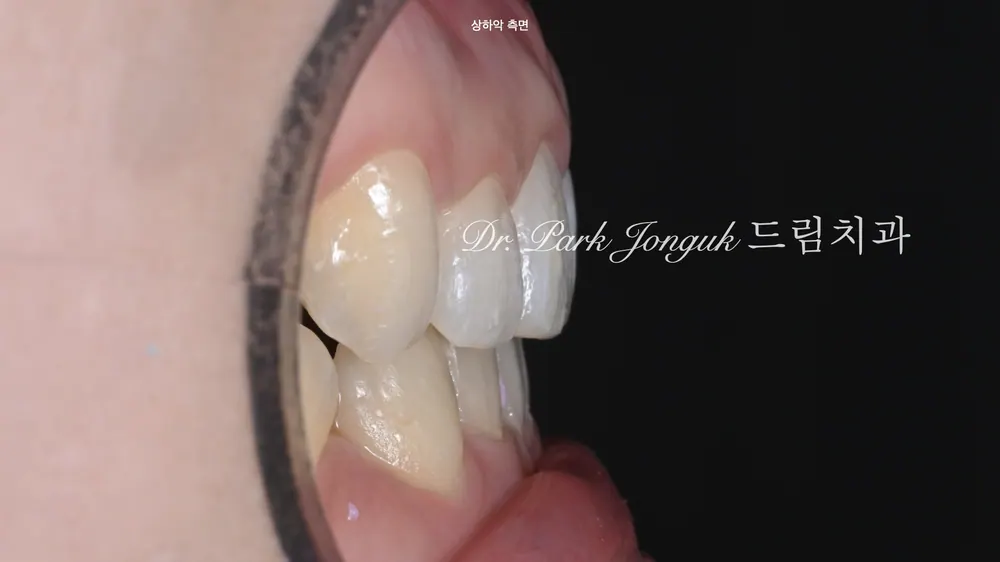
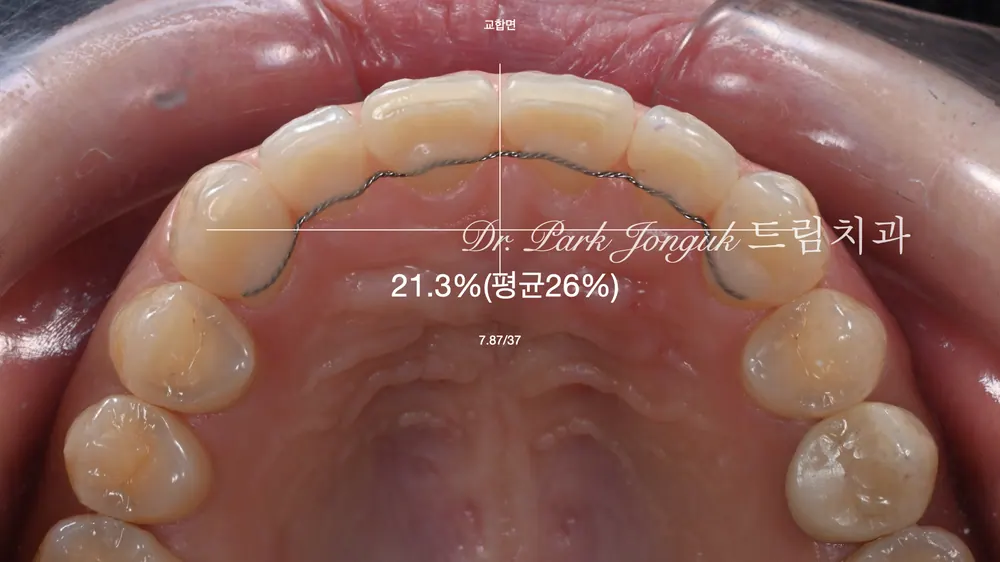
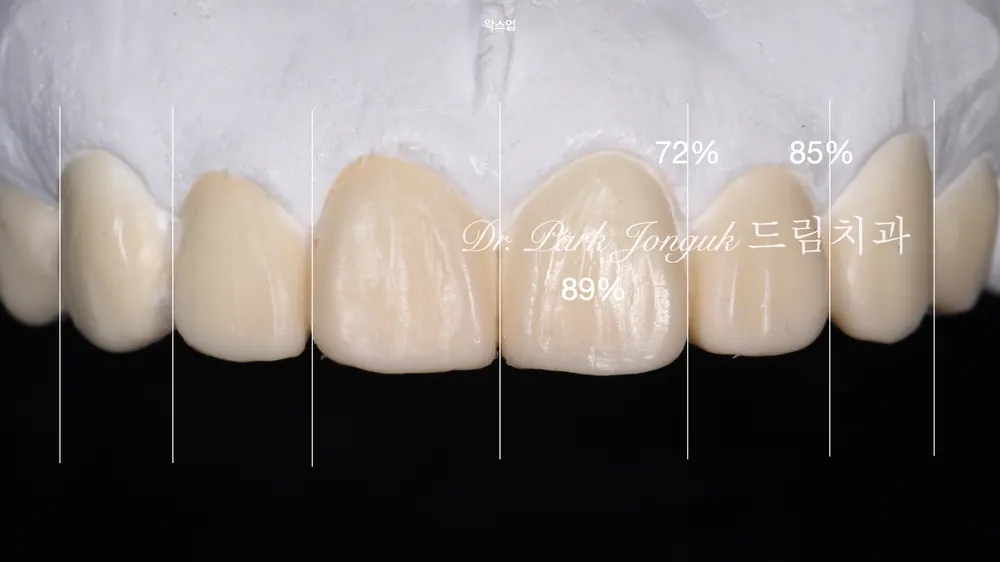
In most cases, once orthodontic treatment is finished, the dental arch has flattened out, which doesn't look aesthetically ideal.
The face shape, smile line, and tooth proportions were redesigned through a wax-up.
Photo 6. The minimal-reduction process
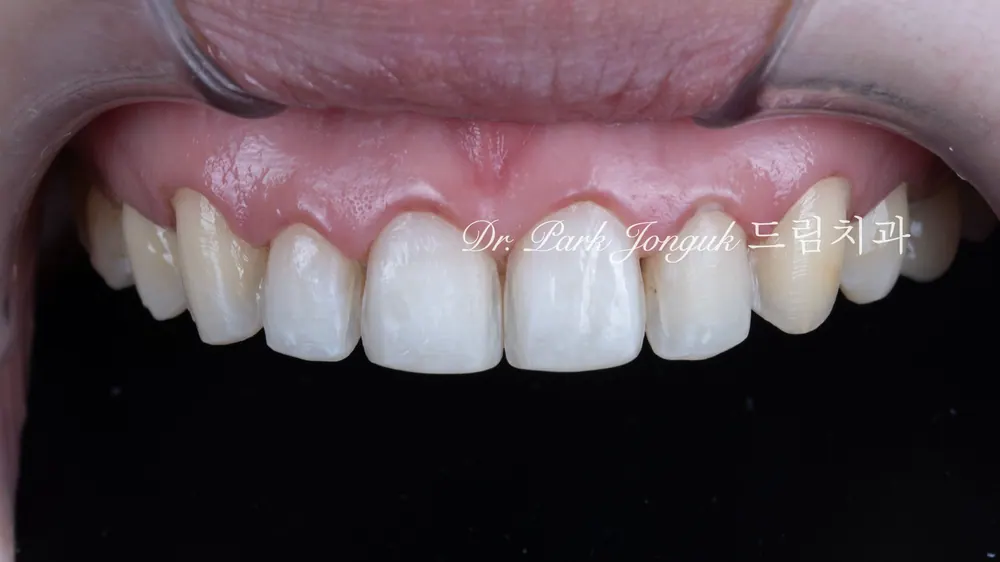
Only the necessary areas were finely reduced, in line with the plan.
The goal was to express natural curvature and dimensionality without enlarging the teeth.
Reduction this fine isn't possible without treatment under a microscope.
Photos 7–8. Fabricating handmade build-up veneers
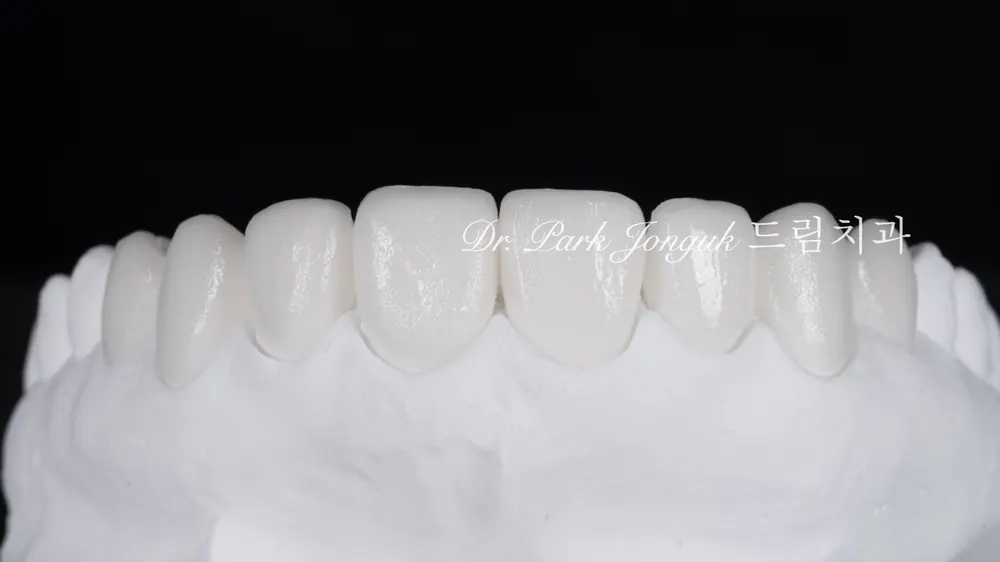
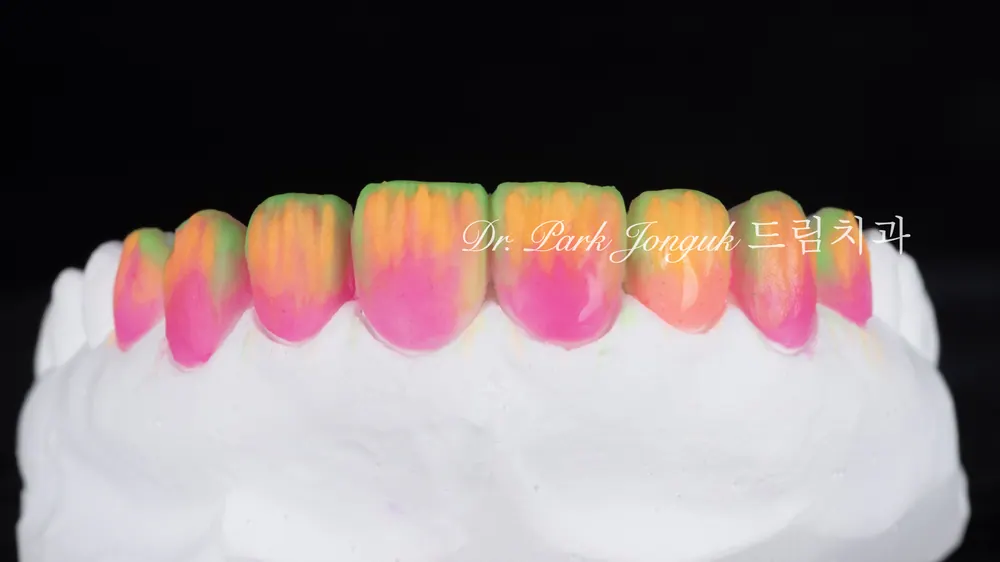
Rather than a single piece of ceramic, multiple layers of ceramic were built up,
controlling the transmission and reflection of light to reproduce the depth and translucency of a natural tooth.
Photo 9. The completed veneers
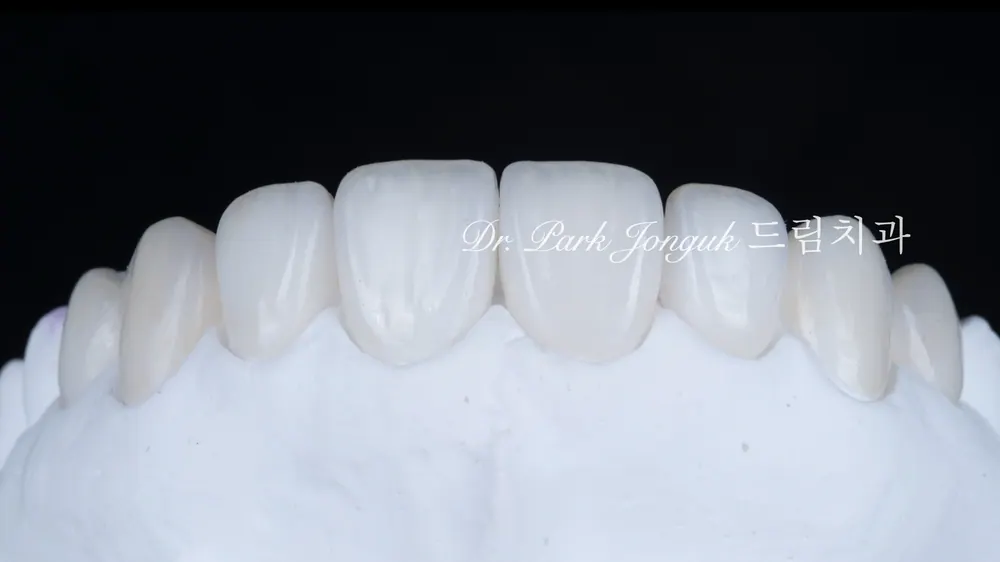
Thin, yet with excellent strength and color stability, with a natural texture intact.
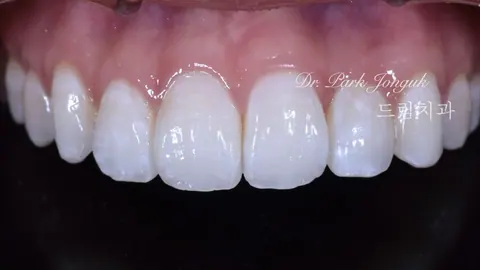
Photos 10–12. The appearance after treatment was completed
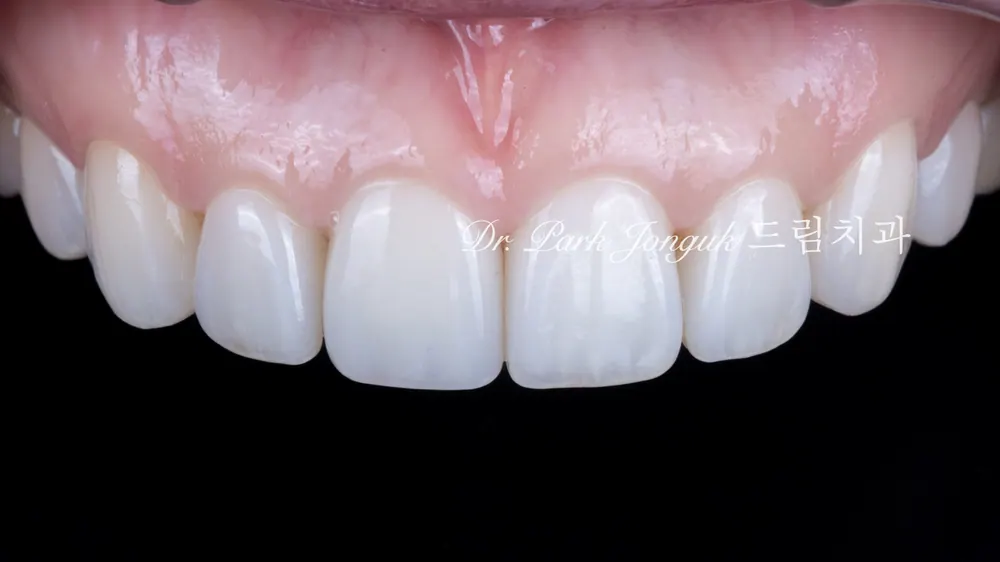
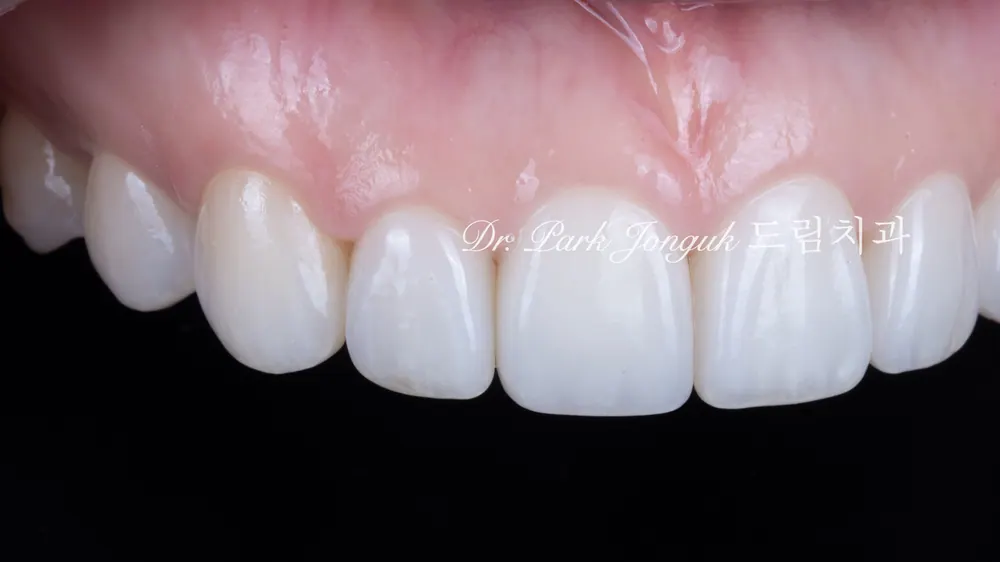
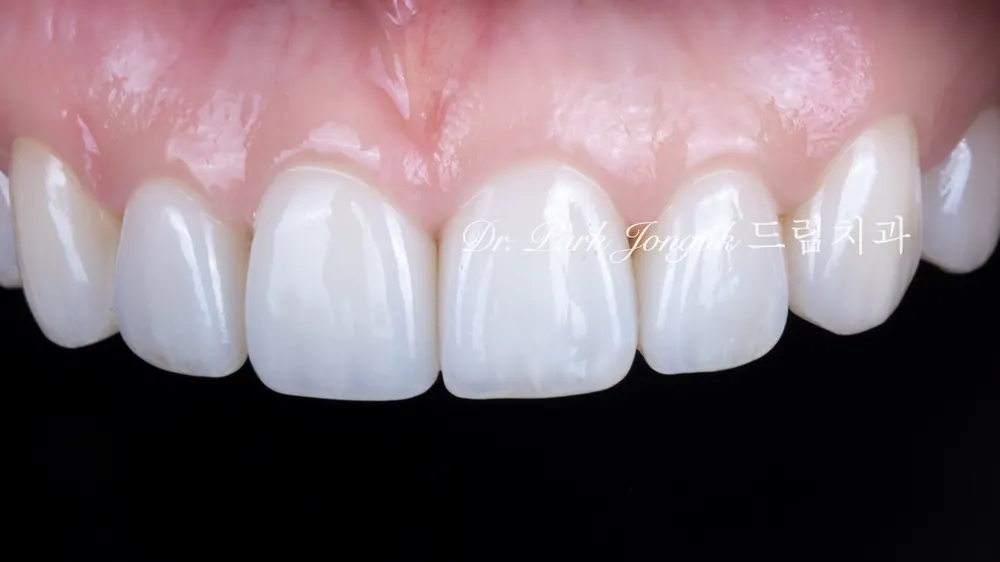
The shape, translucency, and color all harmonize, and the sense of dimension that was lacking after orthodontic treatment has been restored.
The teeth didn't get any bigger, but the smile became far more natural, and
the patient was pleased, saying, "This finally feels complete."
💡 Conclusion
Veneers after orthodontic treatment are not "a treatment to hide teeth that weren't fully corrected."
They are a treatment that adds aesthetic completeness on top of the functional balance created by orthodontics.
Insisting on no-prep alone can actually create an unnatural result.
True naturalness comes from precise diagnosis and minimal reduction,
and from an accurate treatment process carried out under a microscope.
Dream Dental Clinic has specialized in veneer treatment in Apgujeong continuously since 2006, and
director Park Jonguk, with 27 years of experience, personally carries out every diagnosis and treatment.
❓Q&A
Q1. Is a veneer necessarily needed after orthodontic treatment?
A. Even when alignment improves through orthodontics, if the shape or proportions of the teeth still look off, veneers can help complete the aesthetics.
Q2. Can veneers after orthodontic treatment be done no-prep?
A. It depends on the case, but depending on tooth size and facial proportions, minimal reduction often produces a more natural result.
Q3. Why does treatment need to be done under a microscope?
A. Because the amount of reduction changes on a 0.1mm scale, it's needed to guarantee a level of precision that's impossible with the naked eye.
Q4. How long can veneers last?
A. They can last an average of 10 to 20 years or more, and regular care can help them last even longer.
This article is a clinical note written by Dr. Park Jonguk of Dream Dental Clinic, Gangnam; the original was published on his blog. The photographs shown are real cases he treated. Results vary with each patient’s condition, and every procedure carries the possibility of individual variation and side effects.
Quick Consult
Request a Callback
Leave your number and we will call you back during clinic hours.
Request Received
We will contact you during clinic hours. For urgent matters, please call +82-2-3448-0028.