
Veneer Redo | When Front Teeth Look Awkward: Why a Redo Is Needed, and 3 Representative Cases
Introduction
Even after already having veneers or all-ceramic crowns done,
"why does this look so awkward?"
"it's so obvious when I smile..."
more and more people are considering a redo for reasons like these.
In most cases, the reason is fast fabrication without analysis of the amount of tooth reduced or of the tooth shape,
or a single-material fabrication method that can't adjust translucency or coloring.
At Dream Dental Clinic,
diagnosis,
removal,
fabrication,
and bonding —
we consider these four stages the most important,
and today I want to introduce 3 cases that were completely transformed through an actual redo.
Main content
Case 1 — Redoing 4 old front-tooth all-ceramic crowns
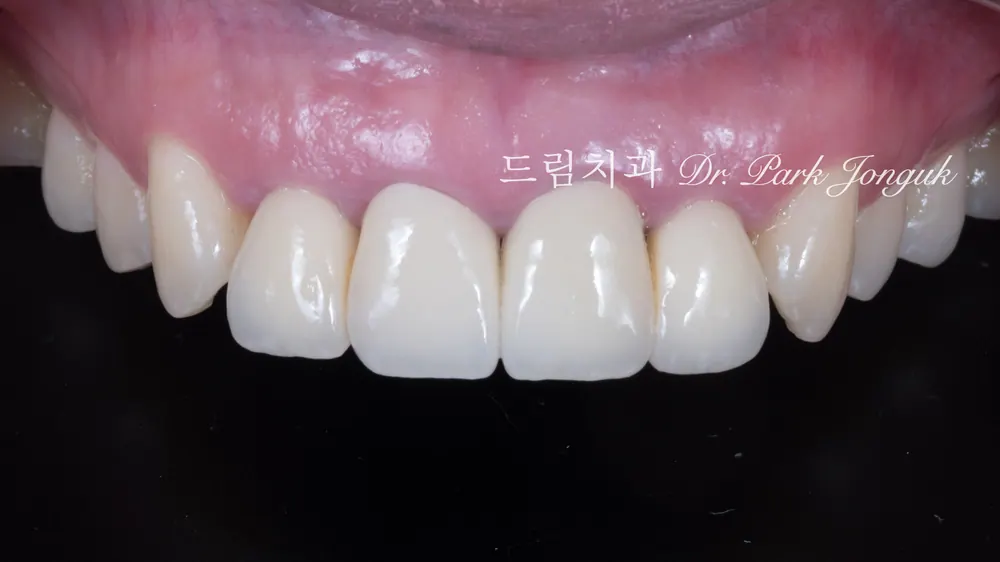
The problem
4 front-tooth all-ceramic crowns made several years earlier
Dull, opaque coloring
A boxy, angular shape, with asymmetric tooth sizes
Poor harmony with the lip line, looking awkward when smiling
The treatment process
With a precise diagnosis,
the tooth angle,
length proportions,
translucency,
and harmony with the lips
were all reanalyzed.
The existing crowns were then removed, and new all-ceramic crowns were fabricated and bonded.
The result
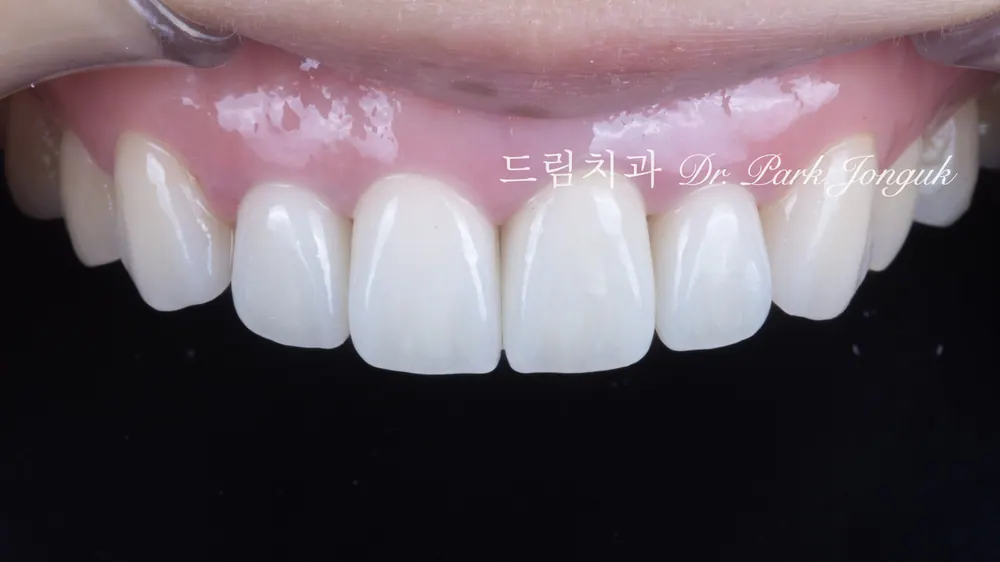
The change was like becoming a different person — the teeth now look translucent and softly shaped, just like natural teeth.
The patient was extremely satisfied, saying, "I can finally smile."
Case 2 — 2 central-incisor veneers redone into a total of 6
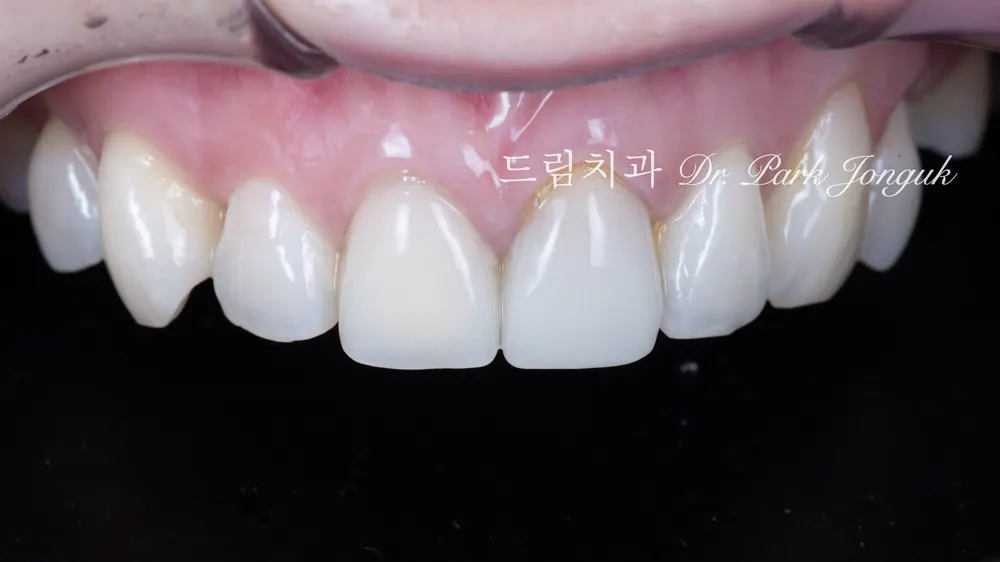
The problem
Only the two front teeth had veneers.
Their color stood out on its own, giving an artificial look where "just those two teeth" caught the eye.
They didn't harmonize with the other teeth.
The treatment process
The existing veneers were safely removed with a laser.
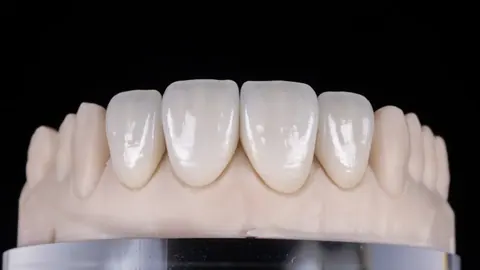
After precise diagnosis, a natural line was reconstructed with a total of 6 veneers.
Translucency and coloring were reproduced using the build-up method.
The result
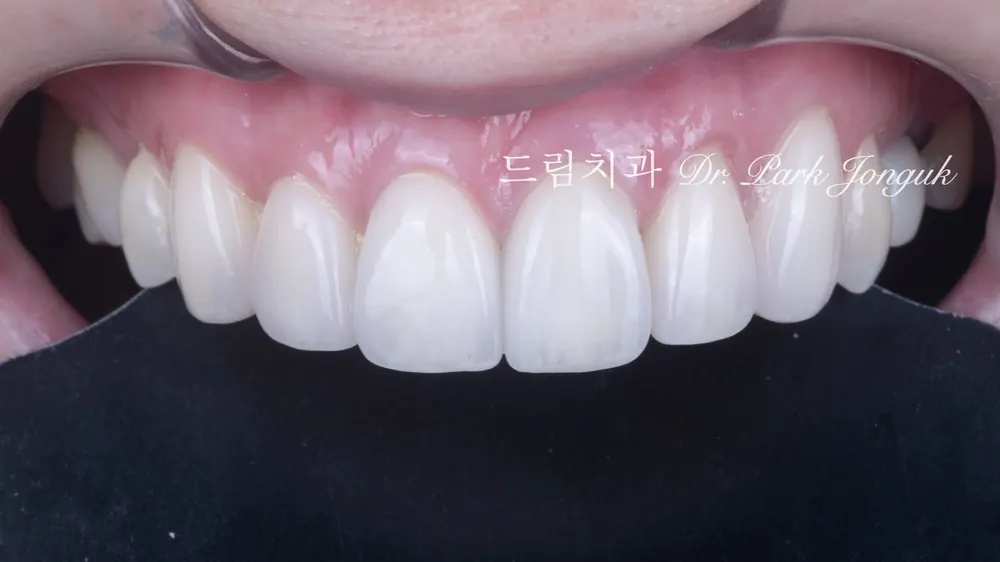
A natural smile line was restored, centered on the central incisors.
A translucent feel that's hard to distinguish from natural teeth.
In harmony with the patient's face shape, achieving "naturally beautiful front teeth."
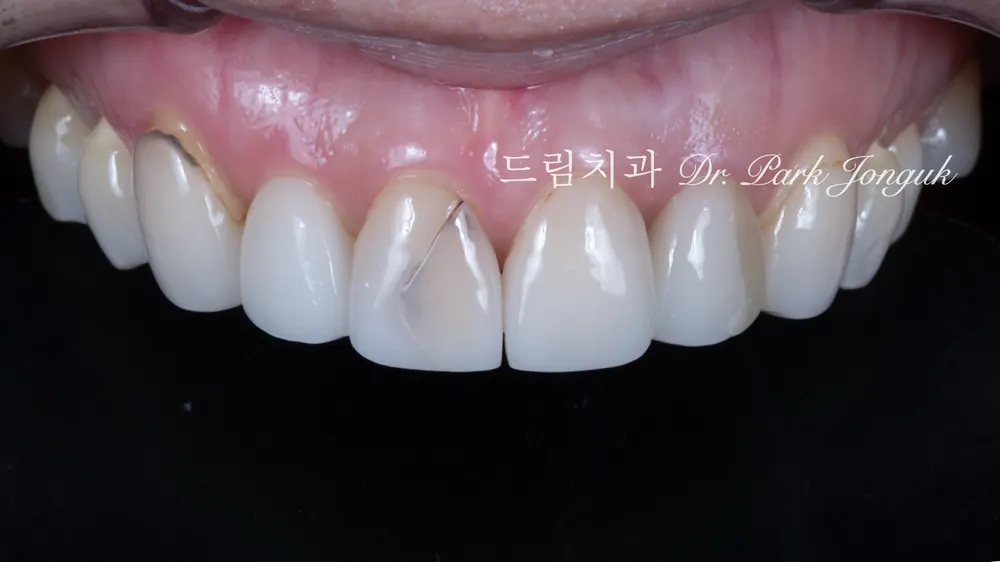
Case 3 — Fractured, discolored old veneers → redo
The problem
Discoloration at the margins of old veneers
Fractured veneers
Loss of translucency at the tooth edges
Looking even more awkward under light
The treatment process
The existing veneers were removed.
The cause was analyzed (the location of the fracture, the bonding condition, the bite pattern).
New veneers were fabricated.
Translucency at the tooth edge and natural color layering were applied.
The result
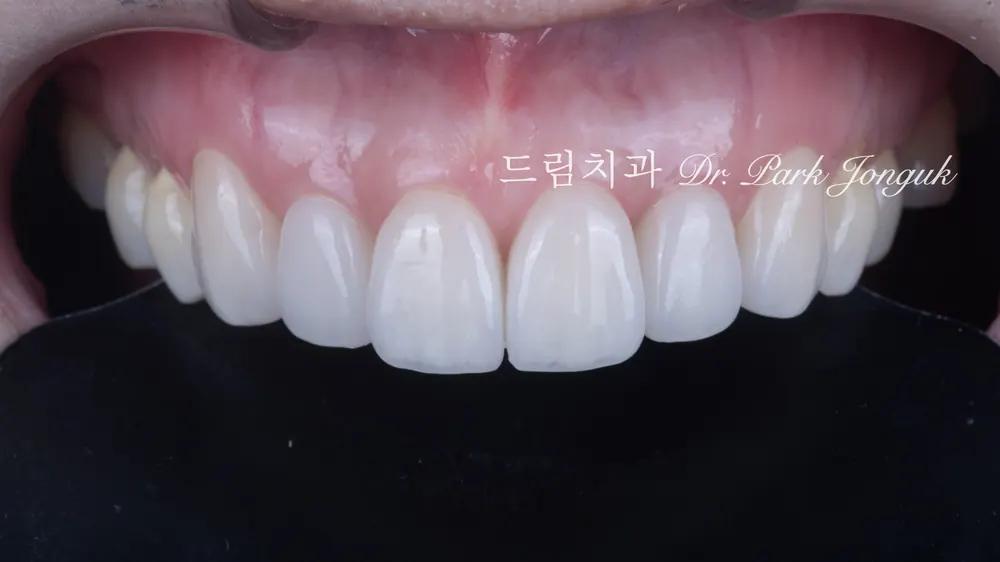
Teeth restored to a bright, natural look with translucency, free of fracture or discoloration.
A natural border that connects perfectly with the surrounding teeth.
The patient was satisfied enough to say, "Now it finally looks like my own original teeth."
Conclusion
A veneer redo isn't simply "treatment where you glue something back on."
Why it became awkward-looking,
why the color is dull,
why the shape is unnatural —
these causes need to be precisely analyzed.
For front teeth in particular,
how light plays across the surface,
translucency,
the dimensionality of the incisal edge,
and harmony with the face shape
all need to come together for a natural look.
At Dream Dental Clinic,
precise diagnosis, then removal, then hand-crafted fabrication, then bonding —
we consider these four stages the most important,
and we aim for "a natural veneer where it's not obvious it was ever attached."
Q&A
Q1. Does a veneer redo require reducing even more of the tooth?
No. In many cases the original treatment already involved excessive reduction,
but a redo is carried out under a minimal-reduction principle, avoiding further reduction wherever possible.
Q2. Isn't removing a veneer risky?
It can be safely removed using a laser rather than an ordinary drill,
which minimizes damage to the remaining tooth.
Q3. Will it look natural if only the front teeth are redone?
With accurate analysis and fabrication, it's entirely possible to achieve a natural look.
That said, if broader esthetic harmony is needed, sometimes 4 to 6 teeth are required.
This article is a clinical note written by Dr. Park Jonguk of Dream Dental Clinic, Gangnam; the original was published on his blog. The photographs shown are real cases he treated. Results vary with each patient’s condition, and every procedure carries the possibility of individual variation and side effects.
Quick Consult
Request a Callback
Leave your number and we will call you back during clinic hours.
Request Received
We will contact you during clinic hours. For urgent matters, please call +82-2-3448-0028.