
Veneer Redo That Brings Natural Translucency Back to Life
Hello, I'm Park Jonguk, director of Dream Dental Clinic and director of Lamista Academy.
Quite a few patients come back to see a dentist after veneer treatment because, as time passes, they're not satisfied with the result.
One of the most common complaints in particular is an "opaque feeling."
A tooth's natural translucency and natural coloring need to remain alive in the veneer,
but a veneer that's excessively white and dull instead gives an artificial impression and fails to harmonize with the surrounding teeth.
In cases like this, the patient feels awkward every time she looks in the mirror,
and as time goes on, that discomfort only grows, eventually leading her to consider a redo.
Over the past 20-some years, I've devoted myself to veneer clinical practice,
and through that process, having experienced countless successes and failures, I've come to the conclusion that "naturalness" is the core of veneer treatment.
It's not simply about making teeth white —
true esthetic restoration is only possible when the tooth's inherent translucency, its layered depth, and the way light reflects and passes through it are all taken into account.
That's why redoing an opaque, artificial-looking veneer into something translucent and natural holds special meaning for me as a piece of work.
Based on this experience and philosophy,
I wrote Korea's first veneer-specialized textbook, 『최소 삭제를 위한 라미네이트 임상』 (Veneer Clinical Practice for Minimal Tooth Reduction).
This book covers a wide range of clinical approaches to no-prep and minimal-prep veneers,
as well as the know-how for how to diagnose and plan a patient's tooth condition to achieve the most natural possible result.
The diagnostic process isn't just about looking at the shape of the tooth — it requires a comprehensive judgment that takes the gums, the bite, and harmony with the whole face into account. That's why it can be called the single most important step in veneer treatment.
I also run Lamista Academy, where I teach fellow dentists the proper method of veneer treatment.
It's not simply about passing along technique — it's a place where I share a philosophy built on natural esthetics and the principle of minimal tooth reduction.
Through this process, I hope more dentists come to understand veneers more accurately,
and are able to give their patients more satisfying results.
In this article, I want to show how an opaque, artificial-looking existing veneer was redone into something translucent and natural,
through an actual clinical case.
I hope you'll look together at how 20 years of clinical experience, writing a textbook, and the know-how gained from teaching countless dentists can come together to change an actual patient's smile.
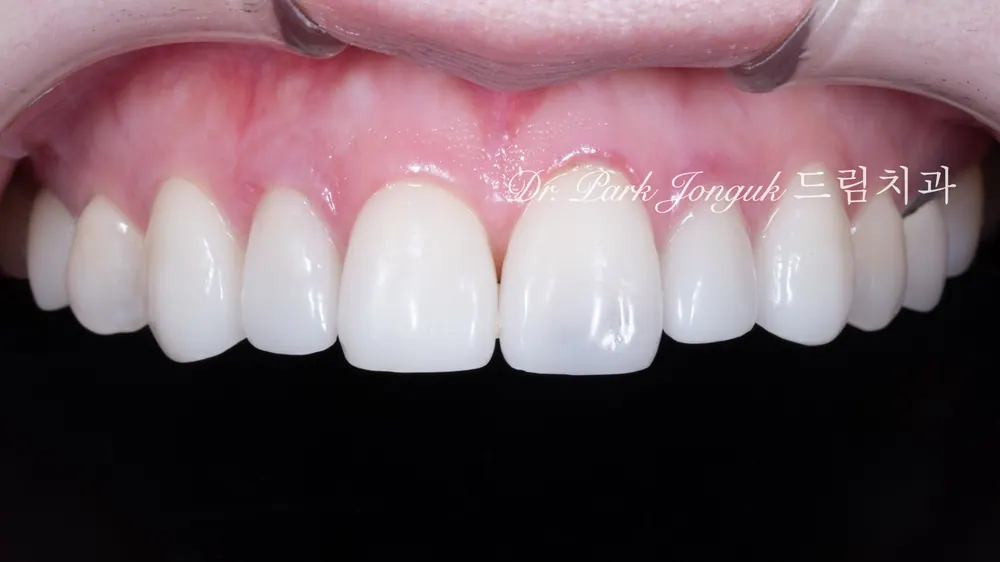
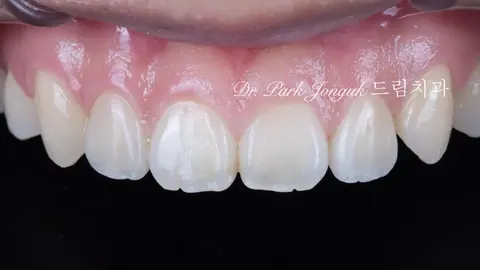
An opaque, artificial-looking veneer doesn't let light pass through properly, so the depth unique to a natural tooth disappears.
A surface that's excessively white or too uniform gives a flat, lifeless impression almost like plastic,
and it stands out easily because the color doesn't harmonize with the surrounding teeth.
An excessively smooth, glossy shine also reinforces the artificial impression,
and without the tooth's fine contours or texture expressed, it tends to look awkward when smiling.
In the end, it fails to bring out the patient's individuality and harmony, resulting in an artificial look that's noticeable even from a distance.
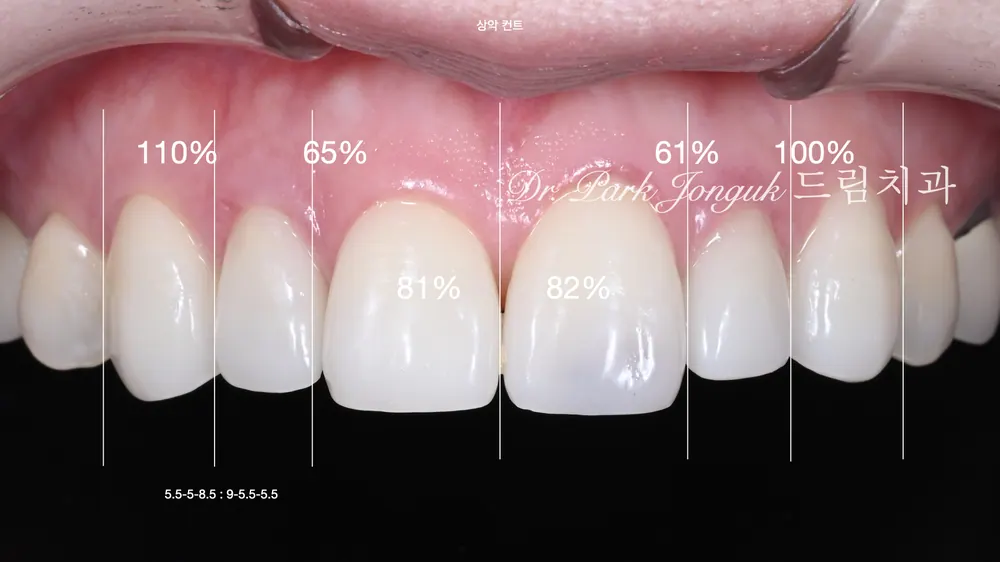
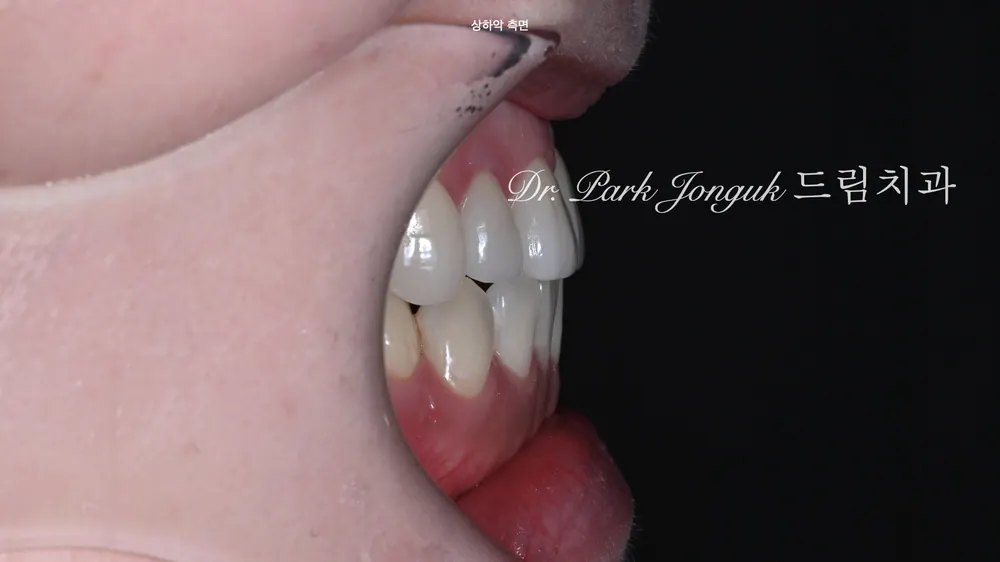
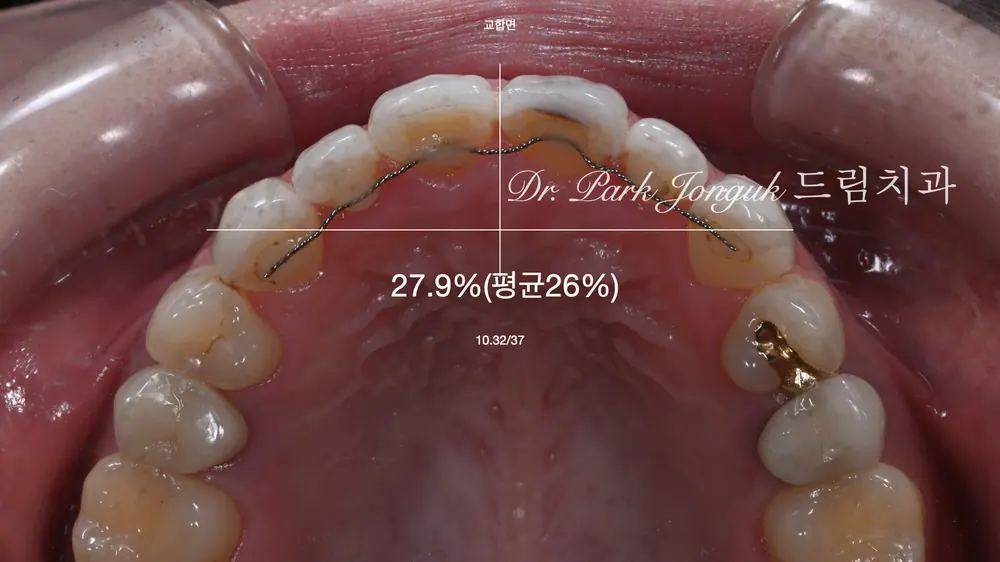
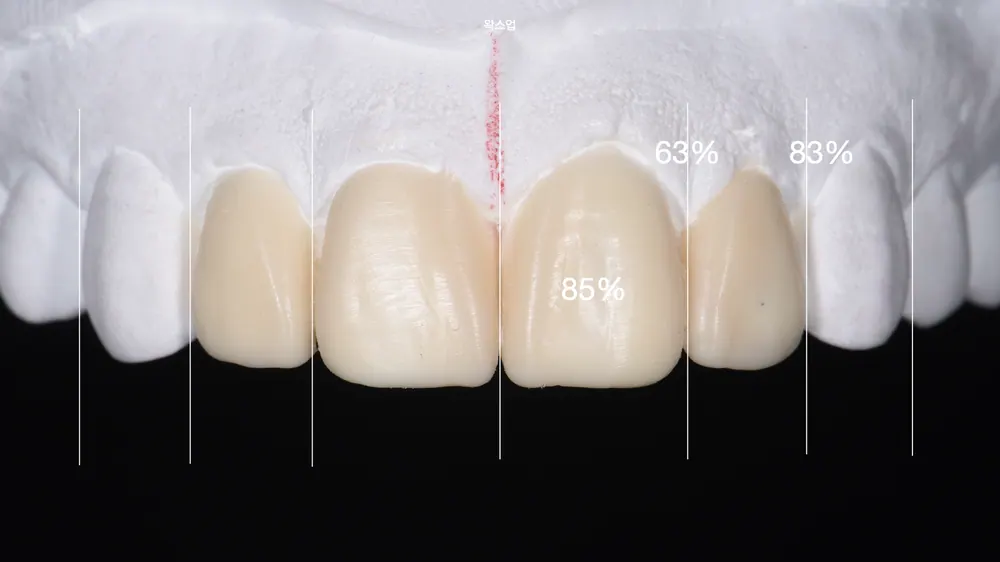
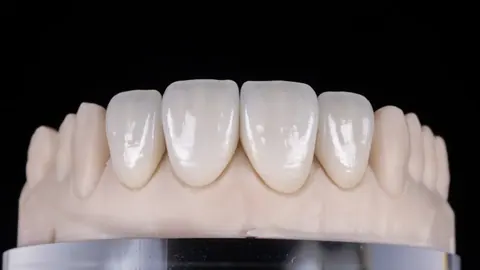
In a veneer redo, a precise wax-up diagnostic is the key process that lets us predict the final result in advance and communicate thoroughly with the patient.
It's not just about looking at the shape — it lets us comprehensively check the tooth arrangement, bite, and harmony with the smile line, so the direction of treatment can be clearly set.
Precise planning is essential, in particular, to fix the opacity, gum problems, and misalignment caused by an existing veneer.
Through the wax-up, the patient gets to experience an image of the result in advance, and the dentist can precisely set the extent of minimal reduction needed, leading to a natural, stable outcome.
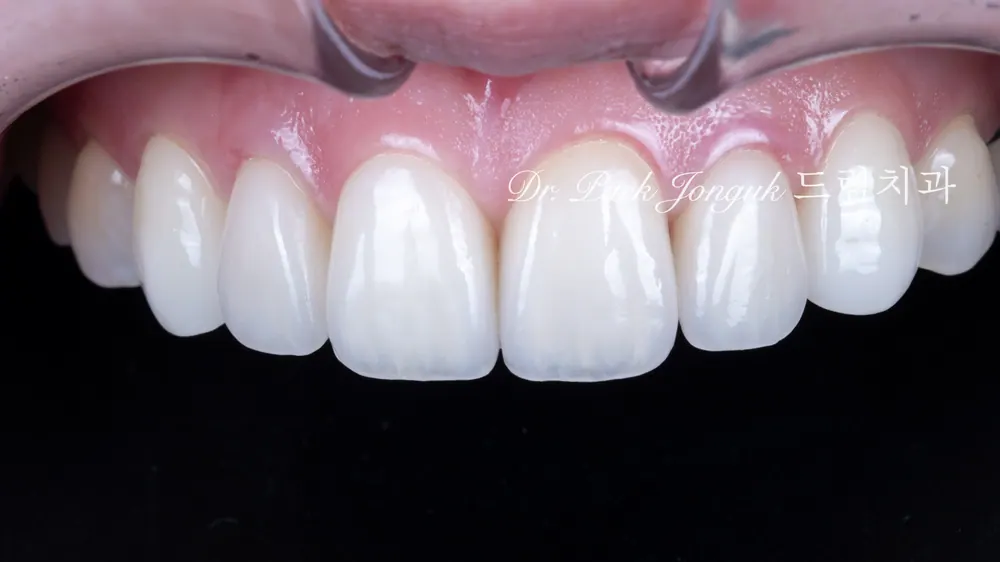
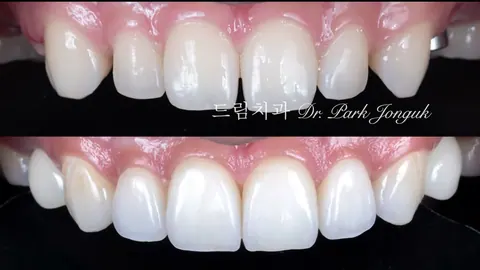
A veneer redo with a clearly natural feel brought back to life was completed.
The natural dimensionality and translucency of the teeth are well preserved.
The difference in how light passes through the dentin and enamel — something only seen in natural teeth — was well captured.
This is an area the one-day method simply cannot match.
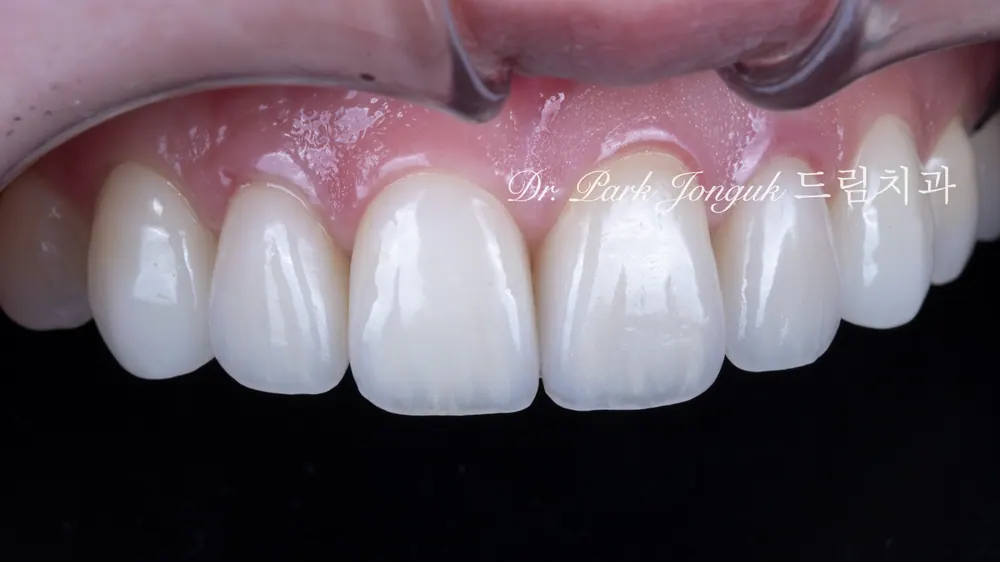
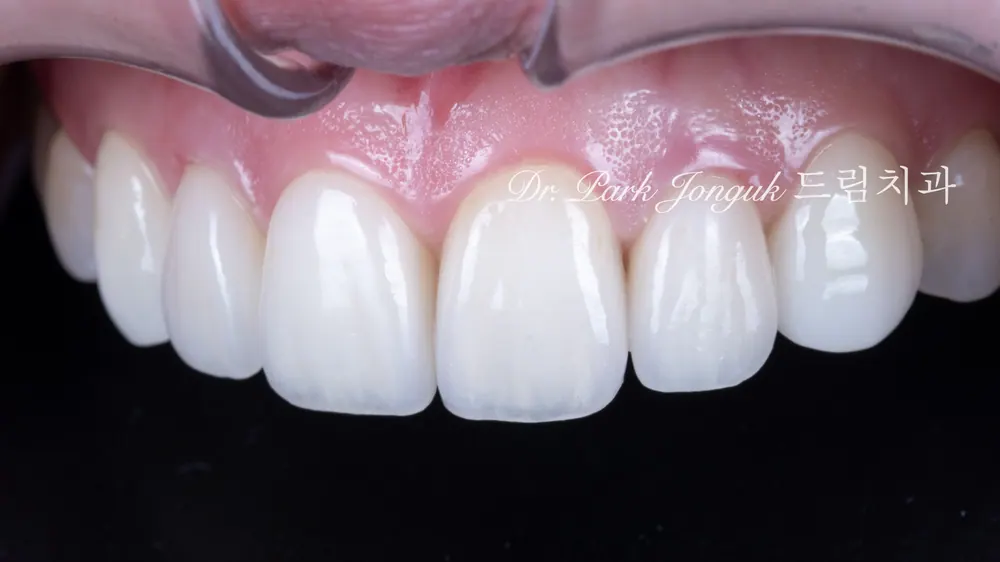
The most important factors for naturally finishing front-tooth veneers are translucency and dimensionality.
A real natural tooth isn't simply a white, smooth surface — light enters, reflects, and passes through it, creating a texture with real depth.
So a properly made veneer shouldn't have an artificial feel like it's been painted in one flat tone,
instead, the clear translucency of the tooth's surface layer (the enamel) and the warm color of the dentin glowing softly beneath it need to come together in harmony.
It's this harmony that gives a natural yet vibrant impression when smiling brightly.
Also, giving the veneer surface fine contours and a certain sheen lets light reflect softly, bringing out dimensionality and avoiding a monotonous look.
Reflecting each tooth's own distinct shape and arrangement, rather than aiming for a perfectly symmetrical, artificial beauty, is important for bringing out each individual's own harmonious character.
Only when all these delicate details come together can front-tooth veneers achieve a natural, translucent, dimensional result that looks just like the patient's own original teeth, indistinguishable even up close.
This article is a clinical note written by Dr. Park Jonguk of Dream Dental Clinic, Gangnam; the original was published on his blog. The photographs shown are real cases he treated. Results vary with each patient’s condition, and every procedure carries the possibility of individual variation and side effects.
Quick Consult
Request a Callback
Leave your number and we will call you back during clinic hours.
Request Received
We will contact you during clinic hours. For urgent matters, please call +82-2-3448-0028.