
A Collection of Veneer and All-Ceramic Crown Before-and-After Photos
Hello, I'm Dr. Park Jonguk, director of Dream Dental Clinic.
Through blog posts, I've been continuously sharing a variety of
veneer and all-ceramic crown treatment cases, as well as retreatment and redo cases.
Today as well, I'd like to gather together a variety of cases and show you before-and-after photos.
The defining feature of the veneer and all-ceramic crown treatment I do
is naturalness.
An artificial, unnatural-looking veneer
has a very simple, straightforward fabrication process.
Because it's not made by hand,
but instead made by a computer and a milling machine,
it ends up not paying attention to harmony with the face or the other teeth,
and looks awkward,
almost like a piece of xylitol gum stuck on.
It's produced almost like mass production in a factory.
The veneers I make
are fabricated one at a time by hand, as if crafting a fine piece,
so even though treatment takes somewhat longer,
the result is far more natural.
Case 1
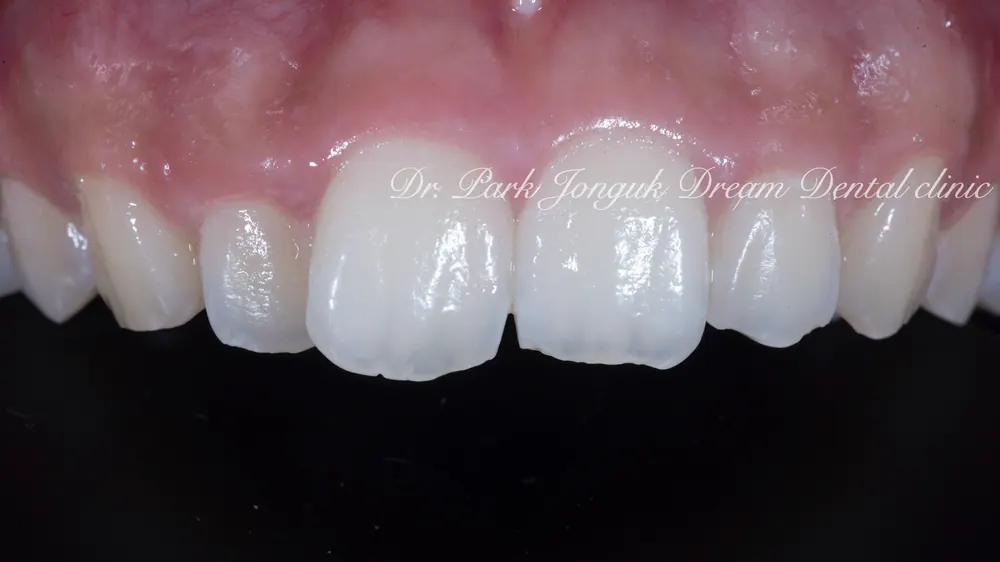
This was a case where just the two front teeth were fairly large, too square in shape,
and also protruding, giving a rabbit-tooth appearance.
For a protruding case like this, deciding between veneer treatment and orthodontics
is something you have to think through carefully.
If it's only protrusion, with the tooth size and shape otherwise normal,
orthodontics would be the better option,
but if, as in this case, along with the protrusion,
the tooth size ratio is also poor
and the tooth shape is also poor,
veneer treatment may be needed even after orthodontics.
That would mean paying for treatment twice.
After a precise diagnosis of how much tooth reduction is needed and a detailed consultation with the patient,
we decide on the treatment method and proceed.
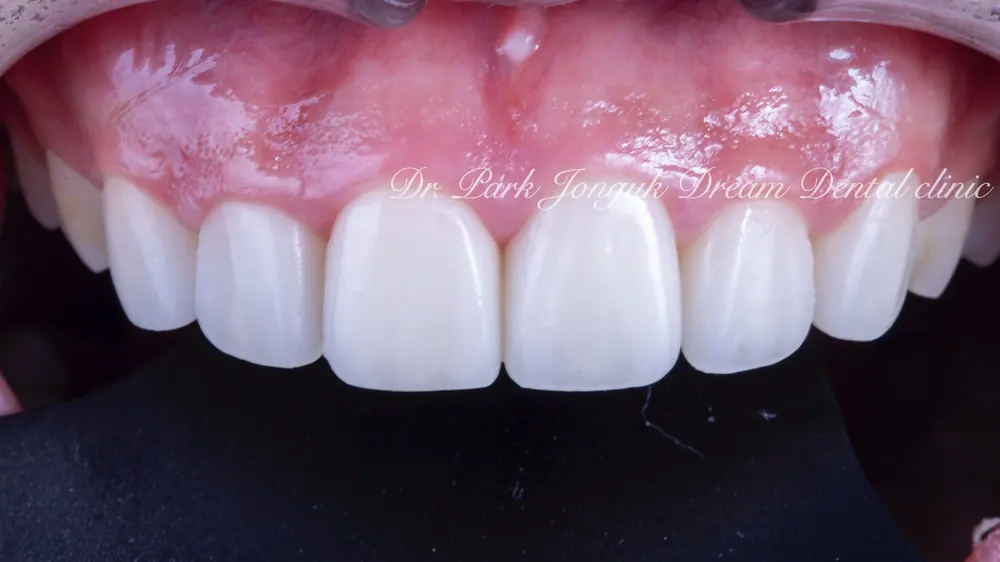
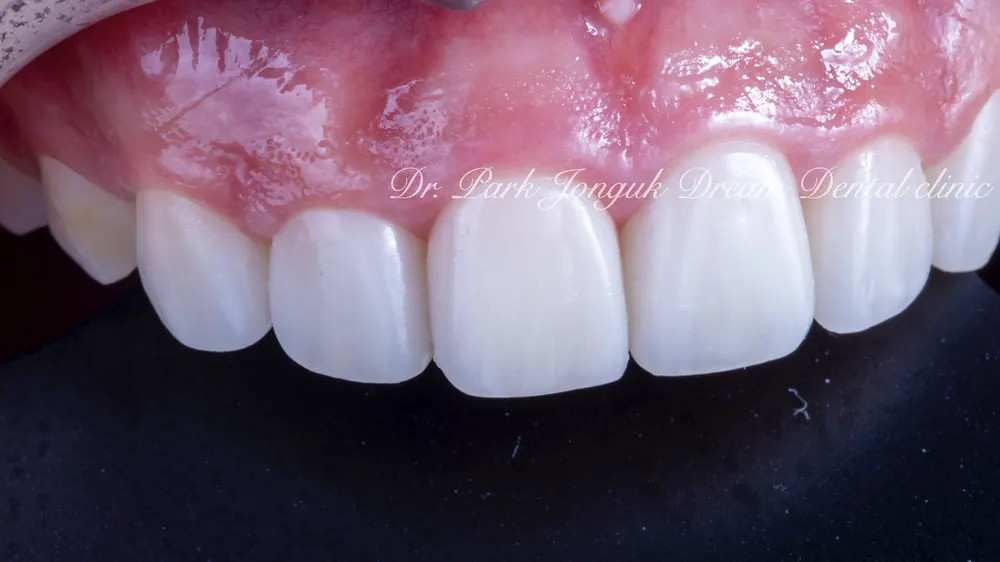
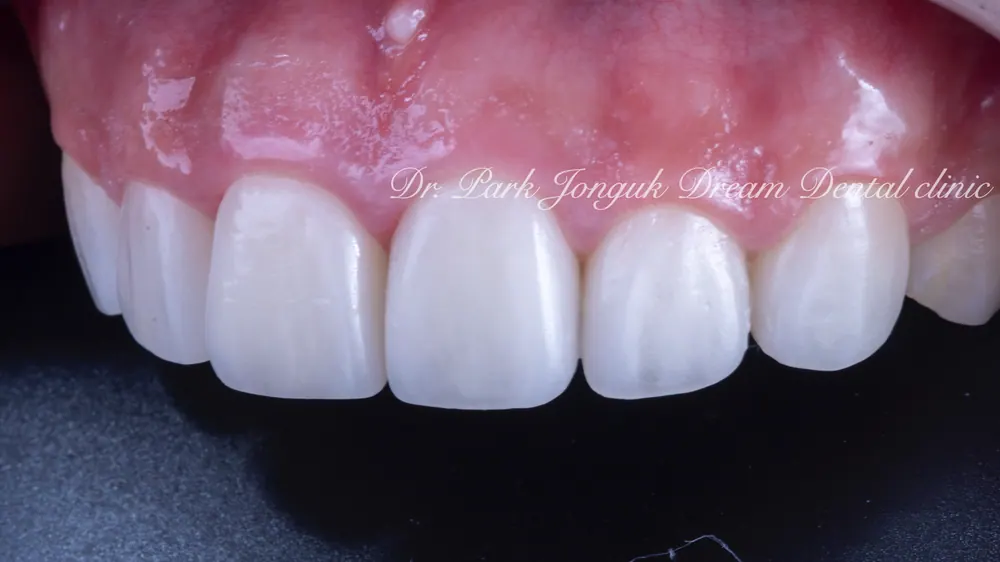
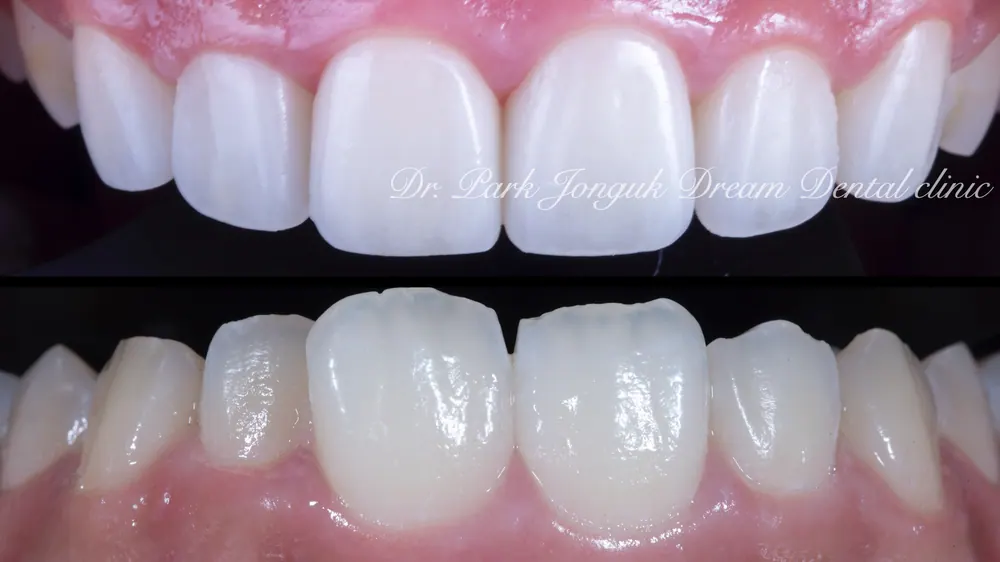
From the tooth color and shape to the alignment and degree of protrusion,
everything was resolved at once through veneers.
The teeth after treatment were finished so that their natural feel stayed alive as well.
Case 2
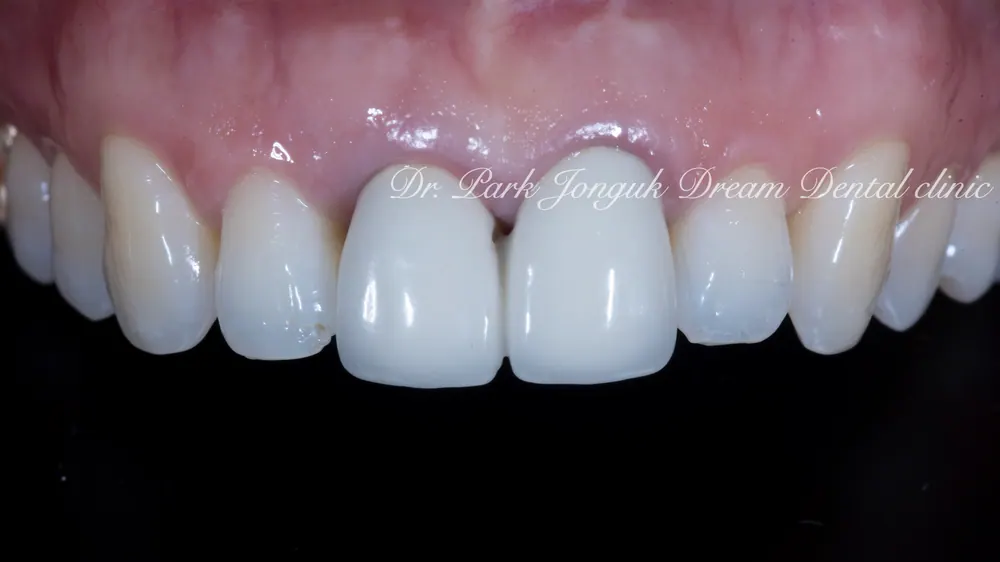
This is a retreatment case for old all-ceramic crowns on the front teeth.
In the past, when treating front teeth,
it wasn't unusual to bundle two teeth together for treatment, as in the case above.
Of course, even now, due to gum issues or other problems,
there are cases where two all-ceramic crowns are connected,
but treating otherwise normal teeth this way
can, in the long run, lead to gum problems or
the risk of decay recurring inside the crown,
so unless there's a special reason,
it's better to cap the teeth individually.
Beyond these gum and decay issues,
treating them individually is also better esthetically.
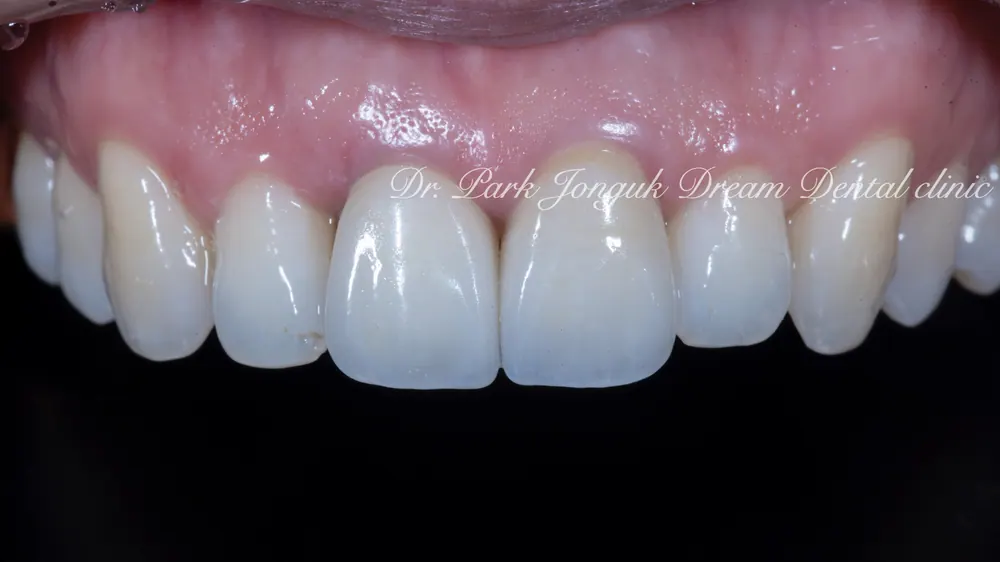
So that it would blend better with the other surrounding teeth,
we proceeded with retreatment.
The tooth color, which had been white and opaque,
gained translucency,
and the treatment was done bringing out all the varied expressions of a natural tooth.
Case 3
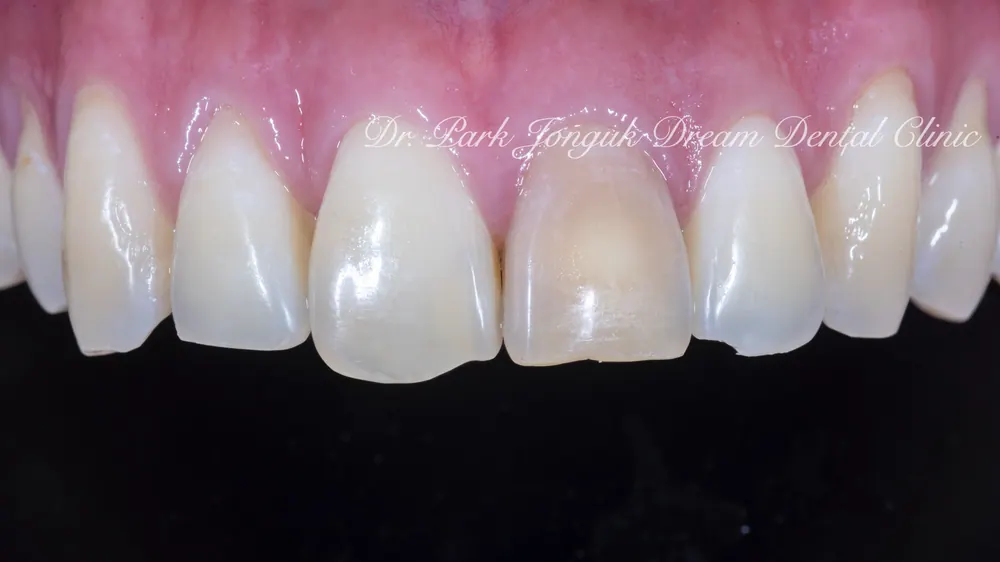
Just one tooth had become severely discolored
due to root canal treatment.
The other teeth also had a poor shape
from chipping or wear,
but the patient wanted to leave the other teeth untouched
and only put an all-ceramic crown on the discolored tooth,
matching its color and shape to the other natural teeth.
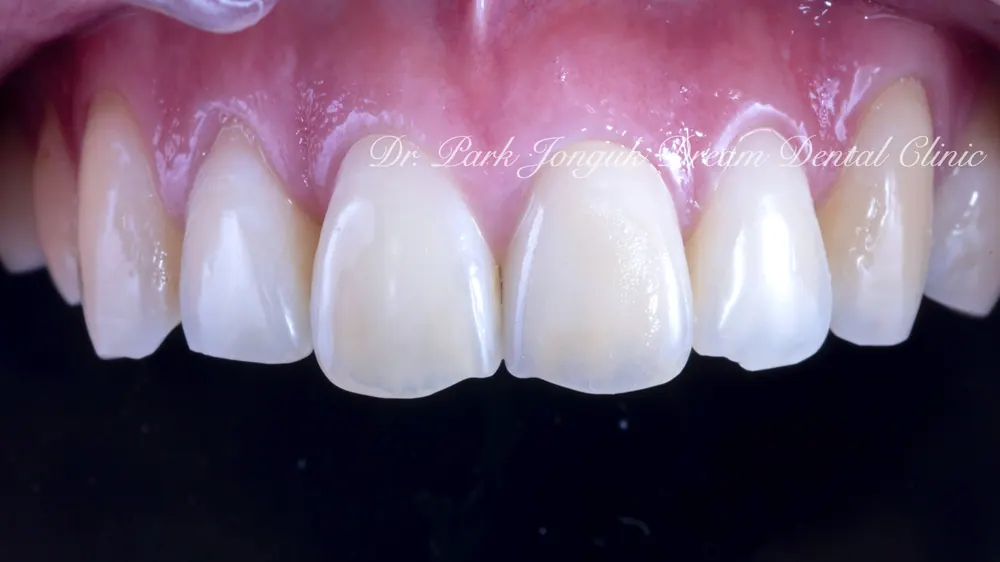
We reproduced the tooth's color, shape, and translucency
all together.
We even matched the worn shape of the tooth
so that both sides would be symmetrical.
It looks almost as if the all-ceramic crown
had naturally worn down like a real tooth.
Capturing the beauty of nature as it is,
in both veneers and all-ceramic crowns alike,
is the basic standard of premium veneer treatment.
Since 2006, Dream Dental Clinic
This article is a clinical note written by Dr. Park Jonguk of Dream Dental Clinic, Gangnam; the original was published on his blog. The photographs shown are real cases he treated. Results vary with each patient’s condition, and every procedure carries the possibility of individual variation and side effects.
Quick Consult
Request a Callback
Leave your number and we will call you back during clinic hours.
Request Received
We will contact you during clinic hours. For urgent matters, please call +82-2-3448-0028.