
Minimal-Reduction Veneers for Gapped Teeth
Hello, I'm Park Jonguk, director of Dream Dental Clinic.
There are several reasons why gaps form between teeth.
The teeth may be small relative to the size of the jawbone,
or conversely, the jawbone may be too large relative to the teeth.
Either way,
orthodontic treatment is usually considered first,
but there are many cases orthodontics alone cannot resolve.
These are cases where the teeth are relatively too small or the jawbone is relatively too large.
If the teeth are too small and need to be made larger,
veneers become a very good treatment option.
Even with orthodontic treatment, if the teeth are too small,
there isn't much aesthetic improvement.
In some cases,
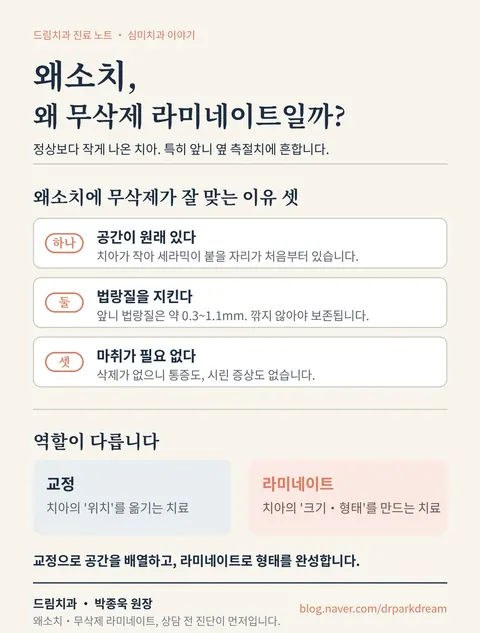
no-prep veneers are possible for these cases,
but the teeth must not be protruding.
No-prep veneers on protruding teeth can backfire,
so through a precise diagnosis,
how much reduction is needed must be checked in advance.
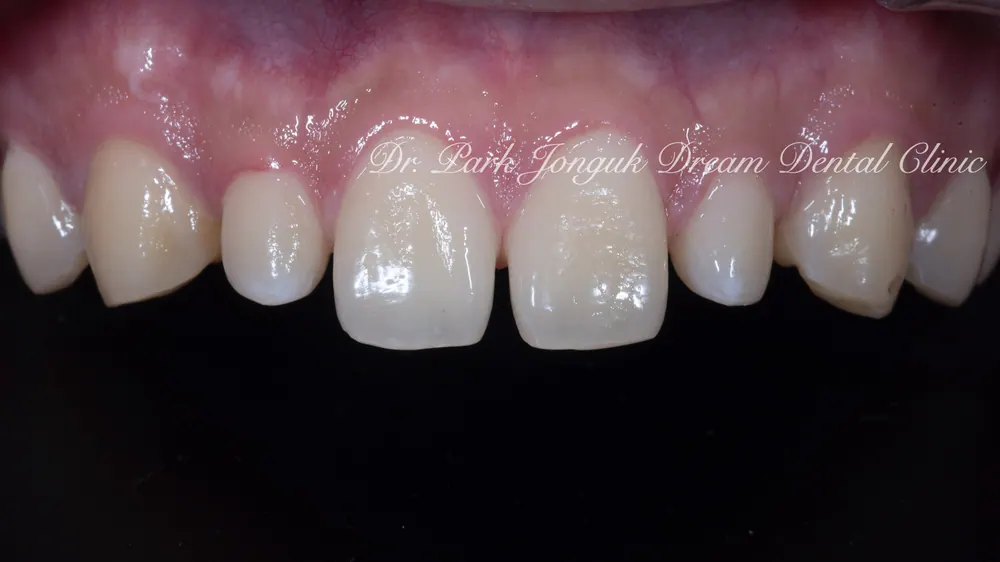
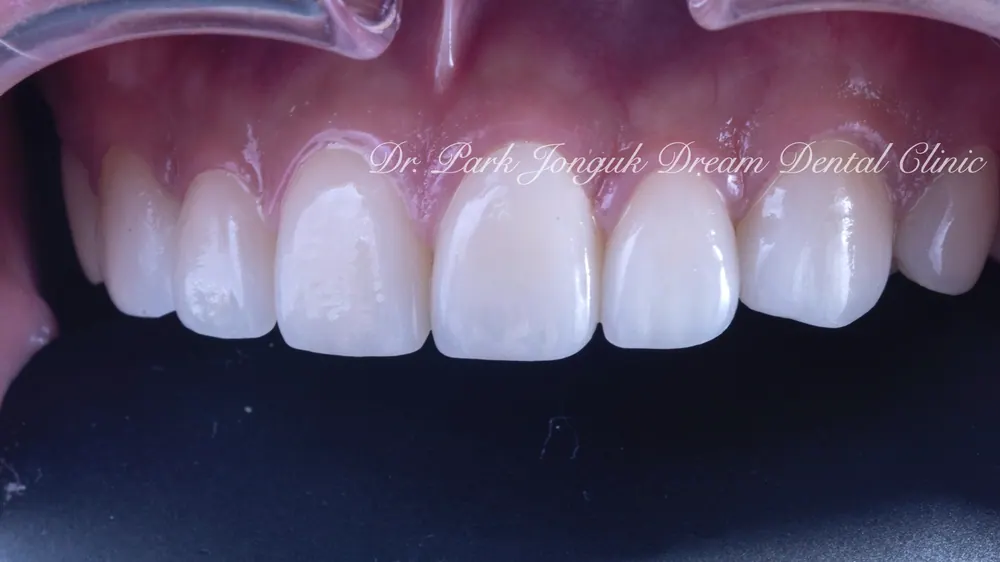
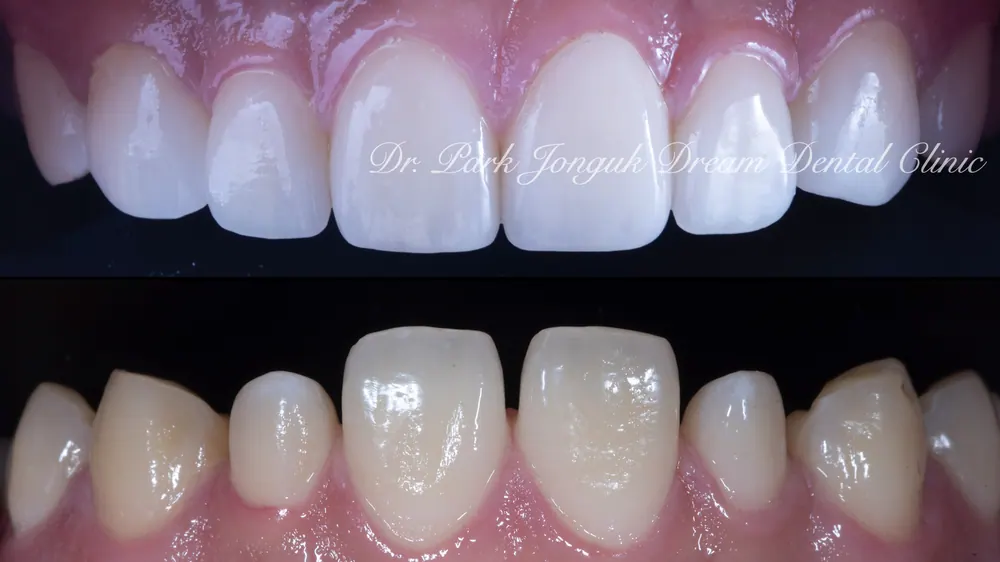
Including a peg-shaped (undersized) tooth,
there is quite a lot of space between the teeth.
In particular, the two front teeth are fairly long,
and the teeth beside them are too small. The canines are of average size.
In a case like this, closing the spaces with orthodontics
can actually make the aesthetics worse.
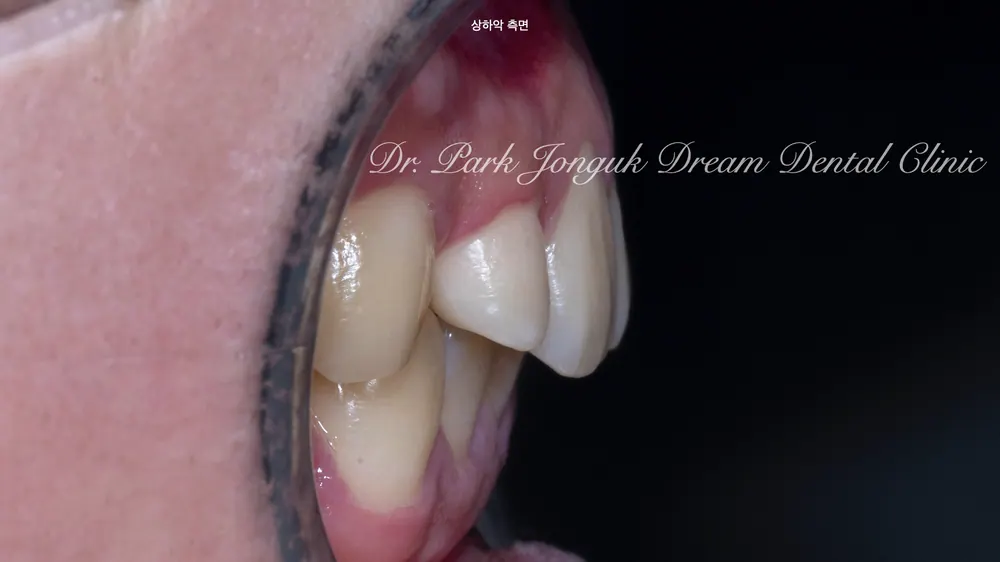
Because the upper teeth protrude somewhat relative to the lower teeth,
doing no-prep veneers
would push the teeth out even further,
which would be a shame aesthetically,
so we decided to reduce the teeth by the necessary amount.
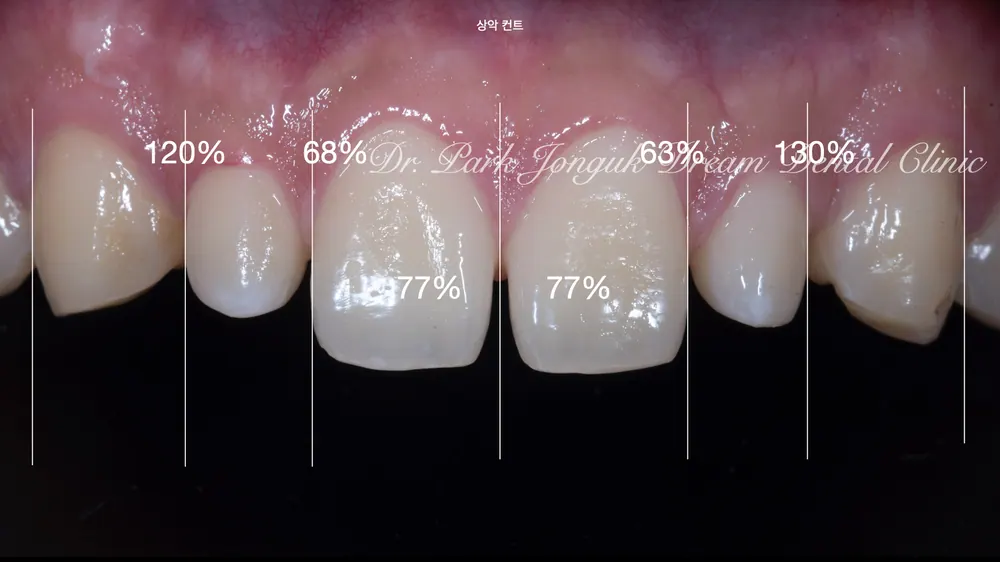
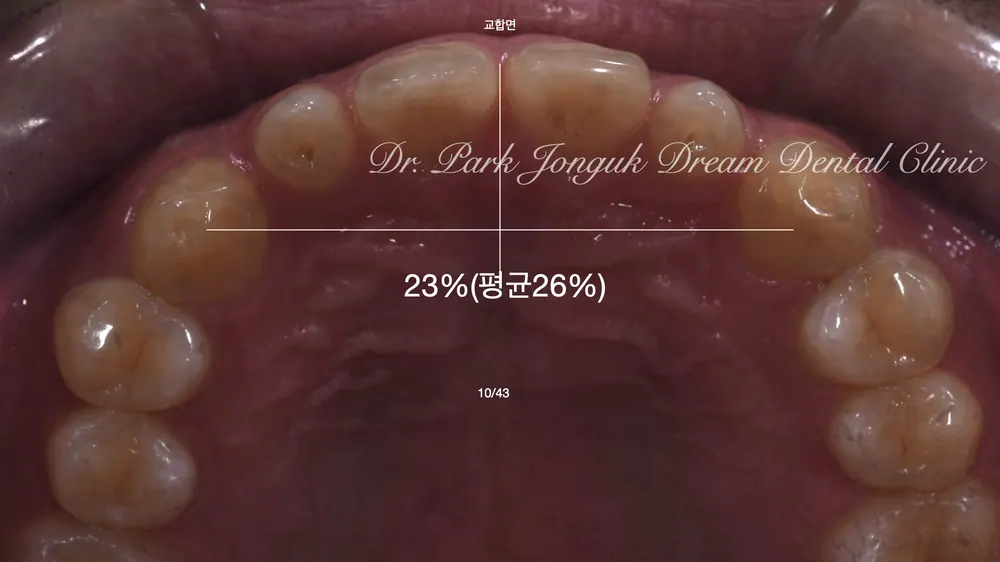
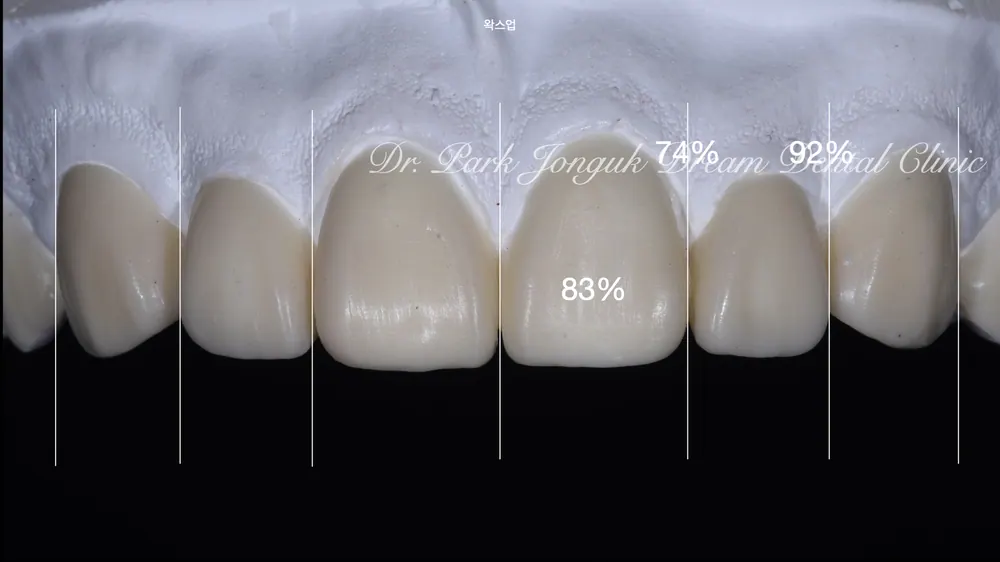
Through the diagnostic process,
we determine how much tooth reduction is needed and proceed with a wax-up of the result.
While working to bring the proportions close to average,
we also decide what to do about the size of the canines.
Since the canines were a normal size,
they inevitably need to be made a little larger to close the space.
We also decide what to do with the gumline,
and in this case, the gum around the undersized tooth needs to be raised slightly.
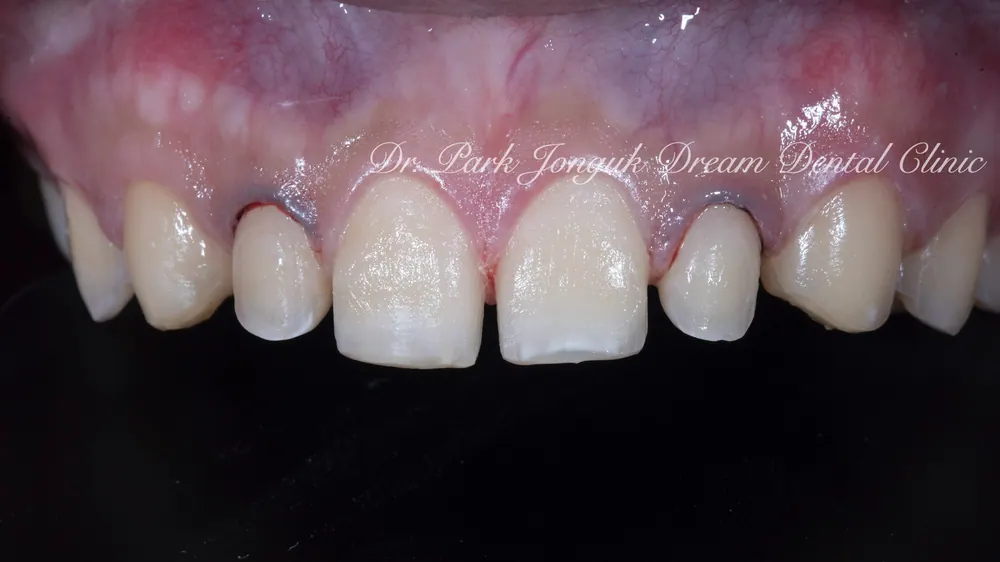
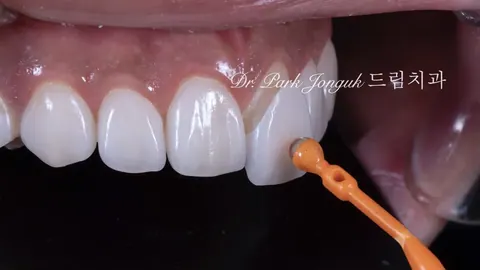
Tooth reduction was completed according to the plan.
To change the shape of the gum,
we place retraction cord only around the undersized tooth
and reshape the gum.
There are ways to reshape the gum —
one method actually cuts the gum with a scalpel or laser,
but raising the gum naturally like this
and shaping the gum through the form of the veneer itself
is the non-surgical method I prefer.
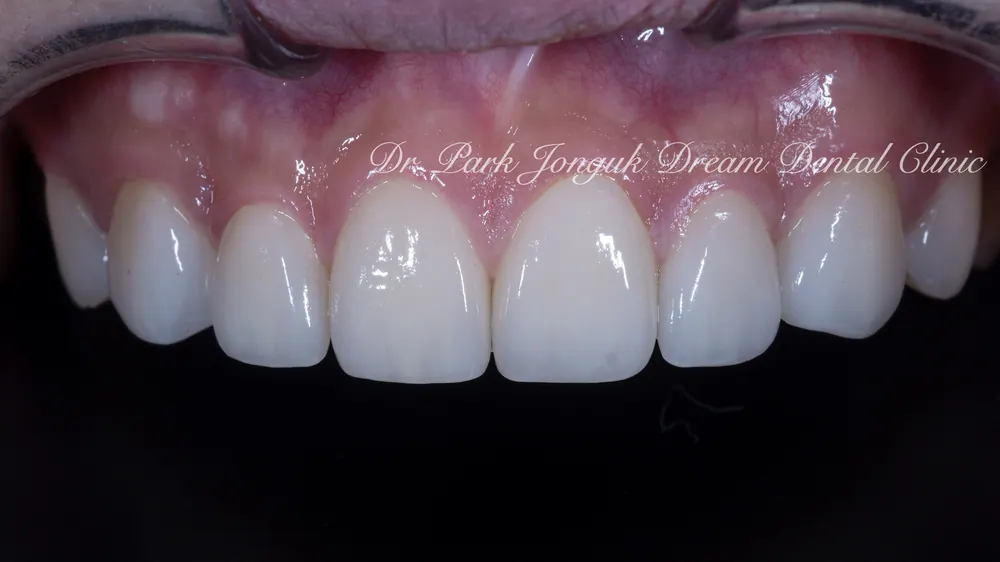
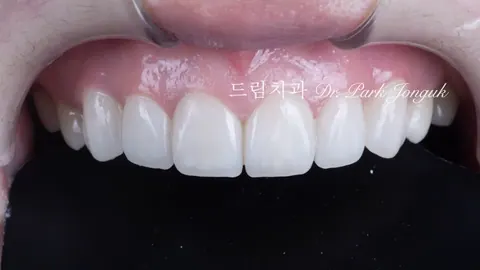
As I always say on my blog,
the biggest characteristic of the veneers I make
is their natural look.
There is nothing more beautiful than looking natural.
For any kind of cosmetic procedure, the ultimate destination is a natural result.
Dental cosmetic treatment is no different —
doing it naturally is the most beautiful outcome.
Anyone can produce veneers that look obvious and unnatural.
Anyone can make them just by buying a computer and a milling machine,
but veneers this natural are only possible with years of experience and know-how.
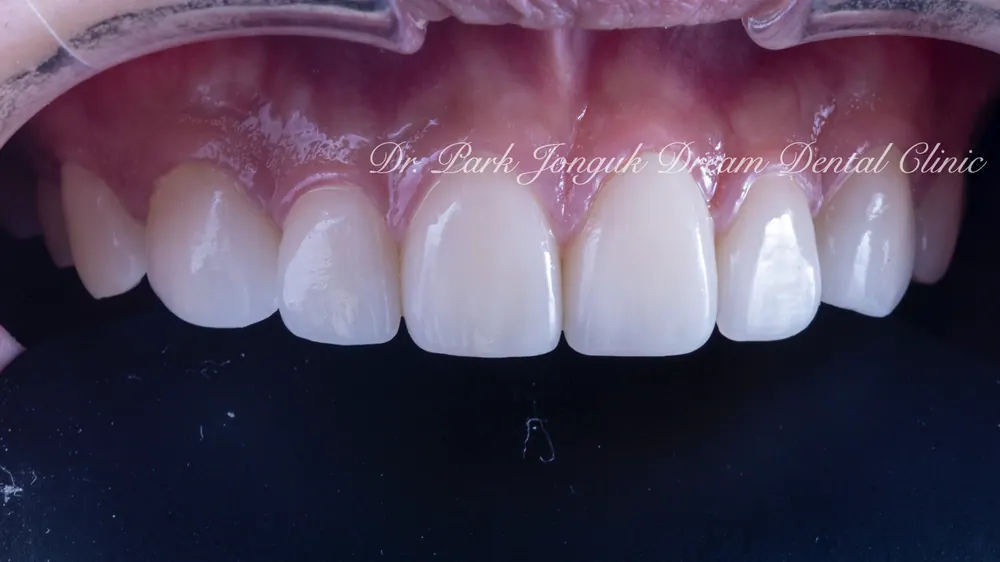
Since 2006, Dream Dental Clinic
This article is a clinical note written by Dr. Park Jonguk of Dream Dental Clinic, Gangnam; the original was published on his blog. The photographs shown are real cases he treated. Results vary with each patient’s condition, and every procedure carries the possibility of individual variation and side effects.
Quick Consult
Request a Callback
Leave your number and we will call you back during clinic hours.
Request Received
We will contact you during clinic hours. For urgent matters, please call +82-2-3448-0028.