
Veneer Treatment: A Variety of Veneer Cases
Hello, I'm Dr. Park Jonguk, director of Dream Dental Clinic, doing veneer treatment.
I started my esthetics-focused dental practice in Apgujeong-dong in 2006.
It's now been over 17 years.
Having handled truly many cases,
I too have developed a great deal over the years.
Given how long I've been doing veneer treatment,
I've come to handle tooth reshaping in a wide range of situations.
Unlike other large clinics, where the treating dentist keeps changing,
I personally handle every treatment,
so between that and the years I've been practicing, I think I've probably handled more, and a wider variety of, treatments than most.
At many large clinics, because the dentist keeps changing,
it's not easy for them to follow up on their own cases over a long period the way I do.
Which cases turn out well when treated,
and which cases shouldn't be treated with veneers —
I've come to understand a lot of this through experience.
I try to share that experience with the patients who come in for treatment,
explaining the pros and cons, possible side effects, and alternatives as thoroughly as I can.
Case 1
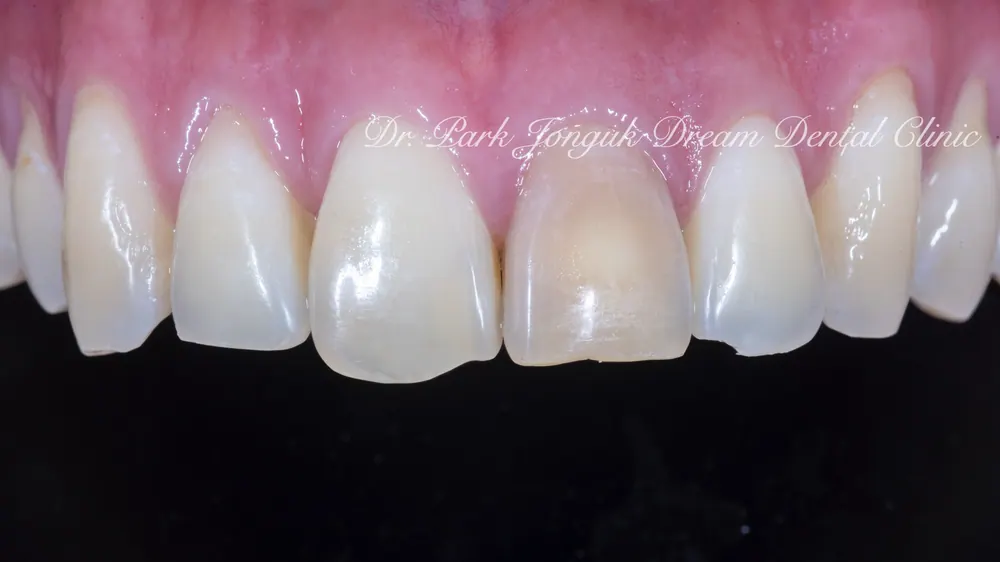
Cases with discoloration like this
are quite difficult ones
when doing veneers or all-ceramic work.
First, the cause of the discoloration needs to be identified —
most of the time it's discoloration from root canal treatment,
and another common cause is trauma.
If there was only trauma, with no root canal treatment, and yet there's discoloration,
removing that discoloration becomes quite difficult.
If root canal treatment has been done,
a method called non-vital bleaching can be used to brighten the tooth,
but that too has its limits.
It often darkens again over time.
So, from a long-term perspective, the best approach is to cover
the current dark state by carefully controlling the thickness of the ceramic.
Veneer treatment is carried out with this in mind.
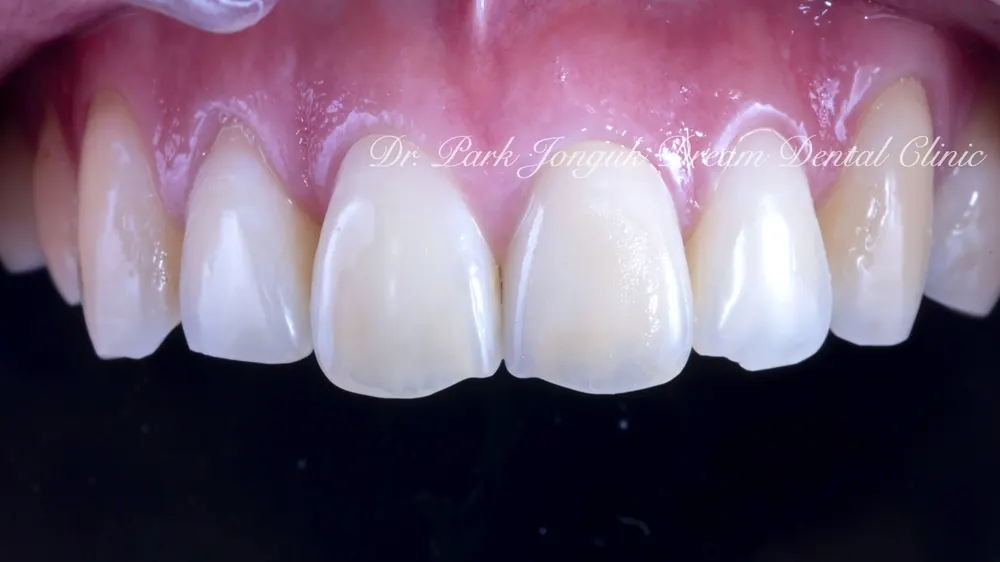
A veneer was done on one tooth.
Since the other teeth already looked good,
we wanted to leave them completely untouched,
so to make the veneer tooth blend well with those natural teeth,
we deliberately avoided a textbook-perfect shape
and instead treated it in a shape that matched the surrounding teeth.
The front tooth next to it had a particularly unusual shape,
and the color varied a lot from area to area,
so it was a fairly difficult case to capture all of that.
It was a good result that effectively covered the discoloration while fully bringing back the feel of a natural tooth.
Case 2
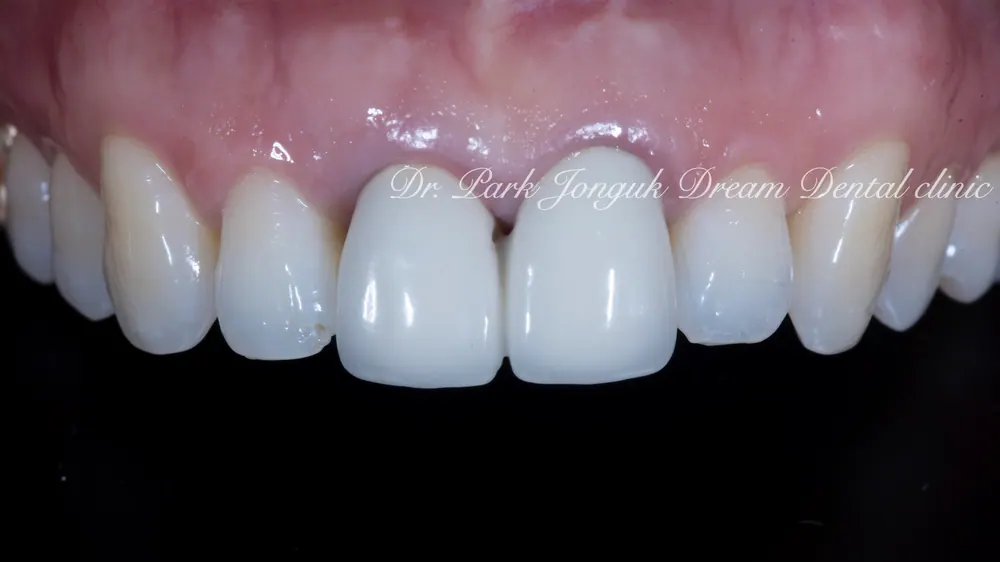
Both front teeth had all-ceramic crowns.
They had been treated after root canal treatment, with the two crowns connected to each other.
Opinions can differ somewhat between dentists,
but for front teeth, unless there's a special reason, I don't treat crowns as connected units.
This case's goals were to separate the two connected crowns for a more esthetic result,
to cover as much as possible the discoloration visible near the gum from the root canal treatment,
and to make the tooth itself blend with the other surrounding natural teeth —
those became the aims of the treatment.
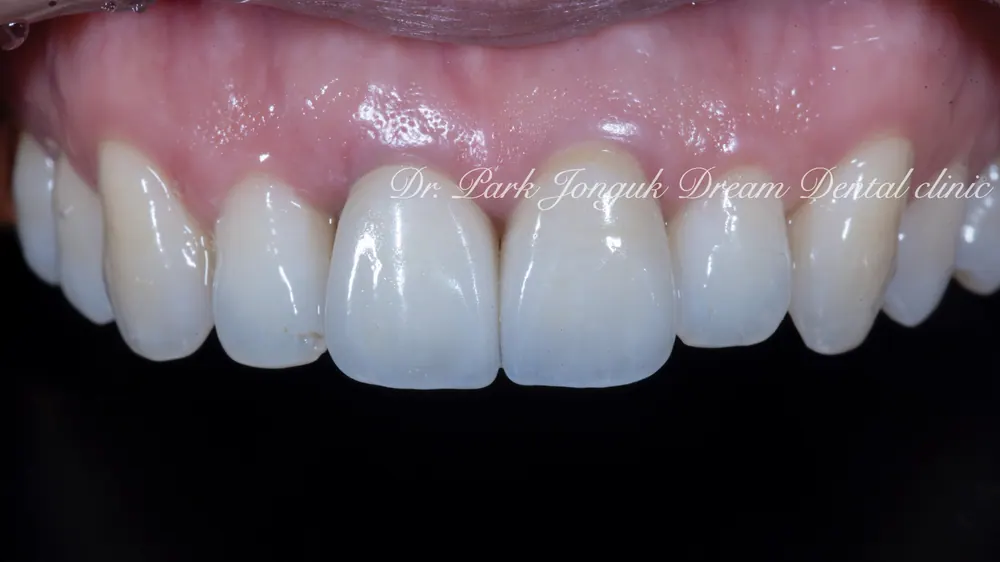
Since the patient wasn't bothered by the difference in gum height,
we left that as it was
and added yellow staining to the tooth
so it wouldn't look too long.
Discoloration of the gum caused by the discoloration of the tooth
should be treated with non-vital bleaching, but pushing bleaching too far in a case like this
has its limits, since it can cause other side effects.
By placing the ceramic slightly under the gumline
to cover the color, you can see the gum color has improved somewhat.
Case 3
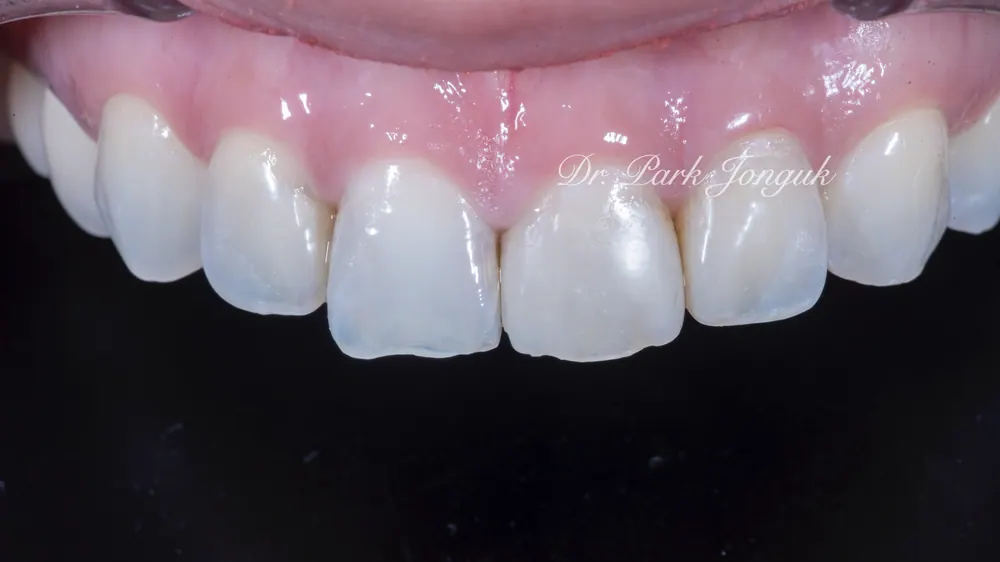
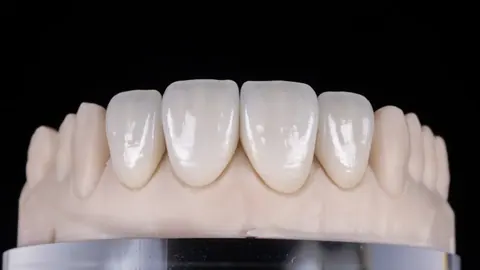
The teeth had extensive resin treatment throughout.
We decided to remove the resin
and proceed with veneer treatment for a natural tooth shape and color.
In the photo, all the areas that look yellow are resin.
Even though it may look fine in the photo,
the teeth were actually all quite yellow, which is why treatment was decided on.
Because resin discolors over time,
it ends up needing to be redone repeatedly,
so rather than going through repeated treatment like that,
we decided to treat it once, with veneers.
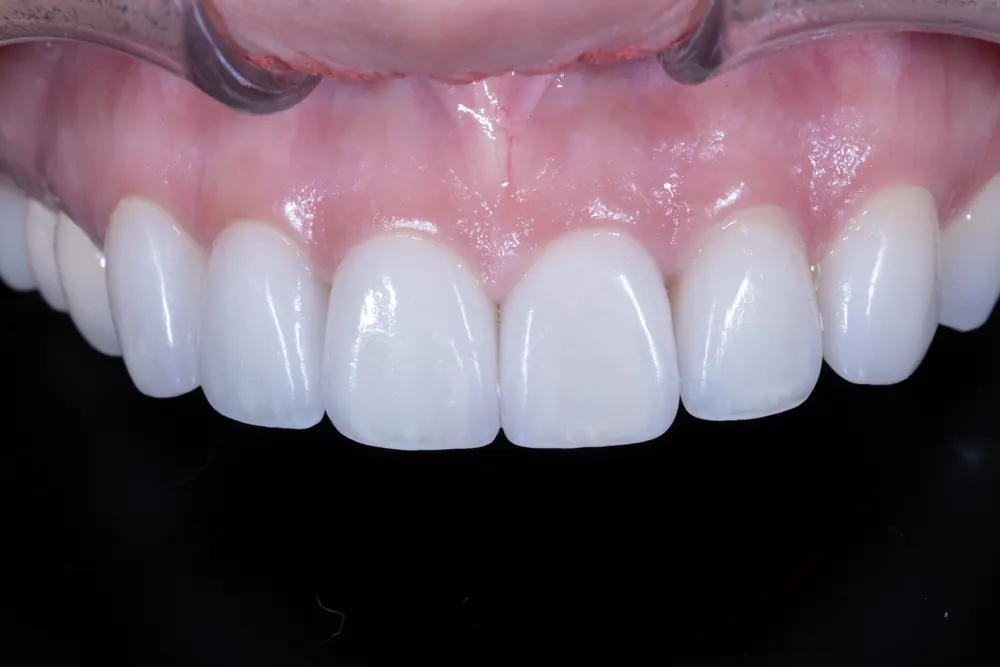
After the veneers, the teeth are bright
while retaining a natural three-dimensional quality.
By adding varied translucency and color to different areas of the teeth,
we made them bright without looking unnatural.
The shape and proportion of the teeth are matched to the proportions of the face.
The difficulty of veneer or all-ceramic crown treatment
changes depending on whether it's
a first treatment or a retreatment.
Getting the first treatment right is more important than anything else,
and when a problem arises and retreatment is needed,
properly resolving the underlying cause is also very important.
Natural beauty.
Since 2006, Dream Dental Clinic — veneer treatment
This article is a clinical note written by Dr. Park Jonguk of Dream Dental Clinic, Gangnam; the original was published on his blog. The photographs shown are real cases he treated. Results vary with each patient’s condition, and every procedure carries the possibility of individual variation and side effects.
Quick Consult
Request a Callback
Leave your number and we will call you back during clinic hours.
Request Received
We will contact you during clinic hours. For urgent matters, please call +82-2-3448-0028.