
Side Effects of Poorly Done Veneers and All-Ceramic Crowns, and How to Treat Them
Hello. I'm Park Jonguk, head of Dream Dental Clinic.
Veneer treatment,
when done properly,
is a procedure with relatively few side effects.
Whether it's an all-ceramic crown or a veneer,
most side effects arise from excessive tooth reduction.
An all-ceramic crown requires a certain, fixed amount of tooth reduction,
and if, for whatever reason, more than that is removed,
or the reduction irritates the gums,
gum inflammation is likely to occur.
In the case of veneers,
when the amount of reduction increases,
bonding strength weakens, which can lead to frequent debonding and fracture,
or tooth sensitivity may appear.
In fact, in treatment whose purpose is esthetics,
the biggest problem
is when the result simply isn't esthetic.
Depending on the case, these side effects can be improved through retreatment.
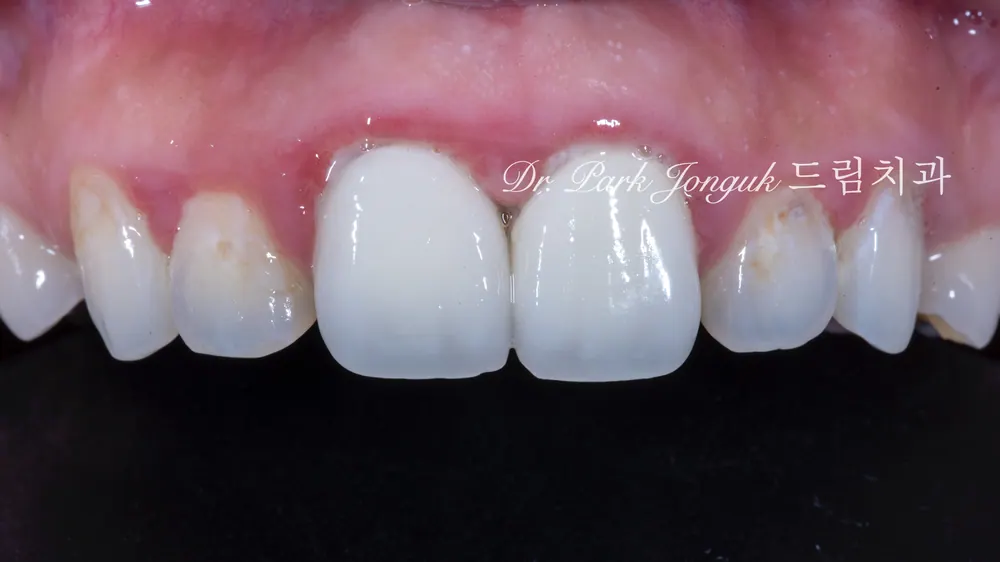
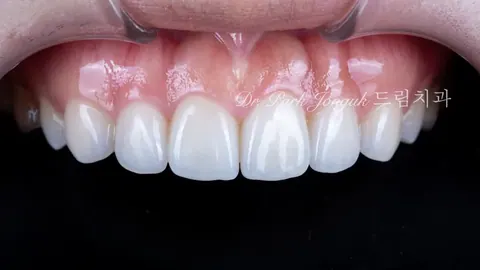
After getting all-ceramic crowns on two front teeth,
the patient came in with severe gum inflammation.
On top of that, the shape and color of the two teeth
didn't even match the other teeth.
Even though she had been receiving ongoing gum treatment,
the inflammation wouldn't go away,
so she was told she needed retreatment and came to us.
In cases like this, the crown margin is positioned too deep beneath the gum,
which continuously causes inflammation.
This is a case where both the esthetic problem and the gum inflammation problem needed to be resolved.
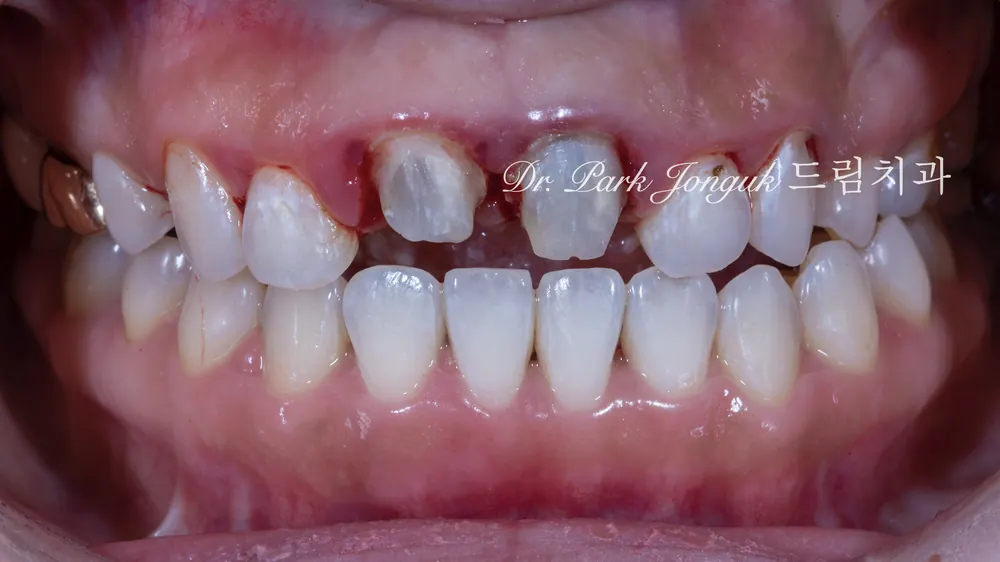
Upon removing the crowns,
for reasons unknown,
a considerable amount of tooth structure had been removed.
The particular problem was that the reduction extended deep beneath the gum.
In cases with this much inflammation,
temporary teeth are used
while waiting for the gum inflammation to resolve,
before the retreatment can be completed.
At the same time as the all-ceramic crown treatment for the two front teeth,
veneer treatment was also carried out on the other front teeth.
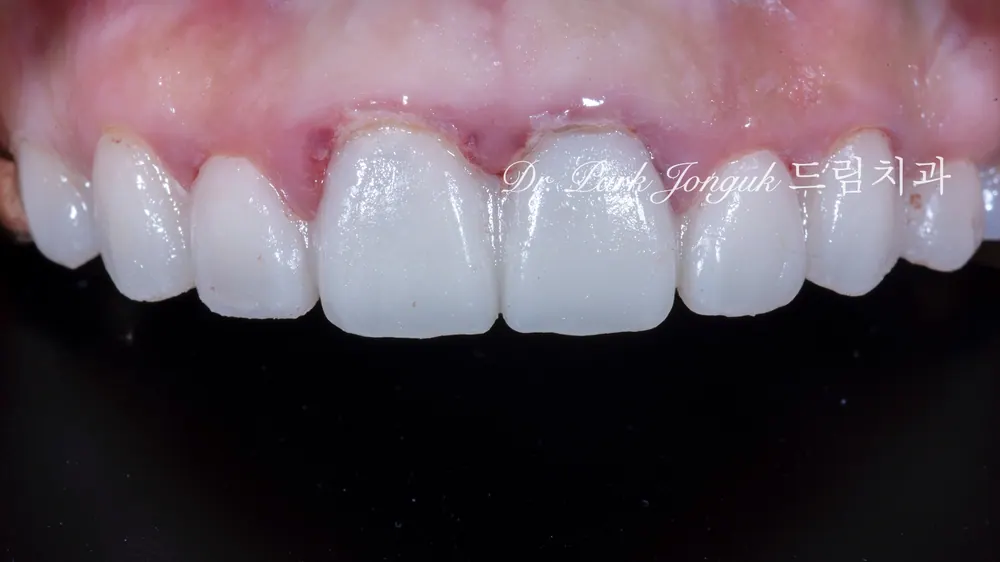
During the retreatment period, the temporary teeth are remade several times to match changes in gum shape.
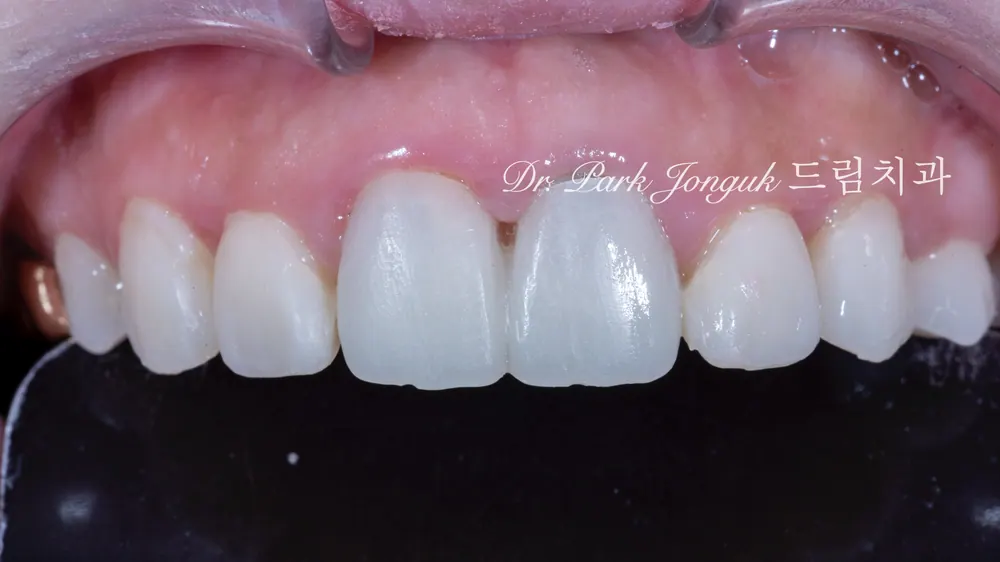
As the shape of the temporary teeth is adjusted, the gum inflammation resolves,
and once the gums are healthy, fabrication of the final all-ceramic crown in ceramic begins.
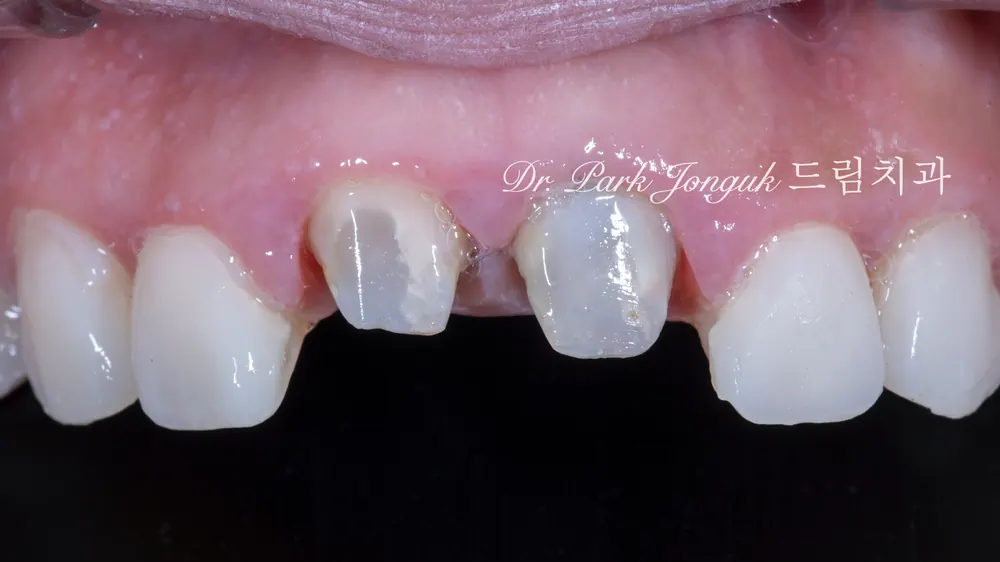
It's not perfect,
but it's brought to the best possible state before moving on to the next stage of treatment.
Since the tooth had already been reduced far too much,
achieving a truly ideal state is simply not possible.
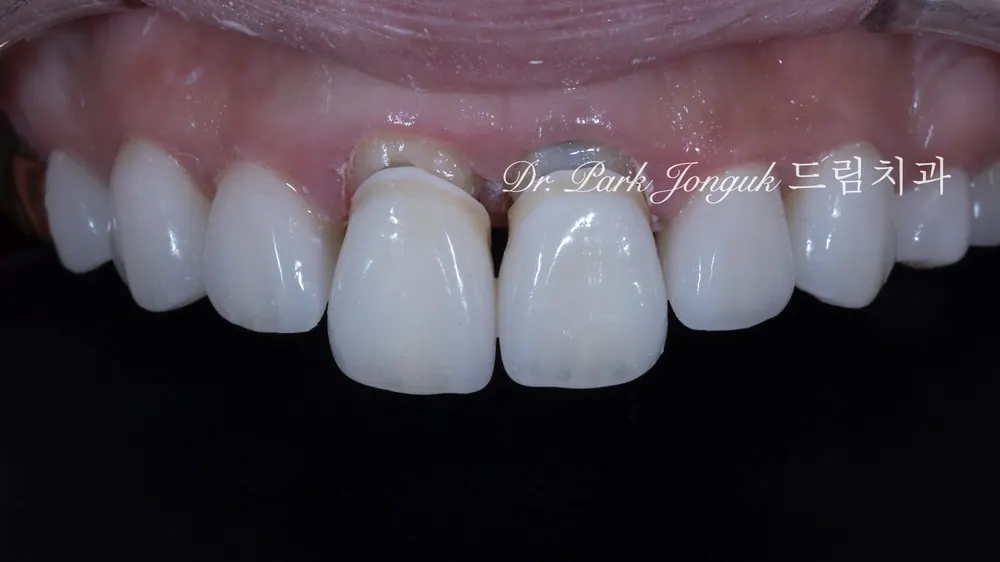
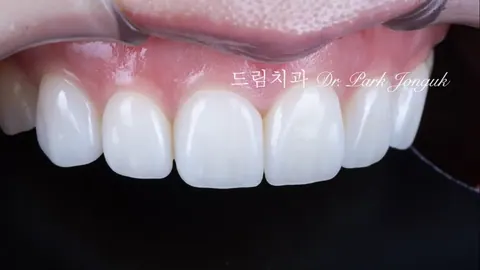
The veneer treatment has been completed,
and the front-tooth retreatment continues.
Using a method that minimizes irritation to the gums,
the tooth shape is refined and the gums are treated, and then
the ceramic crown is fitted for a trial.
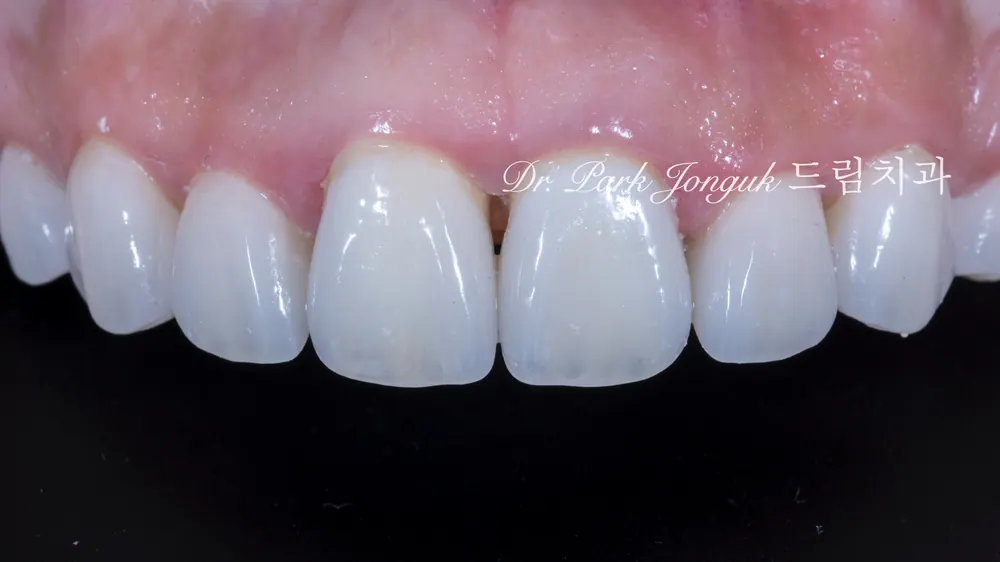
This is the appearance one week after retreatment.
The gums have not yet fully stabilized.
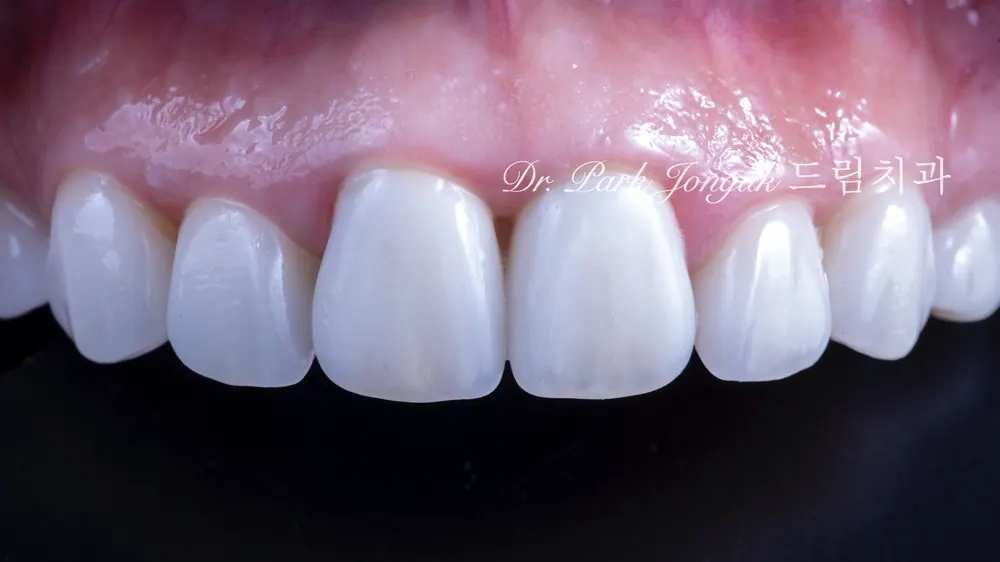
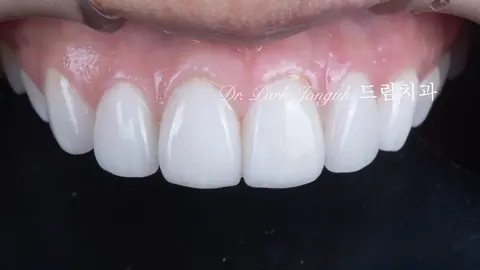
This is the appearance after 6 months.
You can see the gum tissue beginning to fill back in between the veneer and the all-ceramic crown teeth.
Because this was such a severely damaged case,
it takes a long time for the gums to return to normal.
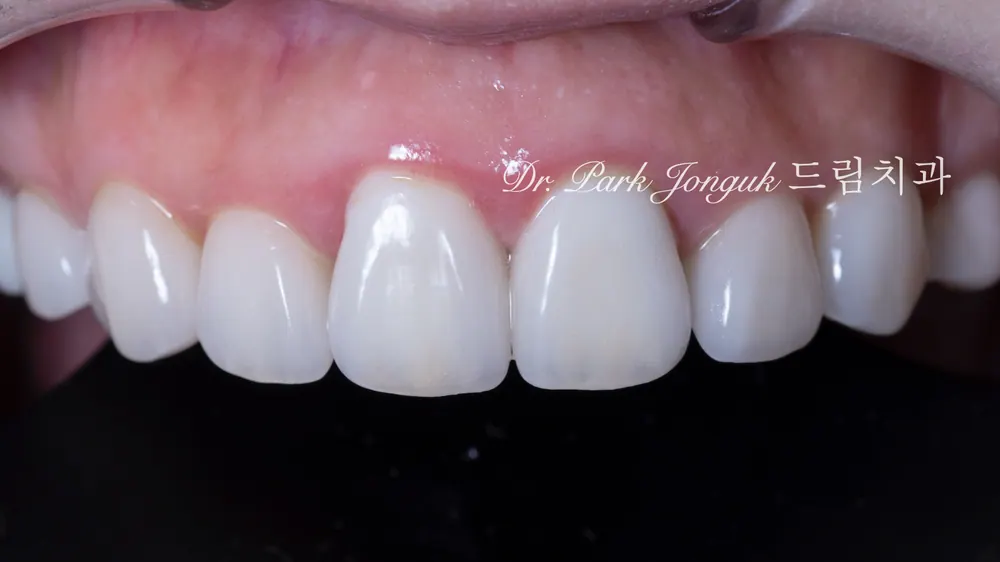
This is the appearance after 3 years.
The gums have completely filled back in,
though gum care hasn't been kept up especially well.
In cases like this, where retreatment was done because of a gum problem,
ongoing gum care every 6 months is necessary.
Since the patient came back after 3 years,
the gums aren't in an especially well-maintained state,
but taking that circumstance into account,
you can see they've improved considerably.
Natural beauty
Since 2006, Dream Dental Clinic
This article is a clinical note written by Dr. Park Jonguk of Dream Dental Clinic, Gangnam; the original was published on his blog. The photographs shown are real cases he treated. Results vary with each patient’s condition, and every procedure carries the possibility of individual variation and side effects.
Quick Consult
Request a Callback
Leave your number and we will call you back during clinic hours.
Request Received
We will contact you during clinic hours. For urgent matters, please call +82-2-3448-0028.