
Sinsa-dong Veneer Clinic: Turning Overly Large Teeth Beautiful
Hello.
I'm Park Jonguk, board-certified specialist in conservative dentistry at a Sinsa-dong veneer clinic.
Even if the alignment of the teeth is good, if the shape of the teeth is awkward,
it's hard to get a beautiful smile when smiling.
The textbook-beautiful shape of a tooth
is based on a square, triangle, or oval,
adjusted slightly to fit the face shape or gender.
There isn't a strict, clear-cut definition of what makes one tooth shape beautiful.
What matters is that it harmonizes well with the face and the smile.
There are a few characteristic traits of teeth that aren't considered attractive.
The most important one is proportion —
the width-to-length ratio of a single tooth, and the size ratio with the tooth next to it.
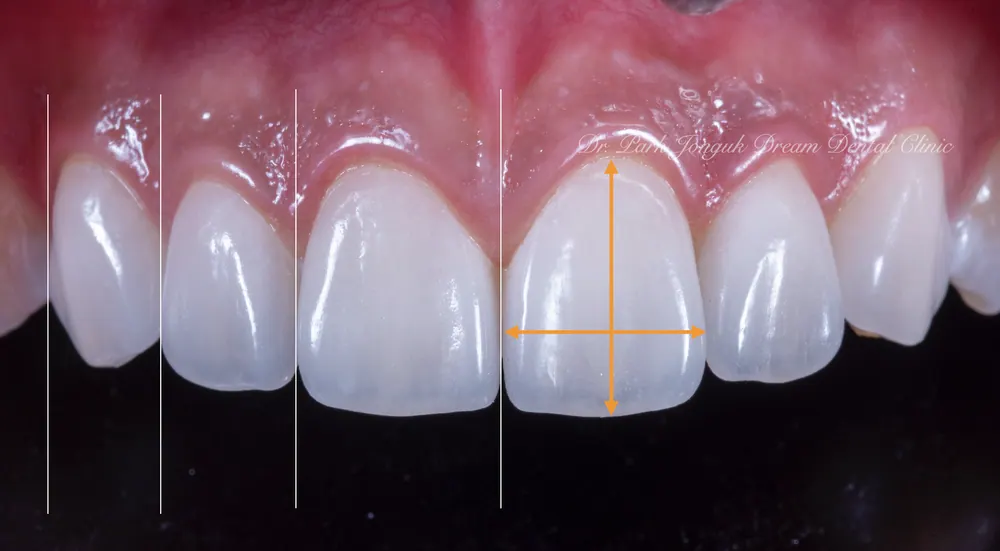
Generally, for the largest front tooth — the central incisor — a width-to-length ratio of around 75 to 85%
looks the most visually beautiful.
If this ratio is too small, the tooth looks narrow and long;
if it's too large, the tooth looks short and stubby.
The proportions between teeth matter as well.
Viewed from the front, the ratio among the front tooth, the tooth next to it, and the canine
needs to match average figures.
Up until the early 2000s,
there was a lot of talk about needing to match the golden ratio,
but since the mid-2000s, the consensus has become that a strict golden ratio is hard to apply in practice,
and in my own case, drawing on 20 years of experience,
I've been identifying and applying the tooth proportions best suited to Korean patients.
At this Sinsa-dong veneer clinic, when transforming teeth to be beautiful,
the proportions also need to be improved at the same time.
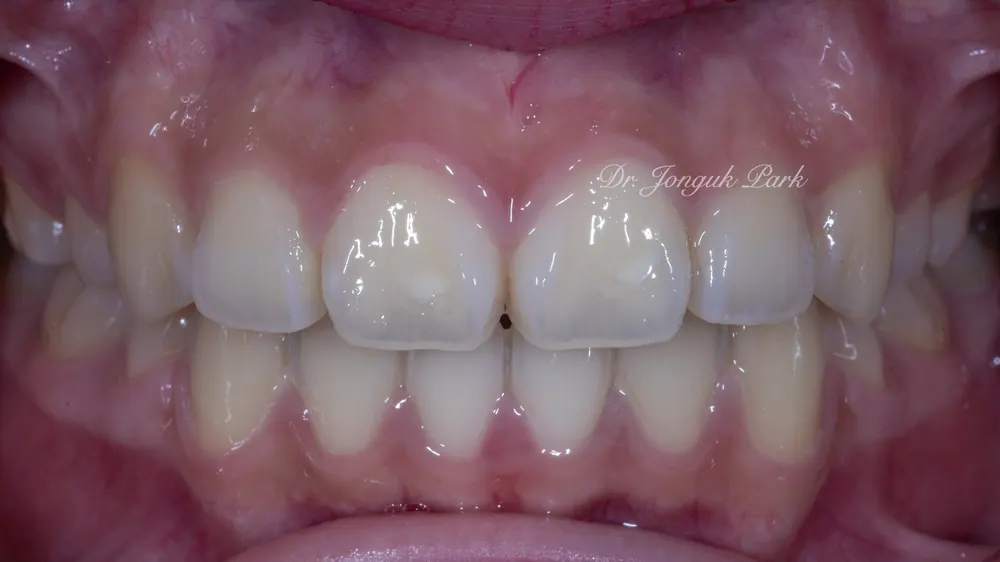
Through treatment at this Sinsa-dong veneer clinic, what the patient wanted most
was for the size of her teeth to become smaller.
Her teeth were more than 20% larger than the average size for women,
so making them smaller was the top priority.
On top of that, there were various other issues that needed improvement.
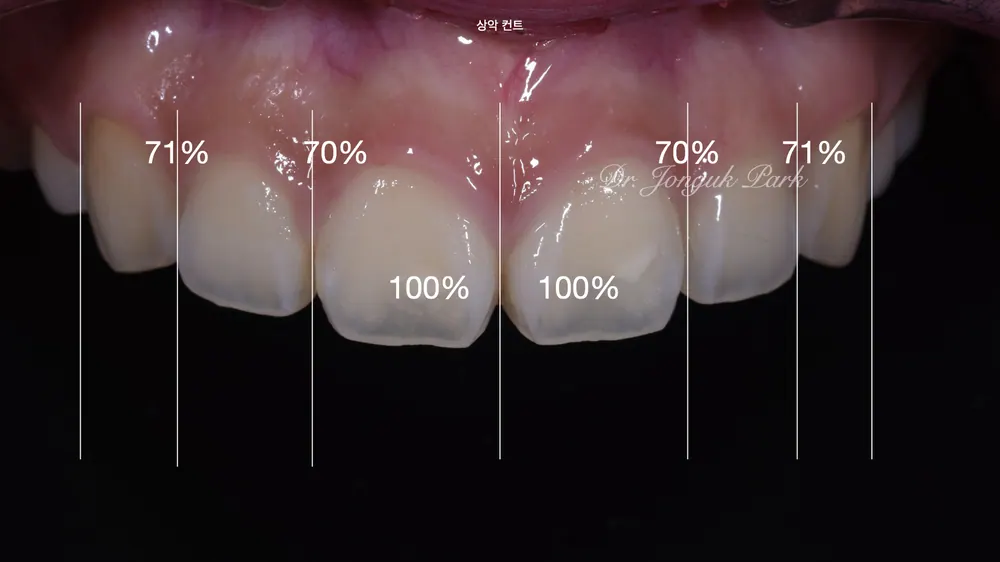
First is the issue of proportion.
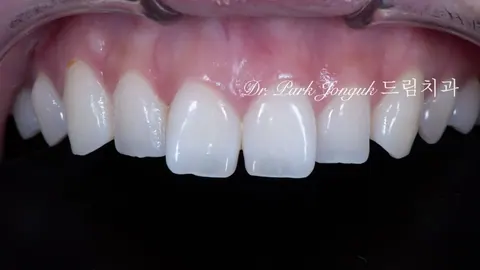
The front teeth were considerably large and wide.
As mentioned earlier, a width-to-length ratio of around 75 to 85% is ideal,
but here the width and length were nearly equal.
Once this size is reduced, the proportions with the adjacent teeth all need to be readjusted as well.
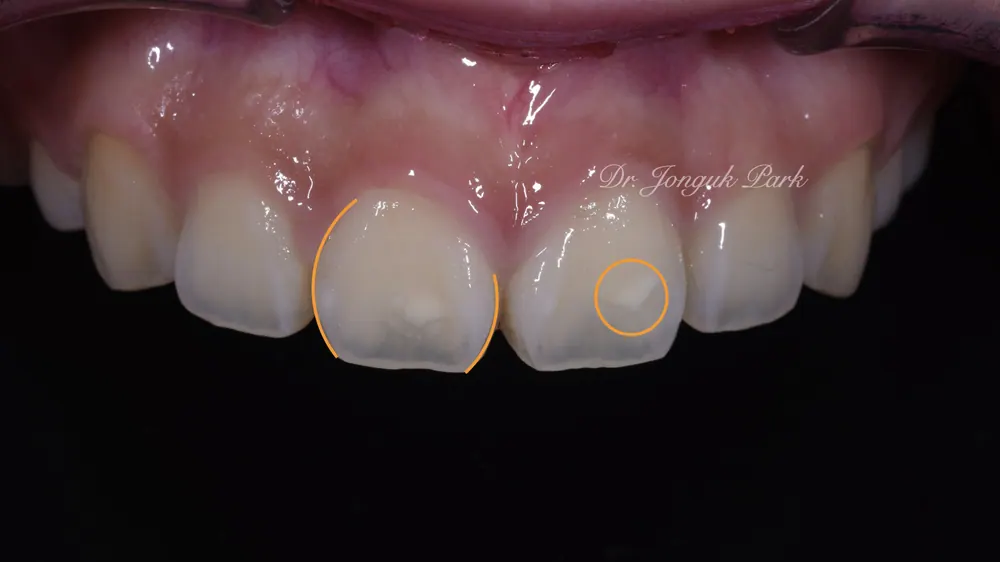
Another important reason the teeth weren't attractive
is what I usually call a "jar shape."
The side outlines of the teeth were quite rounded.
It could also be described as having a pentagon-like shape.
There were also a lot of white spots on the tooth surface,
and the teeth were fairly yellow overall.
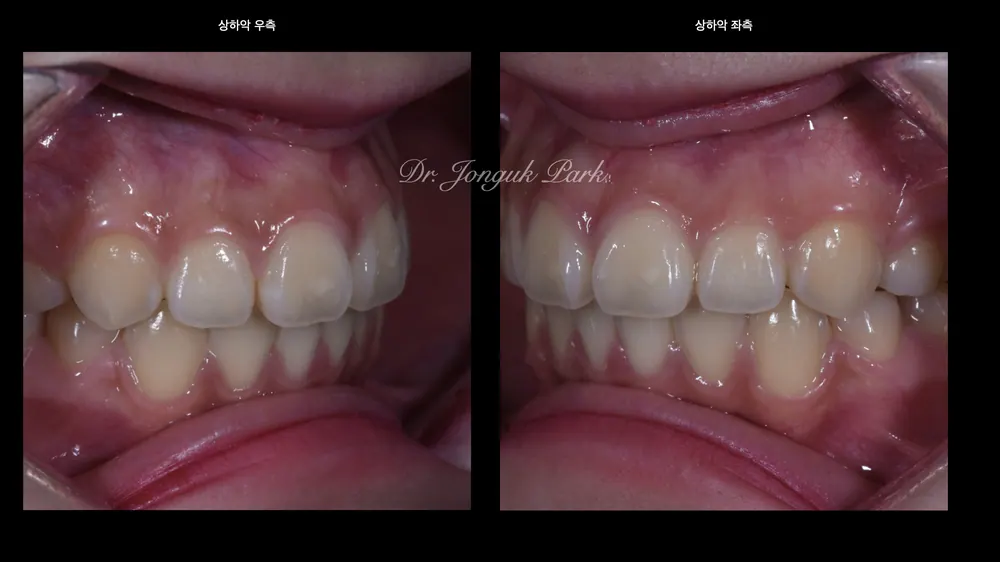
The canines in particular were noticeably more yellow.
The bite relationship also needed to be taken into account.
A plan needs to be developed to resolve these various issues.
Using wax beforehand, we work out which parts of the tooth to reduce and what result to aim for,
building the expected shape in advance.
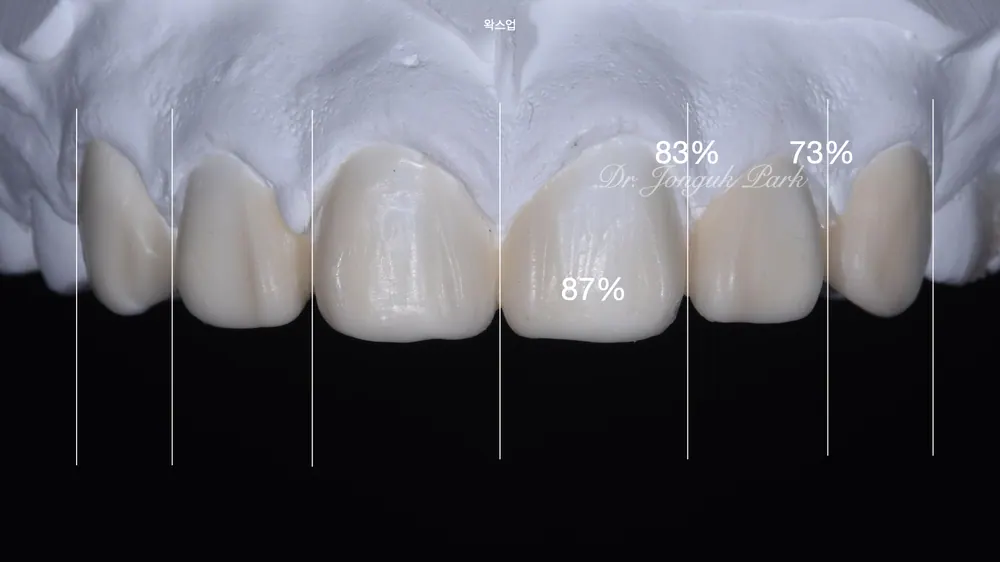
Because there are limits imposed by the tooth's original shape,
a perfect ratio isn't always achievable,
but improvement needs to be maximized as much as possible.
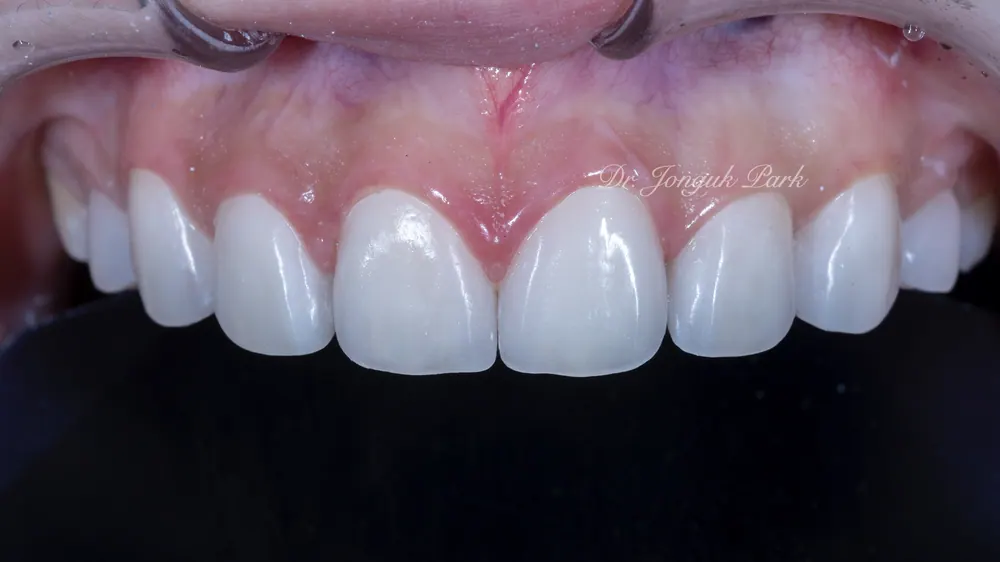
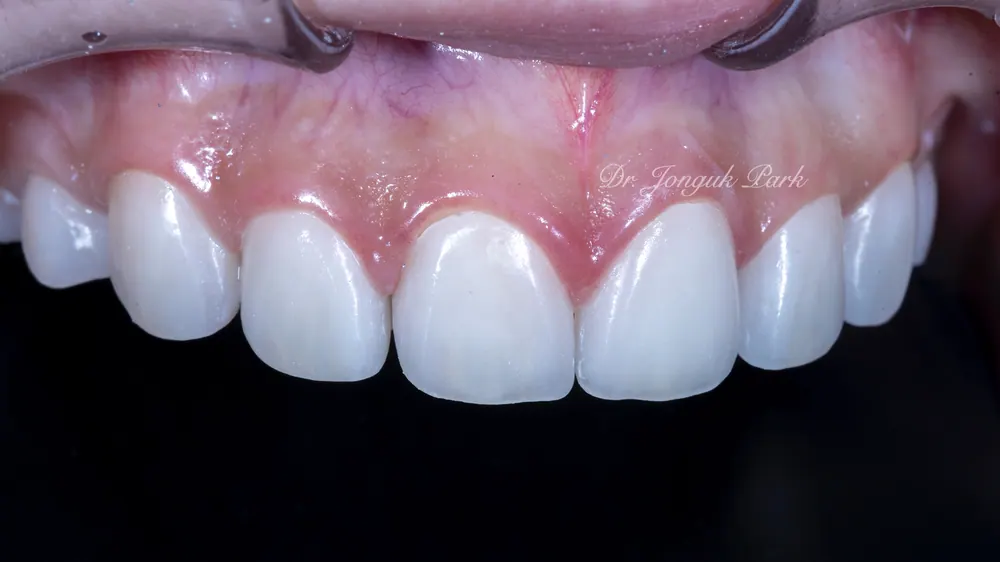
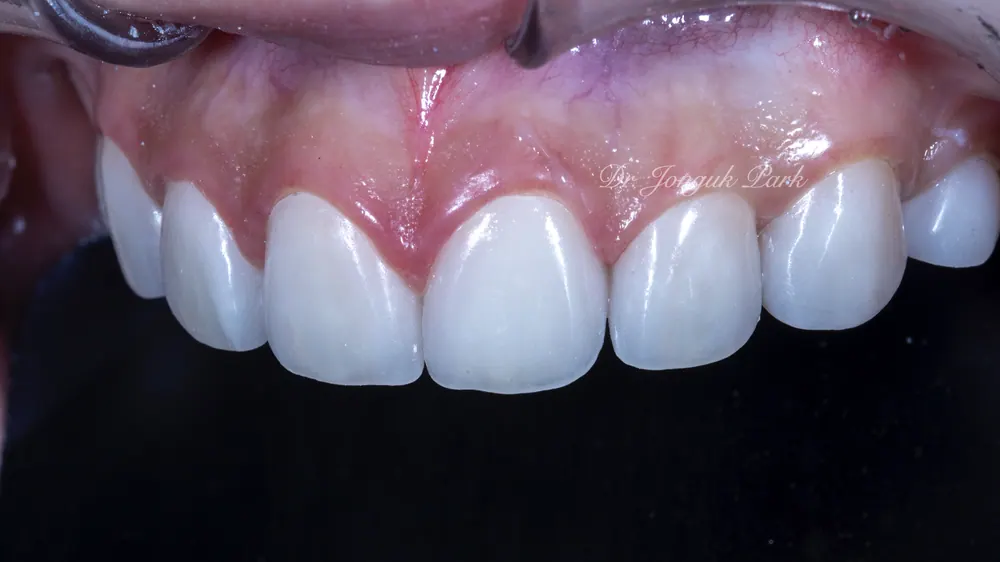
The teeth were reshaped to be as small, bright, and pretty as possible.
So that the veneer result wouldn't look too artificial,
a great deal of natural design was applied.
Beyond simply reducing the actual size of the teeth,
adjusting the proportions and details of the teeth
also has a significant effect of making them look smaller than they actually are.
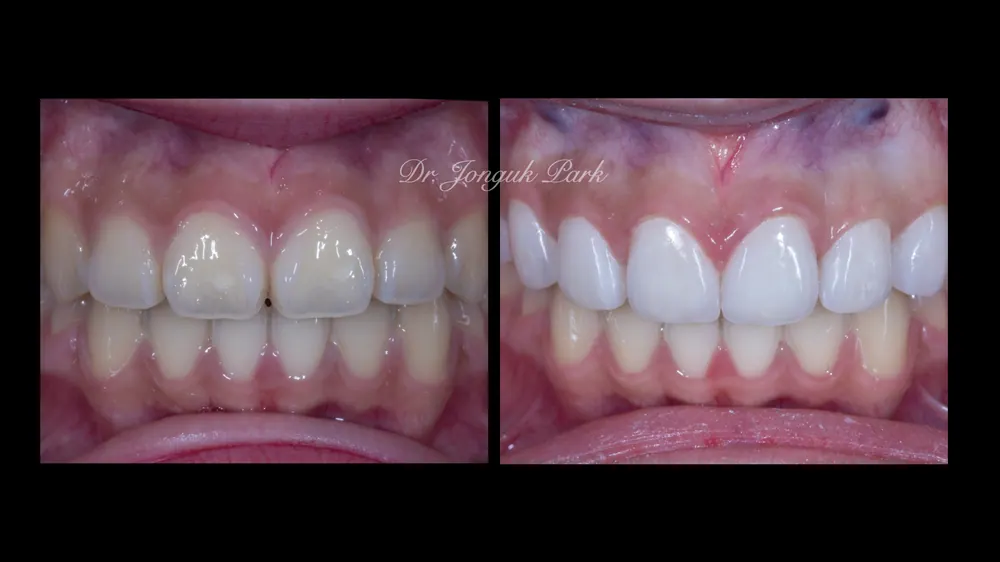
Comparing the before-and-after photos, through this Sinsa-dong veneer clinic
you can see just how much change took place.
It's fair to say this was the single biggest change toward a beautiful smile.
Since 2006, Dream Dental Clinic
This article is a clinical note written by Dr. Park Jonguk of Dream Dental Clinic, Gangnam; the original was published on his blog. The photographs shown are real cases he treated. Results vary with each patient’s condition, and every procedure carries the possibility of individual variation and side effects.
Quick Consult
Request a Callback
Leave your number and we will call you back during clinic hours.
Request Received
We will contact you during clinic hours. For urgent matters, please call +82-2-3448-0028.