
A Well-Regarded Apgujeong Clinic Retreats an All-Ceramic Crown with Severe Gum Discoloration
Hello.
I'm Park Jonguk, a board-certified specialist in conservative dentistry at a well-regarded Apgujeong dental clinic.
When a front tooth develops severe decay,
or breaks due to an accident or various other reasons,
it needs root canal treatment and then a crown.
In a badly broken case, a post may need to be placed inside.
It's called a post.
In the past, these posts were sometimes made of metal.
Of course, molars are still made with metal posts today.
Recently, when a post needs to be placed in a front tooth,
a tooth-colored material is used.
When a tooth undergoes root canal treatment like this,
its color gradually changes as time passes.
On top of that, if a metal post is added, it can turn almost black.
With an all-ceramic crown, this discoloration shows through the ceramic.
When it shows through like this, the tooth ends up looking quite dark.
Since discoloration also affects the root area of the tooth,
the color of the gum darkens as well.
Recently, materials that discolor less are used during root canal treatment,
and tooth-colored posts are used instead,
so the discoloration is much less than before,
but some degree of discoloration over a long period of time
can't be completely prevented.
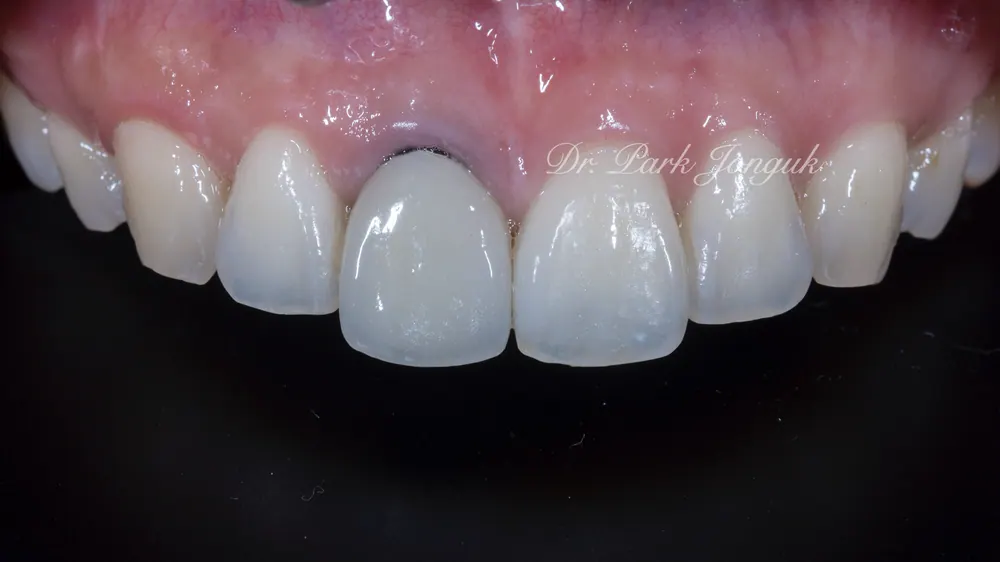
When only one tooth has had root canal treatment and a metal post placed,
this kind of discoloration is commonly seen.
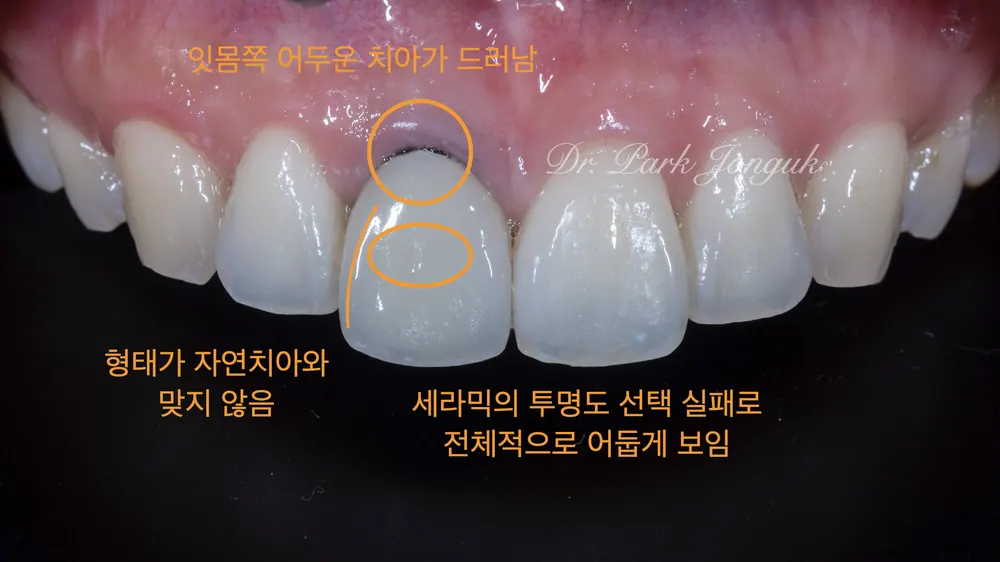
Since this was a case with a metal post,
the color probably didn't match from the very start.
As time passed and the gum shape changed,
the discolored root portion of the tooth became exposed,
making the gum area look even darker.
The shape also looked quite different from the left front tooth, which should have been symmetrical.
Many of these issues had to be resolved.
Resolving them required an overall plan starting from the temporary-tooth stage.
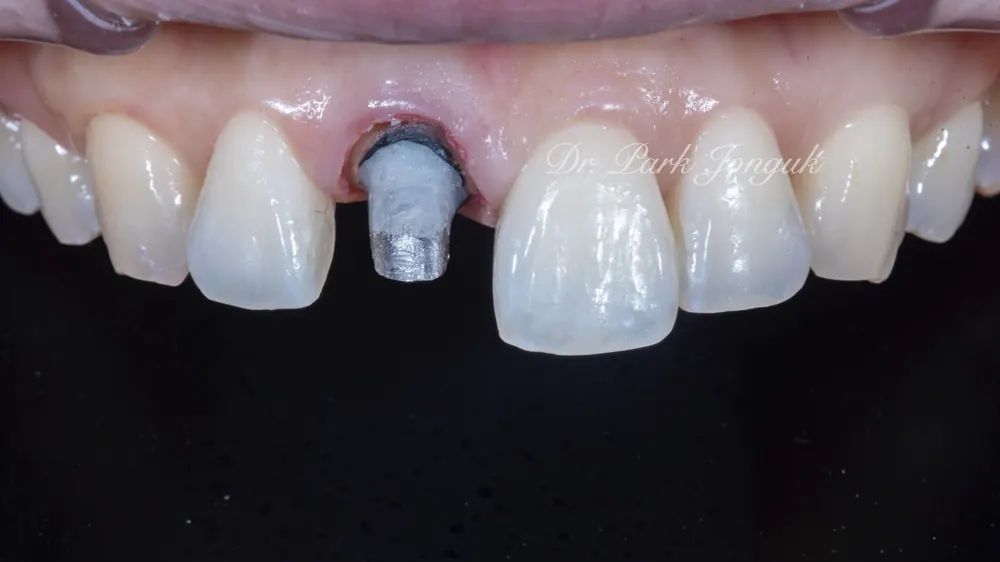
This is the state after removing the crown and refining the tooth further.
One point we emphasize at this well-regarded Apgujeong clinic, Dream Dental Clinic, is that
matching left-right symmetry is important,
but the gum shape also has to be matched well.
The gum shape needs to be shaped gradually using temporary teeth.
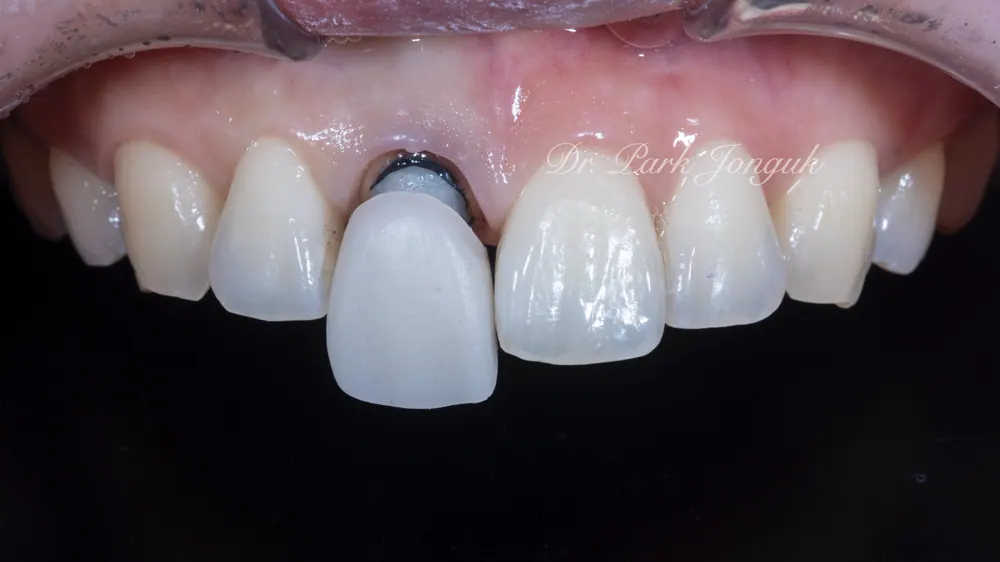
By making precise temporary teeth,
we make sure the gum can adapt well.
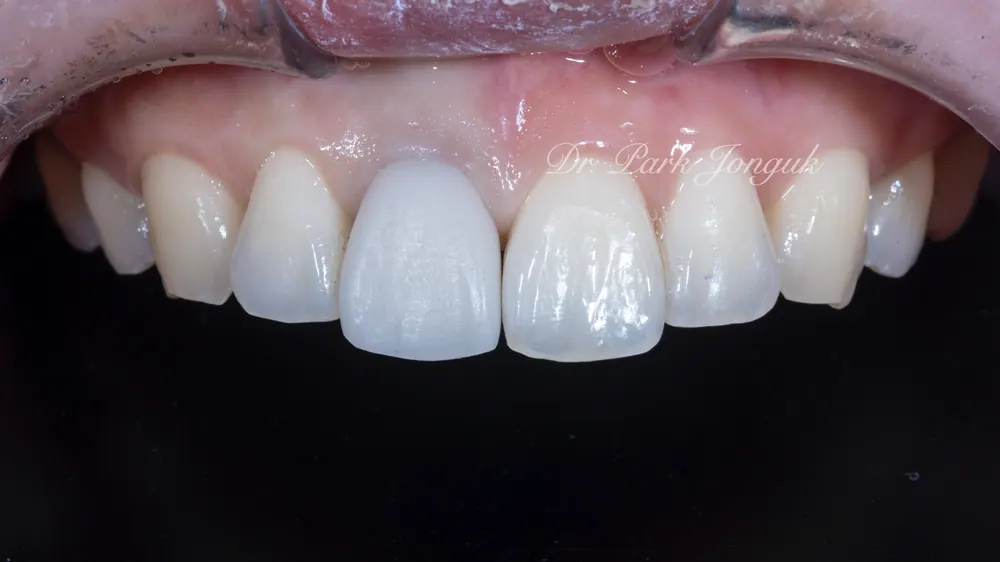
Temporary teeth are made from a material called resin,
and unfortunately, since there's no material that's completely opaque,
a lot of the dark tooth color still shows through.
The purpose of temporary teeth also includes matching the shape of the tooth,
but in this case, their purpose was to correct the shape of the gum.
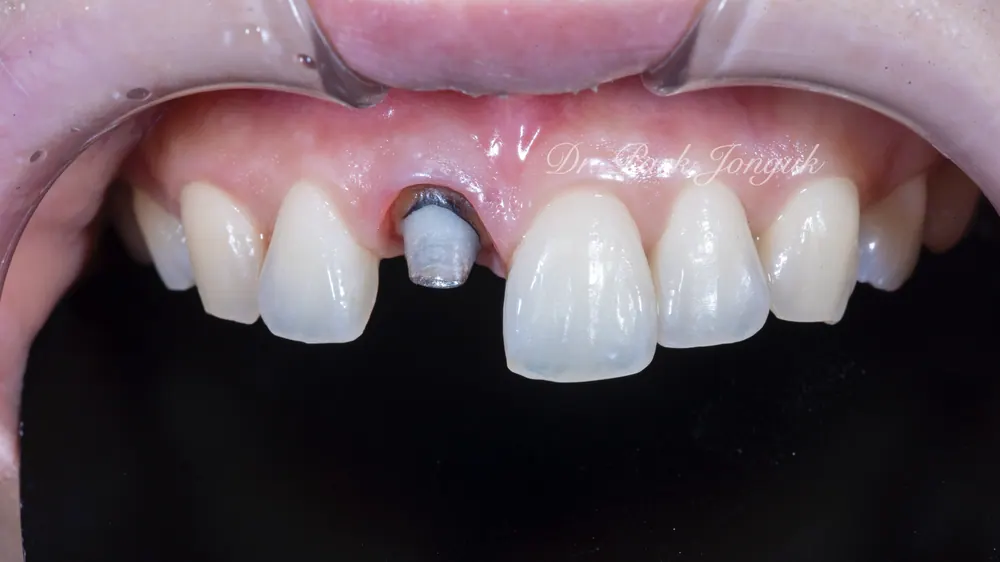
By removing a bit more of the metal post,
we had to reduce the likelihood of the tooth looking dark.
During the temporary-tooth period, you can see the gum was shaped up very cleanly.
At this well-regarded Apgujeong clinic, Dream Dental Clinic,
for cases with this much discoloration,
we use a ceramic called zirconia.
Since it's the most opaque ceramic available,
it's used often for front teeth with this level of discoloration.
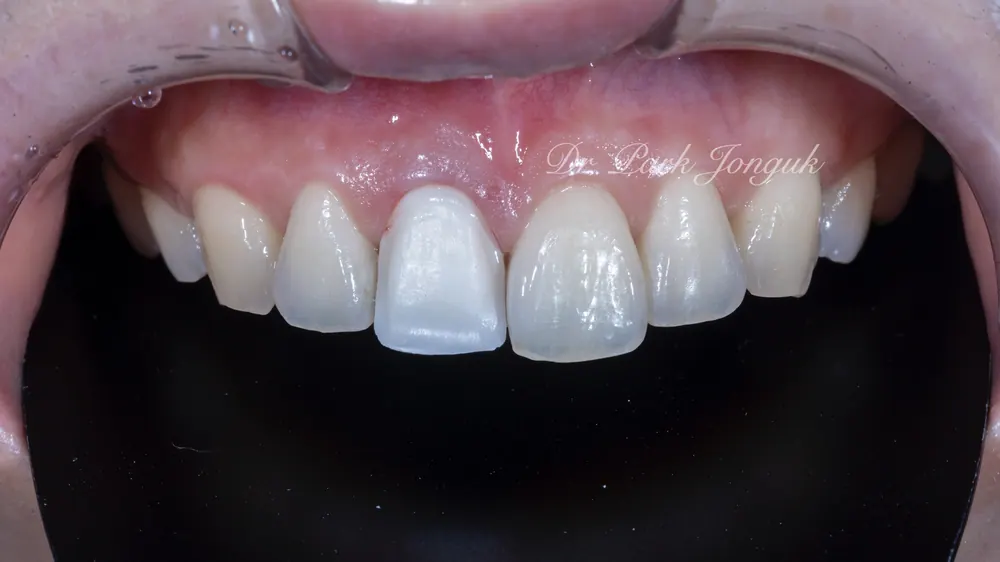
We place a cap made of zirconia
and check whether it fits well with the gum.
More ceramic is then layered on top of this zirconia
to bring out the feel of a natural tooth.
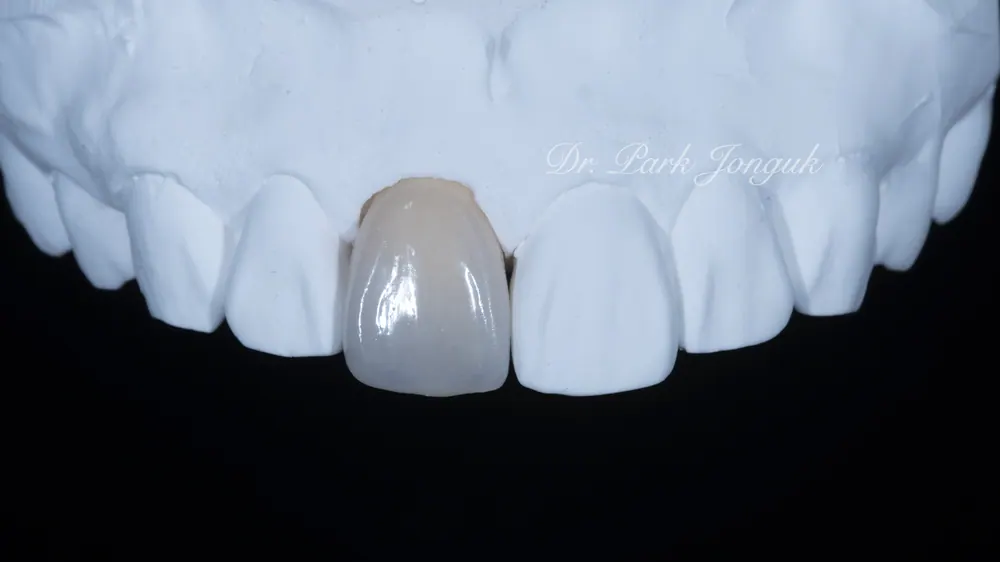
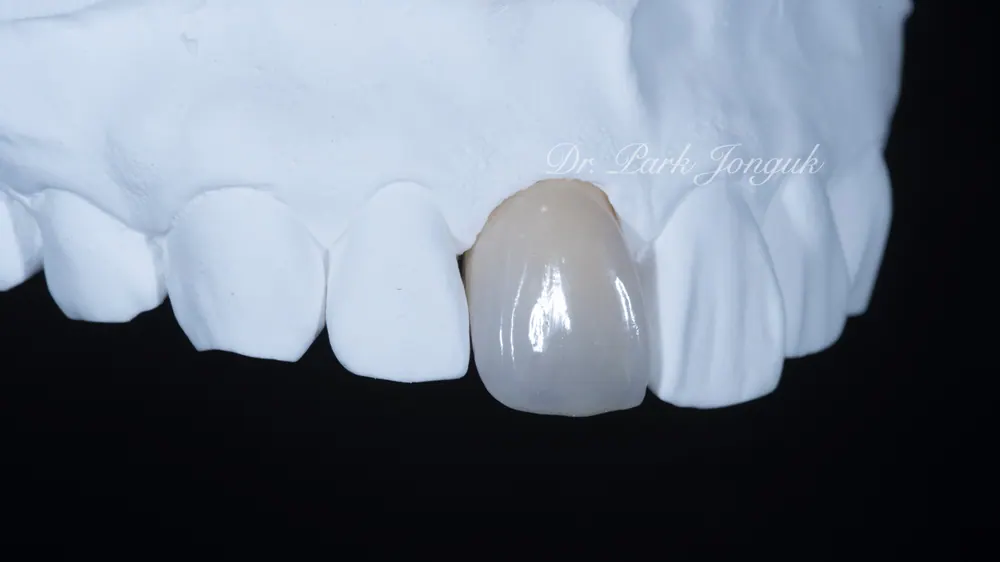
Once we confirm that the cap fits well,
we shape the natural tooth form
carefully through ceramic build-up.
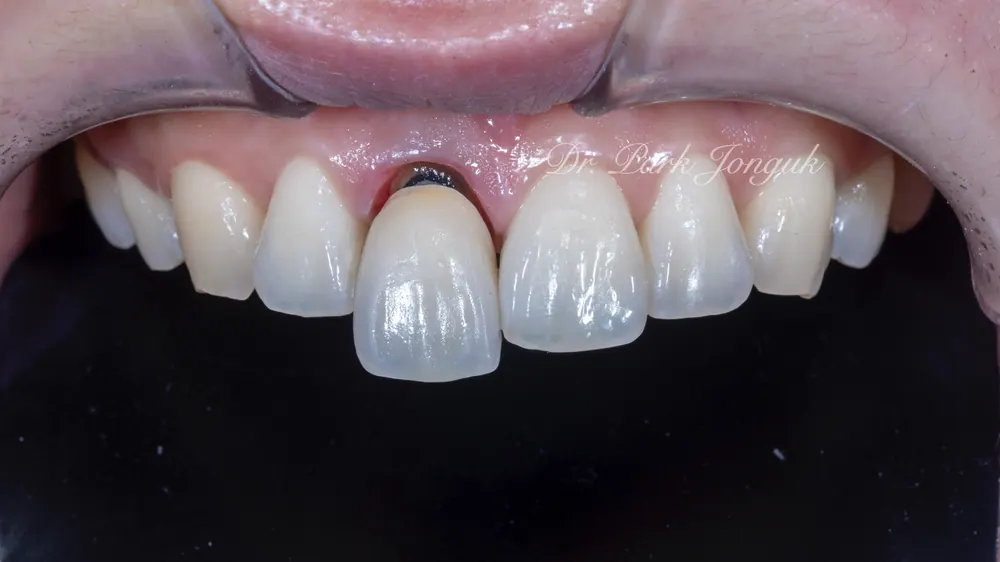
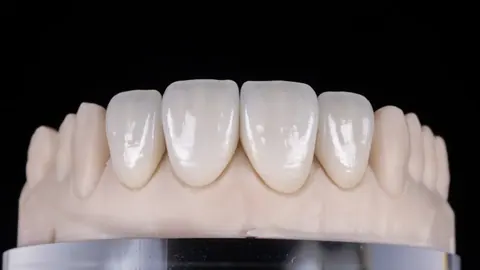
Now we take the completed all-ceramic crown
and fit it in place, discussing the color and shape with the patient.
We check the color and shape under various angles and lighting and finalize it.
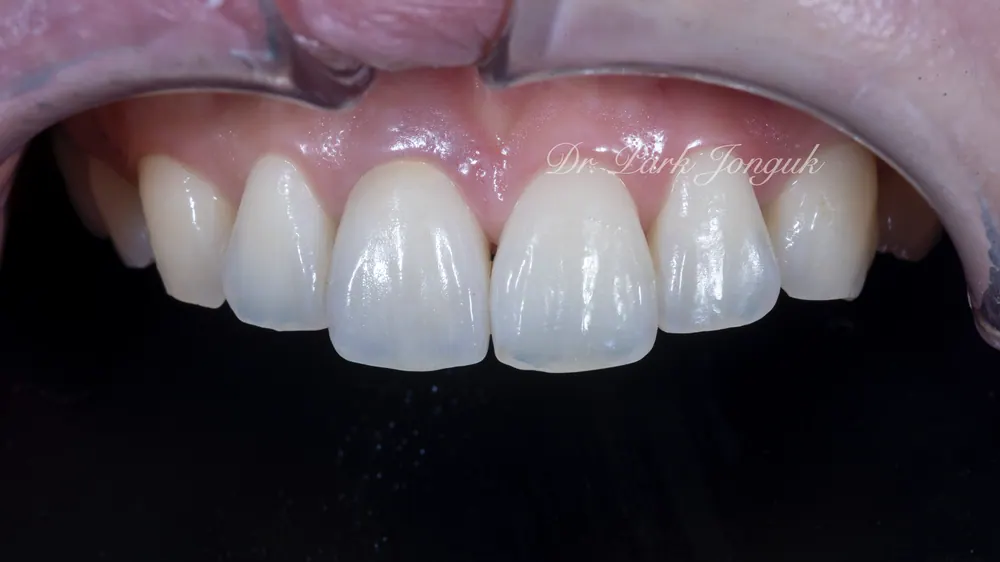
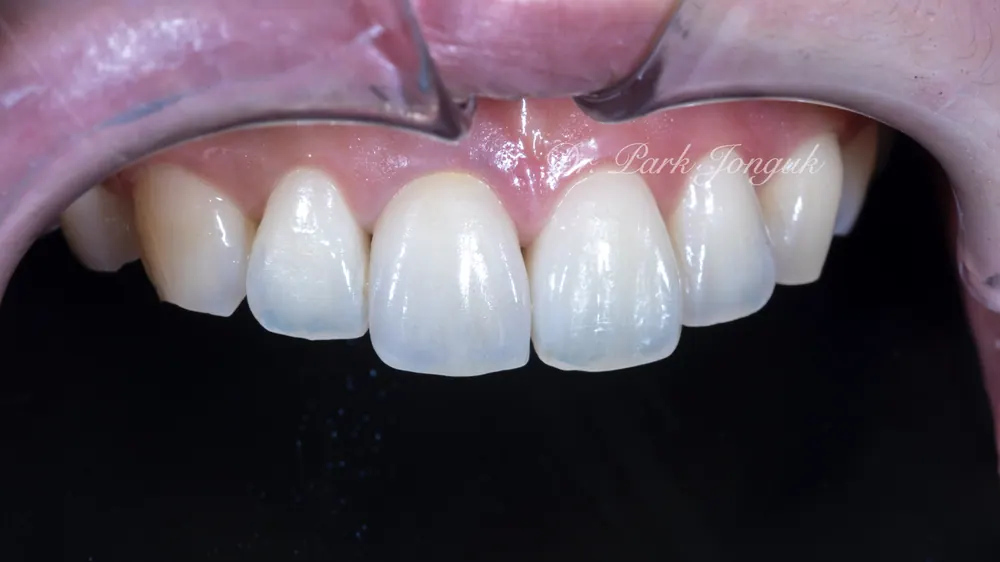
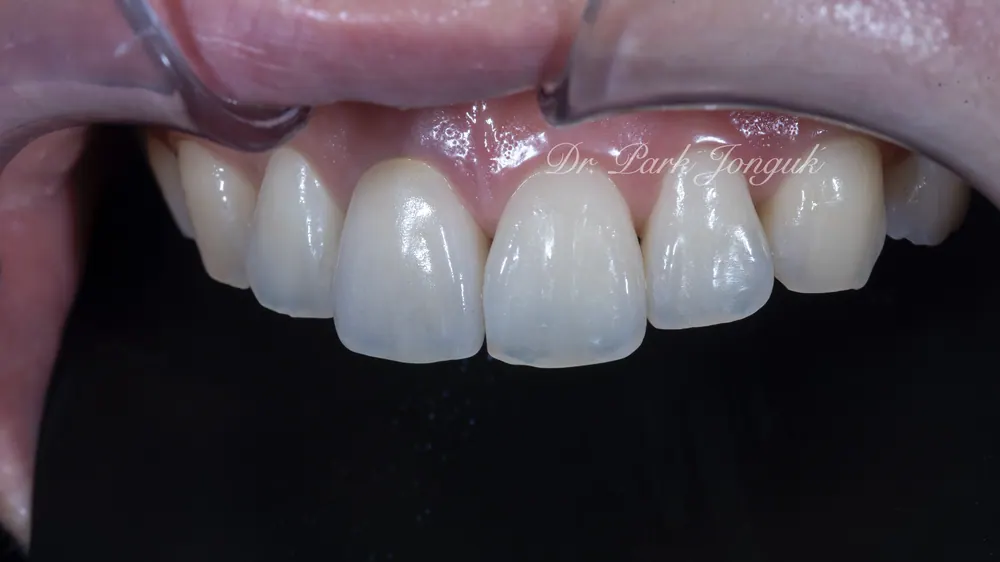
It becomes hard to tell
which tooth is the natural tooth and which is the all-ceramic crown,
since it was made to resemble the natural tooth so closely.
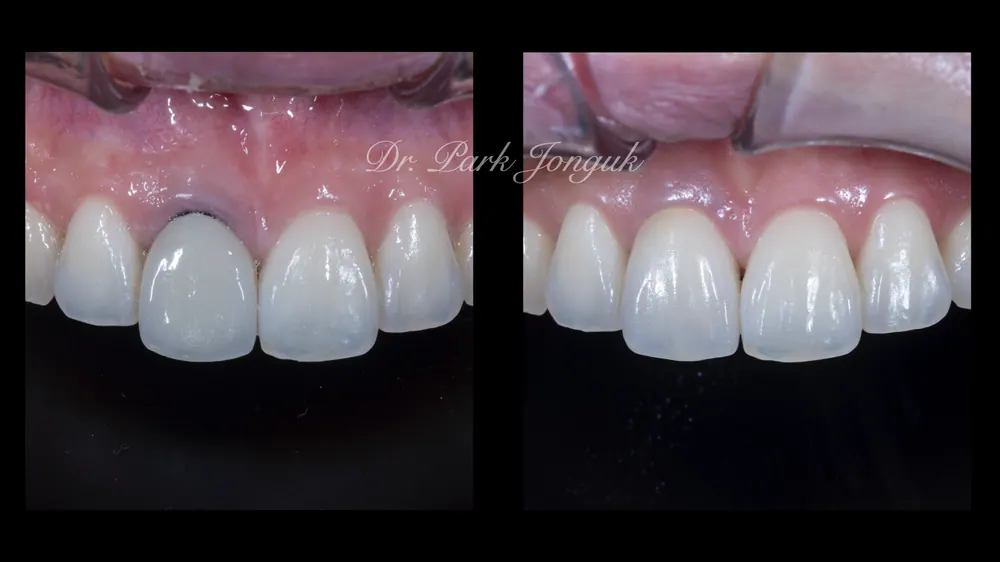
Comparing before and after treatment,
you can clearly see exactly what improved.
Harmonizing a single tooth with the surrounding natural teeth
is a very demanding process in all-ceramic crown treatment.
Once again, long experience matters most.
Since 2006, Dream Dental Clinic
This article is a clinical note written by Dr. Park Jonguk of Dream Dental Clinic, Gangnam; the original was published on his blog. The photographs shown are real cases he treated. Results vary with each patient’s condition, and every procedure carries the possibility of individual variation and side effects.
Quick Consult
Request a Callback
Leave your number and we will call you back during clinic hours.
Request Received
We will contact you during clinic hours. For urgent matters, please call +82-2-3448-0028.