
No-Prep Veneers: Beautiful Without Cutting Your Teeth
Hello, I'm Park Jonguk, director of Dream Dental Clinic in Apgujeong.
Today I'd like to introduce an ideal case of no-prep veneers.
It's a special treatment that can create a beautiful smile without reducing the teeth at all.
What are no-prep veneers?
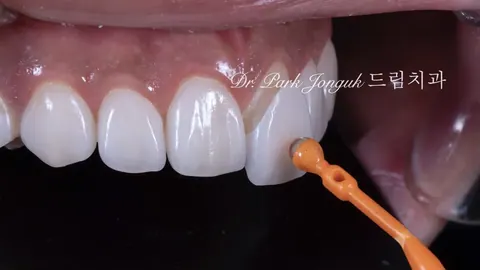
No-prep veneers are a treatment that bonds thin ceramic onto the tooth without any reduction at all.
Conventional veneers reduce the tooth by about 0.5-0.7mm, but no-prep veneers reduce it by 0mm.
100% of the healthy tooth structure can be preserved.
It's the most conservative and safest cosmetic treatment method.
The three key conditions for no-prep veneers
But not everyone can get no-prep veneers.
Three conditions are required.
1. The teeth must be small
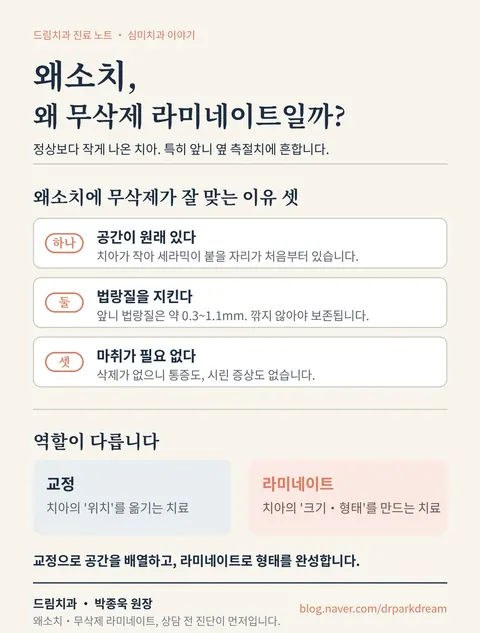
Since the teeth need to be enlarged, there's no need to reduce them.
It's actually a treatment that adds material, not removes it.
2. The alignment must be even
When the teeth are arranged evenly, no position adjustment is needed.
If they're crooked, reduction is needed, but if they're even, no reduction is necessary.
3. The teeth must not be protruding
The teeth must not stick out forward.
In fact, no-prep is possible only when the teeth are angled inward, like inward-tilted teeth.
This patient had the perfect conditions
This patient perfectly met all three key conditions for no-prep veneers.
Her teeth were small, her alignment was good, and they weren't protruding.
So we confidently proceeded with a no-prep approach.
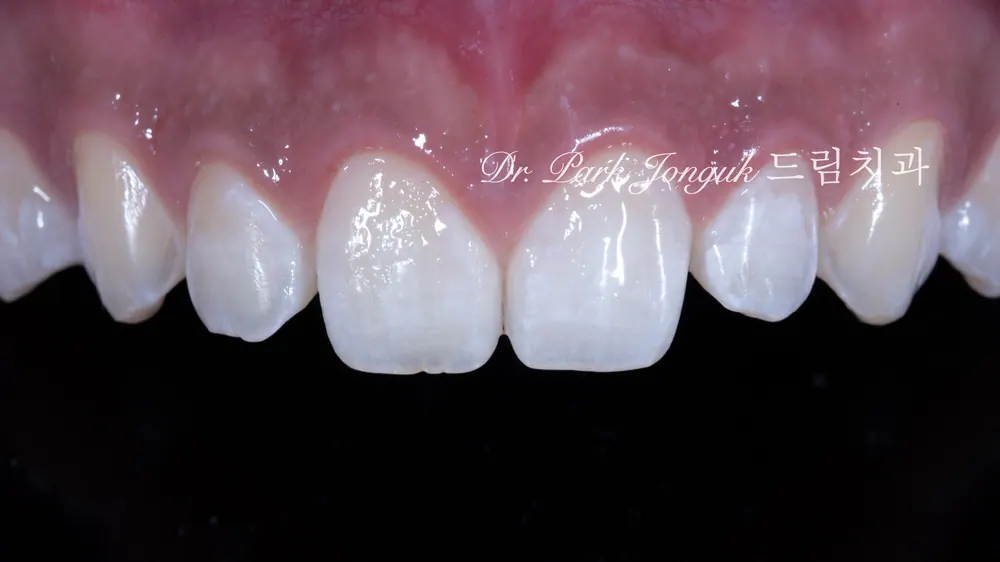
Photo 1. The initial examination photo before no-prep veneer treatment, showing the ideal conditions for no-prep veneers: small teeth and even alignment
The teeth are small and inward-tilted.
The alignment is also even.
It's a perfect indication for a no-prep approach.
Even for no-prep, diagnosis is essential
Just because it's a no-prep veneer doesn't mean diagnosis can be skipped.
In fact, diagnosis is absolutely necessary even for a no-prep case.
Precision wax-up diagnosis
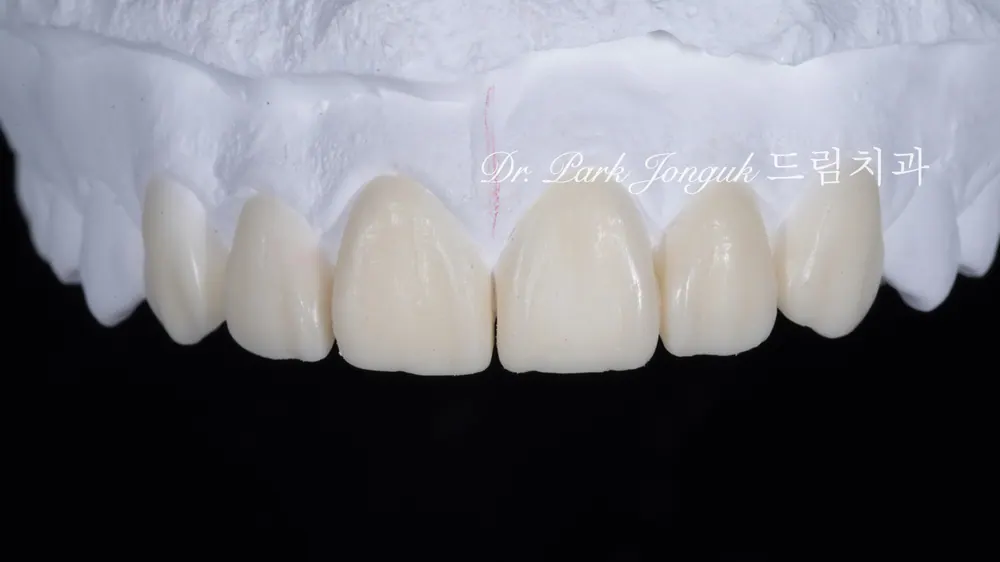
Photo 2. Precision wax-up diagnosis for no-prep veneers, designing the final tooth shape and size in advance
We create the final shape ahead of time.
We precisely design the tooth size, shape, and proportion.
Since this is a no-prep case, we must be careful not to let the teeth become too large.
Proportion control is important
The teeth must be enlarged while keeping a natural proportion.
We adjust the relationship between the central and lateral incisors harmoniously.
We make them a size that suits the patient's face and lips.
Checking in advance with temporary veneers
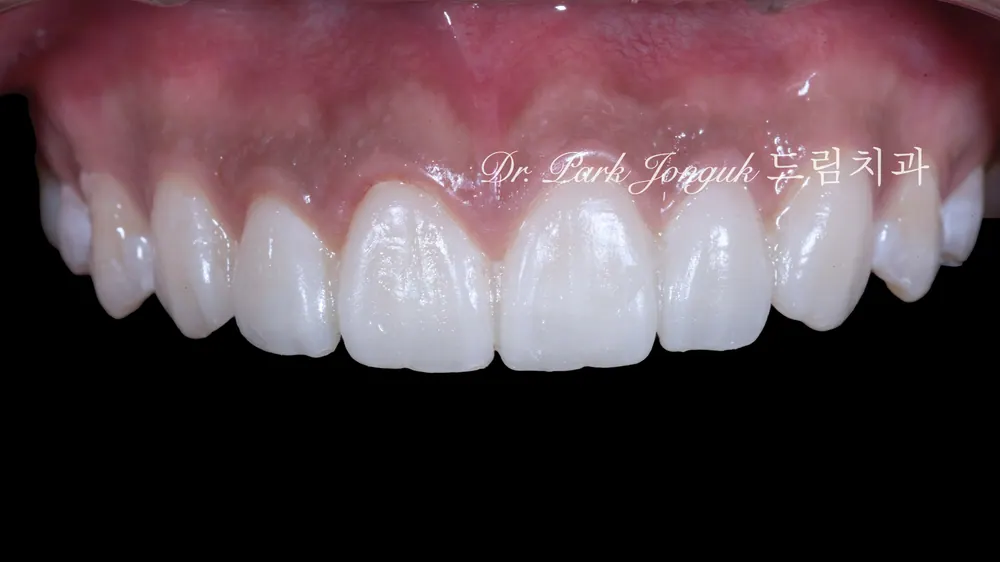
Photo 3. The temporary-veneer stage for no-prep veneers, an important process where the patient previews the final shape and consults with the dentist
Temporary veneers are made based on the wax-up diagnosis.
The patient actually wears them in her mouth.
Consultation with the patient at this stage is truly important.
The patient experiences it firsthand
She checks for herself in the mirror.
Is the size appropriate?
Does she like the shape?
What should the color be?
We communicate thoroughly
We listen to the patient's opinion.
If needed, we make adjustments at this stage.
We keep adjusting until it's perfect.
Going through this process is what leads to high final satisfaction.
The finished veneers — really thin
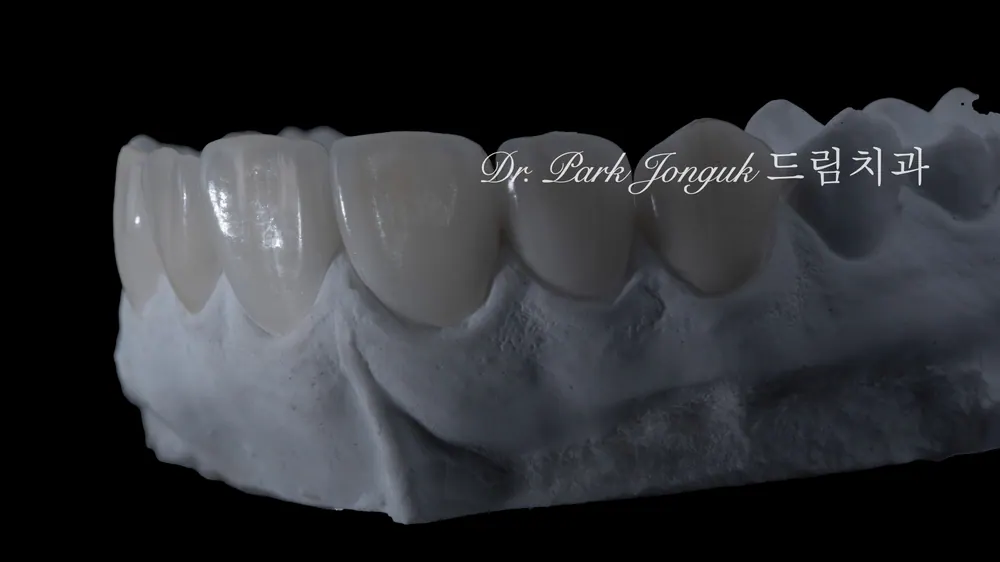
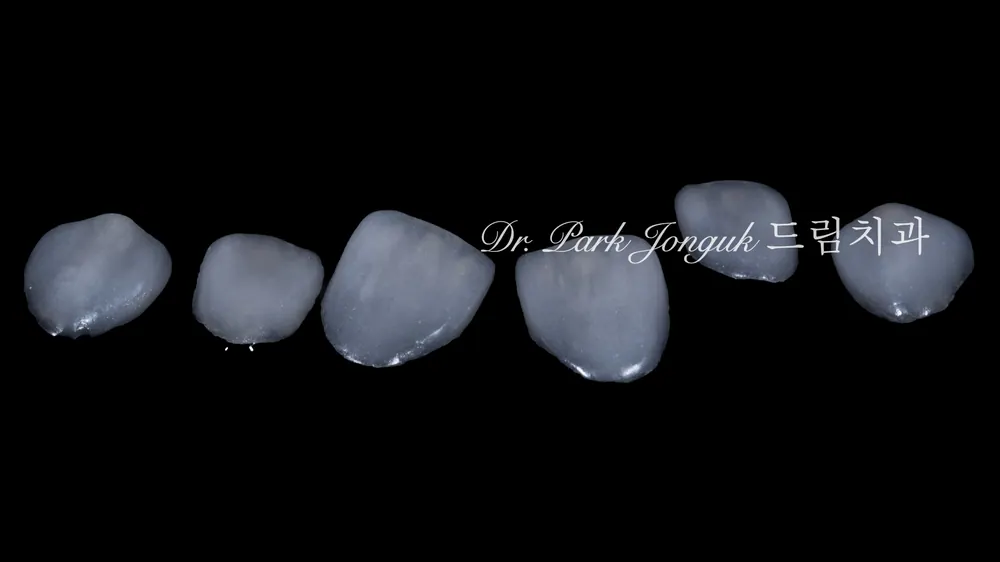
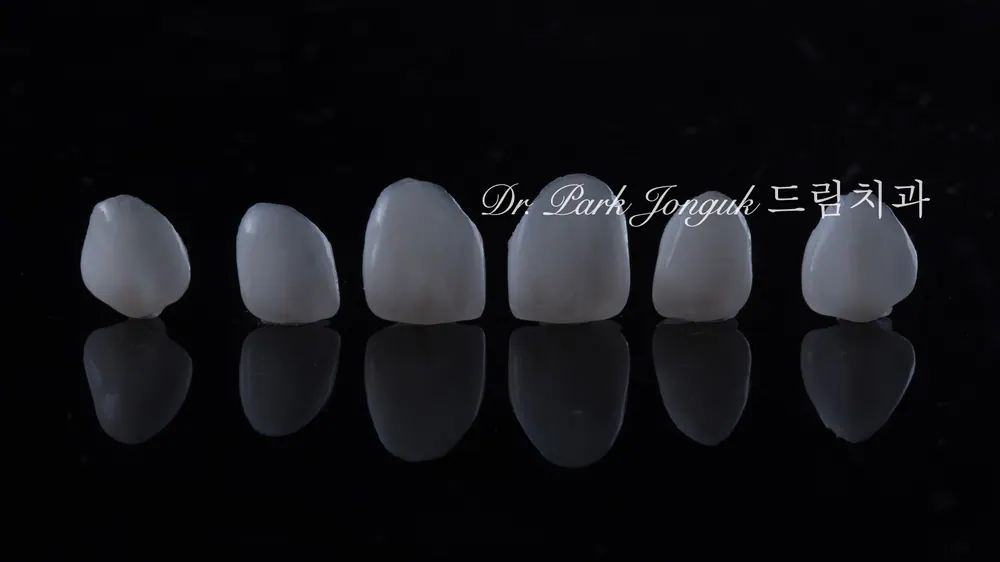
No-prep veneers are really thin.
They're ultra-thin, about 0.2-0.3mm.
The thickness is close to that of a contact lens.
The thin ceramic still captures every nuance of a natural tooth
What's remarkable is that even at this thinness, every detail is preserved.
You can see the translucency at the tooth edge.
There's subtle color variation across the tooth surface.
Developmental lobes and surface contours are reproduced.
The power of hand-layered build-up
This is only possible with hand-layered, multilayer build-up.
Multiple layers of ceramic are carefully stacked.
A dentin layer, an enamel layer, and a translucent layer are each built separately.
This is an effect that a single-block method can never achieve.
Verified through the try-in process
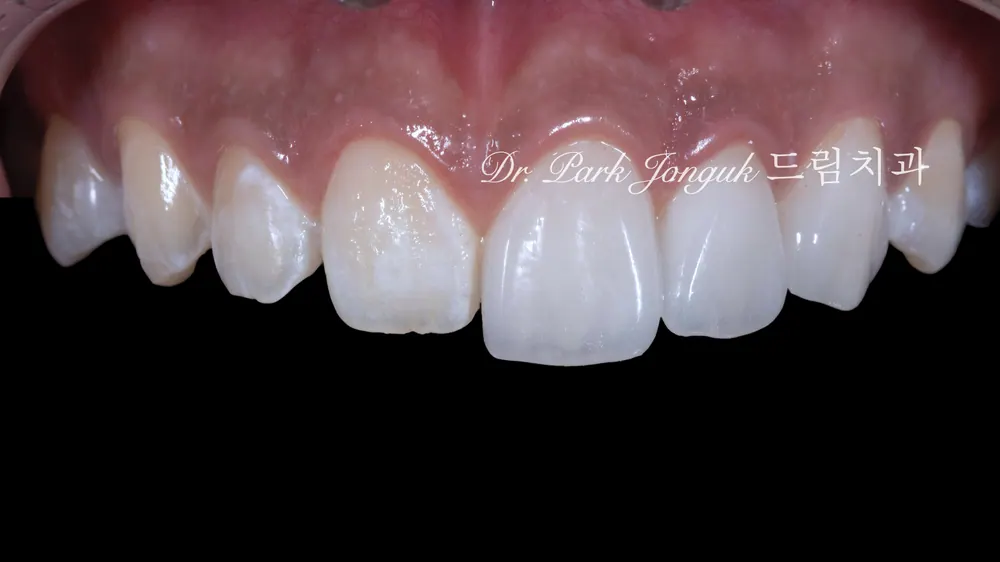
Photo 7. The try-in process for no-prep veneers, with the veneers placed only on the left teeth so the before-and-after difference can be directly compared
We placed them on the left side only.
This is the try-in process.
Comparing left and right makes the change clear.
The left side has the veneer placed, the right side is the original state.
The difference is dramatic.
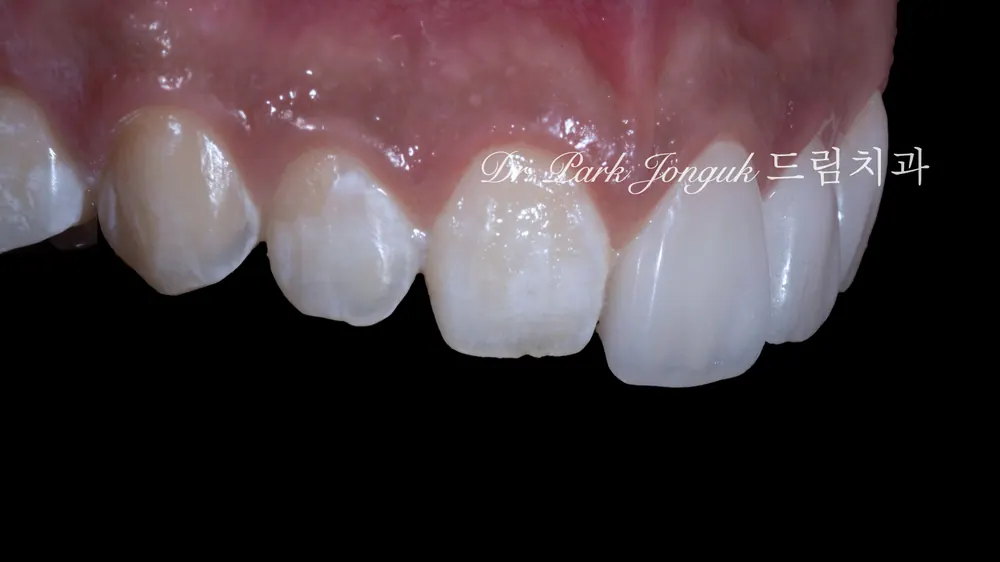
Photo 8. A side view of the no-prep veneer try-in, showing that it naturally wraps not only the front but also the sides of the tooth
This is the view from the side.
The no-prep veneer wraps all the way around the sides of the tooth.
This is possible because the tooth is angled inward (inward-tilted).
This is what allows the tooth to be effectively brought forward.
Preparing for setting — precise bonding
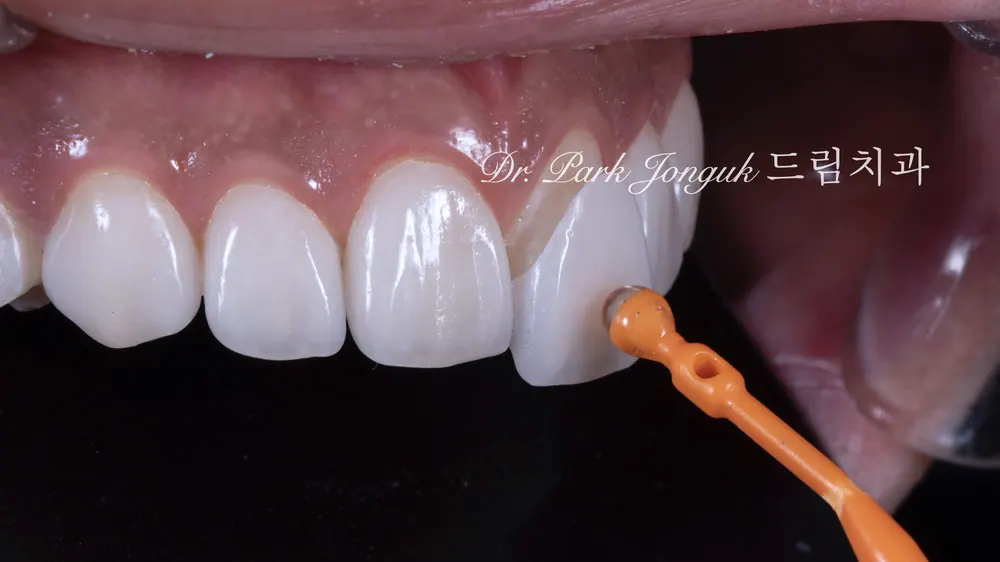
Photo 9. The preparation stage for setting no-prep veneers, treating both the tooth surface and the inner surface of the veneer for precise bonding
We prepare for bonding.
We precisely treat the tooth surface.
We also treat the inner surface of the veneer.
Bonding is really critical for no-prep veneers.
Since it bonds directly to enamel, the bond strength is excellent.
But the exact protocol must be followed.
After treatment — a perfect result
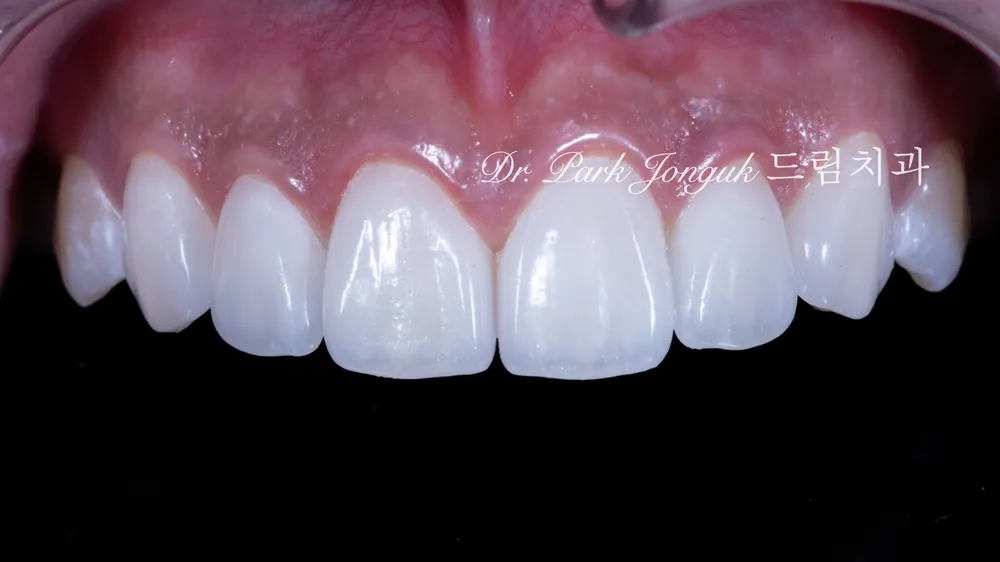
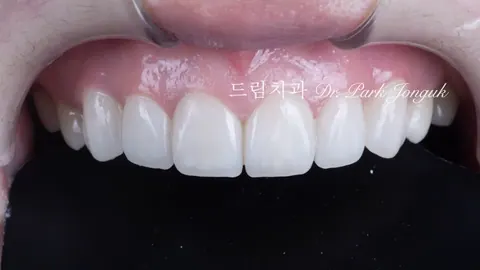
Photo 10. Front view after no-prep veneer treatment, achieving a natural, beautiful smile without reducing the teeth at all
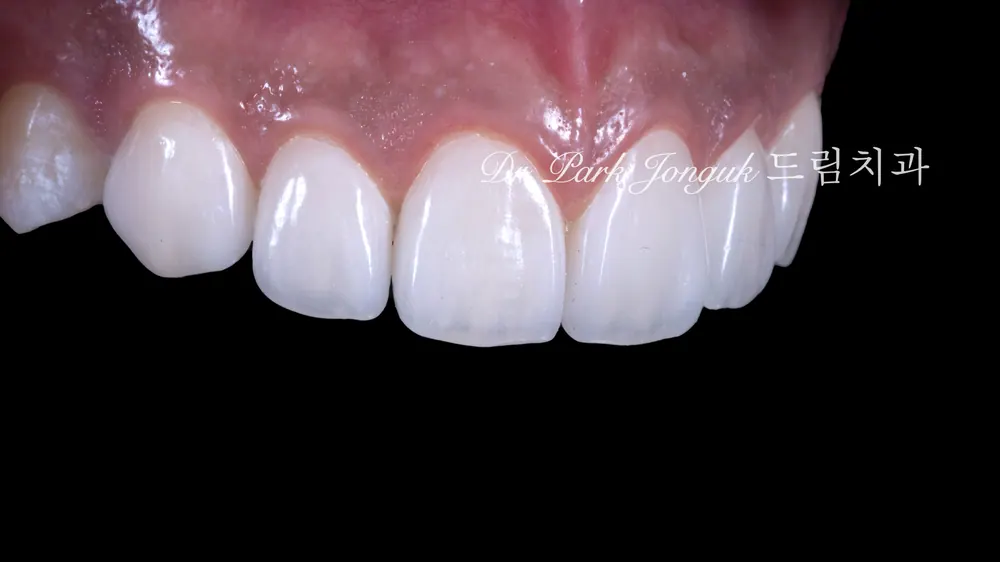
Photo 11. Close-up after no-prep veneer treatment, showing translucency and color gradient reproduced perfectly like a natural tooth
This is the appearance after treatment.
It's truly beautiful and natural.
The size is appropriate
The teeth were enlarged, but not excessively.
They're in perfect harmony with the patient's face.
It's a natural size.
The translucency comes through
The translucency at the tooth edge is beautifully expressed.
Light passes through and diffuses softly.
This is a characteristic of young, healthy teeth.
The shape is delicate
The tooth shape is elegant and delicate.
Developmental lobes and surface contours are reproduced three-dimensionally.
Each tooth has its own unique character.
The color is natural
From the warm ivory tone near the root to the translucency at the tip.
The natural color gradation makes it look like a real tooth.
A beautiful smile, completed
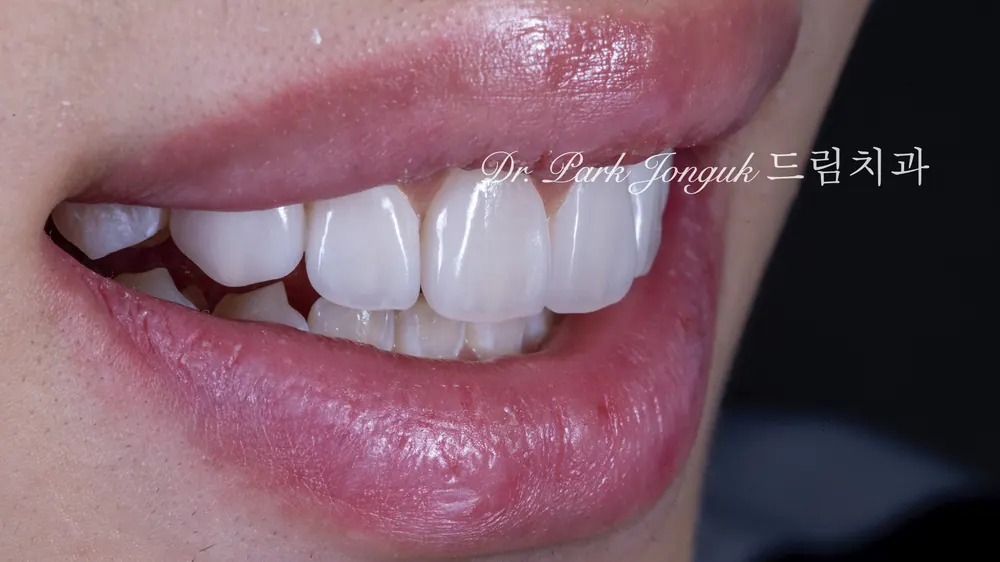
Photo 12. The patient's natural smile after no-prep veneer treatment, regaining a confident smile without any tooth reduction
This is the patient's beautiful smile.
She regained her confidence through no-prep veneers.
The teeth were not reduced at all.
100% of her healthy tooth structure was preserved.
But the result is perfect.
Advantages of no-prep veneers
No tooth reduction at all
The biggest advantage is that the teeth aren't reduced at all.
100% of the healthy tooth structure is preserved.
The enamel remains fully intact.
Fully reversible
If you're not satisfied, you can remove them at any time.
Removing them returns the teeth to their original state.
It's a fully reversible treatment.
No sensitivity
Since the teeth aren't reduced, there's no sensitivity.
The dentin is never exposed.
You can use them comfortably.
No anesthesia needed
Since the teeth aren't reduced, no anesthesia is used.
You can receive treatment comfortably.
Excellent bonding strength
Since bonding is directly to the enamel, the bond is strong.
It can actually be more stable than conventional veneers.
No-prep veneers — here's what to do
If you're considering no-prep veneers, here's what to do.
Check the three key conditions
Are the teeth small?
Is the alignment even?
Are the teeth not protruding?
If all three apply, it's an ideal case for no-prep veneers.
Request a precision diagnosis
Even for a no-prep case, a wax-up diagnosis is essential.
The final shape must be created and reviewed in advance.
This is the process of optimizing size, proportion, and shape.
Check with temporary veneers
Actually wearing and evaluating them is an important process.
Thorough consultation and adjustment with the patient are needed.
Confirm it's a hand-layered build-up method
No-prep veneers are really thin.
But natural expression cannot be sacrificed.
Only hand-layered, multilayer build-up can achieve a thin yet beautiful result.
Choose an experienced clinic
No-prep veneers are more difficult than conventional veneers.
Handling thin ceramic requires delicate technique.
The bonding protocol must also be precise.
Choose a clinic with more than 20 years of clinical experience.
Frequently Asked Questions (Q&A)
Q1. Don't no-prep veneers come off easily?
A. No. When properly made and bonded, they can last 10 years or more, just like conventional veneers. In fact, bonding directly to enamel can make the bond even better.
Q2. Aren't no-prep veneers thick?
A. No. They're made ultra-thin at 0.2-0.3mm, close to the level of a contact lens. With inward-tilted teeth, since the teeth sit further back, there's ample room to bring them forward, so there's no thick feeling at all.
Q3. Can anyone get no-prep veneers?
A. No. Three conditions must be met: small teeth, even alignment, and inward-tilted teeth. Precise diagnosis determines whether a no-prep approach is possible. If the conditions aren't met, minimal-reduction veneers are recommended instead.
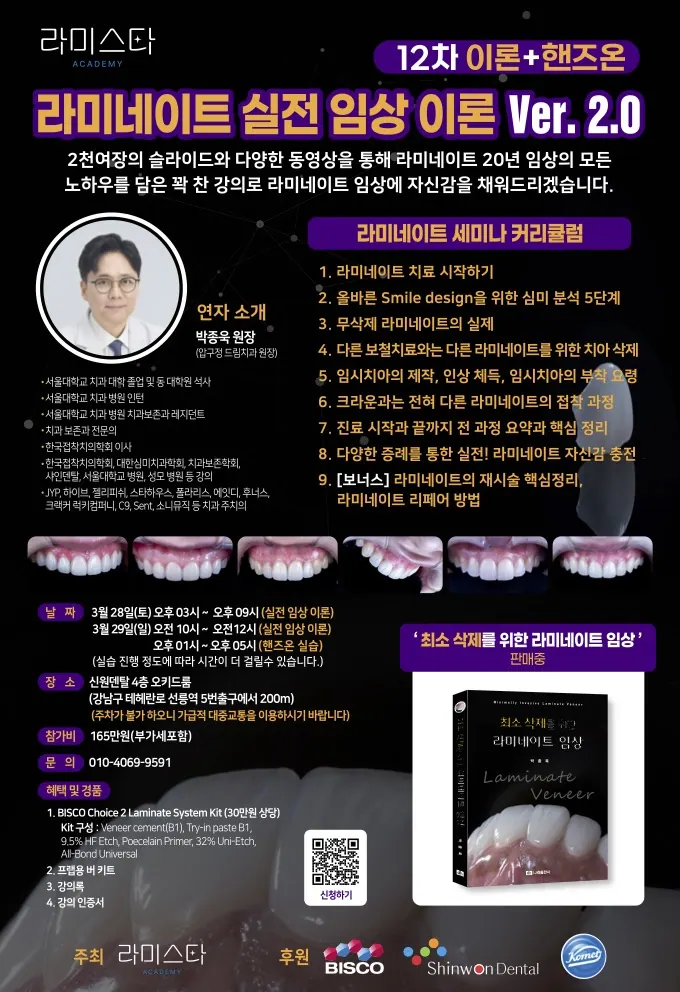
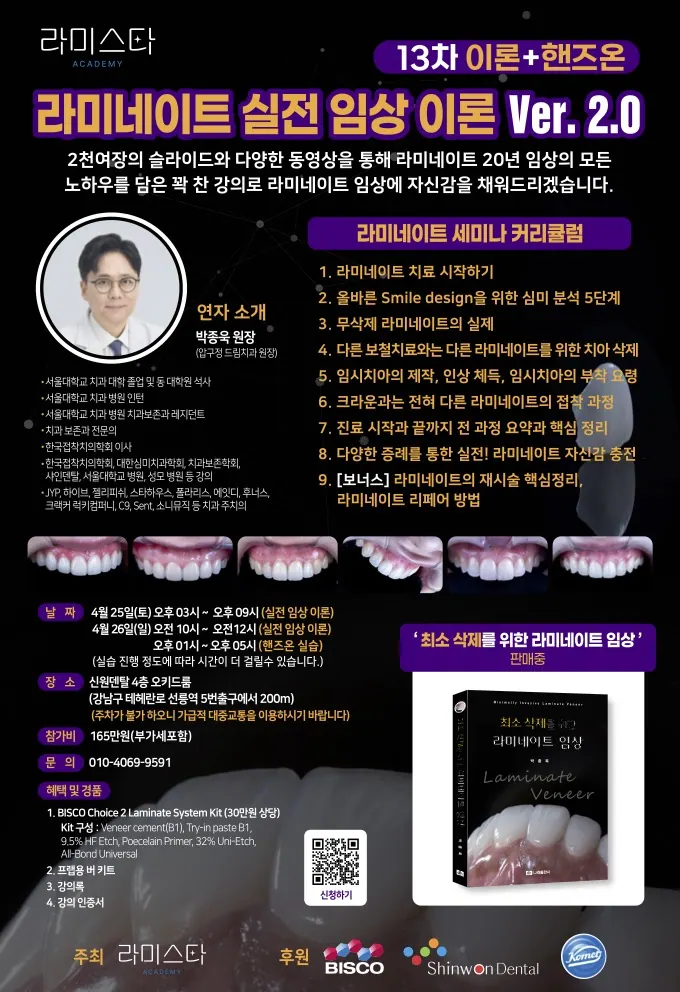
This article is based on the real clinical experience of Dr. Park Jonguk, director of Dream Dental Clinic in Apgujeong. He has practiced cosmetic dentistry for 20 years and teaches no-prep veneer techniques to fellow dentists every month at Lamista Academy. He has published Korea's first laminate veneer textbook.
This article is a clinical note written by Dr. Park Jonguk of Dream Dental Clinic, Gangnam; the original was published on his blog. The photographs shown are real cases he treated. Results vary with each patient’s condition, and every procedure carries the possibility of individual variation and side effects.
Quick Consult
Request a Callback
Leave your number and we will call you back during clinic hours.
Request Received
We will contact you during clinic hours. For urgent matters, please call +82-2-3448-0028.