
No-Prep Veneers Aren't Possible for Everyone
Hello. This is Park Jonguk, director of Dream Dental Clinic.
There are many different reasons people get veneer treatment.
Poor alignment,
chipped teeth,
severe wear,
dark tooth color,
and so on —
veneer treatment is done for a wide variety of reasons.
Most patients want their teeth reduced as little as possible,
or want no-prep veneers.
The problem is that, in most cases, no-prep veneers aren't possible.
For no-prep veneers to be possible,
the teeth need to be small, the alignment needs to be even, and there must be no protrusion,
and it's not that common for these conditions to line up exactly.
To keep tooth reduction to a minimum,
a precise pre-treatment diagnosis
and a precise treatment process are essential.
Please refer to the link below for what makes Dream Dental Clinic's veneers distinctive.
The importance of reducing the tooth as little as possible, or not at all,
can also be confirmed in the structure of the tooth.
The outermost layer of the tooth is the enamel,
and dentin lies just inside it.
Enamel is the part where veneers bond most securely.
Preserving as much enamel as possible
is what makes a veneer last a long time.
Not only that,
when a lot of enamel remains,
the likelihood of tooth sensitivity or nerve inflammation
drops dramatically.
This is why the concept of no-prep or minimal-prep veneers matters so much.
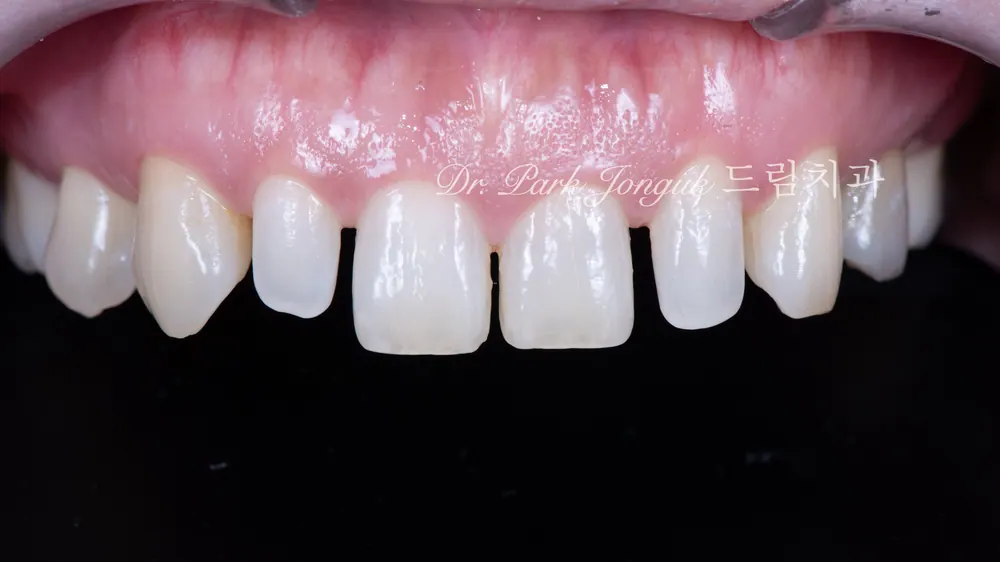
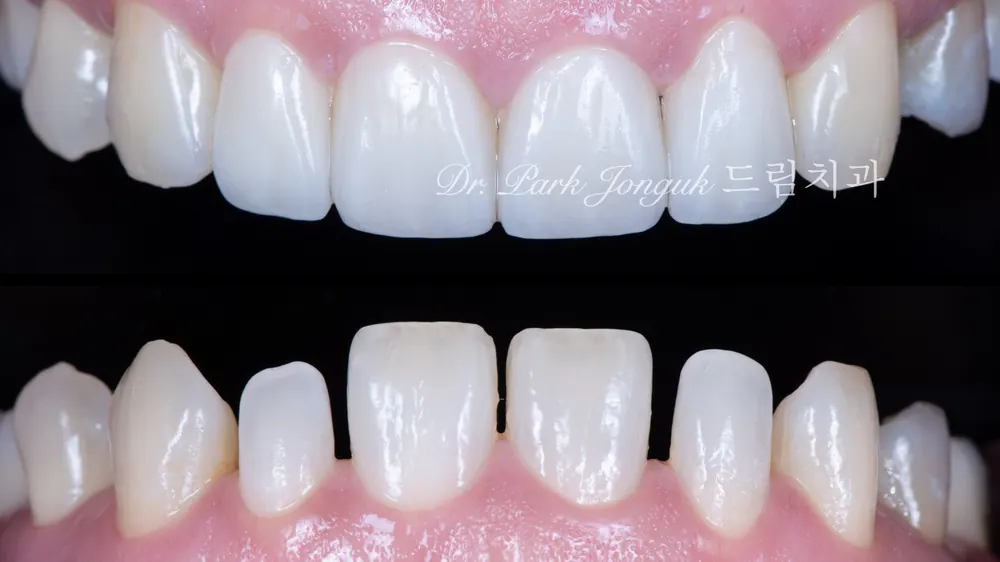
Here, there's space between the teeth,
the teeth are small,
and the teeth are not protruding.
This is exactly
the kind of case suited to the no-prep veneer treatment I mentioned earlier.
That said, to do it without reducing the tooth at all,
the length of the two front teeth was too long,
so we decided to trim the length down slightly.
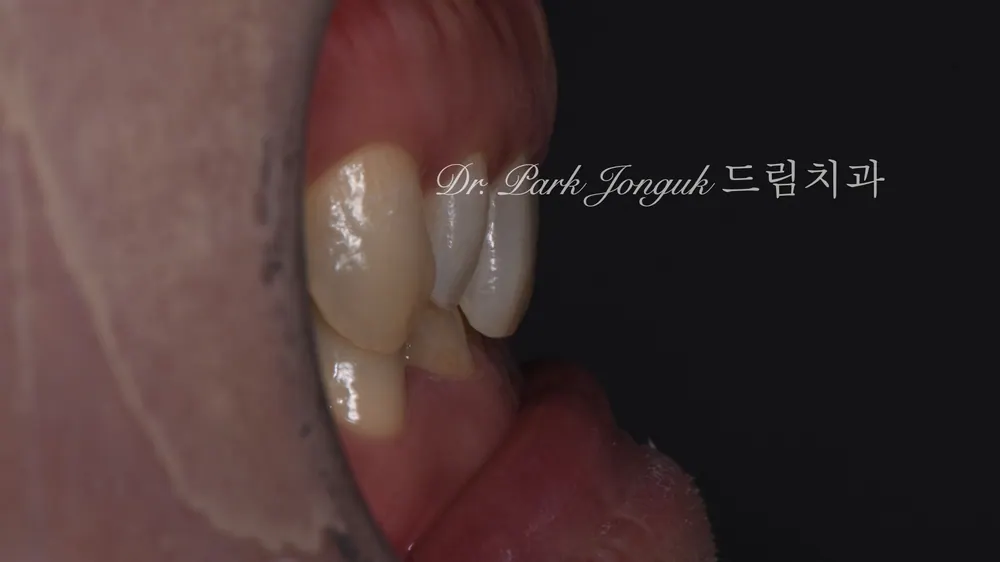
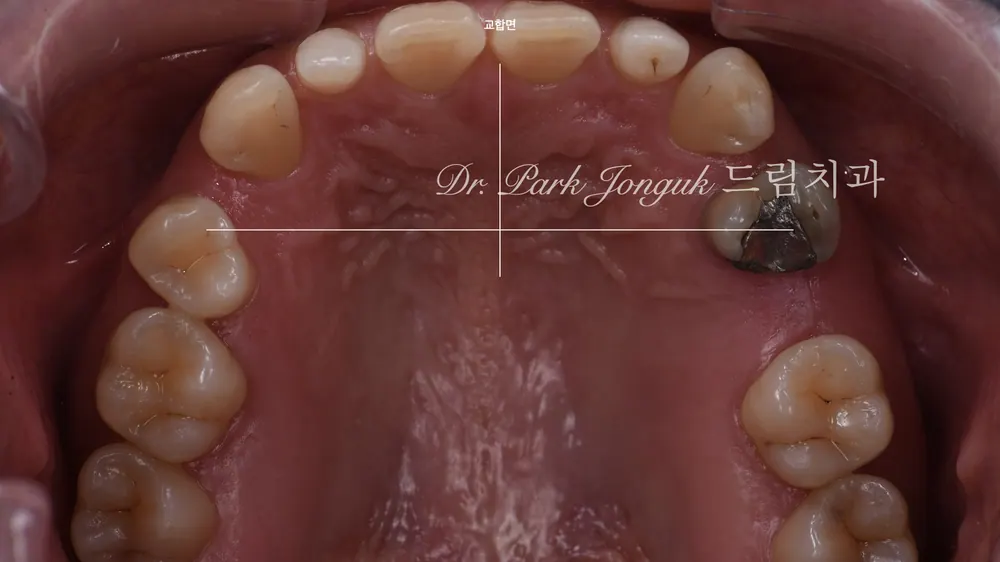
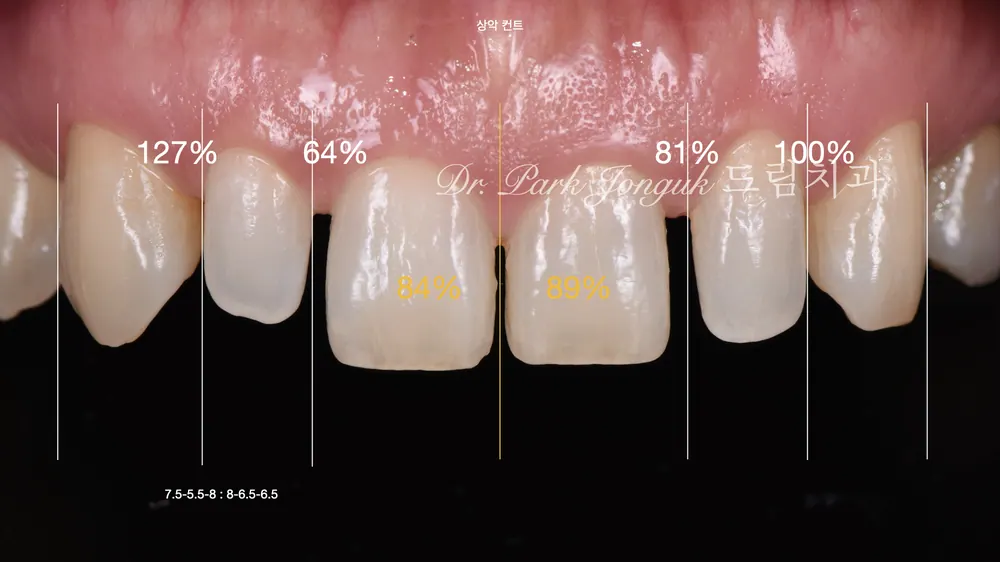
We carry out an analysis of the current teeth.
The proportions and size between the teeth,
the degree of protrusion and the bite, and so on —
we diagnose a variety of factors
and plan in advance how the treatment will proceed.
Especially in a case like this, with a lot of space between the teeth,
the proportions of the teeth change
depending on how the space between them is filled,
so setting those proportions well matters a great deal.
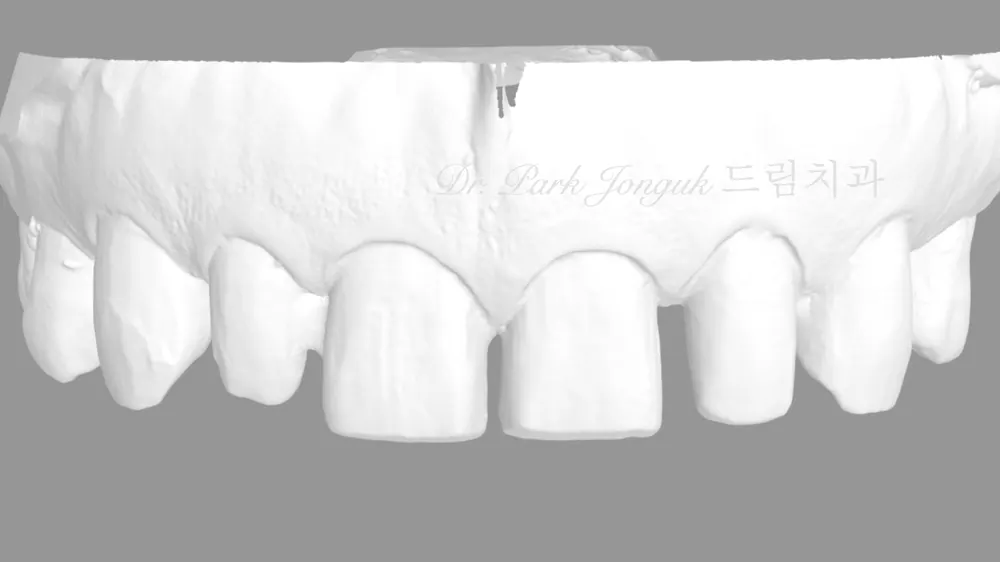
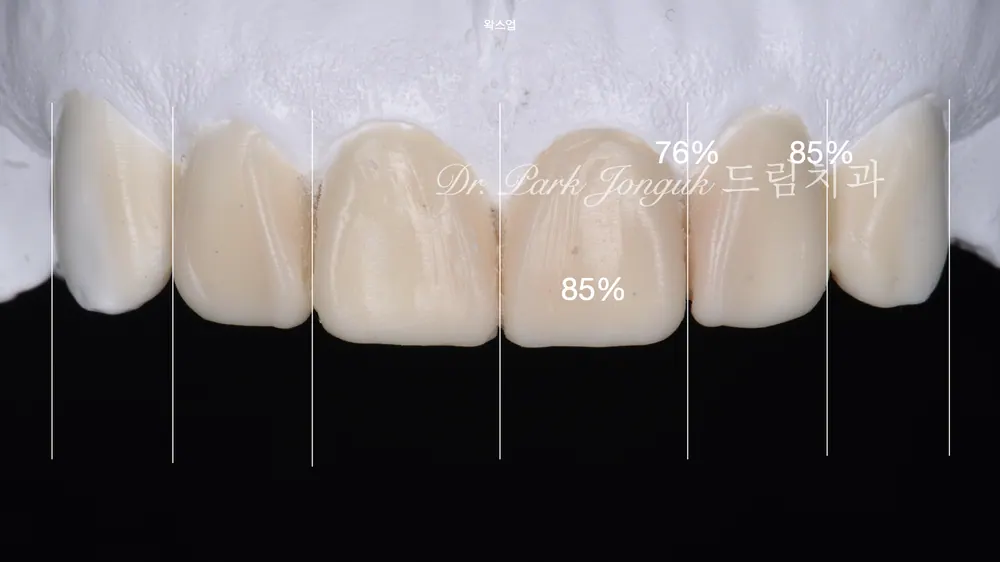
We also check in advance
the amount of tooth reduction and the expected result,
and consult with the patient about this.
The proportions between the teeth are set close to the average.
A ratio the eye is used to seeing looks more natural.
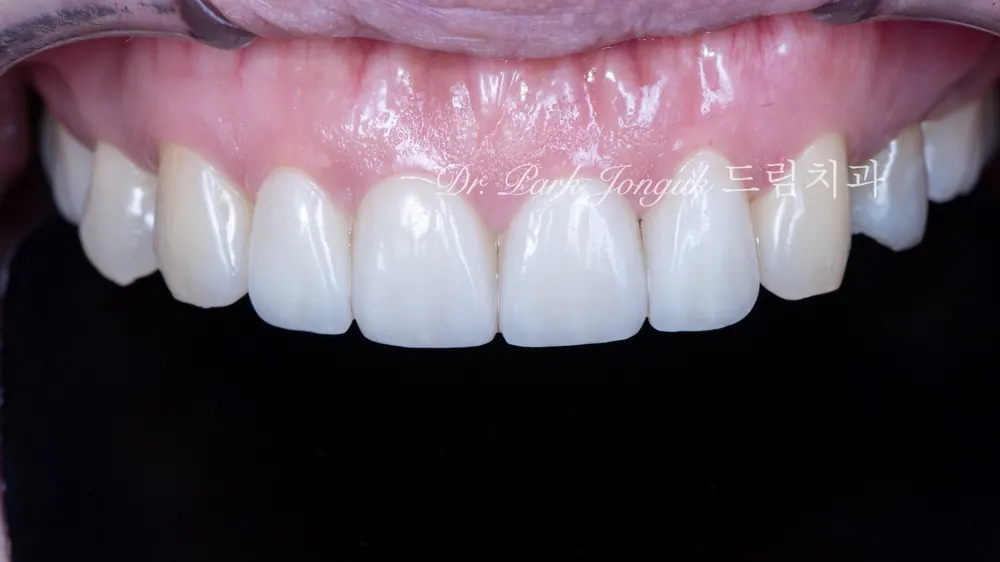
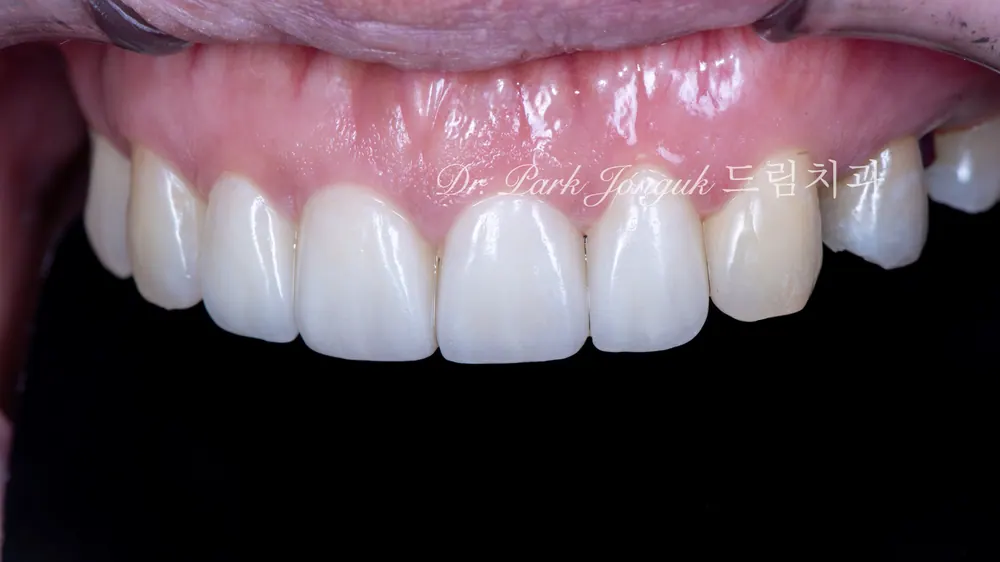
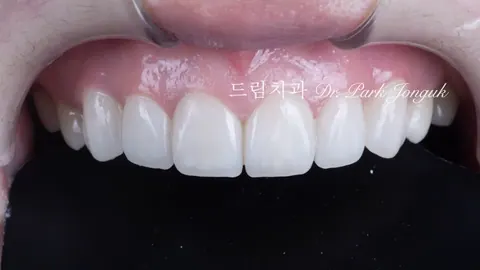
The veneer treatment has been completed.
The teeth ended up bright, natural, and beautiful.
You can confirm that the natural three-dimensional feel,
the texture of the tooth surface,
and even the translucency and bright coloring
are all well expressed.
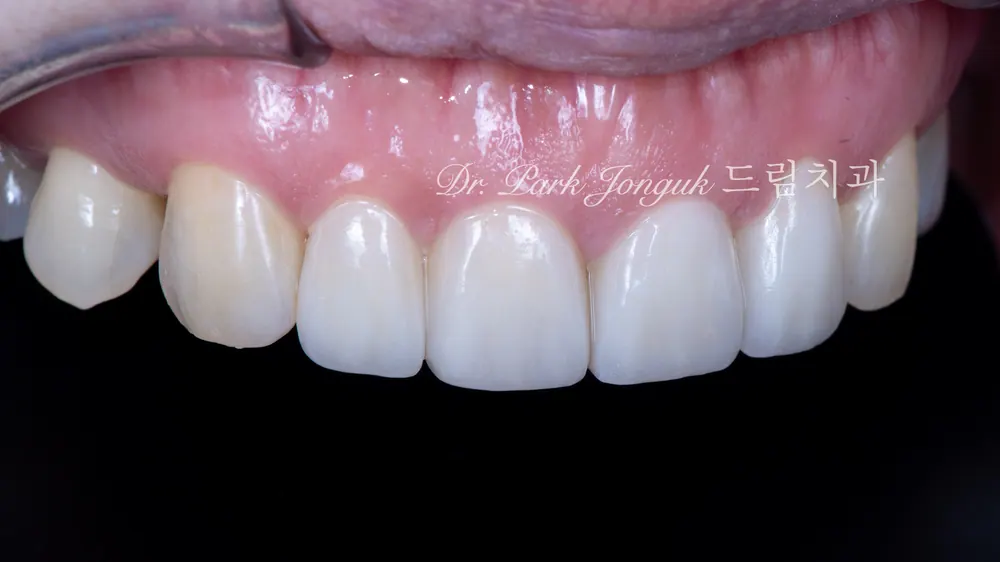
Natural beauty.
Since 2006, Dream Dental Clinic
This article is a clinical note written by Dr. Park Jonguk of Dream Dental Clinic, Gangnam; the original was published on his blog. The photographs shown are real cases he treated. Results vary with each patient’s condition, and every procedure carries the possibility of individual variation and side effects.

Quick Consult
Request a Callback
Leave your number and we will call you back during clinic hours.
Request Received
We will contact you during clinic hours. For urgent matters, please call +82-2-3448-0028.