
No-Prep Veneers When a Front Tooth Is Missing? The Maryland Bridge
Hello. This is Park Jonguk, director of Dream Dental Clinic.
Sometimes a front tooth needs to be extracted due to an accident or decay,
and it's also fairly common to be born missing a front tooth.
In the past, when a tooth was missing, the treatment was typically a bridge.
This involves reducing the teeth on either side of the missing tooth, much like preparing them for crowns,
and connecting them together.
The drawback is that even though the teeth on either side are healthy,
a large amount of reduction still has to be done on them.
With the arrival of implants,
a missing tooth can now be restored
without sacrificing the teeth on either side.
There are two problems with front-tooth implants.
First, they can fall short aesthetically.
Tooth color and shape matter, but so does the shape and color of the gum.
For people with thick gum tissue there's usually no major problem,
but for people with thin gum tissue, the area near the gum can look darker,
and the gum's esthetics simply can't match that of a natural tooth.
The other problem is that implants aren't easy when there isn't enough bone.
Especially with the lower front teeth, the bone is often too thin, and quite a few cases end up unable to get an implant at all.
What we'll look at today is, in a situation like this where a front tooth is missing,
a way to restore the missing tooth
without causing major damage to the surrounding teeth
and without needing surgery the way an implant does —
we're going to take a look at the Maryland bridge.
You can think of it as
a method similar to bonding a no-prep veneer onto the inner surface of the tooth.
(It's called a Maryland bridge because the technique originated at the University of Maryland dental school.)
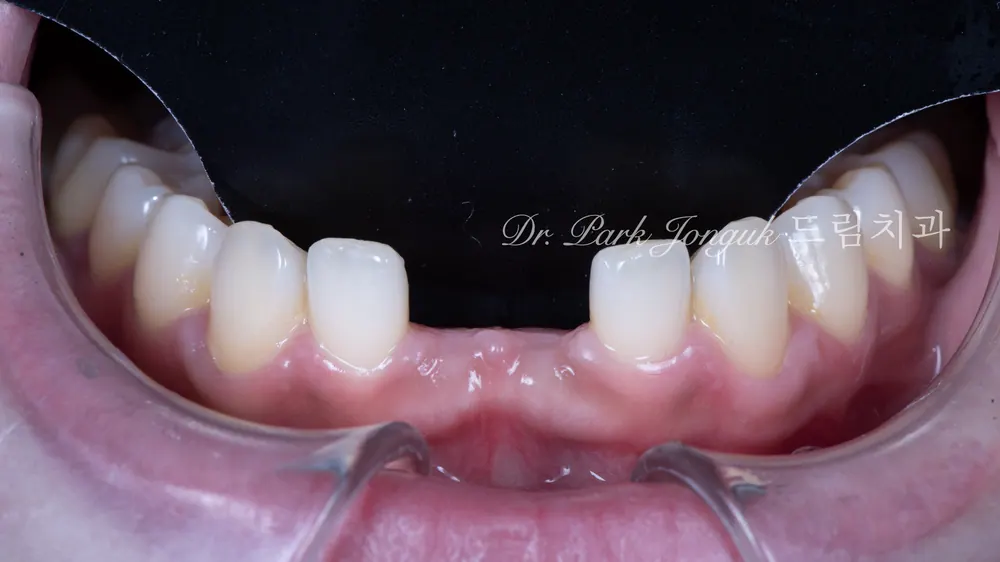
Here, two front teeth are congenitally missing.
Usually the baby teeth remain in place for a long time,
and since the permanent teeth never come in, the bone becomes quite thin,
putting the patient in a situation where an implant would require both a bone graft and a gum graft.
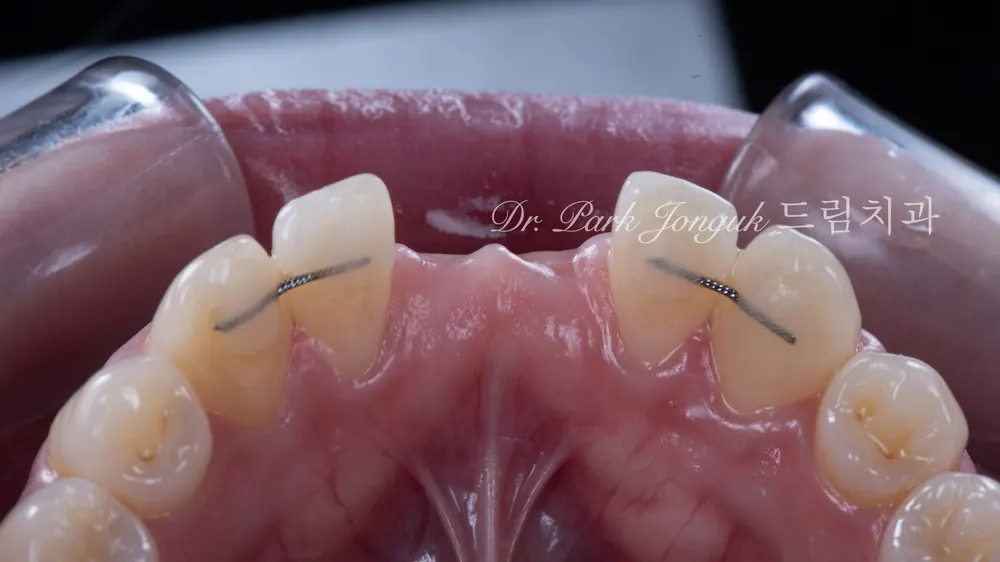
Orthodontic treatment has been used to properly create space for the teeth.
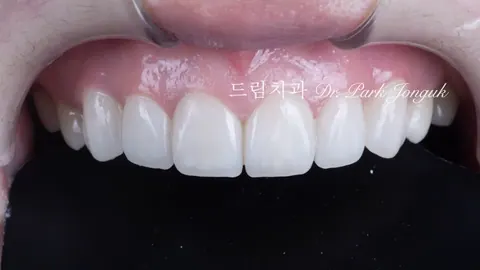
This is a situation where a Maryland bridge can be used.
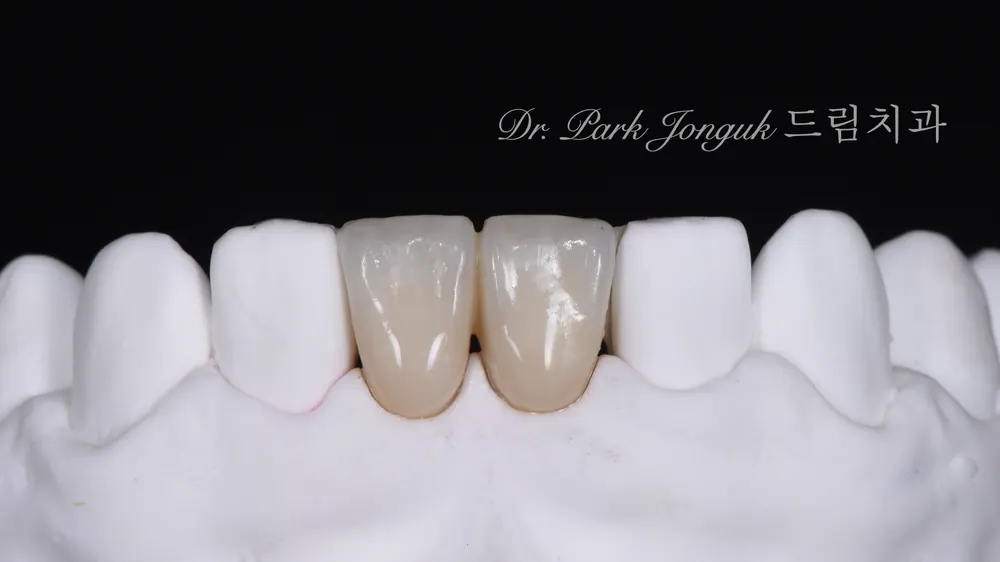
The teeth on either side remain completely natural,
while two brand-new teeth are simply set right in between.
So how do we go about bonding this onto the teeth?
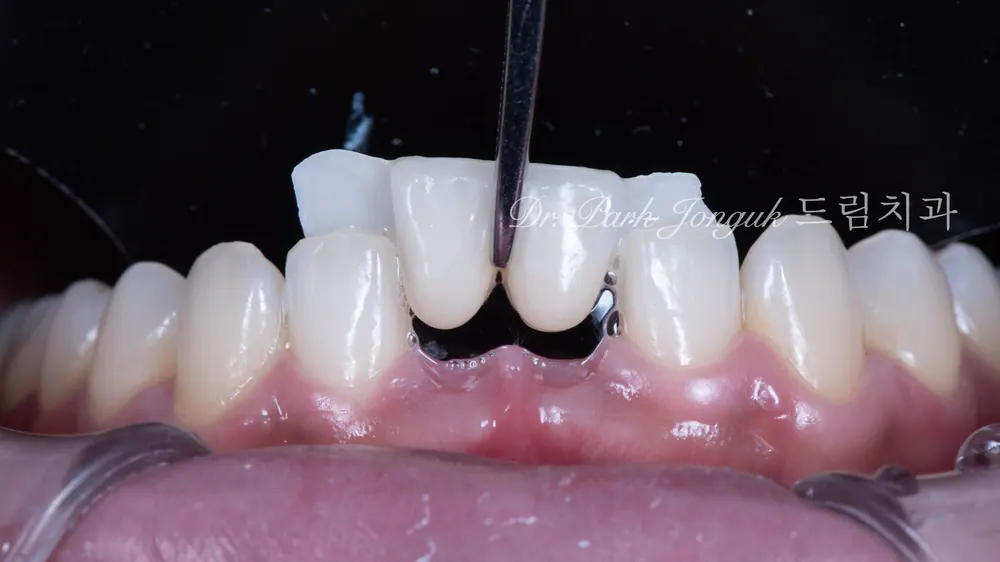
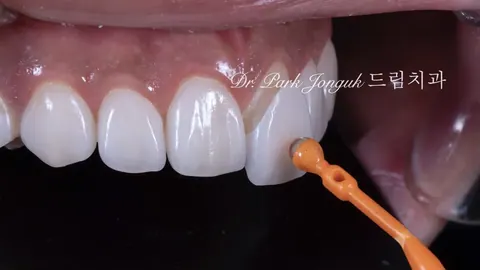
It's done exactly like this.
Wing-shaped extensions are built out from the two teeth,
and those wings are bonded onto the teeth on either side.
From the perspective of the adjacent teeth, it's as if a veneer had been bonded onto their inner surface.
Looking at the shape near the gum, it's designed in advance
so that the gum looks as though a tooth were already there.
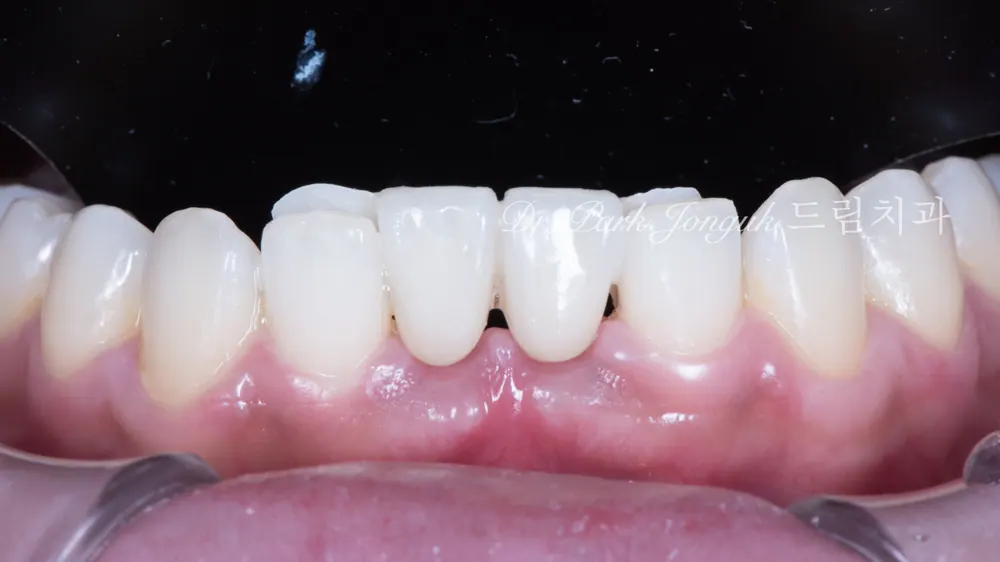
If we slip it in a bit further like this,
it becomes even easier to understand how it gets bonded on, doesn't it?
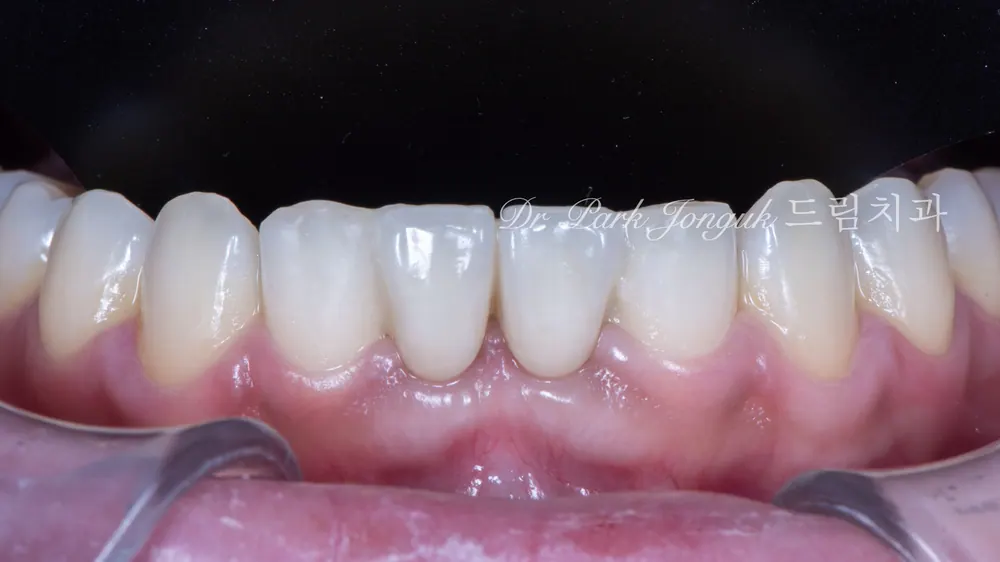
The bonding process is now complete.
With a feel similar to a no-prep veneer,
the Maryland bridge has been completed.
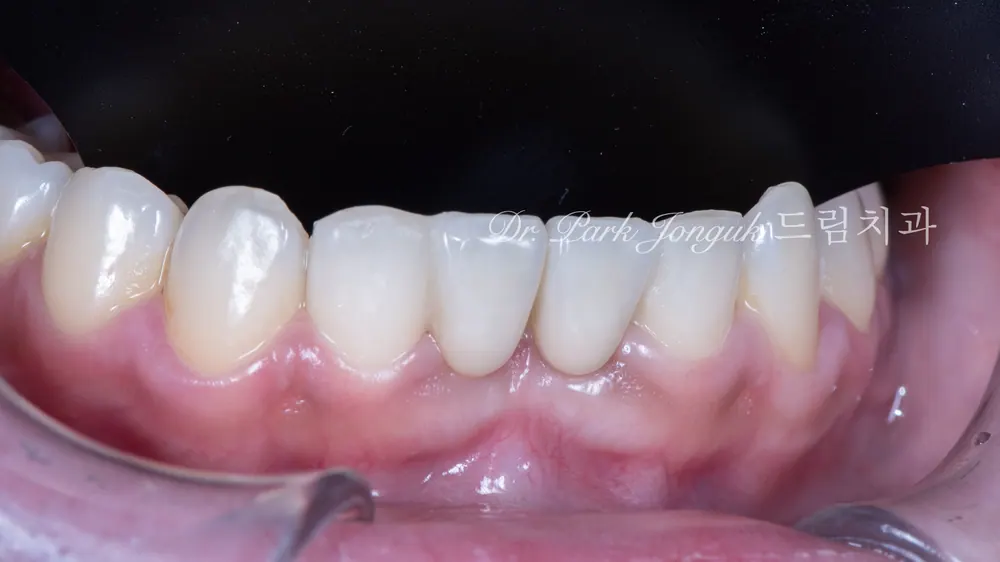
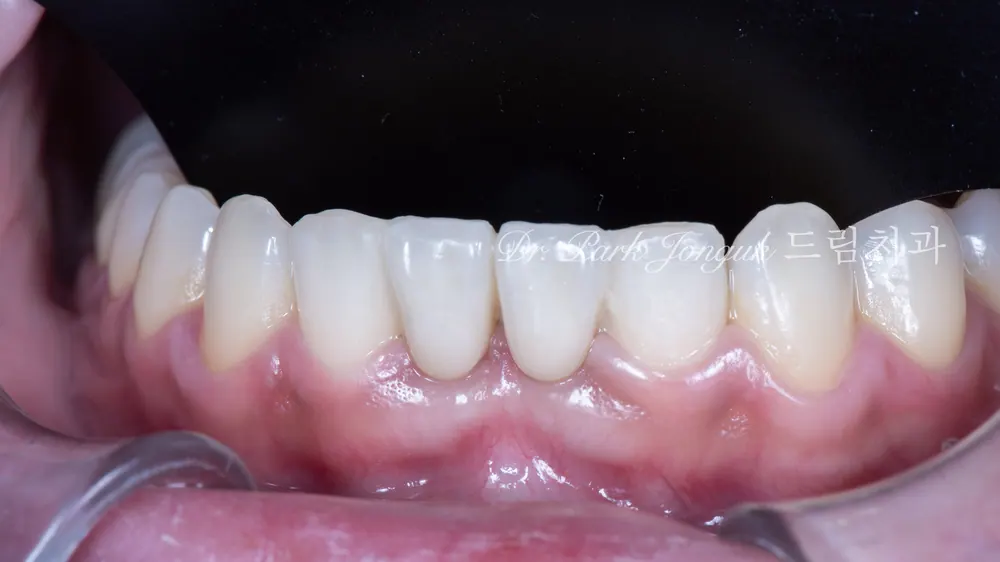
There's almost no damage to the teeth,
no surgery is needed the way it is with an implant,
and it's a great option even when there's no bone —
but it's not possible for every case.
First, there must be no interference in the bite,
and the condition of the teeth on either side needs to be very good for this to be possible.
Natural beauty.
Since 2006, Dream Dental Clinic
This article is a clinical note written by Dr. Park Jonguk of Dream Dental Clinic, Gangnam; the original was published on his blog. The photographs shown are real cases he treated. Results vary with each patient’s condition, and every procedure carries the possibility of individual variation and side effects.

Quick Consult
Request a Callback
Leave your number and we will call you back during clinic hours.
Request Received
We will contact you during clinic hours. For urgent matters, please call +82-2-3448-0028.