
Veneer Treatment: Making Buck or Protruding Teeth Look Natural
Hello. I'm Park Jonguk, director of Dream Dental Clinic.
Doing veneers for protruding teeth is fairly rare.
Since veneer treatment works by bonding a ceramic plate to the front surface of the tooth,
even if the tooth stays exactly where it currently is,
tooth reduction is still needed.
To bring the tooth further inward than its current position,
the amount of reduction has to increase considerably,
and because of the risk to tooth health,
it isn't a preferred approach.
In particular, when the protrusion is caused by a skeletal issue,
orthodontics or surgery is what's needed,
and hoping for major improvement
through veneers alone is difficult.
However, when the teeth simply protrude somewhat,
veneers can offer
a limited degree of improvement.
Even this is only done in special cases where orthodontics isn't an option.
Cases where orthodontics isn't possible
are usually because the patient is elderly or has gums too weak for orthodontic treatment.
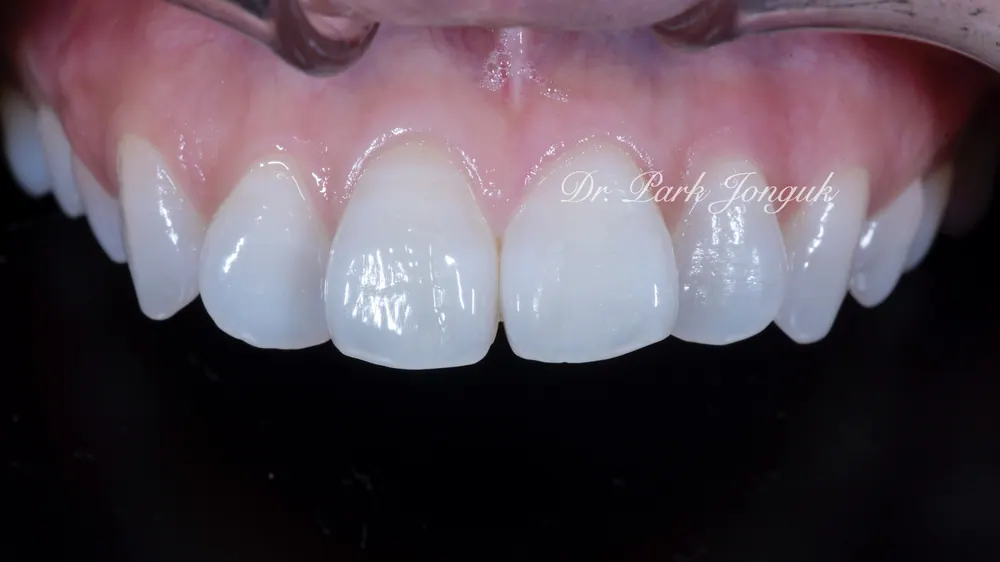
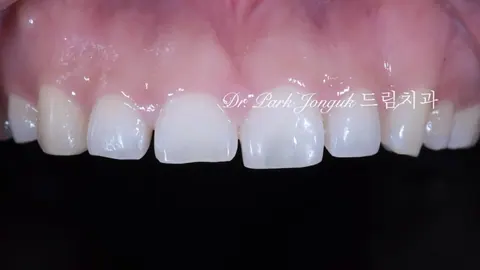
This shows a case where the two front teeth protrude severely.
The alignment wasn't good either,
and the patient wanted the shape of the teeth improved as well.
Given the patient's age, orthodontics wasn't something we could readily recommend,
and the length of orthodontic treatment was also an issue in this case.
In a case like this, a fair amount of tooth reduction is expected.
The two protruding teeth needed
more reduction than the average veneer requires,
while the other teeth needed almost no reduction at all.
Whether it's the right approach to sacrifice these two teeth,
choosing veneers over orthodontics,
has to be discussed seriously with the patient.
To do that,
we need to talk it through while looking at the current state, the treated state, and the amount of tooth reduction, all together.
Any possible side effects are also explained,
along with the limits of what veneers, rather than orthodontics, can actually achieve.
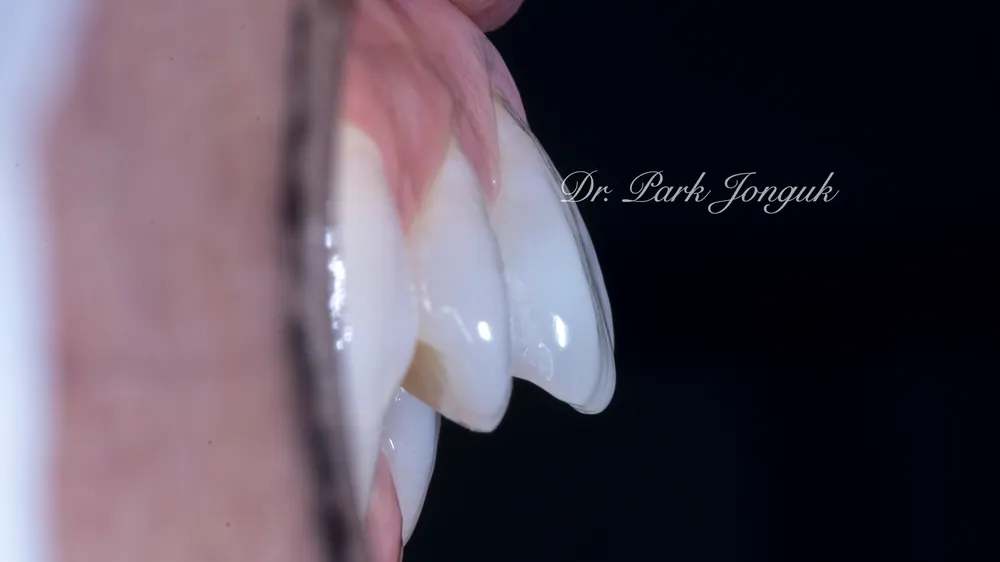
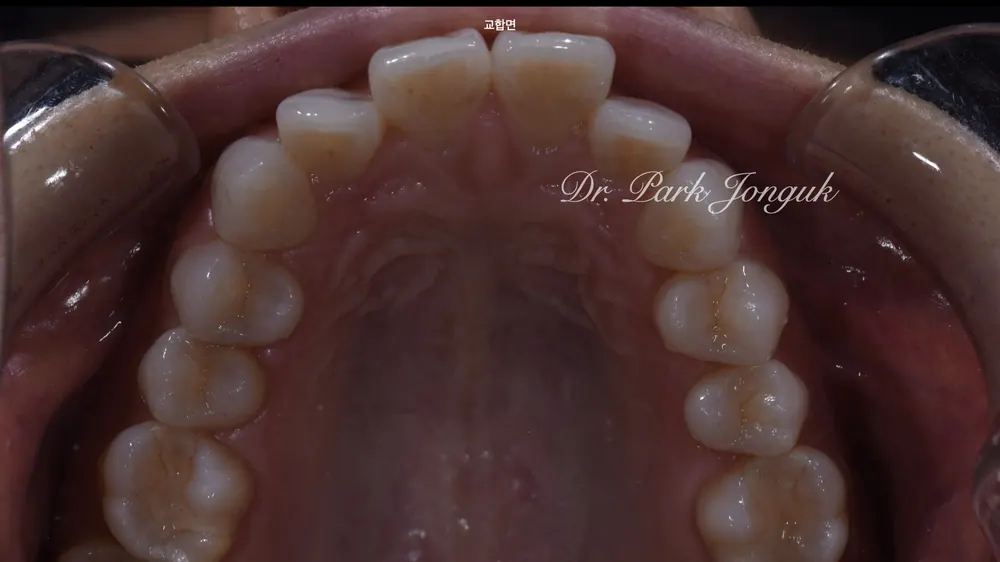
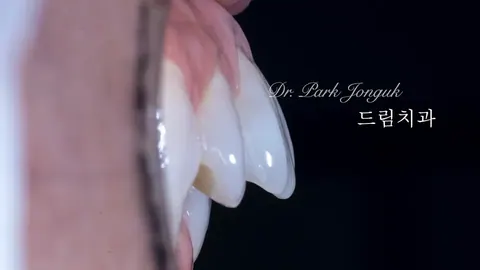
The protrusion was fairly significant.
Rather than moving the entire tooth inward,
only the tip of the tooth is brought inward,
while the gum-side of the tooth is actually brought slightly outward,
so the treatment is planned to give the impression the tooth has been rotated.
A detailed veneer treatment plan is drawn up,
and the process is explained to the patient in detail.
The limits of treating protruding or buck teeth are explained together with this.
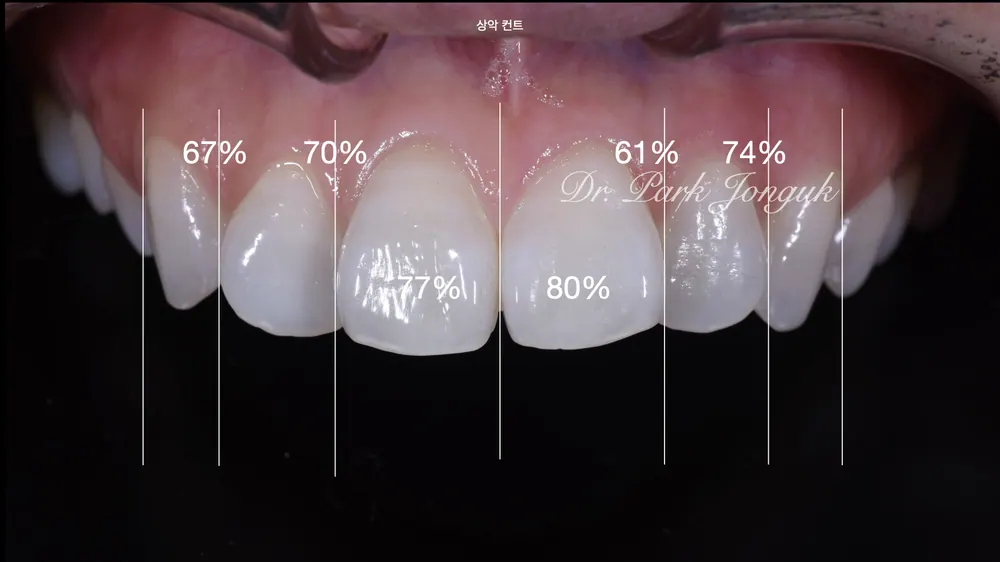
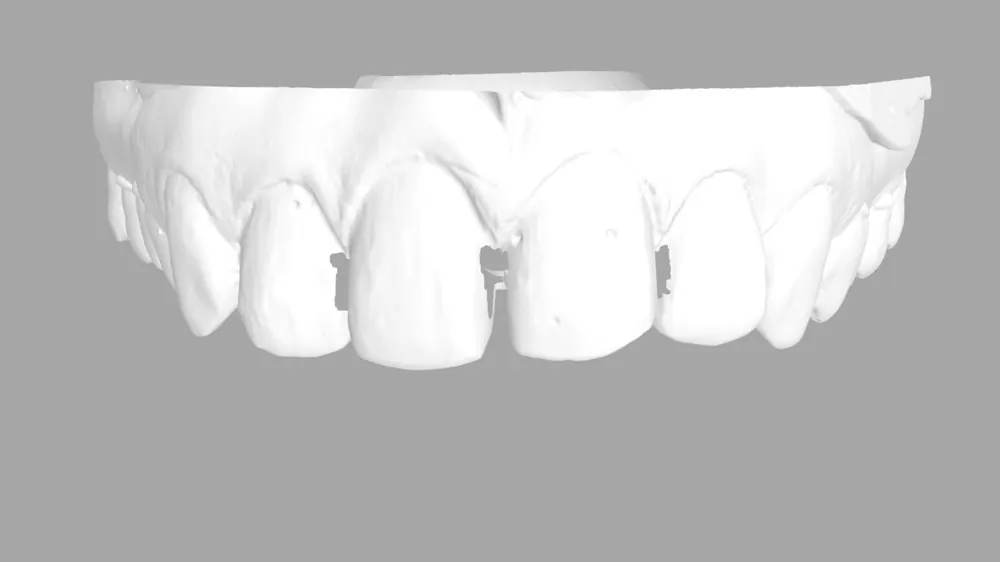
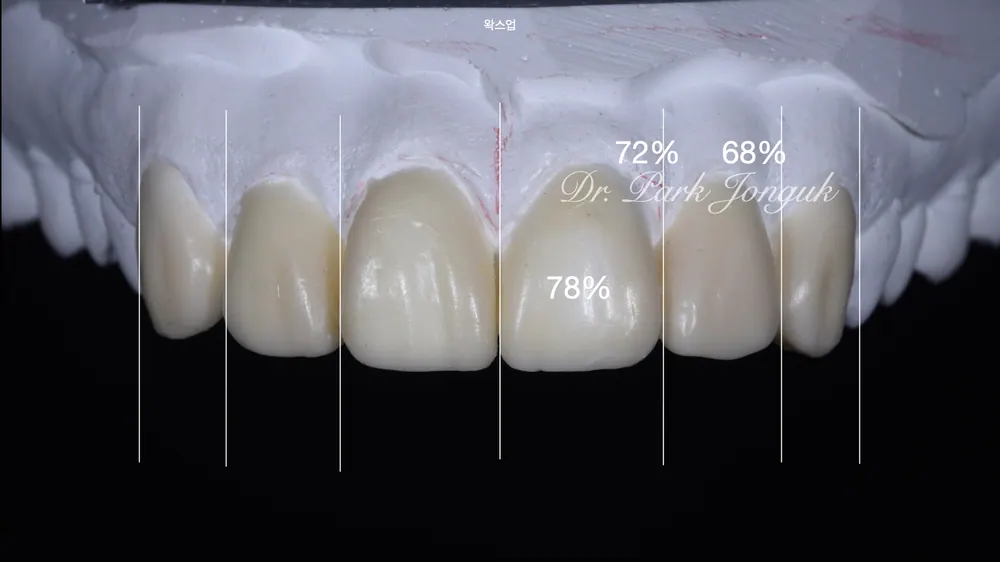
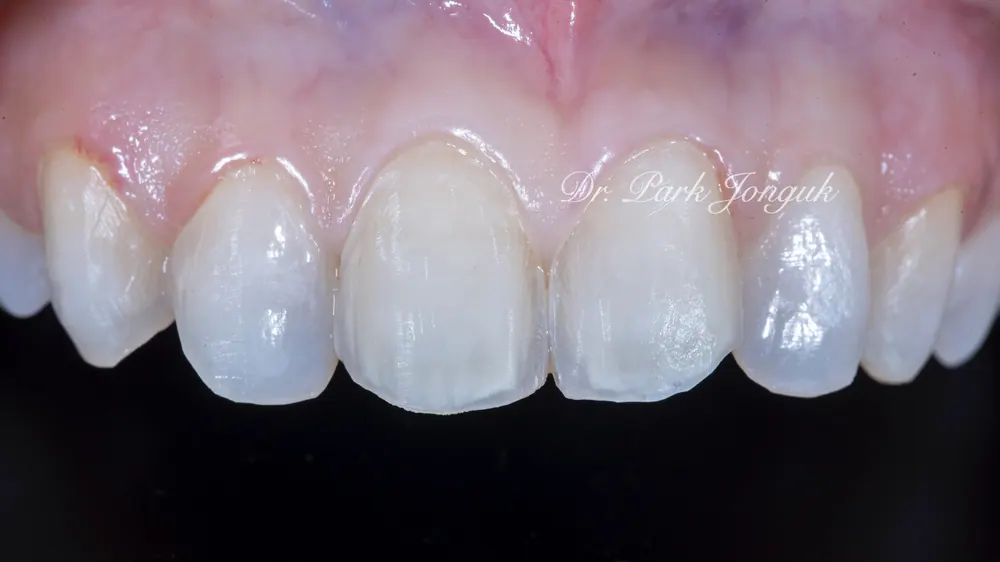
Looking at 3D scan data showing the expected amount of reduction,
the amount of reduction and any possible tooth sensitivity afterward are explained,
and only once the patient understands the whole picture does veneer treatment begin.
Tooth reduction is then carried out according to that plan.
You can see that the teeth other than the two front teeth received very little reduction.
Even for the two front teeth, as much dentin as possible was preserved
to help prevent tooth sensitivity.
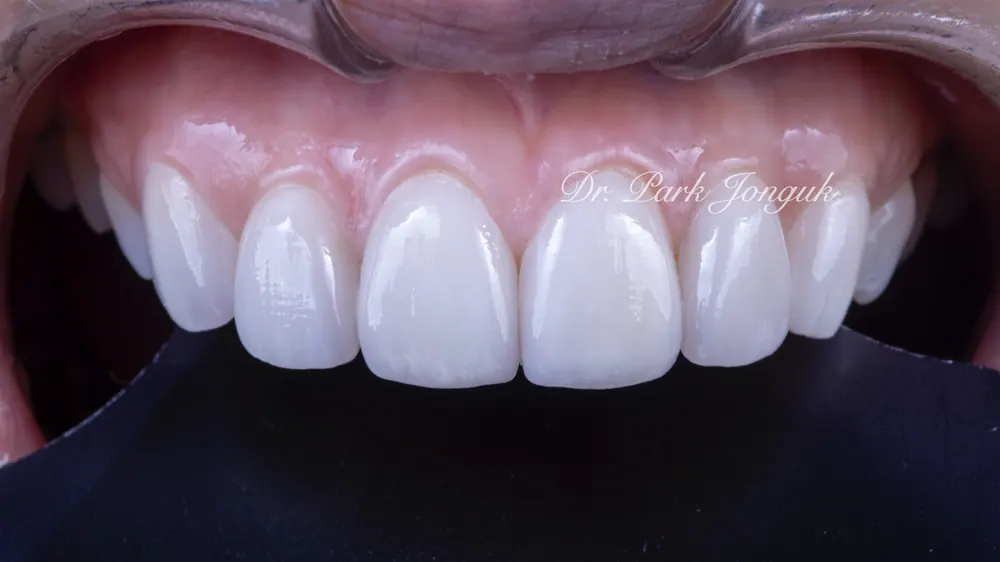
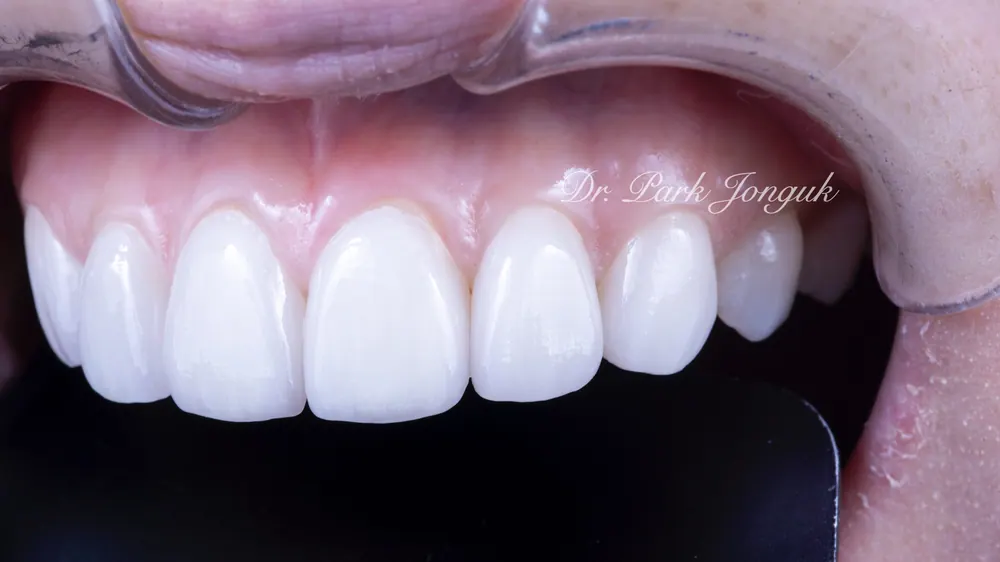
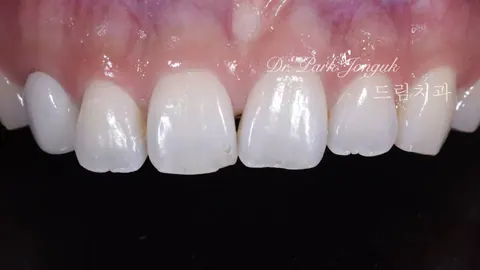
The veneer result
turned out remarkably natural,
finishing even and bright.
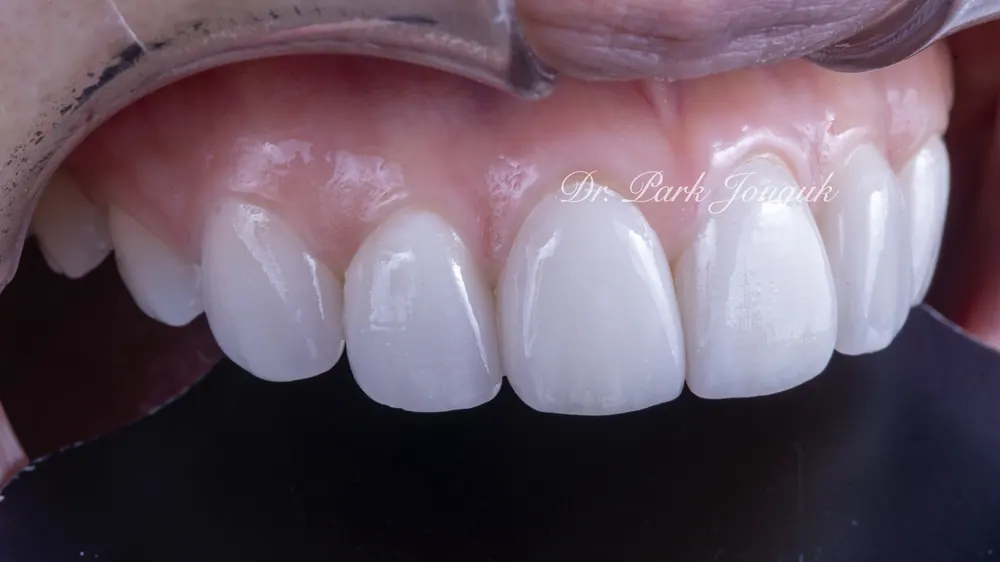
The alignment improved thanks to the veneers,
the proportion between teeth improved as well,
and the teeth became very bright and translucent.
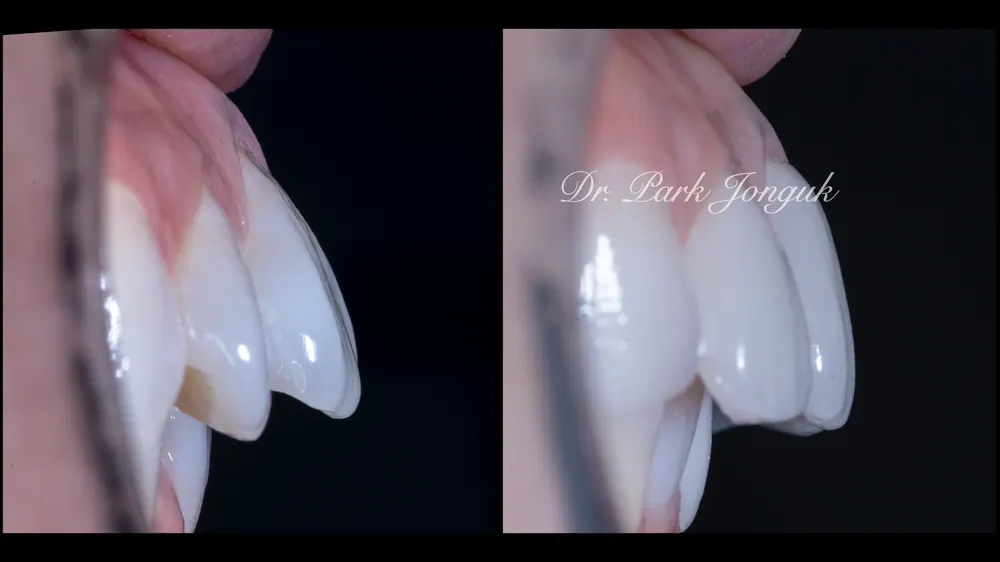
As mentioned earlier,
treating buck teeth or protruding teeth with veneers
isn't a method that actually moves the tooth inward;
instead, as though the tooth were rotated clockwise when viewed from the side,
the gum-side is brought slightly forward
while the tip is brought inward.
This is the approach that allows the amount of reduction to be kept to a minimum.
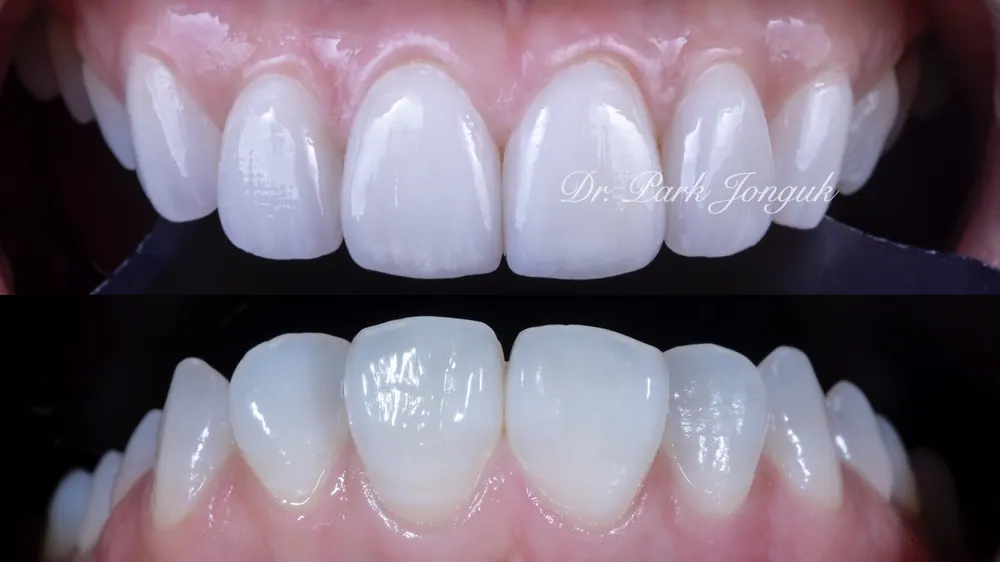
Because the outcome was compared with the current protruding state before treatment even began,
satisfaction has been especially high.
No tooth sensitivity appeared at all after the veneer treatment.
Since 2006, Dream Dental Clinic
This article is a clinical note written by Dr. Park Jonguk of Dream Dental Clinic, Gangnam; the original was published on his blog. The photographs shown are real cases he treated. Results vary with each patient’s condition, and every procedure carries the possibility of individual variation and side effects.
Quick Consult
Request a Callback
Leave your number and we will call you back during clinic hours.
Request Received
We will contact you during clinic hours. For urgent matters, please call +82-2-3448-0028.