
Minimal-Reduction Veneers That Reduce Side Effects
Hello. I'm Park Jonguk, director of Dream Dental Clinic.
There was a time when "side effects" would come up as a related search term whenever people searched for veneers,
and it became quite an issue.
Even now, the thing people worry about most when it comes to veneers
is probably side effects.
In fact, when the right indication is treated properly,
front veneer treatment is actually one of the dental treatments
with comparatively few side effects.
The reason side effects became an issue is that
a handful of clinics forced veneer treatment
onto cases that made no sense for it,
and most of these turned out to be all-ceramic crowns rather than actual veneers.
Some of these clinics even used the term "rapid orthodontics" for veneers,
or described all-ceramic crowns as veneers,
and the problem was this kind of aggressive patient solicitation and treatment.
In medicine, the name given to a treatment matters a great deal,
and even now you still see cases where something is really a veneer but is given a fancy new name to make it sound like a different treatment,
confusing patients,
and that doesn't seem like the right approach.
Most side effects of veneers
are caused by the amount of tooth reduction.
The more tooth structure removed, the more side effects tend to occur.
Tooth sensitivity, the chance of the veneer later coming off, and so on
mostly start with excessive tooth reduction.
That's why veneers that keep tooth reduction to a minimum matter so much,
and the best approach of all is one that involves no reduction whatsoever:
no-prep veneers.
The problem is that not every case can be treated with no-prep veneers.
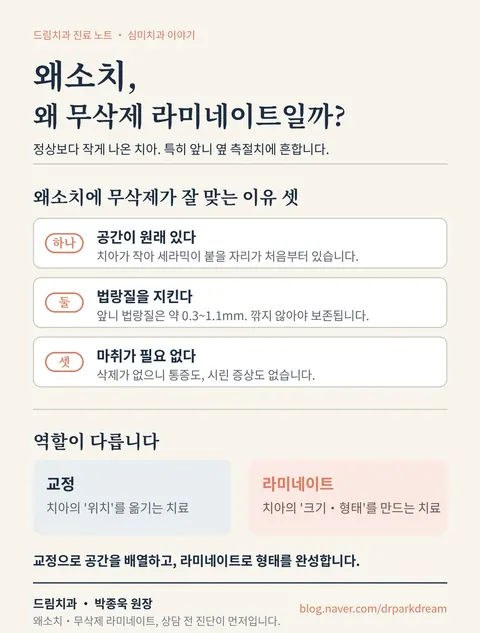
The teeth need to be small, the alignment needs to be good, and there should be no protrusion.
If these three conditions are met,
no-prep veneers, or veneers that only lightly refine the tooth —
minimal-reduction veneers — can be considered.
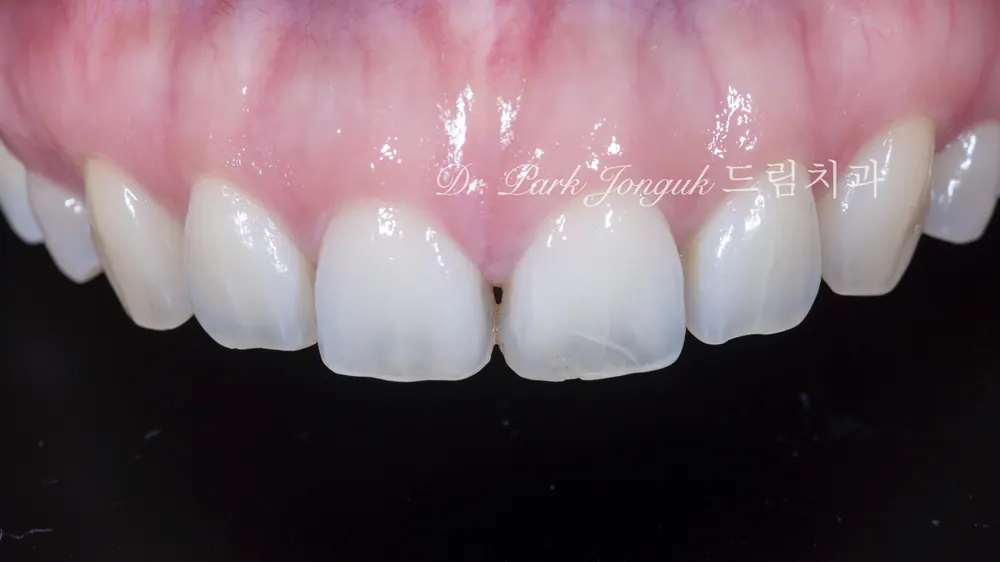
After orthodontic treatment,
teeth sometimes end up retroclined, tilted too far inward, and this patient came in because it had become quite severe and needed improving.
If the teeth are retroclined and small, no-prep veneers are possible.
However, in this case the teeth weren't especially small,
so whether to go with no-prep
or minimal-reduction veneers was something we had to weigh carefully.
In a case like this, we run the diagnosis for both approaches.
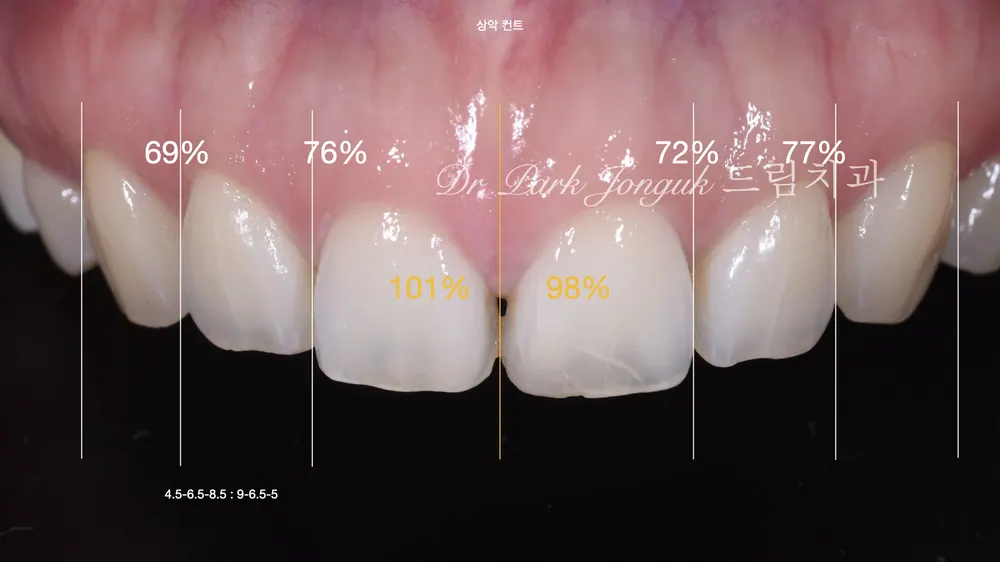
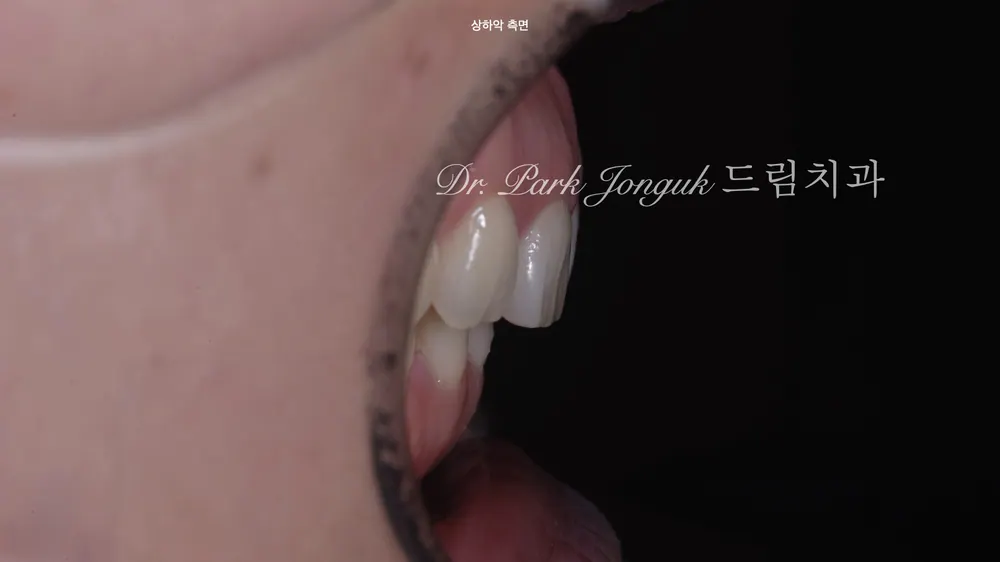
We measure the current size and proportion of the teeth
and check the degree of protrusion.
Since the retroclination was severe,
this was a case where the teeth needed to come forward.
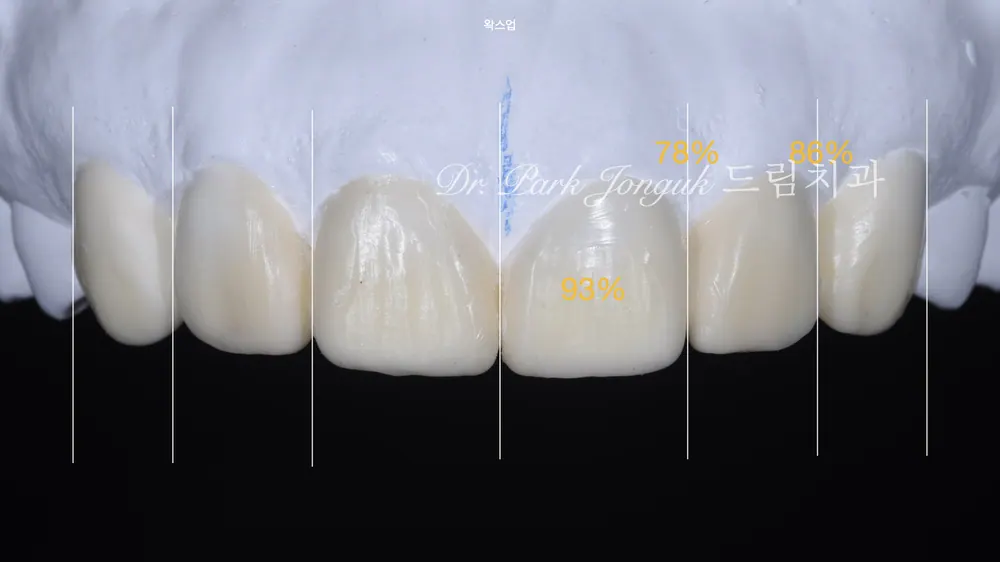
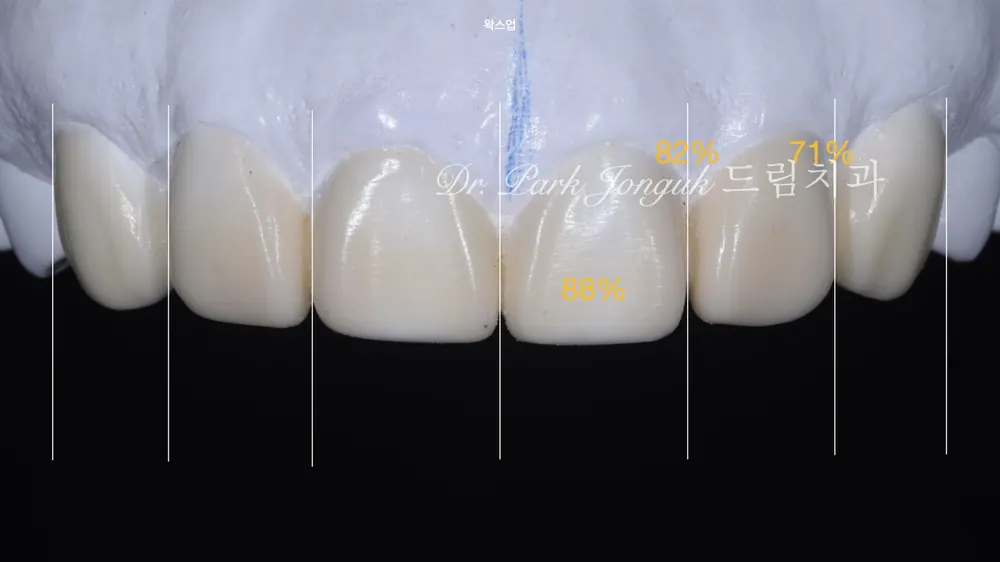
We carry out precision wax-up diagnosis for both approaches.
One shows the result with no reduction,
and the other shows the result with minimal reduction between the teeth.
Even though it's called reduction,
it's only removed to a degree that's hard to tell apart with the naked eye.
This is done so the teeth don't end up any bigger than they already are.
With no-prep veneers, in almost every case,
the teeth end up larger than they currently are.
In some cases, larger teeth can actually look better,
but in this case, making the teeth bigger wouldn't improve the aesthetics.
Even though the reduction was minimal,
we could confirm that the width-to-height ratio of the teeth,
as well as the proportion between teeth, clearly improved.
We consulted with the patient on both options before making a decision.
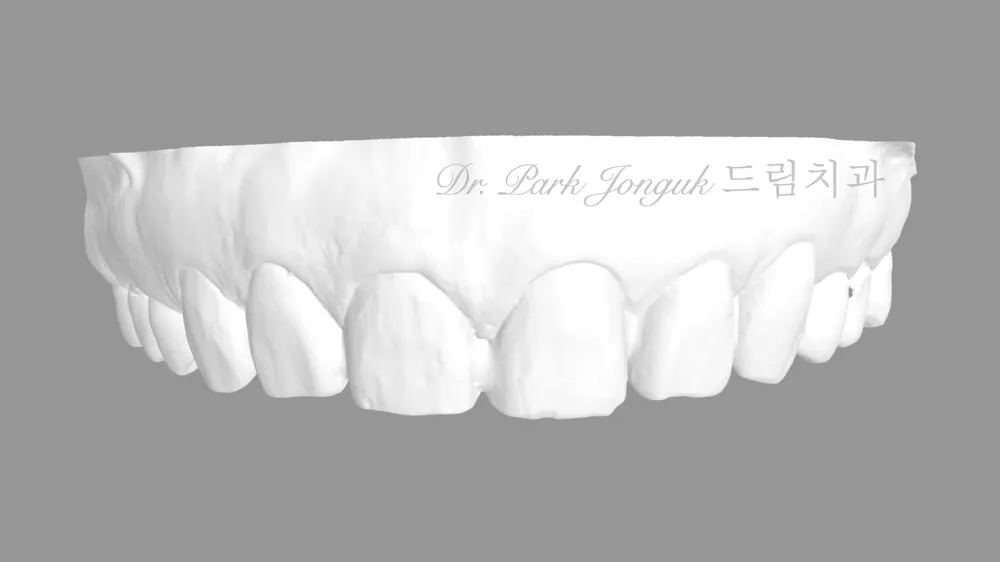
Checking the expected amount of tooth reduction,
confirming there was no issue for tooth health,
and since the likelihood of side effects was low,
we decided to proceed with minimal-reduction veneers.
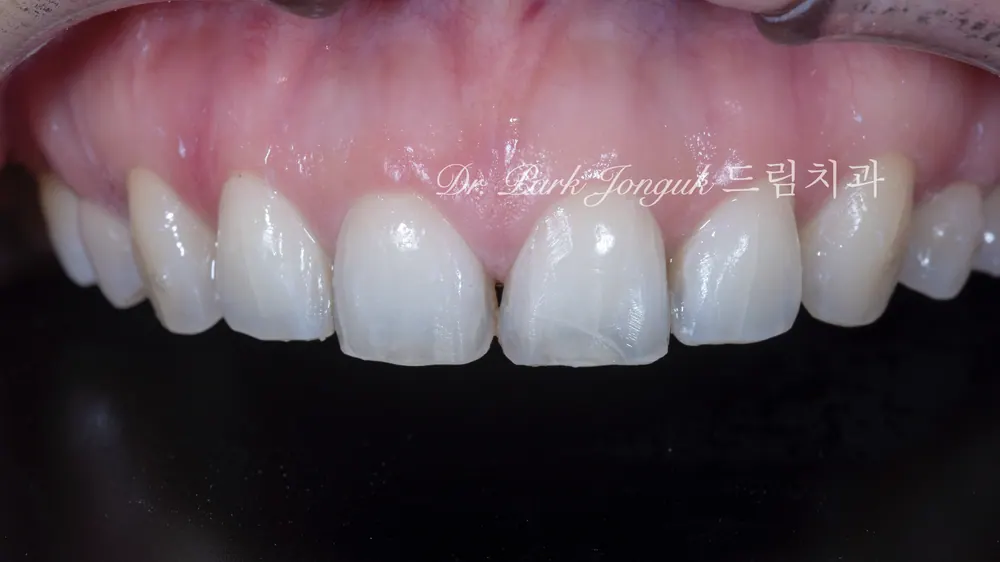
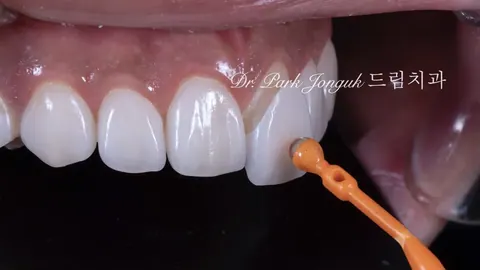
The reduction has been completed.
The reduction is done without anesthesia,
and even comparing it with the pre-reduction photo above,
it's hard to tell where any reduction was done —
that's how minimal the reduction is.
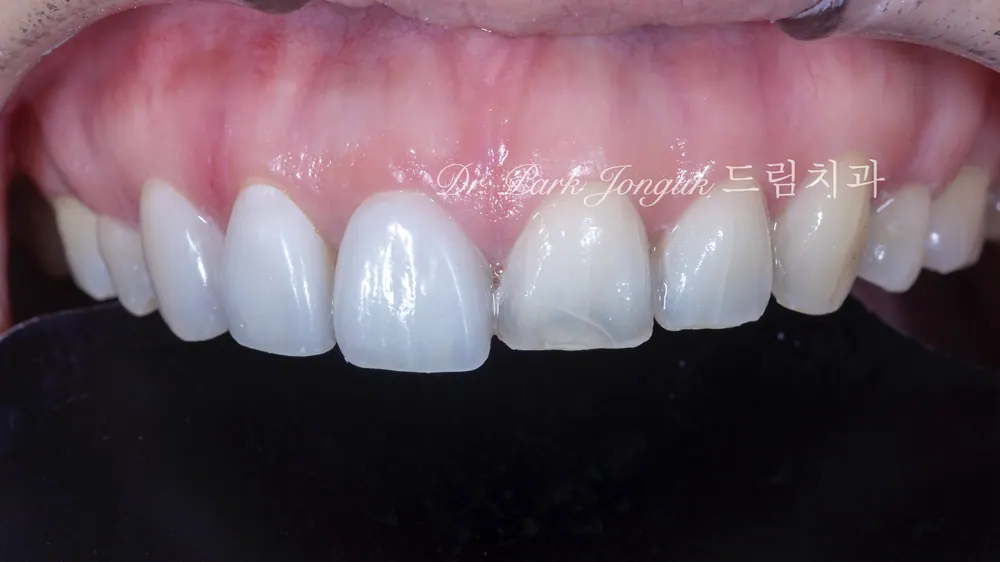
In terms of proportion, the teeth needed to be a bit longer,
but without the width increasing much,
the ceramic is fabricated to wrap even the sides of the tooth.
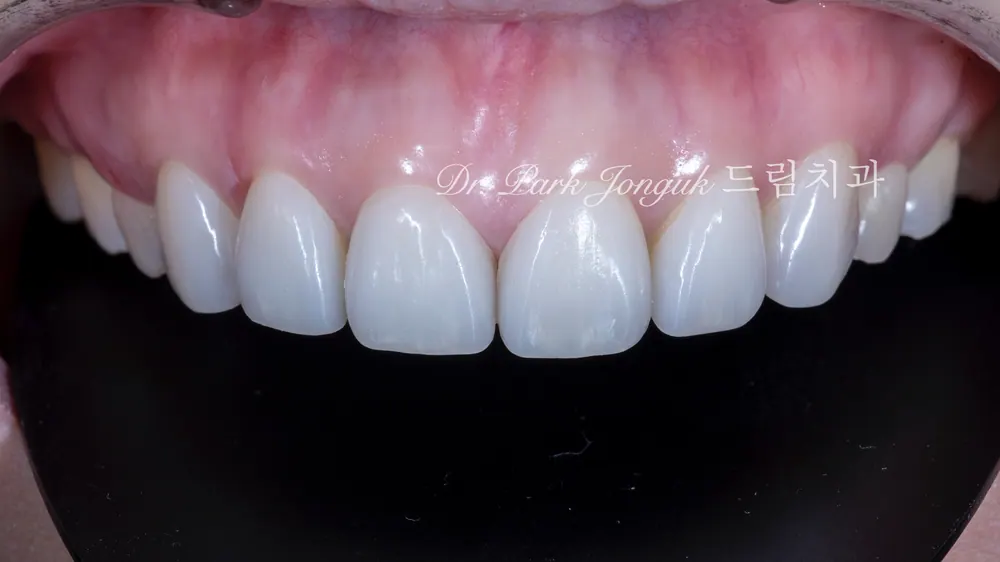
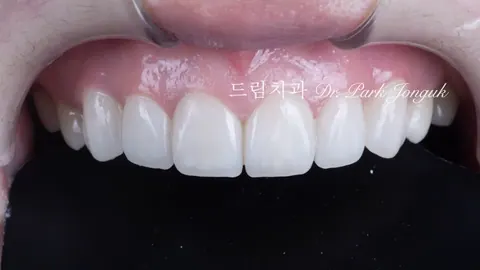
This completed a case of minimal-reduction veneers that came close to no-prep.
When the teeth are on the larger side,
a sense of dimension matters a great deal.
Without dimension, the teeth end up looking too large.
A range of colors and the translucency at the tooth edges as well —
all of this expression is packed into an extremely thin ceramic.
Teeth can only be called beautiful when they keep the feel of natural teeth.
This is something the one- or two-day method simply can't match.
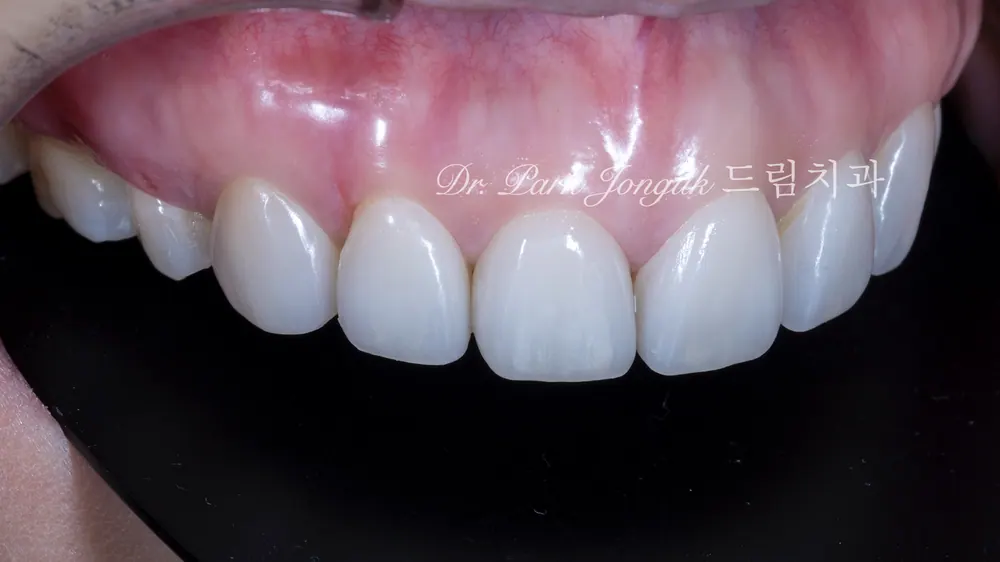
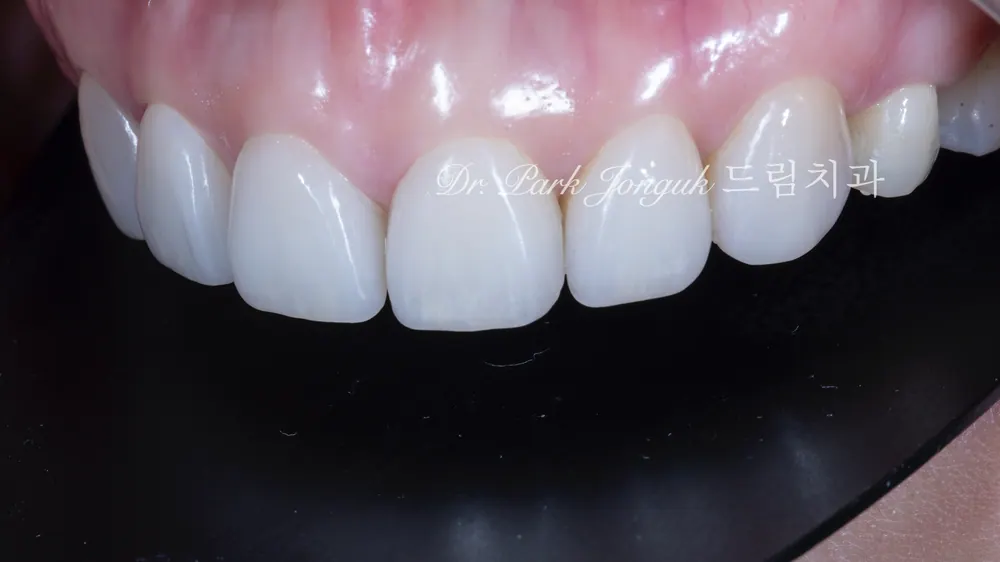
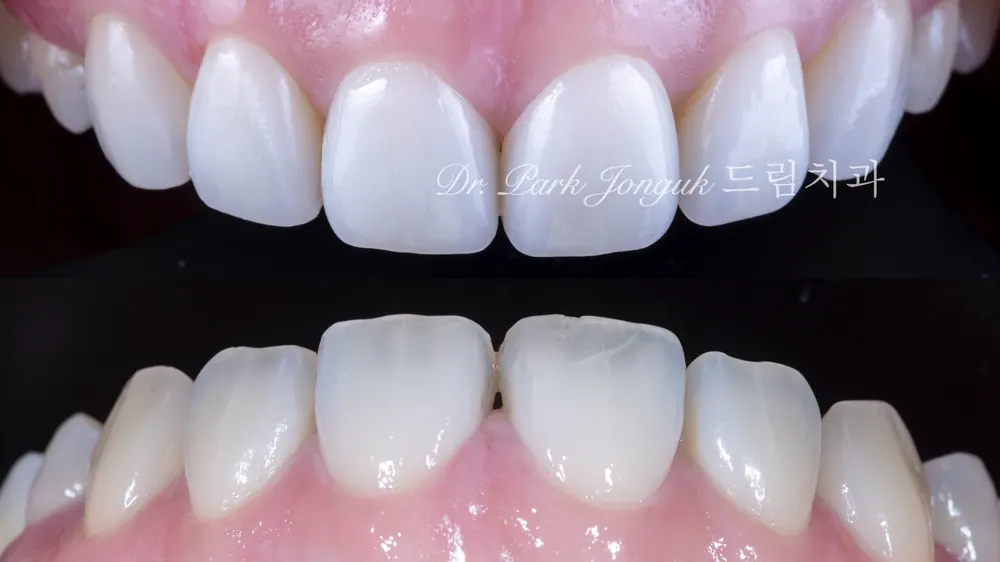
While correcting the retroclined teeth,
this treatment also transformed the color and shape of the teeth to be more beautiful —
minimal-reduction veneer treatment.
Natural beauty
Since 2006, Dream Dental Clinic
This article is a clinical note written by Dr. Park Jonguk of Dream Dental Clinic, Gangnam; the original was published on his blog. The photographs shown are real cases he treated. Results vary with each patient’s condition, and every procedure carries the possibility of individual variation and side effects.
Quick Consult
Request a Callback
Leave your number and we will call you back during clinic hours.
Request Received
We will contact you during clinic hours. For urgent matters, please call +82-2-3448-0028.