
A Minimal-Reduction Veneer Case from a Clinic Skilled in Veneers
Hello. I'm Park Jonguk, director of Dream Dental Clinic, a clinic skilled in veneers.
For those considering veneer treatment,
the biggest worry is usually side effects.
When people think of veneer side effects,
what most people picture is tooth sensitivity and veneers coming off.
In fact, there can be various other side effects as well,
but these two are usually the ones that stand out most.
To reduce these side effects, tooth reduction needs to be kept to a minimum.
The way a clinic skilled in veneers minimizes tooth reduction is that
the pre-treatment preparation stage, the treatment process, the lab fabrication process, and the bonding process all
require thorough preparation for minimal-reduction, micro-reduction, or no-prep veneers.
Reducing less this way brings the following benefits.
Tooth preservation: no-prep or minimal-reduction veneers only lightly polish the surface of the tooth, preserving its original structure. This helps keep the tooth stronger and healthier.
Less tooth reduction: only a smaller amount of tooth structure needs to be removed compared to other dental treatment methods. This causes less discomfort for the patient and reduces the chance of damage to the tooth and surrounding tissue.
A natural appearance when made by hand: this approach can provide a very natural-looking appearance.
Protection of the front teeth: depending on the case, such as with fractured or undersized teeth, they can strengthen and protect the tooth. This is especially important when the teeth look thin and fragile.
But not every case can be treated with this little to no reduction.
For no-prep or minimal-reduction veneers to be possible,
the alignment needs to be good,
the teeth need to be small,
and there should be no protrusion.
If a case meets these three conditions,
it's best to reduce the tooth as little as possible.
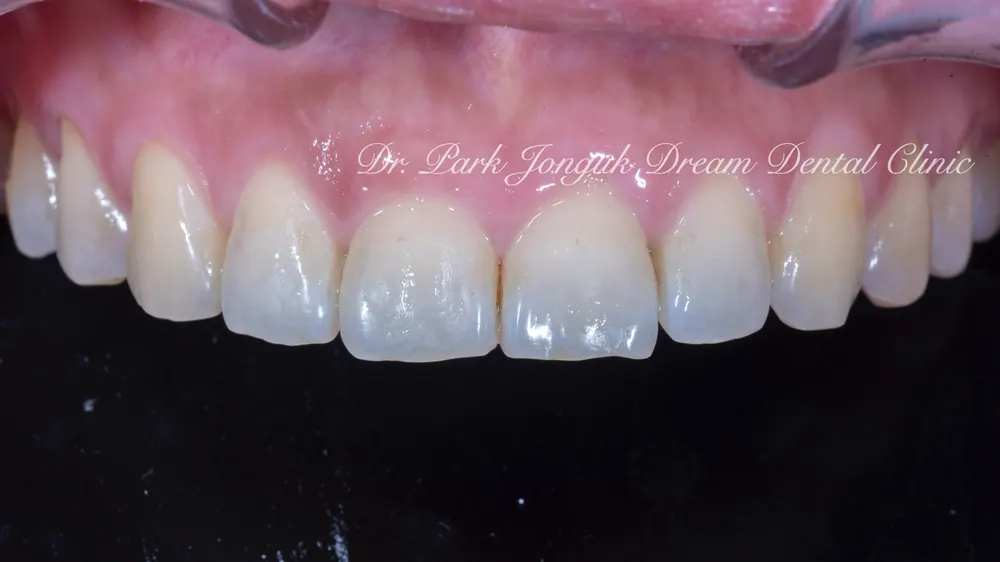
The alignment was good, but
the shape of the teeth was too square, and
there was a lot of discoloration,
with heavy staining between the teeth as well.
Depending on the situation, no-prep treatment was possible,
but the discoloration between the teeth could still show through after treatment,
and the spaces between the teeth could look too dense and heavy,
so it's better to proceed with some partial, minimal reduction.
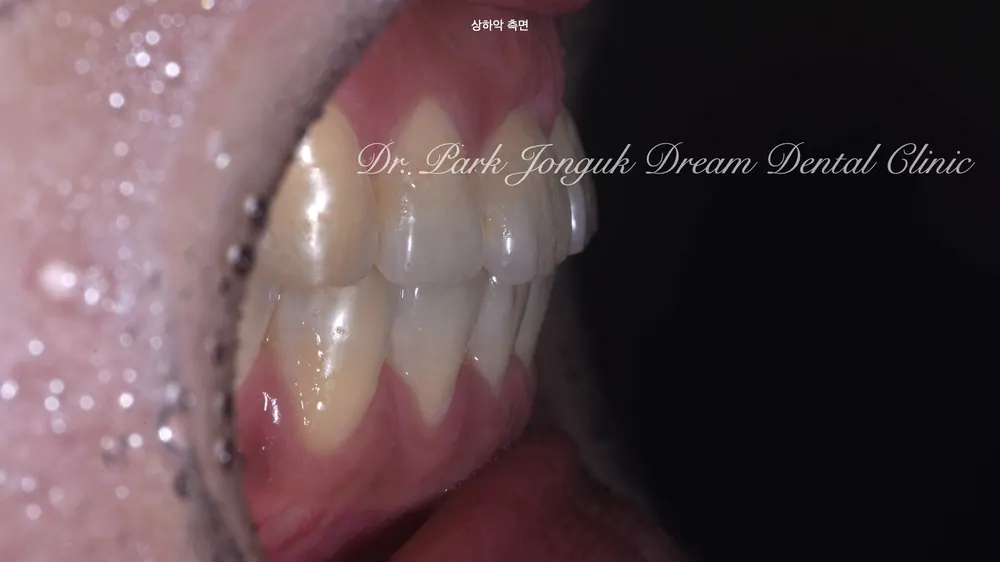
Since there was also a slight sense of protrusion when viewed from the side,
it was decided to address this at the same time.
The less reduction a treatment involves,
the more thoroughly the plan needs to be set.
It needs to be done with the balance of the whole face in mind,
and changes in tooth proportion must be measured precisely.
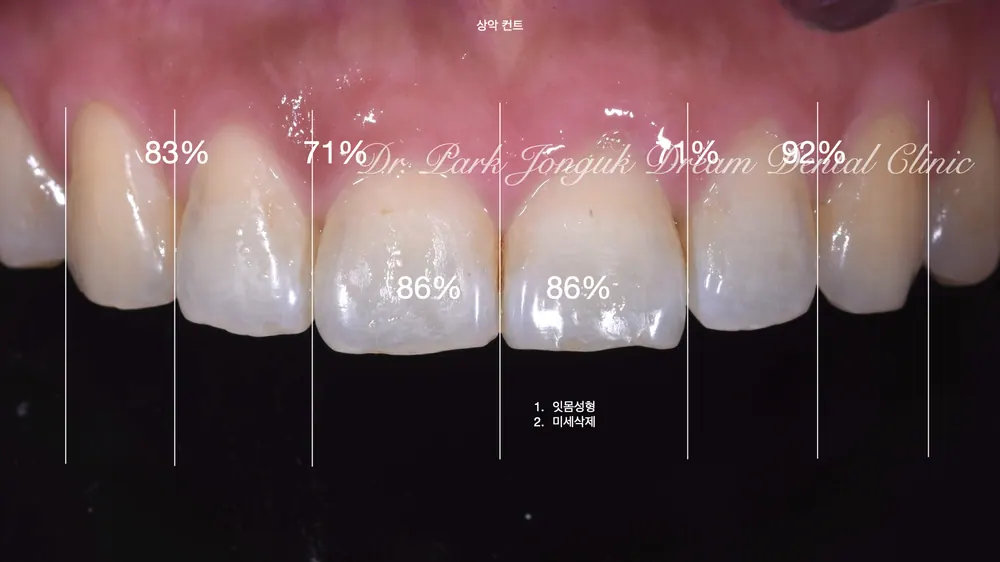
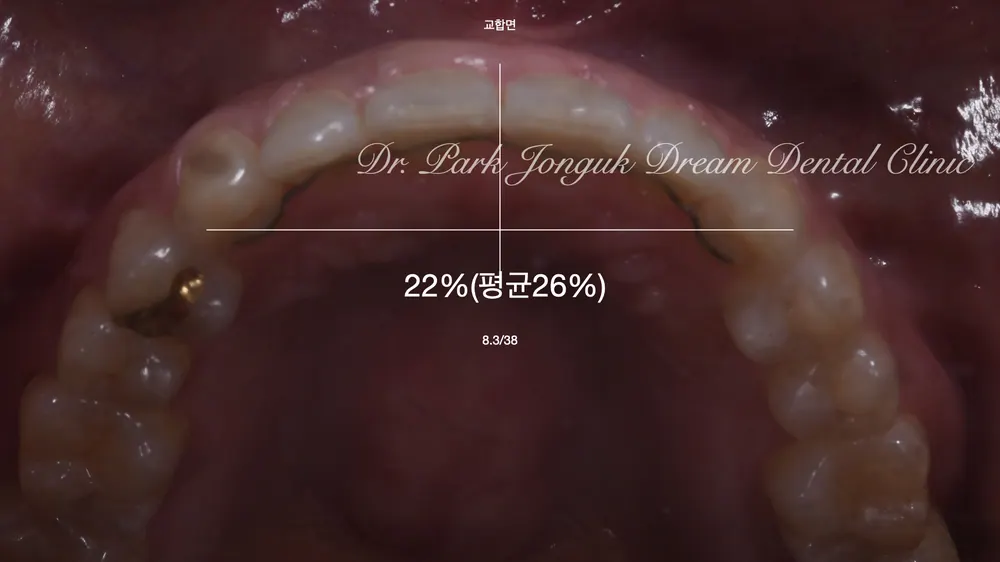
The proportion of the teeth and the degree of protrusion are also calculated precisely,
and a plan is made for how to change them.
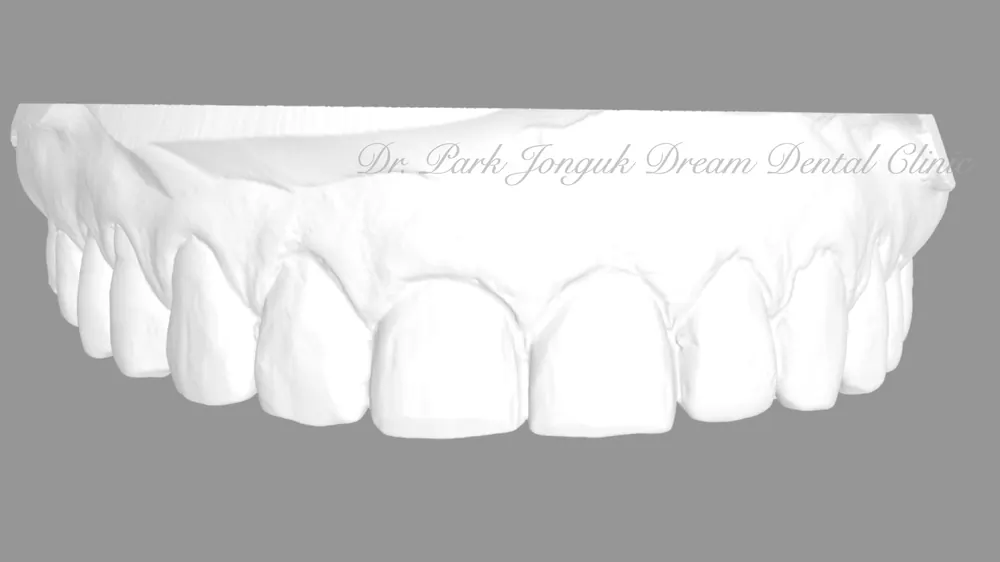
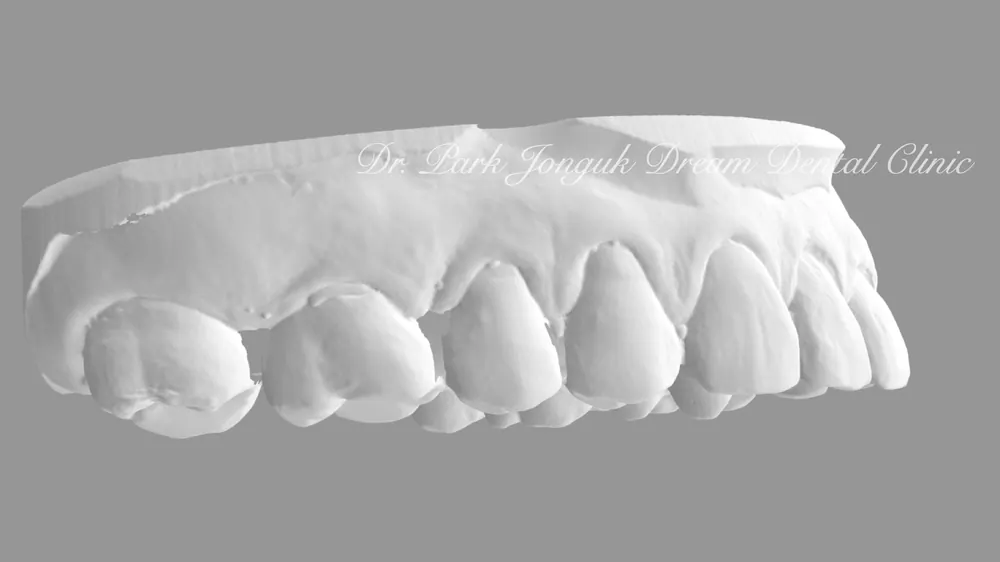
The amount of tooth reduction is tested in advance.
This is used when consulting with the patient.
Exactly which teeth will be reduced and by how much
needs to be explained to the patient in advance.
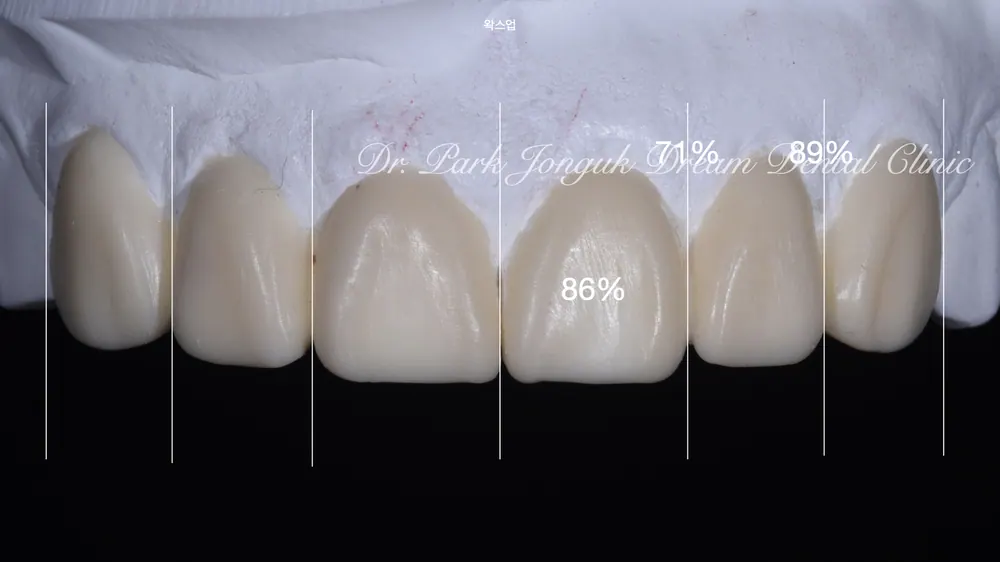
A clinic skilled in veneers will also go over the post-treatment proportions once more.
That gum contouring is needed for a better result
is explained beforehand, and then treatment proceeds.
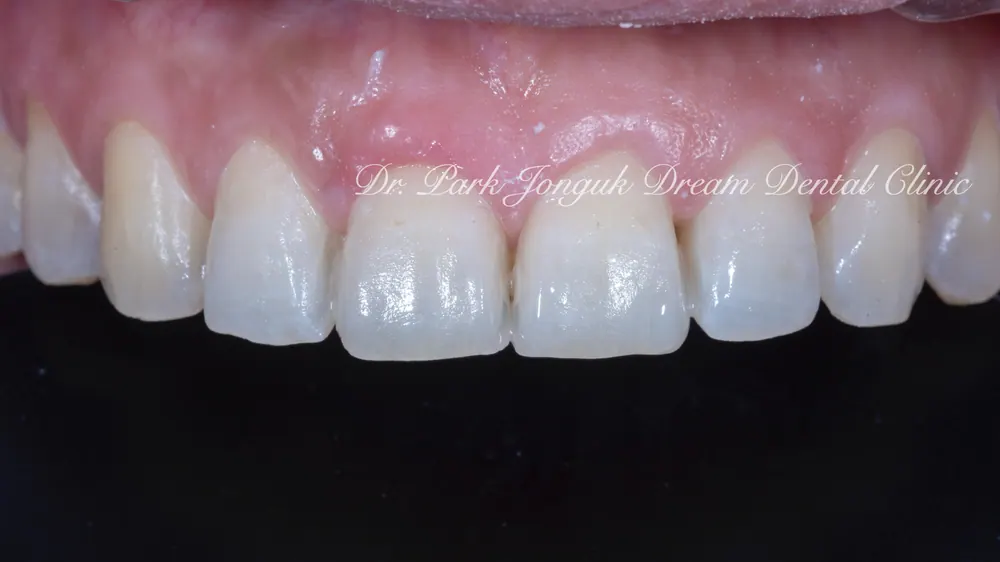
The discoloration between the teeth was removed,
and minimal reduction was carried out.
Because the amount of reduction was so small,
temporary teeth weren't needed.
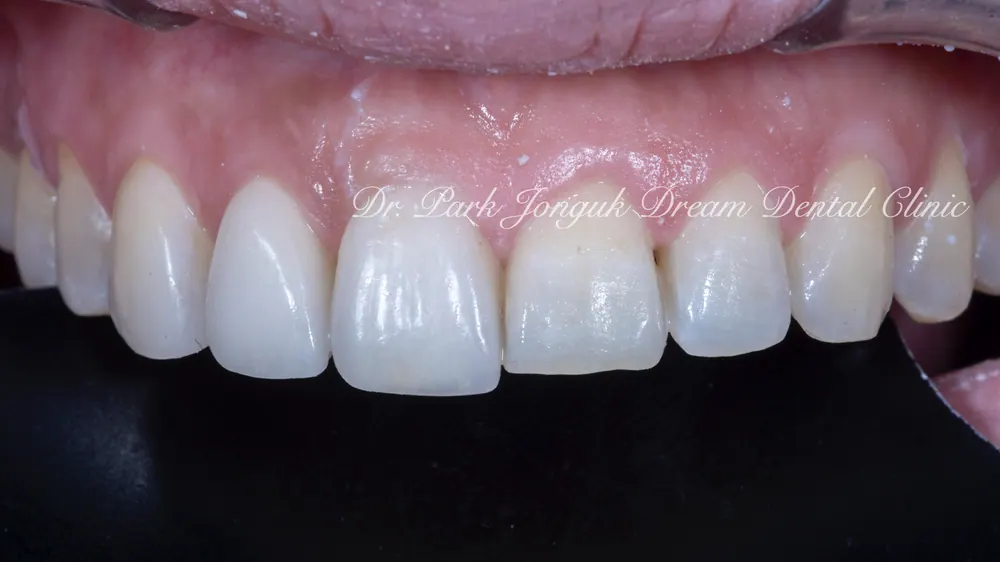
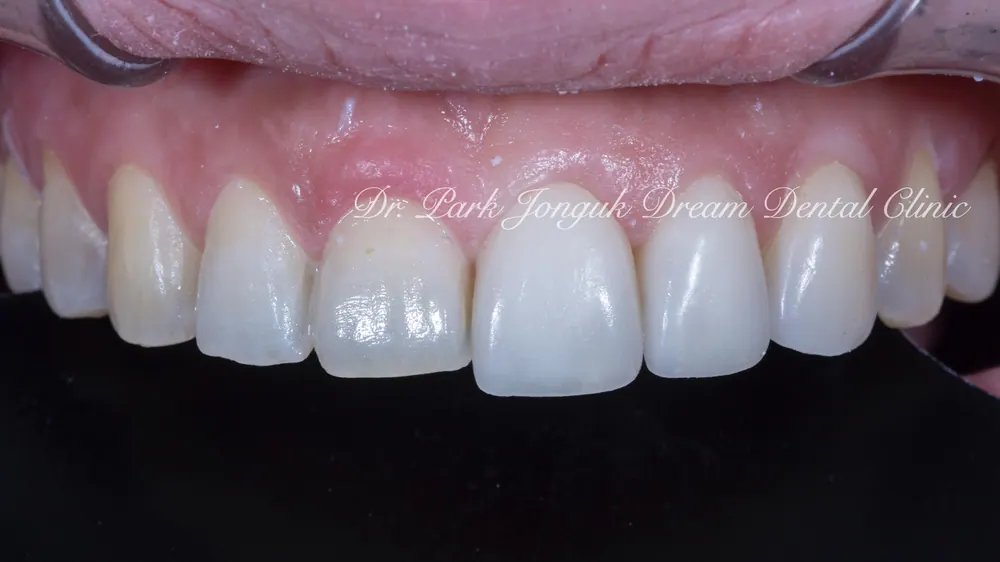
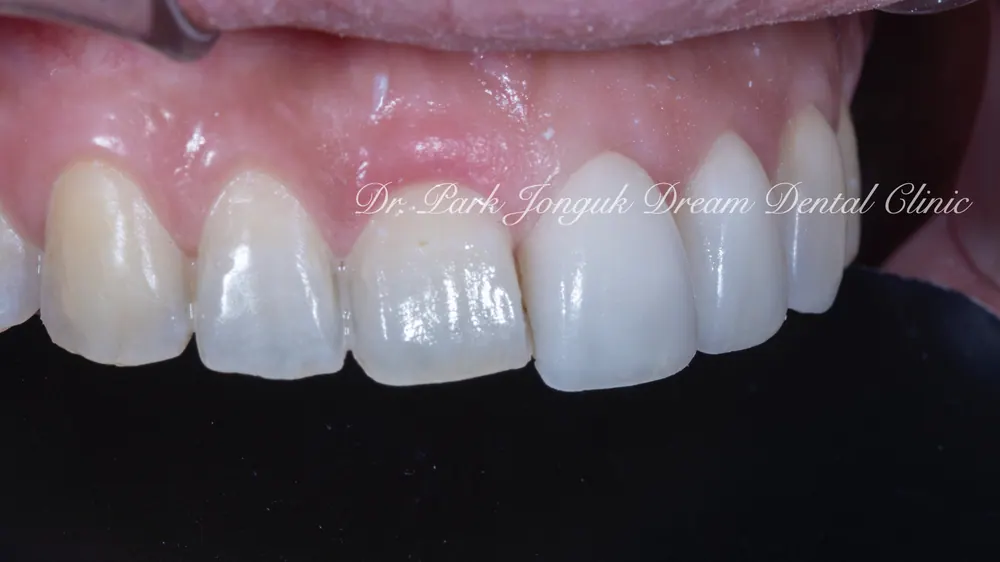
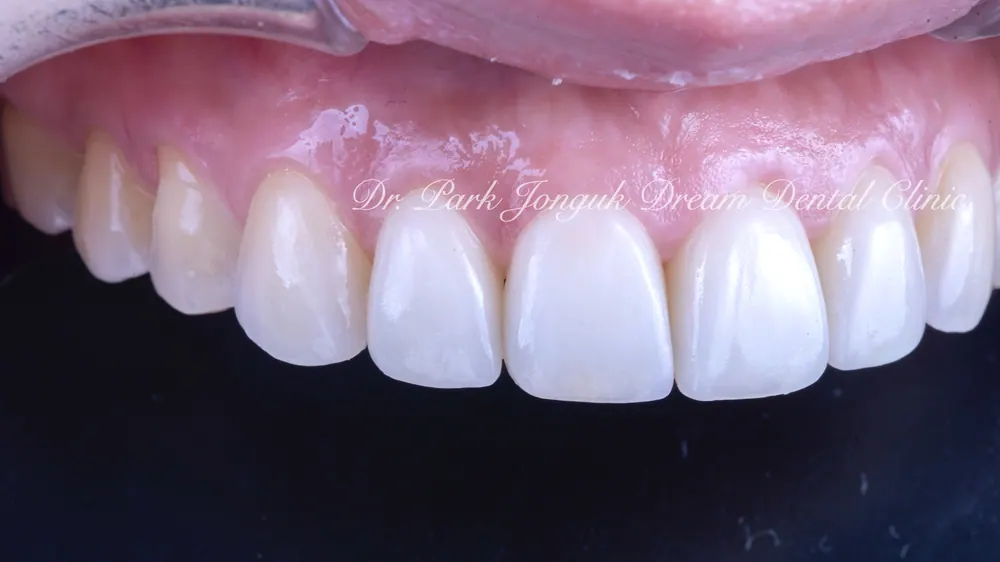
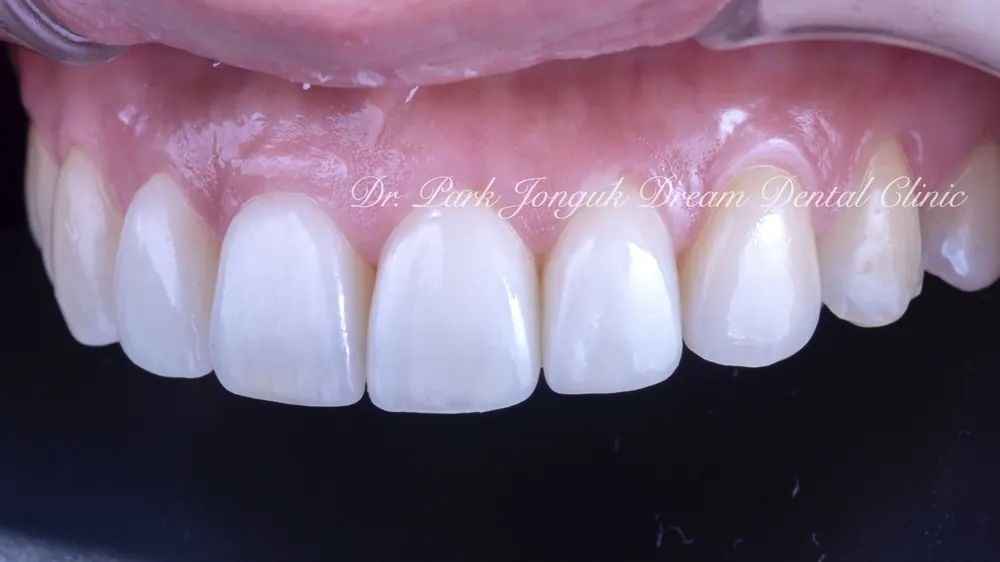
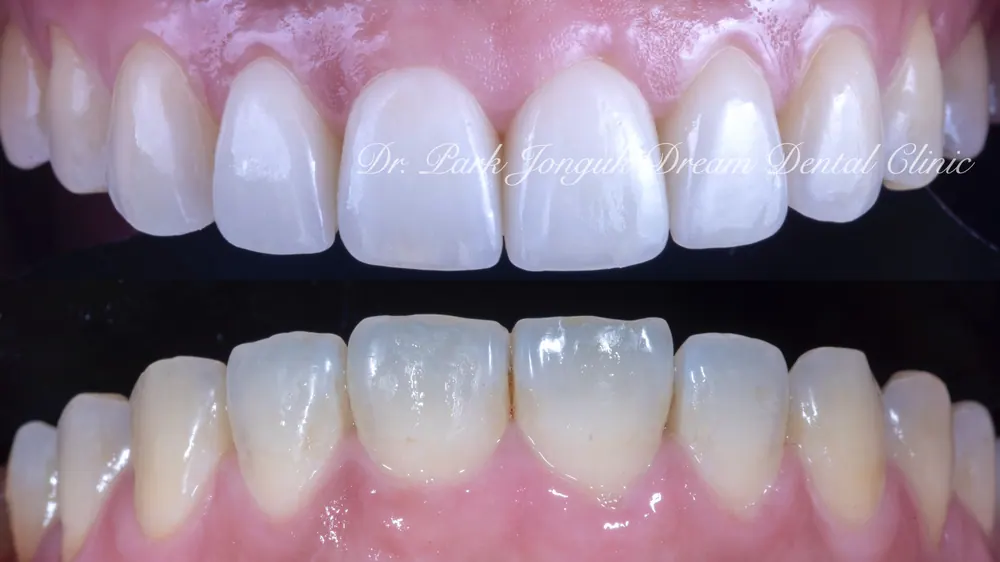
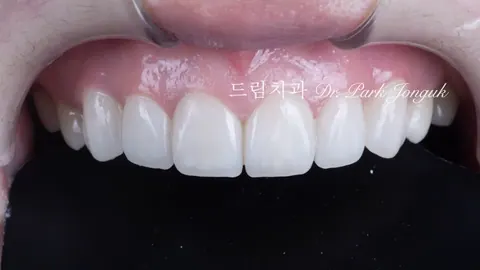
You can see that the veneer wraps even the very narrow edges of the tooth.
Only by wrapping the tooth as fully as possible like this
is it less affected by discoloration later on.
Ceramic itself doesn't discolor,
but any part of the tooth not covered by ceramic can still discolor,
and if that exposed part shows between the teeth,
the discolored area can appear dark.
Producing ceramic this thin
is one of the strengths of the handmade method.
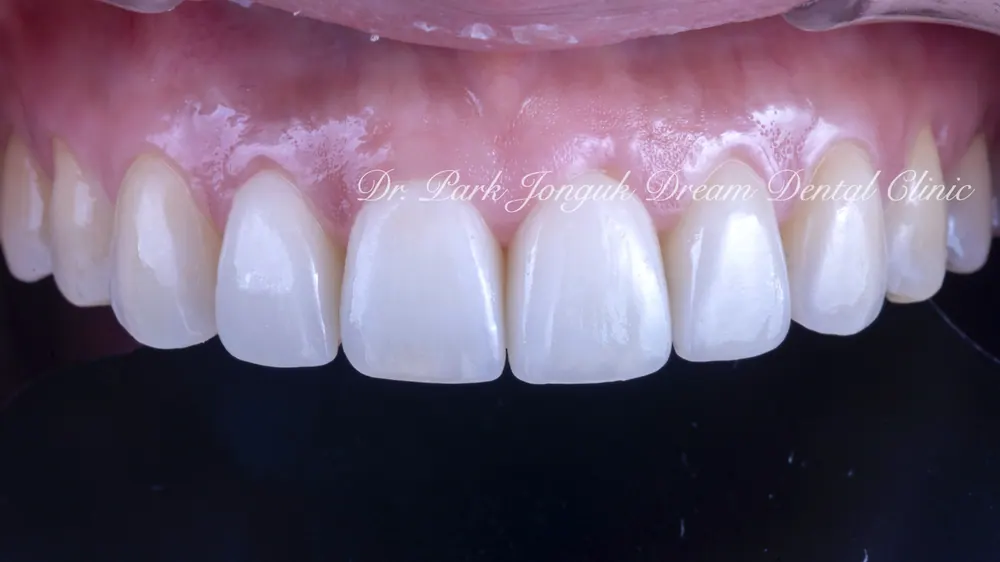
Many veneers
end up quite opaque and white.
Of course, some patients may prefer that
awkward, xylitol-gum-like look on their teeth,
but from the clinic's standpoint, making veneers that opaque
is simply easier to fabricate.
Making them with a translucent feel like this,
since the underlying tooth color shows through,
makes color control much harder.
When bonding veneers that have a translucent feel,
considerable care has to be taken with color control,
and sometimes a different shade of translucent cement is used for each tooth.
Since 2006, Dream Dental Clinic, a clinic skilled in veneers
This article is a clinical note written by Dr. Park Jonguk of Dream Dental Clinic, Gangnam; the original was published on his blog. The photographs shown are real cases he treated. Results vary with each patient’s condition, and every procedure carries the possibility of individual variation and side effects.

Quick Consult
Request a Callback
Leave your number and we will call you back during clinic hours.
Request Received
We will contact you during clinic hours. For urgent matters, please call +82-2-3448-0028.