
Naturalness Achieved Through Minimal Reduction at a Veneer Clinic
Hello, I'm Park Jonguk, director of Dream Dental Clinic, a veneer specialty clinic.
The goal of veneers is to make the teeth beautiful.
While doing so, they shouldn't affect the teeth too heavily.
Compared to the all-ceramic crown method,
veneer treatment clearly involves
less tooth reduction.
Even so, making the effort to keep reduction to a minimum is still very important.
Reducing less
means the ceramic ends up thinner.
The problem is that when the ceramic gets thinner,
it becomes harder to create a variety of natural-looking effects.
Many veneer clinics advertise ceramic thicknesses like 0.1mm or 0.3mm,
but simply making the ceramic that thin doesn't mean much on its own.
What matters more is whether a range of natural effects can still be achieved at that thin thickness.
Rather than veneers that are simply opaque and white,
looking awkward and artificial,
what matters is a result that's thin but still carries a range of natural expression.
Depending on the type of ceramic used for the veneer and how it's fabricated,
the range of expression differs.
Hand-layered feldspathic veneers
allow for the widest range of expression.
However, they're so demanding to fabricate that they're difficult to work with,
and they require considerable experience and know-how from the clinic performing the treatment.
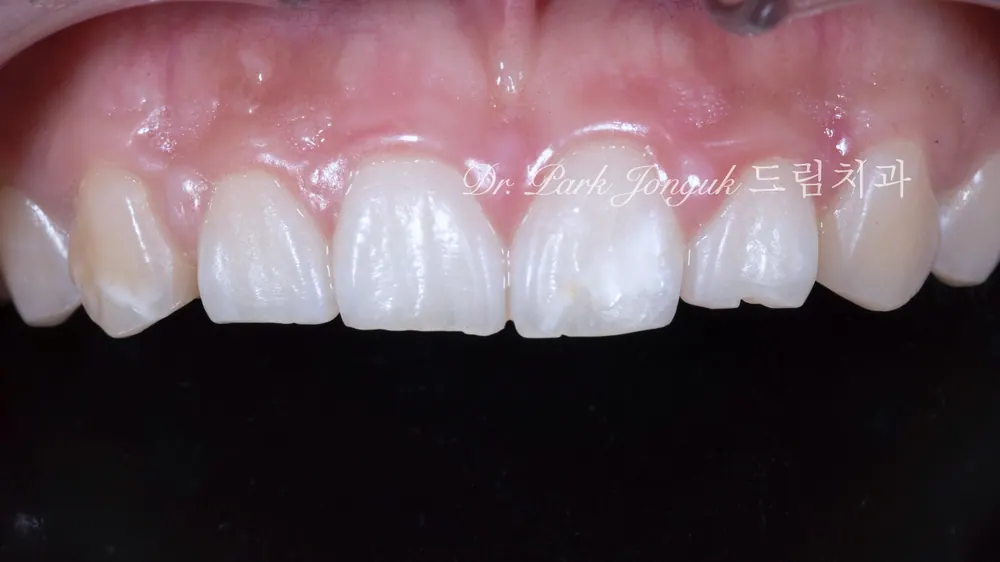
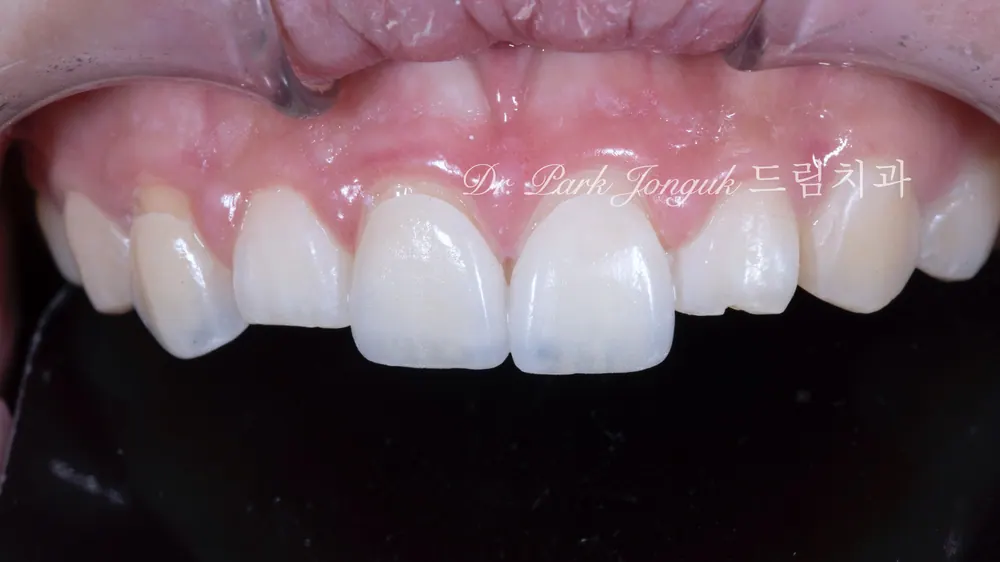
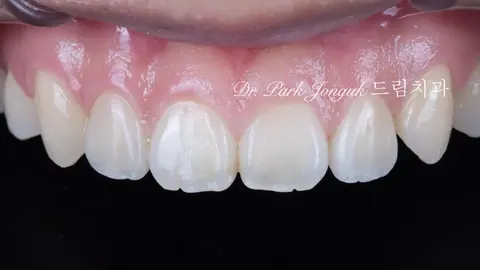
This is a case with white spots on the front teeth.
Treatment with resin is possible,
but the resin itself discolors over time,
so it needs to be redone periodically.
In a case like this, treating it with veneers is a better option,
but if you visit most veneer clinics in this condition,
they'll typically recommend veneers on six or more teeth.
But only two teeth have spots — why six?
Because it's so difficult to achieve a natural tooth look with minimal reduction,
many clinics choose to treat several teeth at once instead.
In this case, it was possible to treat just the two front teeth,
along with the canine, using a more limited approach.
And that, too, with only minimal reduction.
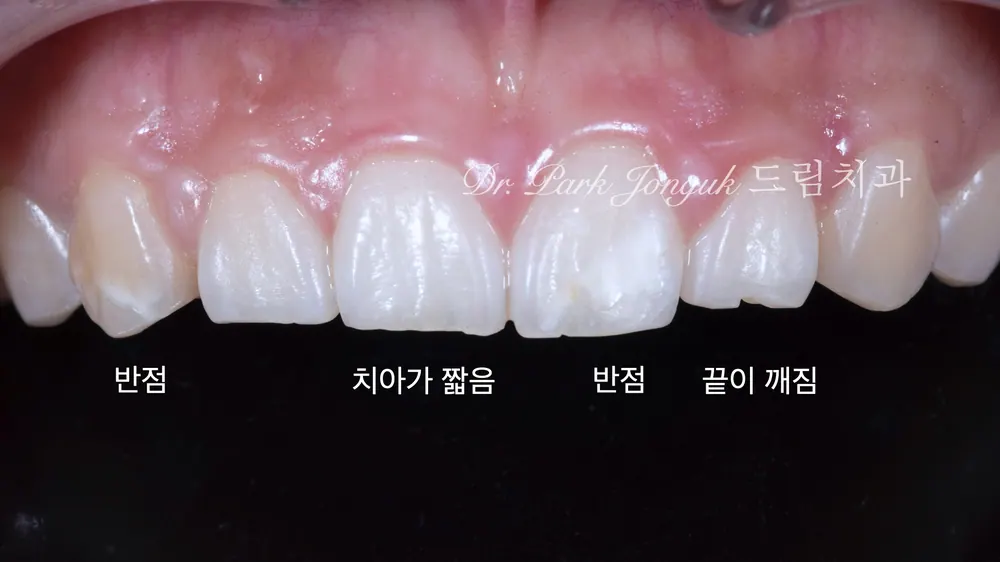
Veneer treatment was done on the spotted tooth and the short tooth,
while the tooth with a chipped edge was treated with resin instead.
For this treatment,
minimal reduction was carried out for the veneers.
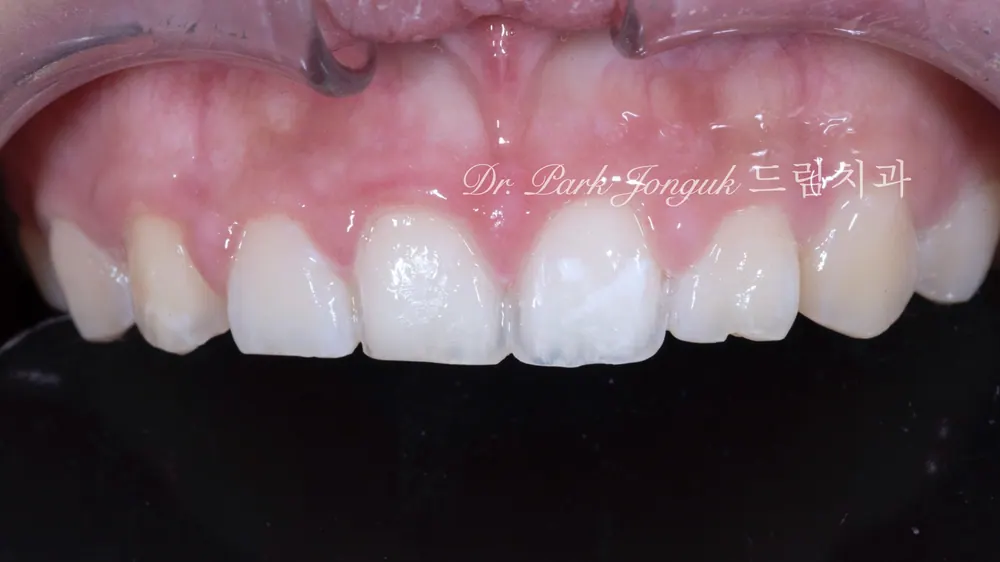
This shows the three teeth after reduction.
You can see how little was removed — it's hard to even tell which teeth were reduced.
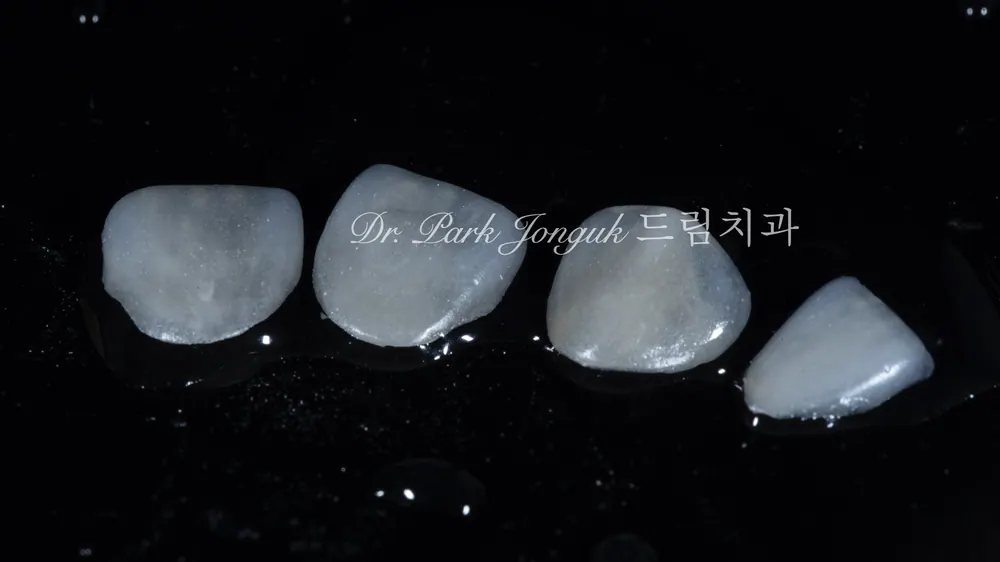
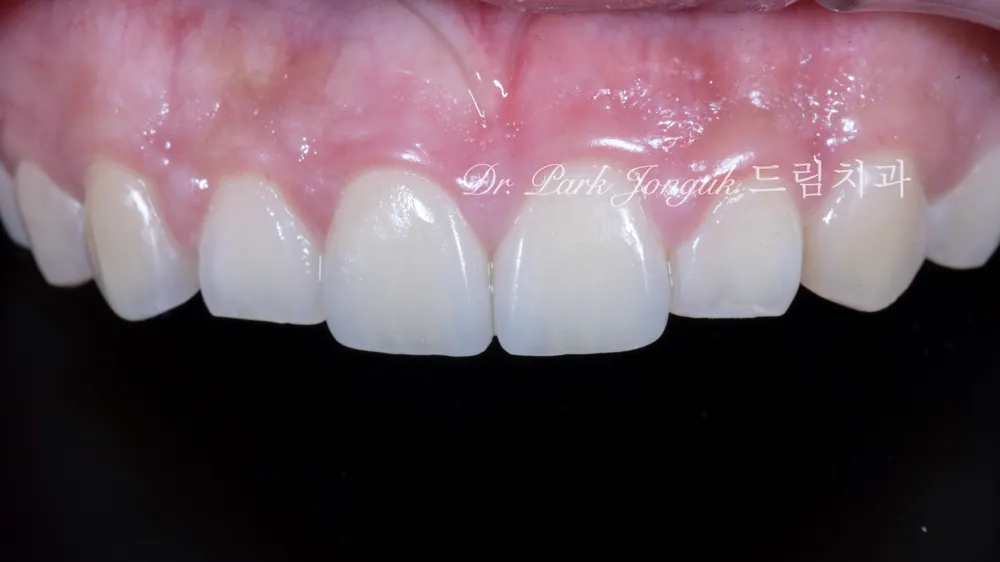
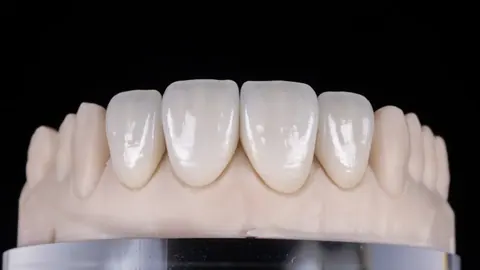
Extremely thin ceramic was fabricated.
If you look closely, you can see that although it's thin, the color varies from area to area.
The veneers are placed on the three teeth.
You can see the translucency at the tooth edges is quite excellent.
You can also confirm that the color matches the natural teeth well.
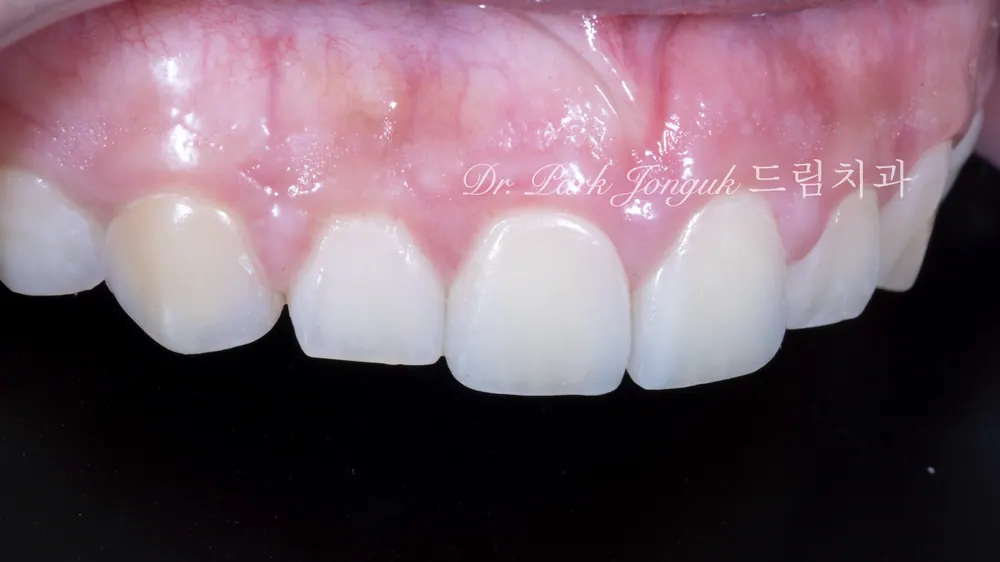
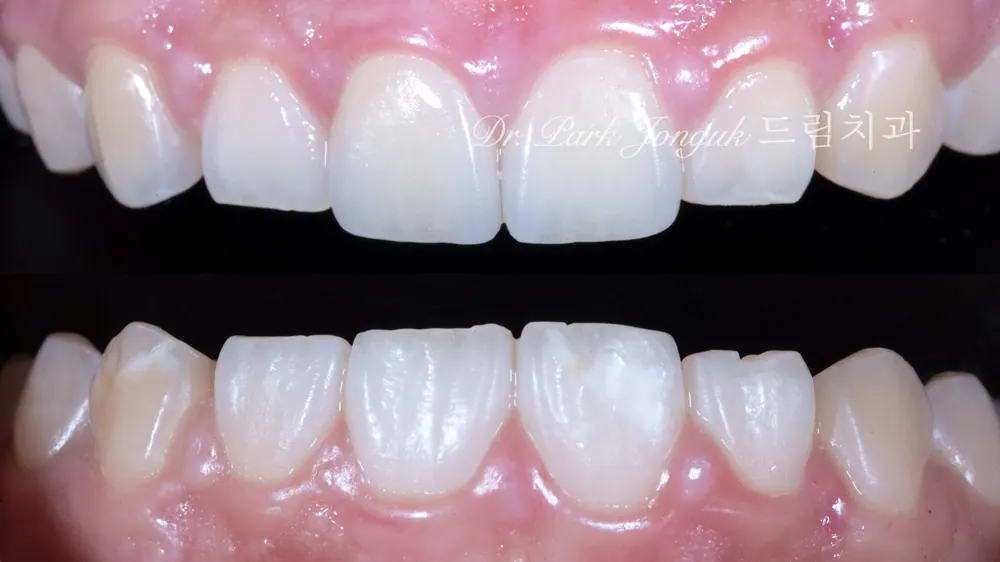
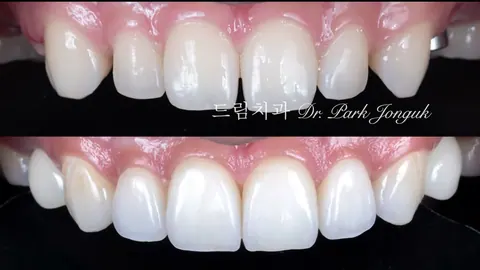
The treatment has been completed.
Which teeth are natural and which are veneers
isn't easy to tell.
The veneers show an exceptionally natural color, translucency, and shape.
In ceramic this thin,
bringing out the feel of natural teeth through a range of expression
is what defines aesthetic veneers, and shows why not just anyone can do it.
Natural beauty
Since 2006, Dream Dental Clinic, a veneer specialty clinic
This article is a clinical note written by Dr. Park Jonguk of Dream Dental Clinic, Gangnam; the original was published on his blog. The photographs shown are real cases he treated. Results vary with each patient’s condition, and every procedure carries the possibility of individual variation and side effects.
Quick Consult
Request a Callback
Leave your number and we will call you back during clinic hours.
Request Received
We will contact you during clinic hours. For urgent matters, please call +82-2-3448-0028.