
Minimal-Reduction Veneers - How to Minimize Side Effects
Hello.
I'm Park Jonguk, director of Dream Dental Clinic, located near Apgujeong Station.
There are two ways to make teeth even and beautiful.
One is orthodontic treatment.
It's a method most people are familiar with. Brackets are attached to the teeth, and
a wire is threaded through to move the teeth and line them up.
It doesn't change the shape of the teeth,
it simply rearranges them as they are.
The advantage is that no tooth structure is removed,
but the drawback is that it takes a long time,
and it can't address problems with the color or shape of the teeth.
The other method is dental cosmetic reshaping.
It's usually known as veneers.
Dental cosmetic reshaping includes two approaches: veneers and all-ceramic crowns.
Veneers involve bonding ceramic only to the front surface of the tooth,
so tooth reduction can be minimal, or none at all.
Sometimes this method is given a unique name and marketed as though it were a different treatment,
but "veneers" is the umbrella term for any method of bonding a thin layer of ceramic to the front of the tooth,
so giving it a different name doesn't make it a different treatment.
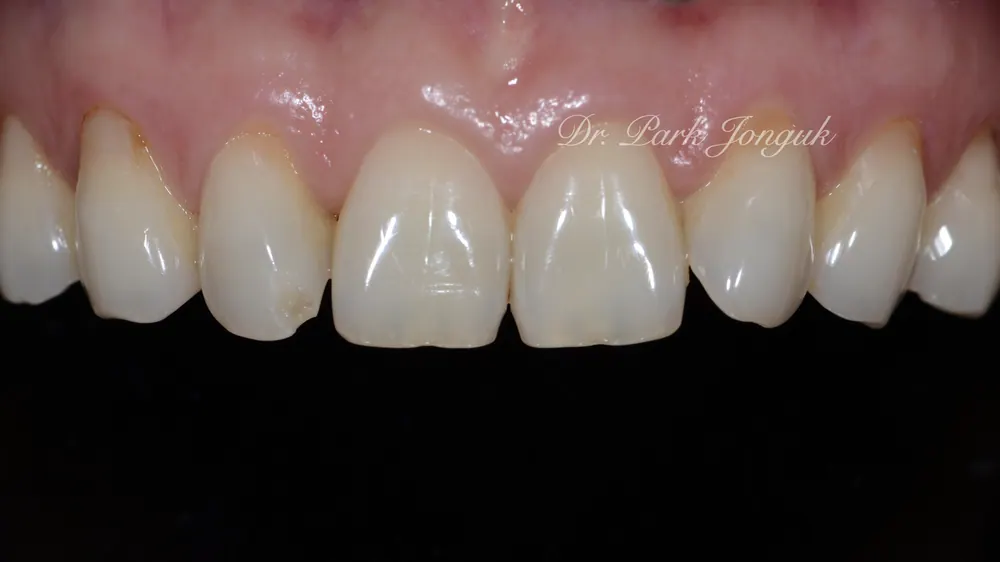
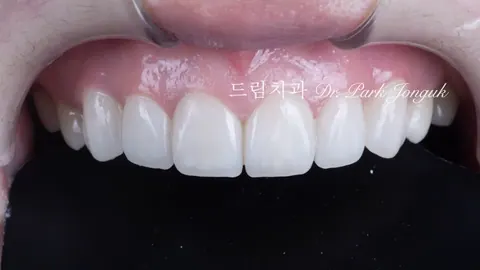
The alignment of the teeth is relatively good.
One tooth is slightly rotated and sits further forward,
and a few teeth are chipped.
Since some of the teeth have slightly awkward shapes, with some close to being undersized,
even orthodontic treatment wouldn't make the teeth look perfectly even.
In a case like this, to correct the alignment,
brighten the color,
and improve the shape of the teeth all at once,
dental cosmetic reshaping is a better option than orthodontics.
In particular, if tooth reduction can be minimized,
minimal-reduction veneers can also keep side effects to a minimum.
No-prep veneers would have even fewer side effects, right?
Please see the link below for no-prep cases.
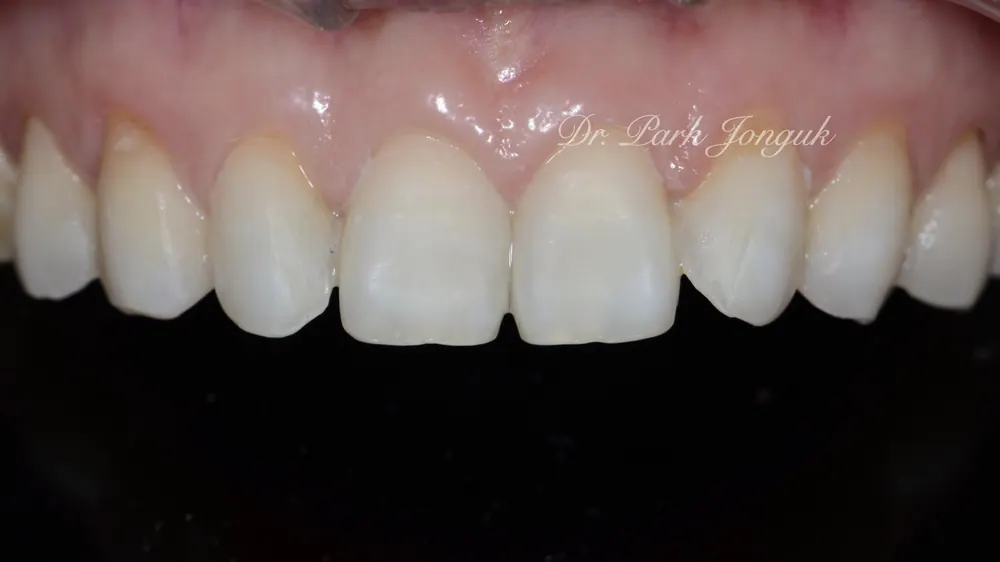
Tooth reduction was carried out after whitening.
Comparing this with the photo above, you can see the amount removed is quite small.
Chipped areas, protruding spots, and
other areas expected to protrude were reduced little by little,
and minimal-reduction veneers were then carried out.
With this small an amount of reduction, even if a veneer were to chip or come off, the tooth shouldn't become sensitive.
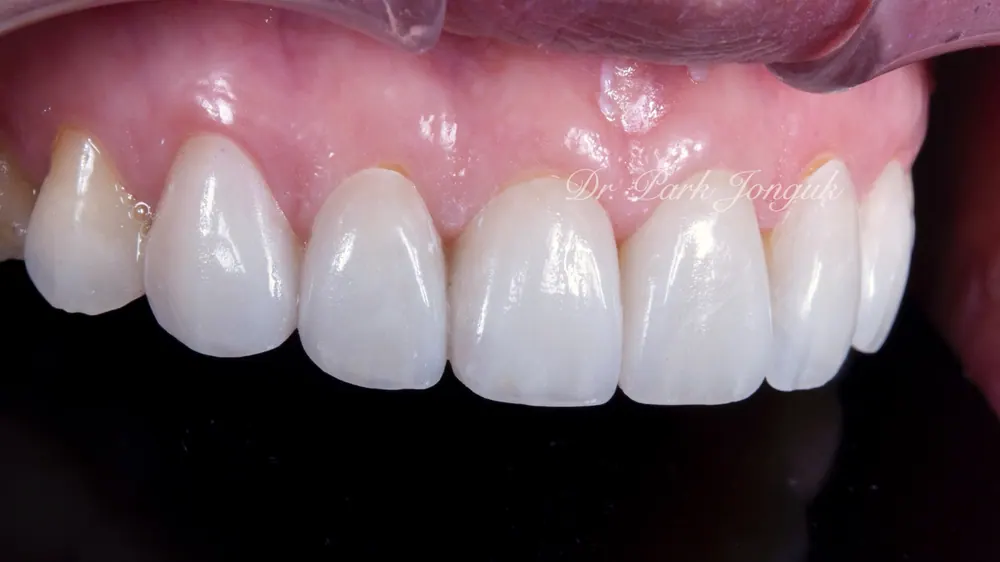
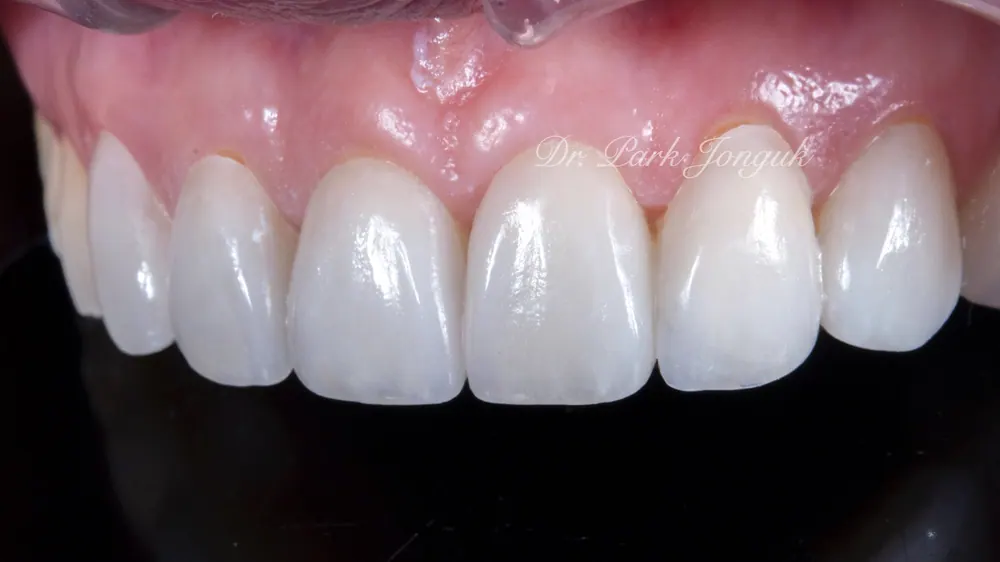
This shows the veneers placed on the teeth before bonding.
Although these are extremely thin veneers, they were given rich, natural tooth character.
Veneers with less reduction also come with considerably fewer side effects.
Most side effects of veneers originate from tooth reduction,
and the less reduction there is, the less tooth sensitivity there is and the lower the chance of a veneer coming off.
That's why, whenever I perform minimal-reduction veneers, I always make a great effort to keep tooth reduction to a minimum.
This is also why I haven't adopted the one-day veneer method that's popular these days.
The one-day method requires reducing the tooth beyond a certain level for the fabrication process to work,
so the amount of tooth reduction inevitably ends up greater than with the handmade method.
To preserve as much natural tooth structure as possible,
I believe the one-day method is still premature.
It's an approach to reconsider once the technology has developed further.
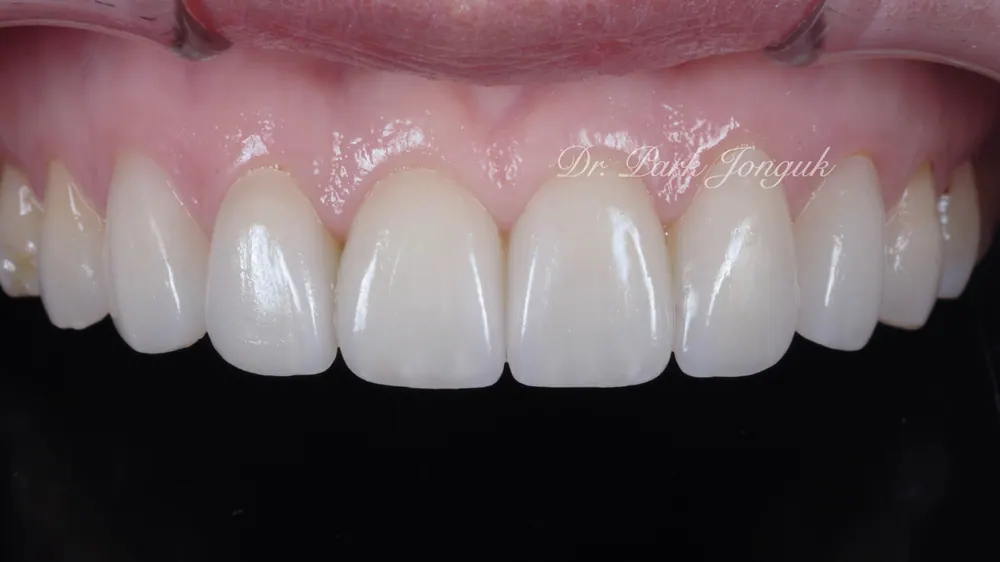
With only a very small amount of reduction,
a considerable transformation was achieved.
The result was minimal-reduction veneers with excellent aesthetics.
The alignment of the teeth improved,
the color became brighter,
and the shape was naturally improved as well.
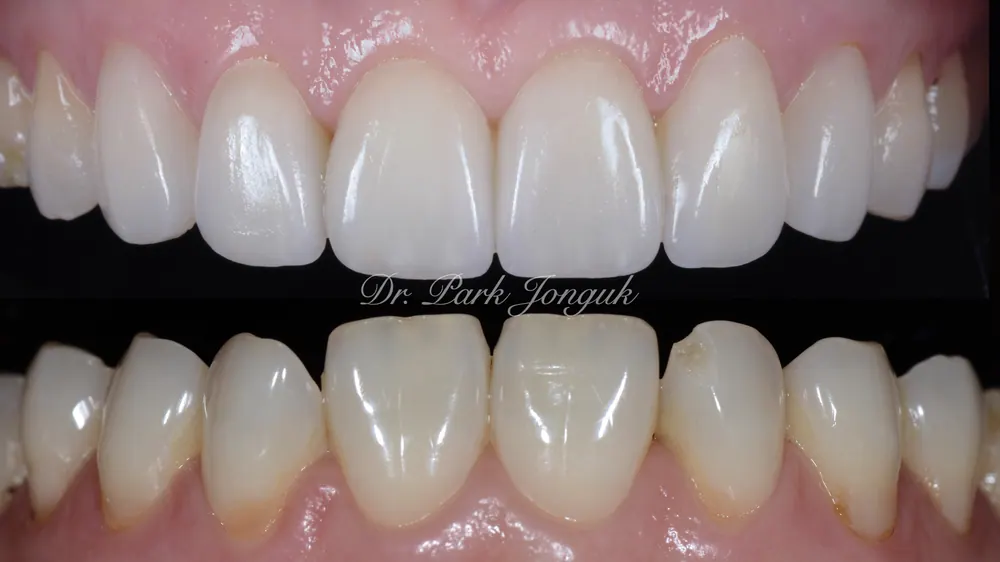
Comparing the before and after like this,
you can see just how much more beautiful the teeth have become.
What's even more important here
is that the amount of tooth reduction is remarkably small.
Achieving rich, natural tooth character while reducing so little tooth structure doesn't happen overnight.
Since 2006, Dream Dental Clinic
This article is a clinical note written by Dr. Park Jonguk of Dream Dental Clinic, Gangnam; the original was published on his blog. The photographs shown are real cases he treated. Results vary with each patient’s condition, and every procedure carries the possibility of individual variation and side effects.
Quick Consult
Request a Callback
Leave your number and we will call you back during clinic hours.
Request Received
We will contact you during clinic hours. For urgent matters, please call +82-2-3448-0028.