
How to Remove Veneers While Minimizing Tooth Damage: Using a Laser
Hello, I'm Park Jonguk, DDS, MS, director of Dream Dental Clinic and director of Lamista Academy.
Perhaps no other country
treats veneer treatment quite like a factory process the way Korea does.
Veneer treatment is, among dental treatments,
one of the most representative "esthetic" treatments.
Treatment aimed at beauty needs to be carried out according to each individual patient's situation.
At large, factory-like clinics,
veneers are often not made according to each patient's individual characteristics,
but rather with efficiency as the priority, so more often than not,
efficiency takes precedence over esthetics in how they're made.
As a result, many patients aren't satisfied esthetically after veneer treatment
and come to our clinic specifically to have the veneers removed.
In the veneer lectures I give, for efficient and safe removal of veneers,
I talk a great deal about laser-based removal.
Not every dental laser can be used to remove veneers.
Only certain lasers can be used for veneer removal.
Using a laser makes it possible to remove veneers while minimizing damage to the tooth.
It's currently the safest method among the ways of removing veneers.
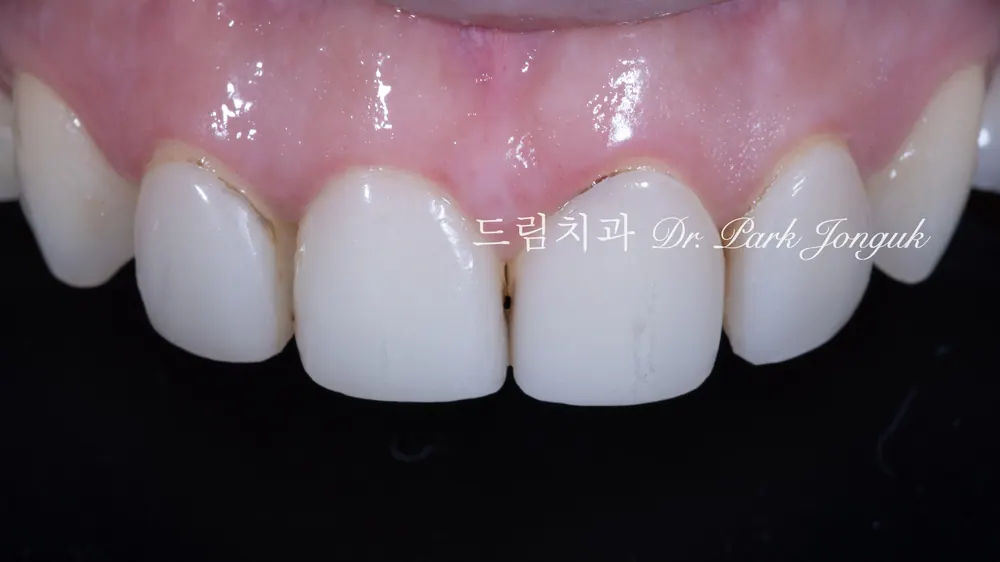
In the past, this patient had no-prep veneers done because of a fractured front tooth.
Over time, staining developed between the tooth and the ceramic, and the patient came in for redo treatment.
The veneer itself doesn't change color, but after this much time has passed,
the adhesive that bonds the veneer to the tooth can sometimes become discolored.
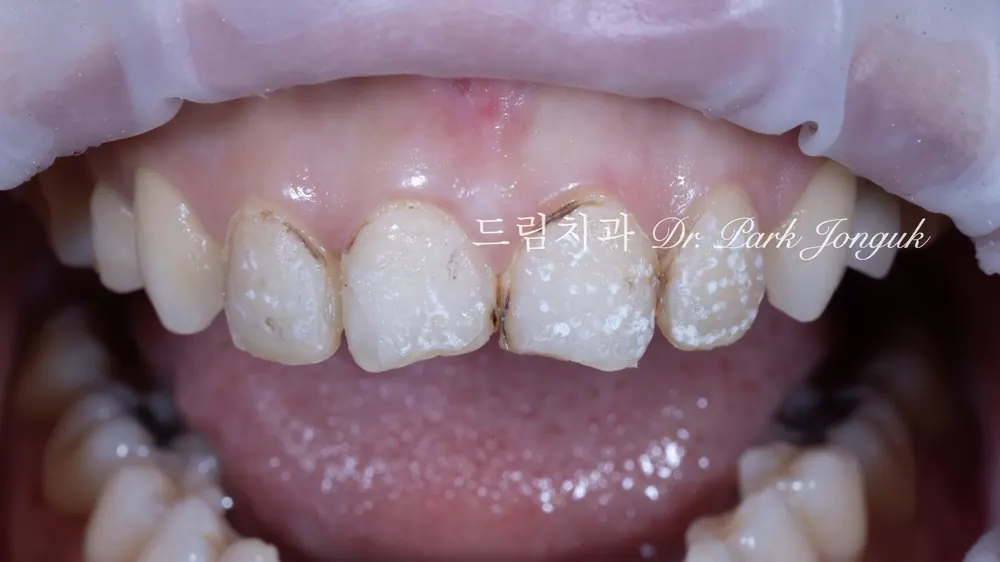
This is the process of removing the veneer using a laser.
The laser passes through the ceramic and melts the resin adhesive between the tooth and the ceramic.
It turns white or black, and as its bonding strength weakens, the veneer comes off.
Occasionally, when the ceramic is too thick, removal with a laser alone can be difficult,
but even in these cases, using the laser still changes the color of the adhesive,
and by using a variety of additional methods, damage to the tooth can be kept to an absolute minimum
while still removing the veneer.
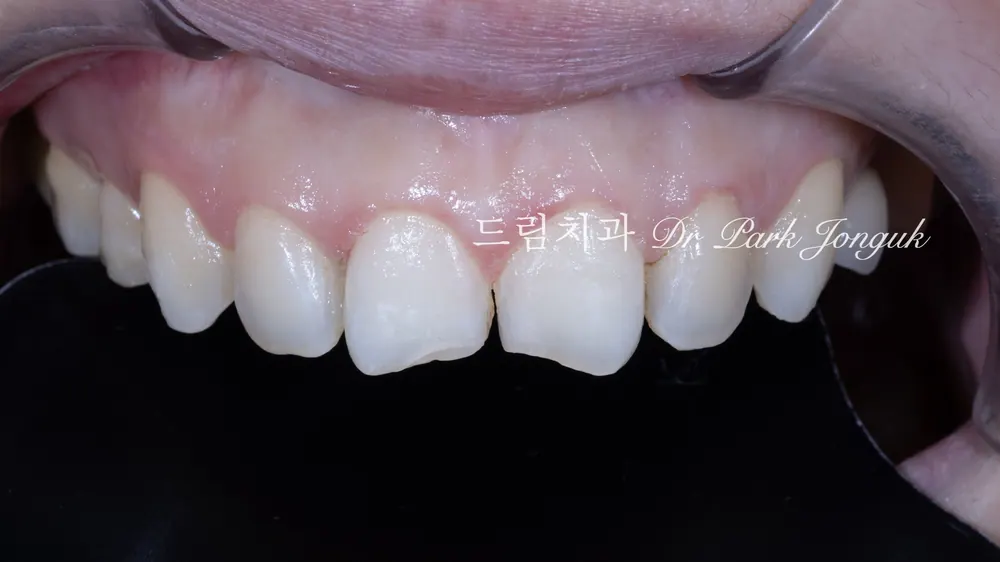
After removing the veneer with the laser,
the patient herself was surprised that her tooth was back to its original shape.
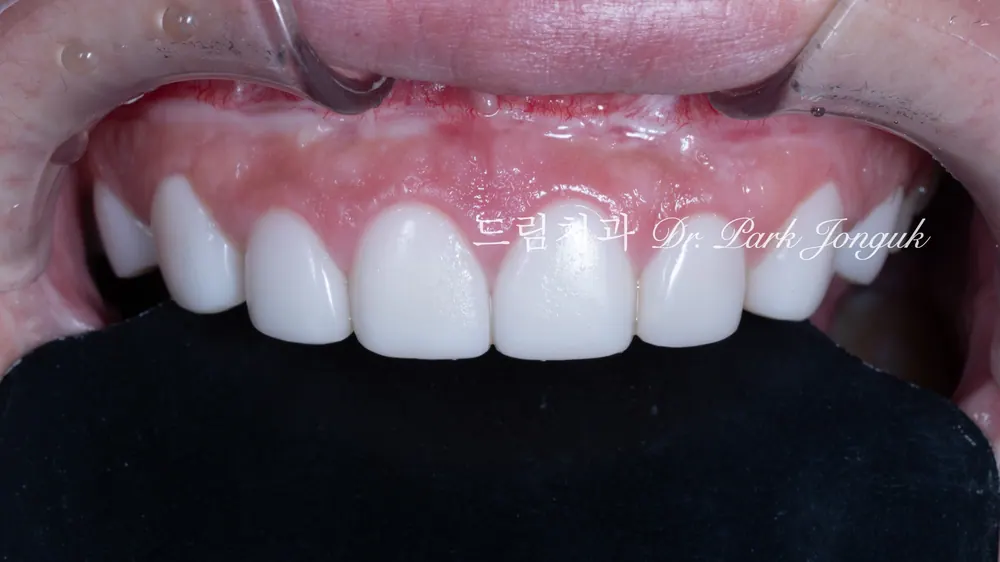
This patient had had veneer treatment at another clinic
not long before, and came to us solely to have them removed.
She said the teeth were too white and unnatural-looking, and looked worse than before treatment.
That's a downside of large clinics that make veneers like a factory.
It can be fine for patients who like this kind of look,
but for those who don't, it's a problem because the veneers weren't made to fit them personally.
Fortunately, since the original veneers had been placed with no tooth reduction,
we were able to remove them with the laser while minimizing damage to the tooth.
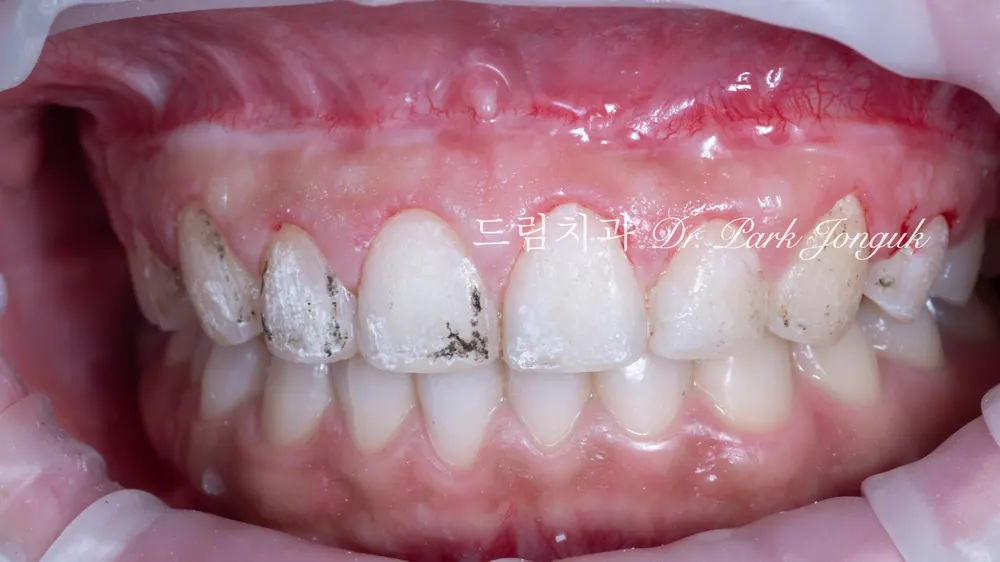
The veneer has been removed, and only the adhesive remains.
From this state, only the adhesive is then removed slowly.
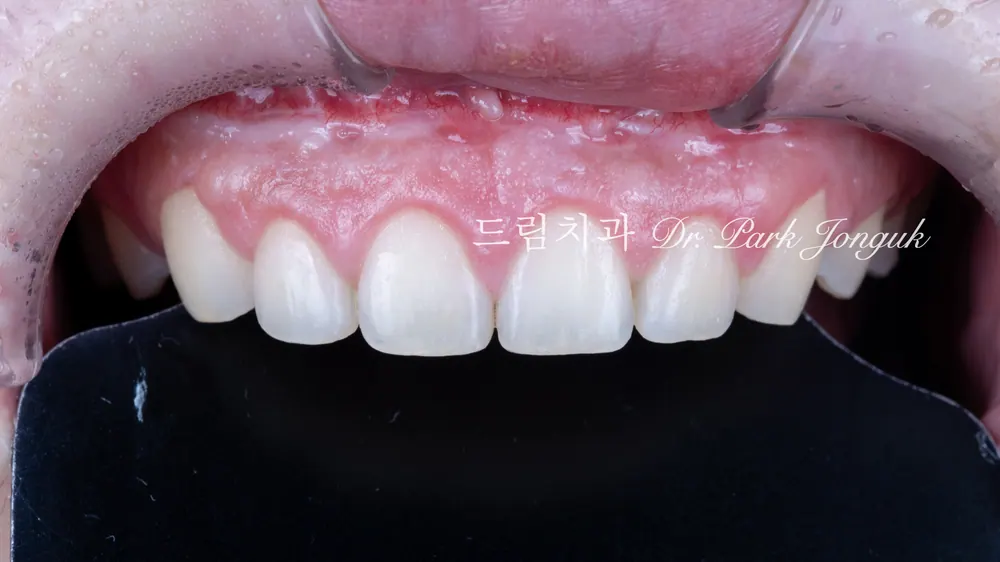
After removal, the patient once again said
the tooth was exactly the same as before the veneer treatment.
She had worried a great deal about
the possibility of significant tooth damage after removal, but there were no problems at all ^^.
When veneer removal is done using a laser like this,
the veneer can be removed while keeping damage to the tooth to an absolute minimum.
In general, removing veneers with a dental high-speed handpiece inevitably causes significant damage to the tooth.
In the veneer lectures I give as well, many dentists
who have tried removing veneers without a laser often talk about how difficult it is.
Only laser-based veneer removal can truly minimize damage to the tooth.
This article is a clinical note written by Dr. Park Jonguk of Dream Dental Clinic, Gangnam; the original was published on his blog. The photographs shown are real cases he treated. Results vary with each patient’s condition, and every procedure carries the possibility of individual variation and side effects.
Quick Consult
Request a Callback
Leave your number and we will call you back during clinic hours.
Request Received
We will contact you during clinic hours. For urgent matters, please call +82-2-3448-0028.