
How Are Veneers Made? Finding the Essence of a Natural-Looking Veneer
These days, dental ads frequently feature the phrase "same-day veneers."
But truly natural-looking veneers aren't made that way.
In this article, through the real fabrication process,
I'll show you where that "natural look" actually comes from.
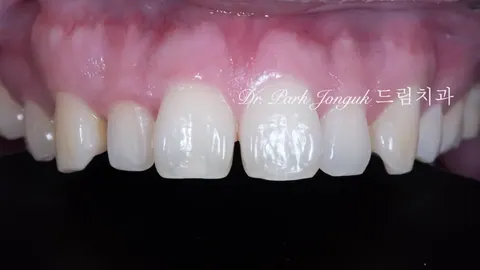
This patient came in with a number of aesthetic issues.
The front teeth were all different sizes, the lateral incisors were undersized,
the tooth color was dark, and the edges were chipped.
She came to our clinic to resolve this combination of problems through veneer treatment.
Recently, more and more clinics
have been adopting CAD/CAM systems or simplified handmade methods to fabricate veneers quickly and easily.
But because these methods are made from just a single ceramic material,
it's difficult to express the distinctive color, translucency, and depth of a natural tooth.
We at Dream Dental Clinic hold firmly to the handmade build-up method.
This method takes more time and requires more care,
but it produces a result that comes closest to a natural tooth.
🔹 Step 1: Diagnosis and Design
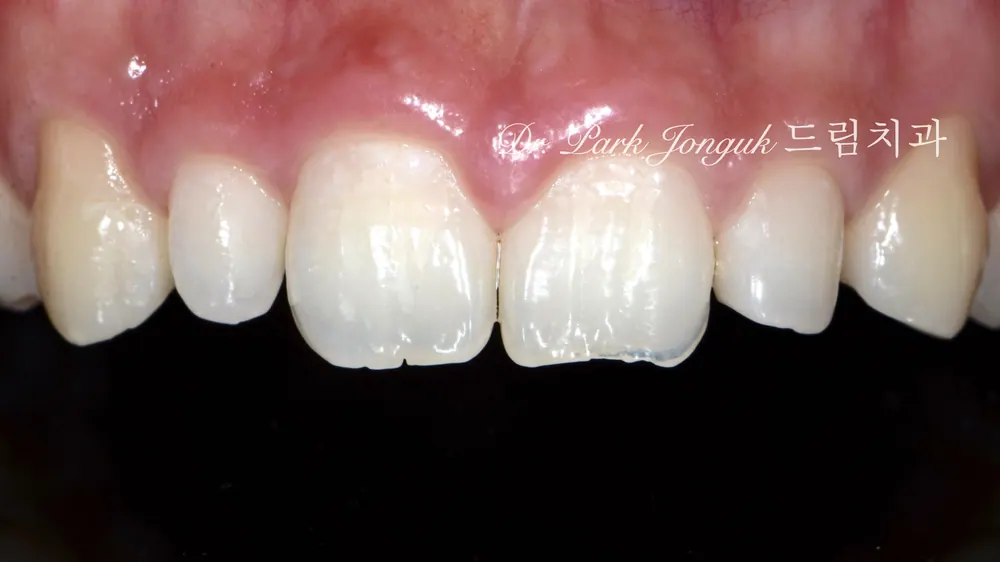
Looking at the patient's condition before treatment,
the shape, color, and proportions of the teeth were all out of balance.
Through a precision wax-up, we analyzed the tooth proportions, the harmony of the dental arch,
and even the smile line in detail.
🔹 Step 2: Base and Build-Up
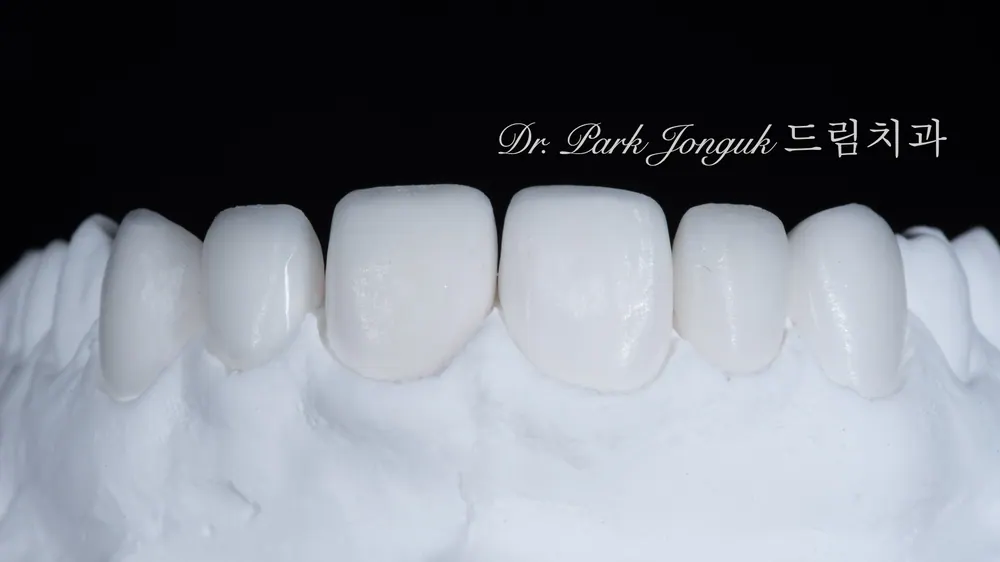
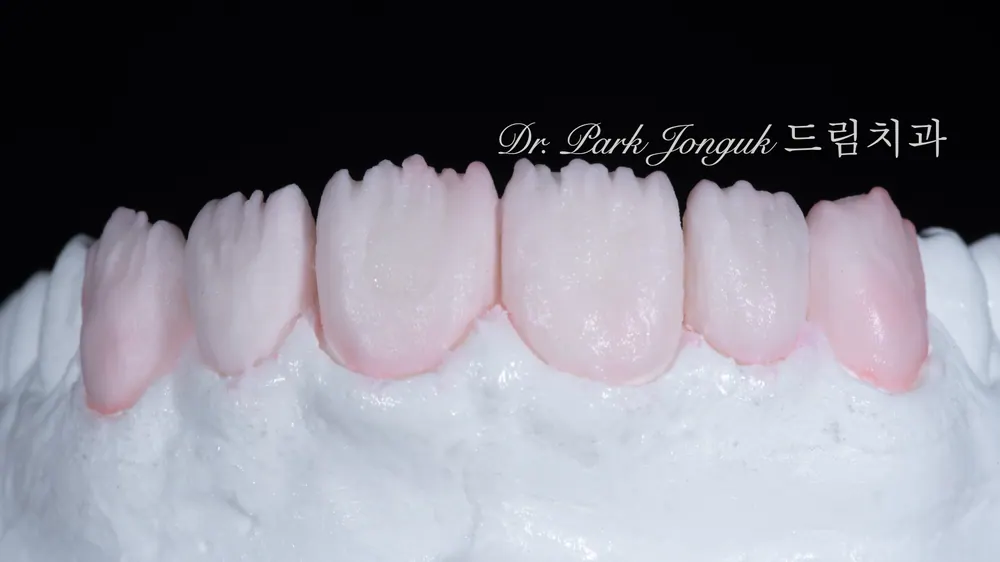
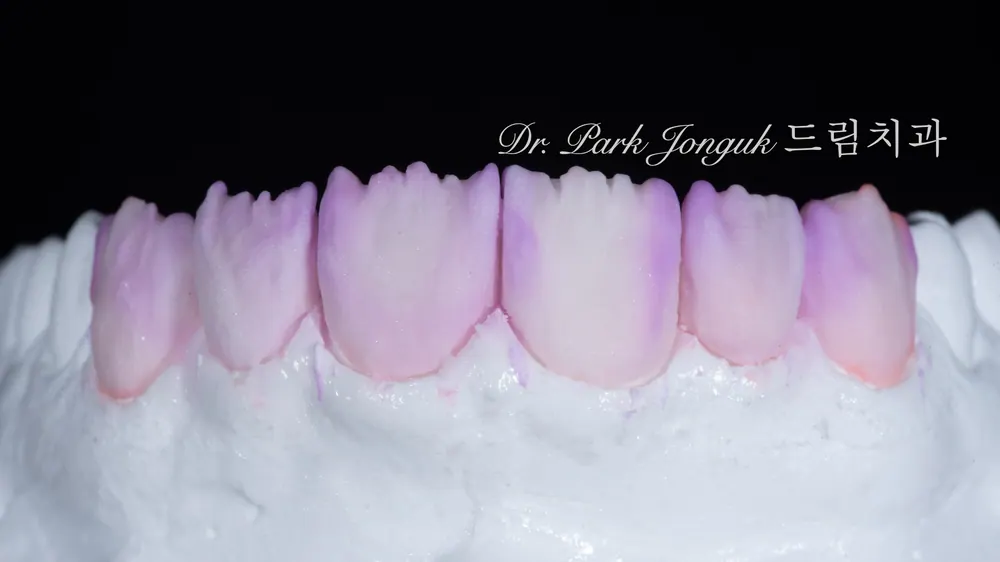
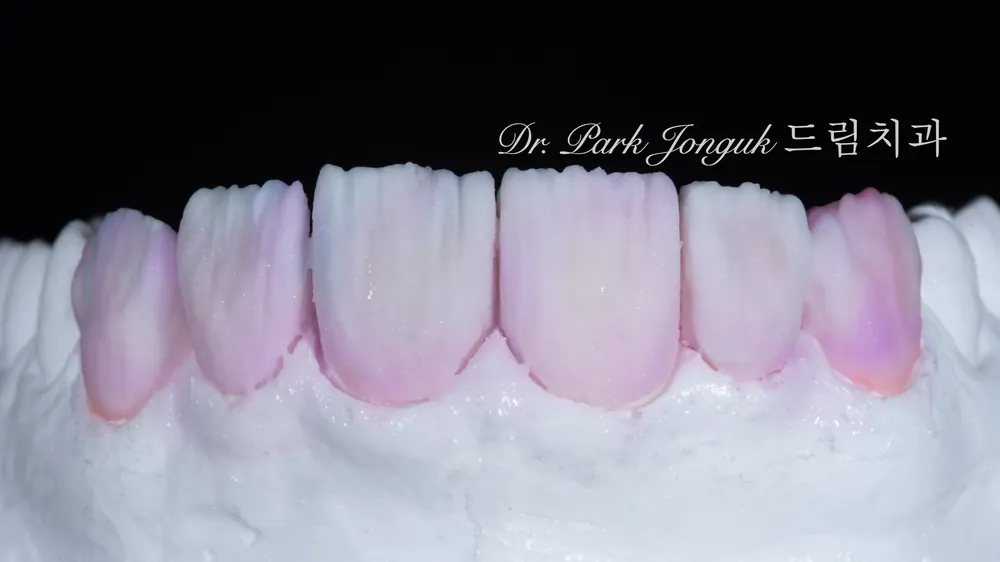
On top of the e.max base that forms the foundation of the veneer,
we carried out a build-up process, layering several different types of ceramic, each with different properties.
To distinguish the role each ceramic plays,
we mixed different-colored "paints" so we could actually show the process visually.
Through this process, you can confirm that it's fabricated
as a multi-layer structure (layered ceramic), rather than out of a single, monolithic material.
🔹 Step 3: Porcelain Firing and Contouring
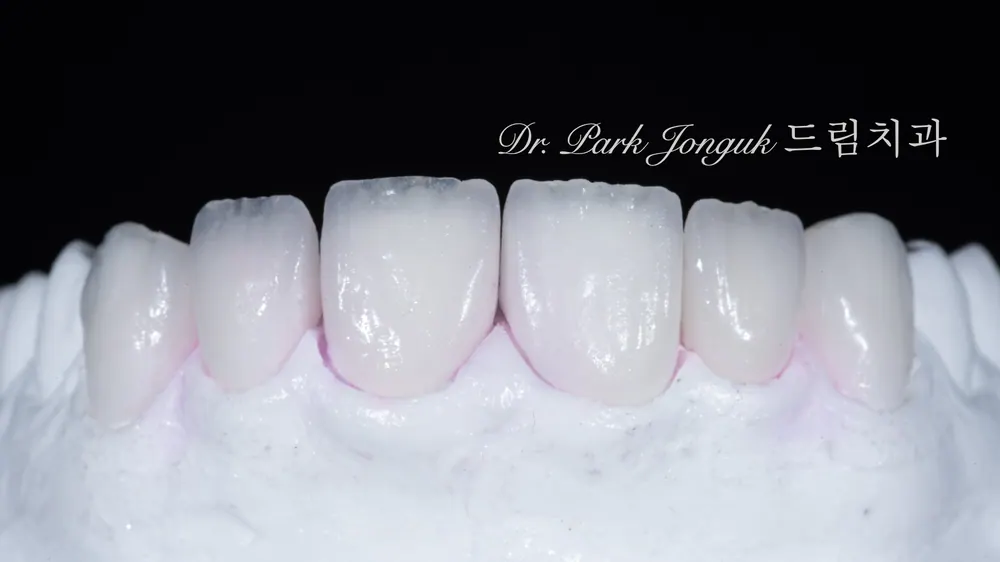
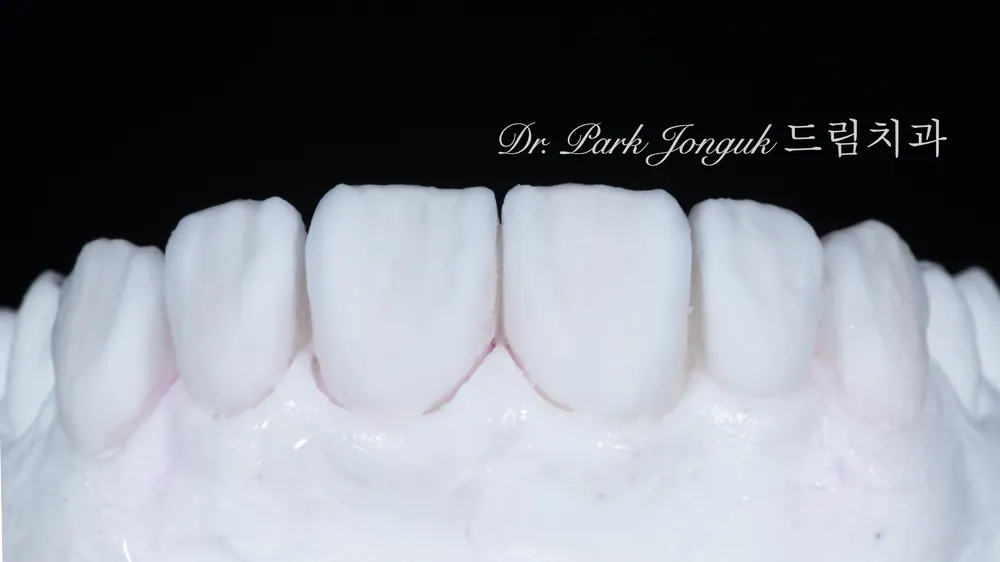
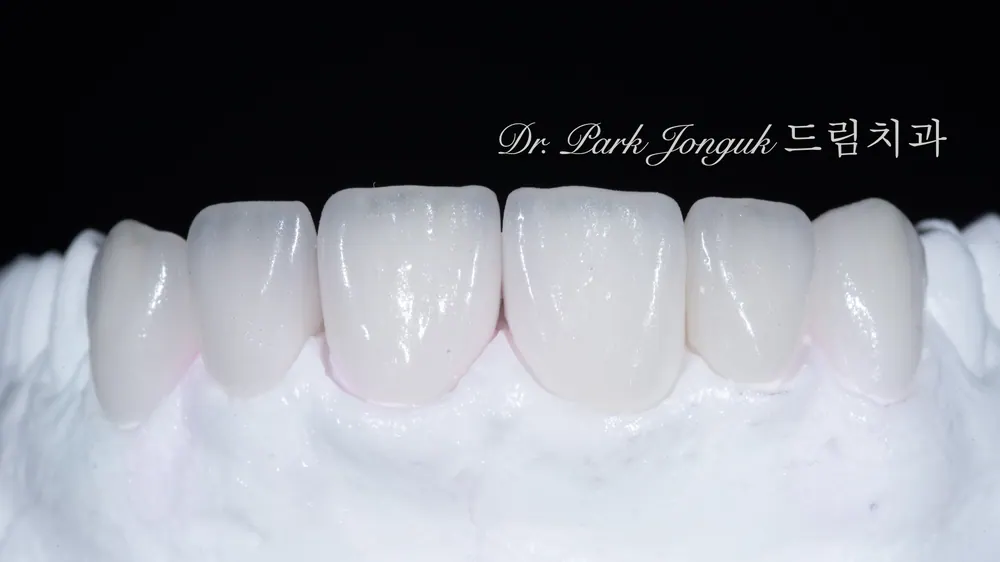
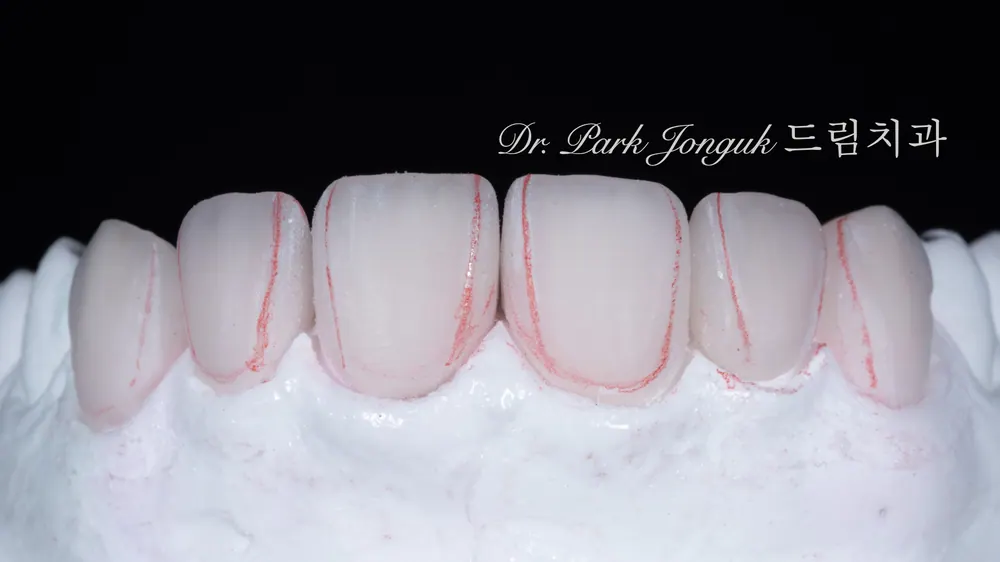
Once the build-up is finished, it goes through a high-temperature firing process, just like firing pottery.
Next comes contouring, one of the most important steps in veneer fabrication.
In this step, the tooth's curves, incisal edge, and the angle at which light reflects are precisely adjusted
to express a natural shape and sense of dimension.
🔹 Step 4: Surface Check and Finishing
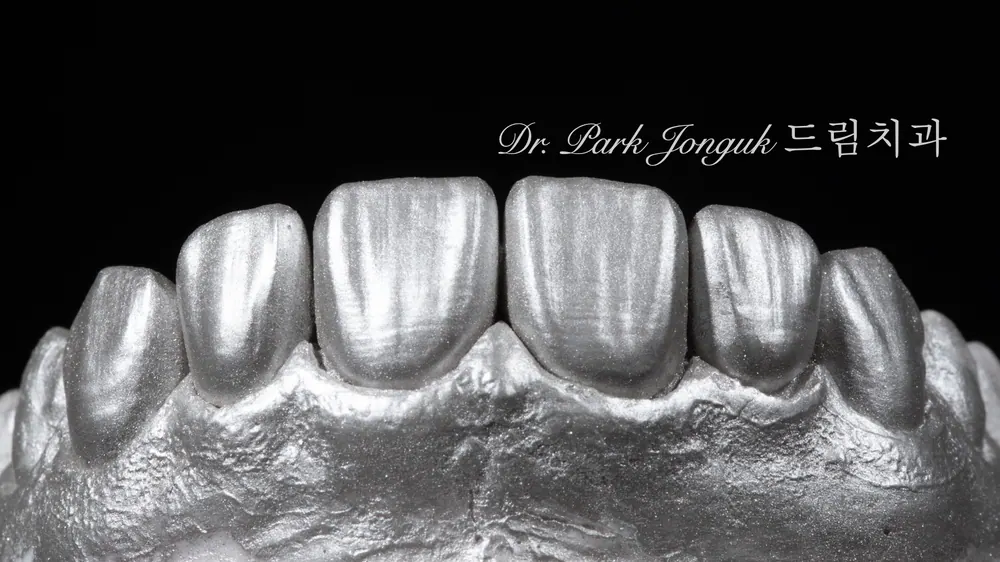
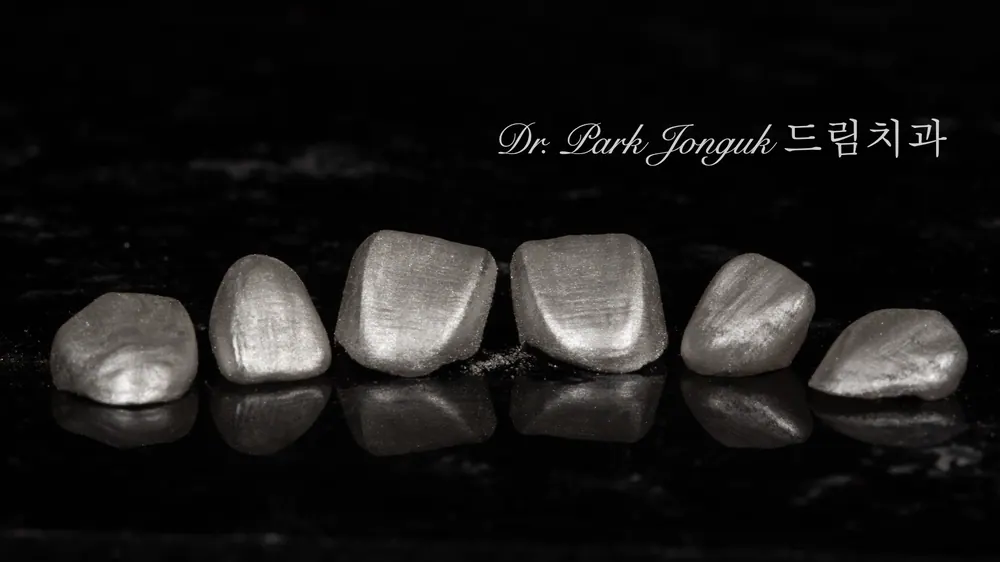
To check the fine detail of the ceramic surface,
a light dusting of silver powder is applied over the veneer to inspect the reflective surface.
This step is a procedure for catching microscopic details that aren't visible to the naked eye,
and it completes a texture and depth just like a natural tooth.
🔹 Step 5: Setting and Seven Years Later
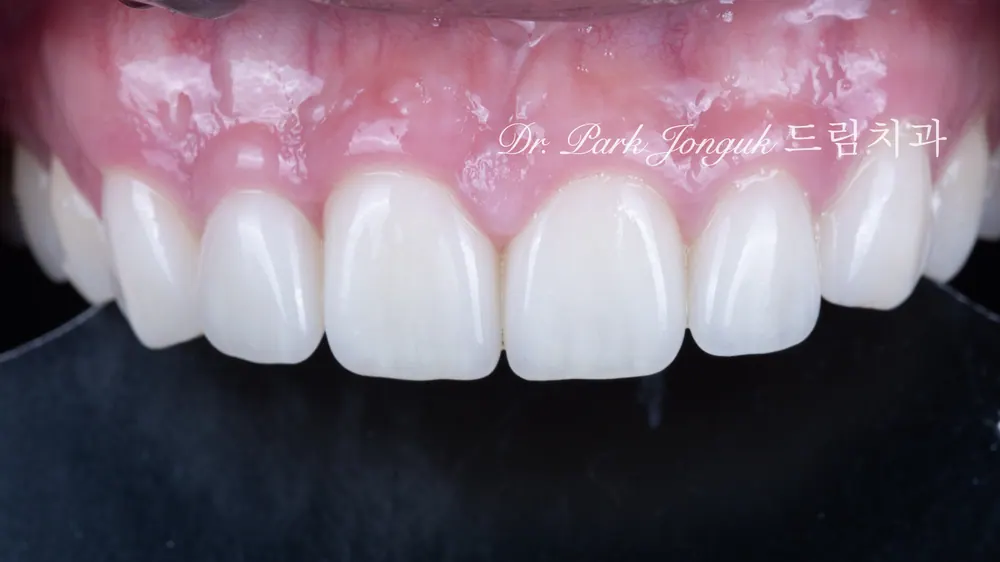
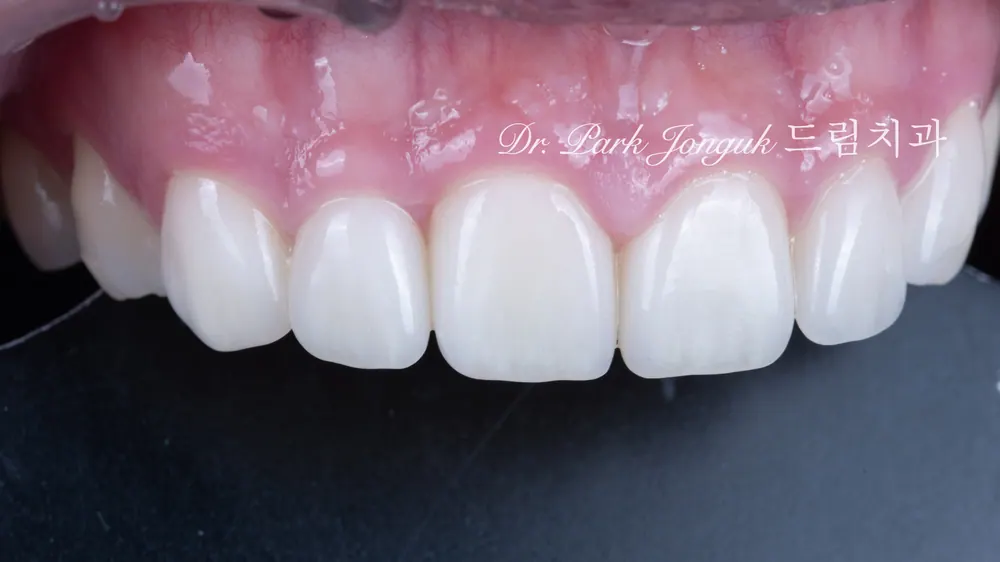
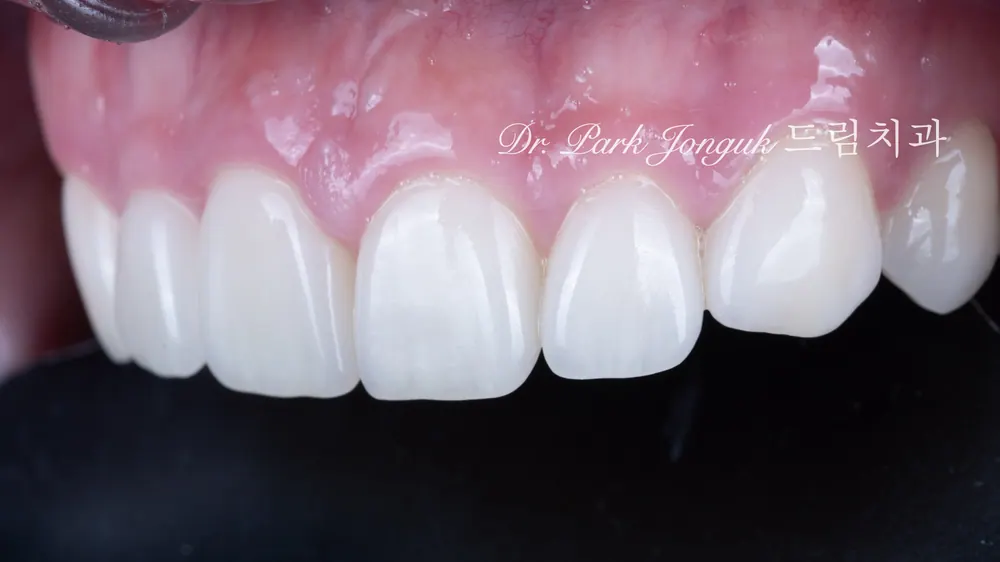
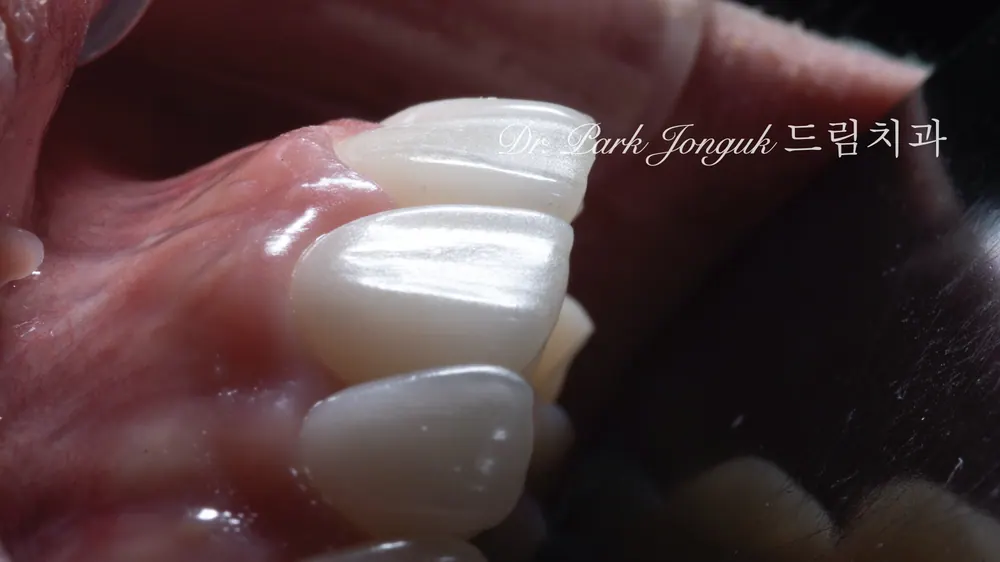
The finished veneers were set in place like this,
and even now, seven years later, the translucency and color remain unchanged.
The reflection looks natural depending on the angle the light hits,
and the harmony with the gums remains very stable as well.
In fact, many celebrities who have been treated at our clinic
never hear that they've had veneers done.
People simply think, "their teeth are naturally pretty."
That's exactly the kind of natural look Dream Dental Clinic's veneers have.
Conclusion
Natural-looking veneers can't be made quickly.
That look is the product not of technology, but of care and effort.
A natural look that can never be expressed with a single material —
what makes it possible
is exactly the handmade build-up veneer philosophy we've upheld in Apgujeong-dong since 2006.
💬 Q&A
Q1. Do build-up veneers take a long time?
A. Yes, they take more time than a factory-style method, but the result is far more natural.
Q2. How is this different from monolithic veneers?
A. The monolithic method is sturdy, but it's difficult for it to express a natural sense of translucency and depth of color.
Q3. How long can veneers be used?
A. With the right diagnosis, fabrication, and bonding process, they can last more than 10 years.
This article is a clinical note written by Dr. Park Jonguk of Dream Dental Clinic, Gangnam; the original was published on his blog. The photographs shown are real cases he treated. Results vary with each patient’s condition, and every procedure carries the possibility of individual variation and side effects.
![[Peg Lateral Veneers] From a Strong-Looking Impression to a Soft, Feminine Smile — The Esthetics of Front-Tooth Veneers](/column-media/224178565168/thumb.webp)
Quick Consult
Request a Callback
Leave your number and we will call you back during clinic hours.
Request Received
We will contact you during clinic hours. For urgent matters, please call +82-2-3448-0028.