
Resin-Discolored Veneers: The Difference Made by 'Hand'-Finished Work, Not a Factory Machine
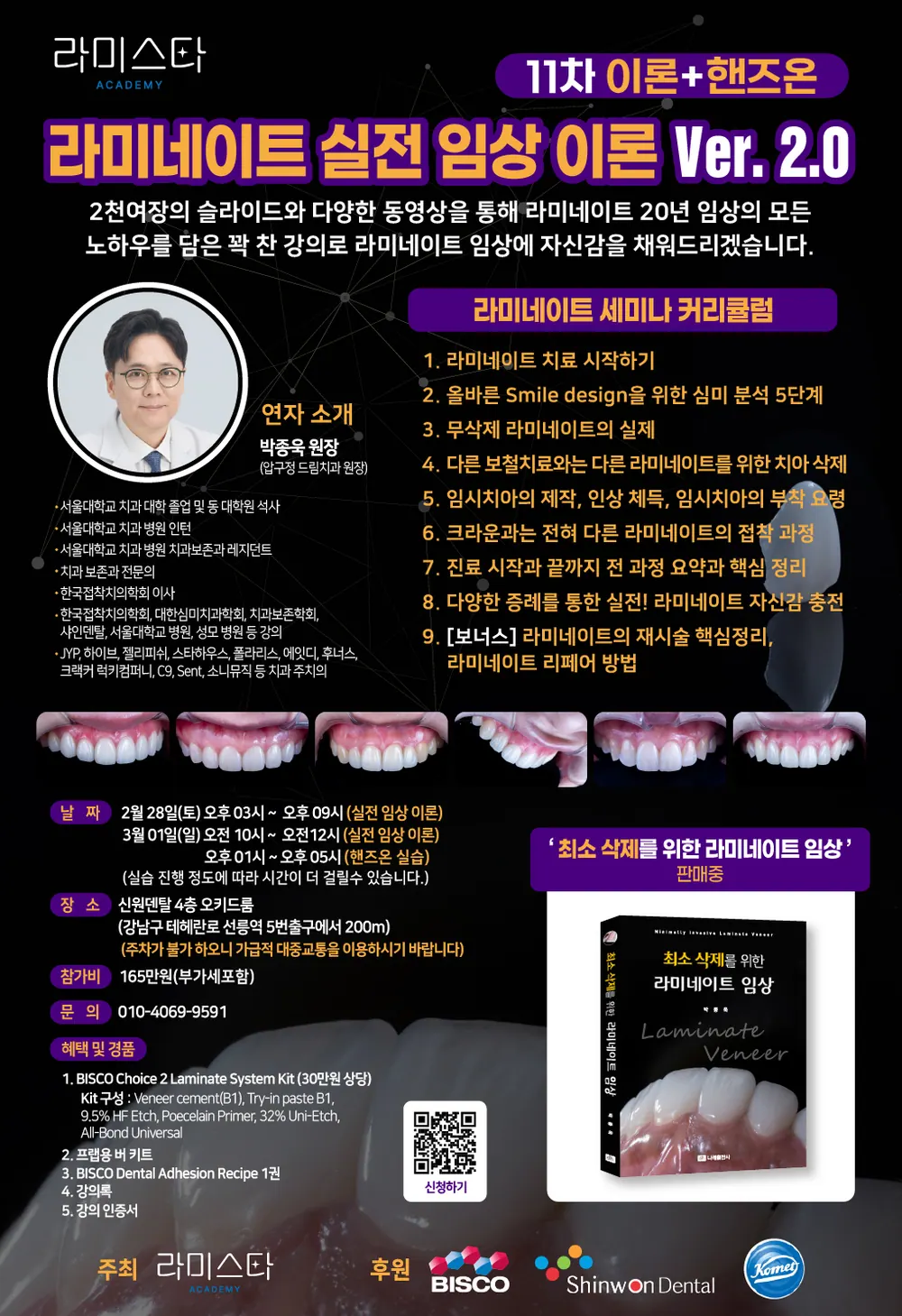
Hello, I'm Park Jonguk, medical director of Dream Dental Clinic in Apgujeong.
I'm a board-certified specialist in conservative dentistry who graduated from Seoul National University School of Dentistry and trained at Seoul National University Hospital.
I've practiced veneer treatment for 20 years, all at the same location in Apgujeong-dong.
Last May, I also published Korea's first veneer-specialized textbook, drawing together all my clinical experience and know-how.
These days I'm keeping busy teaching veneer techniques to fellow dentists through Lamista Academy.
Today, through a case of retreating the front teeth of a woman in her late 20s,
I'd like to explain why veneers should be a 'work of art,' not just a 'simple procedure.'
Simple 'Machine-Made' vs. 'Handmade' with a Different Level of Depth
Before we get into the case itself, there's something you need to know.
There are many veneers on the market marketed under various flashy names.
The names differ, but in reality, many of them are simply a single-colored ceramic block machine-milled with a same-day (one-day) method.
But our natural teeth aren't made of just one single color.
The veneers at Dream Dental Clinic
insist on a build-up method, where a skilled dental technician manually layers a variety of ceramics one layer at a time.
It's a far more demanding technique that takes much longer,
but the depth and naturalness of the result can't be compared to what a machine stamps out.
[Case Study] Resin Discoloration, an Undersized Tooth, and a Small Face
The patient I'll introduce today is a strikingly beautiful woman in her late 20s.
Her face was quite small, and by comparison, the shape and proportions of her teeth left something to be desired.
In the past, she'd had resin treatment because her lateral incisor (the tooth next to the front tooth) was small,
and she also had a cavity between her front teeth that had been filled with resin as well.
Over time, the resin had discolored and become blotchy, and the shape of the teeth wasn't attractive either.
The patient's needs were clear.
"I'd like all the old resin removed, and I want my teeth to look a bit more compact and pretty, to suit my small face."
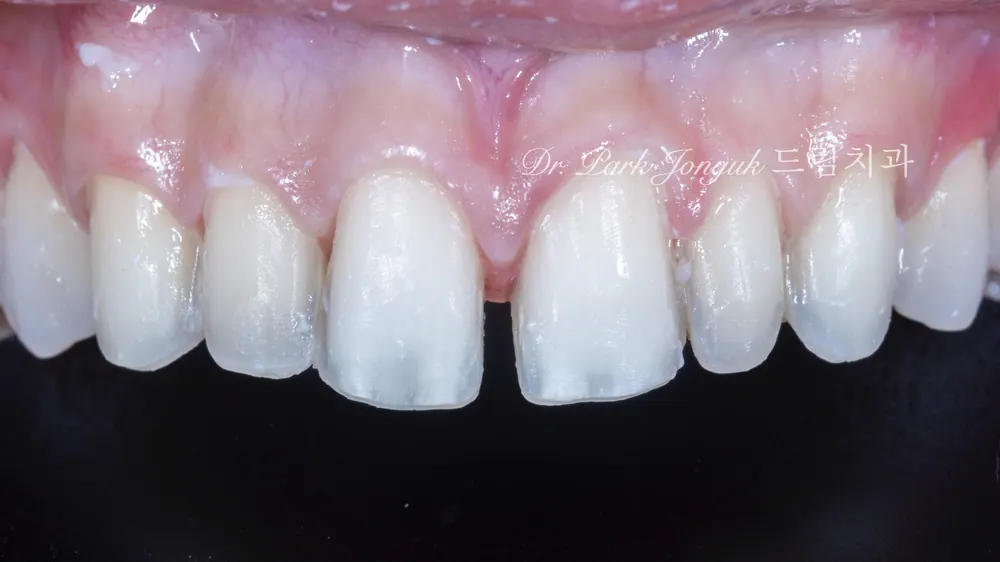
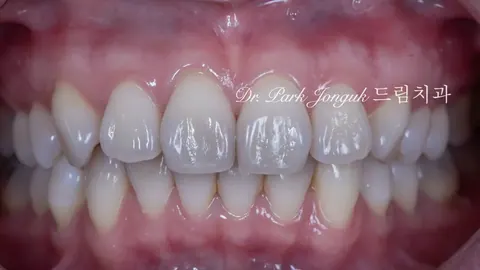
[Photo 1] Appearance Before Treatment
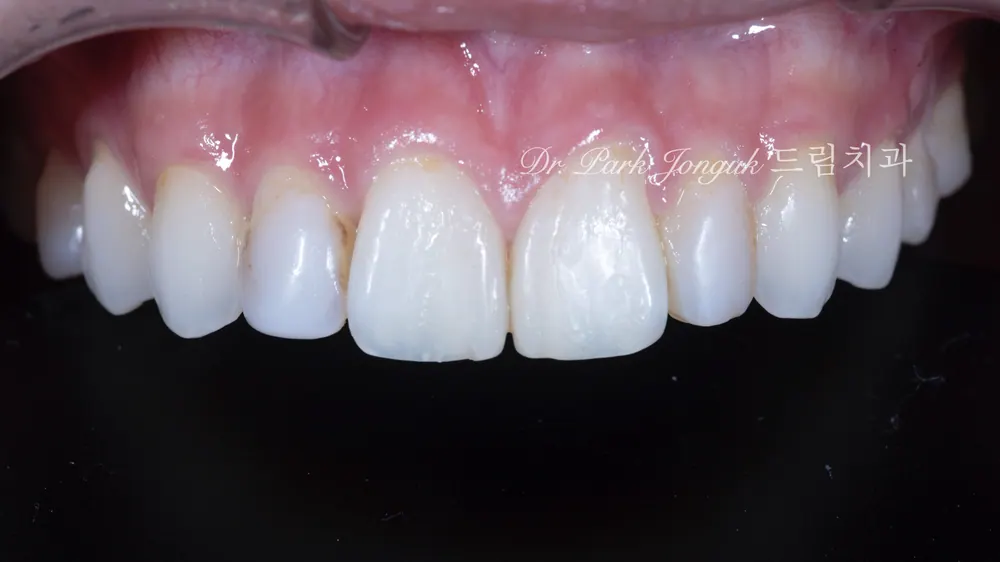
Here's the before-treatment photo first. At a glance it may look fine, but on closer inspection, the tooth surface looks blotchy and dull.
There's also a sense that the teeth look too crowded relative to her small face.
[Photo 2] Marking the Resin-Treated Areas
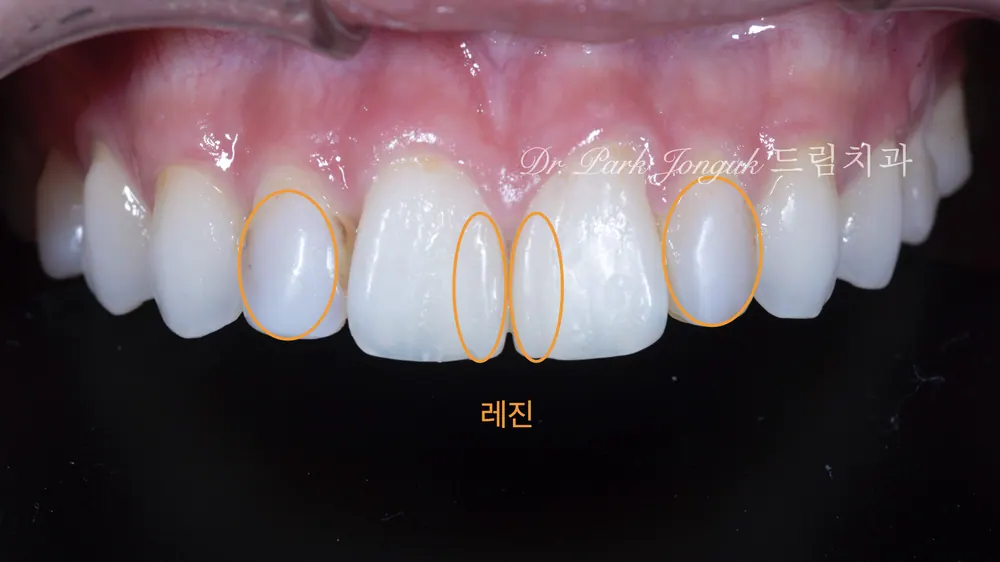
Looking at the marked areas, you can clearly see the discolored margins of the old resin treatments.
The traces of the cavity treatment between the front teeth were also a major factor hurting the aesthetics.
'Precision Analysis' and 'Diagnosis,' Done Personally by the Director
[Photo 3] The Tooth Analysis Process
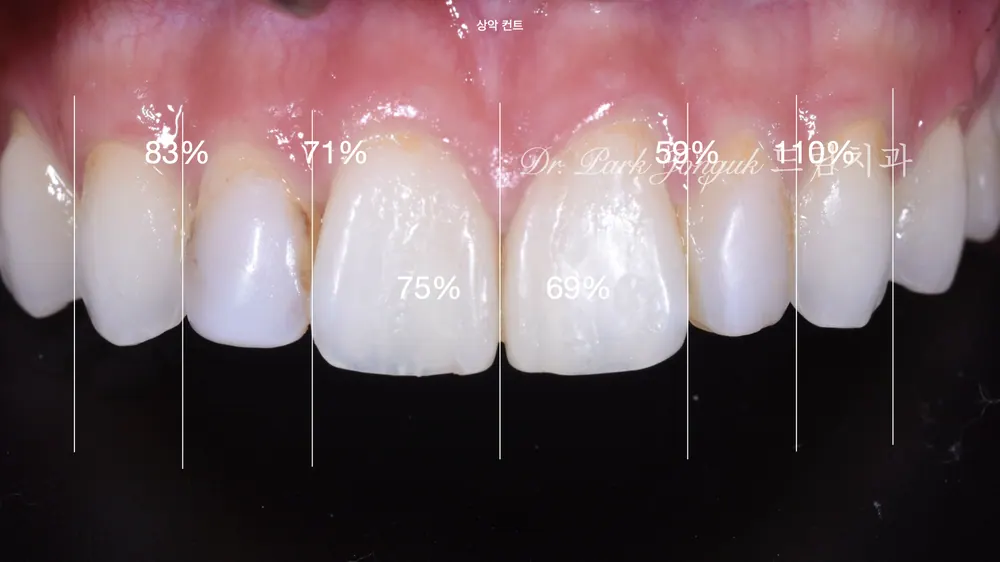
A successful veneer starts with an accurate analysis.
Not a consultation coordinator, but I, the director, personally analyze the tooth proportions, gum line, and harmony with the face.
This is the moment where 20 years of experience and an eye for aesthetics shine the brightest.
[Photo 4] Wax-Up Precision Diagnosis
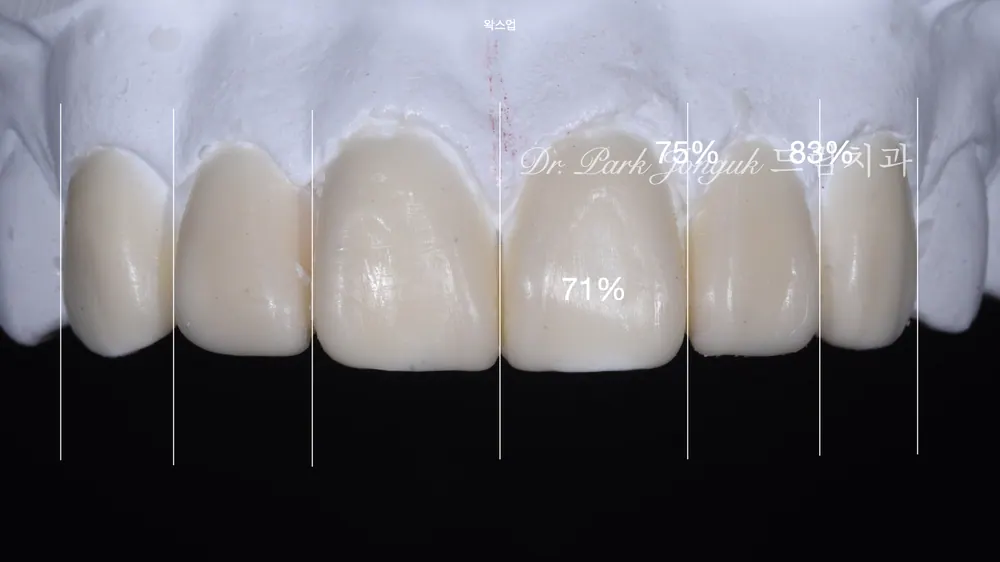
Based on the analysis, this is the process of making a wax model of the teeth in advance.
This is called a 'wax-up precision diagnosis.'
It's the part I emphasized most in the textbook I wrote,
and it's the core process that many of the dentists attending my lectures are working hard to learn.
It's like drawing up blueprints before constructing a building. Cutting straight into the teeth without this step is risky.
Is No Reduction Always the Best Choice?
[Photo 5] Appearance After Tooth Reduction
This is the appearance after the teeth were trimmed (reduced).
These days, you see a lot of advertising for things like "no reduction" or "0.1mm reduction."
But is it really the right answer to insist on no reduction at all, regardless of the patient's actual condition?
That isn't logical.
In this patient's case:
the existing resin and decayed area were extensive and had to be cleanly removed,
and the tooth size needed to be made smaller to harmonize with her small face,
so a somewhat greater amount of reduction was needed than in a typical case.
The goal of reduction isn't to minimize it at all costs — what matters is doing exactly as much as is needed for a perfect result.
That's what genuine professional judgment looks like.
The Culmination of Handmade Layering
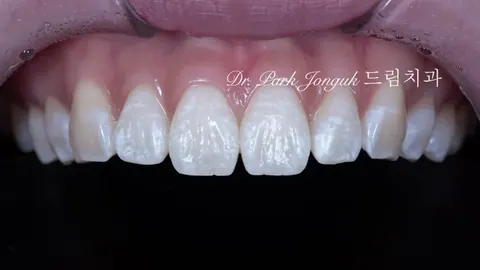
[Photos 6, 7, 8] Appearance After Treatment
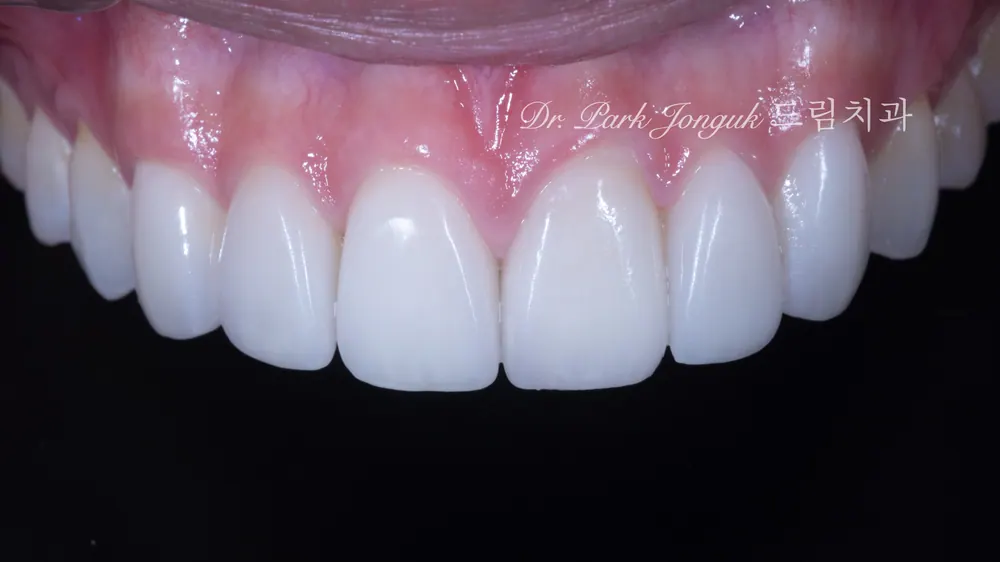
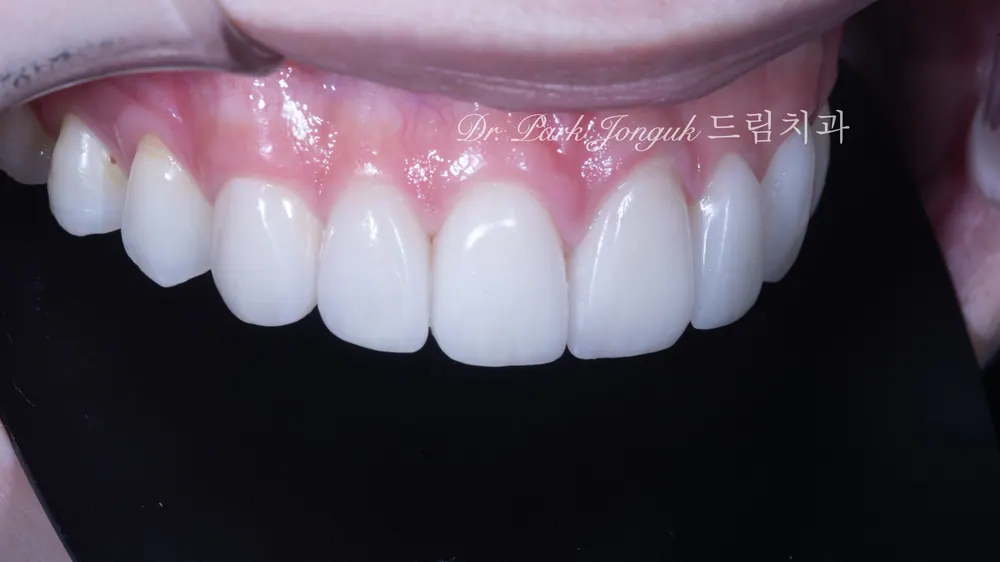
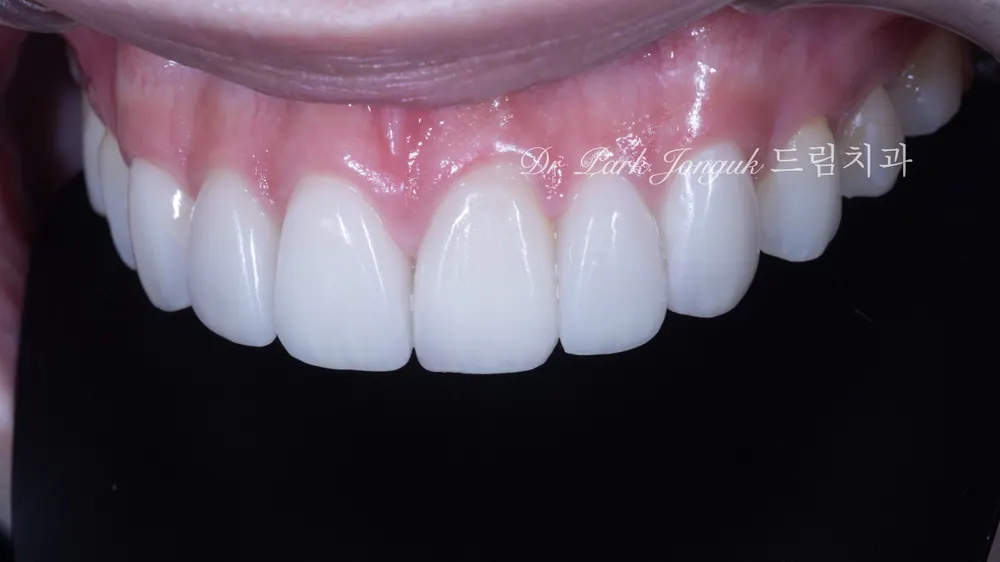
Here's the finished result at last. What do you think? These aren't just plain white teeth.
Translucency: a clear feel at the edges of the teeth
Color: a subtle gradation, just like a natural tooth
Dimension: the texture visible when light reflects off the surface
None of this is easy to achieve with a machine-milling method.
It's a result that's only possible because it was layered stitch by stitch, with the spirit of true craftsmanship.
The result was an elegant, natural smile that suited her small face beautifully.
Conclusion
Veneers aren't just shopping for a mass-produced item.
It's a process of creating a piece of work that will stay on your face for the rest of your life.
Rather than being swayed by flashy marketing terms or a fast procedure time,
I hope you'll make sure to check who is making it, with what philosophy, and in what way.
At Dream Dental Clinic in Apgujeong, even if it takes time,
we design teeth that are uniquely yours, one of a kind in the world, through the handmade build-up method.
💡 Top 5 Veneer Q&A
Q1. How long do veneers last?
A. It depends on how well they're maintained, but precisely fabricated and bonded veneers can typically be used in good health for 10 to 15 years or more.
Managing your bite and getting regular checkups are key.
Q2. Can teeth that previously had resin treatment get veneers?
A. Yes, that's possible. In fact, discolored resin isn't aesthetically ideal and carries a risk of secondary decay,
so cleanly removing the old resin and replacing it with a veneer is beneficial for both tooth health and aesthetics.
Q3. Doesn't tooth reduction cause sensitivity?
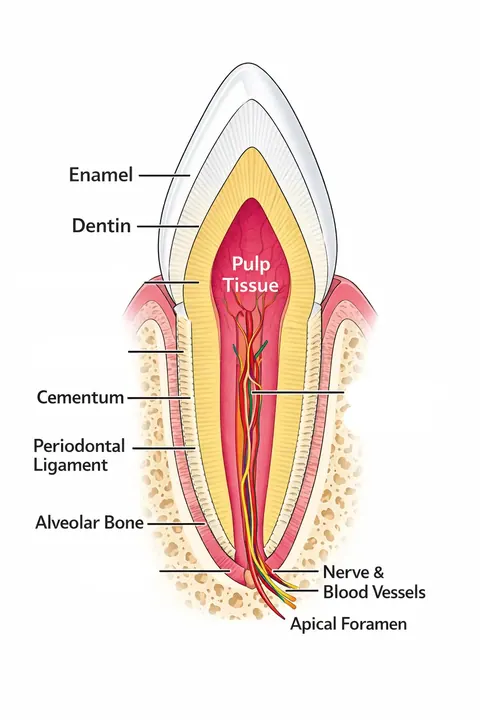
A. Since the reduction is done precisely, without damaging the nerve, and a protective coating is applied, sensitivity is mostly temporary.
As a board-certified specialist in conservative dentistry, I perform the procedure in a way that protects the tooth's nerve as much as possible.
Q4. What's the biggest difference between machine-milled and handmade veneers?
A. It's "natural appearance." The machine (CAD/CAM) method mills a single-colored block, so it can look dull,
while handmade build-up layers and fires powders of various colors, expressing the kind of deep translucency and color that real teeth have.
Q5. Should hard foods be avoided after getting veneers?
A. Regardless of veneers, front teeth were never meant to be a tool for biting into very hard foods like fruit pits or crab shells.
Everyday meals are no problem at all — you just need to be careful about the habit of biting hard objects with your front teeth.
This article is a clinical note written by Dr. Park Jonguk of Dream Dental Clinic, Gangnam; the original was published on his blog. The photographs shown are real cases he treated. Results vary with each patient’s condition, and every procedure carries the possibility of individual variation and side effects.
Quick Consult
Request a Callback
Leave your number and we will call you back during clinic hours.
Request Received
We will contact you during clinic hours. For urgent matters, please call +82-2-3448-0028.