
Front Teeth Veneers for Gapped Teeth and Malformed Teeth
Hello, I'm Park Jonguk, director of Dream Dental Clinic.
When teeth are gapped, for treatment
patients often weigh orthodontics against veneers.
If the shape of the teeth isn't a problem and the size of the gap
is one that can be corrected with orthodontics from a bite standpoint,
it's better to treat it through orthodontic correction of the alignment.
But if there's an occlusal problem,
or the gap exists because the teeth are too small,
or the shape of the teeth is malformed, orthodontics alone may be difficult.
Because there are so many different factors involved,
a clear diagnosis of which treatment is best is important.
Orthodontics has the downside of taking a long time
and the limitation that it can't change the shape of the teeth,
while veneers have the issue of sometimes requiring tooth reduction, depending on the case.
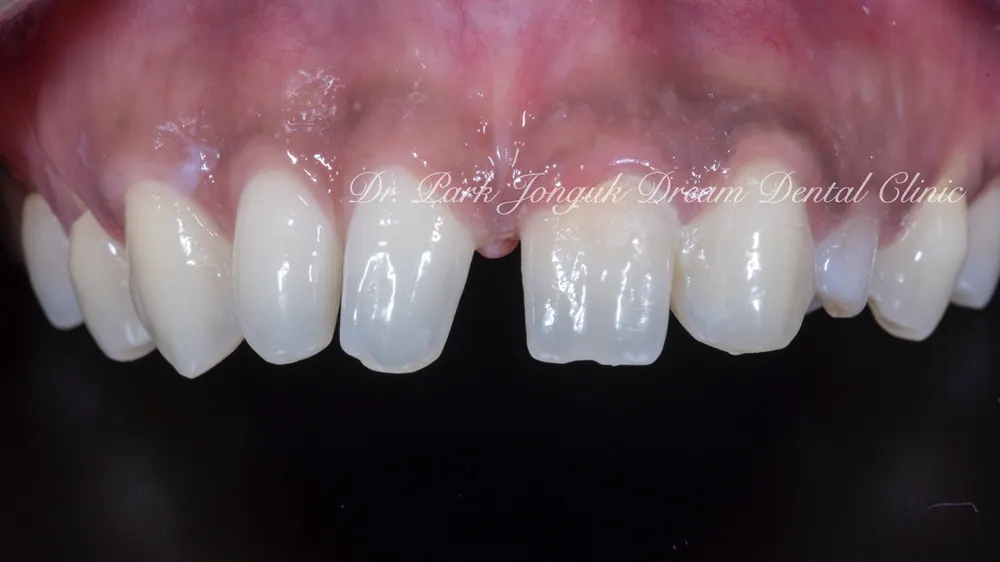
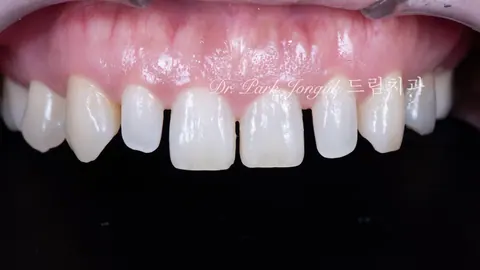
This patient had a variety of issues — tooth position, shape, alignment, spacing, and even the number of teeth.
In a case like this, orthodontics alone could never resolve it.
Since the shape of the teeth was the problem,
veneer and bridge treatment were needed to correct the shape.
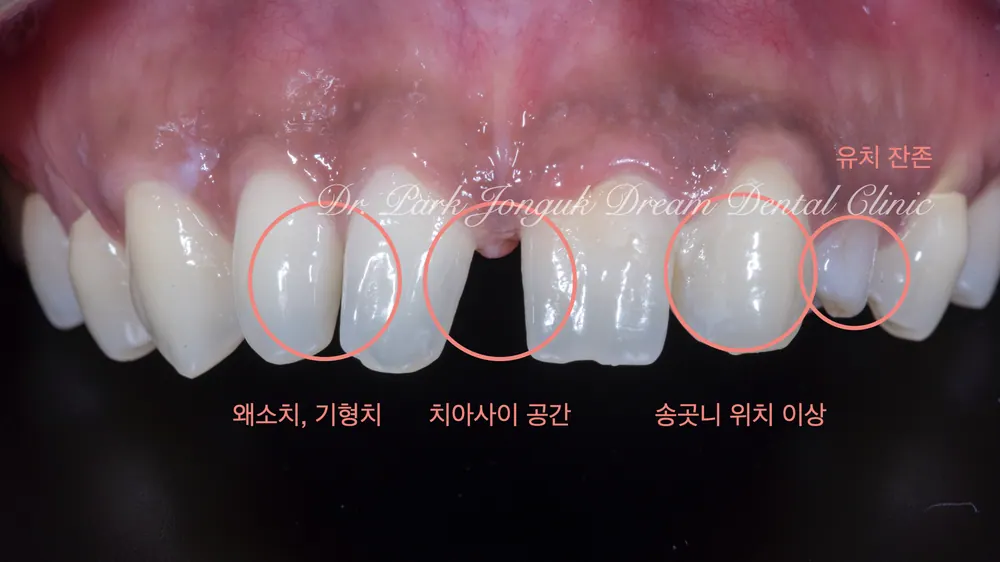
A tooth that's smaller than it should normally be is called a peg tooth.
The tooth wasn't just small — its shape was also abnormal, a malformed tooth.
There was a very large gap between the teeth.
The canine was positioned somewhere other than where it should normally be.
Because the tooth known as the lateral incisor was congenitally missing,
the canine had ended up in the wrong position,
and the baby canine tooth had remained in place.
To resolve this range of problems,
both veneers and a bridge needed to be used.
Since the baby tooth was still present, an implant for the missing tooth area wasn't possible due to space constraints,
so we decided to use a bridge instead.
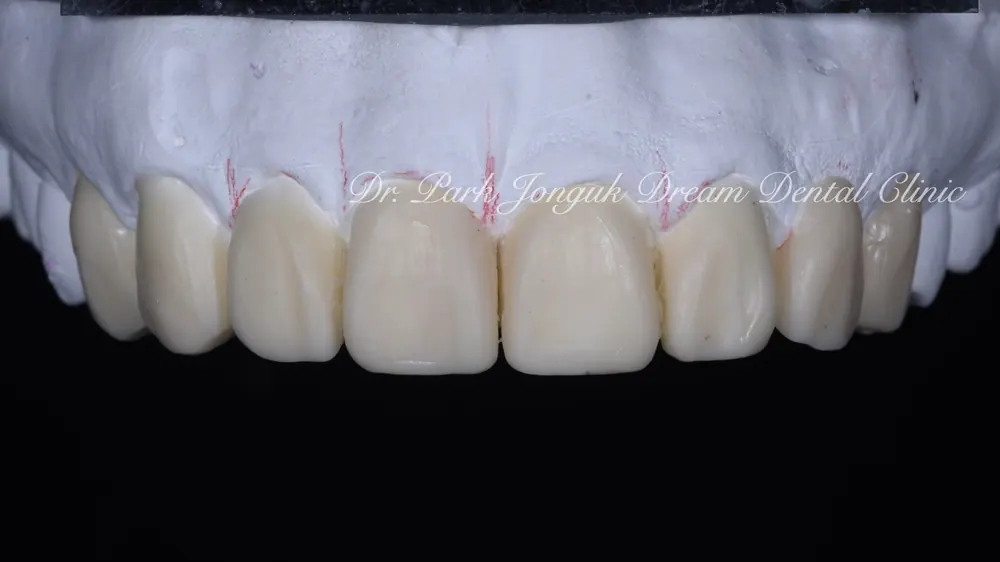
A precision diagnosis using wax like this is an essential process.
This process is explained in detail in the link below.
Through this precisely conducted wax-up diagnostic process,
we determine the amount of tooth reduction in advance and confirm it with the patient.
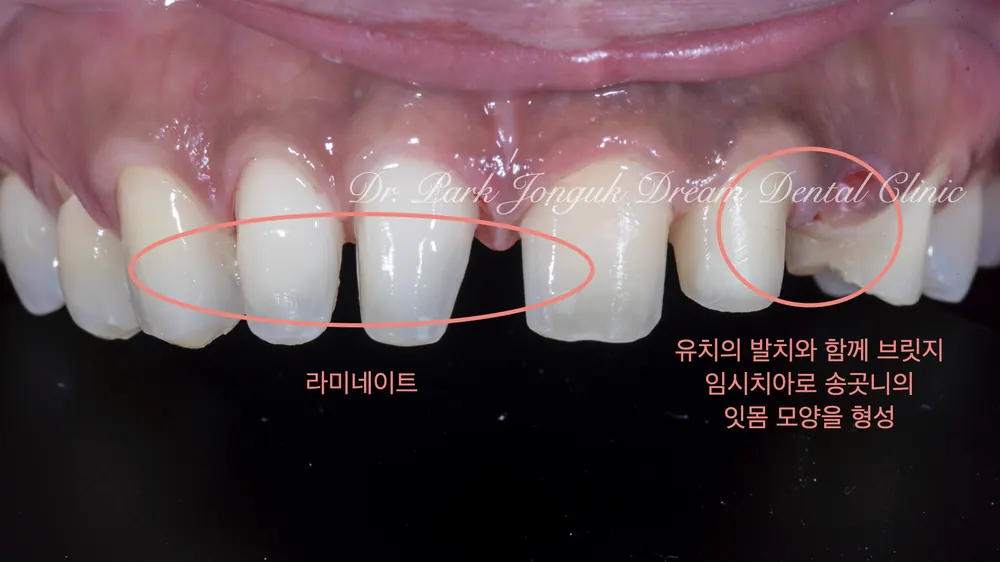
The tooth reduction was carried out this way.
The peg tooth and the malformed tooth were reduced for veneers.
The area with the missing tooth was reduced for the bridge,
and as soon as the baby tooth was extracted, we carefully maintained the shape of the gum there
to prepare so that, even without a tooth, it would look as though the tooth were emerging naturally from the root.
This is a genuinely important step in bridge treatment after extraction.
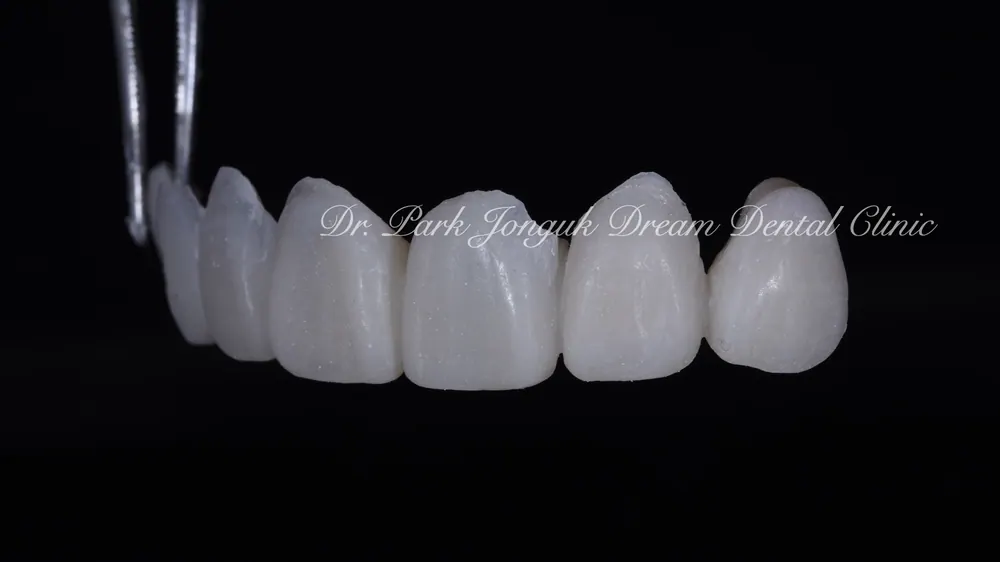
We made temporary teeth
and discussed with the patient what the final shape would look like.
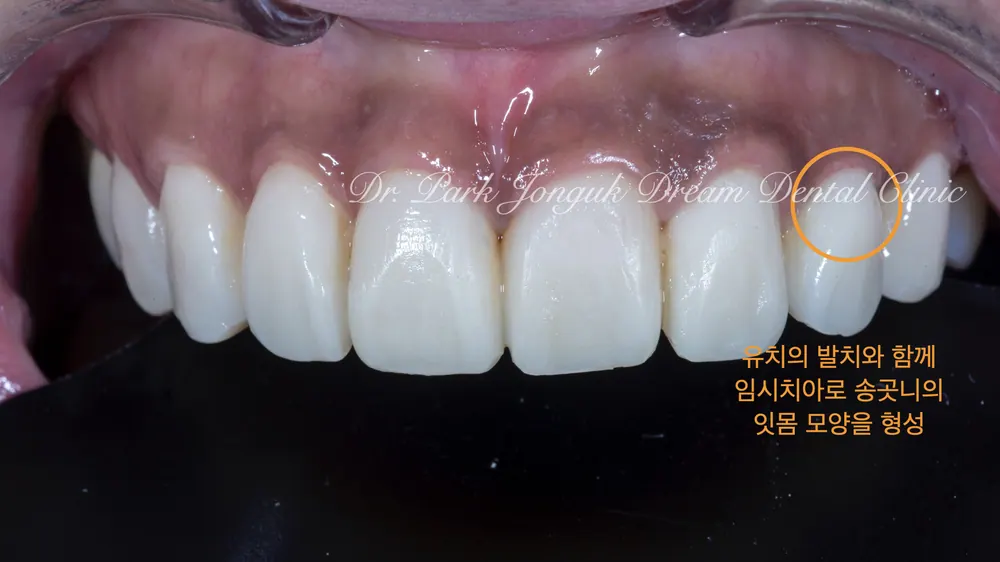
As mentioned earlier,
we shaped the gum at the extraction site to prepare for the canine.
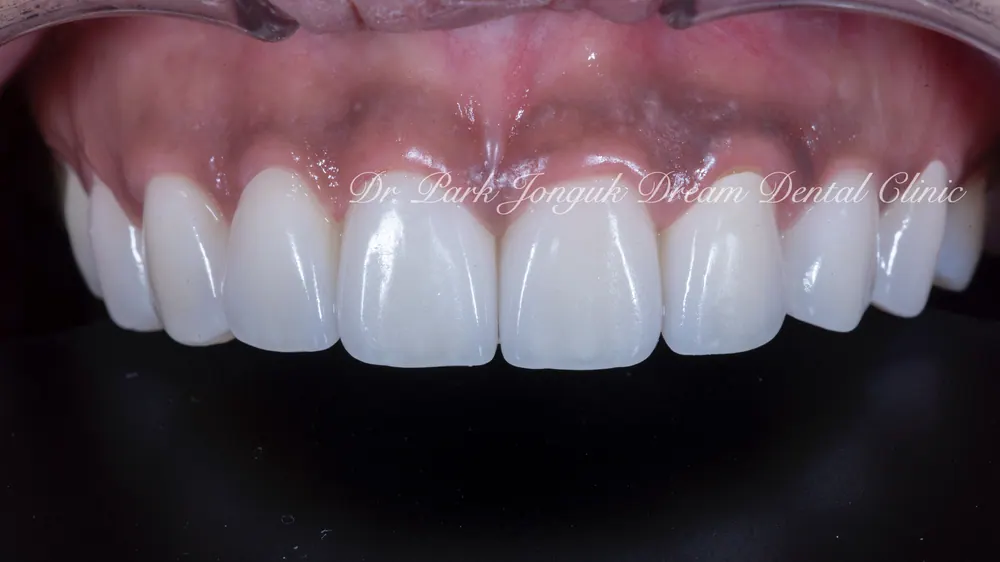
The veneers and bridge have been completed.
Because veneers and bridges use different types of ceramic,
matching their color and feel is an extremely delicate process.
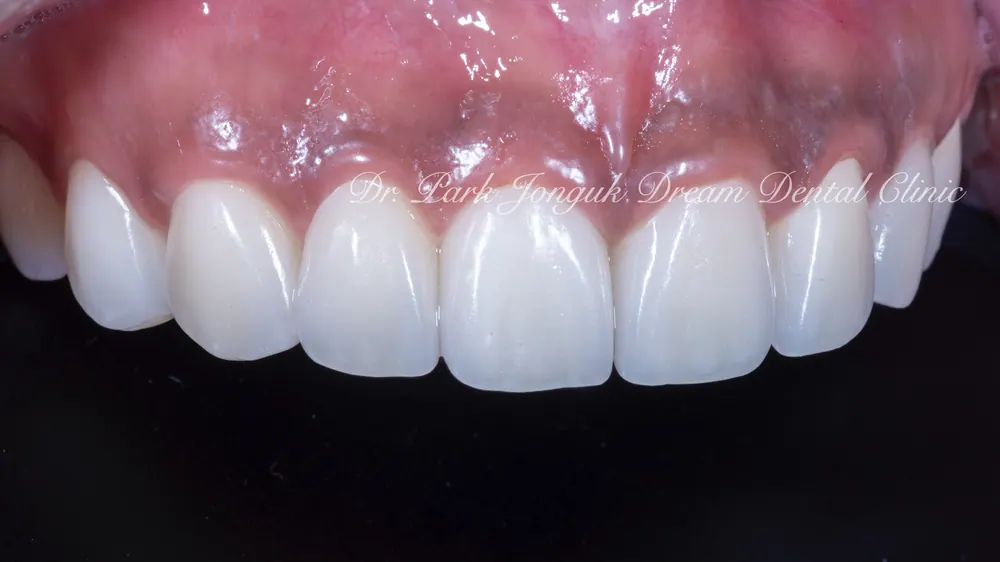
The look of the peg tooth and the malformed tooth are both completely gone,
and they've transformed into very natural, beautiful teeth.
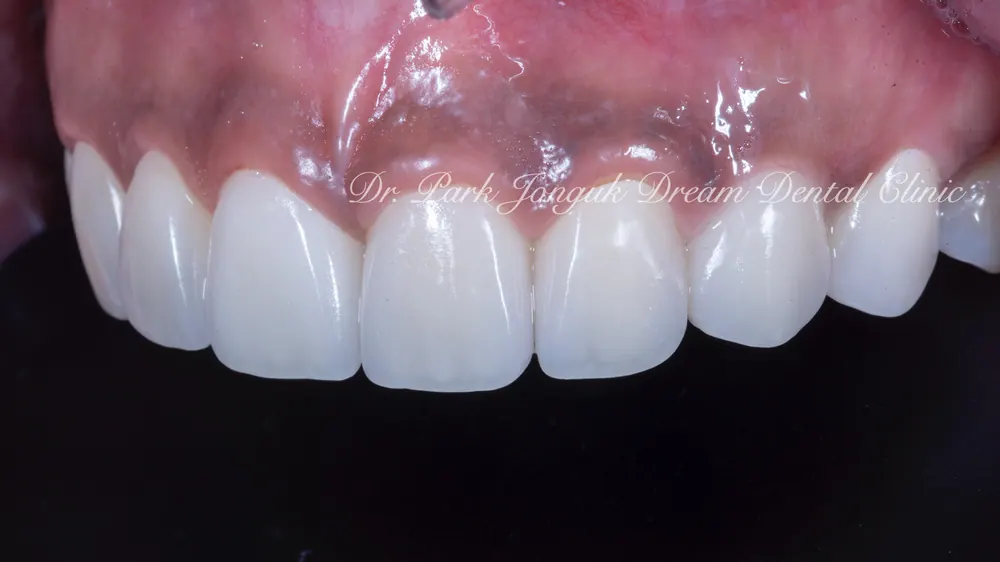
The area where the baby tooth had remained was also treated with a bridge that looks completely natural.
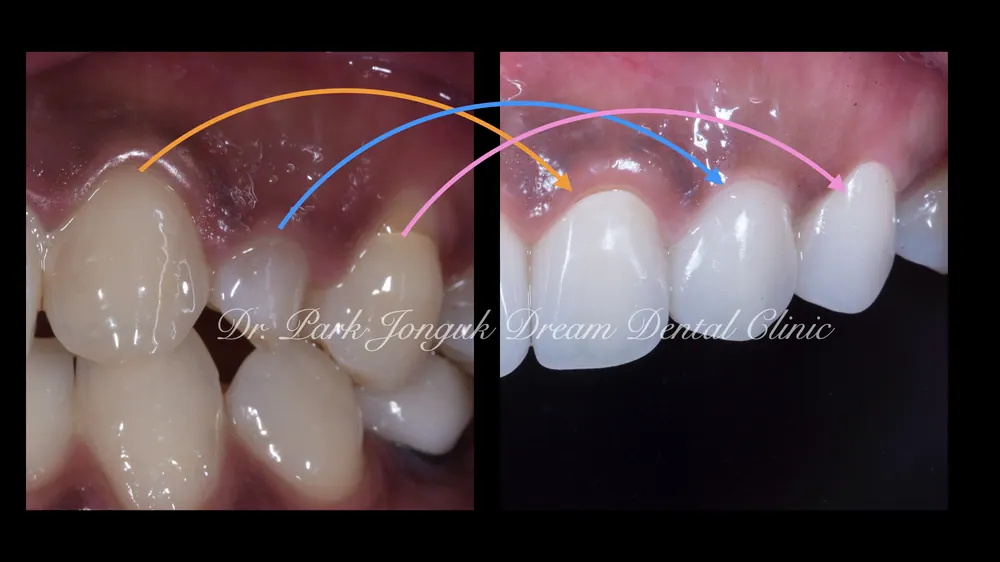
Each individual tooth changed like this.
A veneer is a process that changes the shape and color of a tooth while removing only a minimal amount of structure.
A bridge is a prosthetic treatment that restores one or more missing teeth
by using the surrounding teeth as support.
Matching these two processes well in treatment is extremely important.
Since 2006, Dream Dental Clinic
This article is a clinical note written by Dr. Park Jonguk of Dream Dental Clinic, Gangnam; the original was published on his blog. The photographs shown are real cases he treated. Results vary with each patient’s condition, and every procedure carries the possibility of individual variation and side effects.
Quick Consult
Request a Callback
Leave your number and we will call you back during clinic hours.
Request Received
We will contact you during clinic hours. For urgent matters, please call +82-2-3448-0028.