
Feldspathic Laminate Veneers Reproducing Natural Tooth Color, Shape, and Surface Texture
Hello. I am Park Jonguk, DDS, MS, director of Dream Dental Clinic.
What are the most difficult laminate veneer cases?
No-prep laminate veneers?
Severely misaligned teeth?
Protrusive teeth?
Among the many different cases,
the most technically difficult
are those involving only 1,2 laminate veneers.
In other words,
matching their shade and form to the other natural teeth
can be considered the most difficult type of case.
With crowns,
the ceramic is thicker,
so it is easier to reproduce the appearance of natural teeth.
Multiple layers of ceramic can be
built up one by one
to mimic natural teeth as closely as possible.
Laminate veneers,
by contrast, require only minimal tooth reduction,
so every characteristic must be reproduced
within about half the thickness of a crown,
which is not easy.
If all 6 anterior teeth are treated together instead,
matching the shade and form is easier.
But when only one or two anterior teeth in the middle are treated,
matching them to the other natural teeth
is considerably difficult.
With extremely thin ceramic,
the shade and form of natural teeth,
and even their surface texture,
can be reproduced by one material:
feldspathic ceramic.
It is a ceramic
that has been used for a long time.
Because it is difficult to use,
it is being used less and less these days.
Zirconia is commonly used for posterior teeth,
while feldspathic ceramic is used only for anterior teeth.
Using feldspathic ceramic
without combining it with another material,
on its own,
to fabricate laminate veneers
is truly the most demanding
laboratory process.
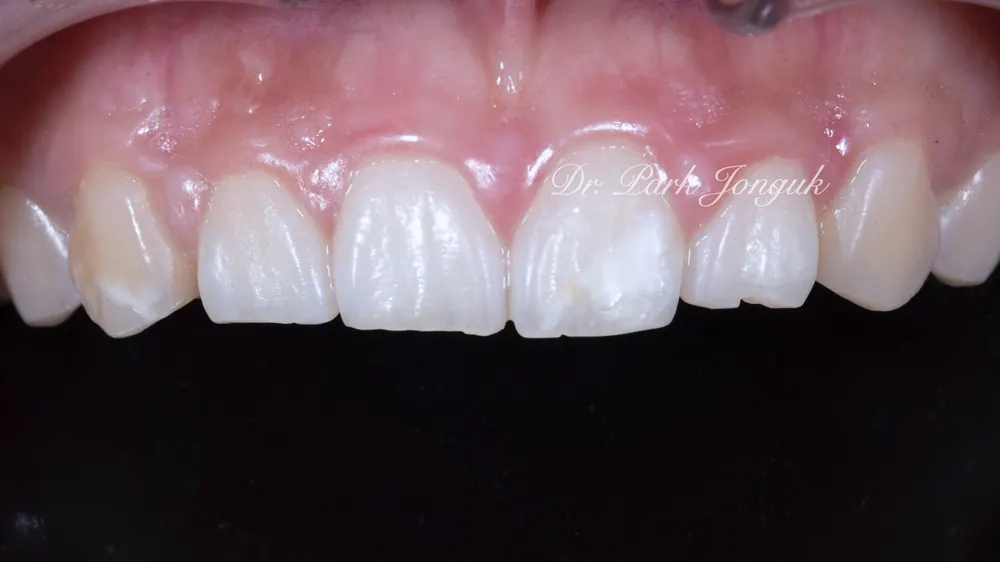
The patient had mottling on the anterior teeth
and wanted laminate veneers.
The white spots
on one canine and one incisor
were a significant source of self-consciousness, the patient said.
Most dental clinics had recommended laminate veneers on all 6 anterior teeth,
the patient said.
Alternatively, the patient had been told
that matching laminate veneers
to the remaining natural teeth was impossible.
First, because both central incisors were either chipped or mottled,
we decided to place laminate veneers on the two incisors and one canine.
For the diagnostic process for laminate veneer treatment,
please see the link below.
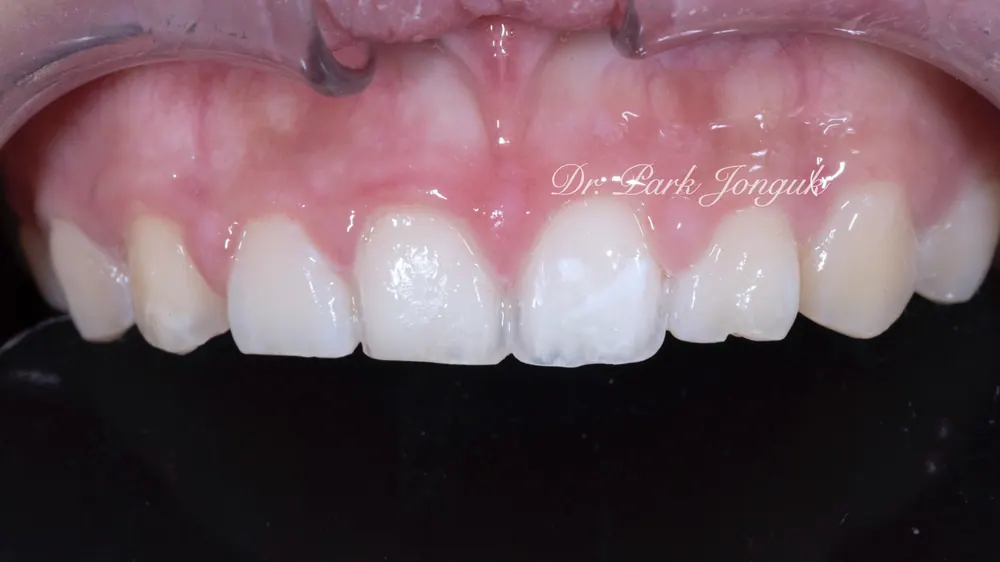
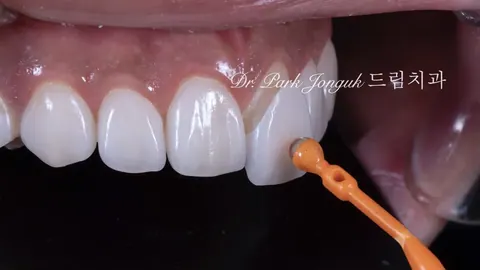
This photo shows the two anterior teeth and the canine after preparation.
You can see how little tooth reduction laminate veneers require.
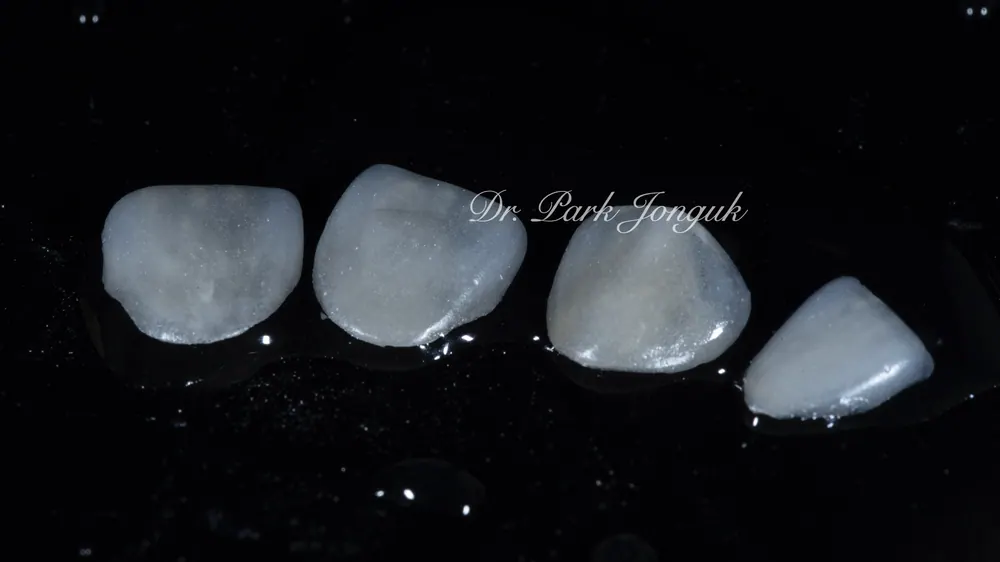
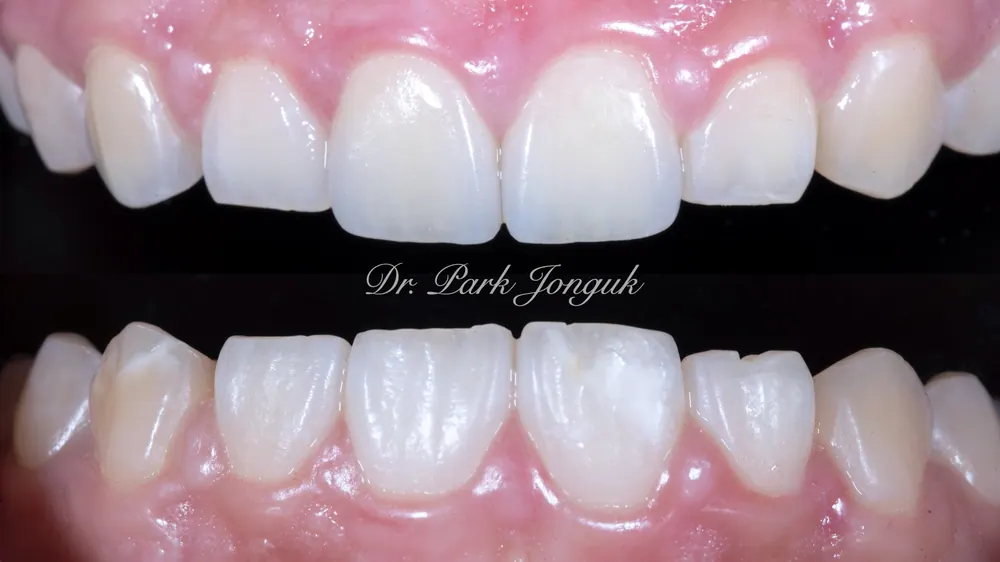
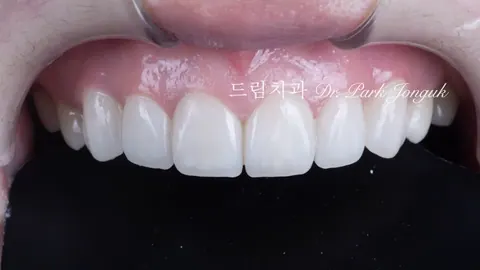
These are the completed laminate veneers.
Using feldspathic laminate veneers,
we kept them extremely thin while
reproducing a range of shades and translucency,
as well as the form and surface texture of the remaining natural teeth,
with careful detail.
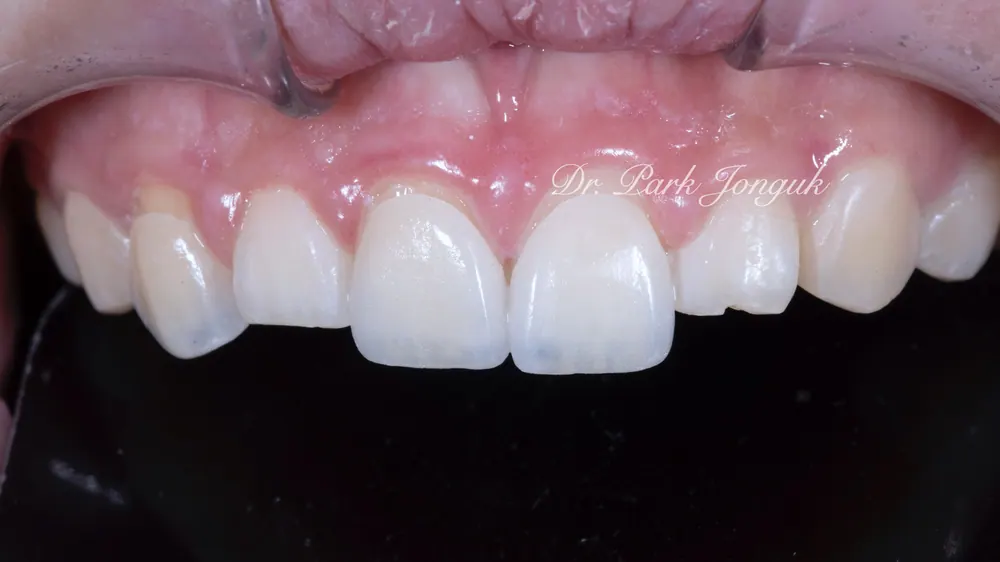
When people think of laminate veneers,
they often imagine teeth that are merely white and opaque,
like xylitol chewing gum,
with an entirely artificial appearance.
At Dream Dental Clinic, however,
our feldspathic laminate veneers
closely replicate natural teeth
while creating attractive teeth.
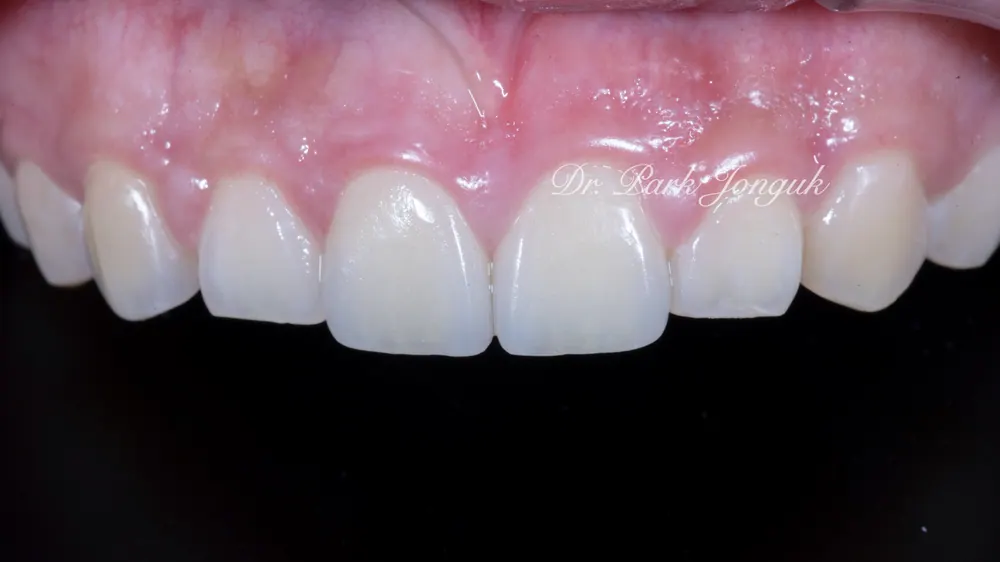
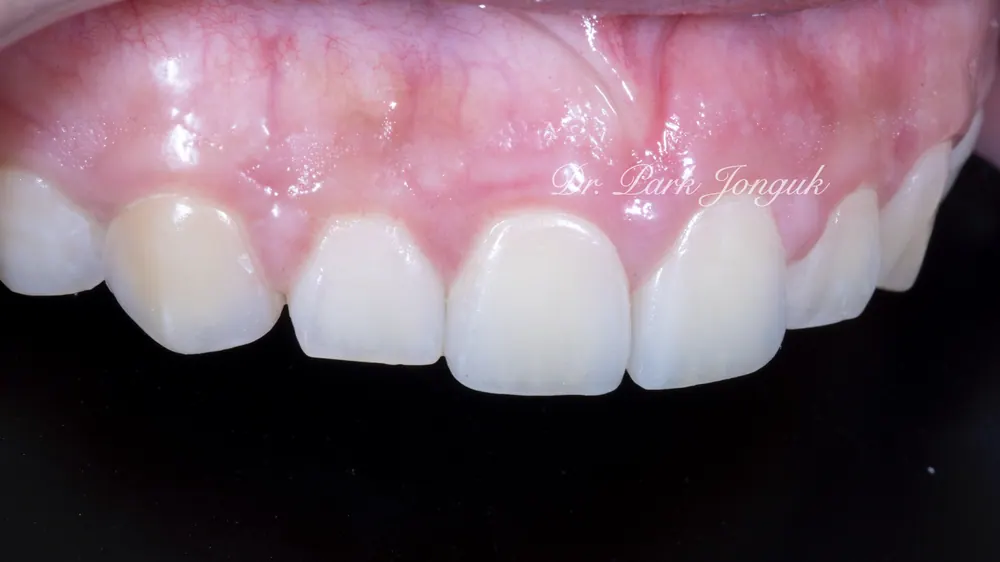
Once completed, these feldspathic laminate veneers
make it impossible to tell
which teeth are natural
and which are laminate veneers.
Artificial-looking laminate veneers
are simple to fabricate
and require little manual work.
Creating them to look like natural teeth in this way
is true artistry and master craftsmanship.
Since 2006, Dream Dental Clinic
This article is a clinical note written by Dr. Park Jonguk of Dream Dental Clinic, Gangnam; the original was published on his blog. The photographs shown are real cases he treated. Results vary with each patient’s condition, and every procedure carries the possibility of individual variation and side effects.
Quick Consult
Request a Callback
Leave your number and we will call you back during clinic hours.
Request Received
We will contact you during clinic hours. For urgent matters, please call +82-2-3448-0028.