
Front-Tooth Veneers: Treating Discolored Resin and Chipped Teeth
Hello, I'm Park Jonguk, director of Dream Dental Clinic.
Resin is probably the most widely used material in dentistry.
Because it closely resembles tooth color,
when a tooth is chipped or a cavity develops,
it's one of the best, most convenient materials for a tooth-colored repair.
In terms of cost, it's also the most affordable of the tooth-colored materials.
It comes in a range of shades, which also makes it good to work with.
But because resin has its own drawbacks,
when treating a front tooth,
you need to weigh the pros and cons against front-tooth veneers before choosing a material.
Here's a look at the pros and cons of resin versus veneers, using ChatGPT:
When treating a front tooth at a dental clinic, the pros and cons of resin and veneers are as follows.
<Resin>
Pros
It's offered at a relatively affordable price.
It can be easily shaped and adjusted.
It's much lighter than ceramic and doesn't put much strain on the tooth.
Cons
It has a short lifespan and needs to be replaced after a certain period.
It lacks durability against strong pressure or impact.
It's highly absorbent, so it can discolor in smokers or people who drink a lot of coffee.
<Veneers>
Pros
They can be made to look very natural and pretty in appearance.
Compared with resin, they're more durable and can be used for a longer period.
Unlike resin, they don't easily pick up stains from liquids or pigments.
Cons
They're offered at a relatively higher price.
Compared with resin, they're somewhat thicker, which can put some strain on the tooth.
Making veneers requires reducing part of the tooth, which can be somewhat uncomfortable.
Overall, resin is affordable and easy to work with, while veneers offer better durability and a more natural appearance. Either can be chosen depending on the patient's situation.
Among these, the claim that veneers are somewhat thicker than resin isn't entirely accurate.
It's something that can vary depending on how they're applied.
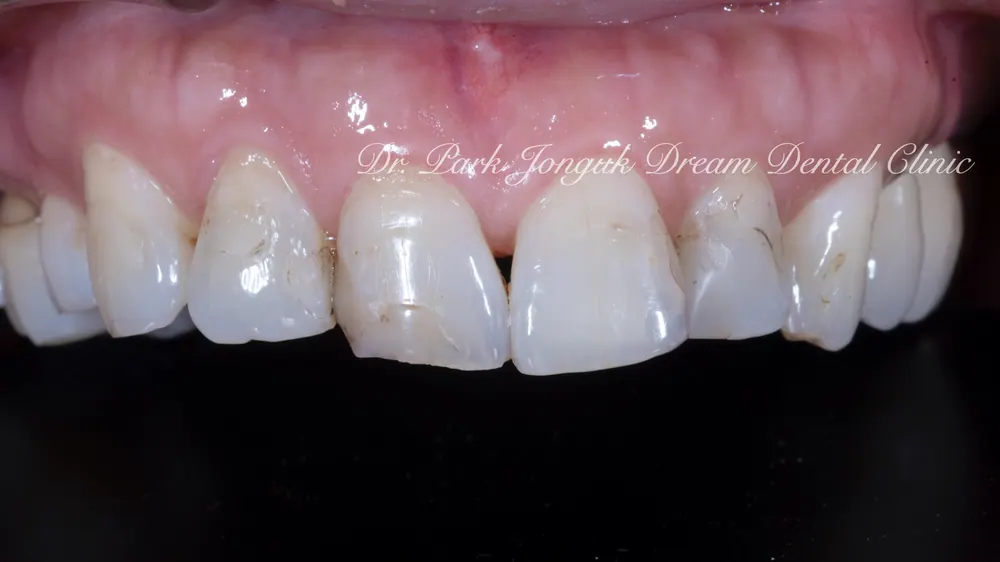
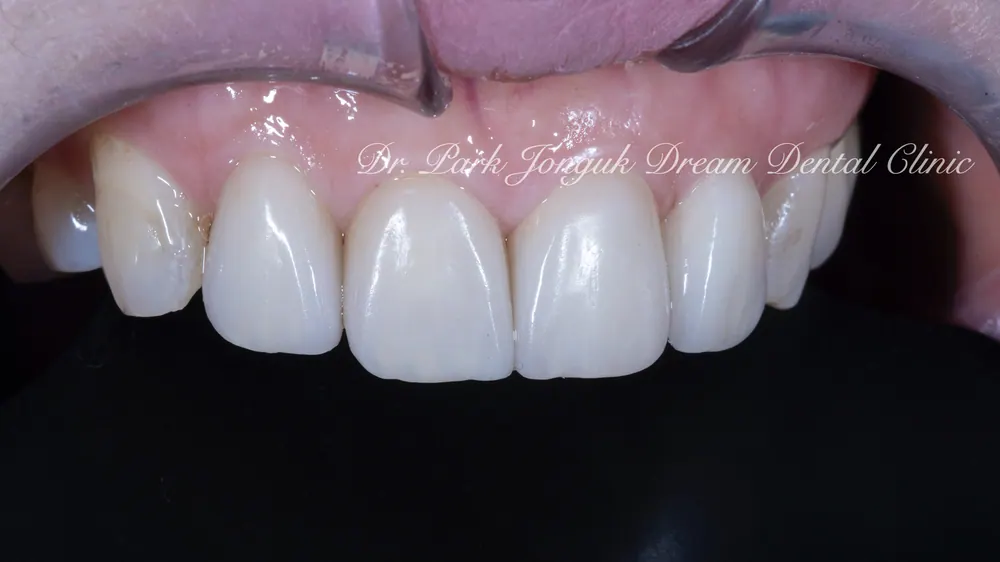
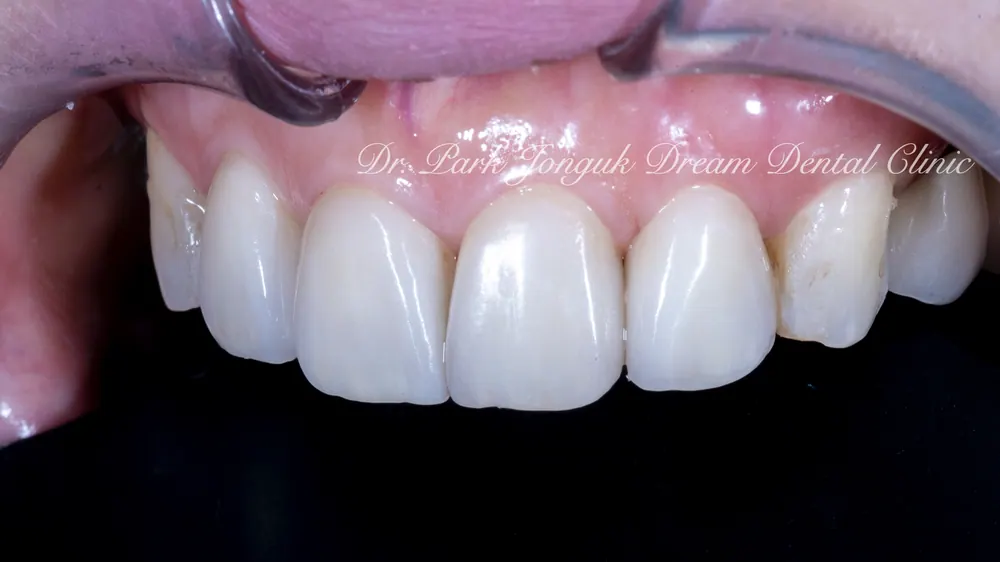
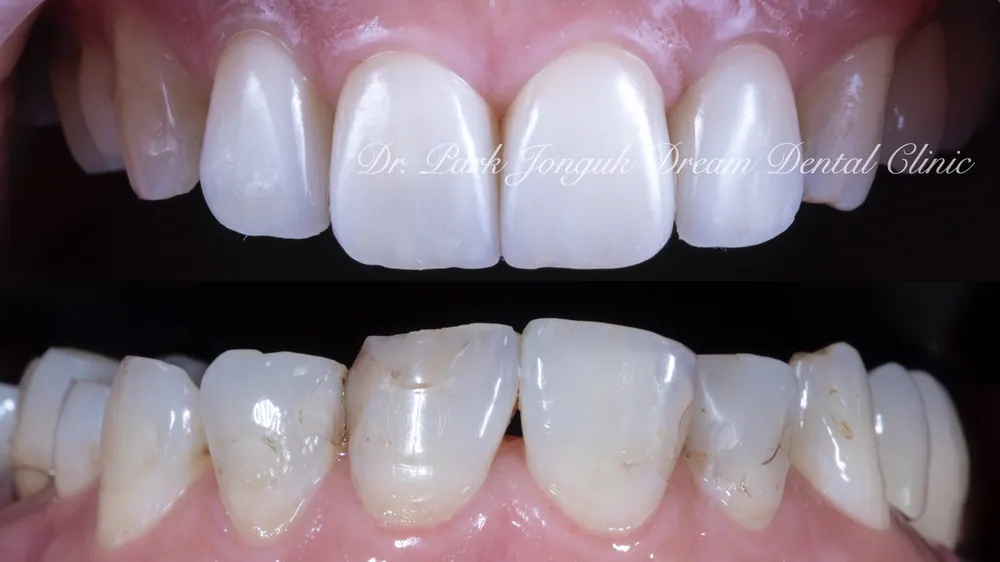
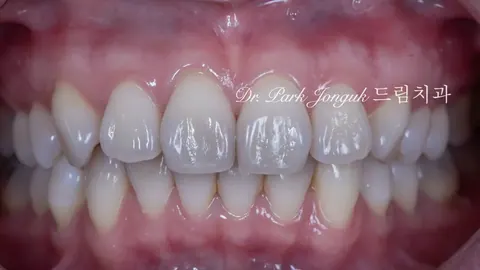
The patient came in with esthetic concerns about her front teeth.
A tooth had chipped and been treated with resin,
and decay had also developed between the teeth, leading to more resin treatment.
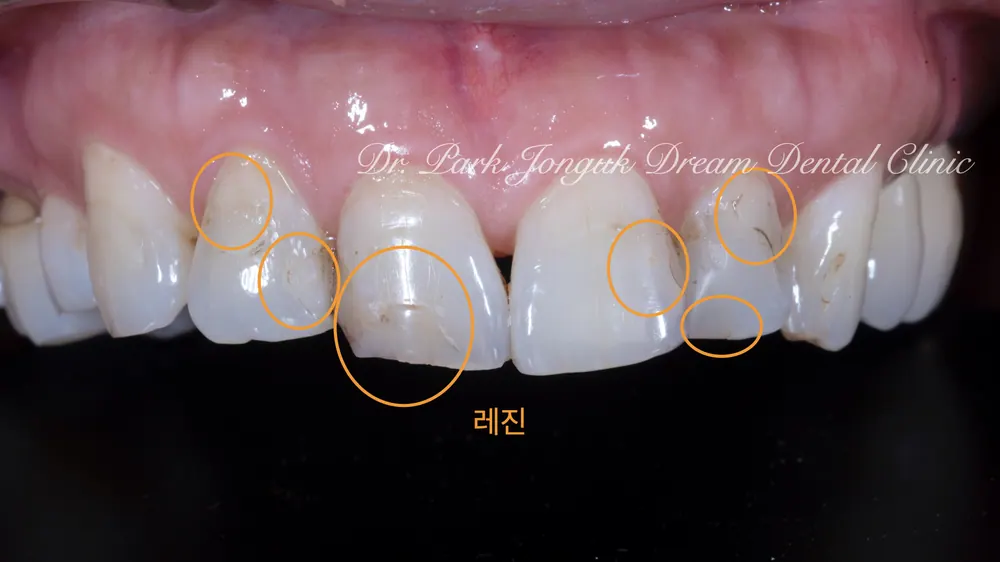
So many areas had already been treated with resin like this.
Resin has the problem of discoloring over time,
and since it wears down easily and chips in places,
problems had also developed with the shape.
We removed all of the old resin
and, while retreating the areas that still needed resin,
decided to proceed with front-tooth veneer treatment.
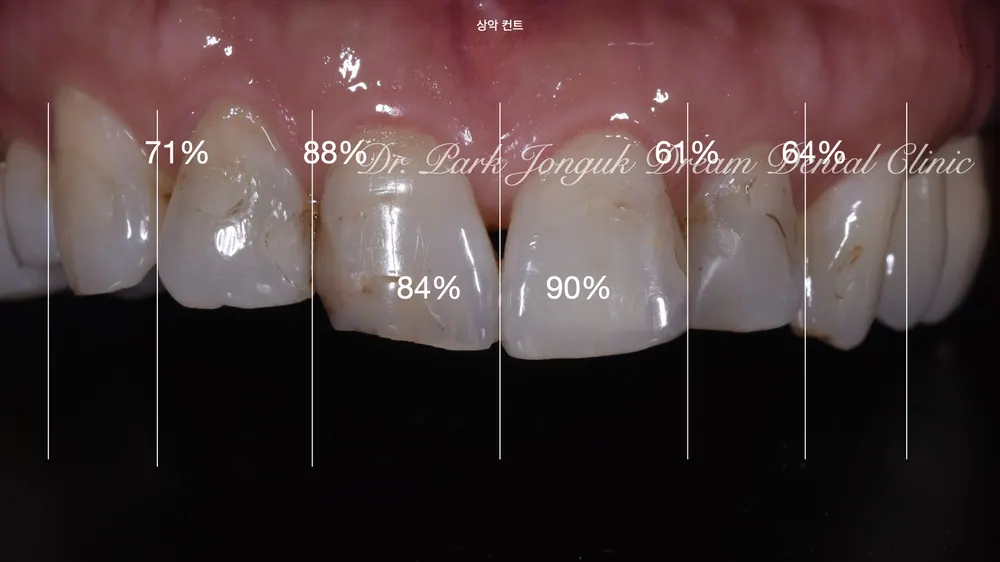
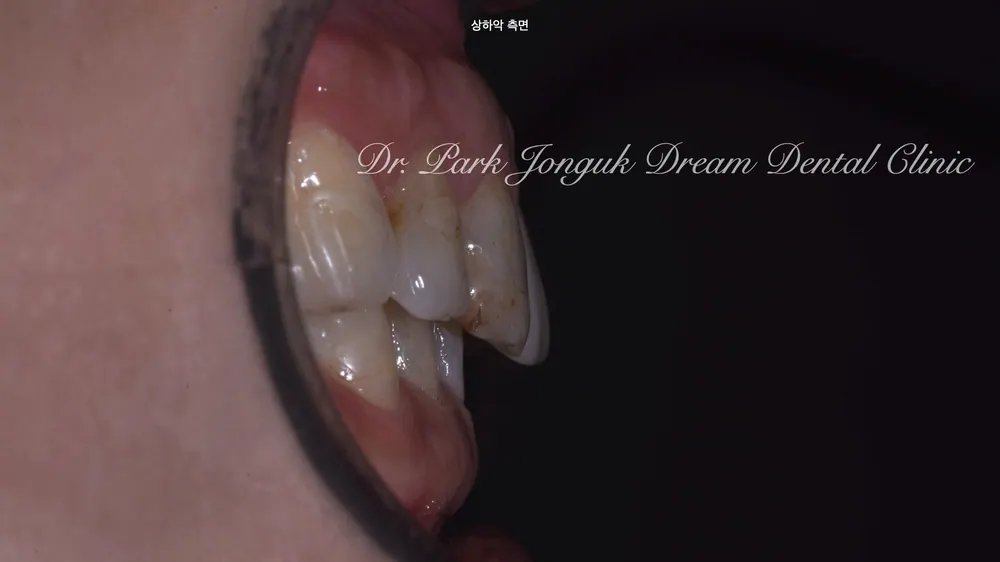
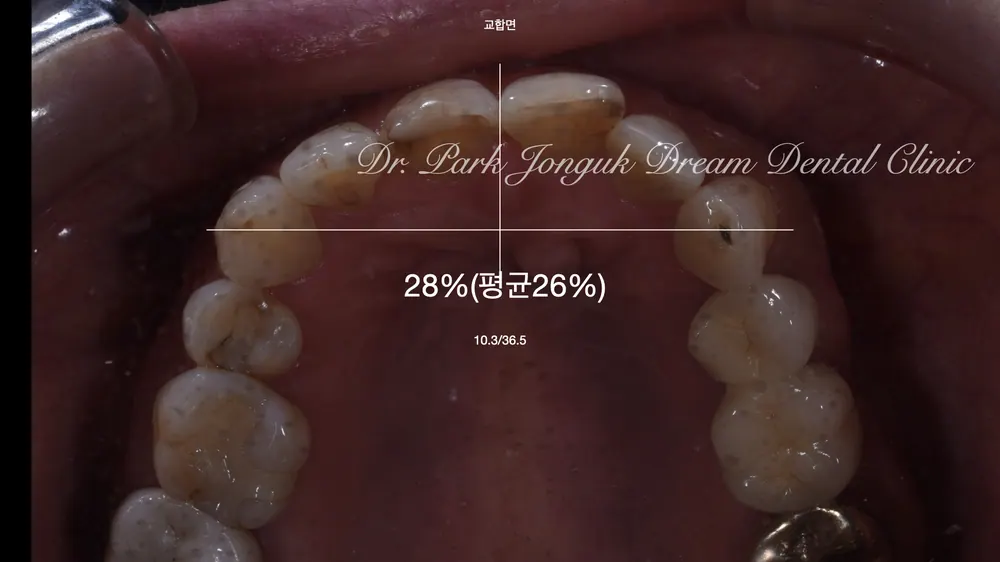
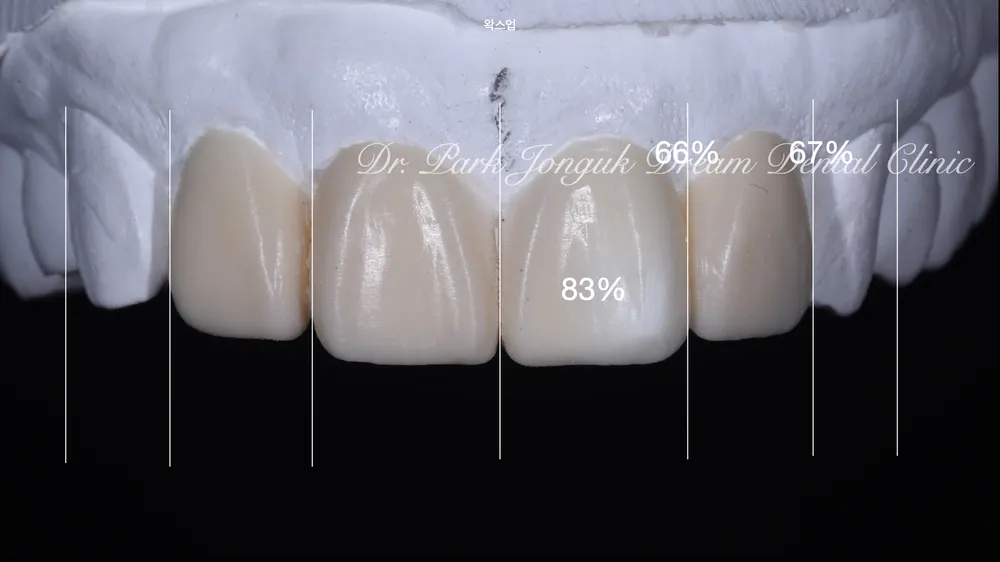
We carry out a diagnosis of how to proceed with treatment.
This diagnostic process is the most important step in front-tooth veneer treatment.
I've posted about this process in detail in an earlier post — please refer to it.
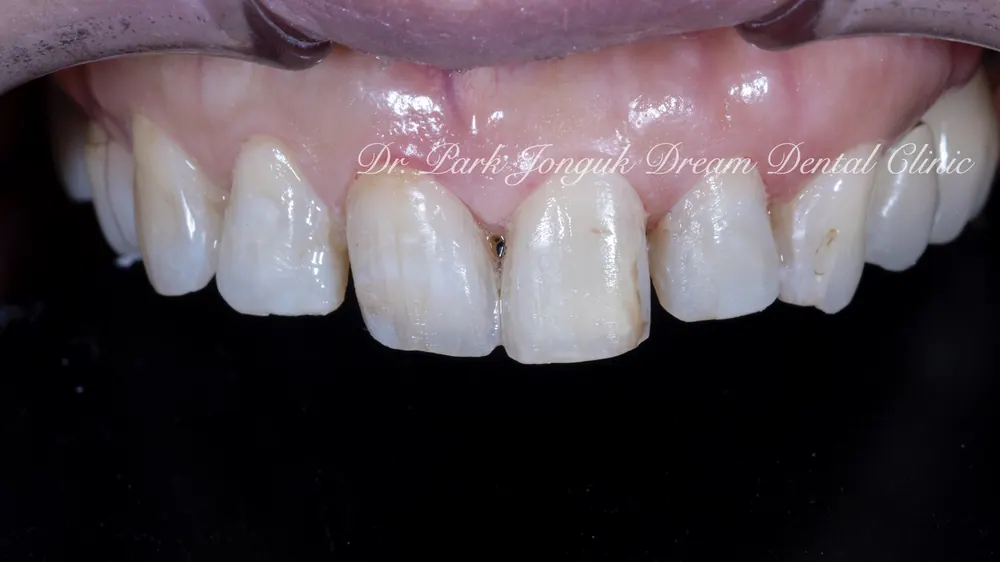
While removing the resin and retreating the teeth,
we proceed with the reduction needed for the front-tooth veneers.
Treatment was carried out on four teeth, but
the two front teeth had such large resin areas that they may look like they were reduced quite a bit.
After removing the resin, almost no additional tooth reduction was done.
For the lateral incisors on either side,
apart from removing the discoloration and retreating the resin,
there was no tooth reduction at all.
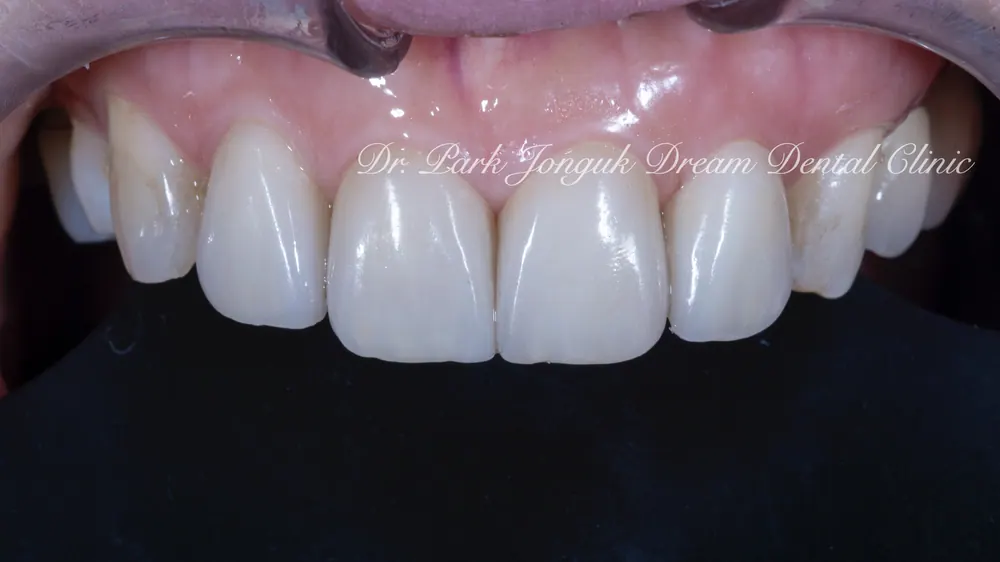
The biggest feature of our front-tooth veneers at Dream Dental Clinic is
naturalness.
We carry out treatment while preserving a shape, color, and translucency just like natural teeth,
whereas an awkward, obviously artificial-looking veneer is easy to make.
This kind of natural veneer — especially one with almost no tooth reduction —
achieving natural expression with such extremely thin ceramic
is quite a difficult task.
The correct way to brush after veneer treatment is as follows.
Use a soft toothbrush: Even without veneer treatment, it's not good to use a toothbrush that's too stiff. Since a veneer's surface is smooth, the brush should clean the surface gently. Brushing too hard can damage the ceramic. So it's best to use a soft-bristled brush.
The angle of the brush: You need to adjust the angle of the brush while brushing. Hold the brush vertically between the tooth and the veneer ceramic, then tilt it slightly so the bristles clean well between the veneer and the tooth. This step matters a great deal.
Using floss: You should use floss to remove food particles between veneer-treated teeth. However, unlike brushing, you shouldn't press the floss too hard — clean carefully between the teeth instead.
Dental checkups: After veneer treatment, it's good to visit the dentist regularly to check the condition. Getting a professional cleanliness check and condition assessment at the clinic helps you use the veneers longer.
Since 2006, Dream Dental Clinic
This article is a clinical note written by Dr. Park Jonguk of Dream Dental Clinic, Gangnam; the original was published on his blog. The photographs shown are real cases he treated. Results vary with each patient’s condition, and every procedure carries the possibility of individual variation and side effects.
Quick Consult
Request a Callback
Leave your number and we will call you back during clinic hours.
Request Received
We will contact you during clinic hours. For urgent matters, please call +82-2-3448-0028.