
Closing Gapped Teeth with No-Prep Veneers
Do you really have to reduce a tooth to close the gap between it and its neighbor?
More people struggle with gaps between their teeth than you might think.
Especially since a gap between the front teeth is instantly noticeable when speaking or smiling,
it causes real stress regardless of age.
The question that comes up most often in situations like this is this:
"Can this be fixed without reducing the tooth?"
In this article, I'll walk through two different cases where no-prep veneers closed a gap between teeth,
showing exactly when gapped-teeth veneer treatment is possible,
and how it should be approached.
CASE 1. No-Prep Veneers for an Older Patient with a Gapped Lower Front Tooth
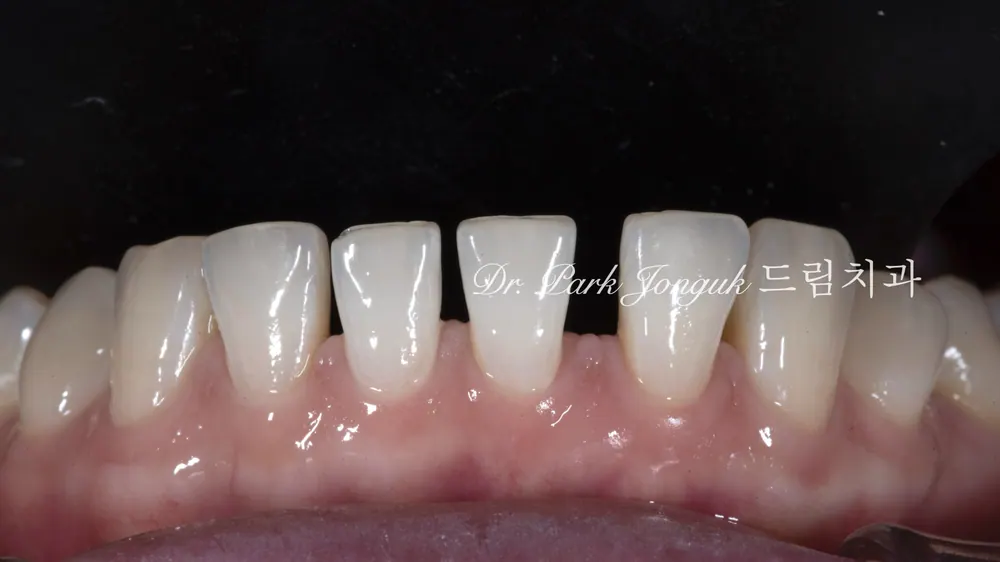
Photo 1. Initial Examination
The first patient was quite advanced in age.
There was a wide gap between the lower front teeth,
and the front teeth barely made contact when biting.
In a case like this, the first thoughts that typically come to mind are
orthodontic treatment
or resin treatment,
but neither was a realistic option for this patient.
Orthodontics was difficult given her age, the treatment duration, and adaptation issues,
and resin had limits in durability and esthetics because the space was too wide.
Above all, the patient's request was clear.
She wanted treatment "without cutting a single tooth."
Why No-Prep Veneers Were Possible
The key to this case
was that we could design
👉 a veneer that fits only into the space between the teeth, rather than one covering the entire tooth surface.
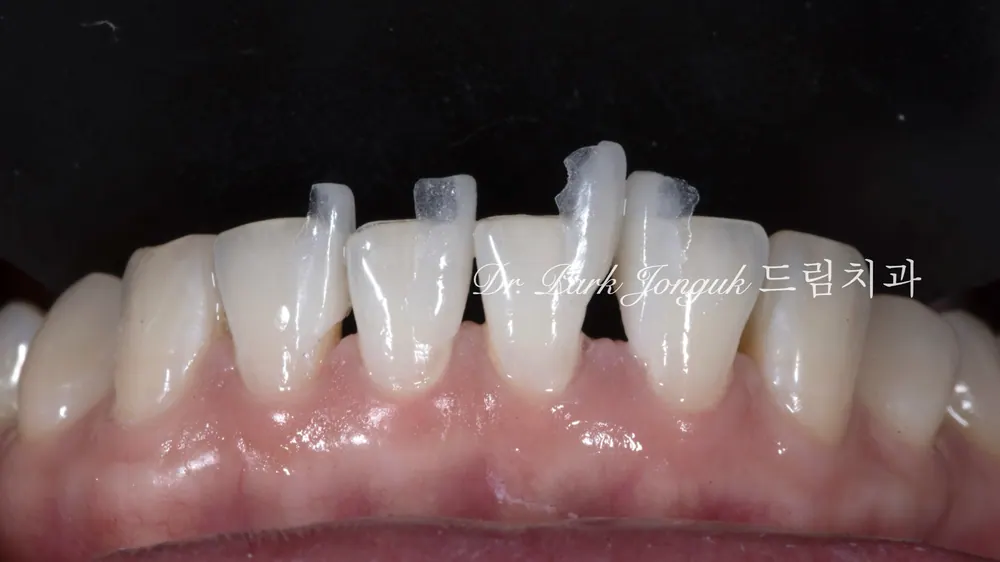
Photo 2. A feldspathic veneer placed into the space
After precisely measuring the size of the space between the teeth,
we fabricated a total of 4 feldspathic veneers sized to fit the space.
These veneers
don't cover the front surface of the tooth
but instead fit only into the space between the teeth,
a method that requires no reduction of the natural tooth at all.
Photos 3, 4. After Seating
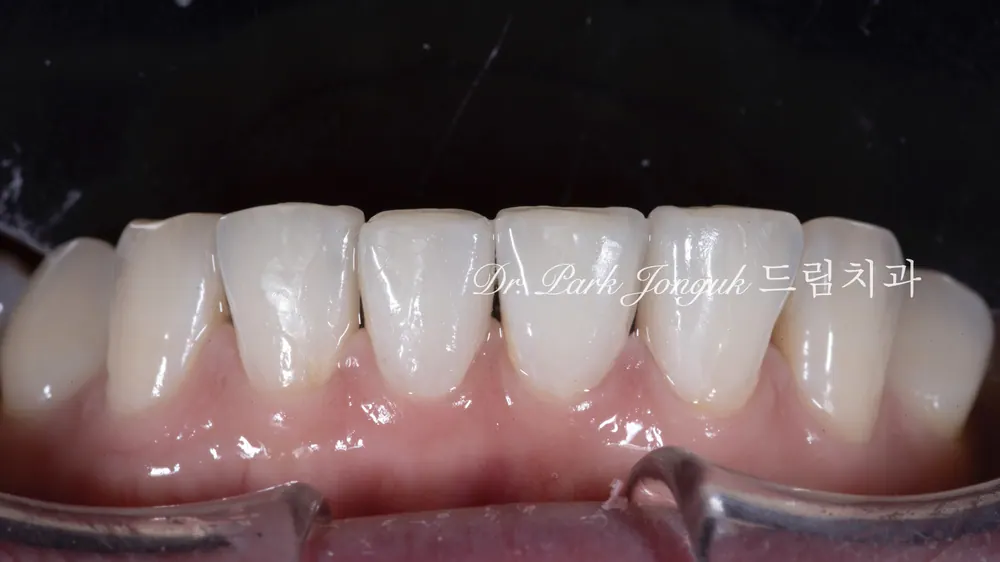
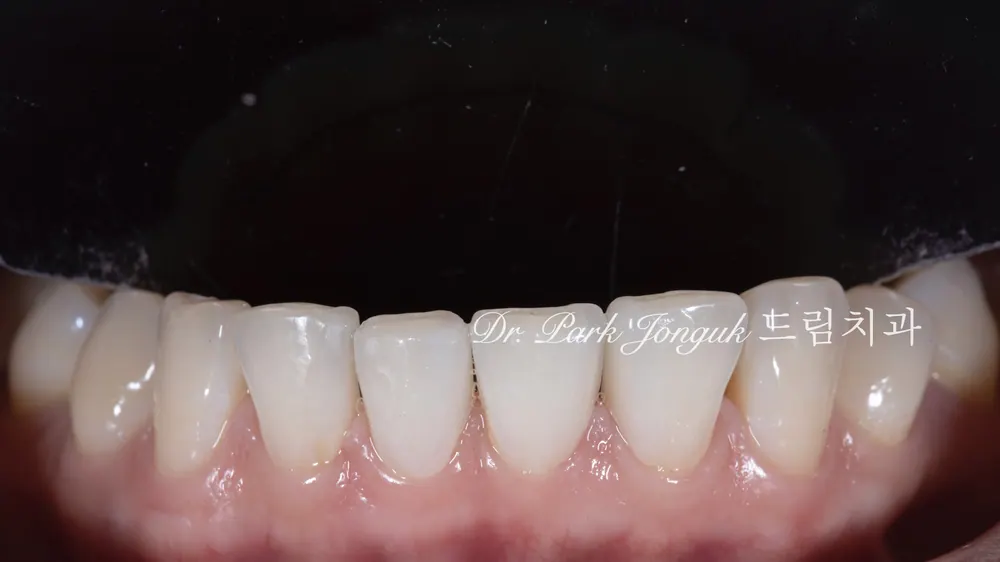
Even though it was done without any reduction,
the gap between the teeth was cleanly closed,
and the shape and color both came out looking very natural.
Even though she was an older patient,
she was extremely satisfied with the result, saying,
"I never imagined a treatment like this would be possible at my age."
CASE 2. Veneers for a Diastema (Gap) Between the Upper Front Teeth
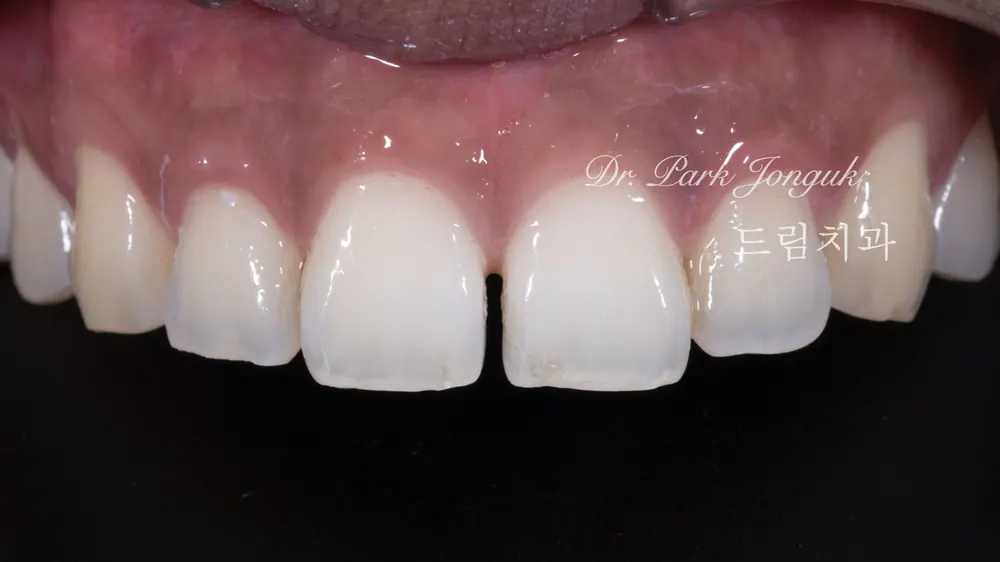
Photo 1. Initial Examination
The second patient was relatively young,
with a diastema—a gap—between the two upper front teeth.
In a case like this, there are usually two options.
Resin treatment
Ceramic veneer
Resin vs. Ceramic Veneer: What's the Difference?
The advantage of resin treatment is that
it can be done in a single visit
and it's relatively inexpensive.
But the drawbacks are just as clear.
A high likelihood of discoloration over time
Surface wear and staining at the margins
Ceramic veneers, on the other hand,
resist discoloration almost entirely,
offer translucency close to a natural tooth,
and have the advantage of lasting longer.
That said,
the cost is higher
and same-day treatment is difficult.
This patient,
considering long-term esthetics and stability,
chose ceramic veneers.
Photos 2, 3. Veneer Fabrication
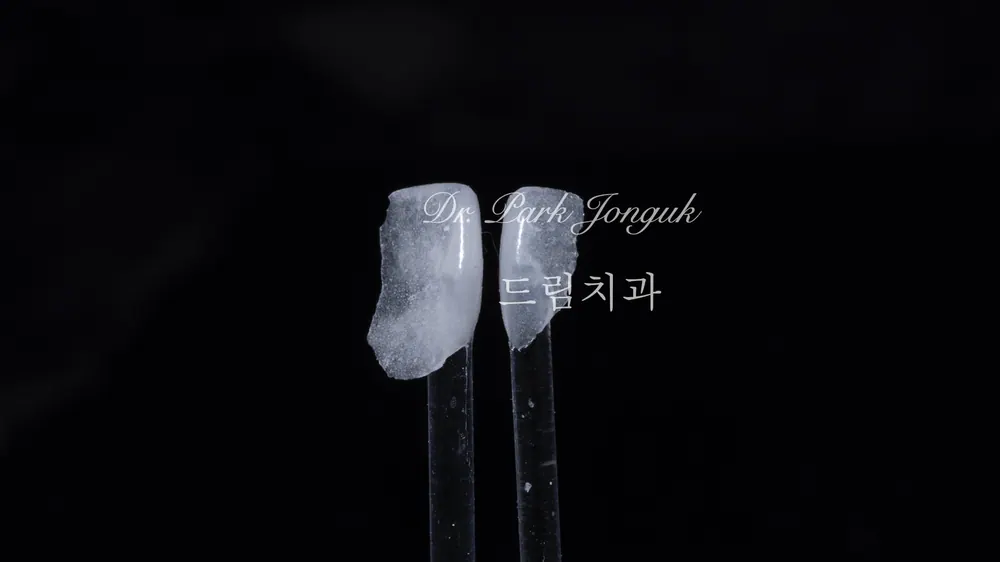
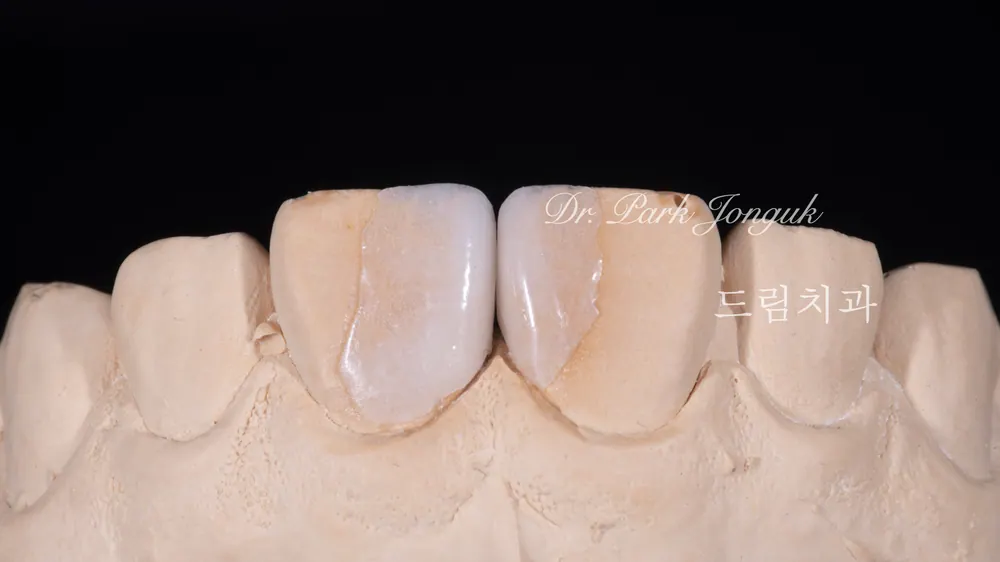
This case, too,
wasn't designed to cover a large portion of the tooth,
but centered on the space between the teeth
while wrapping partially around the front surface.
This approach
improves bonding stability
and lets the border between the teeth blend naturally.
Photo 4. Placed on the Tooth
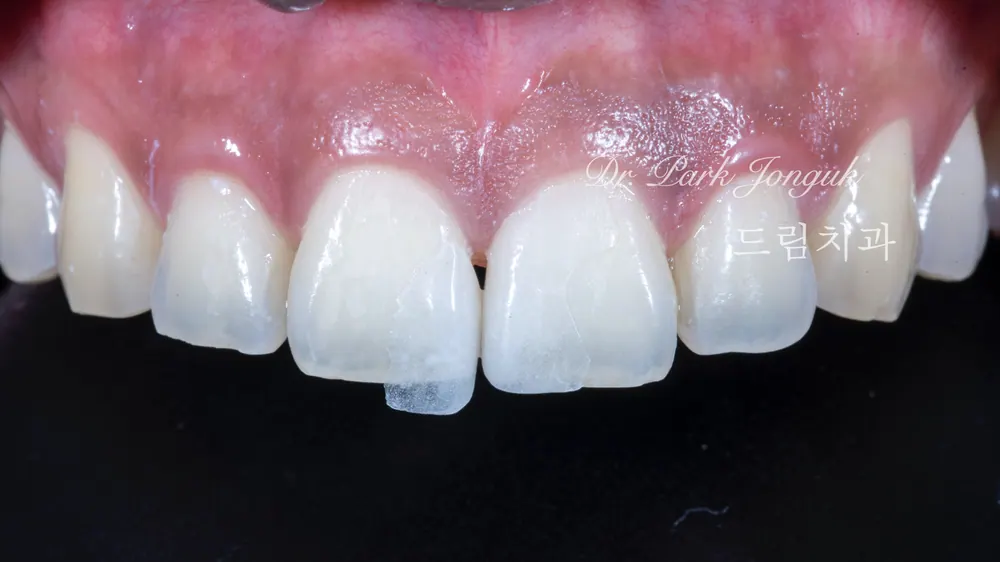
When placed lightly on the actual tooth,
you can see just how thin and translucent the veneer is.
Because this is a no-prep veneer,
it's important to preserve the natural tooth's color and light exactly as they are.
Photo 5. After Treatment
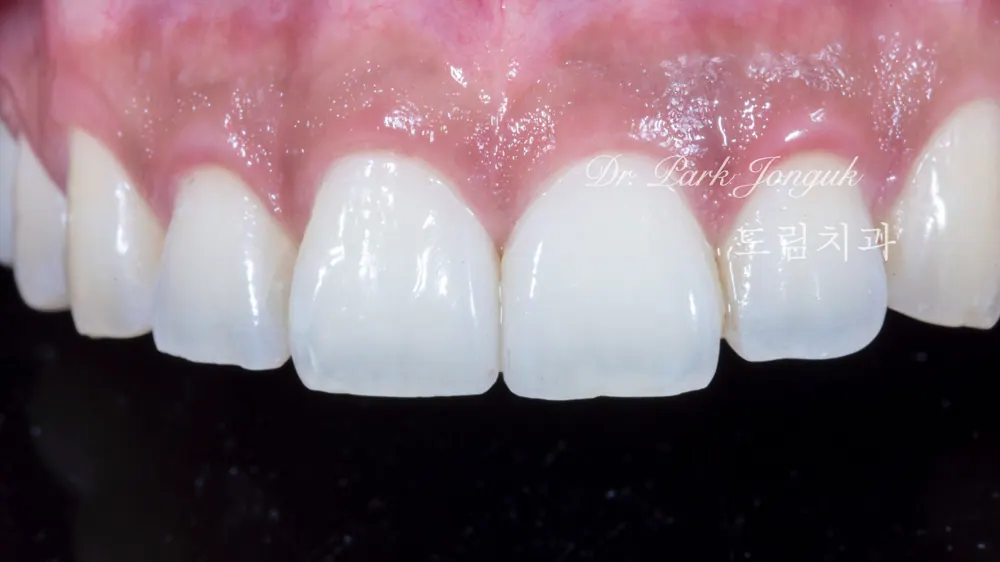
Once the treatment was completed,
the gap between the teeth naturally disappeared,
with no artificial feel to anyone's eye—
it looked as if the teeth had always been perfectly aligned.
Gaps Between Teeth Don't Always Have to Be Reduced
Many people
assume "veneer = tooth reduction,"
but that isn't true for every case.
Tooth size
Tooth alignment
The position and size of the gap
The bite condition
When these four factors are precisely diagnosed,
there are clearly cases that can be resolved sufficiently with no-prep veneers.
What matters
isn't the treatment method itself,
but 👉 choosing the treatment that fits the patient's specific condition.
Conclusion
Veneers for gapped teeth,
and treatment for spaces between teeth,
aren't really a question of "how much to reduce,"
but a question of "how to design."
No-prep veneers
aren't a cure-all that works in every situation,
but when the conditions are right,
they can preserve the natural tooth completely
while producing the most ideal esthetic result possible.
Q&A
Q1. If there's a gap between my teeth, do I always need braces?
No. Depending on the size and position of the gap and the bite condition, veneers can resolve it in many cases.
Q2. Do no-prep veneers come loose easily?
With the right design and bonding process, they stay quite stable.
Q3. Are veneers better for the gums than resin?
Ceramic veneers have a smoother surface, so with good maintenance, they tend to carry a lower risk of inflammation.
This article is a clinical note written by Dr. Park Jonguk of Dream Dental Clinic, Gangnam; the original was published on his blog. The photographs shown are real cases he treated. Results vary with each patient’s condition, and every procedure carries the possibility of individual variation and side effects.

Quick Consult
Request a Callback
Leave your number and we will call you back during clinic hours.
Request Received
We will contact you during clinic hours. For urgent matters, please call +82-2-3448-0028.