
Are No-Prep Veneers Really Impossible? — Returning to the True Essence of Veneer Treatment
These days, I often come across articles that speak negatively about no-prep veneers.
Phrases like "no-prep veneers are only possible in theory,"
and "it's an unrealistic treatment" are easy to find.
But ironically,
veneer treatment originally started out as a no-prep treatment.
The earliest veneers barely touched the tooth at all,
simply bonding an extremely thin piece of ceramic to the front surface,
and that was the treatment's greatest strength.
As time passed, the situation changed.
To handle more cases,
to fabricate them faster,
and to apply them to a wider range of teeth,
the amount of reduction gradually began to increase.
And at some point,
the perception took hold that "veneers are a treatment that grinds down teeth,"
and now, ironically, no-prep veneers
are sometimes treated as an unrealistic idea.
But I think the opposite.
I don't see no-prep veneers as a new trend —
I see them as a return to the true essence of veneer treatment.
The Conditions Under Which No-Prep Veneers Are Possible
No-prep veneers aren't a treatment that can be applied to everyone.
Nor are they a method that works on every tooth.
There are three representative conditions.
Cases where the tooth is small (a peg lateral)
Cases where the alignment of the teeth is relatively even
Cases with a retruded-bite tendency (where the teeth sit further back)
When these three conditions overlap,
it's possible to achieve a natural esthetic improvement
by adding volume without reducing the tooth at all.
In other words, no-prep veneers
aren't a treatment that unconditionally protects the tooth —
they're a treatment that accurately diagnoses which teeth are genuinely suited to no-prep, and applies it to those.
Case 1 – No-Prep Veneers for a Peg Lateral
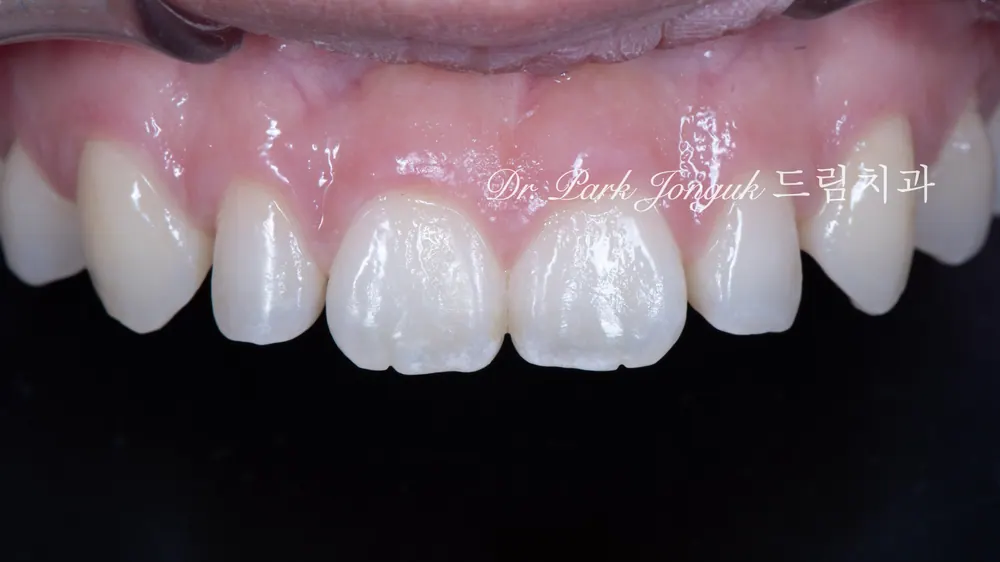
Photo 1 – Before Treatment
This is a classic case of a peg lateral.
The tooth is small, and its proportion relative to the rest of the alignment is off.
Even with orthodontic treatment, the size of the tooth itself wouldn't change in a case like this.
What matters in this case
is that there's simply no reason to reduce the tooth at all.
In fact, reducing it could make the esthetic outcome worse.
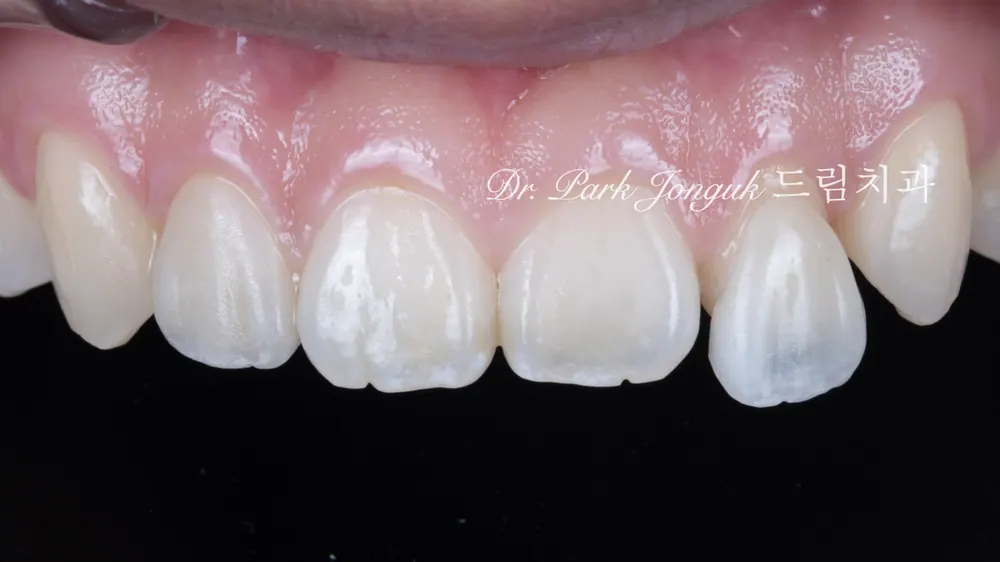
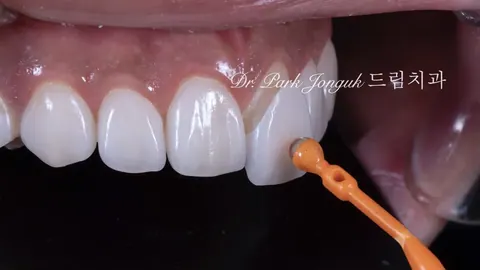
Photo 2 – With the No-Prep Veneer Placed On
When you place the veneer over the tooth,
you can immediately see the tooth grow larger and the proportions fall into place.
This step is exactly the heart of no-prep veneers.
It's not a treatment that reduces the tooth,
but one that designs the tooth —
and this is the first moment the patient really feels that for herself.
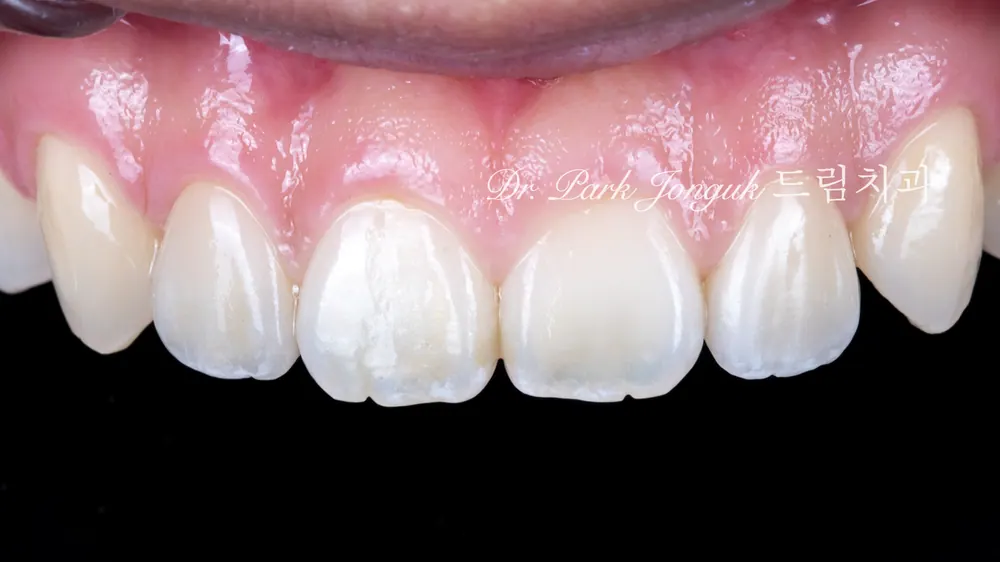
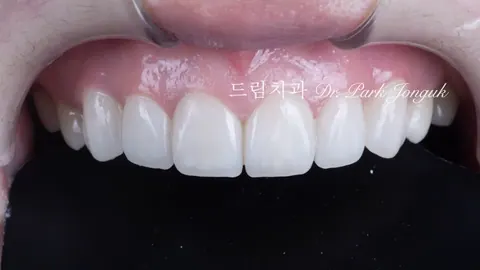
Photo 3 – Treatment Complete
There was no reduction at all.
No anesthesia was needed, and no temporary veneer was needed either.
And yet, the result
was a tooth that's more balanced, more natural,
and above all, esthetically undetectable.
Rather than anyone being able to tell she'd had veneers done,
looking like "someone whose teeth were just naturally pretty"
is the most ideal result a no-prep veneer can achieve.
Case 2 – No-Prep Veneers for Spacing in the Lower Front Teeth
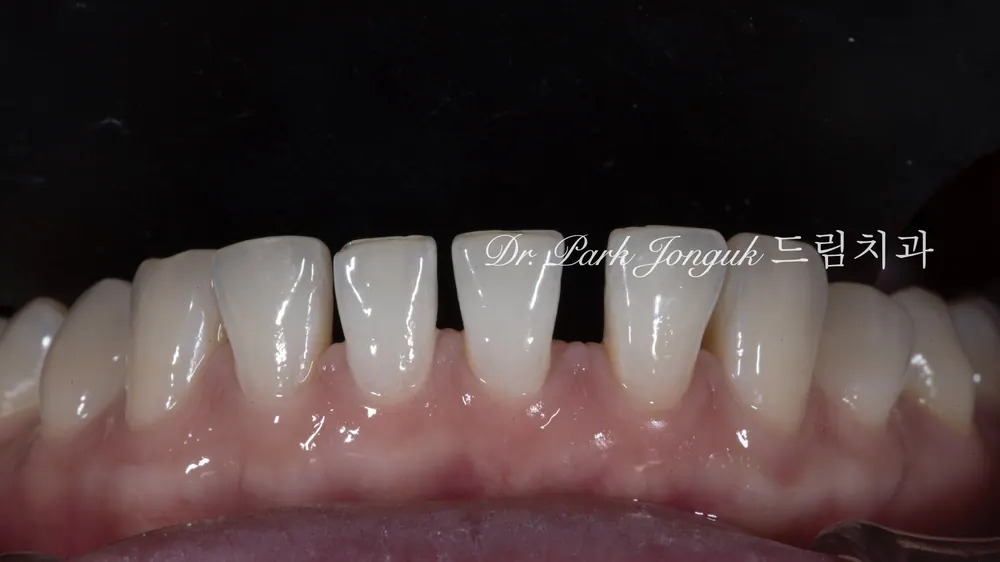
Photo 1 – Before Treatment
There are several gaps between the lower front teeth.
This is a classic case of gaps that gradually widened with age.
Treating it with resin might look fine for the moment,
but over time, discoloration, chipping off, and the gaps reopening tend to happen repeatedly.
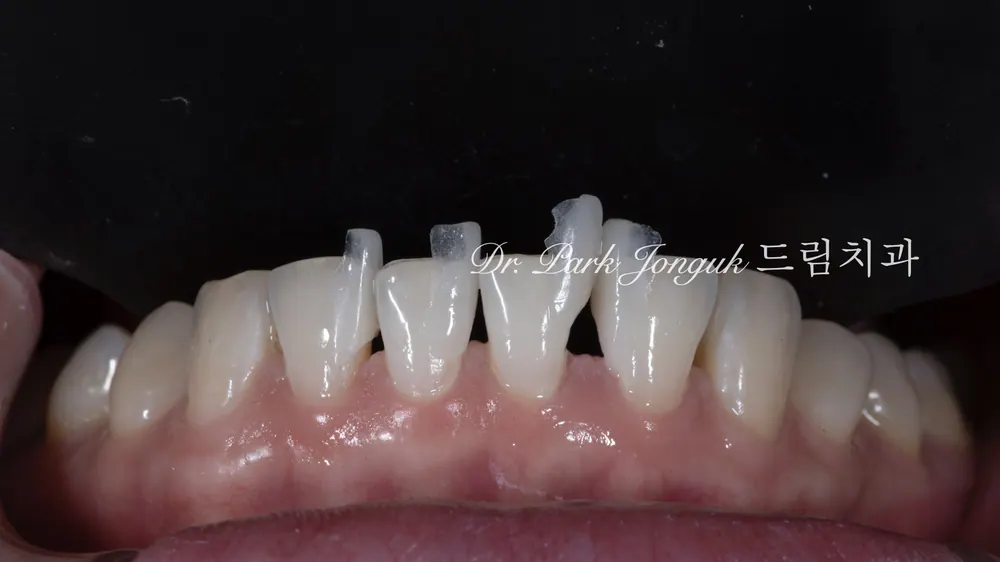
Photo 2 – With the No-Prep Veneer Placed On
Fitted to the space between the teeth,
we fabricated an extremely thin feldspathic veneer.
Rather than covering the whole tooth,
it's structured to fit into the space itself.
A case like this
is a classic indication for no-prep veneers.
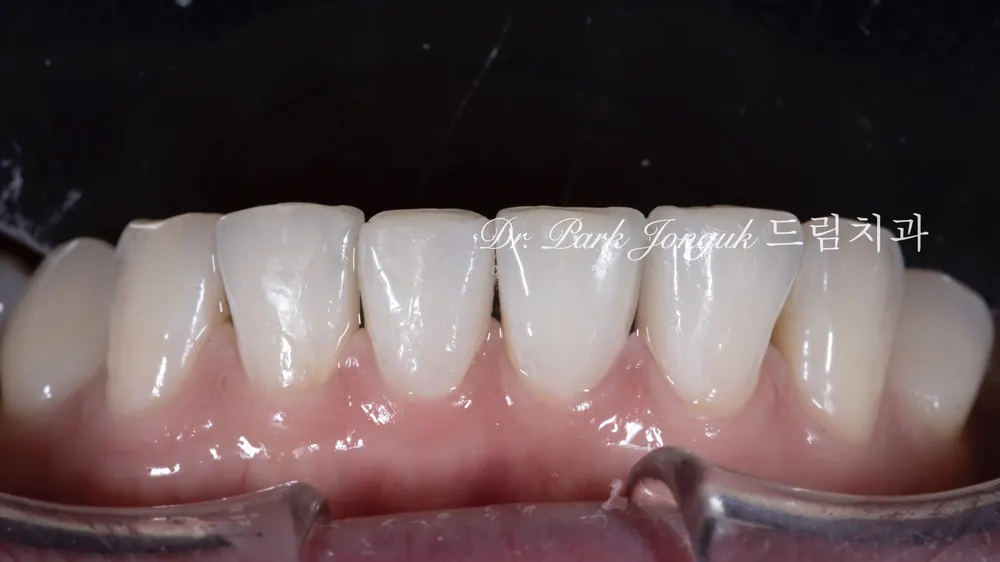
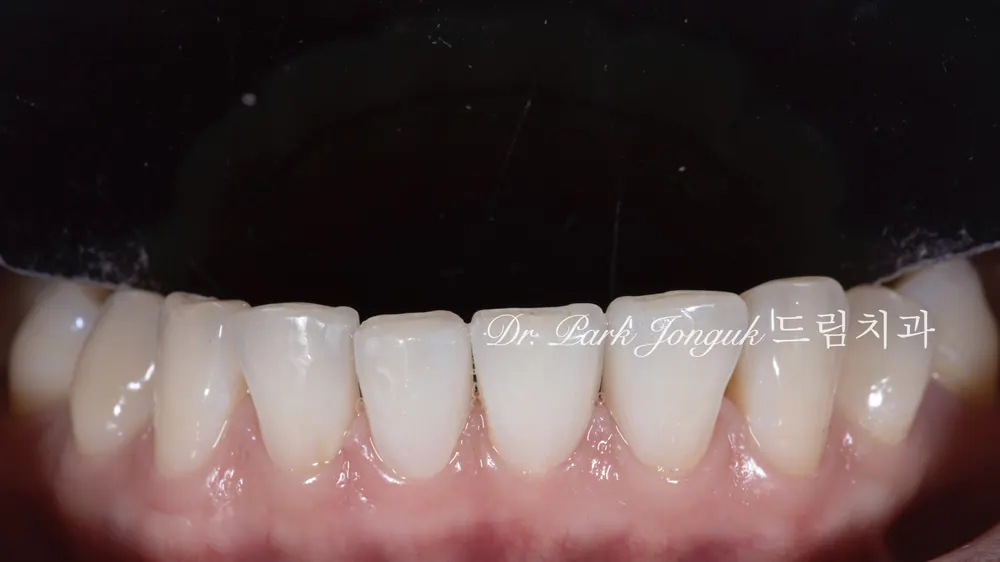
Photos 3, 4 – After Treatment
Even though not a single tooth was reduced,
the gap disappeared very naturally.
Without the artificial feel that's typical of resin,
it connects just like a natural tooth.
The patient, too,
said, "I never imagined it could look this natural."
Why No-Prep Veneers Can Feel Impossible
At many clinics,
you'll hear things like "no-prep bonds weakly,"
"there's a high risk of it coming loose,"
and "realistically, it's hard to maintain."
These statements aren't entirely wrong.
But in most cases,
it's not that no-prep itself is impossible —
these statements come from the experience of failure after applying no-prep to a case that simply wasn't suited to it.
No-prep veneers
aren't a matter of technical skill,
they're a matter of diagnosis.
If the diagnosis is wrong, no-prep becomes risky,
and if the diagnosis is accurate, no-prep becomes the most ideal treatment.
No-Prep Veneers Aren't a Trend — They're a Standard
Over time, veneer treatment has
increasingly developed in a commercial direction.
Faster, more numerous, simpler.
In that process,
tooth reduction increased,
and naturalness declined.
That's why I don't think of no-prep veneers
as some new trend.
Instead,
I think of it as a process of returning to the standard veneer treatment should have been aiming for all along.
If it's possible, I don't reduce the tooth.
If there's no real need to reduce it, I never do.
And if reduction is necessary,
I explain exactly why it's needed and how much is required,
to the patient, clearly and precisely.
This is the philosophy behind no-prep veneers,
and I believe it's the true essence of veneer treatment.
Q&A
Q1. Are no-prep veneers possible for everyone?
No. They're only possible when the teeth are small, have a retruded-bite tendency, and the alignment is relatively good. If the teeth are already large or protruding, no-prep veneers can actually work against the esthetic result.
Q2. Doesn't no-prep mean weaker bonding?
Bonding directly onto enamel is actually the strongest possible bonding environment. With the right surface treatment and bonding process, no-prep veneers achieve the most ideal bonding conditions there are.
Q3. Are no-prep veneers the best treatment there is?
It's not so much that no-prep is inherently the best treatment — it's the most ideal treatment when applied to a tooth that's actually suited to no-prep. What matters isn't whether reduction happens, but an accurate diagnosis suited to that specific tooth.
One-Line Summary
No-prep veneers
aren't a treatment that simply spares the tooth —
they're a treatment that accurately understands the tooth.
This article is a clinical note written by Dr. Park Jonguk of Dream Dental Clinic, Gangnam; the original was published on his blog. The photographs shown are real cases he treated. Results vary with each patient’s condition, and every procedure carries the possibility of individual variation and side effects.
Quick Consult
Request a Callback
Leave your number and we will call you back during clinic hours.
Request Received
We will contact you during clinic hours. For urgent matters, please call +82-2-3448-0028.