
Why Do Veneer Prices Differ So Much Between Clinics?
Hello, I am Park Jonguk, director of Dream Dental Clinic, Apgujeong.
Today I want to talk about something many people wonder about: veneer prices.
"Why do veneer prices vary so much?"
"Some places are cheap and some are expensive, what's actually different?"
"Does more expensive always mean better?"
After 20 years of veneer treatment, I'll share what I've honestly come to think about this.
Why veneer prices vary so widely
If you search for veneer prices online, you'll find they really are all over the place.
Some places charge a few hundred thousand won per tooth. Some charge over a million won per tooth. It's the same veneer, so why such a big difference?
To cut to the answer: it's not actually the same veneer.
Only the name "veneer" is the same; the fabrication method, materials, and process are completely different. There's a real reason behind the price difference.
Factors that determine the price
1. Fabrication method
This is the biggest difference.
Lower-priced veneers are mostly made using the one-day method.
A machine carves a single ceramic block, and it's finished in 20 to 30 minutes.
No skilled technician is needed. Mass production is possible. That's why it's cheap.
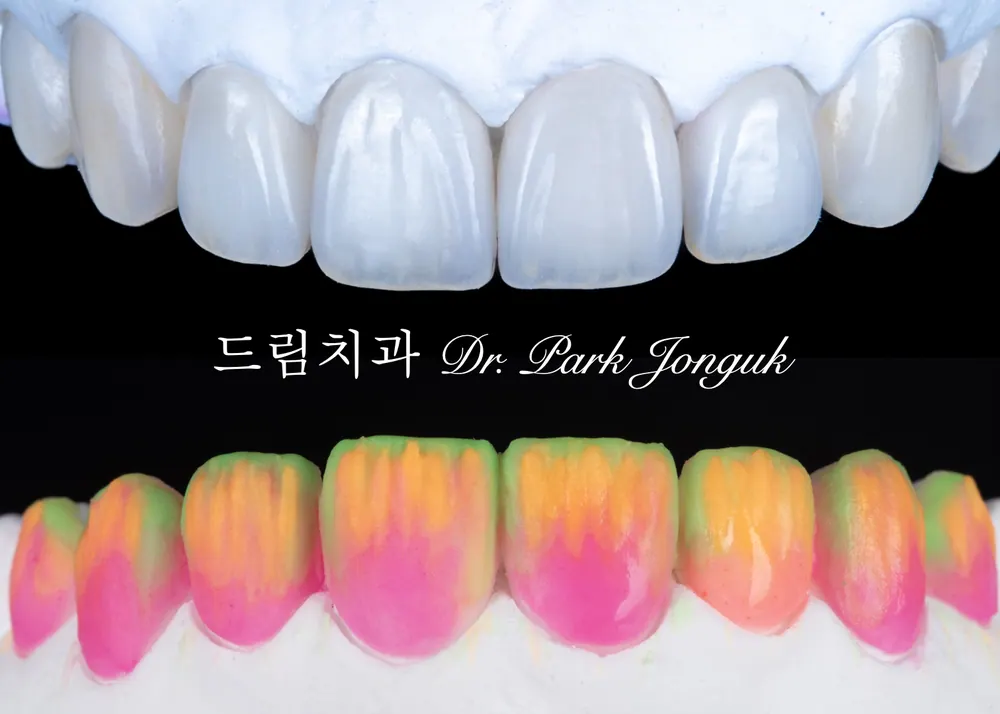
Higher-priced veneers are made using the build-up method.
A skilled ceramic technician builds up multiple types of ceramic layer by layer.
It takes several days. Mass production isn't possible. That's why it's more expensive.
2. Differences in the result
A different fabrication method produces a different result.
The one-day method looks opaque and monotonous. Because it's a single type of ceramic, there's no difference in translucency between areas of the tooth.
There's no color gradation. It looks artificial. It's obvious that it's a veneer.
The build-up method still has real translucency. Multiple types of ceramic are used
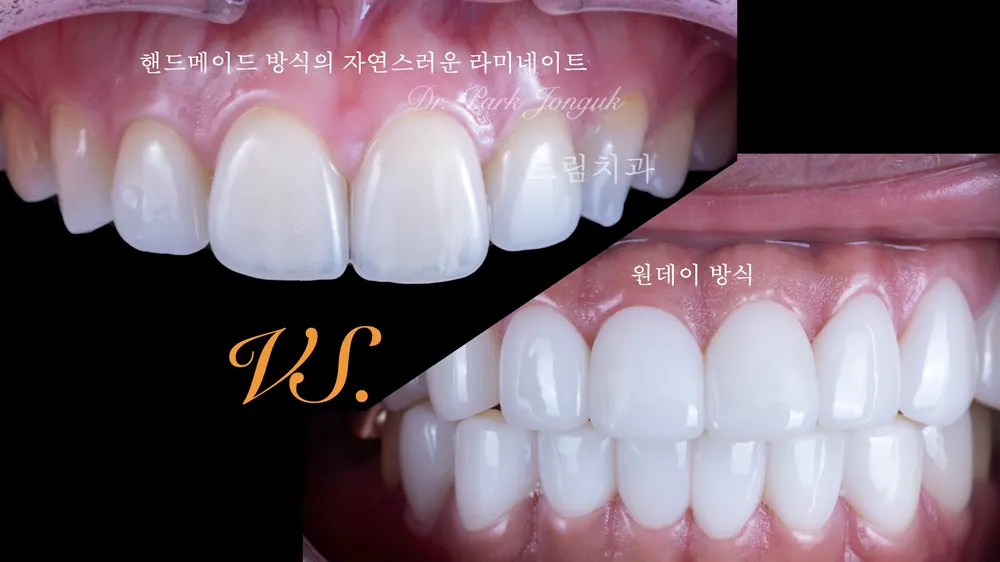
to reproduce the layered structure of a natural tooth.
The color and translucency differ by area. It looks like a natural tooth. It's not obvious that it's a veneer.
3. The technician's skill
With the build-up method, the result depends heavily on the technician's skill.
A skilled technician can reproduce a natural tooth almost perfectly.
They express color, translucency, and even surface texture with great care. There aren't many technicians like this. Naturally, the lab fee is higher.
With the one-day method, by contrast, a machine does the carving, so the technician's skill has little effect on the result. The lab fee is lower.
4. Diagnosis and planning
A good veneer starts with a different kind of diagnosis.
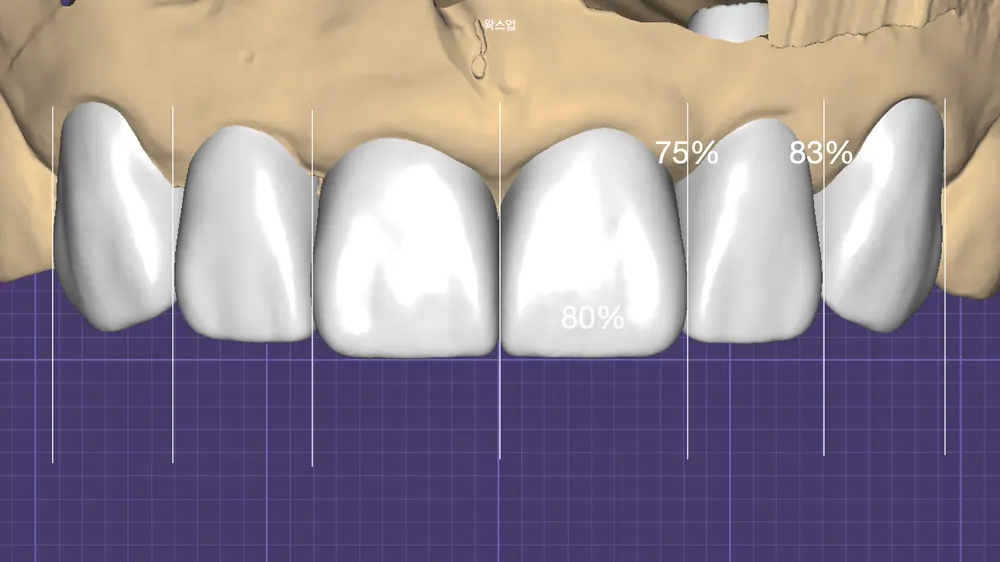
Facial analysis, proportion analysis, wax-up diagnosis, digital simulation.
Going through this process takes time and money. But it delivers a predictable, satisfying result.
Lower-priced veneers often skip this process entirely.
Everything moves quickly. The result can end up different from what you expected.
5. The bonding process
How the veneer is bonded also has a major effect on the result.
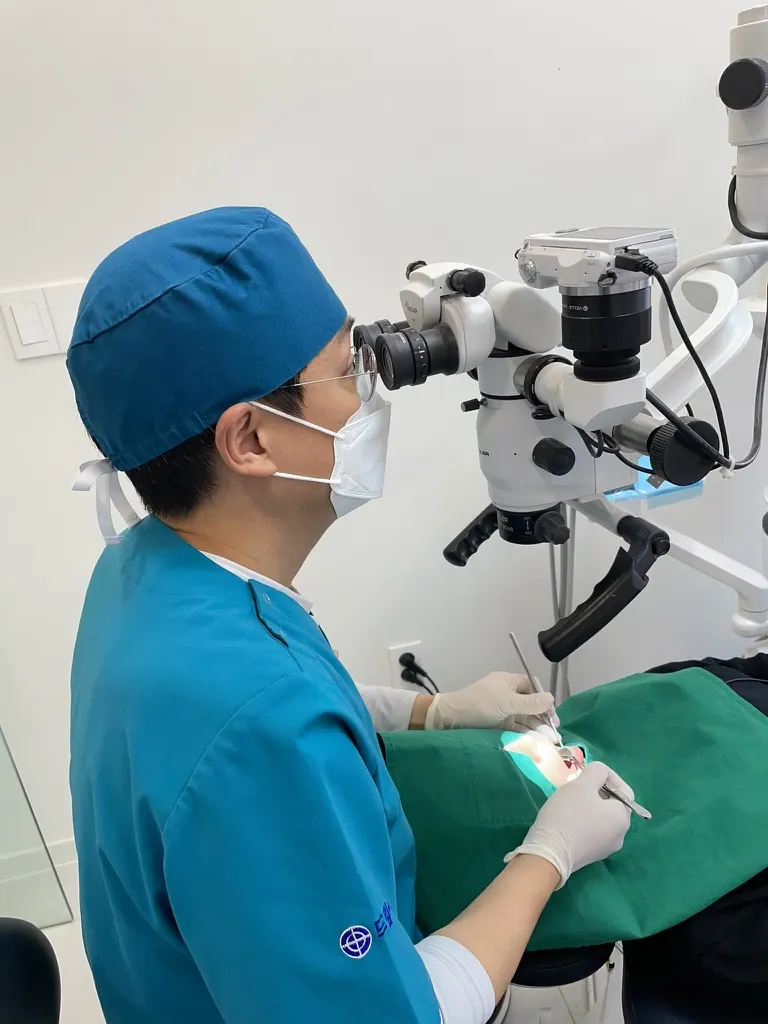
Thorough moisture control, a precise bonding protocol, use of a microscope. Doing this properly takes time.
But it makes the veneer last longer, with no discoloration at the margin.
If this process is cut short to finish quickly, problems can show up later, like the veneer coming loose, discoloring, or causing gum problems.
The hidden cost of a cheap veneer
Retreatment cost
A cheap veneer can look like a good deal at first.
But what happens if you're not happy with the result?
You need retreatment. Something that could have been finished once, if done right the first time, now has to be done twice.
Once you add in the cost of retreatment, it ends up more expensive than doing it properly from the start.
Difference in lifespan
The one-day method can have a relatively shorter lifespan.
That's because it differs in bond strength, fit, and material quality. If you have to redo it again after 5 years, it ends up costing more in the end.
A veneer properly made with the build-up method lasts 10 to 20 years or more. Looked at over the long term, it's actually the more economical option.
Aesthetic dissatisfaction
The biggest reason people get veneers is to have beautiful teeth.
But what if the result looks awkward and artificial? You've spent the money and still aren't satisfied. You lack confidence when you smile.
Smiling with confidence because of beautiful teeth, that value is hard to put a price on.
Does more expensive always mean better?
No, it doesn't.
Expensive doesn't automatically mean good. What matters isn't the price, it's what that cost is actually going toward.
Things you should check
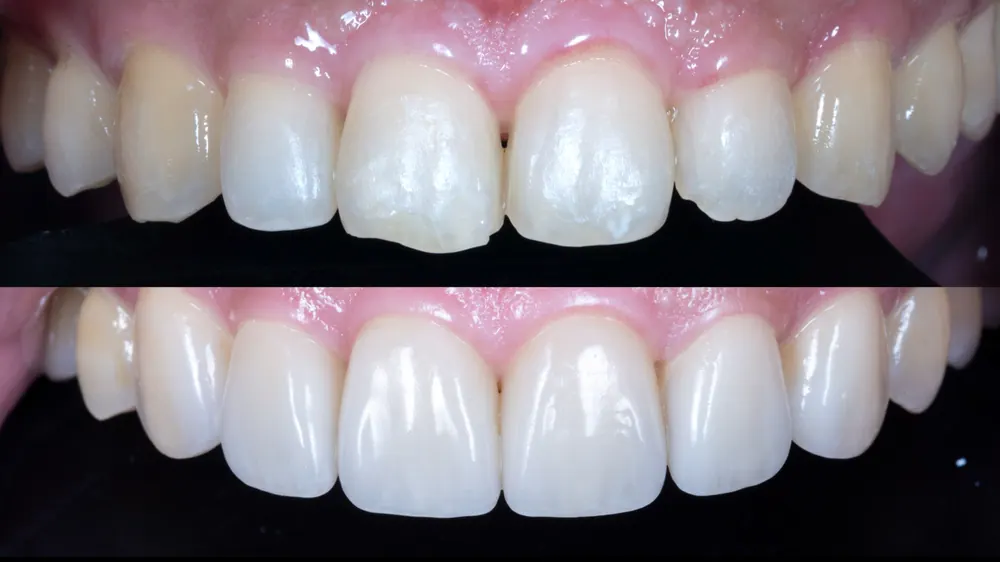
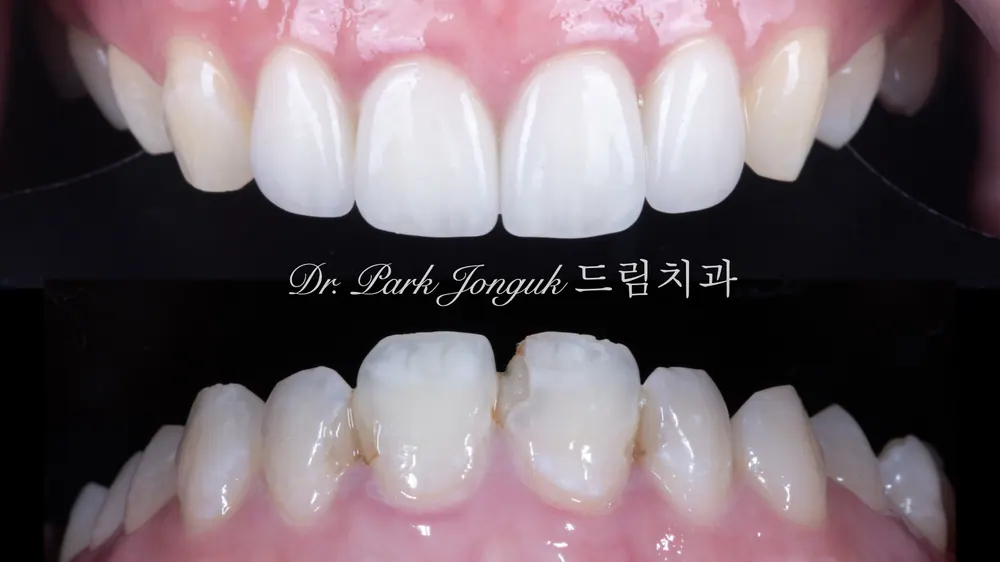
Check whether the fabrication method is build-up or one-day. Check whether there's a diagnosis process. Check whether they show you the expected result in advance with a wax-up. Check whether the technician is experienced. Ask to see photos of actual cases.
Case photos matter
Look at photos of cases actually done at that clinic.
Do they look natural? Is there translucency? Do they harmonize with the surrounding teeth? Is it obvious that they're veneers?
You can judge skill from the photos.
How does Dream Dental Clinic do it?
We use only the build-up method
We don't do the one-day method. A skilled ceramic technician carefully builds it up layer by layer. It takes time, but the result is different.
We carry out a precise diagnosis
We do facial analysis, proportion analysis, and a wax-up diagnosis. We show you the expected result before treatment. We aim for predictable treatment.
We have 20 years of experience
We know what approach produces a good result for which kind of case. We've successfully treated a great many cases.
Look at value, not just price
A veneer is part of your face
A veneer isn't just a dental procedure. It's part of your face that shows every time you smile.
Every time you look in the mirror, take a photo, or meet people. It stays with you for 10 to 20 years or more.
Do it once, and it lasts
A veneer isn't something you get done often. Once it's done, it lasts 10, 20 years.
If it's done properly the first time, you can live satisfied for that whole period. If it's done carelessly the first time, you can live with regret for that whole period.
Think of it as an investment
The cost of a veneer isn't spending, it's an investment.
An investment in confidence. An investment in beauty. An investment in something you'll enjoy for 10 years or more.
Frequently Asked Questions (Q&A)
Q1. Why do veneer prices differ so much between clinics?
A. The biggest reason is the difference in fabrication method. Lower-priced veneers are mostly made with the one-day method, where a machine carves a single ceramic block in 20 to 30 minutes. Higher-priced veneers use the build-up method, where a skilled technician builds up multiple ceramics over several days. Material cost, lab fees, time, and the diagnostic process are all different. They're only called the same "veneer"; they're actually completely different treatments.
Q2. Why are cheap veneers not a good idea?
A. A cheap veneer isn't automatically bad, but there's a reason it's inexpensive. Most are made quickly with the one-day method, so they look opaque and monotonous. They don't look like natural teeth, and it's obvious they're veneers. Also, if the diagnostic process is skipped or the bonding is done carelessly, the lifespan shortens and problems can occur. If you're unhappy with the result and need retreatment, it ends up costing more in the end. Doing it properly the first time is the more economical choice in the long run.
Q3. Does an expensive veneer always mean a good one?
A. No, it doesn't. Expensive doesn't automatically mean good. What matters is where that cost is actually going. Check whether the fabrication method is build-up, whether there's a diagnostic process, whether they show you the expected result in advance with a wax-up, and whether their actual case photos look natural. Rather than the price, looking at photos of cases actually done at that clinic is the most reliable way to judge. Choose a clinic that can show you results with real translucency and a natural look.
This article is based on the actual clinical experience of Director Park Jonguk of Dream Dental Clinic, Apgujeong. He has practiced aesthetic dentistry for 20 years and understands the differences in veneer fabrication methods and quality better than most. He has published Korea's first veneer textbook.
This article is a clinical note written by Dr. Park Jonguk of Dream Dental Clinic, Gangnam; the original was published on his blog. The photographs shown are real cases he treated. Results vary with each patient’s condition, and every procedure carries the possibility of individual variation and side effects.
Quick Consult
Request a Callback
Leave your number and we will call you back during clinic hours.
Request Received
We will contact you during clinic hours. For urgent matters, please call +82-2-3448-0028.