
Aging-Tooth Veneers: You Can Have Young-Looking Teeth Even in Your 50s and 60s
Hello, I am Park Jonguk, director of Dream Dental Clinic in Apgujeong.
Today I want to talk about veneers for aging teeth.
"My face looks young, but my teeth alone look old."
"I'm in my 50s and my teeth are so worn down."
"Can I still get veneers on teeth in my 60s?"
Yes, you can. In fact, it's often exactly what's needed.
We work to prevent facial aging, but what about the aging of teeth?
These days, many people get treatment for facial aging at dermatology clinics.
With lifting, lasers, fillers, and the like, there really are far more people with youthful-looking faces now.
But what about the aging of the teeth?
It can't be prevented.
We have to eat every day, and we have to keep chewing continuously.
Over decades of chewing again and again, the teeth wear down bit by bit.
People whose face looks like it's in the 40s, while their teeth look like they're in the 60s.
People whose aged teeth show through plainly when they smile.
For people like this, aging-tooth veneers are the answer.
What exactly is the problem with tooth aging?
At the core of tooth aging is enamel loss.
Enamel is the outermost layer of the tooth, a hard, semi-translucent protective shell.
Over decades of chewing, this enamel gradually thins.
What happens when the enamel thins?
The dentin underneath shows through, and the tooth turns yellow. The tip of the tooth looks translucent and thin.
Fractures occur even from minor impacts.
This is where the biomimetic theory becomes important.
Once the enamel is gone, the force applied to the tooth is no longer distributed properly.
As stress concentrates in one spot, cracks and fractures gradually grow larger.
This is why aged teeth break down faster.
The principle behind aging-tooth veneers
A veneer is a treatment that restores the enamel that has been lost.
Ceramic has physical properties similar to natural enamel.
Bonding on a veneer is essentially like getting the lost enamel layer back.
There's good news.
Since the enamel has already worn away considerably, there's no need for much tooth reduction.
As long as the alignment is even, this can be done with minimal reduction or no-prep at all. The concept is simply filling the space created by wear with ceramic.
Case 1: A woman in her 60s
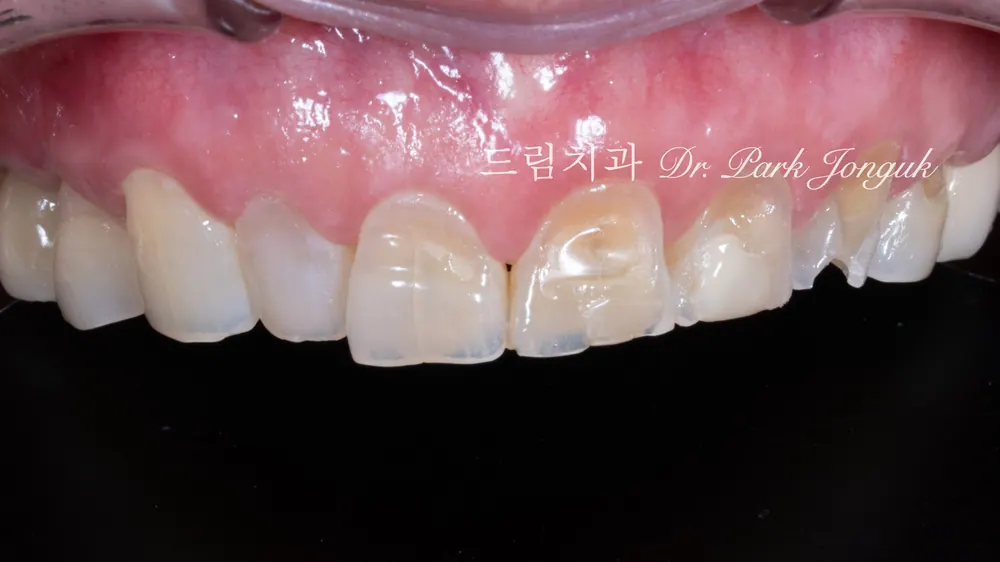
Before treatment
A woman in her 60s came in with concerns about aging and tooth fractures.
On examination, her enamel had nearly disappeared.
Her teeth were badly worn, with fractures in several places. From the perspective of biomimetic theory, this is a natural result.
As the enamel disappeared, the teeth weakened, and as force concentrated on the weakened teeth, more damage occurred.
In cases like this, the enamel needs to be restored quickly. Left untreated, the damage will keep progressing.
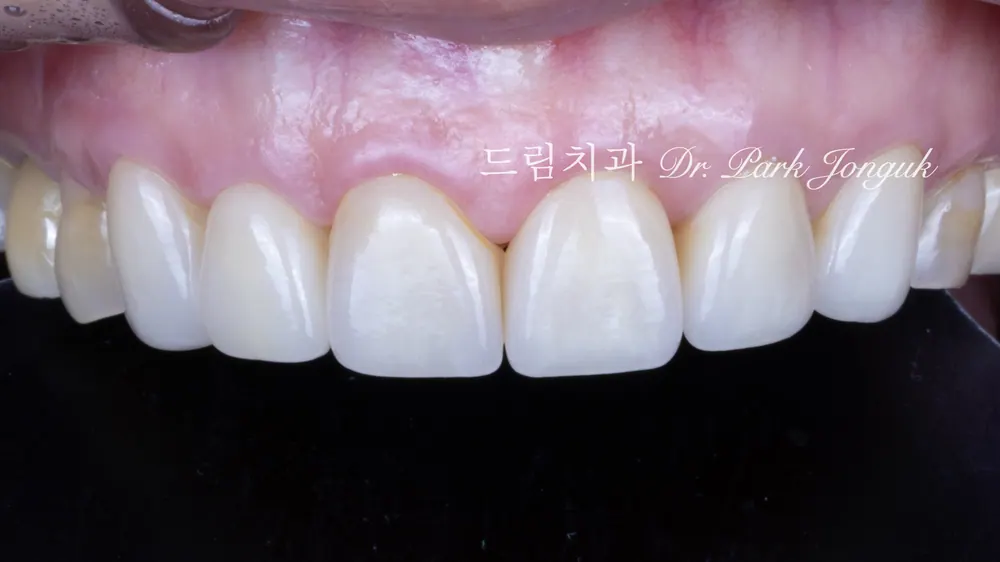
After treatment
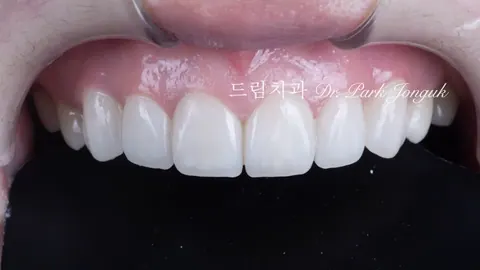
The enamel layer was restored with veneers.
The result was a young, beautiful set of teeth.
The yellowish color brightened. The fractured areas were restored.
Most importantly, the teeth are protected again. Further damage can now be prevented.
Case 2: A man in his 50s
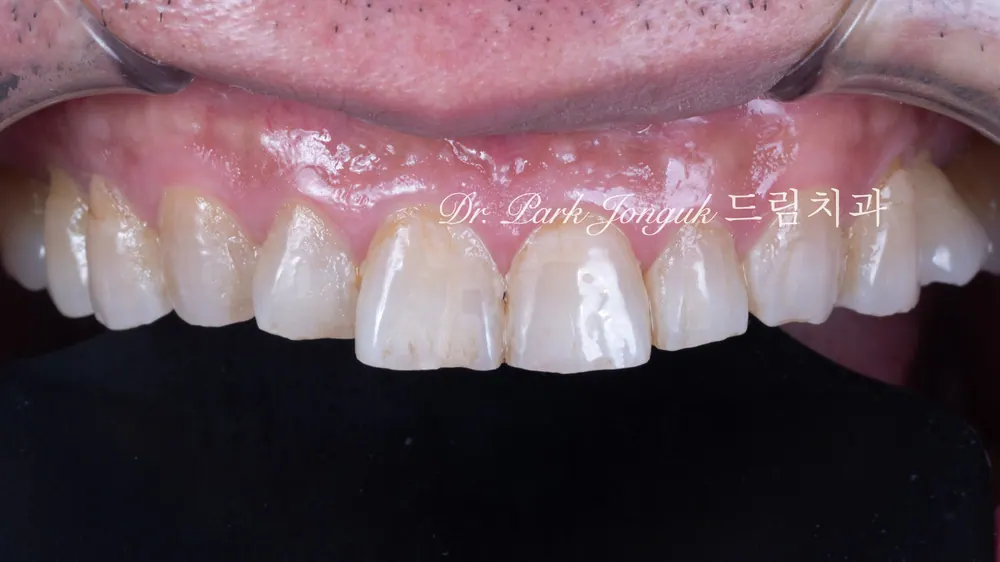
Before treatment
A man in his 50s came in for treatment.
His enamel had thinned considerably. It hadn't broken down severely yet, but
fractures had started to appear at the tips of his teeth.
If left untreated now, it was expected to get as severe as Case 1.
Fortunately, his alignment was even and there was no protrusion, so no-prep veneers were possible.
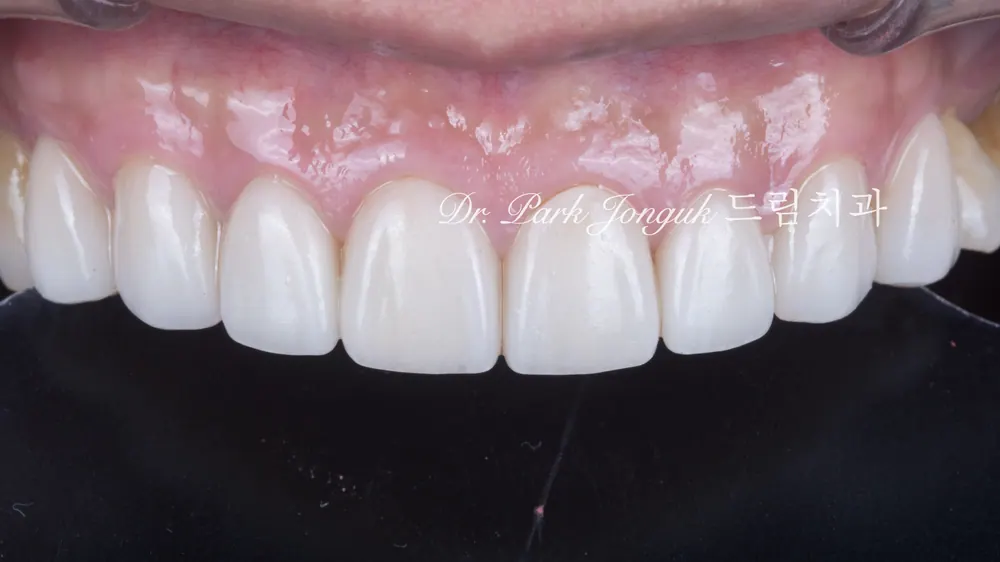
After treatment
The veneers were done with no-prep.
What matters is that it doesn't give itself away.
These aren't teeth that scream "veneer" — white and artificial-looking.
The goal was to protect the teeth naturally.
The result was healthy teeth that look as natural as his own, with the function of the enamel restored.
Case 3: Black triangles caused by aging
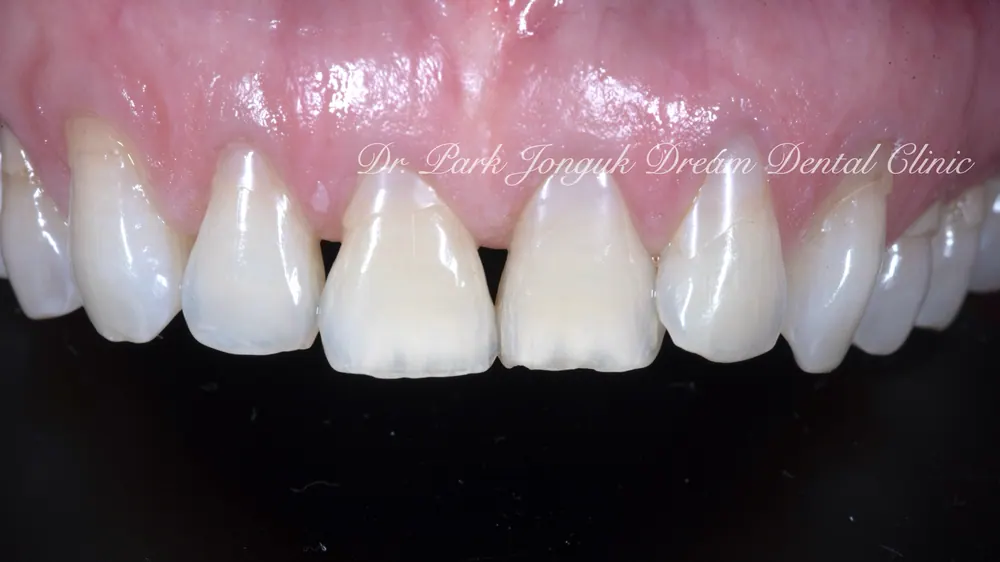
Before treatment
This patient developed black triangles as her gums receded due to aging.
Dark triangular gaps were visible between the teeth. This, too, is part of the aging process.
As the gums recede, the interdental papilla drops, exposing the space between the teeth.
The teeth themselves had also worn down, giving an overall aged impression.
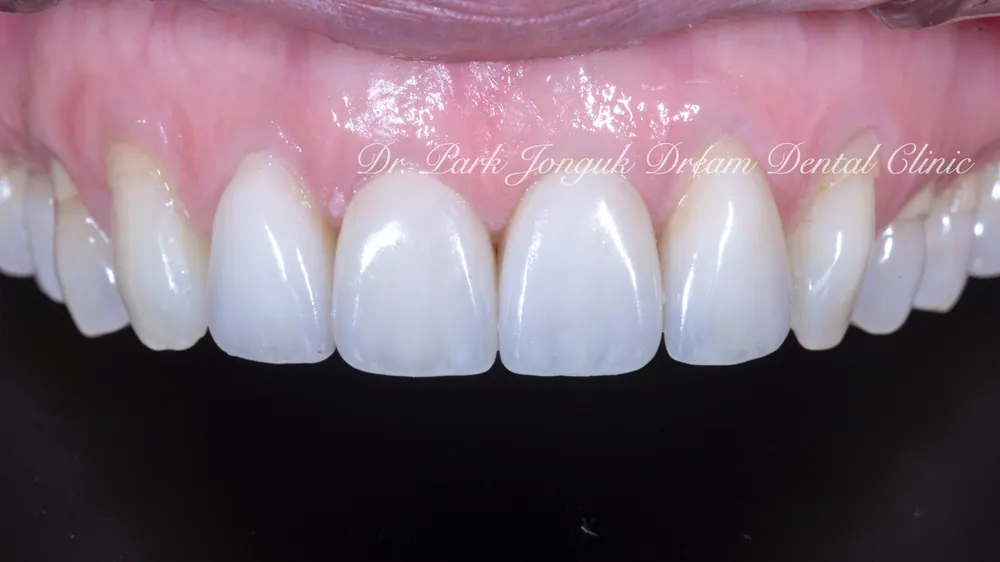
After treatment
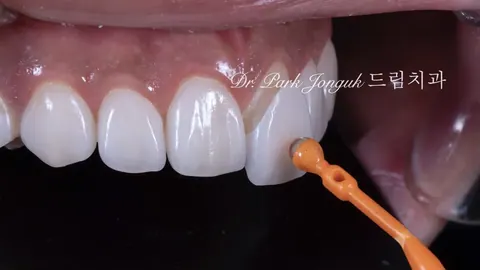
The black triangles were resolved with veneers, resulting in younger-looking teeth.
The gaps between the teeth were filled in. The tooth shape became beautiful. The color also brightened.
The teeth ended up looking about 10 years younger.
Why are veneers needed in your 50s and 60s?
Aesthetic reasons
It shouldn't be the case that your face looks young while your teeth alone look old.
The teeth revealed when you smile determine your overall impression. Young-looking teeth create a young impression.
Functional reasons
According to biomimetic theory, enamel loss is the beginning of tooth breakdown.
Restoring the enamel with veneers can prevent further breakdown. It's prevention, not just treatment.
Minimally invasive treatment is possible
Since the enamel has already worn away, there's no need to reduce the tooth much.
In fact, a more conservative treatment is possible than for younger patients.
Dream Dental Clinic's aging-tooth veneers
Dream Dental Clinic in Apgujeong has performed a great deal of veneer treatment for patients in their 50s and 60s.
With 20 years of experience, we create natural results suited to each age group.
Our goal isn't overly white, artificial-looking teeth, but healthy, beautiful teeth appropriate to the patient's age.
With treatment based on biomimetic theory, we restore both aesthetics and function.
Frequently Asked Questions (Q&A)
Q1. Can people in their 50s and 60s get veneers too?
A. Of course. In fact, it's often exactly the treatment that's needed. When the enamel has worn away and the teeth have weakened, veneers restore the function the enamel used to provide. Since ceramic is simply used to fill the space created by wear, tooth reduction can also be minimized. It's a two-in-one treatment — aesthetically it makes you look younger, and functionally it protects the teeth.
Q2. Do aging-tooth veneers still look natural?
A. Yes, making them look natural is the key. Giving patients in their 50s or 60s teeth as bright white as a 20-something's actually looks awkward. They need to be made with a brightness and translucency appropriate to the patient's age group. At Dream Dental Clinic, we create teeth in colors and shapes tailored to each individual patient, so they look both natural and younger.
Q3. My teeth are very worn down — is it okay to reduce them further?
A. That's a good question. If the enamel has already worn away significantly, it's actually possible to reduce the tooth less, or not at all. That's because the concept is filling the space created by wear with ceramic. If the alignment is even and there's no protrusion, no-prep veneers are also possible. We find the optimal method for you through precise diagnosis.
This article was written based on the actual clinical experience of Dr. Park Jonguk, director of Dream Dental Clinic in Apgujeong. He has practiced aesthetic dentistry for 20 years and has treated many cases of aging-tooth veneers for patients in their 50s and 60s. He has published Korea's first veneer textbook.

This article is a clinical note written by Dr. Park Jonguk of Dream Dental Clinic, Gangnam; the original was published on his blog. The photographs shown are real cases he treated. Results vary with each patient’s condition, and every procedure carries the possibility of individual variation and side effects.
Quick Consult
Request a Callback
Leave your number and we will call you back during clinic hours.
Request Received
We will contact you during clinic hours. For urgent matters, please call +82-2-3448-0028.