
Types of Veneers and the Important Differences in How They're Fabricated
Hello, I am Park Jonguk, Director of Lamista Academy and director of Dream Dental Clinic.
Both patients considering veneer treatment, and
dentists preparing to perform veneer treatment, seem to put a great deal of preparation into it.
A good number of the patients who come to our clinic for a consultation
have already had consultations at many other clinics before arriving.
Some also come after researching extensively online.
Dentists, too, have to study extensively through seminars and books.
Unlike other treatments, dental school
teaches very little about veneers — in fact, I'd guess it's barely taught at all.
A great deal of dental clinical practice can't be handled with what's learned in dental school alone.
There is a great deal that has to keep being learned after graduation, through ongoing lectures and seminars.
This is also why I started Lamista Academy,
and why I published 『최소 삭제를 위한 라미네이트 임상』 (Veneer Clinical Practice for Minimal Tooth Reduction),
so that dentists can
learn about veneers more systematically and provide better care.
Let's first think about what patients absolutely need to know before veneer treatment.
Many clinics advertise things like "our own exclusive veneer material,
our own exclusive veneer method."
Some clinics even go so far as to claim that what they do
isn't a veneer at all, but some entirely different treatment.
The process of changing the shape of a tooth — reshaping a tooth much like reshaping the eyes or nose — is tooth reshaping.
There are two methods of tooth reshaping: laminate veneers and all-ceramic crowns.
An all-ceramic crown covers the entire tooth, while
a laminate veneer bonds a thin piece of ceramic only to the front surface of the tooth.
This laminate veneer is what's shortened to just "veneer."
As a general term for the treatment method, any treatment that goes through this process is a veneer.
Simply giving it a different name doesn't make it a different treatment, and
no particular brand of veneer is somehow uniquely protective of the tooth.
I hope patients aren't misled by some clinics' exaggerated advertising.
Veneers like this can be divided into a few categories based on how the ceramic is fabricated.
1. The one-day method
The method fabricated by computer is called the one-day method.
In more technical terms it's also called the CAD/CAM method, but
most aim to finish treatment in a single day, which is why it's called the one-day method.
It's a method designed and machined entirely by computer,
and because it's fabricated from a single block of ceramic, it also has aesthetic limitations.
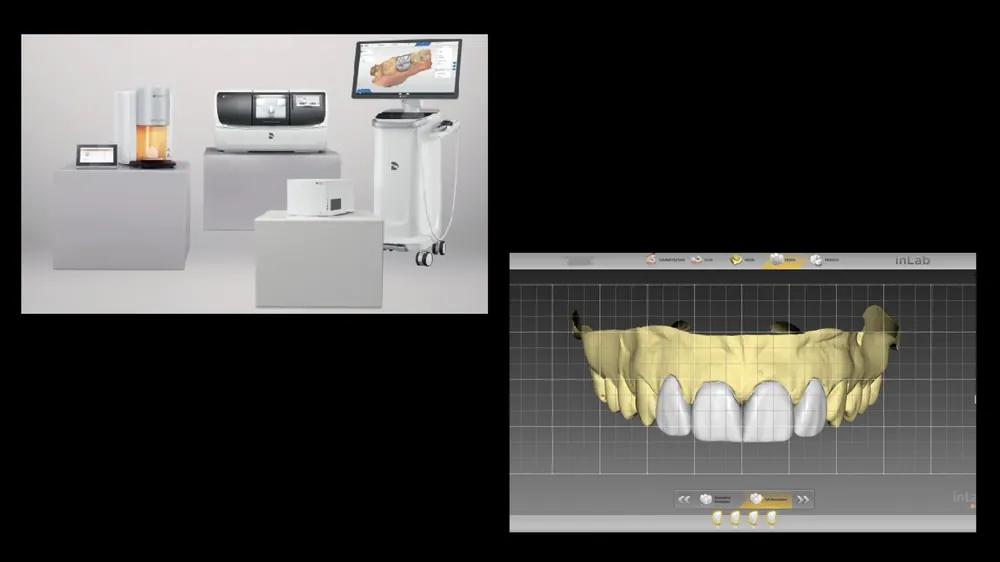
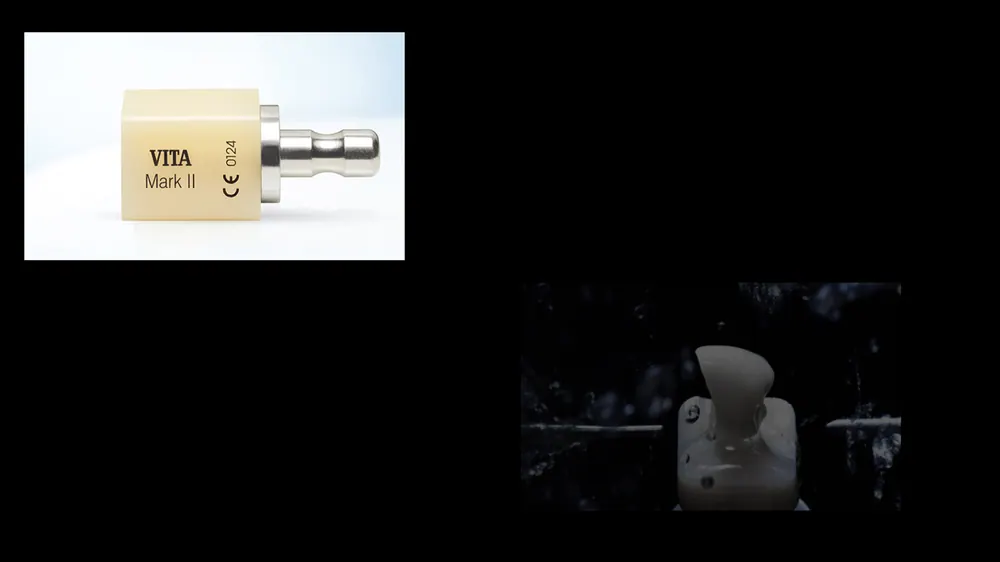
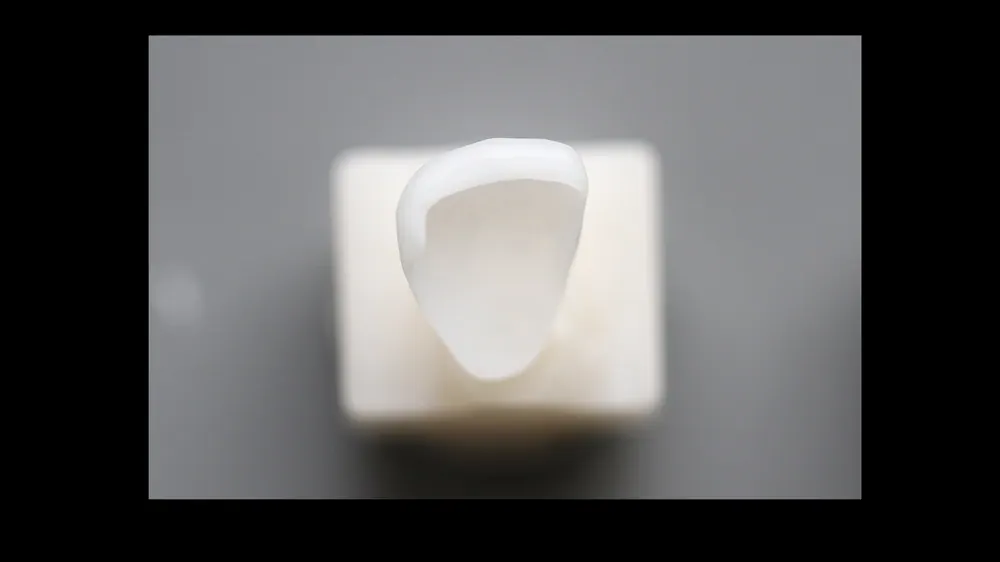
Setting aside whether this method is better or worse,
when used well it allows for mass production, and so
rather than aesthetic results ...
it has become a method for large dental chains to produce veneers quickly, in bulk, and cheaply.
It's a genuinely regrettable situation.
Beyond the commercial side,
veneer treatment is a treatment where aesthetics matter enormously, and
because of this purely commercial approach,
I worry that it's being misused.
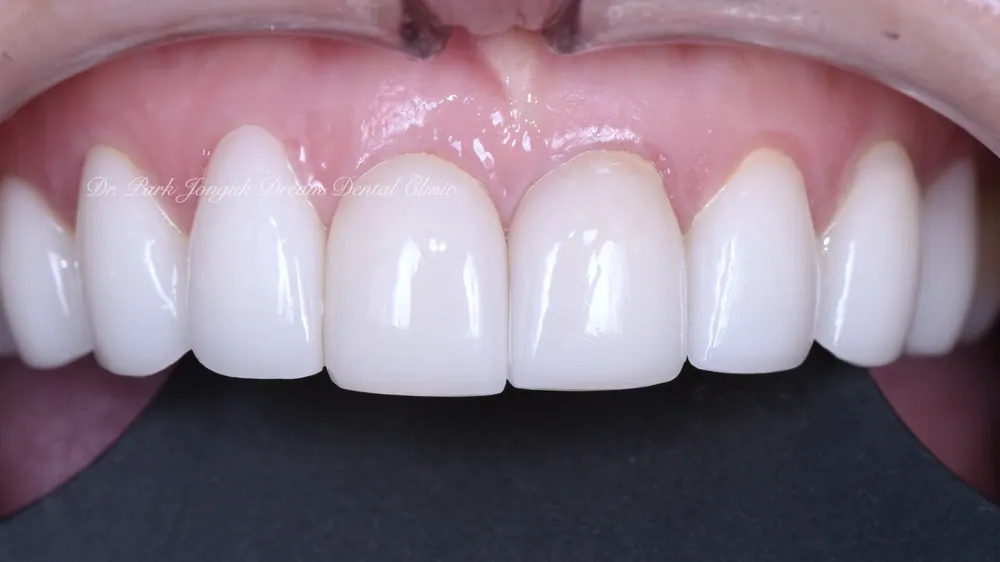
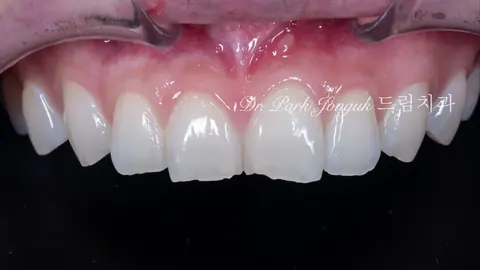
This is one representative result of the one-day method.
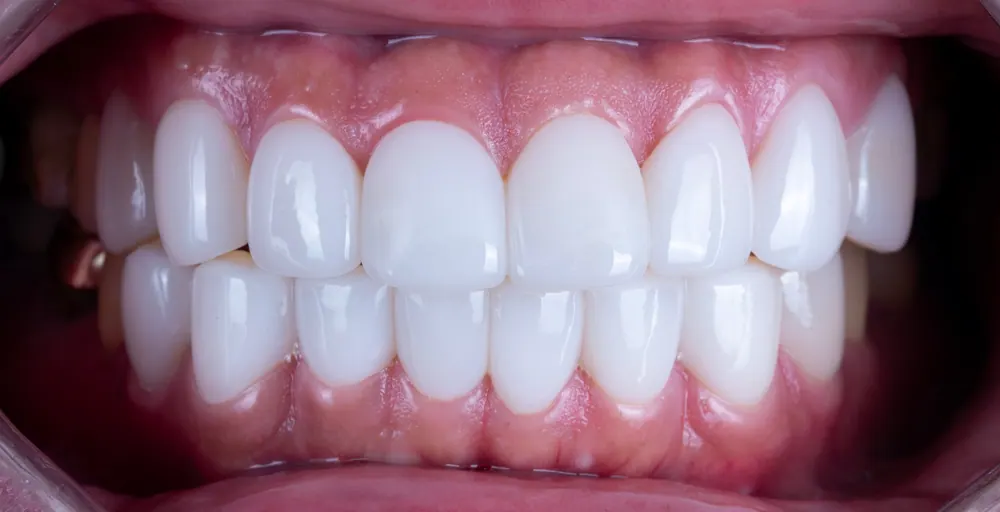
It ends up being a veneer treatment that looks glaringly obvious and unnatural.
Not a single characteristic of a natural tooth is represented, and
simply making it white can't really be called aesthetic.
2. The handmade method
As the name suggests, this is a method where a skilled ceramist makes each piece by hand, one at a time.
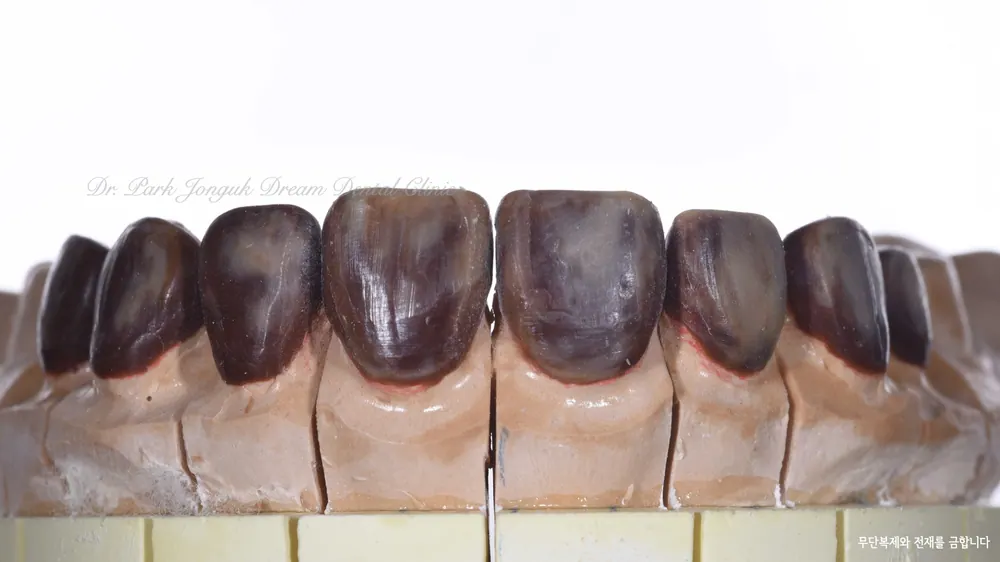
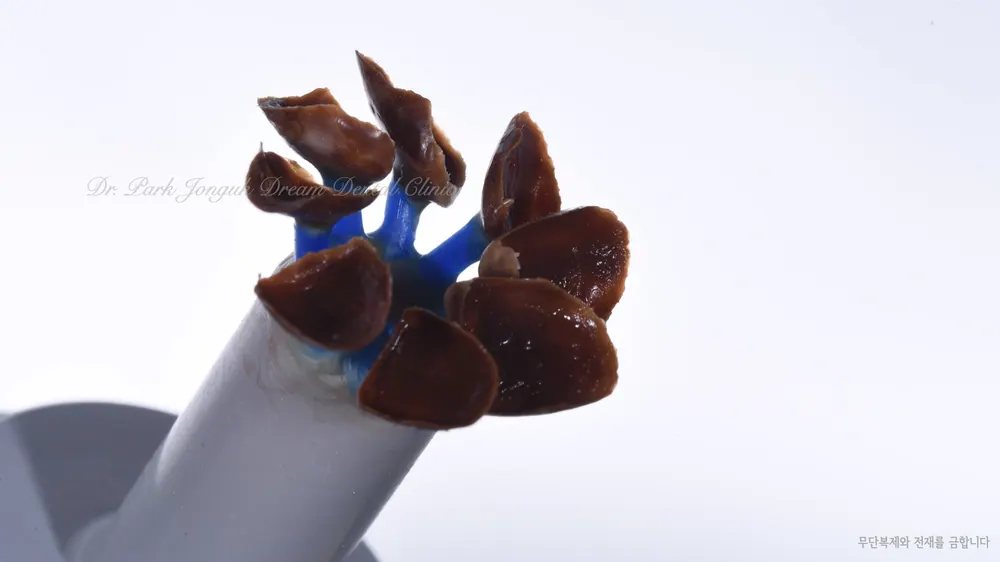
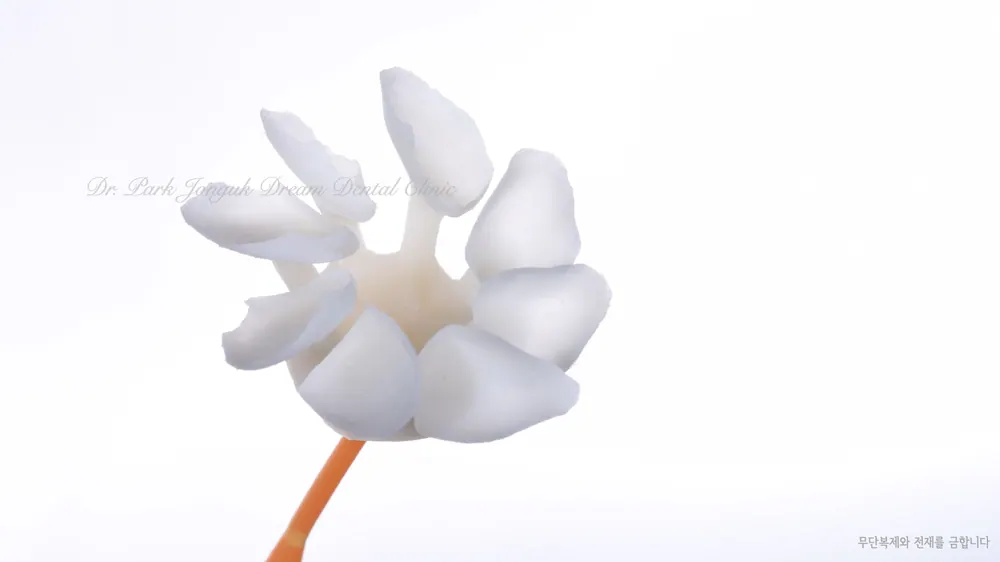
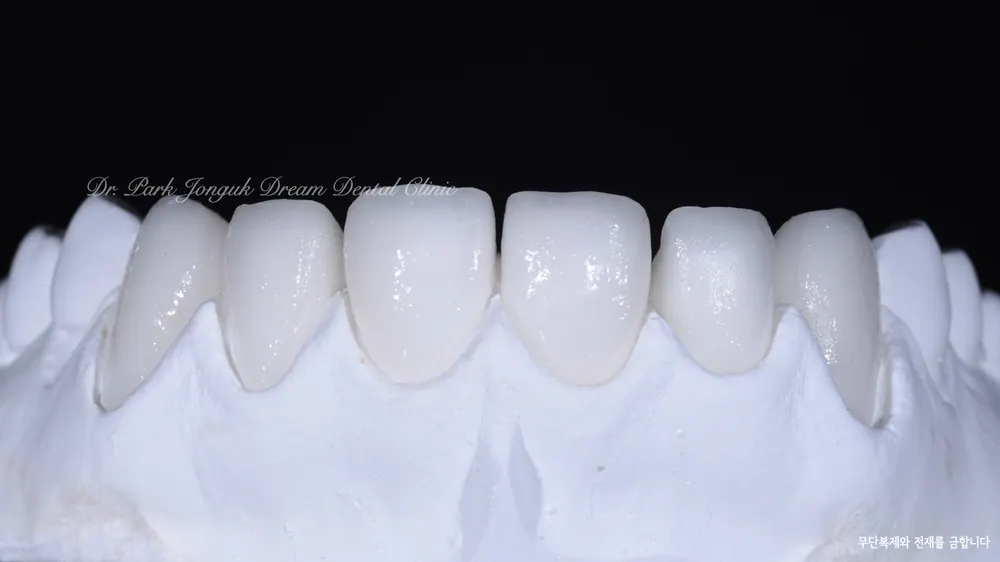
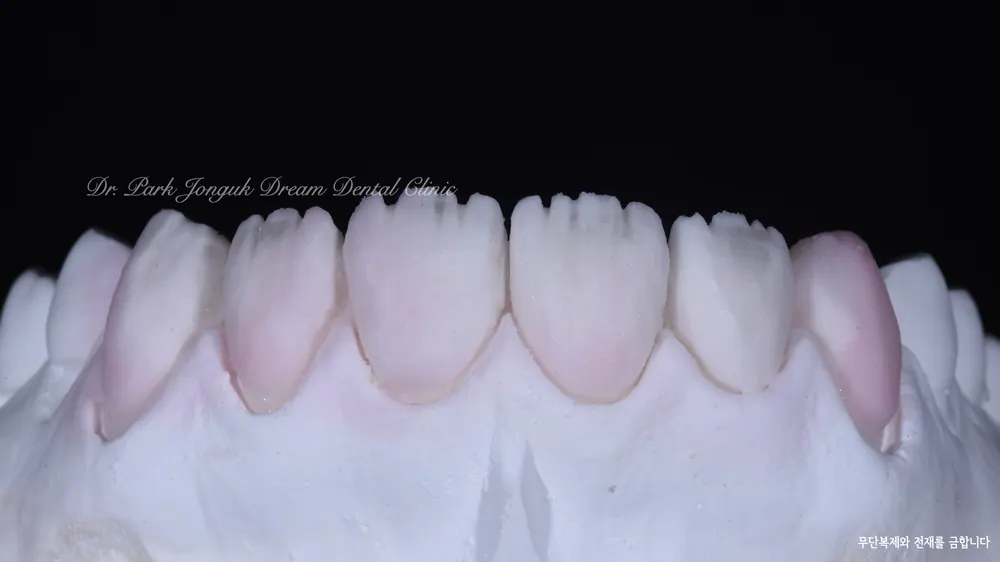
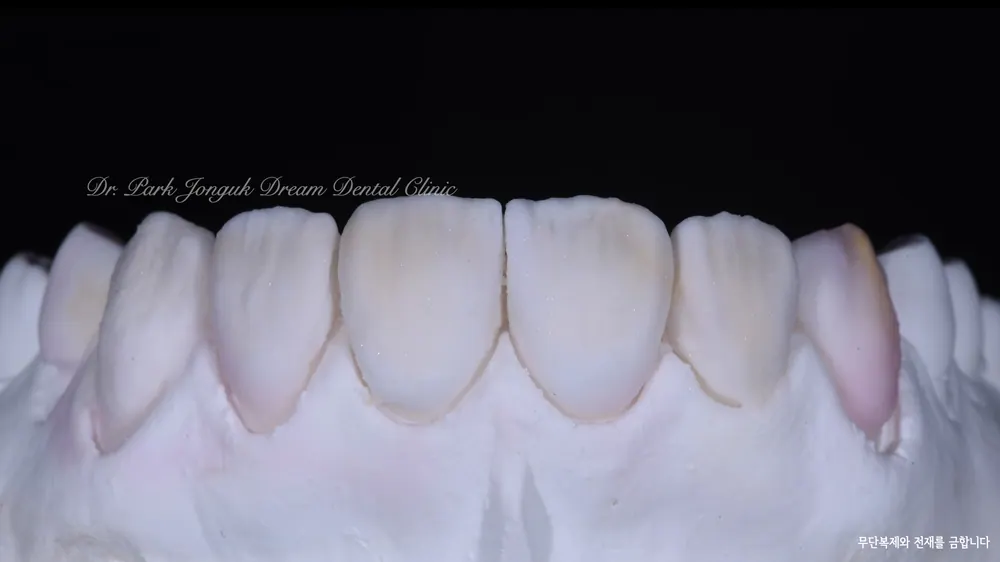
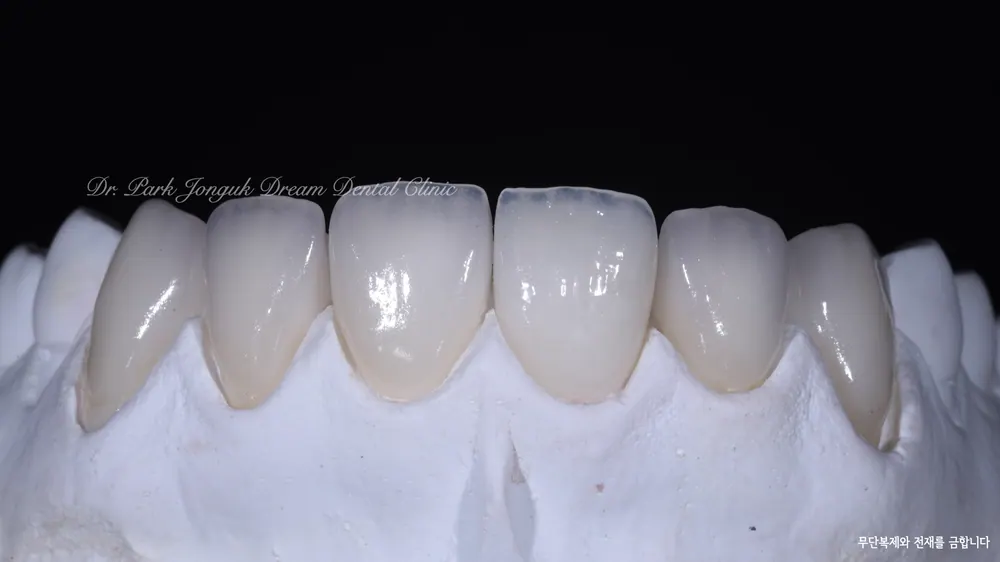
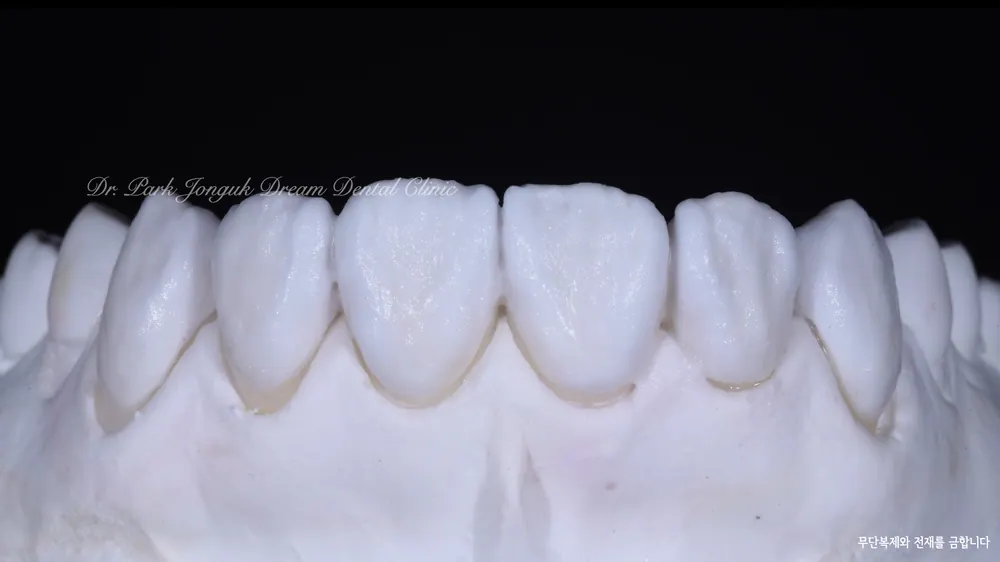
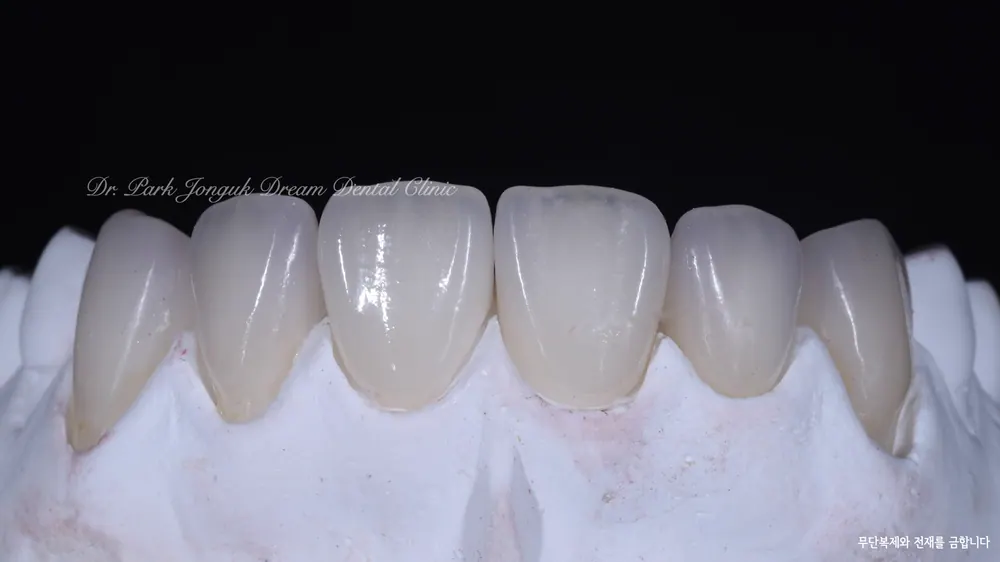
Because it has to go through such a demanding, lengthy process,
mass production is simply not possible with this method.
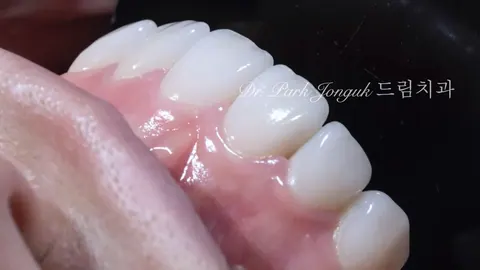
The ceramic is built up in multiple layers,
because a natural tooth isn't made of a single color and translucency —
translucency and color vary from part to part, and this process is meant to reproduce all of those characteristics.
This process of building up ceramic layer by layer during veneer fabrication is called a build-up.
Because it differs from person to person and tooth to tooth,
only by doing each one by hand can the full feel of a natural tooth be brought out.
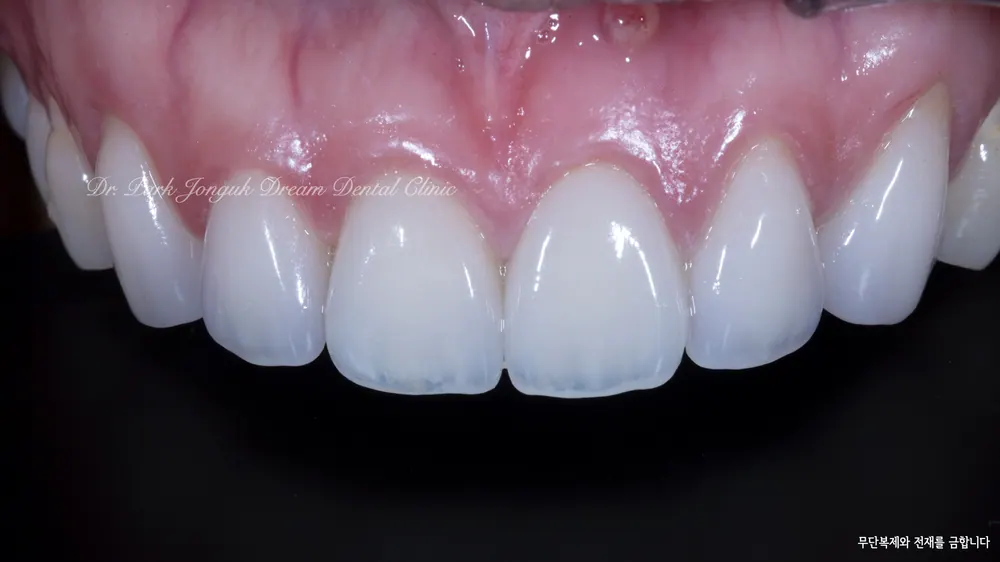
A tooth fabricated this way
is able to express both the color and translucency of a natural tooth.
In this way, the fabrication method produces veneers with a completely different feel.
If you want a white, opaque tooth, the one-day method might work, but
if you want a natural, beautiful tooth,
the build-up process of layering ceramic by hand absolutely has to be part of it.
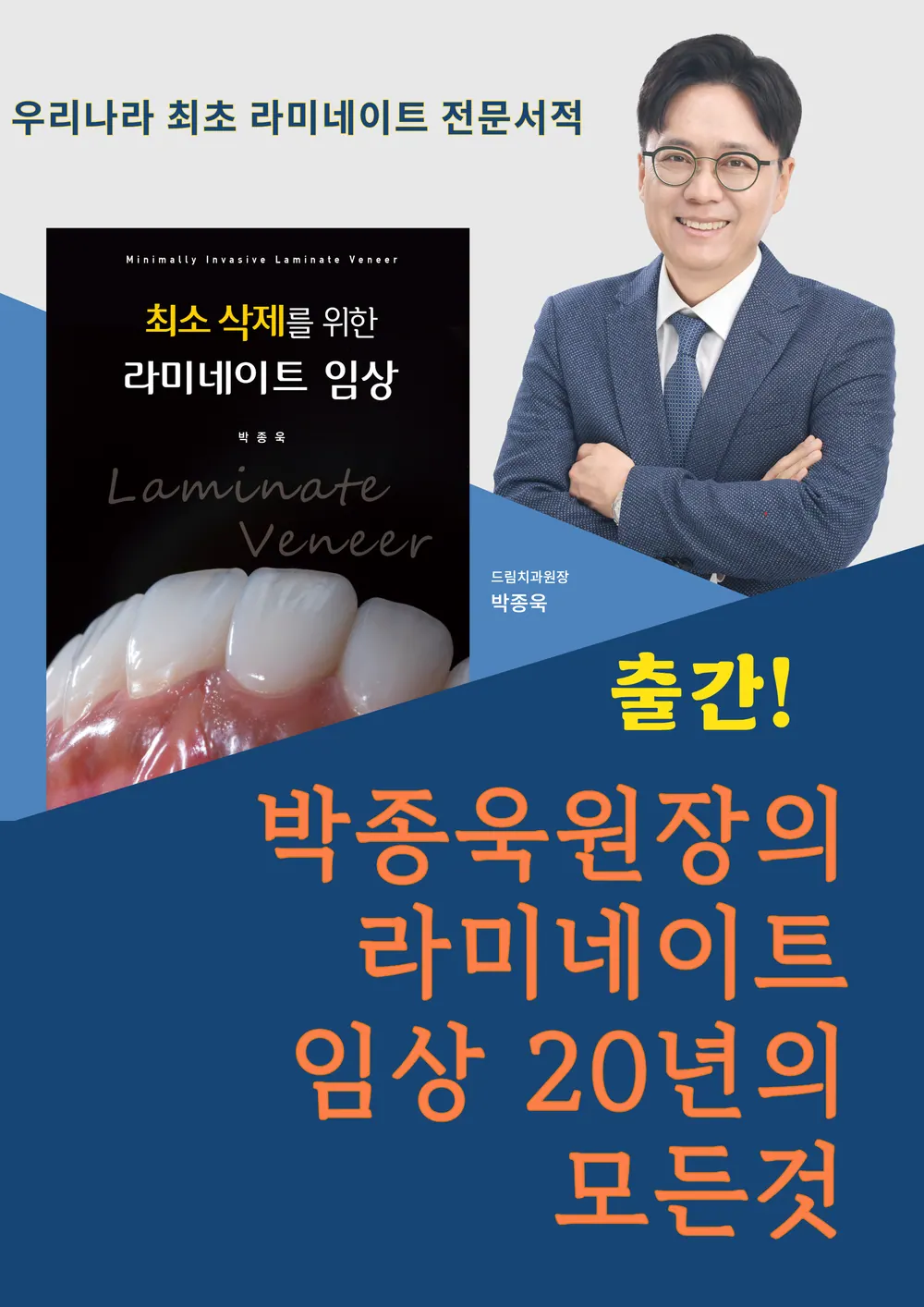
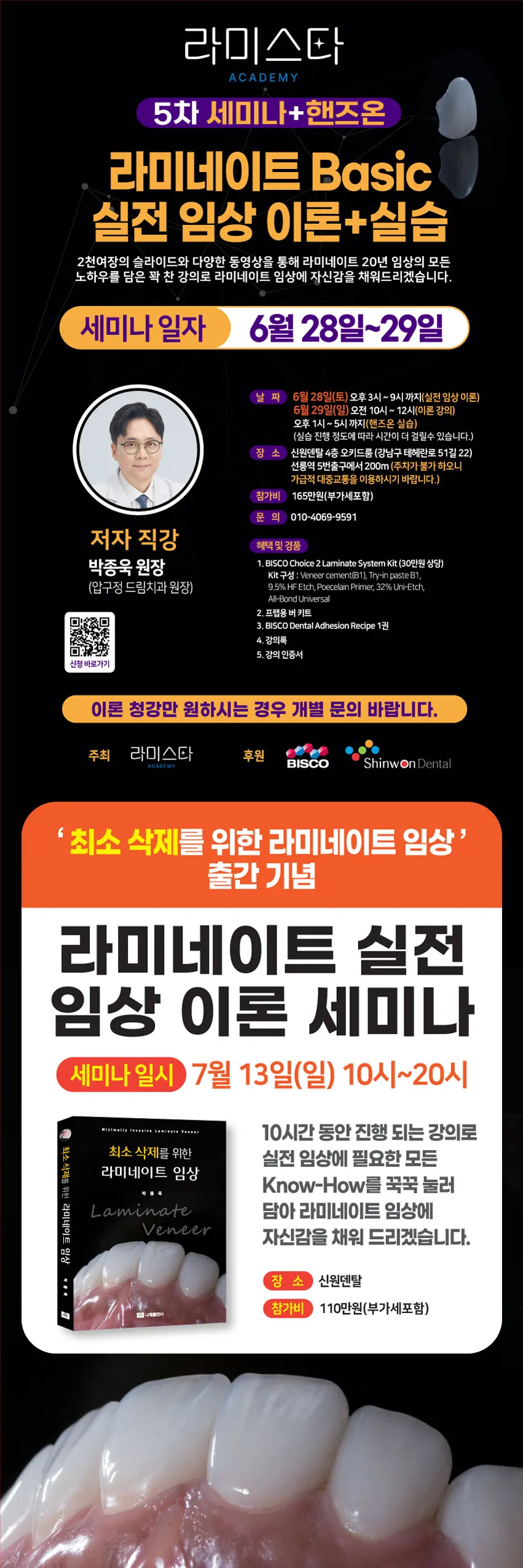
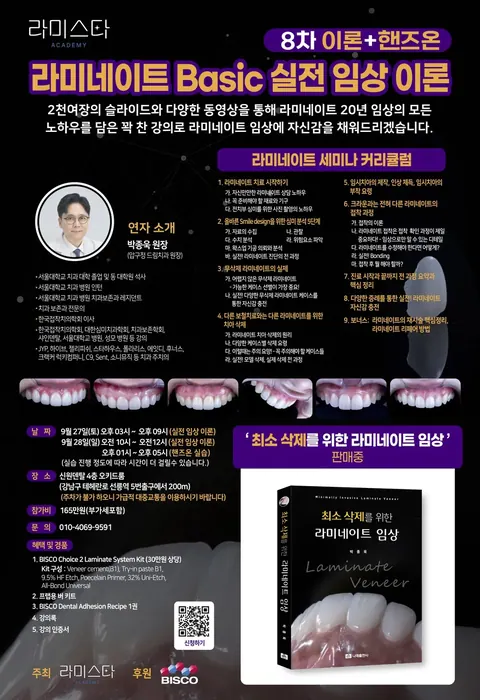
Regarding the publication of the veneer book, and
the seminar — here is the information.
This article is a clinical note written by Dr. Park Jonguk of Dream Dental Clinic, Gangnam; the original was published on his blog. The photographs shown are real cases he treated. Results vary with each patient’s condition, and every procedure carries the possibility of individual variation and side effects.
Quick Consult
Request a Callback
Leave your number and we will call you back during clinic hours.
Request Received
We will contact you during clinic hours. For urgent matters, please call +82-2-3448-0028.