
A Veneer Redo Case
Hello, I'm Park Jonguk, director of Dream Dental Clinic.
These days, advances in science and technology are astonishing.
Artificial intelligence in particular makes me wonder whether it's about to surpass humans...
or, honestly, whether it already has —
that's how fast it's moving.
Looking at AI like ChatGPT
reminds me of Skynet from the movie Terminator that I watched as a kid,
or the countless AIs that appeared in other movies and cartoons.
Seeing things I once only imagined become reality like this
feels amazing, but honestly... it's also more than a little frightening.
This kind of technological progress is enormous in the medical field too.
A great deal of digital technology has made its way into dentistry as well,
and there are more and more cases where treatments that used to be very complex and difficult can now be done simply.
There are always attempts to bring this kind of technology into the esthetic field as well.
The issue is that, because technology develops at a certain pace,
most functional treatments in dentistry
have already shifted to digital methods,
but the esthetic side of things still isn't quite ready to fully move over to digital.
These days many clinics — actually, most clinics — use digital technology
to fabricate veneers or all-ceramic crowns,
but the pros and cons of this are so clear-cut that...
as a result, it's not uncommon to see patients who had veneers done using the same-day method
come back later for a redo.
Redoing veneers is a demanding process in itself,
and since it also has to produce the result the patient actually wants,
the process of fabricating the ceramic is difficult as well.
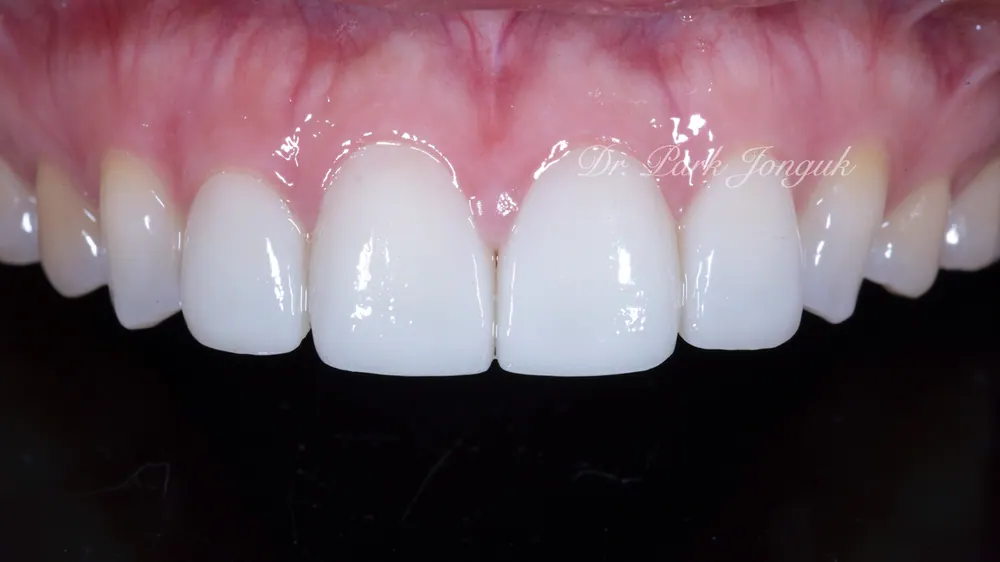
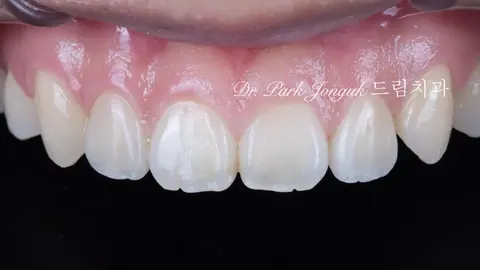
This patient had 4 teeth with veneers.
This is a fairly esthetic and subjective matter,
but the entire set of teeth was a uniform color and quite opaque.
If you happen to like this kind of look,
it's perfectly fine to get treatment made through computer design and machine milling.
It has the advantage of usually being completed within a day, or 2 to 3 days.
This computer-fabricated approach is called the same-day method, or CAD/CAM veneers.
These days, the vast majority of clinics fabricate veneers this way,
and since it's hard for clinics to differentiate themselves, many of them avoid using the word "veneer"
and instead give it their own unique name, as if it were a different treatment.
But it's all just veneers.
"Veneer" is a general term for a type of treatment,
not a brand name.
Each clinic simply comes up with its own fancy-sounding brand name for it.
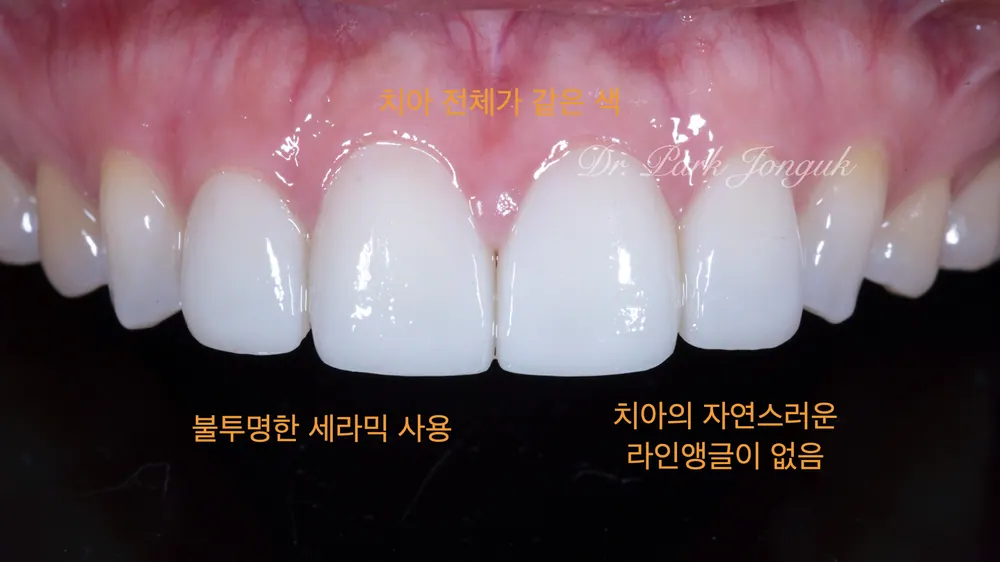
If it's a natural tooth,
and especially a young one, one thing it should naturally have
is a sense of translucency.
Young teeth are translucent because of the properties of the enamel layer,
but as we age, the enamel layer thins out,
and that translucent quality fades away.
Natural teeth also have a sense of three-dimensionality.
One characteristic of computer-made, same-day veneers
is that they lack this three-dimensionality.
Actually, right after being fabricated by the computer, they do have some three-dimensionality.
The problem is that they come out too thick.
Since there's a technical limit to how thin they can be made,
in most cases the milled veneer ceramic
has to be ground down by hand to make it thinner.
In this process, the three-dimensionality and shape created by the computer are largely lost,
and because everything has to be finished in a single day, the hand-grinding is rushed and excessive,
leaving the result flat, dull, and awkward-looking.
Of course, some patients do like this look,
so it's hard to call it a problem outright.
The patient above disliked how opaque and uniformly colored the teeth were,
and how flat they felt, and decided to have the veneers redone.
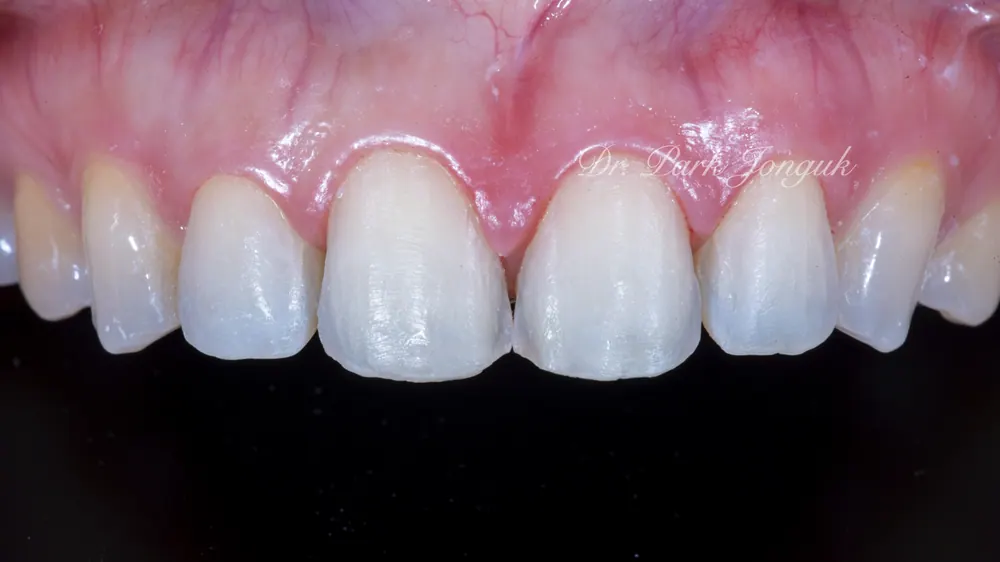
First, the veneers are removed.
If this isn't done carefully, the tooth can easily be damaged.
Using a laser makes it possible to minimize damage to the tooth.
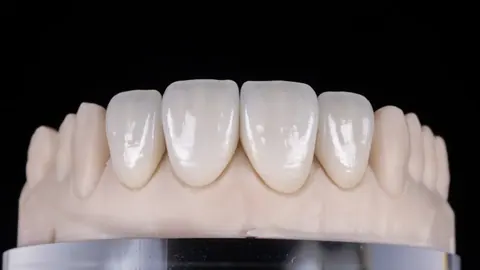
The way we fabricate veneers
is by hand, in the hands of a ceramist who specializes in ceramics.
Layer by layer, as if recreating the structure of a natural tooth,
the ceramic is built up one layer at a time.
Please refer to the link below for the difference from the digital fabrication method.
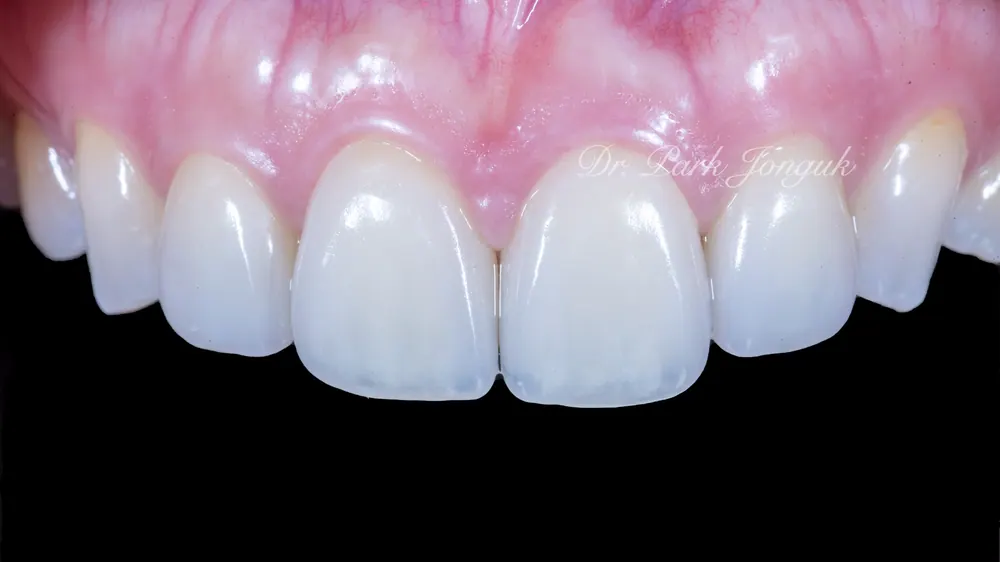
In this way, the veneer redo was completed.
It brought out a translucent yet natural sense of three-dimensionality,
and color was applied to each part of the tooth just as it would appear naturally.
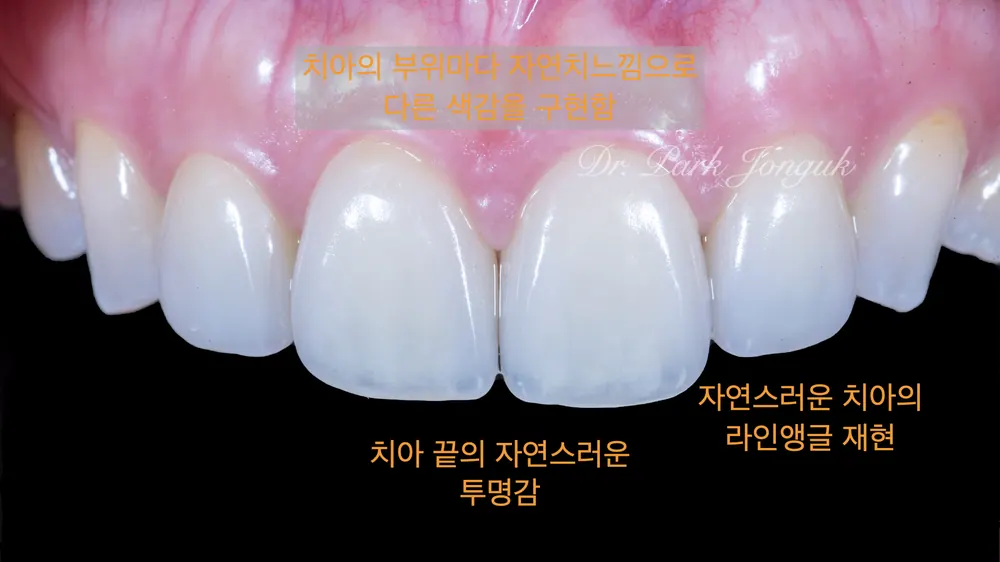
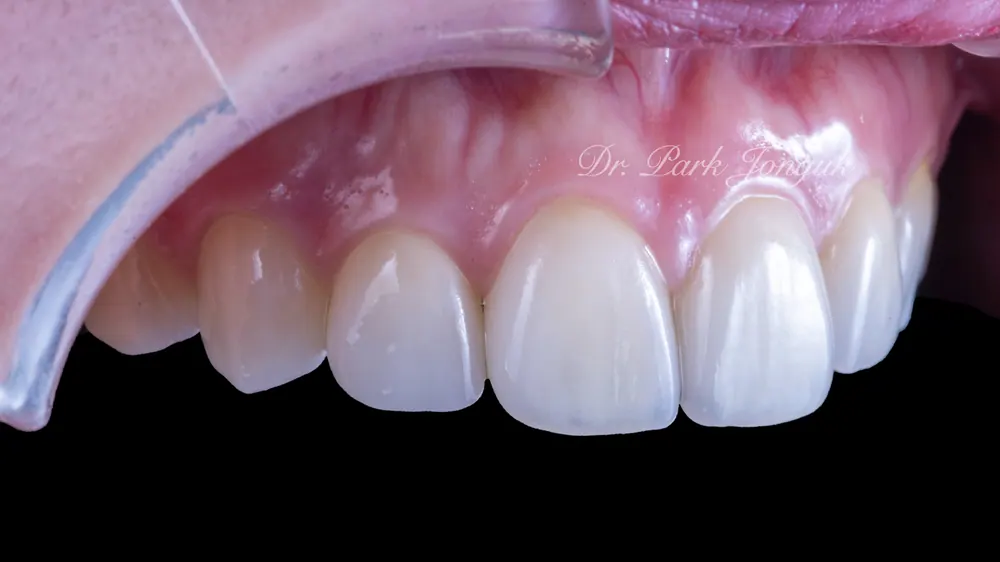
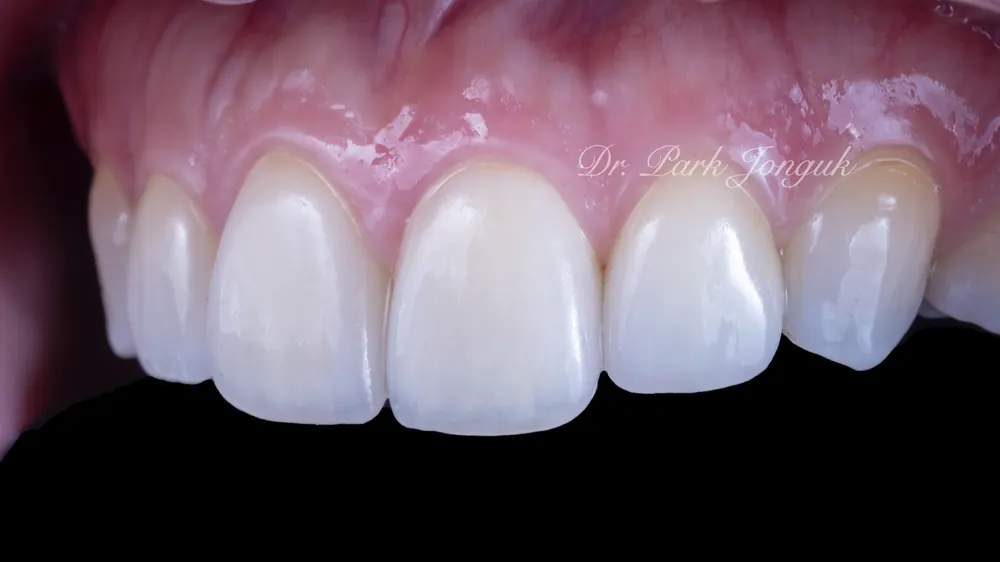
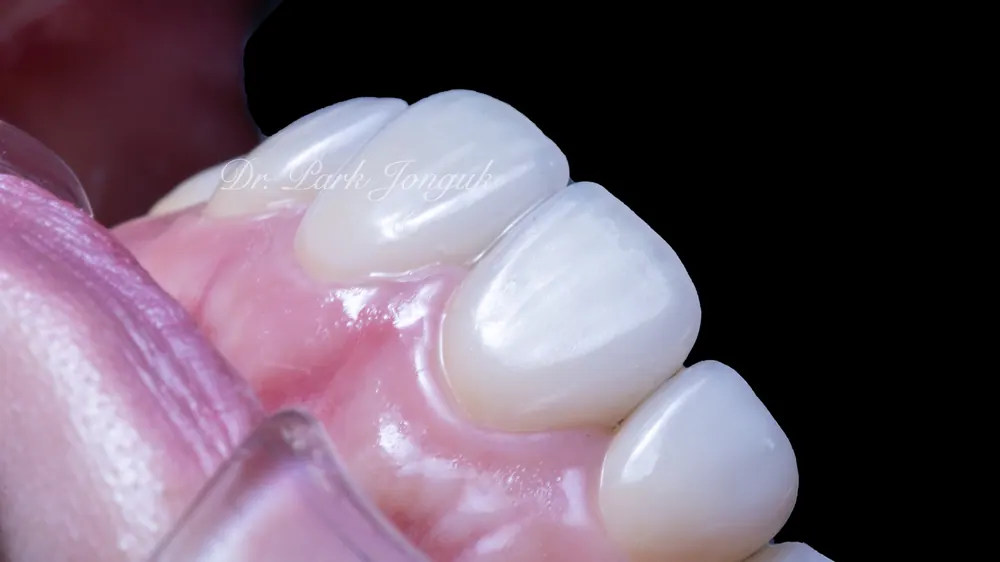
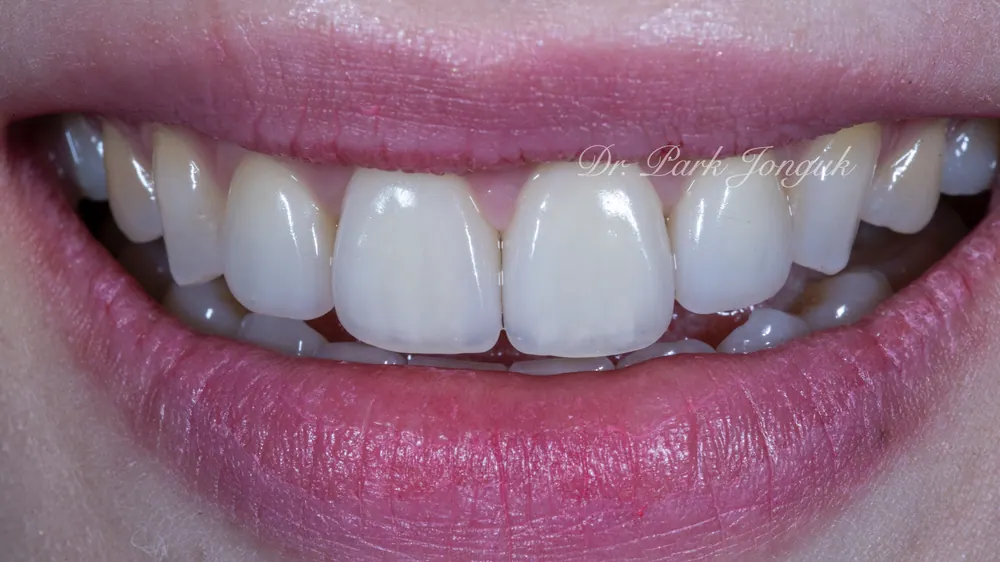
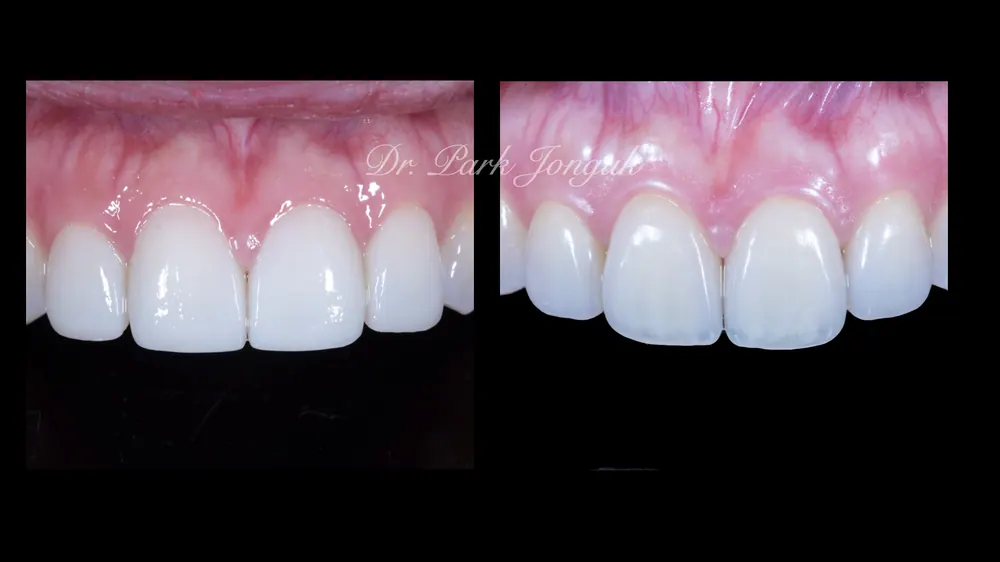
Comparing the before-and-after photos of the veneer redo,
you can really see what a natural tooth feel actually looks like.
If you compare it to clothing, the computer-made method feels, in a way, like a mass-produced fast-fashion brand,
while the handmade method is like a luxury piece crafted stitch by stitch by an artisan.
Since 2006, Dream Dental Clinic
This article is a clinical note written by Dr. Park Jonguk of Dream Dental Clinic, Gangnam; the original was published on his blog. The photographs shown are real cases he treated. Results vary with each patient’s condition, and every procedure carries the possibility of individual variation and side effects.
Quick Consult
Request a Callback
Leave your number and we will call you back during clinic hours.
Request Received
We will contact you during clinic hours. For urgent matters, please call +82-2-3448-0028.