
A Skilled Veneer Clinic: Front-Teeth Veneer Treatment for Tetracycline and Other Drug-Induced Discoloration
Hello. I'm Park Jonguk, head of Dream Dental Clinic, a skilled veneer clinic.
Taking tetracycline-class antibiotics at a young age
causes permanent dark discoloration of the teeth.
Beyond this, due to other medications or illnesses,
there are also cases where multiple teeth become discolored.
These days, tetracycline isn't prescribed to young children anymore, so this issue doesn't come up.
But because it used to be prescribed quite frequently in the past,
there are still quite a few people with this kind of discoloration.
Beyond this, conditions like fluorosis, bile duct abnormalities, alkaptonuria, and porphyria
are among the illnesses that can discolor multiple teeth at once.
Whatever the cause, there are two treatment options: teeth whitening and veneers.
The problem is that this kind of discoloration starts deep within the tooth
and, since it's an intrinsic discoloration rather than surface staining,
whitening has almost no effect.
That's why most patients end up receiving front-teeth veneer treatment.
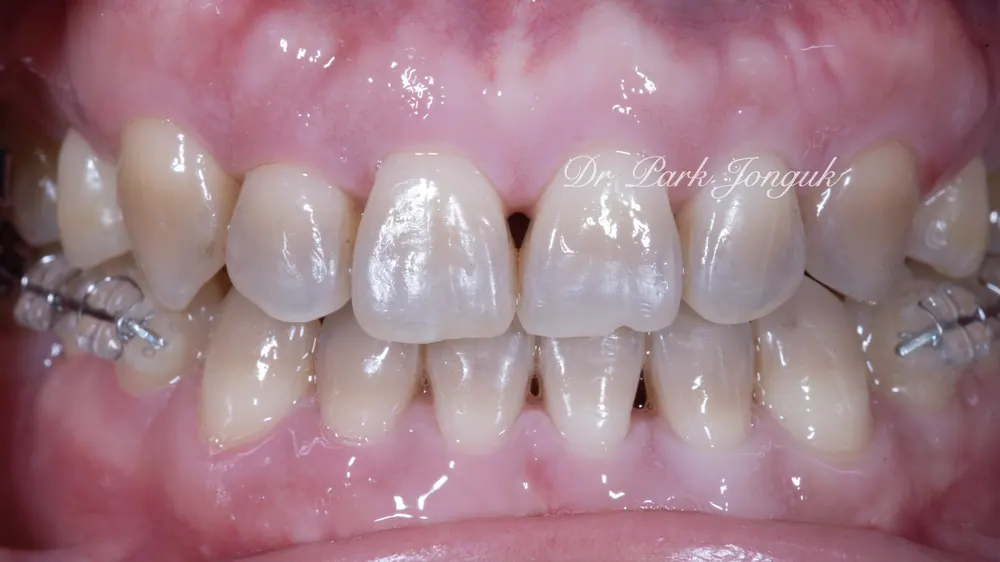
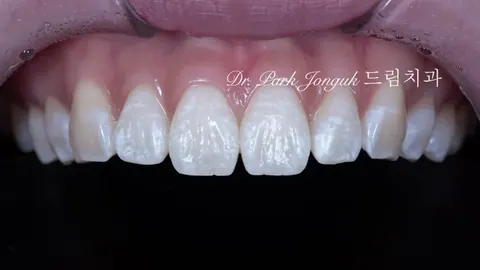
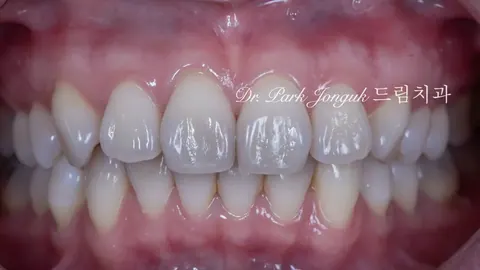
This is a typical appearance of tetracycline discoloration.
Dark brown bands have formed,
and all the front teeth are discolored to about the same degree.
For a case like this, no matter how good the alignment is or how small the teeth are,
some reduction is usually necessary.
The ceramic needs a certain minimum thickness
to be able to cover the tooth color and brighten it.
According to the tooth-brightness guide we generally use at our clinic,
it's said that 0.1mm of thickness is needed to brighten a tooth by one shade,
but a case like this requires even more than that.
Fortunately, since the patient had already had orthodontic treatment and had well-aligned, relatively small teeth,
the front-teeth veneers could be used more effectively
to cover the discoloration.
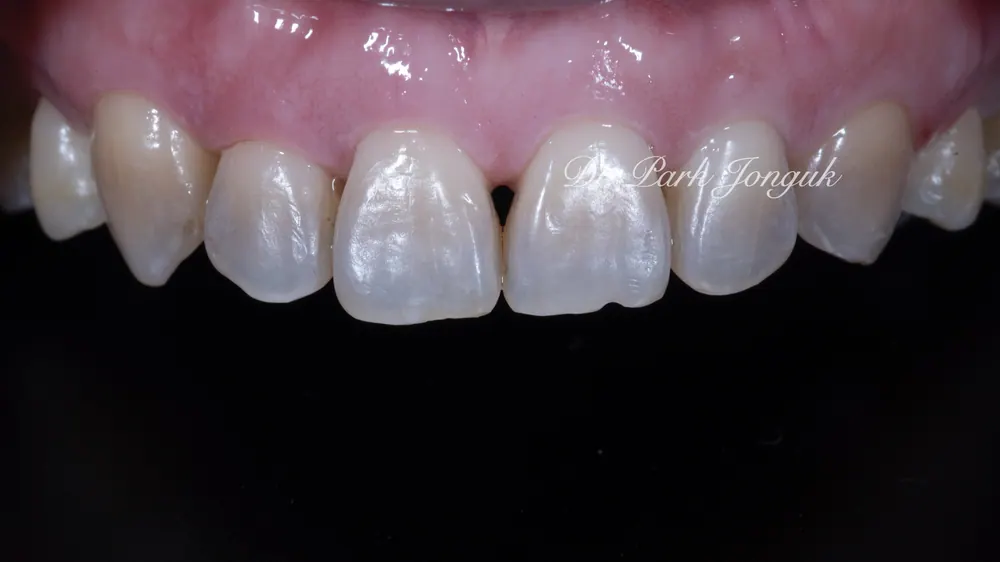
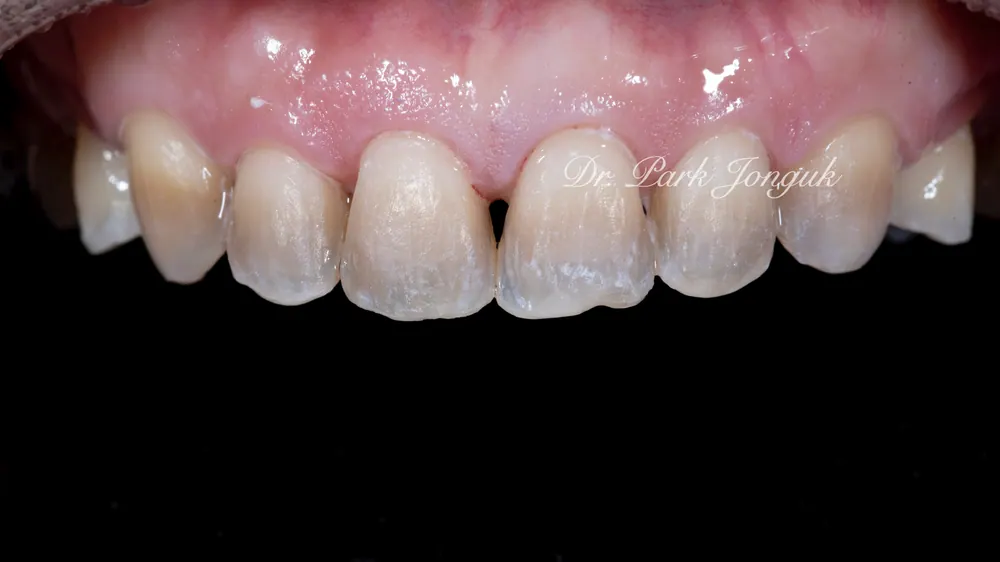
The more the tooth is reduced, the more the brown tooth color
stands out even more prominently.
So reducing more than necessary doesn't actually help in this situation.
Since there were black triangles as well,
we decided to address that esthetic issue at the same time.
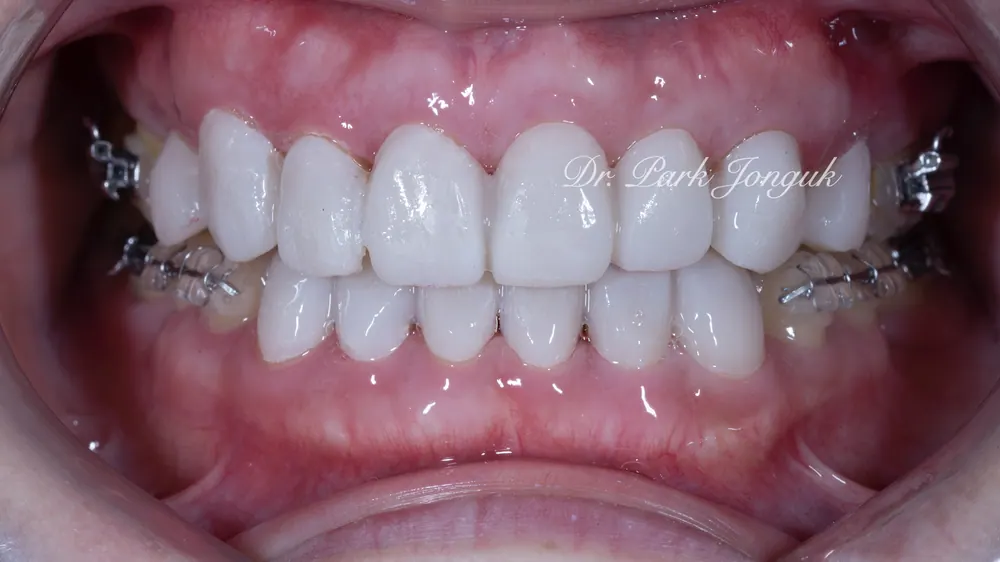
Using temporary teeth,
we assess the shape of the teeth.
The material used for temporary teeth is called resin,
and since this material is close to opaque,
it effectively covers the tooth color.
Ceramic comes in varying degrees of translucency,
and a case like this requires using an opaque ceramic.
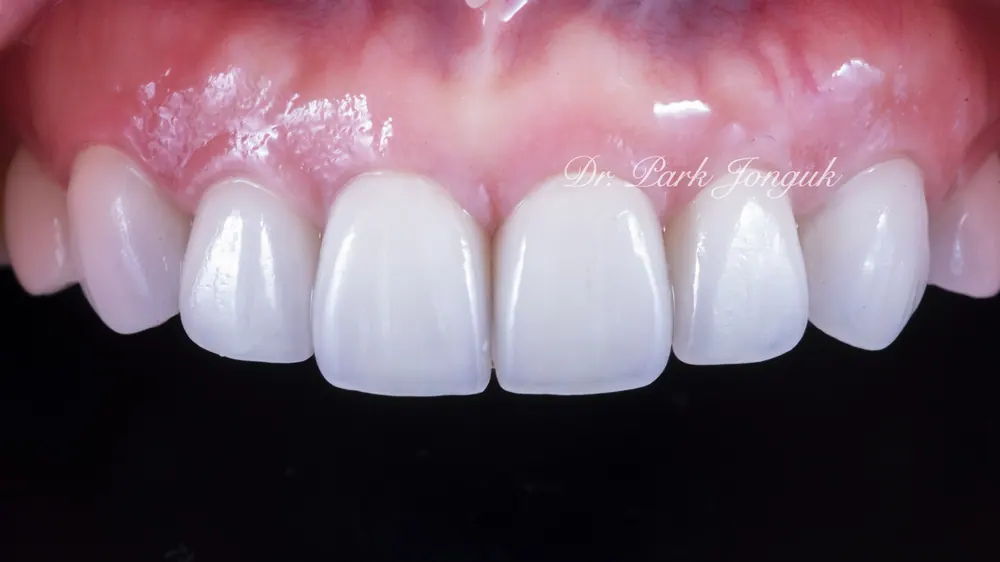
Balancing opacity with a translucent look is quite a difficult case.
Since covering the tooth color has to come first,
an opaque ceramic is layered as a base,
another opaque layer is added on top of that,
and a translucent layer is added last.
Using a variety of ceramics
and building it up in multiple layers is the only way
to prevent the result from looking awkward and artificial.
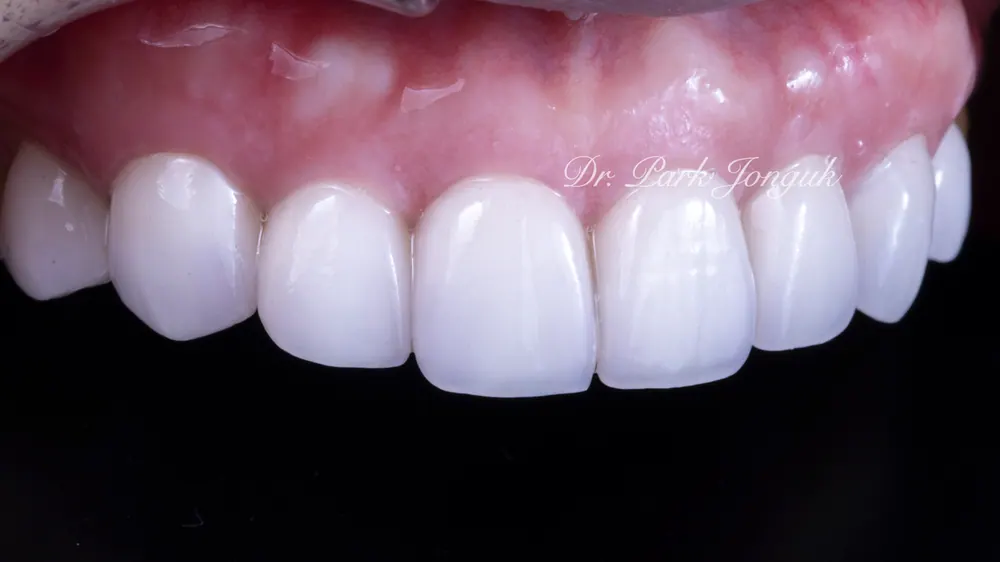
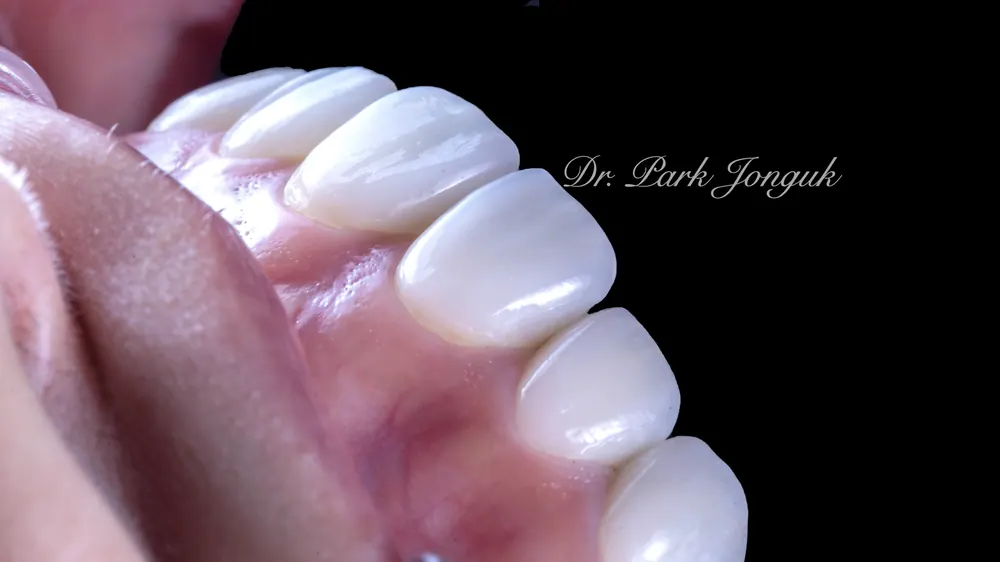
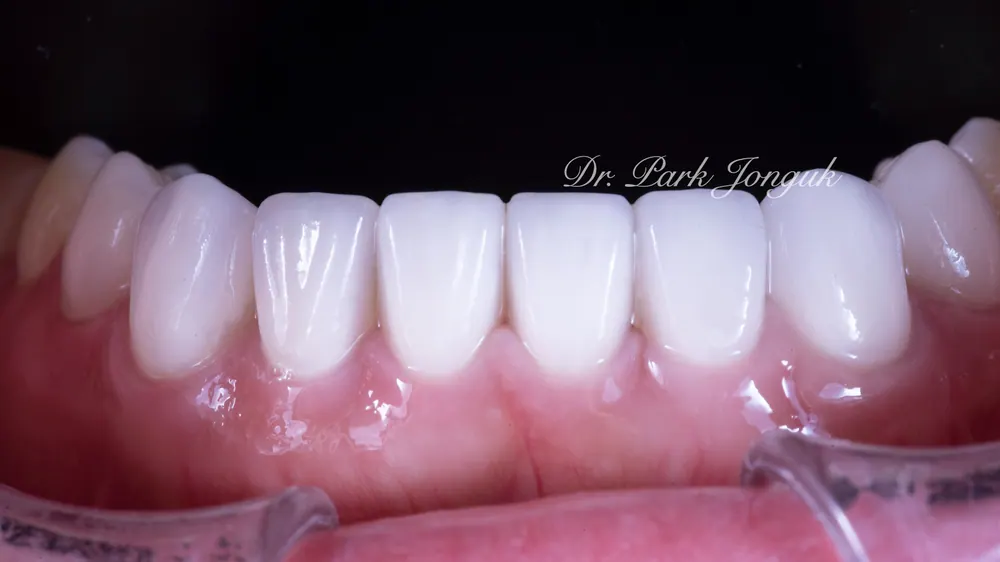
At our clinic, a skilled veneer clinic,
we finished it so that even the texture of the tooth surface
fully captures the feel of a natural tooth.
Since 2006, Dream Dental Clinic
This article is a clinical note written by Dr. Park Jonguk of Dream Dental Clinic, Gangnam; the original was published on his blog. The photographs shown are real cases he treated. Results vary with each patient’s condition, and every procedure carries the possibility of individual variation and side effects.
Quick Consult
Request a Callback
Leave your number and we will call you back during clinic hours.
Request Received
We will contact you during clinic hours. For urgent matters, please call +82-2-3448-0028.