
A Recommended, Skilled Veneer Clinic's Sandwich Technique (Treating Tooth Damage from Acid Reflux)
Hello.
I'm Park Jonguk, board-certified specialist in conservative dentistry at Dream Dental Clinic, a recommended, skilled veneer clinic.
Veneer treatment is a treatment that minimizes tooth reduction
while making the teeth beautiful.
Since it's done for aesthetic purposes,
it shouldn't end up causing dental health problems by removing too much tooth structure.
Naturally, it needs to protect the tooth as well.
When treatment is carried out in a way that protects damaged teeth as much as possible,
we come across all kinds of cases.
Acid-related tooth damage tends to show up across quite a number of teeth at once,
and the entire surface of the tooth ends up damaged.
People who drink a lot of wine,
or who habitually eat yogurt, and others,
can also develop acid erosion of the teeth from their eating habits.
Morning sickness during pregnancy can also cause tooth erosion from stomach acid.
The most serious cause is acid reflux disease.
If it isn't treated in time, stomach acid keeps flowing back up and continuously erodes the teeth.
The extent of it can be beyond imagination.
In particular, both the front and back surfaces of the front teeth erode, leaving the teeth considerably smaller.
In cases like this, the traditional treatment method is to place an all-ceramic crown.
An all-ceramic crown is a method that reduces the entire tooth and caps it completely, like putting on a hat.
The problem is that this means removing even more from a tooth that's already been made smaller by erosion.
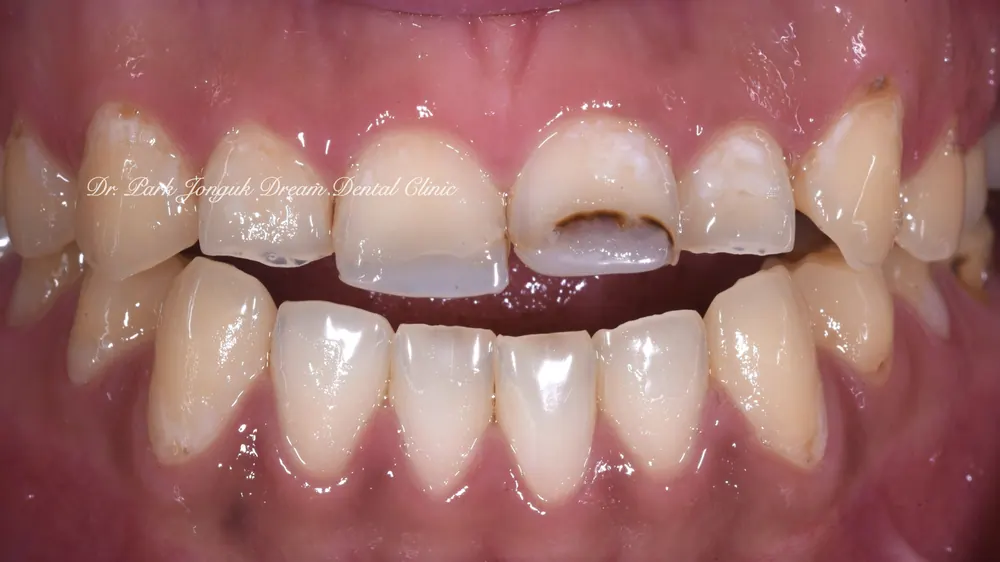
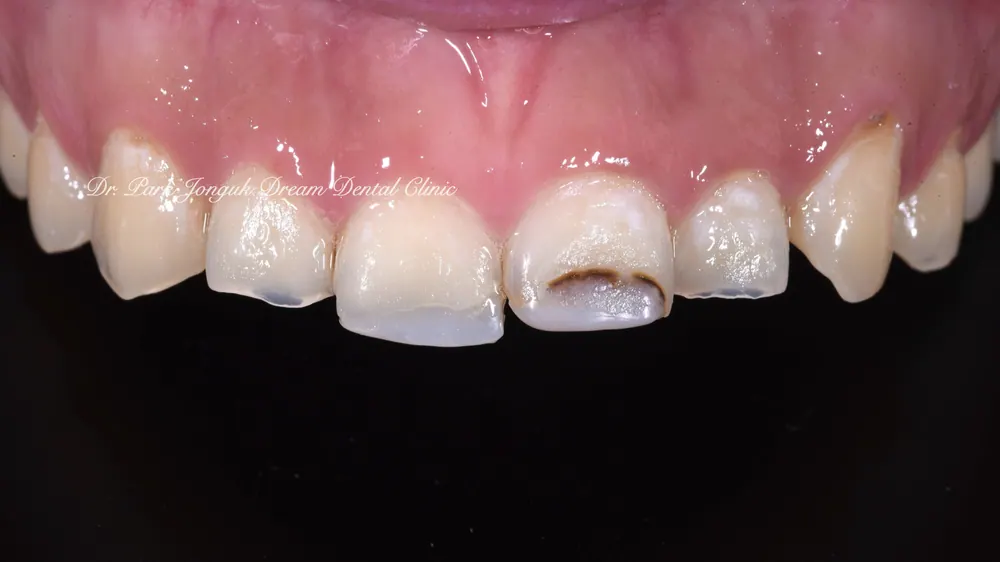
The upper front teeth had severe erosion and had already been treated with resin, but even that resin had discolored badly.
All 6 front teeth, from the right canine to the left canine,
had undergone severe erosion. Their length had also shortened considerably.
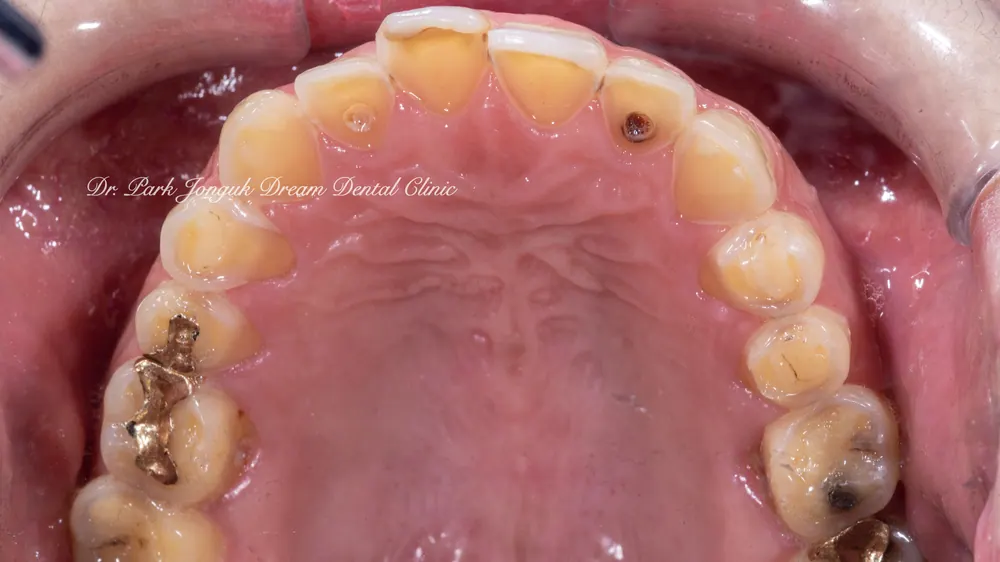
The problem was that most of the molars had also eroded.
Aside from the areas already treated with gold, most of the rest had eroded.
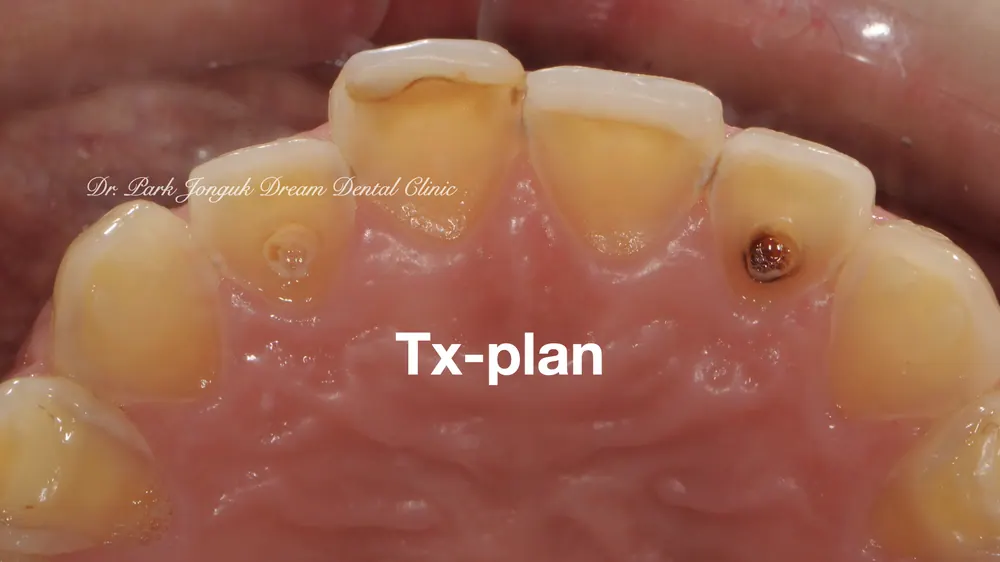
The inner surface of the front teeth was in an even more serious state.
The erosion had worn away the enamel, the tooth's outermost layer, completely.
The existing cavities were also getting worse.
The areas already treated with resin weren't immune to the erosion either.
In a case with this much severe erosion,
most clinics, as I mentioned earlier,
would recommend all-ceramic crown treatment.
In a case like the one above, nearly every tooth in the upper arch
would need to be capped with a crown.
Cost aside, reducing every single tooth that much
isn't necessarily a good treatment.
On top of that, the patient's acid reflux disease had already been treated,
so there was no longer any risk of further acid erosion to the teeth.
How could treatment be done with minimal, or even no, tooth reduction at all?
It's only at a place that thinks this hard about the question — a recommended, skilled veneer clinic —
that the sandwich technique even gets considered.
This isn't something that can be done through willingness alone;
it requires a great deal of experience and skill.
Let's look at the treatment plan.
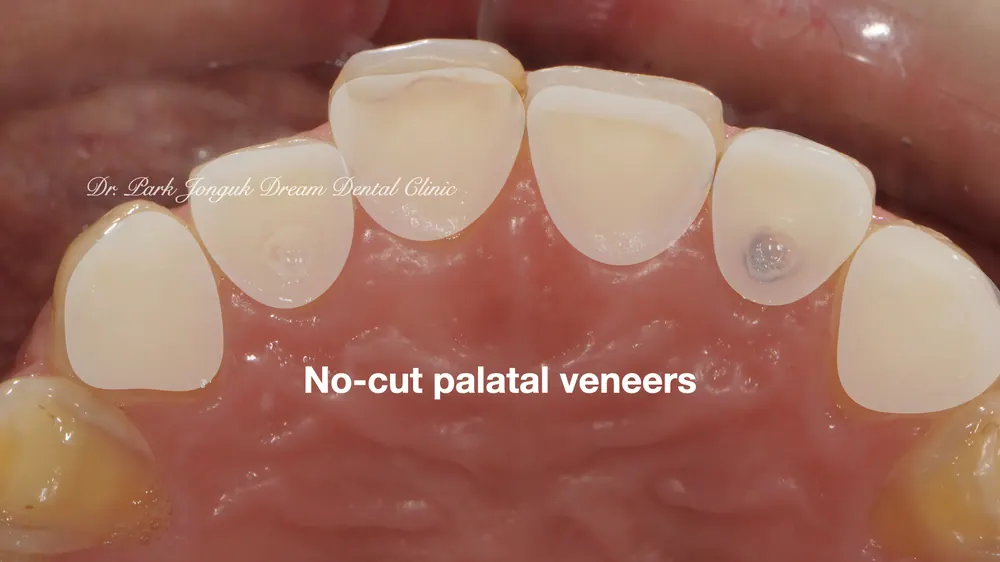
First, an extremely thin, no-prep veneer is placed on the inner surface of the front teeth.
Think of it as recreating the enamel that was lost to acid erosion.
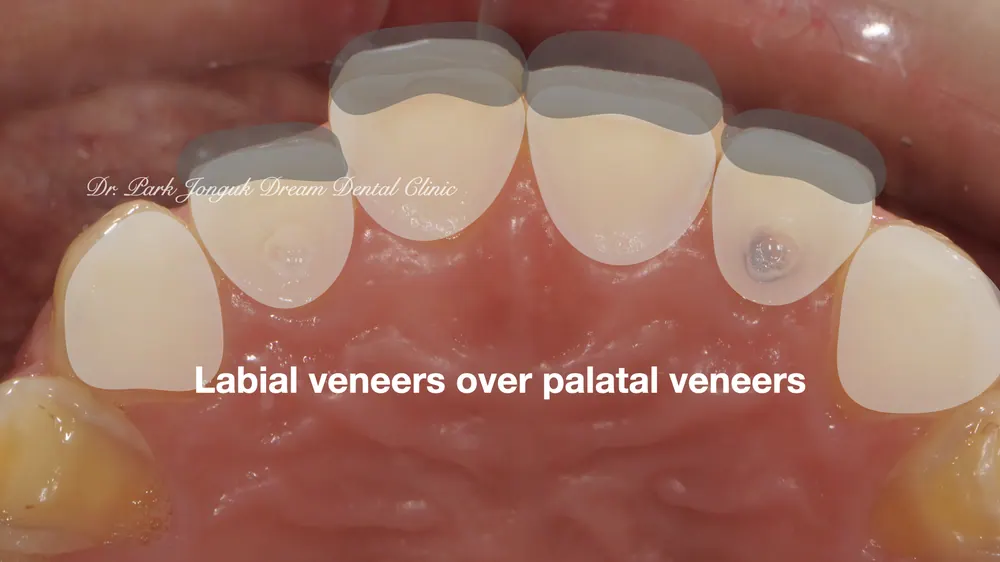
After that, another veneer is bonded onto the front surface of the tooth.
Because it wraps the tooth front and back like a sandwich, it's called the sandwich technique.
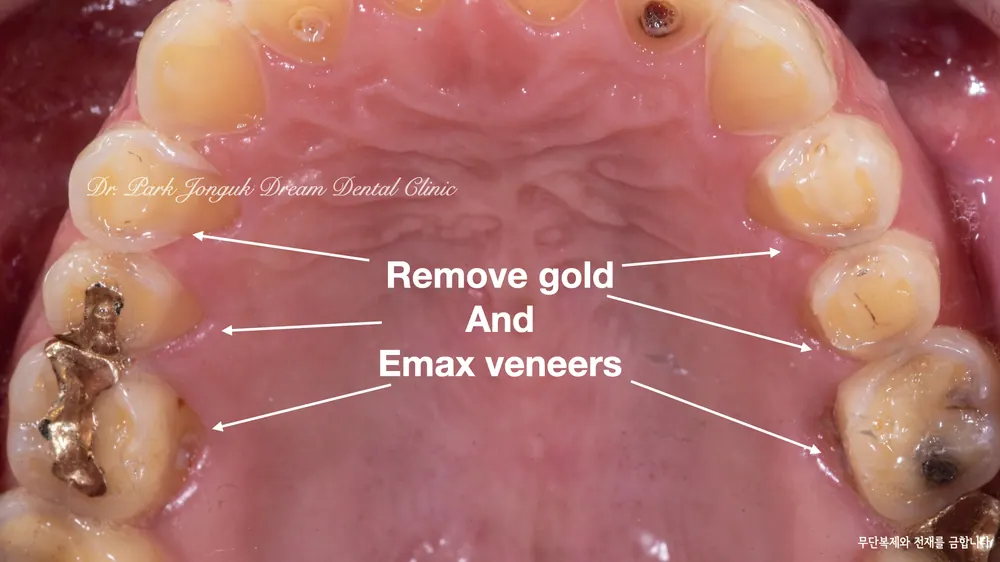
For molars, in a case like this, a crown is almost always recommended without exception.
In this case, however, we decided to treat only the areas affected by acid erosion, decay, or prior treatment,
by wrapping them with an extremely thin, reinforced ceramic.
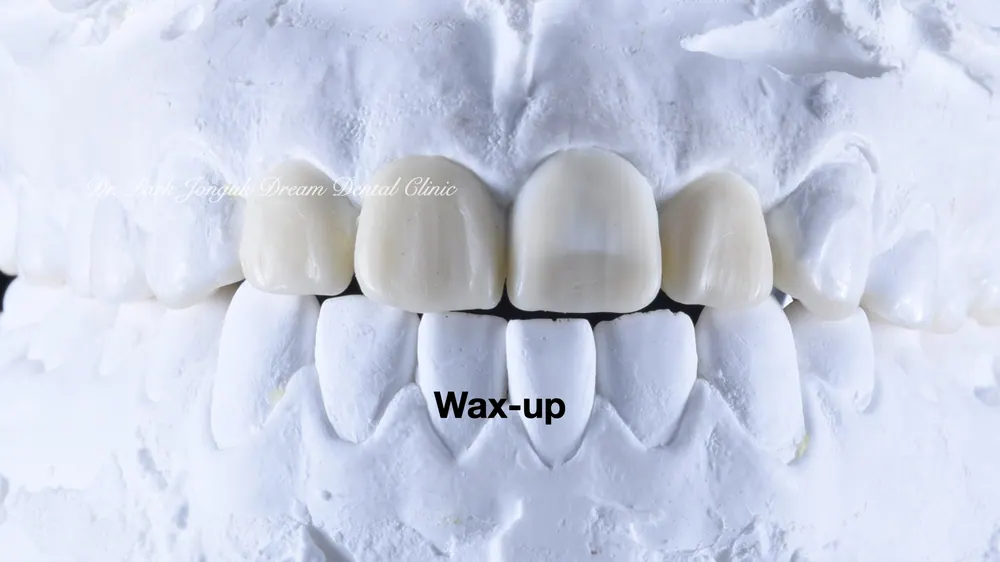
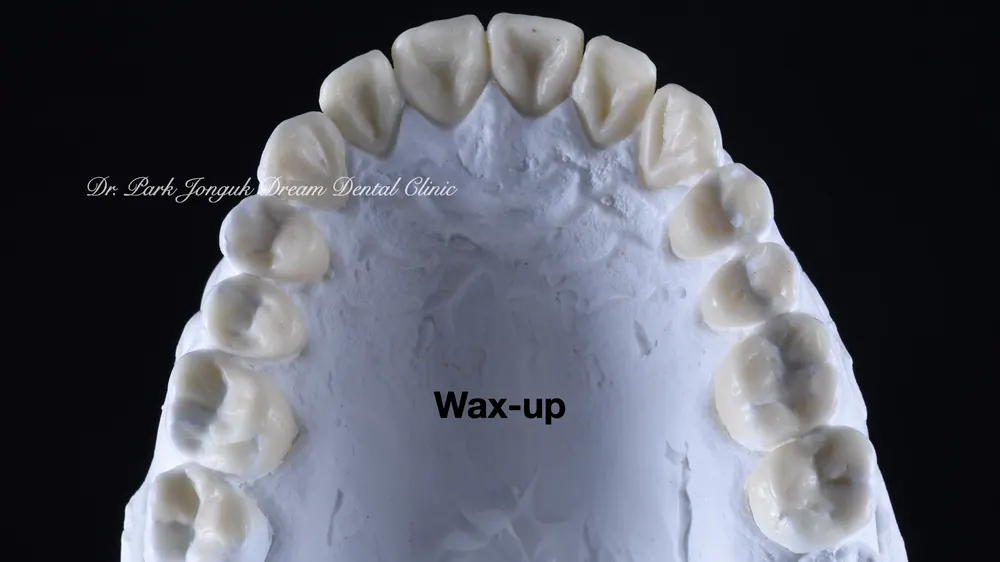
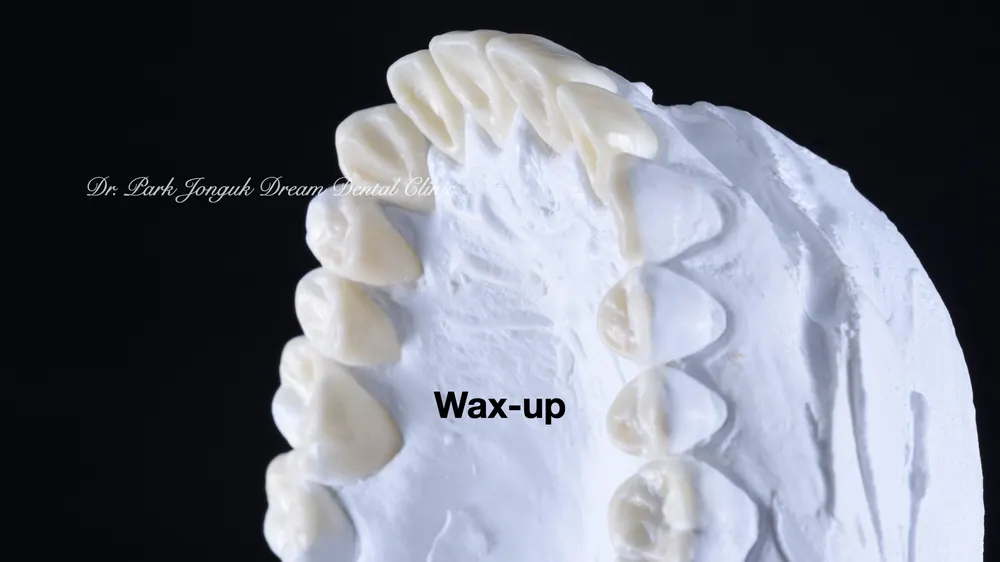
We use wax to build out in advance how treatment will proceed.
This process is called a wax-up.
In the sandwich technique, it's no exaggeration to say this step is the most important part of the entire process.
We need to check everything from how the tooth can be wrapped, to its shape, and even the bite.
Using an articulator, we build it step by step,
paying close attention to how the bite needs to be adjusted so the sandwiched ceramic on the front teeth doesn't run into problems.
This is on a completely different level from an ordinary veneer — it's the kind of know-how you'd expect from a recommended, skilled veneer clinic like ours.
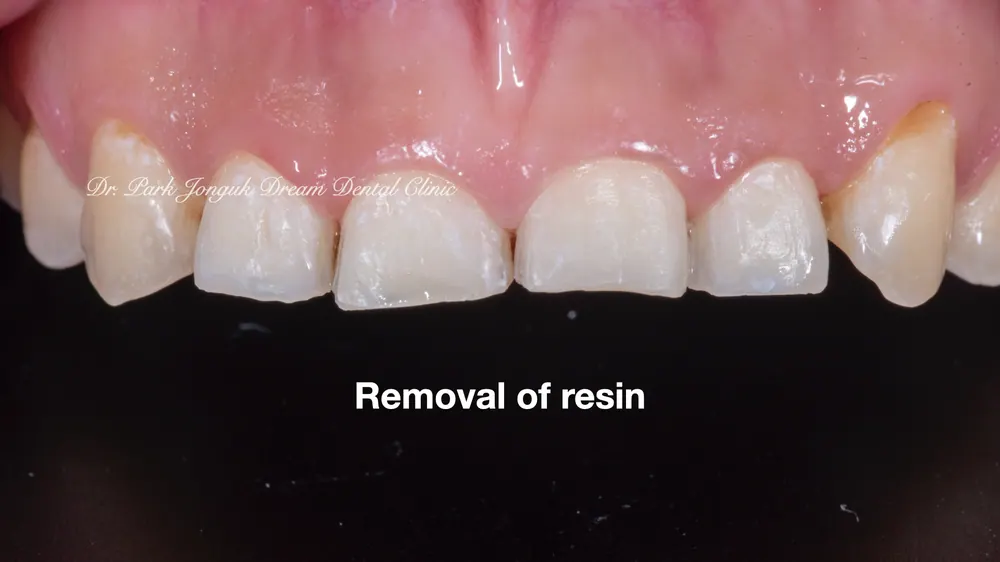
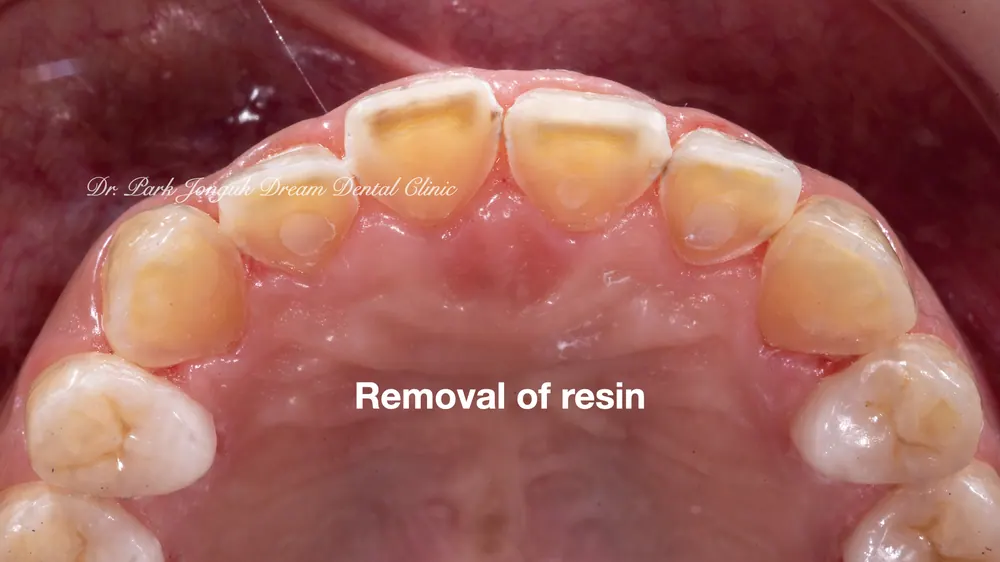
First, we removed the resin.
Resin had been used across much of the tooth,
and because it had discolored so badly, it could be removed with minimal damage to the tooth.
Wherever there was decay, we treated it at the same time.
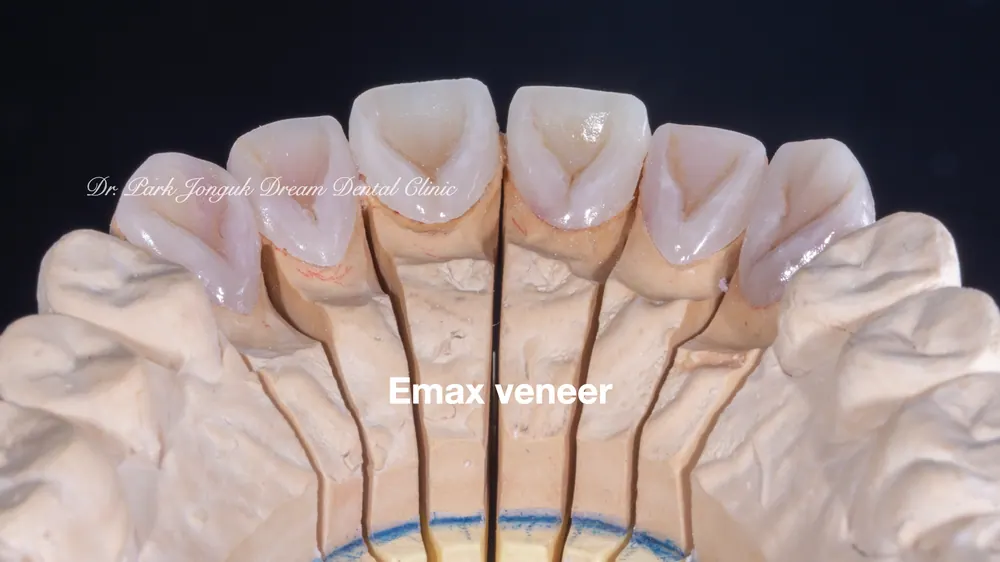
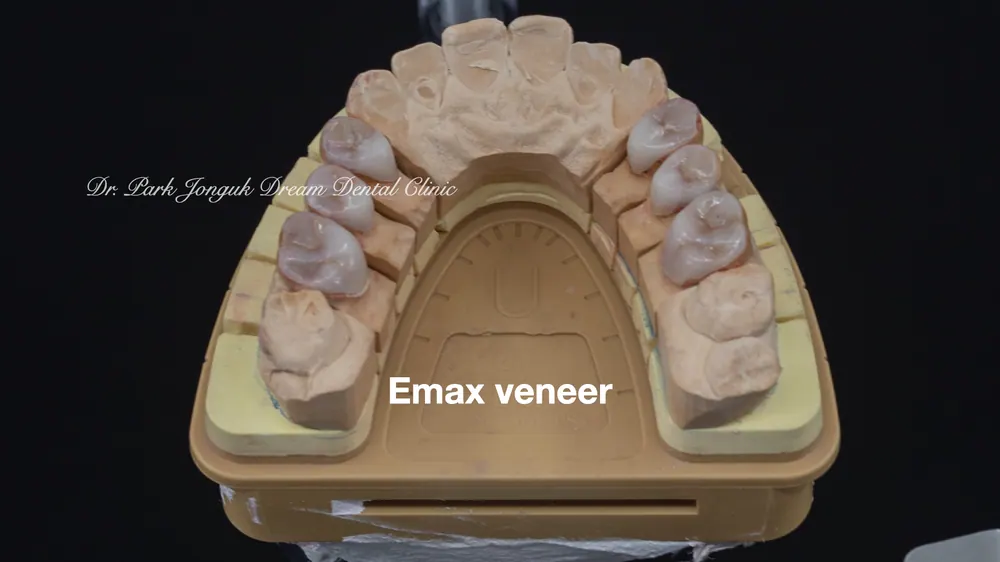
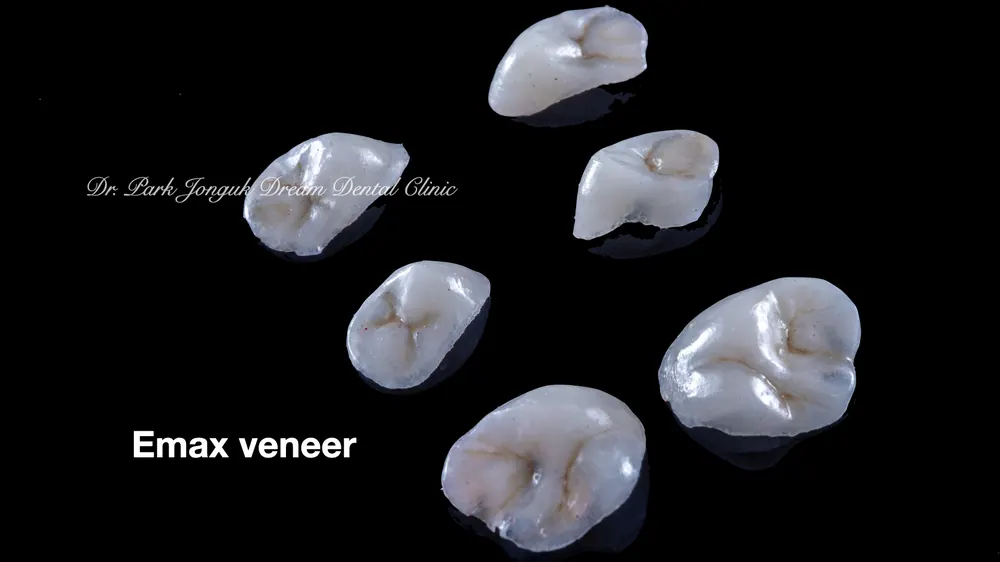
The veneer that would go on the inner surface of the front teeth,
and a thin occlusal veneer for the molars, were both fabricated.
Even though it goes on the molars, in a spot that isn't visible,
the shape and color of a natural tooth were both faithfully reproduced.
This method results in quite a thin restoration.
The one-day method, meaning fabrication using CAD/CAM,
can only be made above a certain thickness,
so even with the same concept, it would require reducing the tooth beyond a certain amount to be possible.
The hand-made method can be made far thinner,
so reduction of the molar can also be minimized.
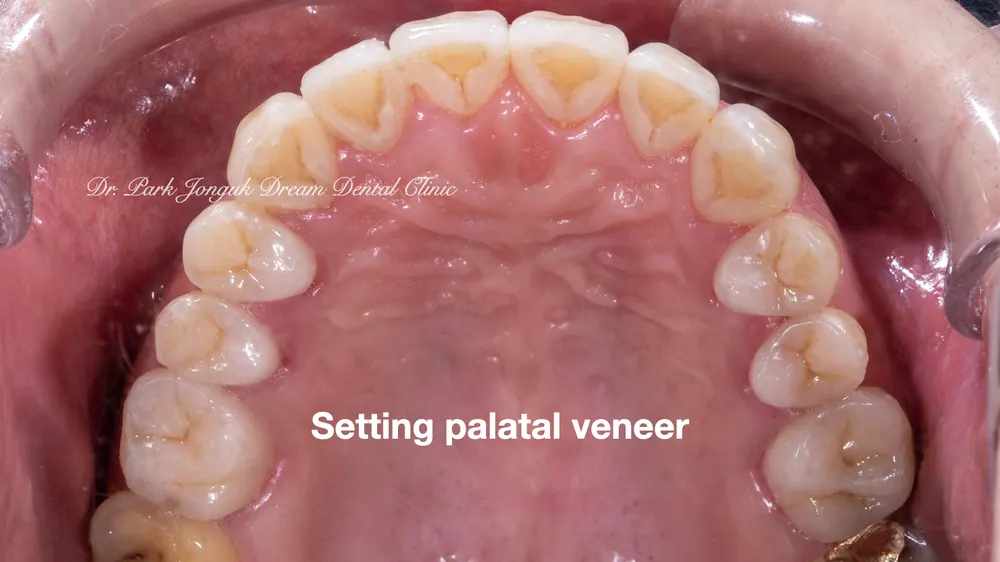
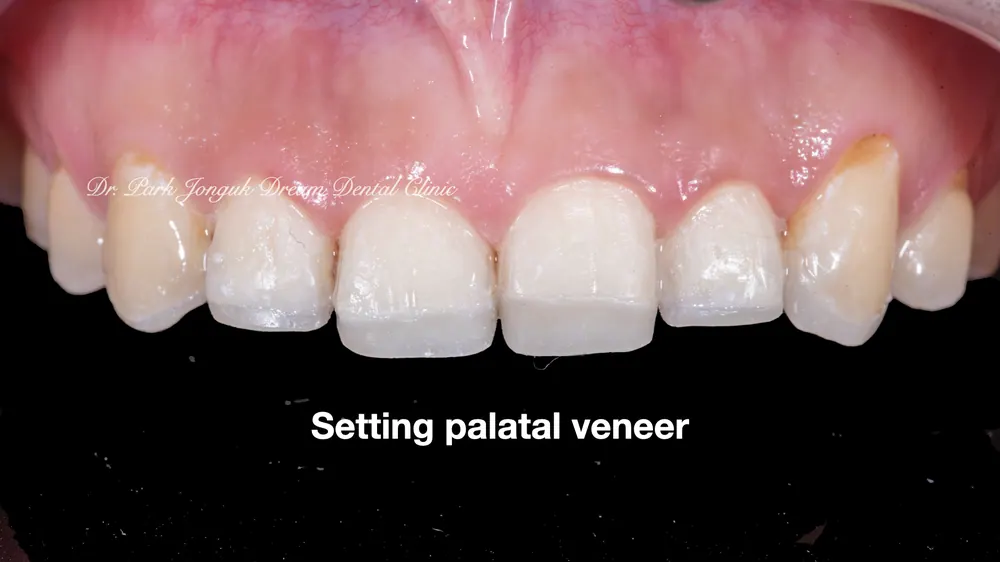
First, we bonded the inner veneer and the molar veneer into place.
Each individual molar was reproduced to look just like a natural tooth.
The teeth were gradually regaining a normal shape.
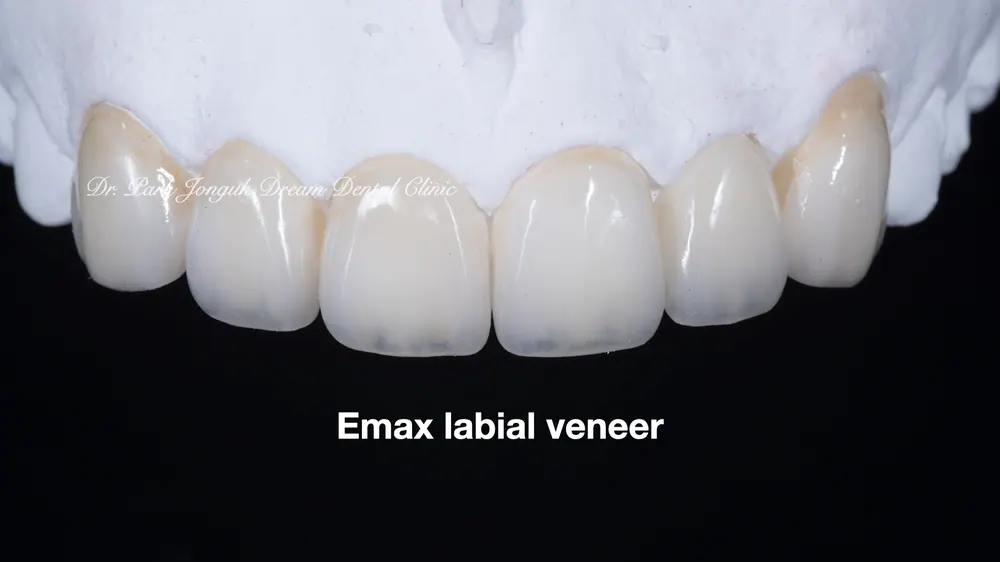
Now the front-tooth veneer was fabricated.
It faithfully reproduces the translucent feel and natural anatomical shape of the tooth.
Since it follows the same concept as a no-prep veneer,
it's fabricated using quite thin ceramic.
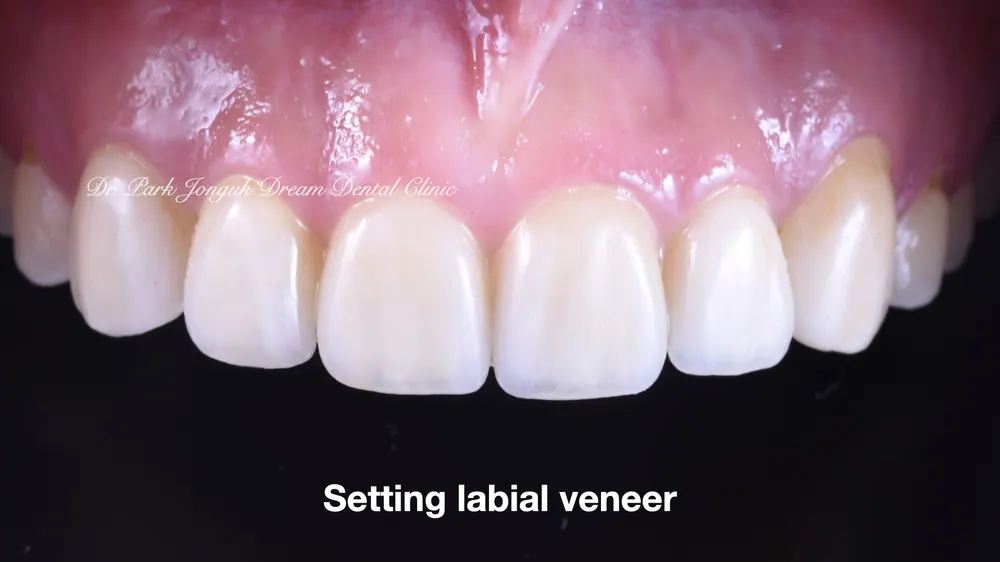
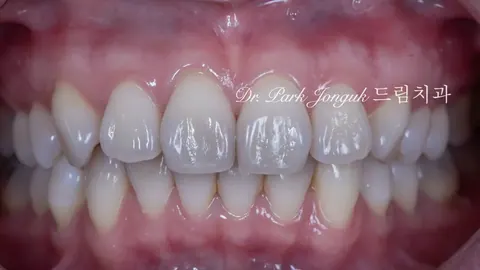
And this is how it was finished.
Tooth erosion caused by acid reflux disease
was resolved into beautiful teeth without any tooth reduction.
Let me summarize the key points here.
Most clinics treat tooth erosion caused by acid reflux disease with all-ceramic crowns, but this means a lot of tooth reduction, which can worsen the damage to a tooth that has already been extensively destroyed.
Because this kind of erosive tooth destruction affects both the front and back of the tooth, it's difficult to treat with an ordinary veneer.
The sandwich-technique veneer is a very demanding treatment method, so it should be done at a clinic with a great deal of experience.
Because it follows a no-prep concept, the ceramic has to be made quite thin, which makes it difficult to produce using the one-day method.
The natural feel of a tooth has to be captured even in thin ceramic, and this too requires considerable experience and skill.
The sandwich-technique veneer represents the pinnacle of the skill on display at Dream Dental Clinic, a recommended, skilled veneer clinic.
Since 2006, Dream Dental Clinic
This article is a clinical note written by Dr. Park Jonguk of Dream Dental Clinic, Gangnam; the original was published on his blog. The photographs shown are real cases he treated. Results vary with each patient’s condition, and every procedure carries the possibility of individual variation and side effects.
Quick Consult
Request a Callback
Leave your number and we will call you back during clinic hours.
Request Received
We will contact you during clinic hours. For urgent matters, please call +82-2-3448-0028.