
The Result of Over-Aggressive Veneer Treatment and the Retreatment Process | A Case of Returning to a Natural Smile
This is a case where a patient who had aggressive front-tooth veneers done long ago underwent retreatment due to inflammation and an awkward shape.
We introduce the process of correcting the original treatment, which had involved excessive tooth reduction, resolving the gum inflammation, and restoring natural, harmonious front teeth.
Veneers represent the pinnacle of cosmetic dental treatment,
which is exactly why balancing tooth preservation with design matters so much.
Excessive reduction aimed only at achieving white, even teeth,
or treatment carried out without proper diagnosis, ends up leaving bigger problems over time.
The patient who visited this time was a woman in her 40s,
who had front-tooth veneers done a few years earlier,
but the teeth weren't aesthetically pleasing, and gum inflammation had also developed,
so she said she felt uncomfortable every time a photo was taken.
The patient believed she had received 'veneers,'
but in reality, so much of the tooth had been reduced that it was closer to an all-ceramic crown.
As a result, each tooth had a different shape,
the gum height and shape were also uneven,
and the alignment had shifted, making the overall impression look awkward.
Veneers aren't simply a 'treatment of bonding something on.'
Diagnosis, planning, and the process of restoring harmony between the teeth and gums are what matter most.
This case was one of the most difficult kinds, a 'retreatment case,'
but through precise diagnosis and adjustment with temporary veneers,
we were able to restore a natural, healthy smile once again.
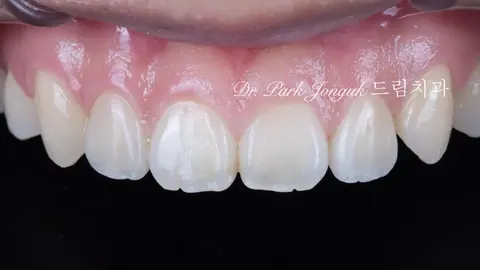
Photo 1. Before treatment
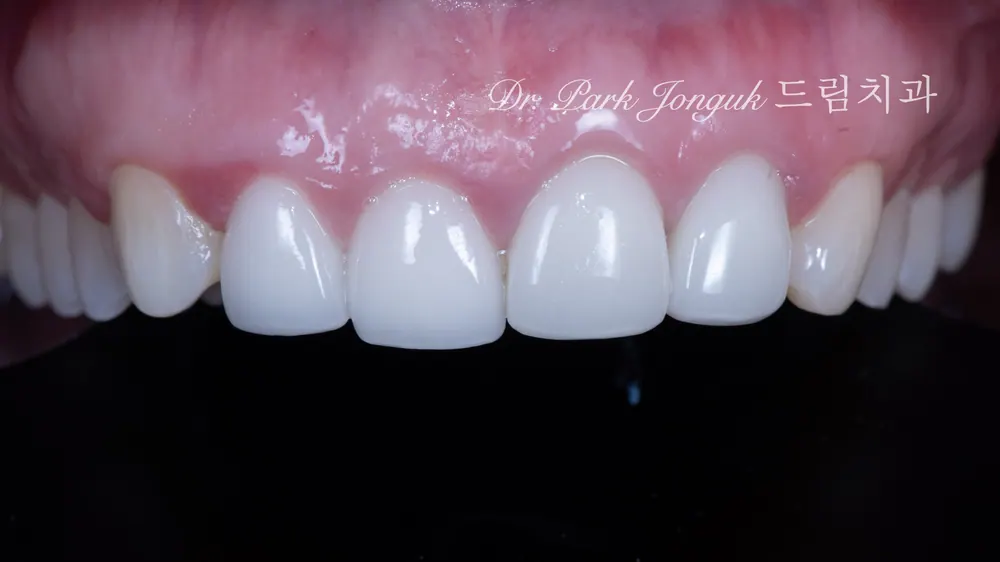
The front-tooth veneers were very thick, and red gum inflammation was observed.
Each tooth had a different shape, the gumline was jagged, and the overall impression looked artificial.
Photo 2. Issues marked
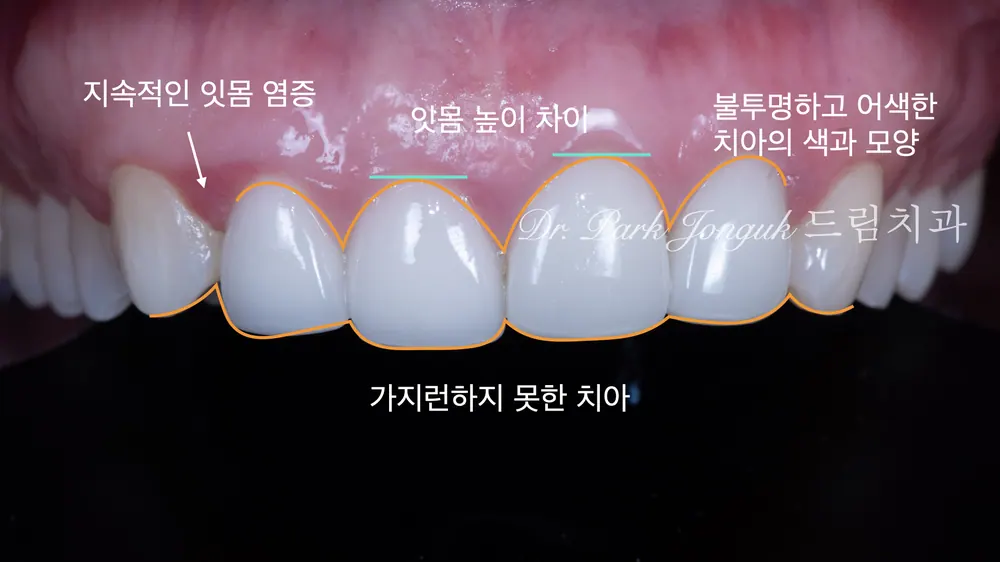
The tooth proportions, gum height, and areas of inflammation were marked visually.
The shifted alignment made the teeth look off to one side,
and the gum swelling made the smile line look awkward.
Photos 3-6. The diagnostic process
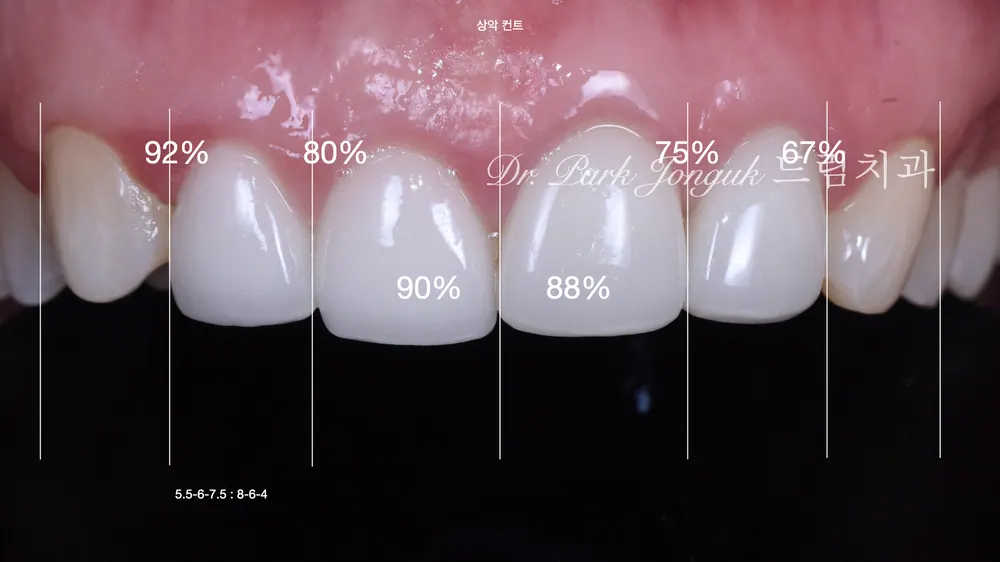
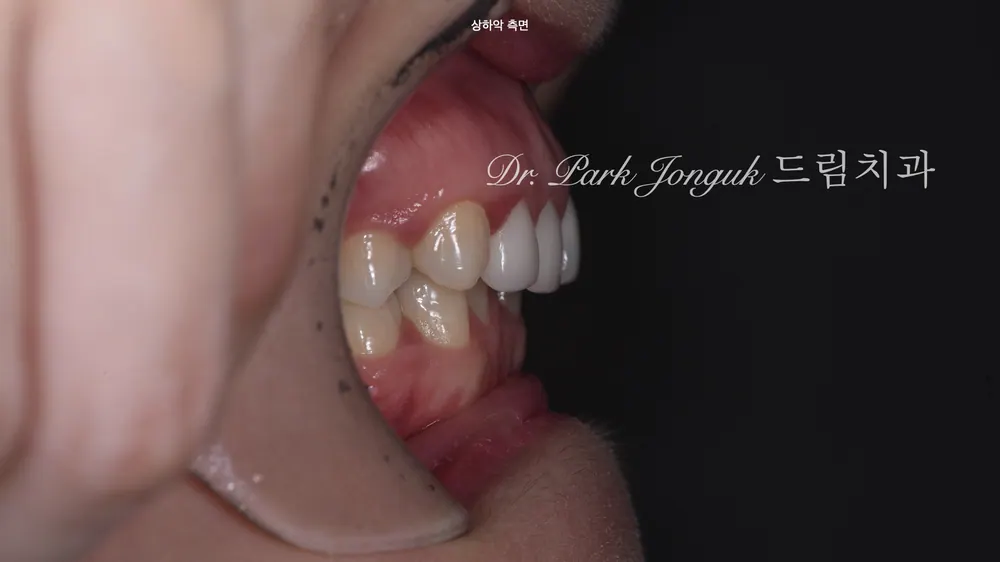
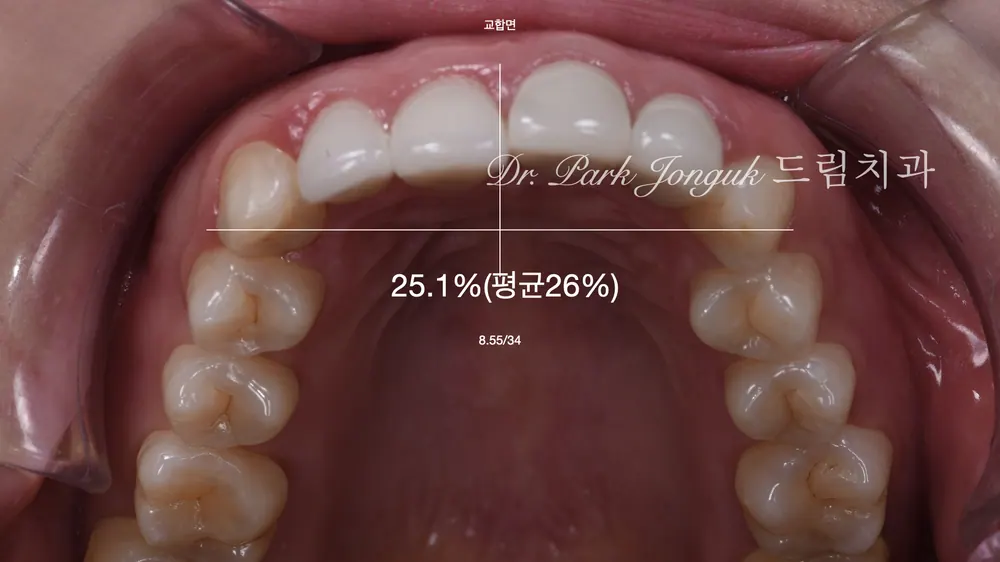
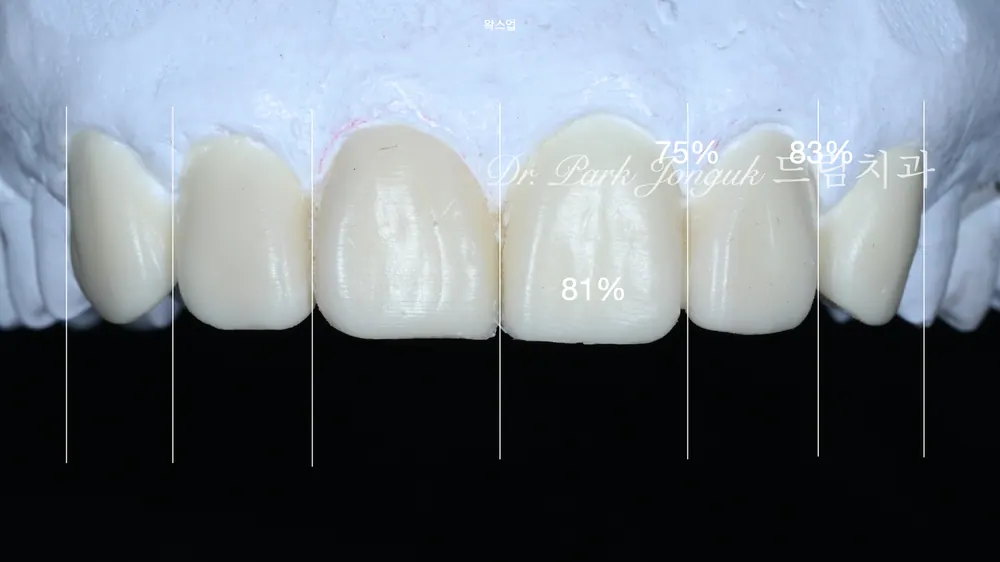
Through precision imaging and wax-up diagnosis,
we analyzed the amount of tooth reduction, the gumline, and the proportions.
The key to this case was gum recovery and redesigning the aesthetic balance.
Photo 7. After removing the veneers and crowns
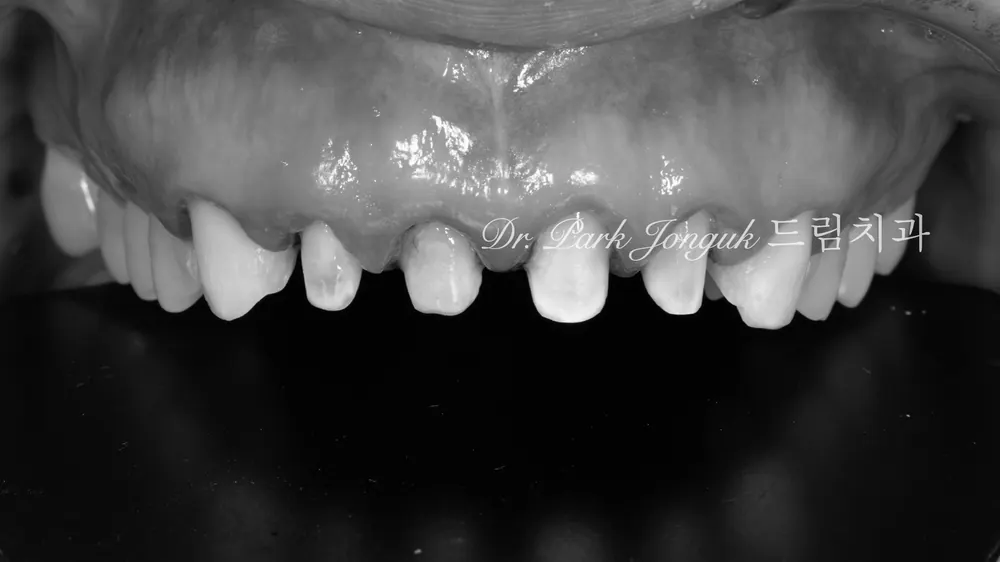
Once the existing restorations were removed, the teeth were far too short and had been excessively reduced.
In some areas, so much had been reduced that the nerve was close by, and some teeth had already had root canal treatment.
And the gum inflammation had spread quite severely.
Photo 8. Temporary veneers placed
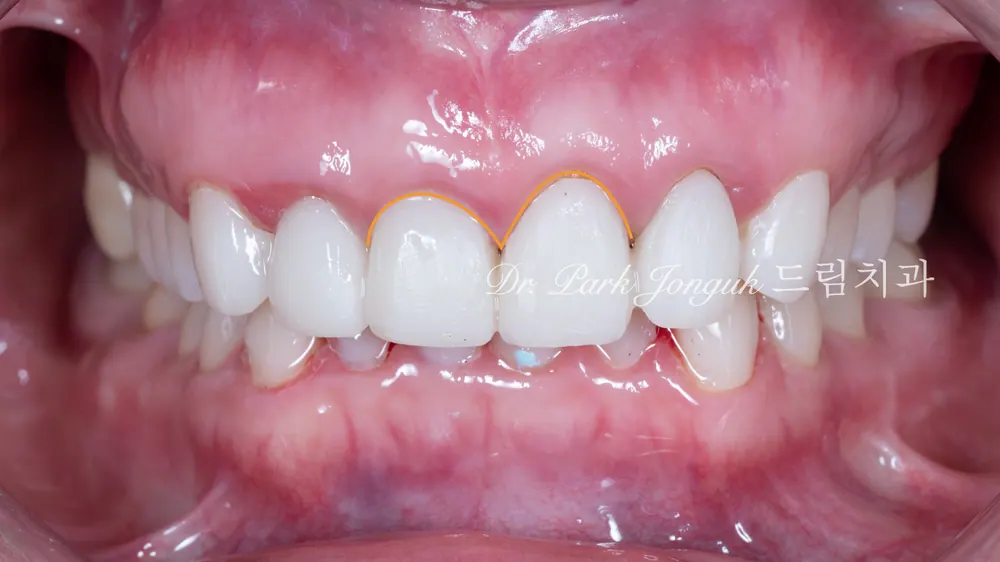
This stage was the turning point of the treatment.
The patient wore the temporary veneers for about a month, so we could check whether the gums recovered on their own
and whether the inflammation subsided.
Photo 9. After the gum height recovered
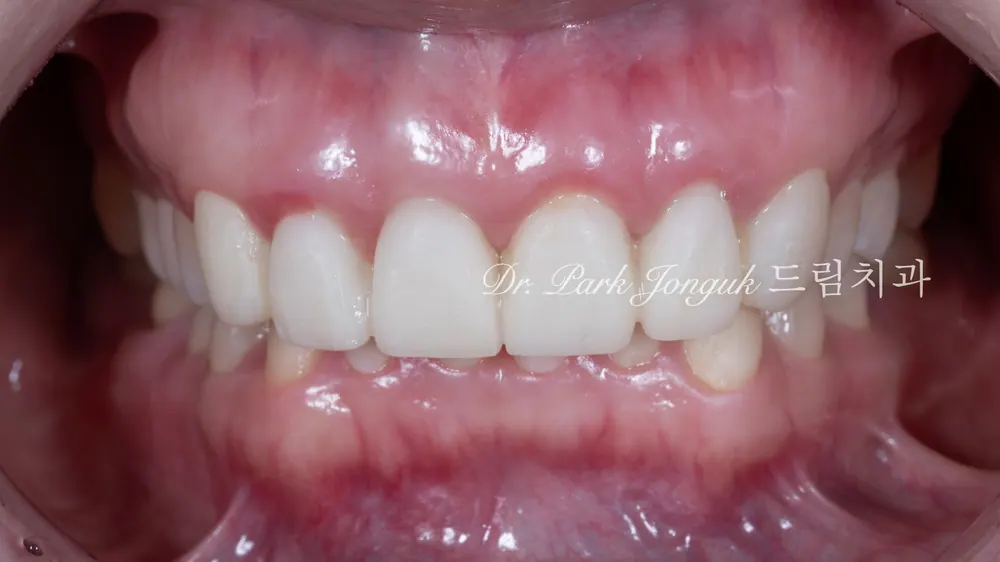
The gums evened out remarkably.
The redness decreased, and the smile line settled into a much softer shape.
This was a moment that once again confirmed the importance of the temporary-veneer stage.
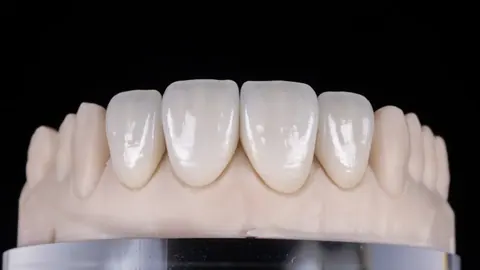
Photo 10. The final restoration fabrication process
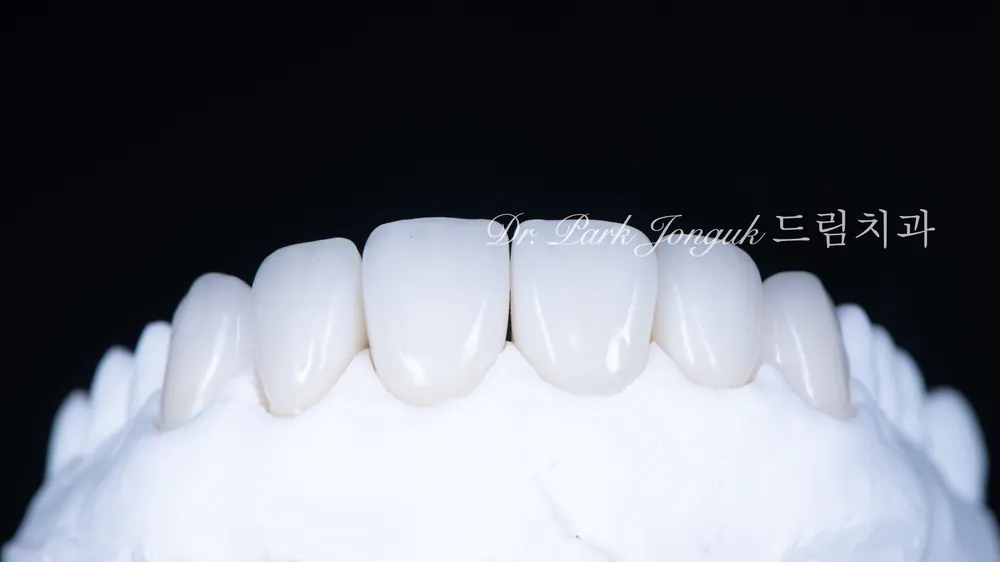
We made the final veneers and all-ceramic crowns to match the recovered condition of the gums.
Multiple layers of ceramic were built up to reproduce translucency and naturalness.
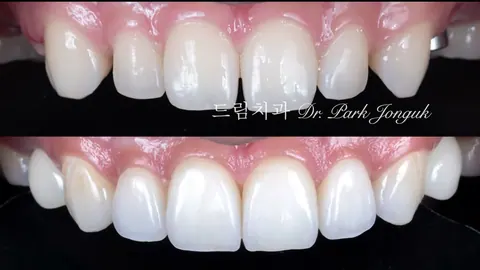
Photo 11. One week after setting
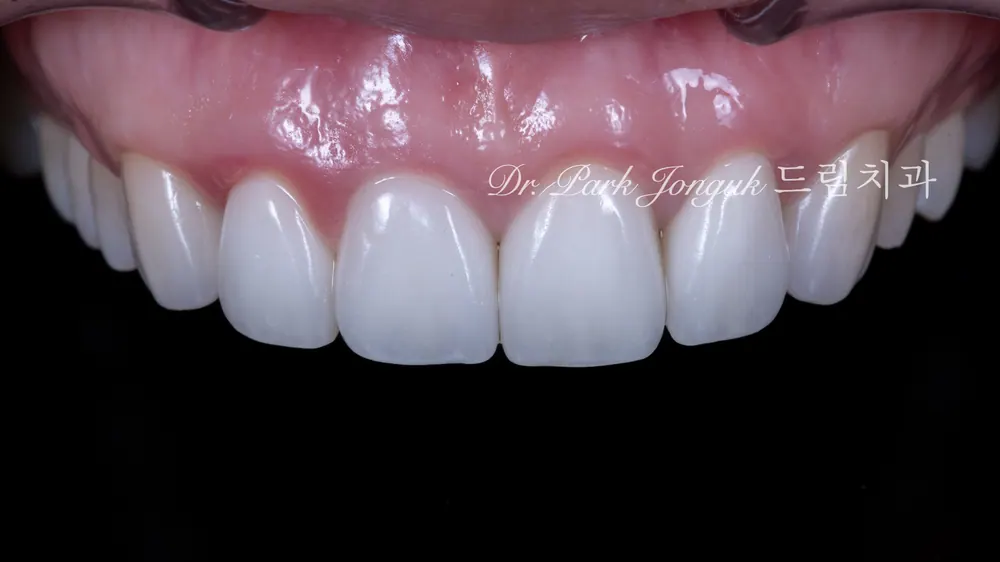
The teeth were finished natural and translucent, in a shape that harmonized with the face.
The patient expressed satisfaction, but some inflammation still remained deep within the gums.
Photos 13-15. One year after setting
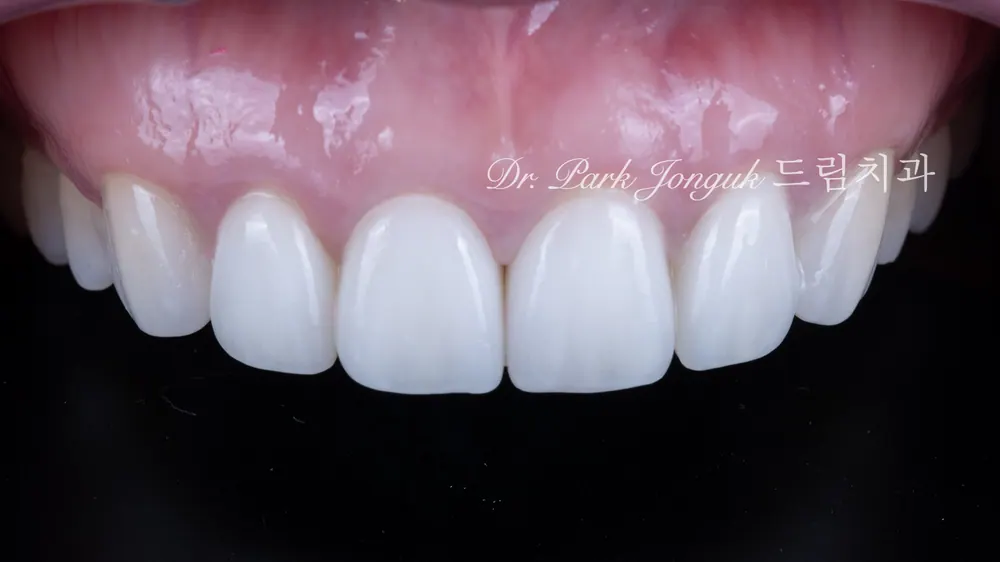
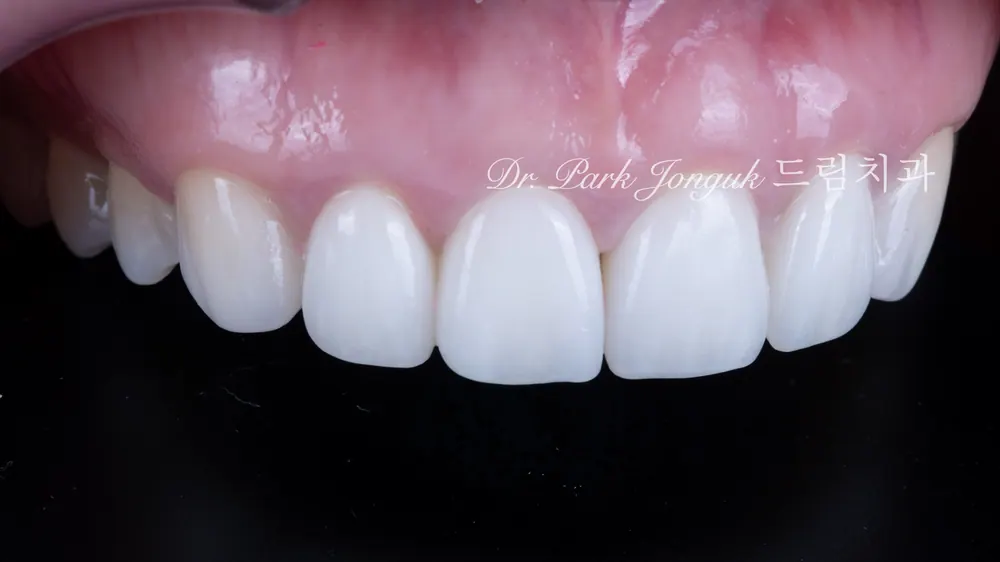
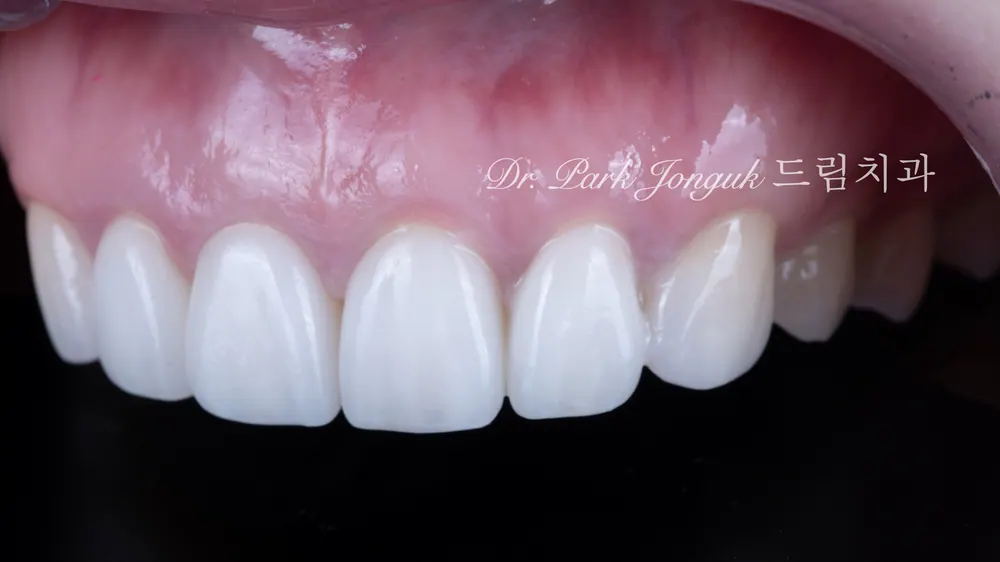
The inflammation had almost completely disappeared, and the gum height had stabilized.
The tooth color and surface texture still looked natural,
and the overall smile line remained soft and well-maintained.
The patient said, "Only now can I smile confidently in front of a camera."
Veneers aren't a 'treatment for bonding on white teeth.'
Excessive reduction or inaccurate diagnosis can actually harm both the teeth and the gums.
Truly natural-looking veneers must take into account the harmony among the teeth, gums, and smile line,
and this requires precision diagnosis and a temporary-veneer stage without fail.
Even for a tooth that has already been excessively reduced, as in this case,
taking time to let the gums recover and treating it in stages
can fully restore a healthy, beautiful smile.
Q&A
Q1. Isn't veneer retreatment risky?
A. Caution is needed if a lot of the tooth was already reduced.
But through precision diagnosis and a step-by-step approach (temporary-veneer adjustment, gum recovery),
retreatment can be done safely. In particular, laser veneer removal makes the treatment even safer.
Q2. Are temporary veneers absolutely necessary?
A. Yes, they're especially essential in retreatment.
They let us observe changes in the gums and teeth while adjusting the shape.
Q3. Is it possible to get veneers while inflammation is still present?
A. As a rule, treatment should proceed only after the inflammation has fully subsided.
However, temporary veneers can be used to help guide the healing process.
This article is a clinical note written by Dr. Park Jonguk of Dream Dental Clinic, Gangnam; the original was published on his blog. The photographs shown are real cases he treated. Results vary with each patient’s condition, and every procedure carries the possibility of individual variation and side effects.
Quick Consult
Request a Callback
Leave your number and we will call you back during clinic hours.
Request Received
We will contact you during clinic hours. For urgent matters, please call +82-2-3448-0028.