
Conditions for No-Prep Veneers, and a Real Clinical Case!
Hello. I'm Park Jonguk, director of Dream Dental Clinic and director of Lamista Academy.
Lamista Academy is a seminar group
that teaches dentists how to perform veneer treatment.
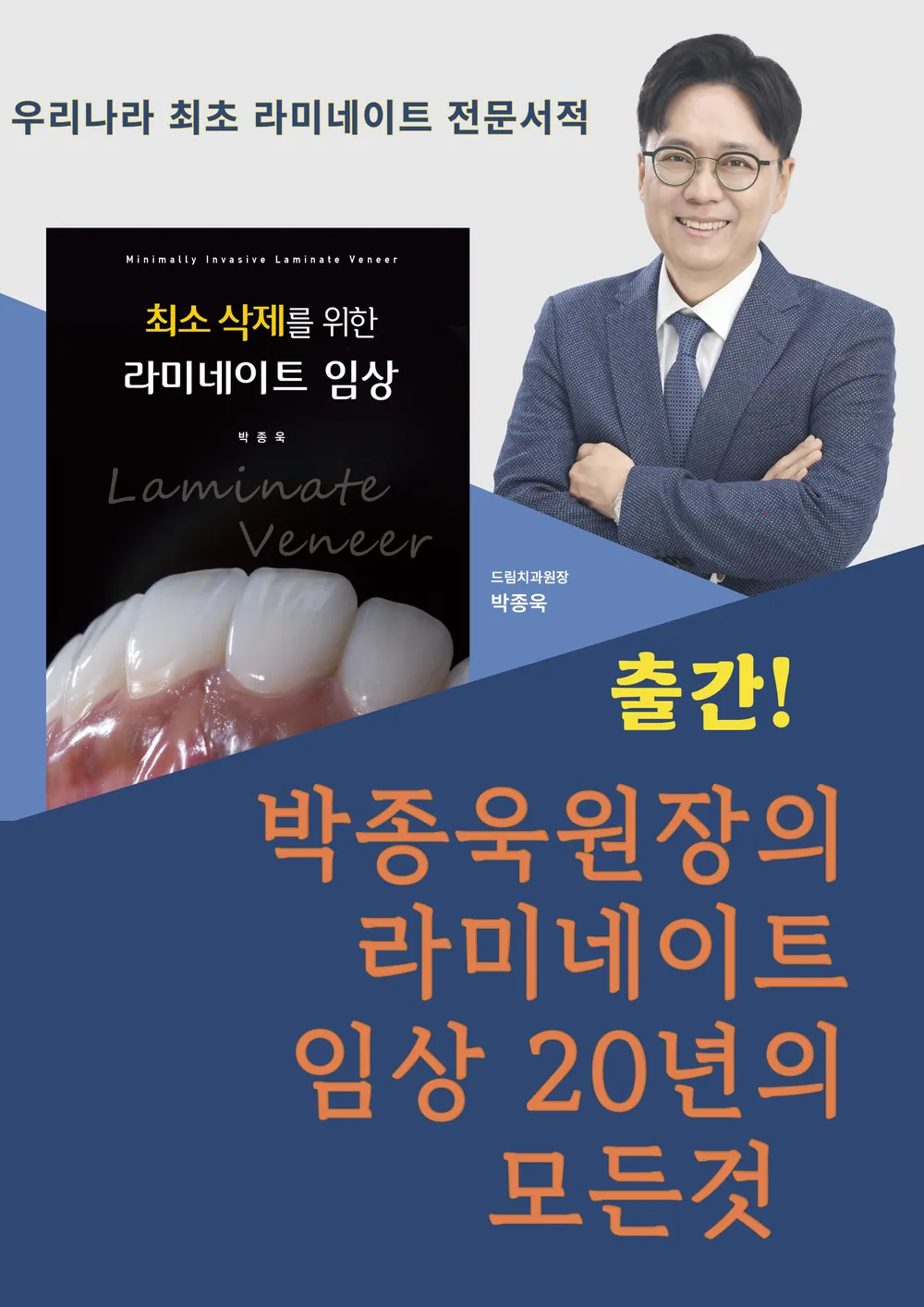
Since my book 『최소 삭제를 위한 라미네이트 임상』 (Minimal-Reduction Veneer Clinical Practice) was published,
I've been giving even more veneer lectures.
I'm working to help more dentists
understand veneer treatment methods more accurately and deliver better care.
Since veneer treatment is barely taught in the dental school undergraduate curriculum,
it has to be learned during residency or while in clinical practice,
and in practice it's very hard to learn during residency.
In the end, dentists end up learning it after graduating from dental school.
The reason I wrote the book is that even for dentists who want to study veneers and practice them,
there was essentially no veneer-specialized textbook written by a Korean author,
with only a handful of foreign-language texts available,
so I published a book with content suited to conditions in Korea and directly applicable to clinical practice,
in order to help more dentists.
The case we'll look at today is a no-prep veneer case.
In veneer lectures and in consultations with patients,
one of the things people ask about most
is exactly this topic of no-prep veneers.
Even among dentists there's a lot of back-and-forth over whether it's possible or not,
and many patients are also curious whether no-prep veneers would work for them.
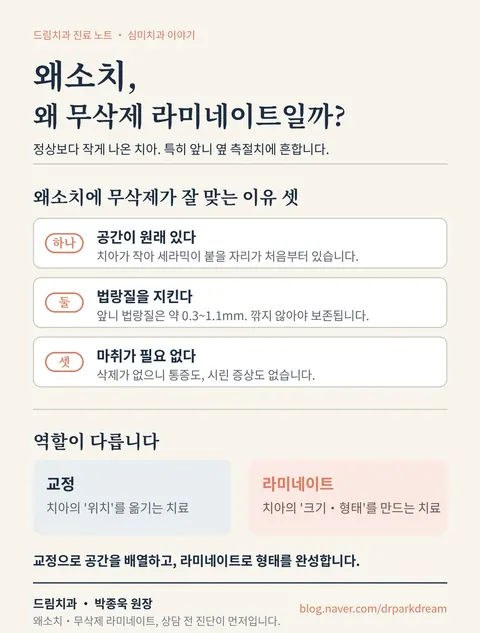
First, there are three conditions under which no-prep veneers are possible.
1) The teeth need to be small
2) The alignment needs to be good
3) It's even better if the teeth are retruded
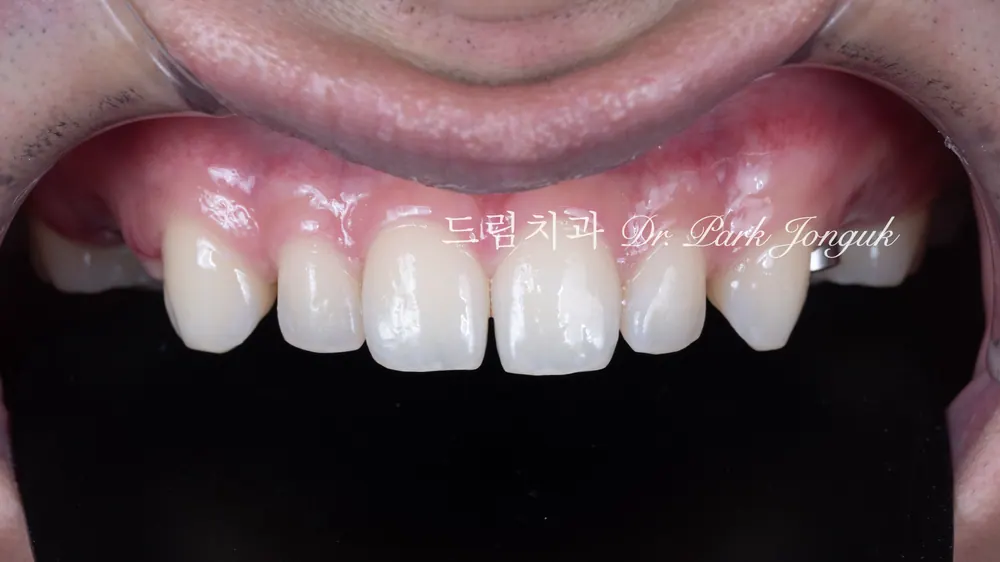
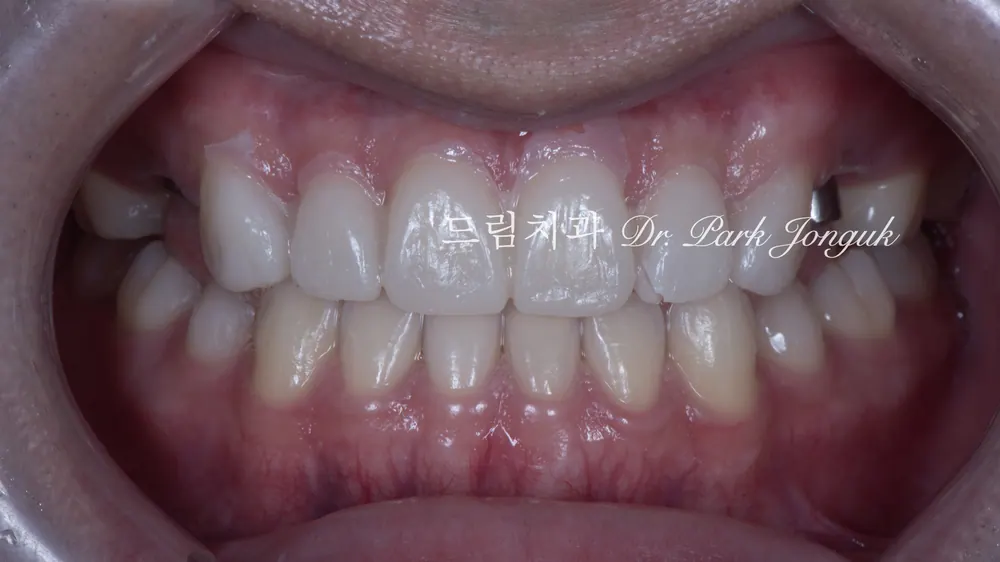
A patient in this kind of state came in.
Of the three conditions mentioned above, two were met,
but the teeth weren't small.
A no-prep veneer is possible even under these conditions.
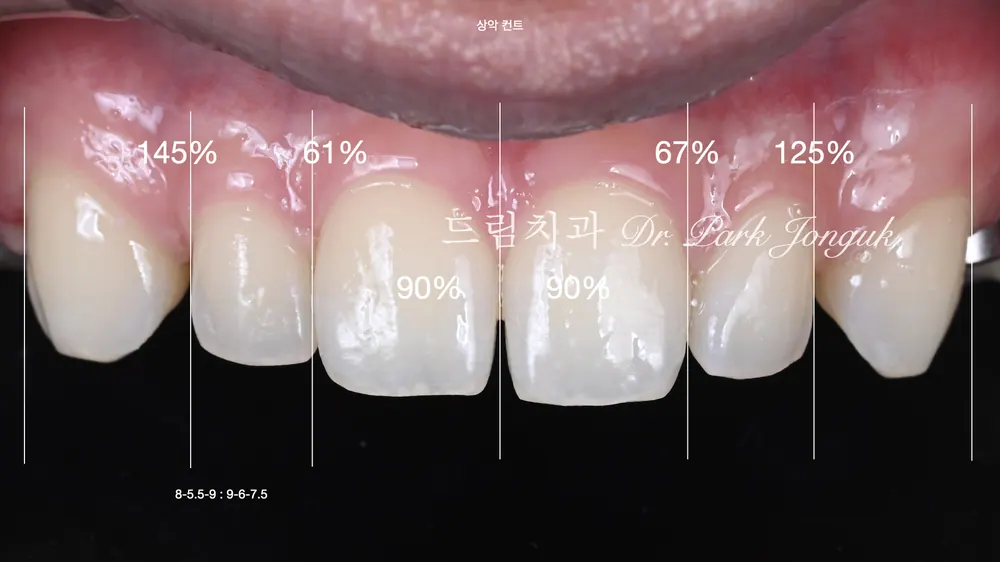
For every veneer treatment, pre-treatment diagnosis is essential.
We check the relationship between the face and the teeth,
measure the size and proportion of the teeth to identify the current problems,
and decide how to proceed with treatment; that's this stage.
In this process, the amount of tooth reduction for the veneer treatment gets decided.
For a typical veneer, the amount of reduction varies with the condition of the tooth,
and it differs from tooth to tooth and even area to area on the same tooth.
You'll sometimes see clinics advertise with claims like
"we only reduce 0.1mm," but that's really a meaningless statement.
To emphasize this once more to any dentists reading this article,
the amount of tooth reduction can only be known after diagnosis.
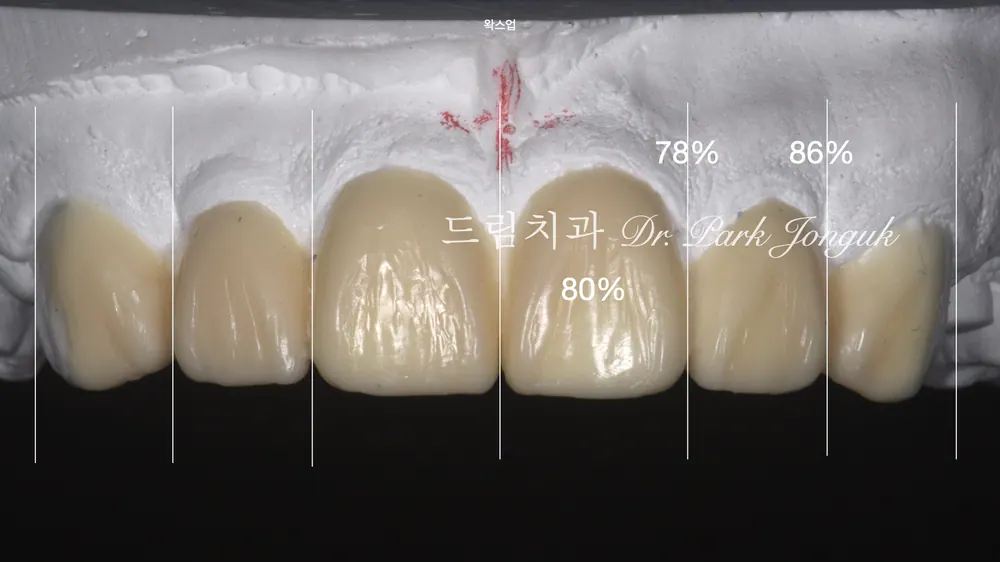
Once diagnosis is done, we check the tooth shape in wax like this.
This diagnostic process is called wax-up precision diagnosis.
You can confirm the proportion improves noticeably.
In the case of no-prep veneers, as treatment proceeds,
we can go ahead and make temporary teeth right away.
A lot of dentists think that since no-prep veneers involve no reduction, there's no need
to make temporary teeth, but that's absolutely not true.
Temporary teeth are essential for no-prep veneers as well.
The purpose of temporary teeth isn't just to protect the reduced tooth surface;
it's also to preview the shape after treatment.
With no-prep veneers, this purpose can be achieved reliably.
Temporary teeth absolutely have to be made so we can consult with the patient on the shape.
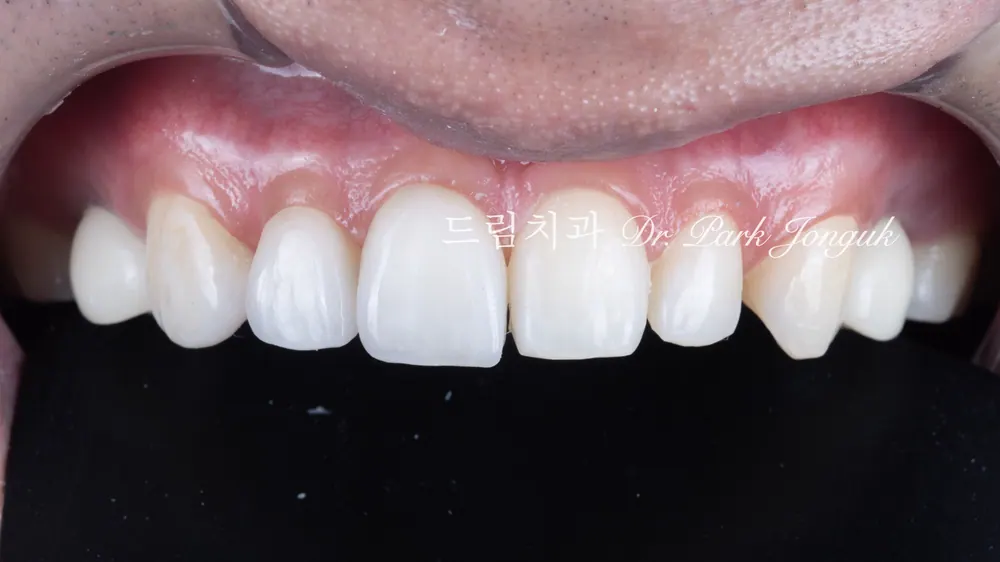
The veneers have been fabricated.
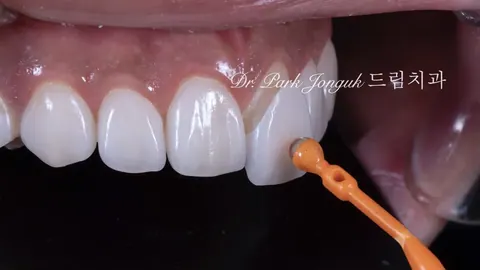
We took a photo with the veneer placed only on the right-side teeth.
The tooth size does increase,
but since the shape improves, there doesn't appear to be a significant problem.
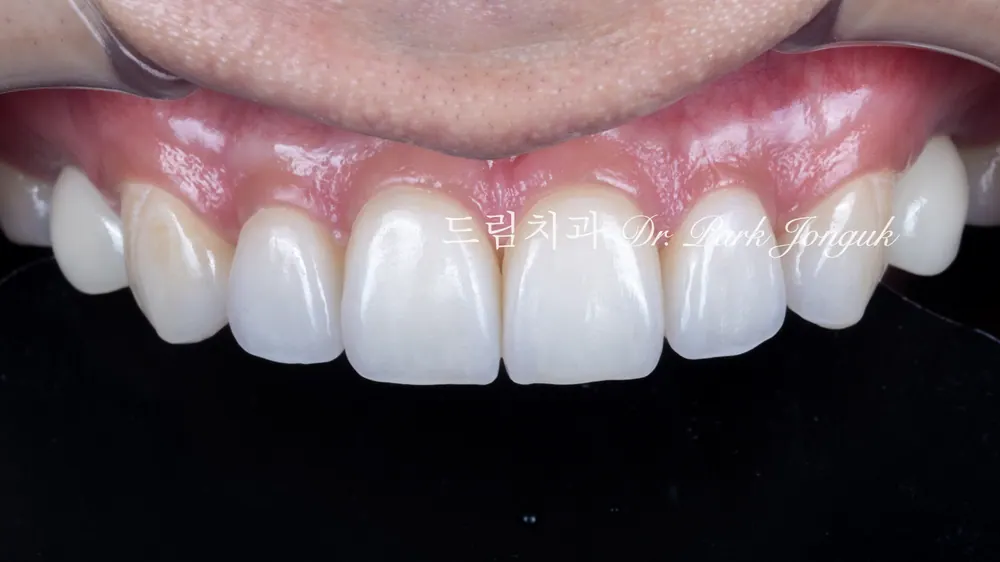
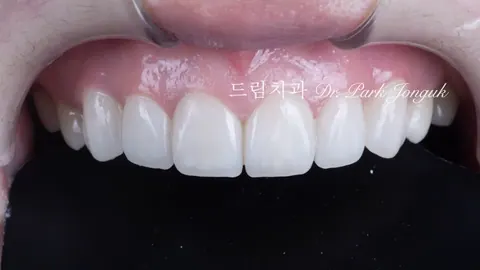
The veneer treatment has been completed.
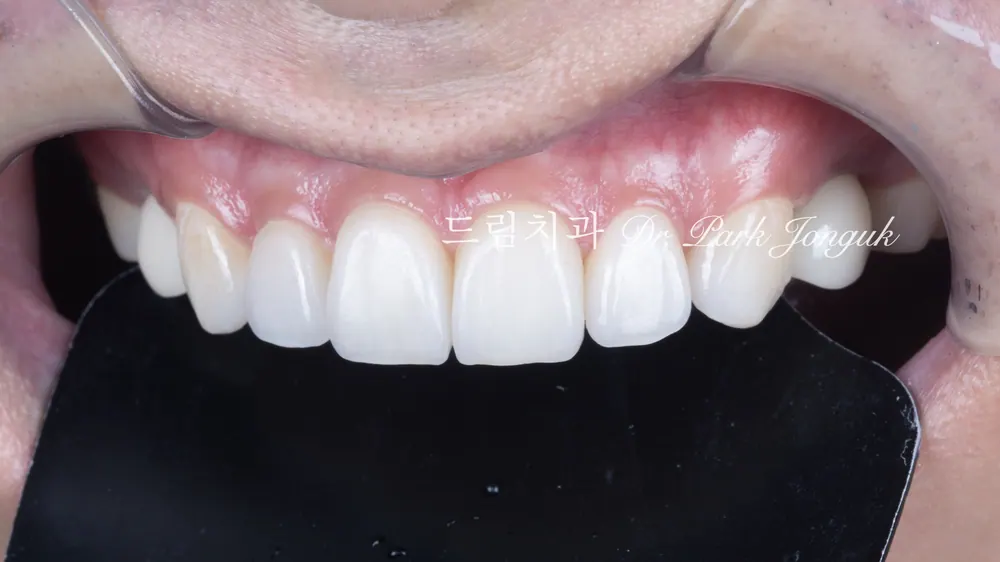
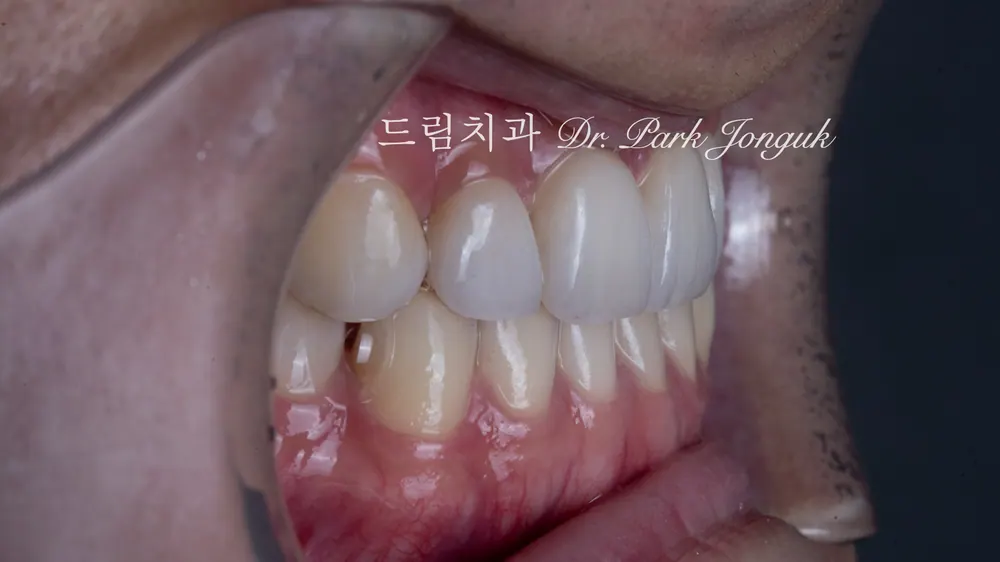
The hallmark of Dream Dental Clinic's veneers is naturalness.
Since a tooth isn't made of a single color,
expressing a range of color tones well is very important.
The tooth's translucency also needs to be well expressed,
and its three-dimensionality needs to remain alive.
This is what makes a veneer a genuinely "aesthetic" one.
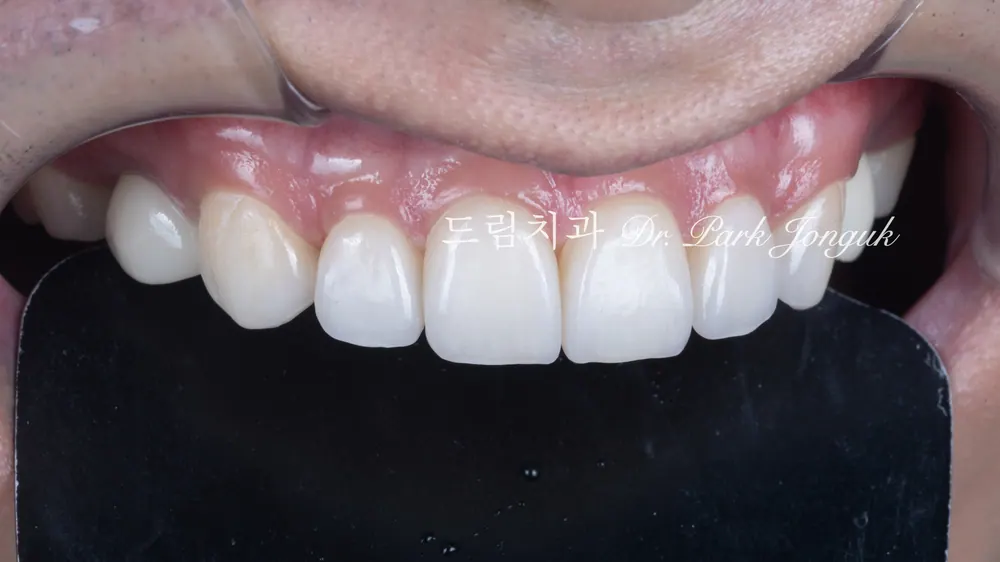
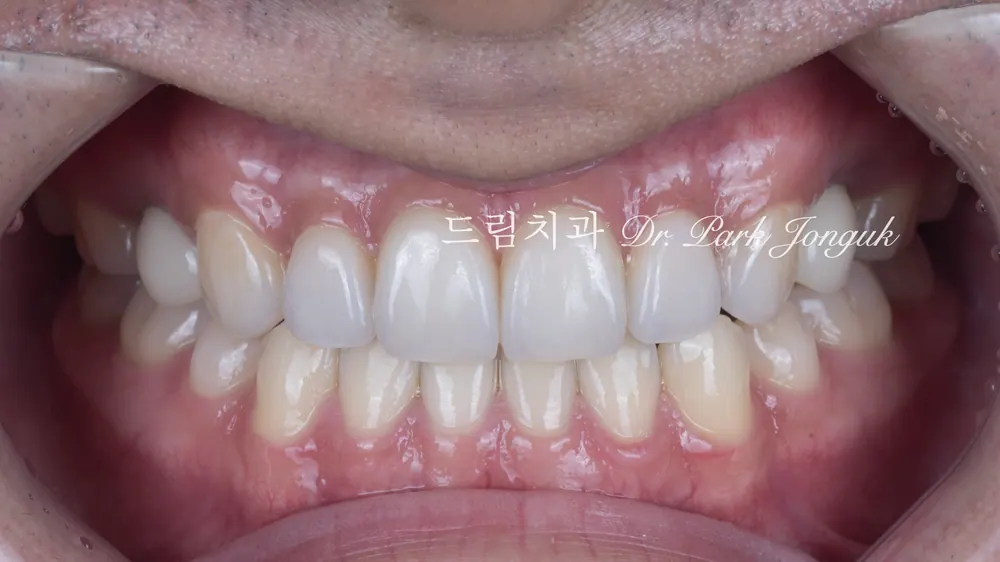
Typically, veneers on the upper front teeth
are made a little brighter than the lower front teeth.
If they were the same color, the teeth could end up looking noticeably darker.
We've looked at the treatment process for no-prep veneers.
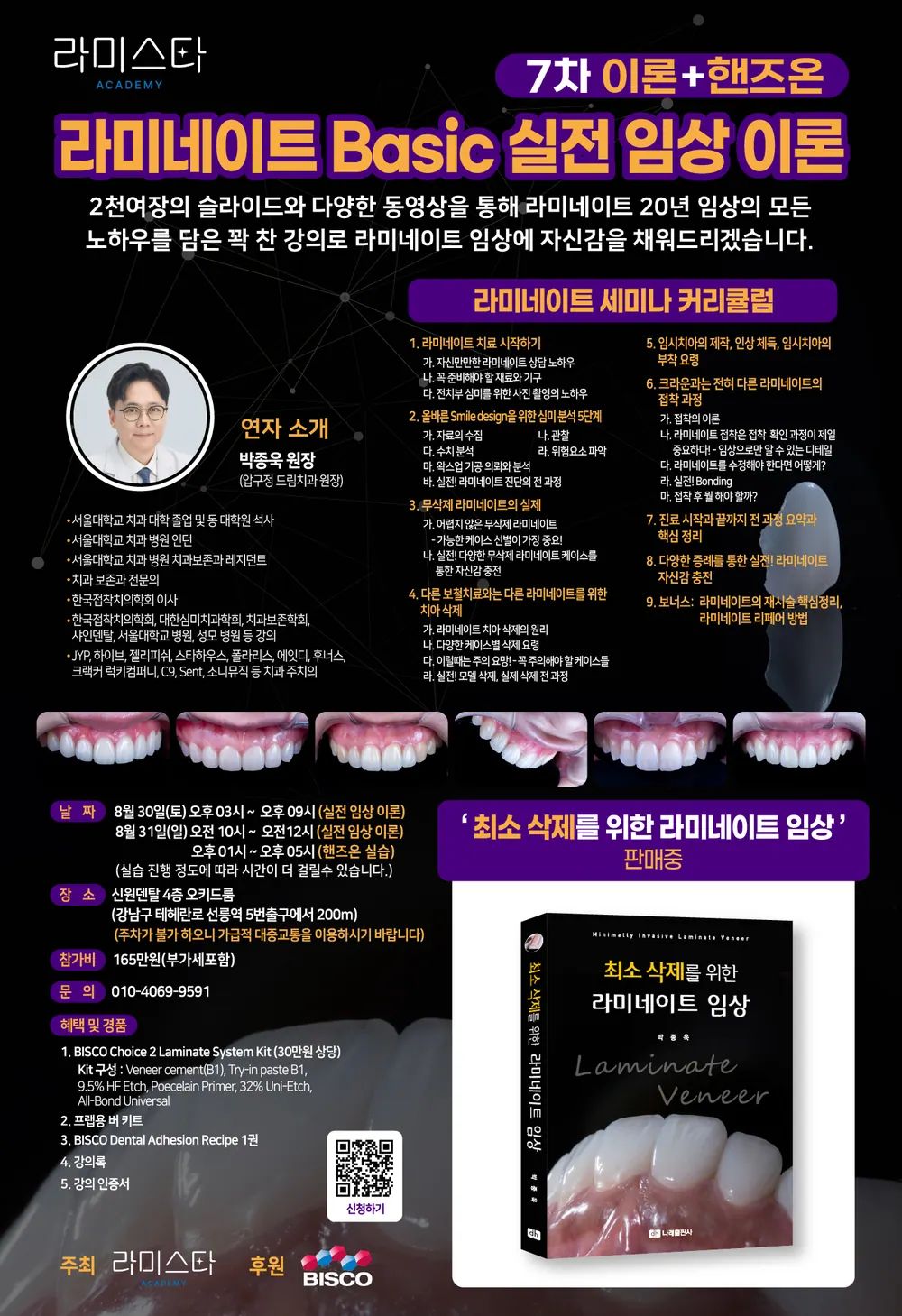
This is the August veneer lecture.
If you'd like a consultation for veneer treatment, please see the contact information below.
This article is a clinical note written by Dr. Park Jonguk of Dream Dental Clinic, Gangnam; the original was published on his blog. The photographs shown are real cases he treated. Results vary with each patient’s condition, and every procedure carries the possibility of individual variation and side effects.
Quick Consult
Request a Callback
Leave your number and we will call you back during clinic hours.
Request Received
We will contact you during clinic hours. For urgent matters, please call +82-2-3448-0028.