
No-Prep, Minimal-Reduction Veneers: Natural, Beautiful Teeth
Hello. I'm Park Jonguk, director of Dream Dental Clinic.
These days I'm putting a lot of effort into showing a wide range of cases.
I'm posting this many veneer case photos,
yet it's still less than a tenth of the treatments we actually do.
Cosmetic treatment is quite trendy these days.
On the facial surgery side, there's a wide range of cosmetic procedures for the eyes, nose, chin, and more.
In the dental field, cosmetic treatments
include orthodontics, teeth whitening, double-jaw surgery, and so on,
and among these, the treatment that makes the teeth themselves beautiful
is tooth reshaping.
As a treatment that changes the shape of the tooth, using methods called minimal-reduction veneers and all-ceramic crowns,
treatment is carried out.
Depending on the clinic,
you'll sometimes hear things framed like "what we do isn't a veneer,"
as if there were some new method of tooth reshaping.
It's really just a veneer with a fancier name attached.
If you're genuinely confident in the treatment itself,
there's no need to fuss that much over the packaging.
At Dream Dental Clinic, we pour every bit of care into our veneers,
and we're confident in delivering the best veneers.
What matters in this kind of tooth reshaping
is minimizing damage to the tooth.
Giving minimal-reduction veneers a different name
doesn't reduce the amount of tooth that has to be cut,
and a treatment with less reduction isn't called by some other name either.
Among veneers, there are cases where less tooth reduction is enough,
and there are cases where reducing less isn't possible at all.
The amount of reduction inevitably differs from person to person, case to case, and tooth to tooth,
so a method that reduces less shouldn't really be given a different name.
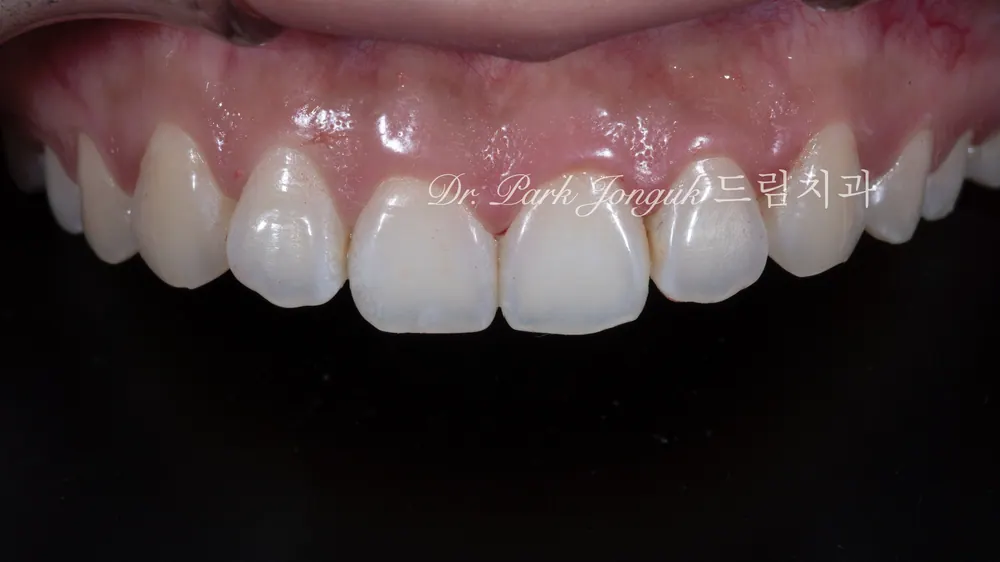
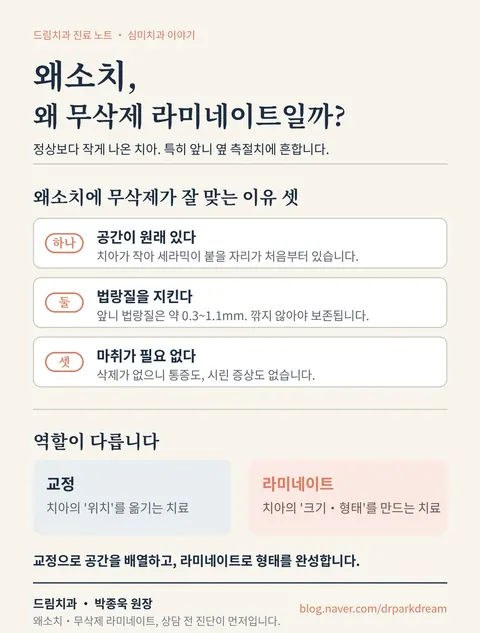
The teeth were relatively even,
but the tooth next to the front tooth stuck out slightly,
and while the teeth kept a good sense of translucency,
their jar-like shape made it hard for them to look pretty.
The teeth were a bit short, which made them look wide from the side.
The proportion between the teeth wasn't good either,
so there was a lot that needed improving.
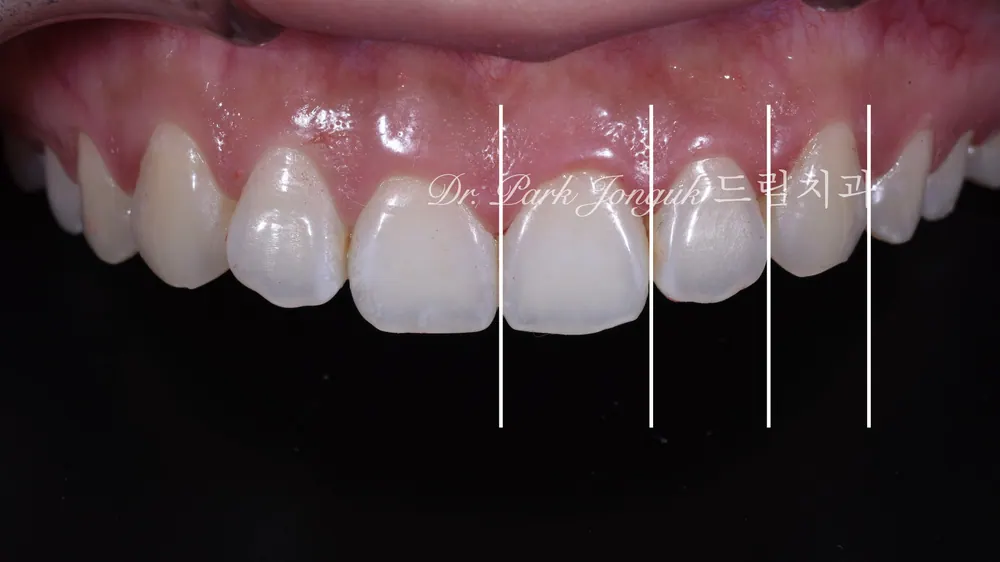
There's a proper proportion between the front tooth, the tooth next to it, and the canine,
and this case didn't match it.
Adjusting the proportion was needed to make it look more stable.
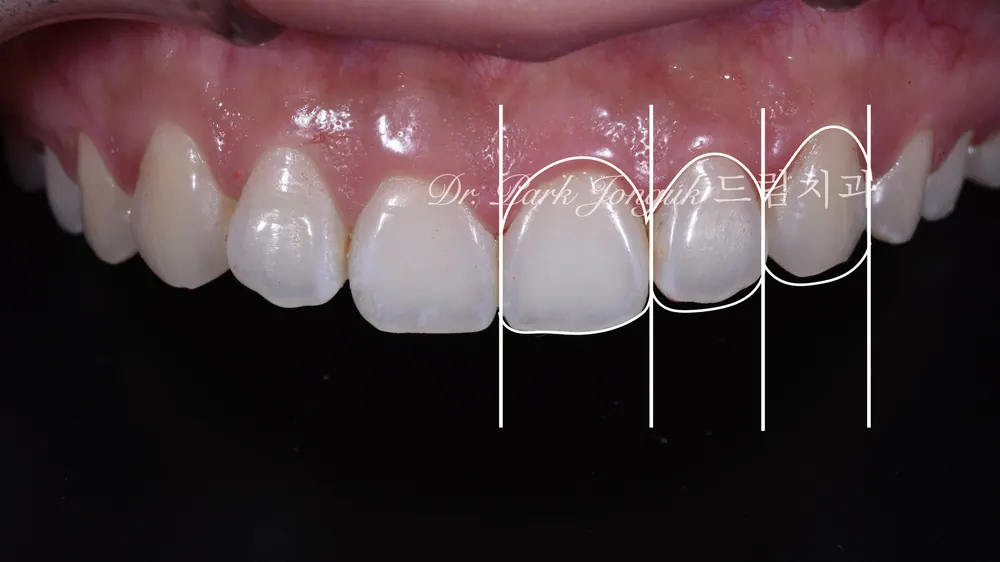
The teeth needed to be lengthened somewhat,
and there are various ways to extend that length,
so the decision has to take the bite into account as well.
We planned to lengthen the front teeth toward the gum side
and lengthen the other teeth toward the incisal edge.
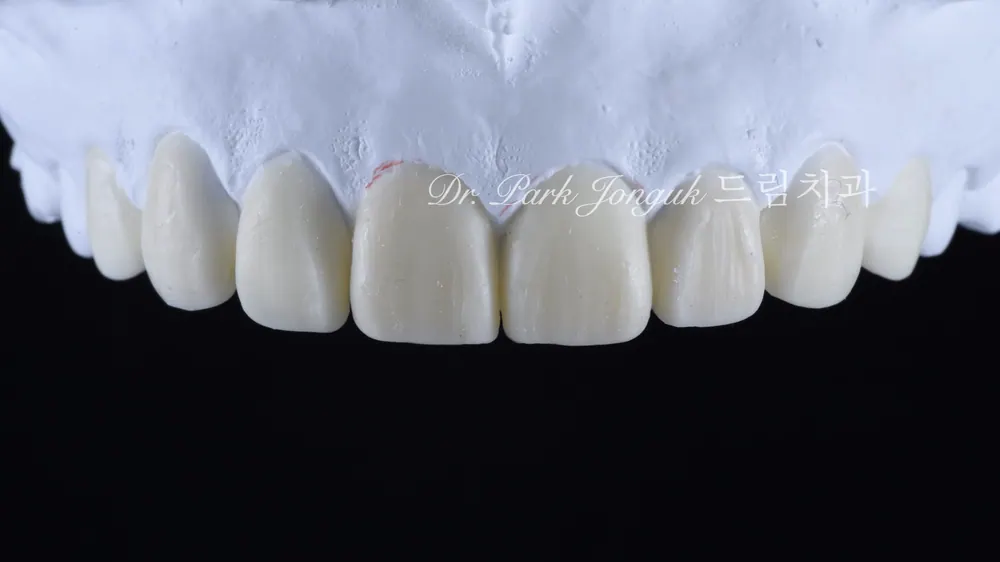
Using wax,
we check what shape the teeth will end up taking.
Through this process, we check how much each tooth needs to be reduced.
The amount of reduction for every tooth has to be decided before treatment.
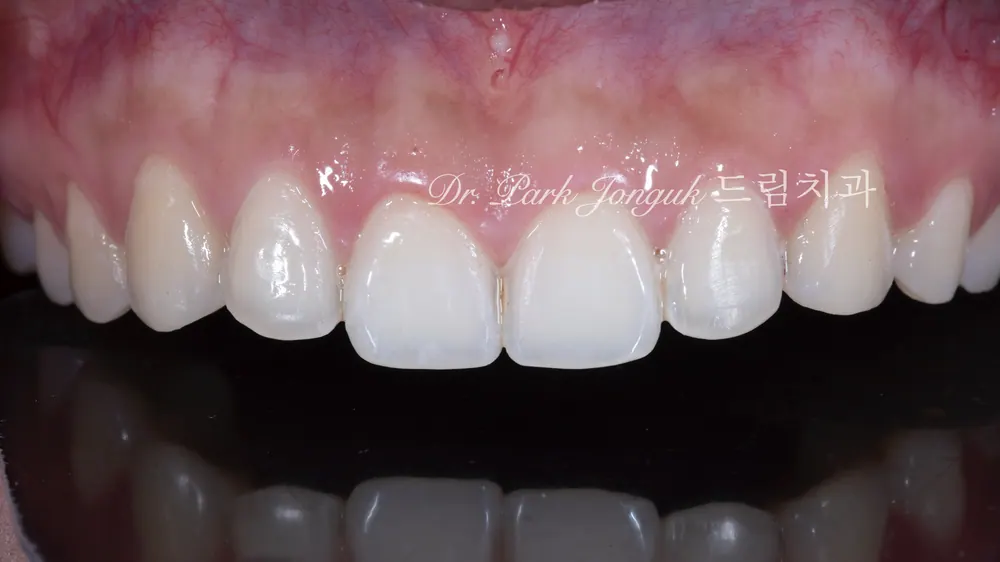
This is the appearance after the teeth were reduced for minimal-reduction veneer treatment.
There are teeth with no reduction at all,
and teeth with some amount of reduction.
In this state, even without temporary teeth, there's no sensitivity at all;
only a minute amount was reduced.
The amount of reduction differs from tooth to tooth and even from area to area on the same tooth,
which naturally means the veneer ceramic's thickness
has to vary from tooth to tooth and area to area as well.
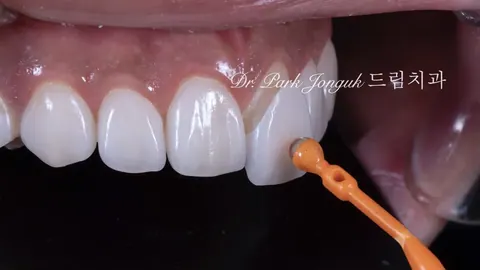
To reduce the tooth and fit the veneer with this level of precision,
a microscope is essential.
Looking through a microscope, magnifying the tooth about 10 times,
is what it takes for the reduction to count as done properly for a veneer.
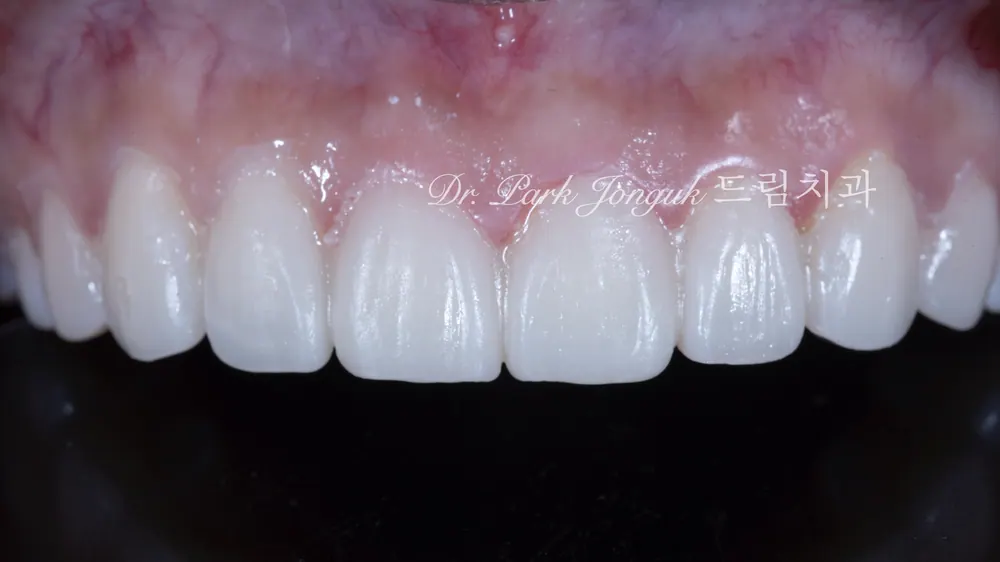
We make temporary teeth
to preview the shape of the minimal-reduction veneer result.
There are clinics that sometimes skip making temporary teeth altogether,
but one of the most important steps is using temporary teeth
to preview and consult on the result.
It's an essential process, so skipping it
is something that shouldn't happen in veneer treatment.
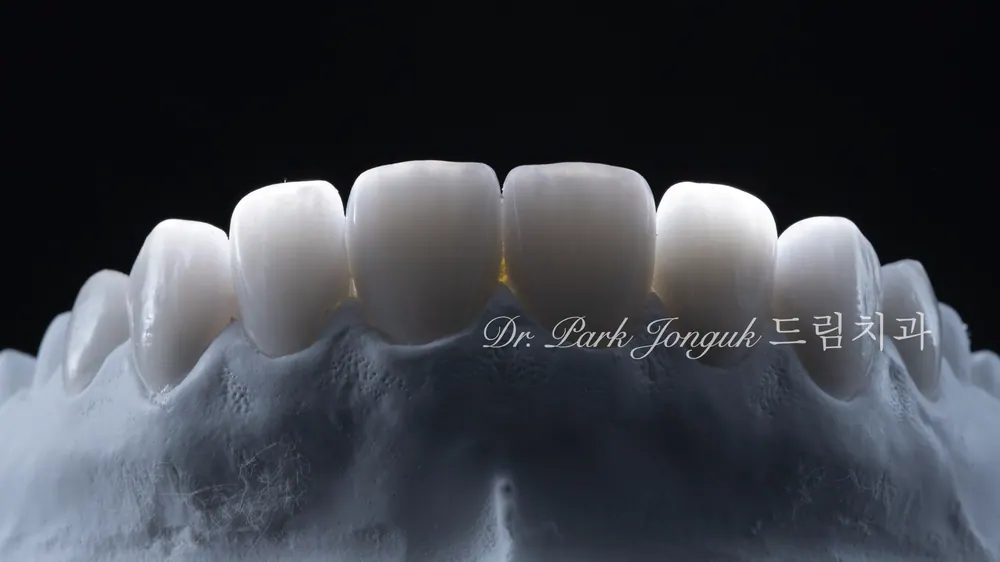
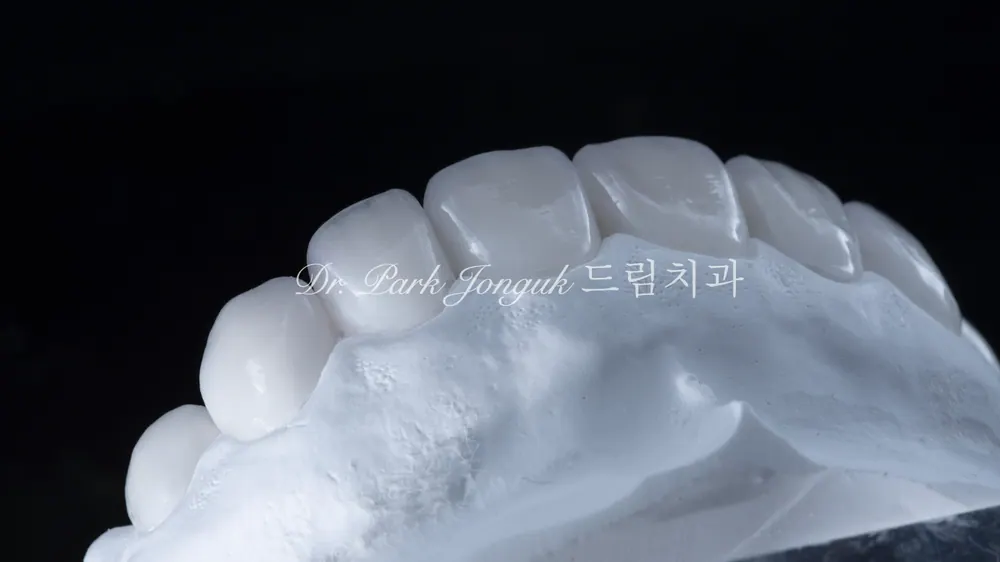
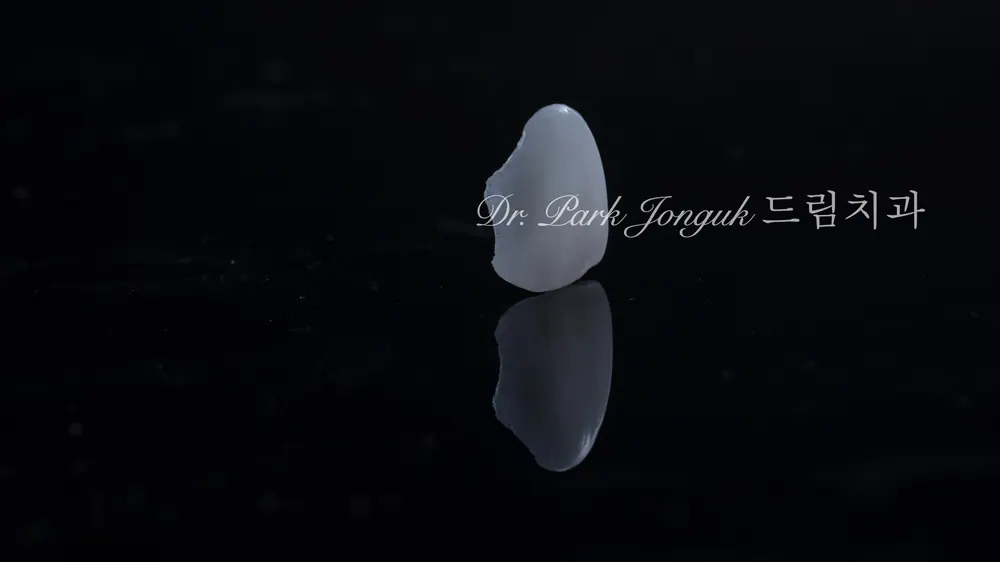
These are veneers fabricated in ceramic.
Because they're no-prep and minimal-reduction,
they're quite thin.
The thickness runs from about 0.1mm to 0.7mm depending on the area.
What matters is that, within this thin a thickness,
every varied expression of a natural tooth is fully packed in.
This is the advantage of the hand-made method.
It's something the currently trendy one-day method simply cannot match.
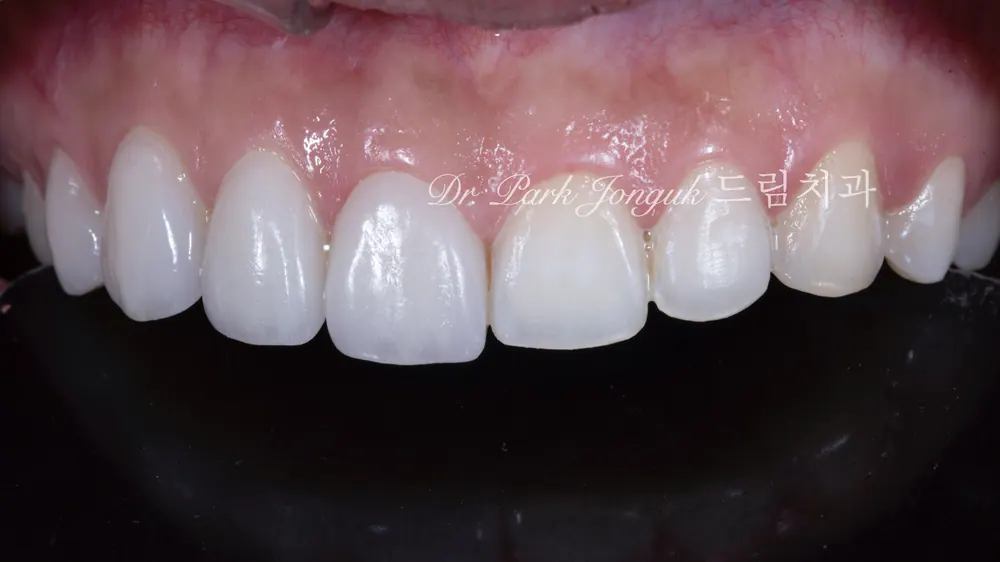
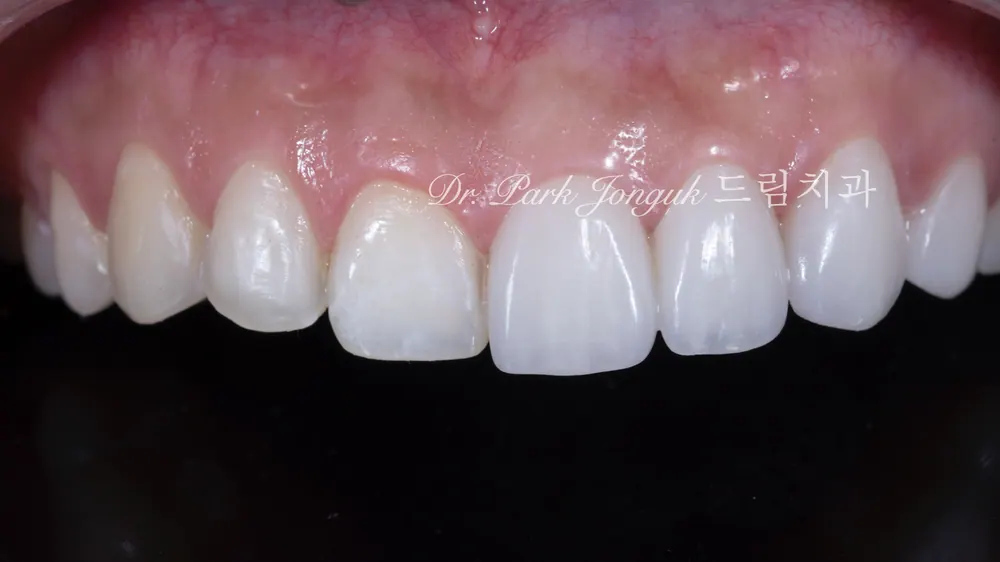
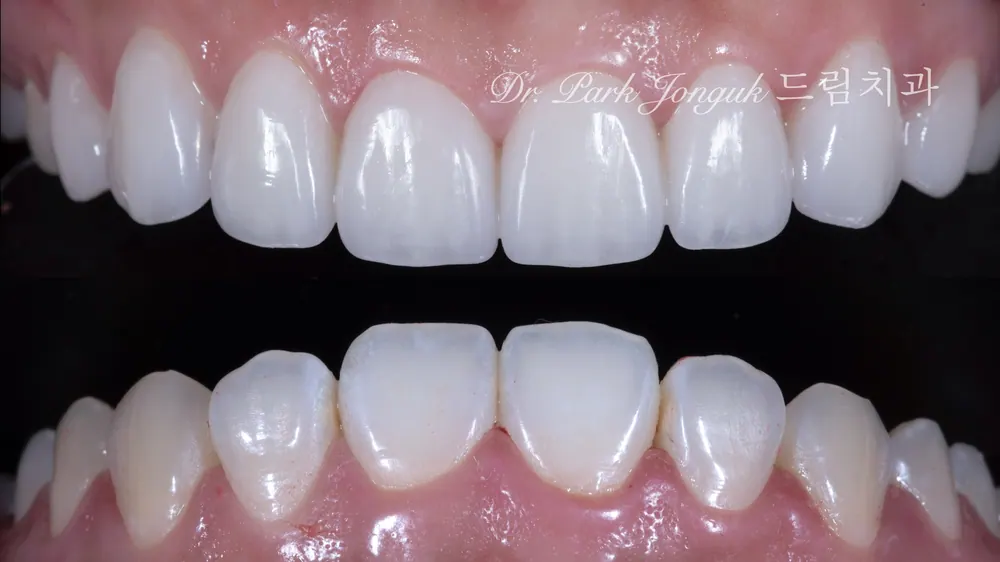
We took a photo split evenly, half and half, side by side.
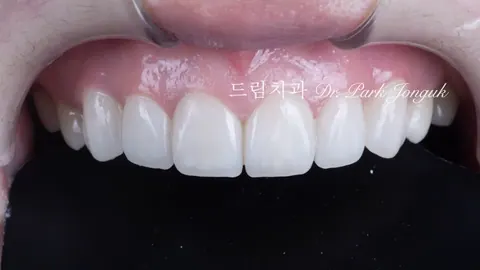
You can see it's more beautiful than the natural tooth, bright, with a living sense of translucency.
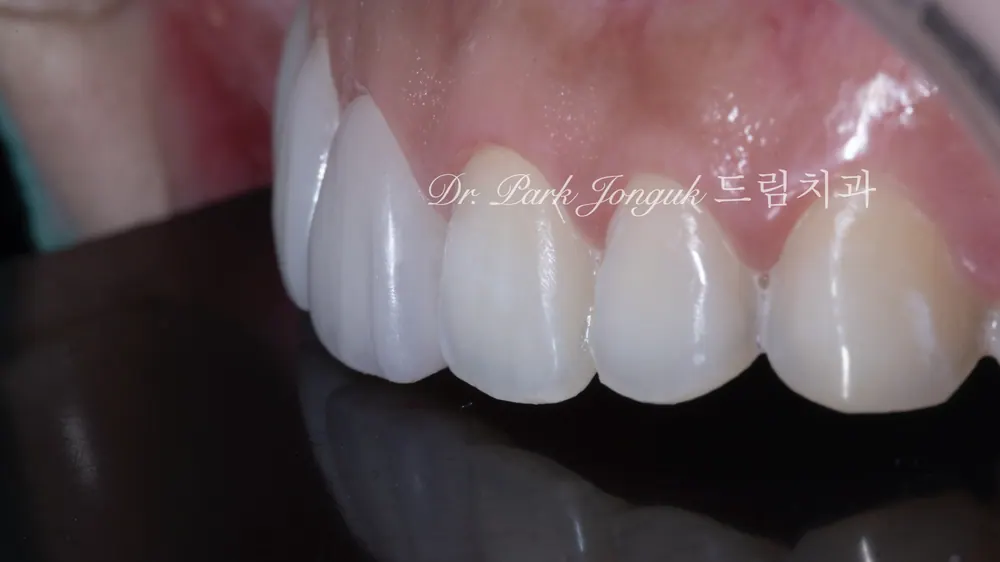
You can see that even the sides of the tooth are properly wrapped.
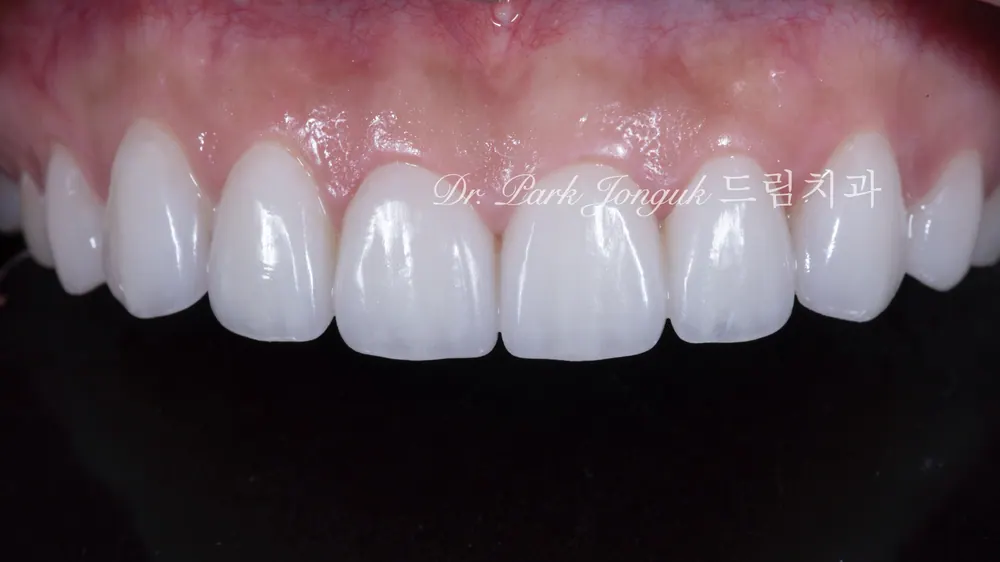
The veneer treatment has been completed like this.
More natural than the natural tooth itself,
and far more beautiful, that's what minimal-reduction veneer treatment achieves.
An awkward, artificial veneer that's obvious to anyone can be made easily.
Only a veneer crafted by hand, piece by piece, like a work of fine quality, can express this kind of natural feel.
Since 2006, Dream Dental Clinic
This article is a clinical note written by Dr. Park Jonguk of Dream Dental Clinic, Gangnam; the original was published on his blog. The photographs shown are real cases he treated. Results vary with each patient’s condition, and every procedure carries the possibility of individual variation and side effects.
Quick Consult
Request a Callback
Leave your number and we will call you back during clinic hours.
Request Received
We will contact you during clinic hours. For urgent matters, please call +82-2-3448-0028.