
Creating Beautiful Teeth with Minimal Veneer Tooth Reduction
Hello. I'm Park Jonguk, director of Dream Dental Clinic.
The purpose of veneer treatment is to make the teeth beautiful.
Beautiful teeth first need to look natural.
How natural the teeth look depends on how the ceramic is handled.
Currently, there are two ways to fabricate veneers:
one using a computer system called CAD/CAM
that mills the veneer from a ceramic block,
and one where, much like firing pottery by hand,
it's built up layer by layer,
made by hand.
Please see the link below for the difference between the two.
Someday, as artificial intelligence advances
and fabrication technology improves,
this kind of one-day, computer-finished method may improve,
but for now, compared to the handmade method,
there's still a big gap when it comes to how natural it looks.
On top of that, since the one-day method requires the ceramic to be a certain thickness or more,
the amount of tooth reduction can end up greater.
Let's take a look at the process of achieving natural, beautiful teeth
while keeping veneer tooth reduction to a minimum.
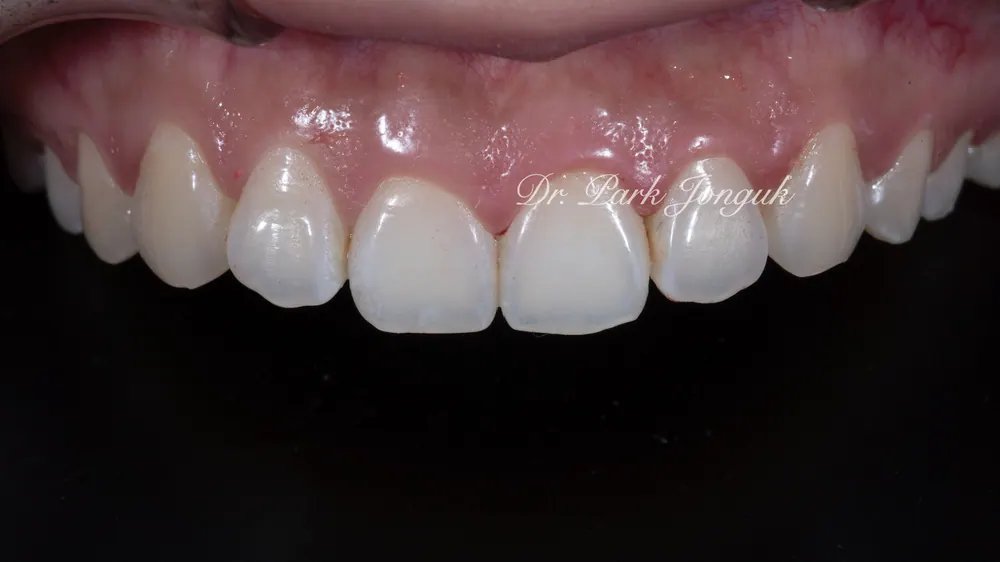
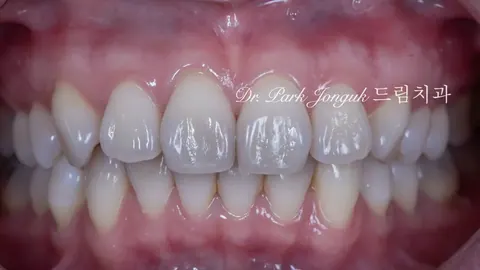
The shape of the teeth was awkward, with discoloration showing between them,
and the gum height wasn't even either.
To make the teeth look attractive here,
the tooth proportions needed adjusting and the gumline needed improving,
and the shape of the teeth had to look more natural while the color was brightened.
There was really a lot to do.
What matters is that, even while making so many changes, veneer tooth reduction still had to be kept to a minimum.
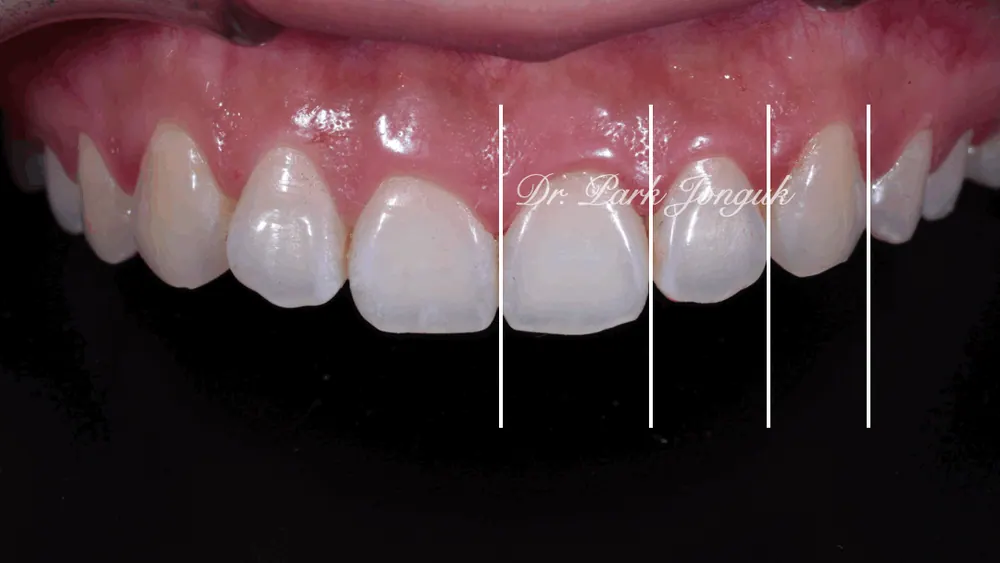
Anticipating the change in tooth proportion and shape like this,
a wax-up is built to that shape. A precise diagnostic process is very important here.
Please see the link below for the diagnostic process.
Through this process, the eventual tooth shape is previewed in wax beforehand.
The amount of tooth reduction is then determined based on this wax-up.
Only a very small amount is removed, and only where necessary.
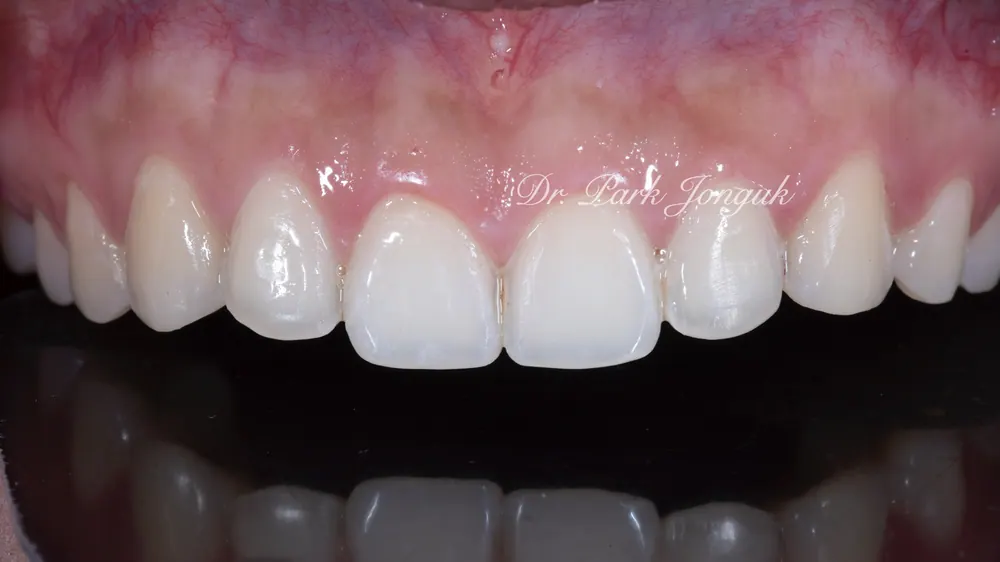
This shows the state after reduction was completed.
With minimal reduction, even without a temporary tooth in place after reduction,
no tooth sensitivity occurs.
That's how minimal the reduction was.
Still, temporary teeth do need to be made.
Not to protect the tooth temporarily,
but to preview the shape the ceramic tooth will eventually take.
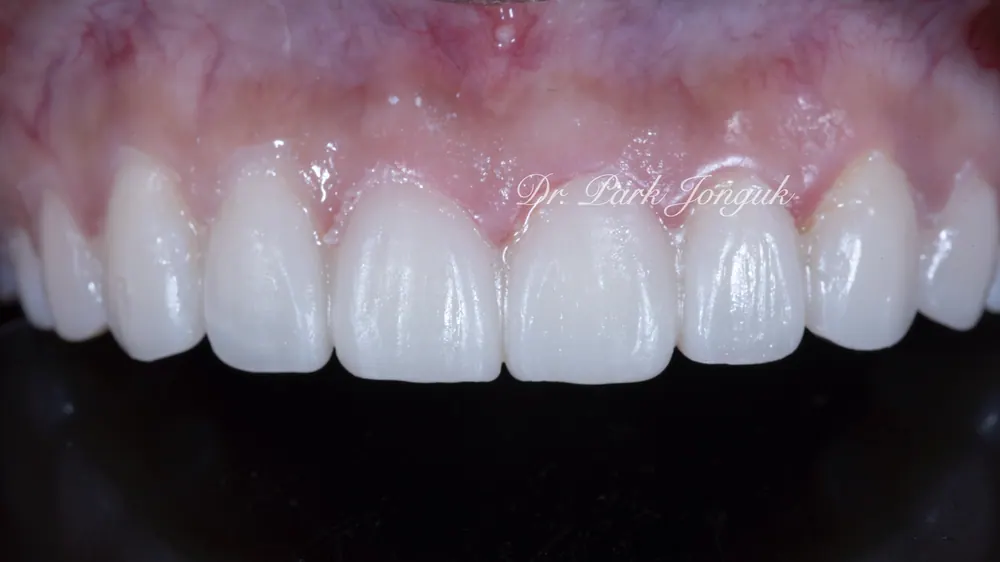
A resin temporary tooth is used to discuss the shape with the patient.
While adjusting the proportion, volume, and other aspects to match the desired shape,
the final shape is decided.
Once the shape has been determined through this process,
the veneer is fabricated in ceramic using the handmade method.
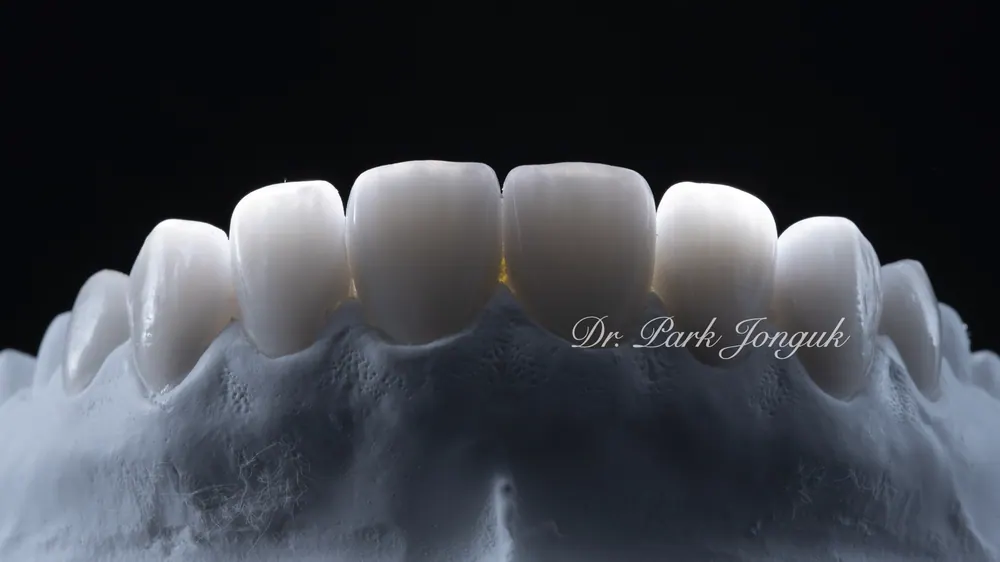
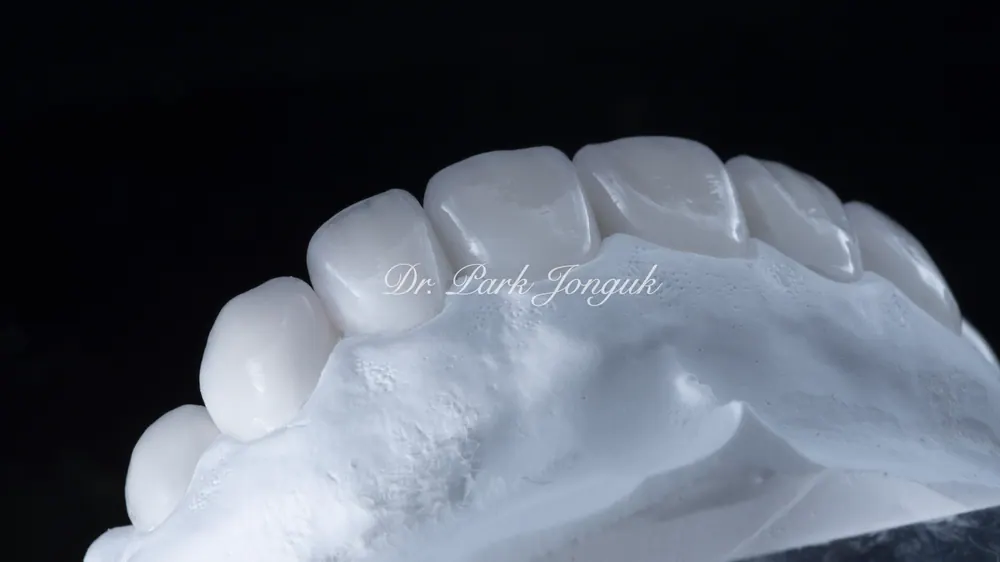
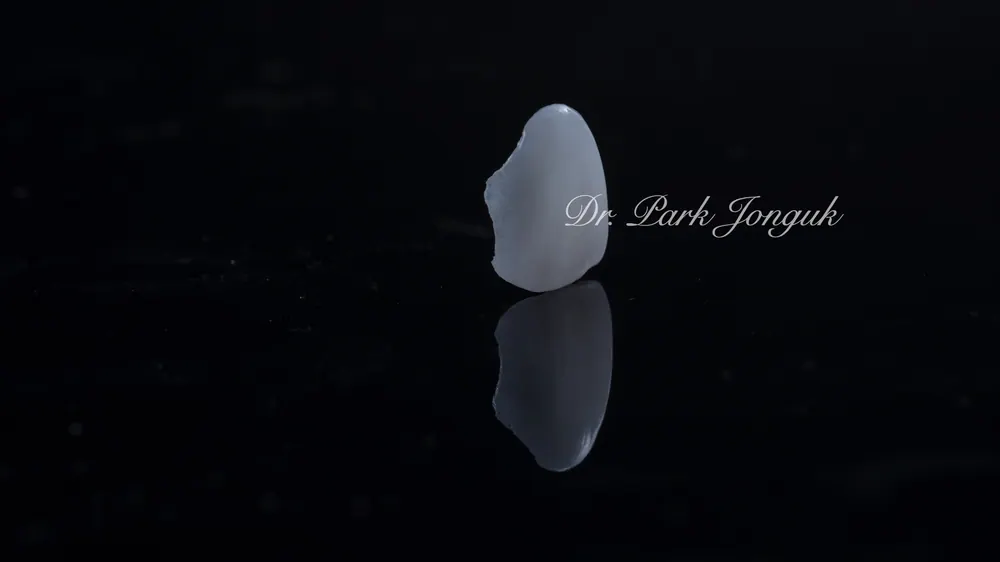
The finished veneer
is extremely thin, yet carries a range of expression within it,
so you could think of it as a work of art.
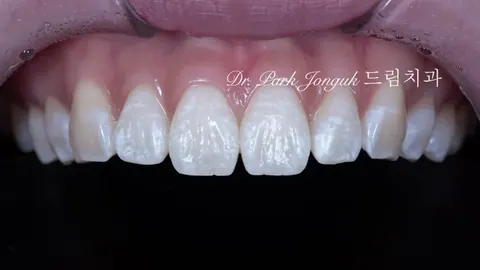
With veneer tooth reduction kept to a minimum, even the shape, color, and surface texture
come together to express the beauty of a natural tooth.
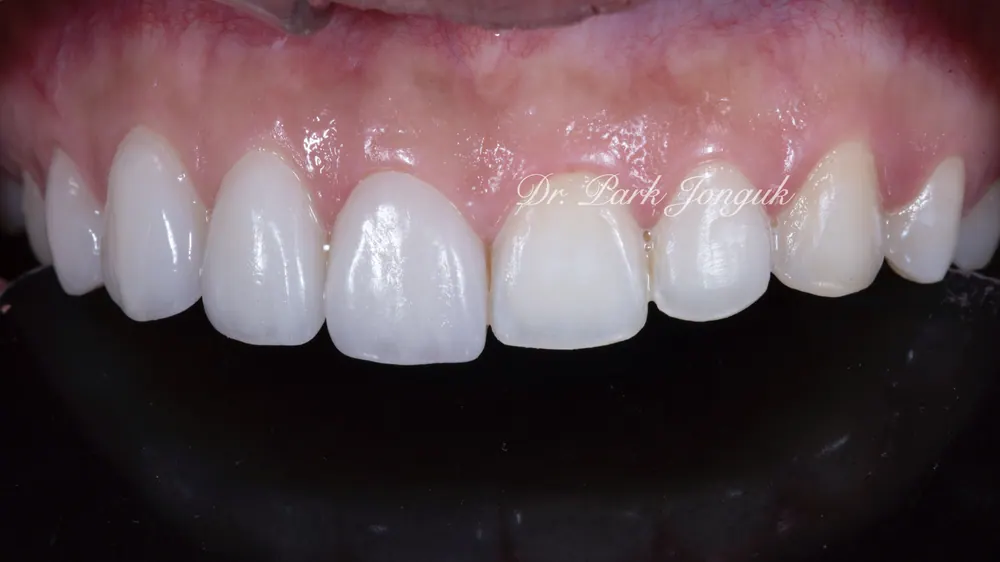
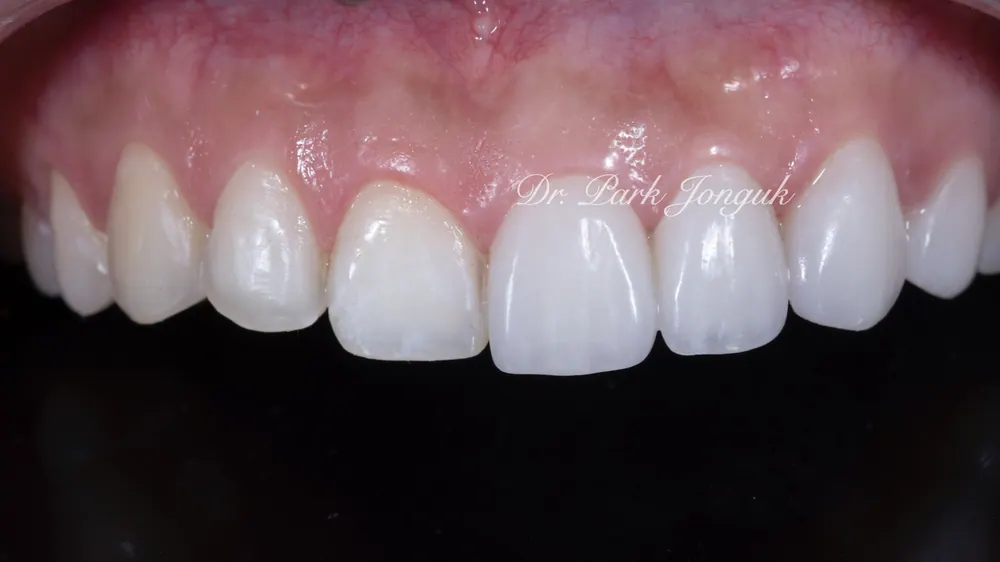
With the veneer placed on half the tooth and the natural tooth left on the other half,
a photo was taken.
You can see the change in tooth shape and color.
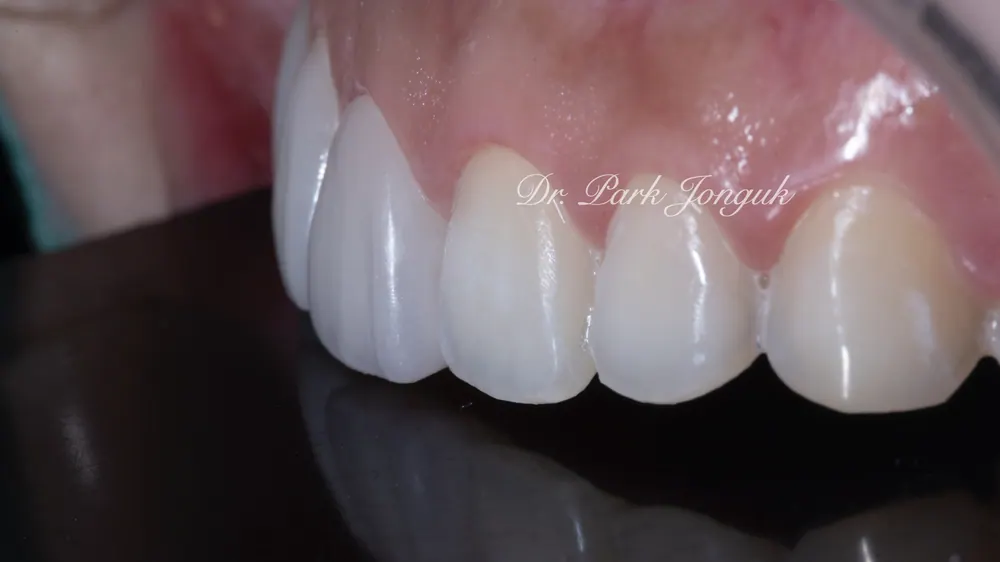
Even from the side, you can see that the veneer wraps the whole tooth.
This in particular is something the one-day method can't match.
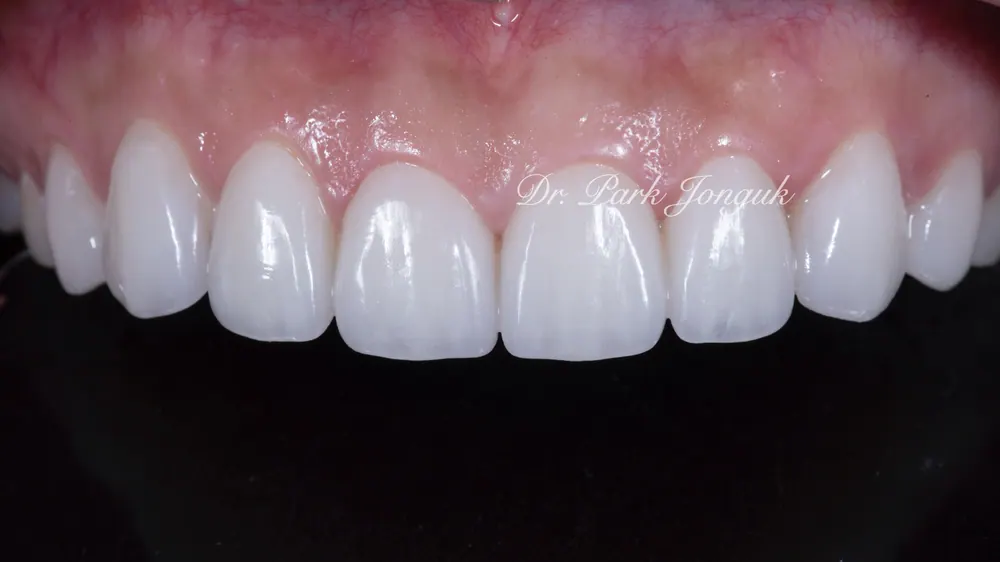
Just like a natural tooth, the dimension, color, and translucency are all preserved.
With only minimal veneer tooth reduction,
all of this was achieved with extremely thin ceramic.
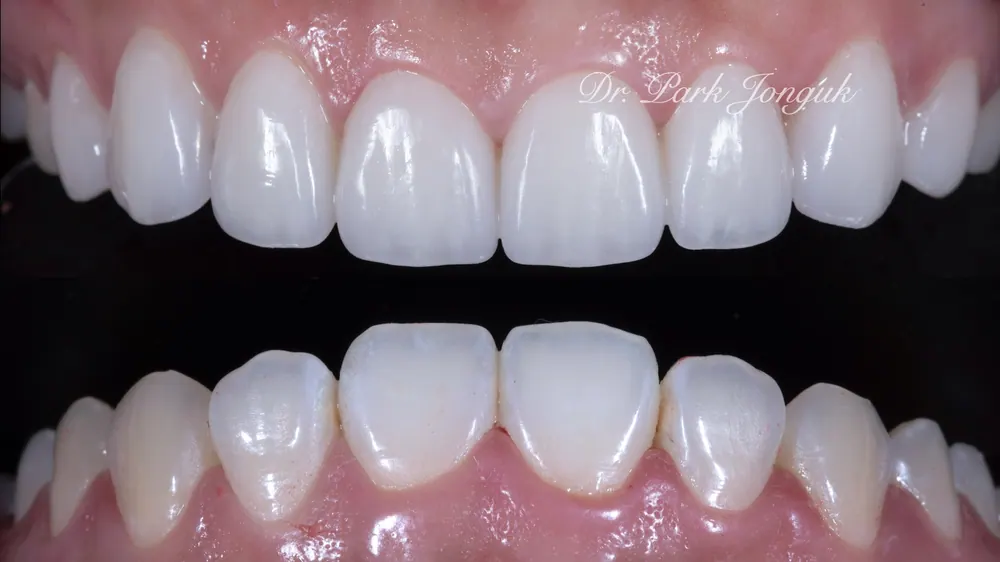
Since 2006, Dream Dental Clinic
This article is a clinical note written by Dr. Park Jonguk of Dream Dental Clinic, Gangnam; the original was published on his blog. The photographs shown are real cases he treated. Results vary with each patient’s condition, and every procedure carries the possibility of individual variation and side effects.
Quick Consult
Request a Callback
Leave your number and we will call you back during clinic hours.
Request Received
We will contact you during clinic hours. For urgent matters, please call +82-2-3448-0028.