
Veneer Treatment with Minimal Reduction, Guided by Proportion
In treatment aimed at aesthetics, how attractively the result turns out matters a great deal.
There are several factors that determine the beauty of teeth. The most fundamental of these is proportion.
Whether teeth look big or small is a fairly relative matter.
When we talk about teeth being big or small, it's really about how they compare to the face, or how their length or width compares to the tooth right next to them.
It's rare, in practice, to talk about a tooth being big or small based on an absolute measurement.
Even if a tooth is average-sized, it can look considerably larger if the face is small.
Even looking at the proportion of a single tooth, a shorter length makes it look relatively wider.
How well this proportion is matched has a very important effect on the aesthetic outcome.
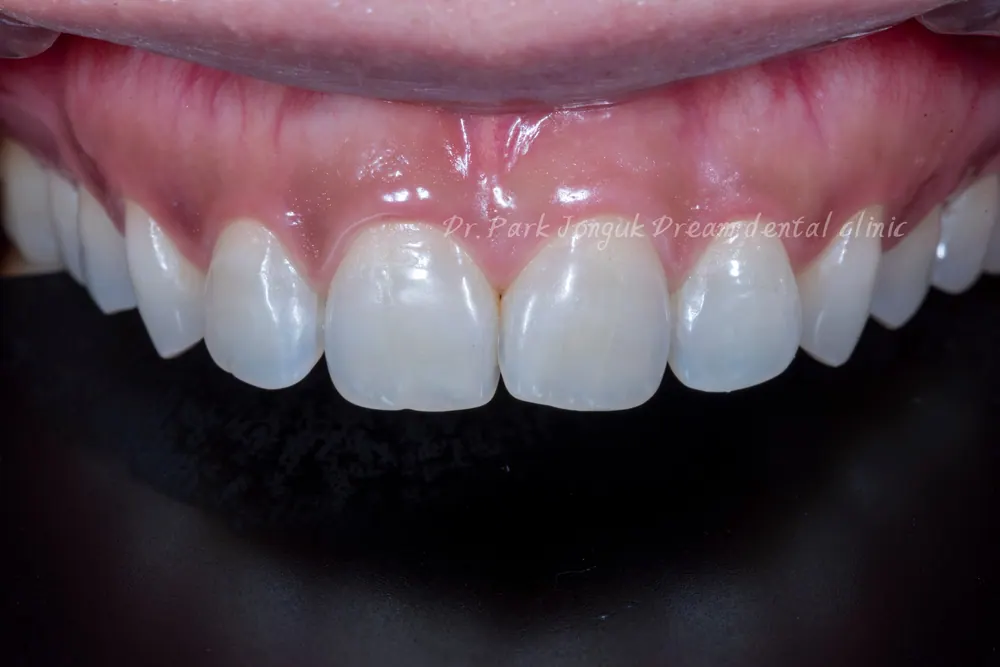
Looking at the teeth, they had a slightly yellow tint, and the alignment of the two front teeth wasn't good.
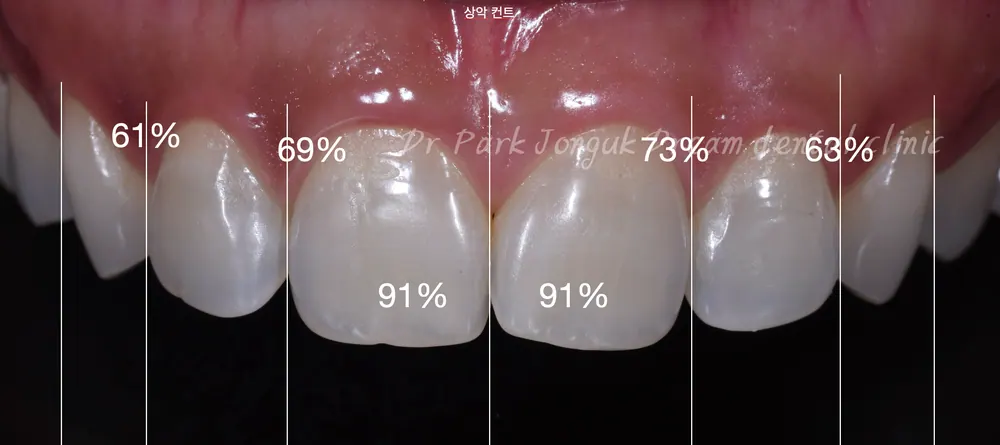
The proportion between the teeth is measured.
Looking at the width-to-height ratio of the front teeth, we get a figure of 91%. This figure treats height as 100 and measures what percentage the width is of that.
For the most part, it follows the proportion of the face. People with a longer face tend to be around 70%, people with an average face tend to be around 75-85%, and people with a wider face tend to exceed 85%.
Since this patient had an average facial proportion, the treatment plan needed to aim as close to the average ratio as possible, but the issue was the bite. Depending on the position of the lower teeth, there's a limit to how long the upper teeth can be made.
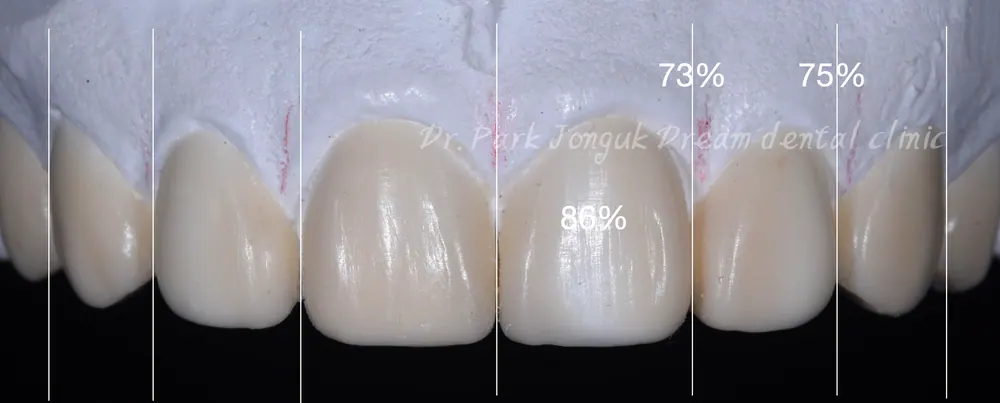
A treatment plan is made to bring the overall proportion as close to average as possible.
At this wax-up stage, the result needs to match the dentist's treatment goals.
With this treatment plan as the target, the veneer treatment proceeds in a direction that brings out the tooth's natural sense of dimension and translucency.
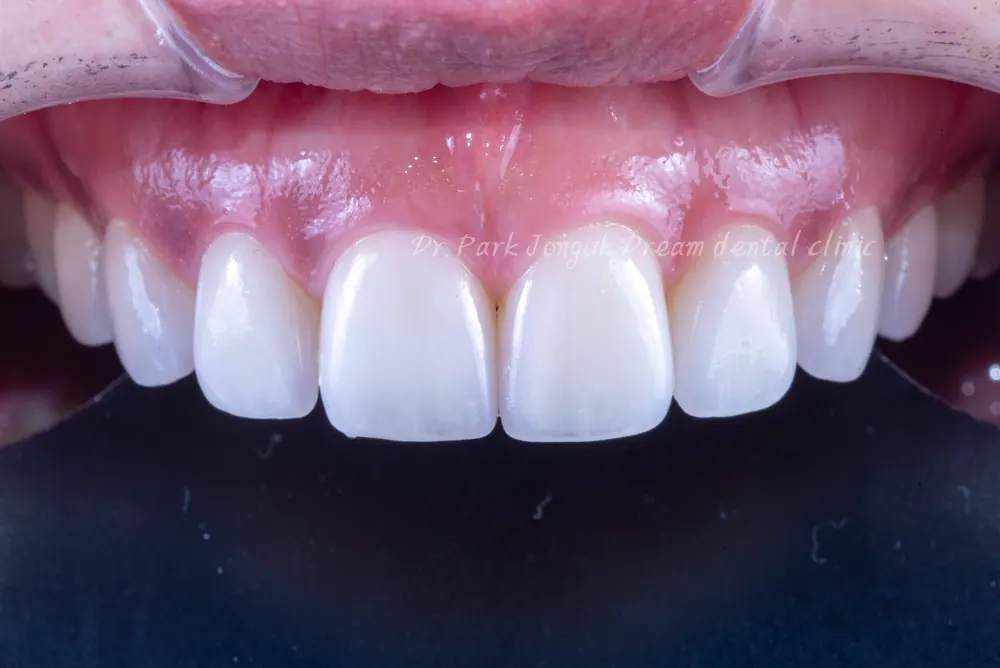
In practice, the ceramic veneer treatment was done at a proportion even closer to the average than originally planned.
By adjusting the length in the mouth using a temporary tooth, keeping it to a length that doesn't cause any issue with the bite against the lower teeth, it's best to set the proportion at around 80% for harmony with this patient's face.
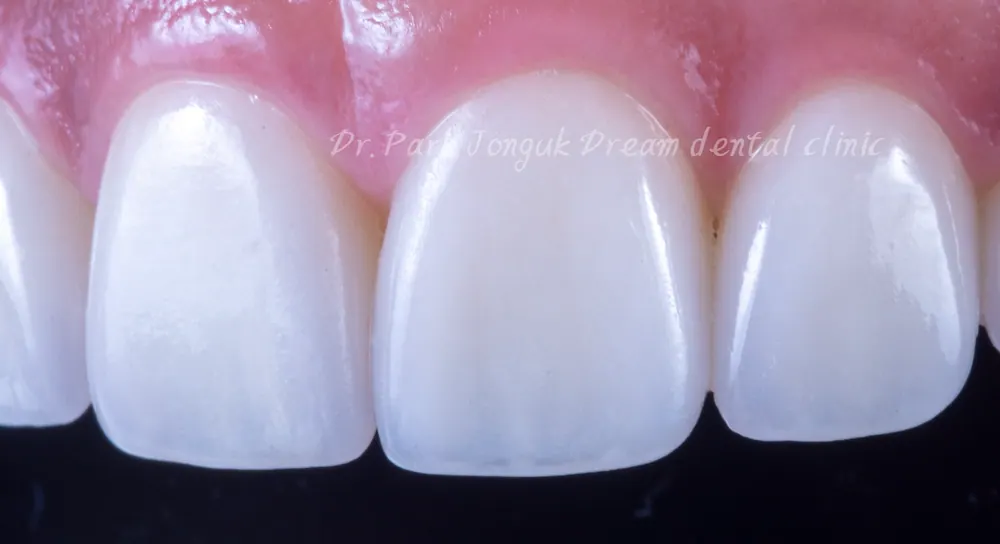
Building on that proportion as a foundation, bringing out the tooth's natural translucency is also very important.
The translucent area at the tip of the tooth is almost a symbol of "youthful teeth."
As one-day aesthetic treatments have become more common recently, this is a part that's often overlooked.
For now, veneer treatment finished in a single day still can't properly express this symbol of youthfulness.
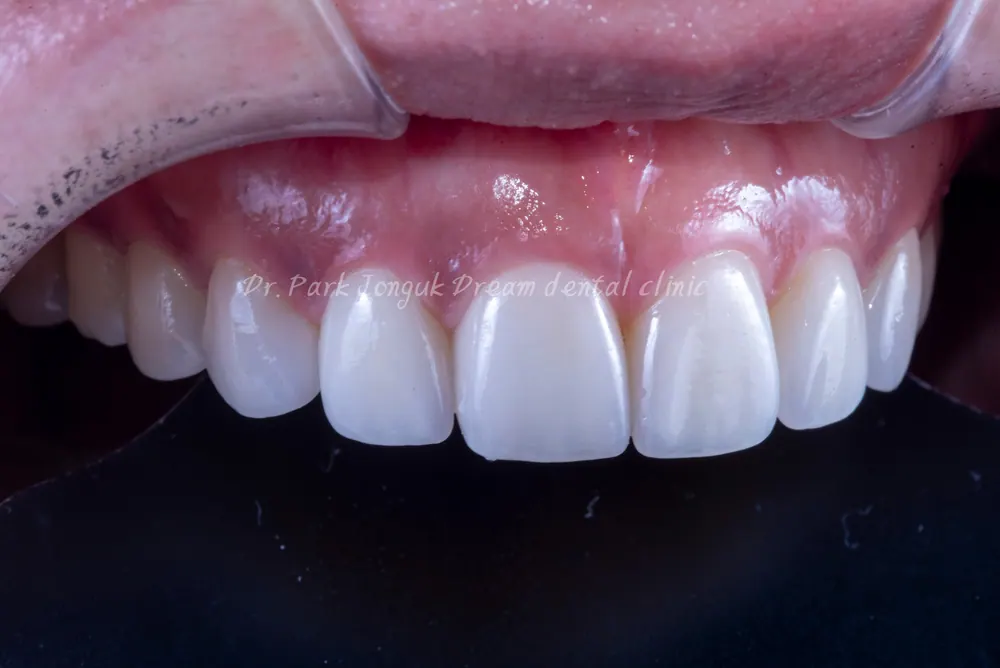
Even the surface texture of the tooth is crafted so that a young, natural feel comes through as much as possible.
This, too, is something the one-day method still can't match.
This article is a clinical note written by Dr. Park Jonguk of Dream Dental Clinic, Gangnam; the original was published on his blog. The photographs shown are real cases he treated. Results vary with each patient’s condition, and every procedure carries the possibility of individual variation and side effects.

Quick Consult
Request a Callback
Leave your number and we will call you back during clinic hours.
Request Received
We will contact you during clinic hours. For urgent matters, please call +82-2-3448-0028.