
Harmony Between All-Ceramic Crowns and Veneers, from a Skilled Dental Clinic in Cheongdam-dong
Hello.
I'm Park Jonguk, medical director of Dream Dental Clinic, a skilled dental clinic in Cheongdam-dong, and a board-certified specialist in conservative dentistry.
Treatment that makes the teeth look prettier is called dental cosmetic surgery.
It's reshaping the teeth, much like eye or nose surgery reshapes those features.
There are two methods for this kind of reshaping: laminate veneers and all-ceramic crowns.
For short, they're usually just called veneers and crowns.
A veneer involves thinly reducing only the front surface of the tooth
and bonding on a thin ceramic plate,
while a crown involves reducing the entire tooth
and capping it, like putting on a hat.
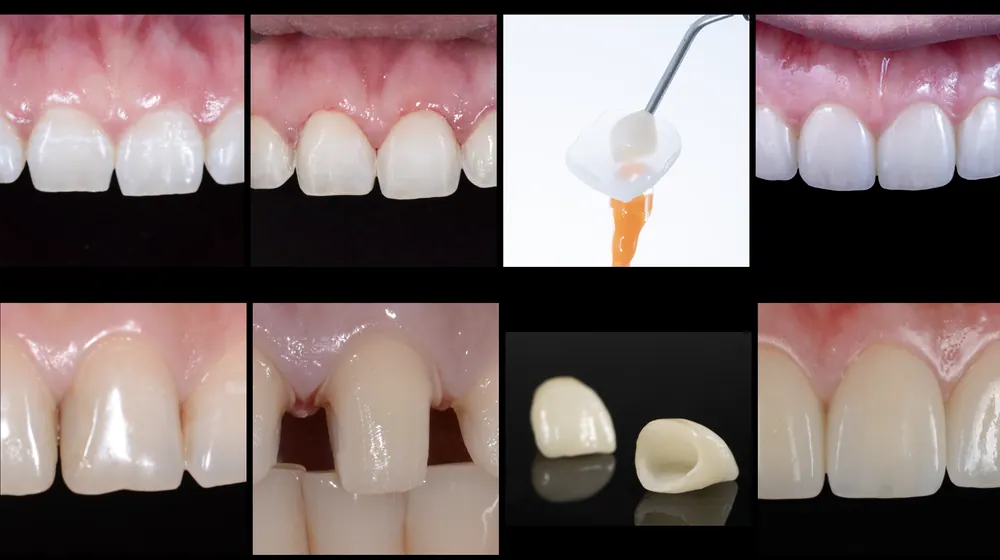
The four photos above show the veneer process.
Starting from the natural tooth, a minimal amount is reduced, and a thin ceramic piece
is bonded onto the tooth to finish.
The four photos below show a crown.
The amount of tooth reduced is far greater than with a veneer.
It's a method that covers the tooth entirely,
used for cases with extensive decay,
severe discoloration, or a tooth weakened by root canal treatment,
and you can think of it as a treatment reserved for these more specific situations.
It's quite common to combine these two methods in a single treatment.
The challenge, when using both methods together,
is unifying the color, translucency, and overall feel of the all-ceramic crown and the veneer.
The ceramic used for the two methods may be the same, or it may differ.
Generally, when discoloration is severe, zirconia is used,
while a different type of ceramic is used for the veneer,
and just as there are many kinds of ceramic,
their color and translucency all differ, which makes matching them a real challenge.
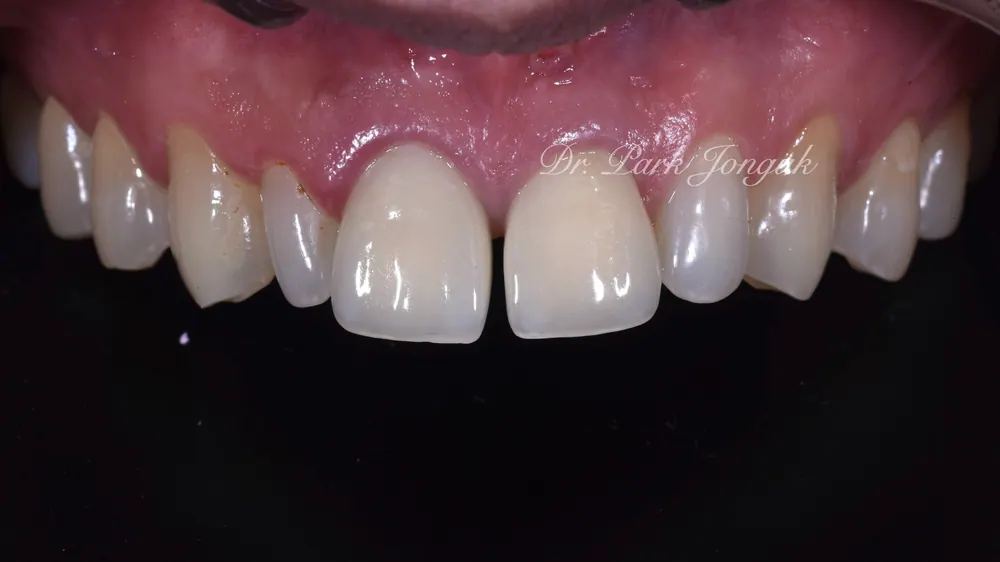
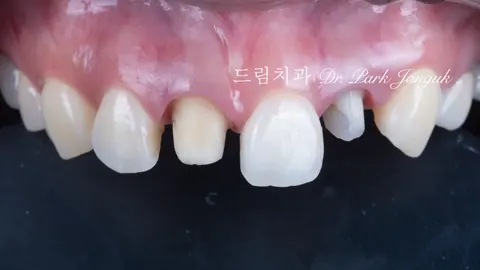
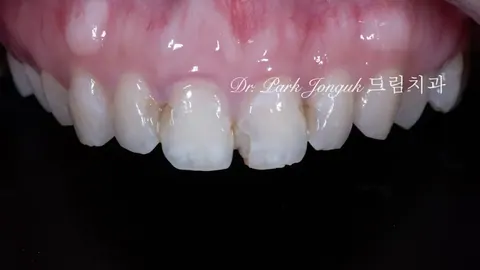
The patient had had two crowns done a long time ago.
They'd had root canal treatment and were then crowned.
The patient said that over time, a gap had started to open between the front teeth.
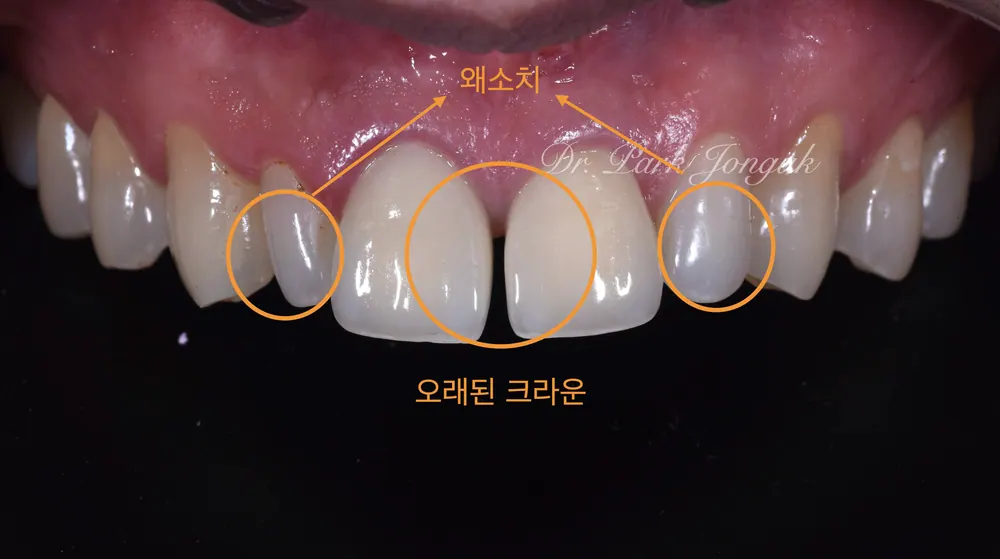
The tooth next to the front tooth is called the lateral incisor.
The lateral incisor was an undersized tooth.
"Undersized tooth" refers to a tooth that's
smaller than the average size normally expected at that position.
In this case, we were able to do the veneer on the undersized tooth with no reduction at all.
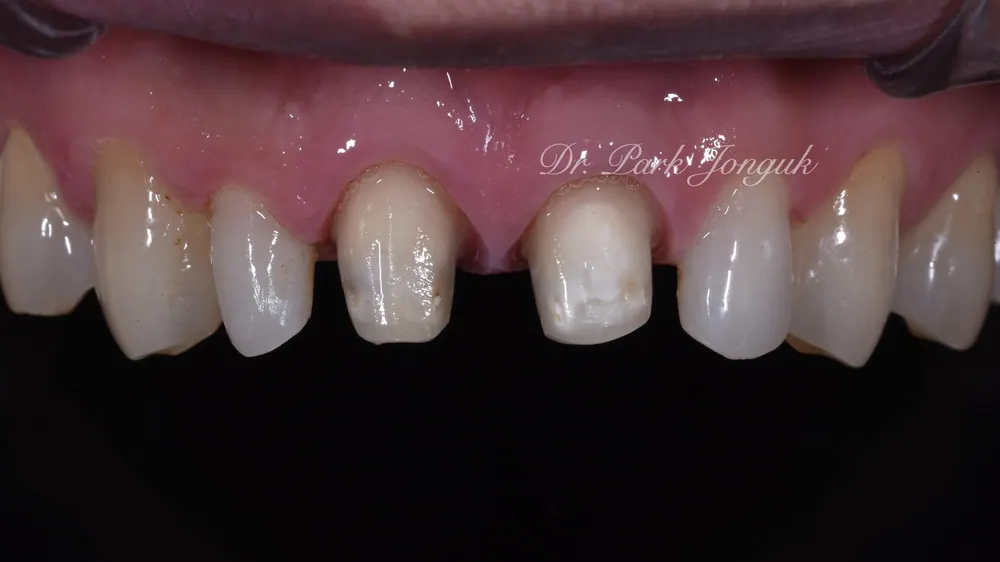
This is the appearance after removing the crowns and wearing temporary teeth for two weeks.
Since the gum condition was very good, we took an impression and moved into fabricating the ceramic.
For the undersized tooth, the veneer is fabricated directly, without any reduction.
Since the two front teeth were discolored, zirconia was used for them.
Zirconia has the advantage of being strong, but it's a somewhat opaque material.
The ceramic used to make the veneer, on the other hand, is quite translucent.
Because of this, when a crown and a veneer are combined,
many clinics simply make everything into crowns.
To do that in this case,
the undersized tooth would need to be reduced quite substantially, instead of not at all.
That would cause considerable damage to the tooth.
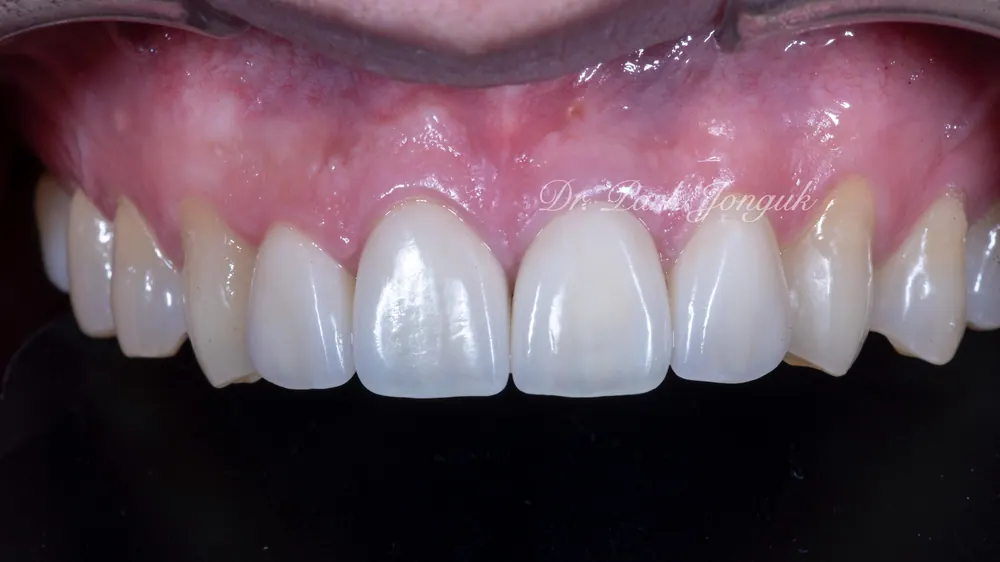
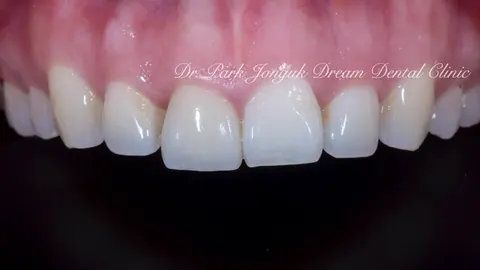
All four teeth were given a strong sense of a natural tooth feel.
Through the know-how of our clinic, a skilled dental clinic in Cheongdam-dong,
we preserved the natural tooth feel across the board, from the three-dimensional shape to the overall look of the teeth.
Zirconia's drawback of an opaque look was also naturally resolved through a two-layer structure.
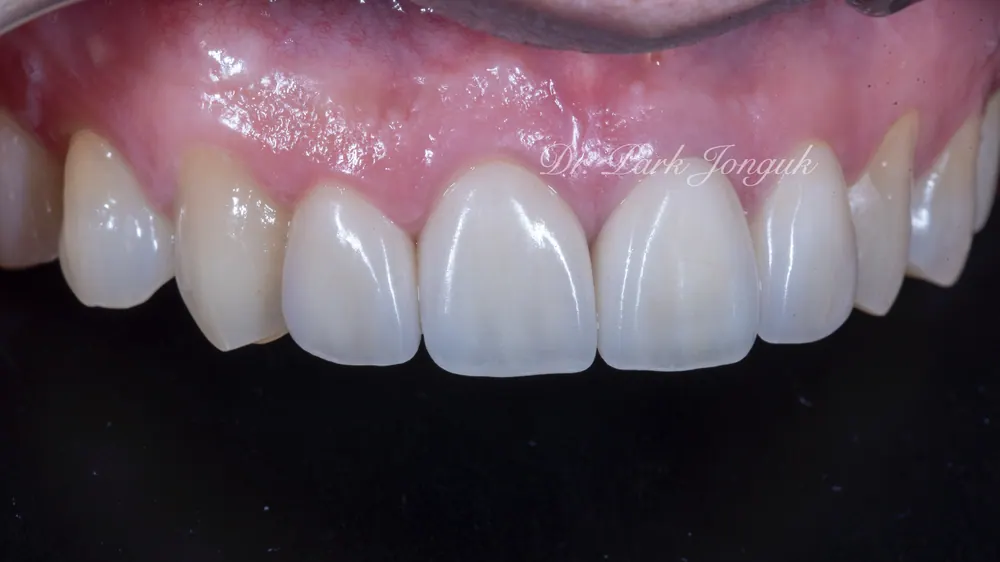
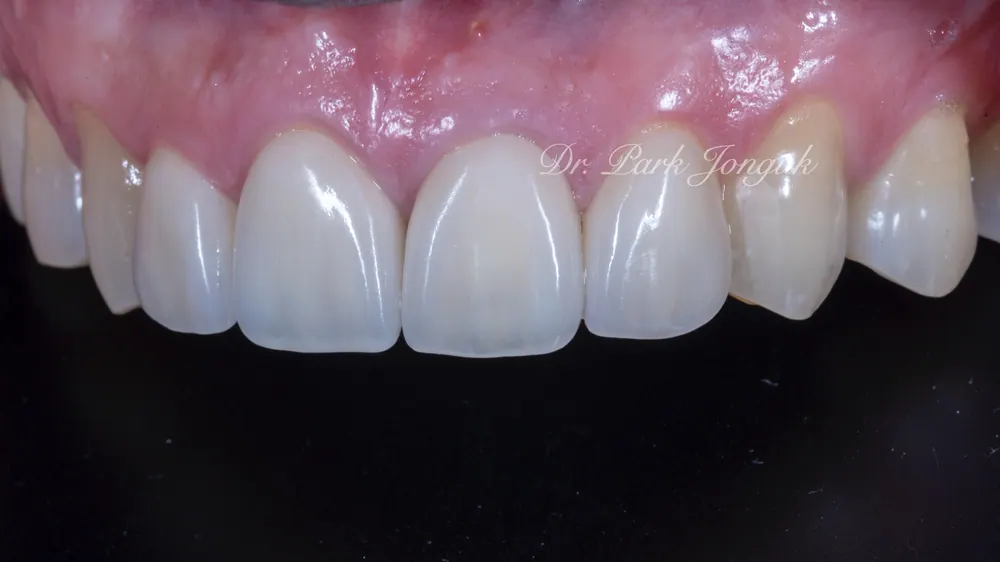
Even viewed from various angles, the harmony with the gum and the harmony between the teeth
were finished to a very high standard.
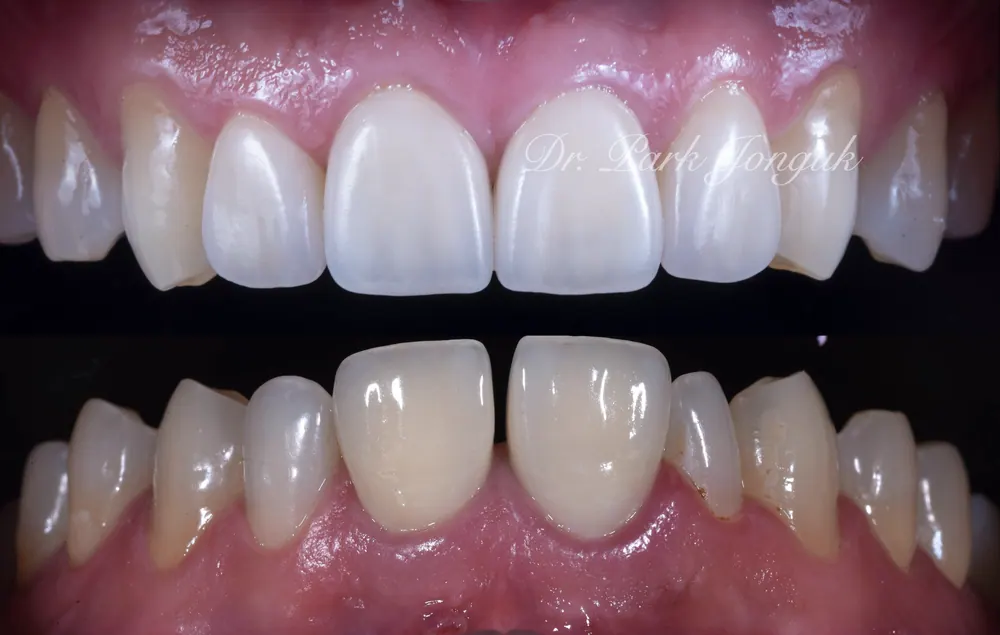
The veneers and all-ceramic crowns at Dream Dental Clinic, a skilled dental clinic in Cheongdam-dong,
pursue a natural beauty.
Since 2006, Dream Dental Clinic
This article is a clinical note written by Dr. Park Jonguk of Dream Dental Clinic, Gangnam; the original was published on his blog. The photographs shown are real cases he treated. Results vary with each patient’s condition, and every procedure carries the possibility of individual variation and side effects.
Quick Consult
Request a Callback
Leave your number and we will call you back during clinic hours.
Request Received
We will contact you during clinic hours. For urgent matters, please call +82-2-3448-0028.