
The Process of Making Natural Handmade Veneers
Hello, I'm Park Jonguk, director of Dream Dental Clinic.
There are two broad methods for fabricating veneers.
One is a method that's become popular recently,
designed by computer and milled by a machine called a milling machine.
It's commonly called the same-day method.
I'd guess most dental clinics these days use this method.
The other method
is the handmade method, which requires far too much time and skill,
so relatively few clinics use it,
but it produces truly outstanding results.
Between these two broad methods,
we at Dream Dental Clinic use the handmade method.
Let's look at the differences and the pros and cons of these two methods.
1. The Same-Day Method (Single-Structure, Single-Layer Veneers)
For the computer-made, same-day method,
its biggest — and really its only — advantage is speed.
That's exactly why it's nicknamed the "same-day" method.
This fast fabrication method
is quite advantageous for saving time,
but it has various drawbacks, from the quality of the result to the amount of tooth reduction required.
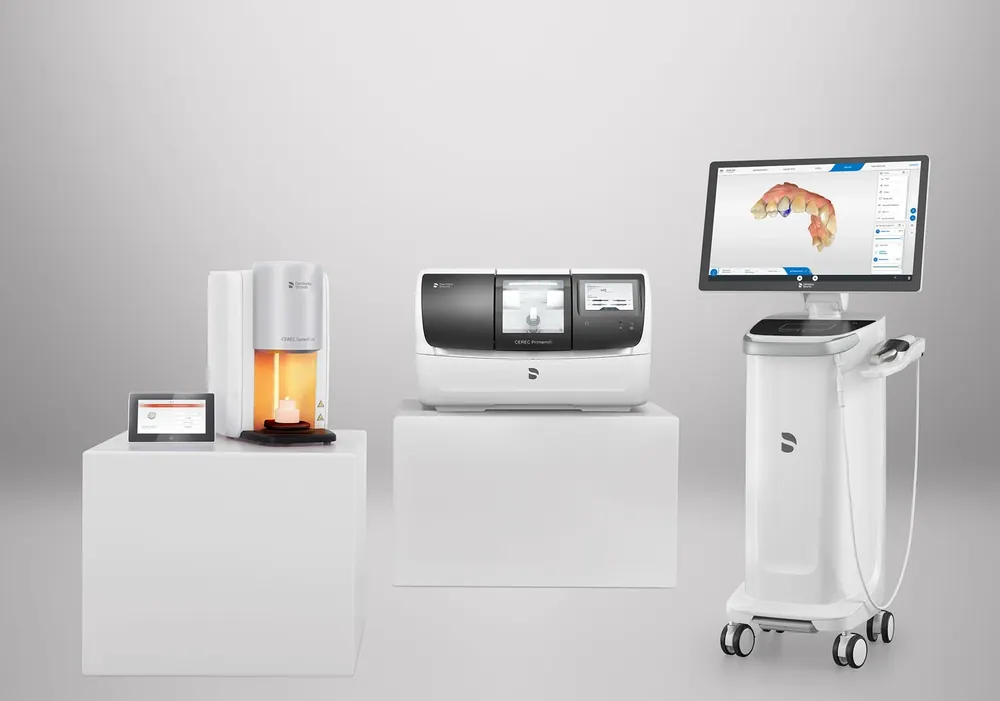
Design and fabrication are done using equipment like this.
In fact, most clinics currently use the same software and equipment.
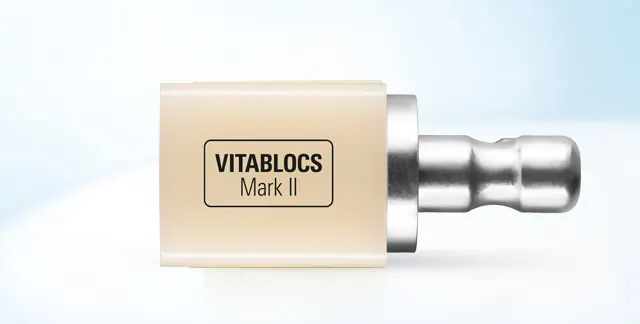
The material has also converged to essentially just one option.
A ceramic block like the one in the photo above is used.
In the past, other materials besides this one were also used,
but due to ease of use and various other issues,
it wouldn't be an exaggeration to say the other materials fell out of use and only this one remains.
For clinics that use a lot of this material,
the manufacturer will sometimes print the clinic's name on the same ceramic block.
Occasionally, because their name got printed on the ceramic block this way,
a clinic will talk as if it's the only one using a special material...
but it's really just the clinic's name printed on it, nothing more.
After the process of tooth reduction, impression and computer scanning, and computer design,
putting a block like the one in the photo into the milling machine produces each piece in just 10-15 minutes.
It's really fast.
But veneers made this way have a few problems.
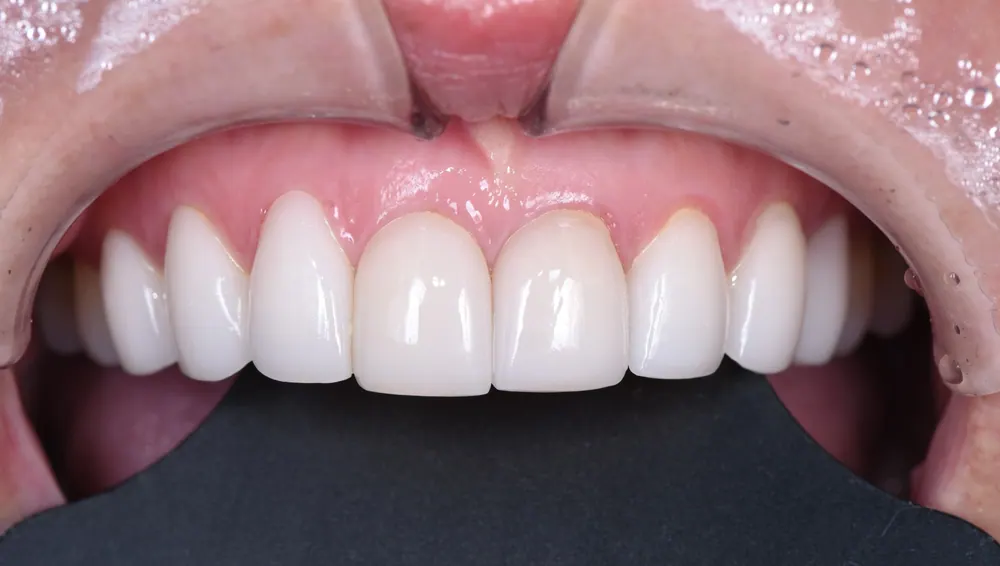
Same-day veneers, for the most part,
are opaque throughout, with a single, uniform color,
and the shape tends to look quite awkward.
They fail to capture the basic shape and coloring that a tooth should have at all.
First, since the ceramic block used to make the veneer is a single, uniform color all the way through,
the result is naturally the same uniform color as well.
Blocks with different shading by area do exist, but they're rarely used.
In the photo above, you can see the color varies slightly from tooth to tooth,
and since the same ceramic block was used for all of them,
when the patient's original tooth colors differ from one another,
and the underlying tooth shows through slightly, a problem like this appears.
Rushing through everything in a single day can create various other problems as well.
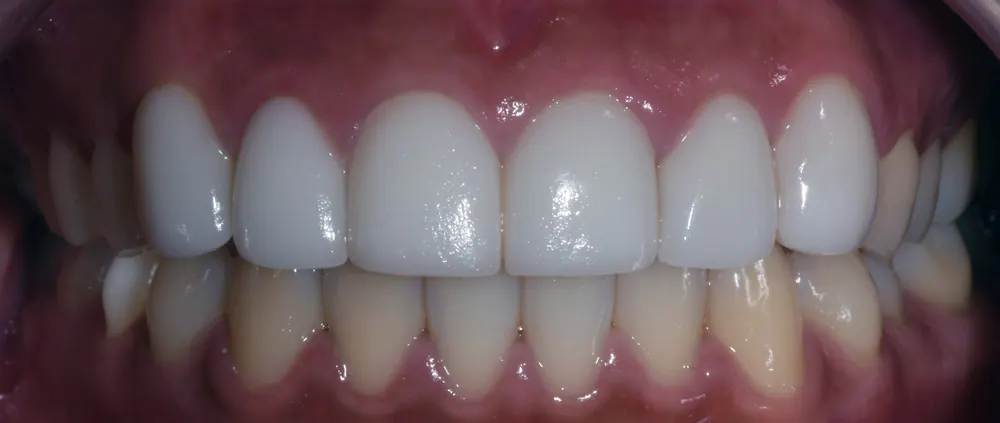
Here's another result made using the same-day method.
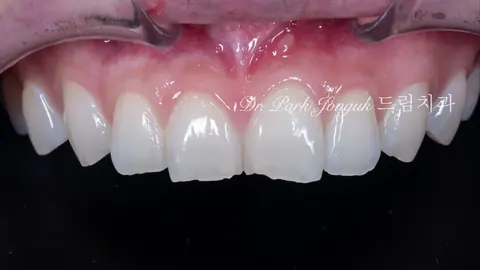
Again, the color and shape aren't something you'd mistake for a natural tooth.
There are several characteristics of this unnatural look,
First, there's no sense of dimension at all.
Natural teeth normally have a distinct sense of dimension,
but these all look like flat, xylitol-gum-shaped slabs.
Another reason is the shape of the tooth edge.


Looking just at the tooth edge,
it looks solidly filled, which creates a rather heavy, stuffy feeling.
Designing this edge line is a very tricky task.
It can only be made to look natural
if it's fabricated by hand over a considerable amount of time.
Besides this unnatural look, there's another problem.
The same-day method inevitably requires somewhat more tooth reduction than the handmade method,
and there's a fundamental reason for this.
The minimum ceramic thickness a machine can mill is around 0.5-0.6mm.

If you try to mill something like what's shown in the leftmost photo,
the areas that are too thin come out partially fractured, as in the two photos on the right.
As a result, the ceramic ends up having to be thicker,
which makes it more likely that more of the tooth will need to be reduced.
To summarize the same-day method:
1. It's fast — practically its only advantage
2. The shape, color, and translucency all tend to look awkward — likely to end up looking like a xylitol-gum shape
3. There's a limit to how thin the ceramic can be made — more tooth reduction is likely to be needed
That's how it works out.
2. Fabricating Handmade Veneers (Multi-Layer, Multi-Layered Veneers)
As I mentioned earlier, it really takes a long time
and requires a great deal of skill.
Let me explain using a treatment process as an example.
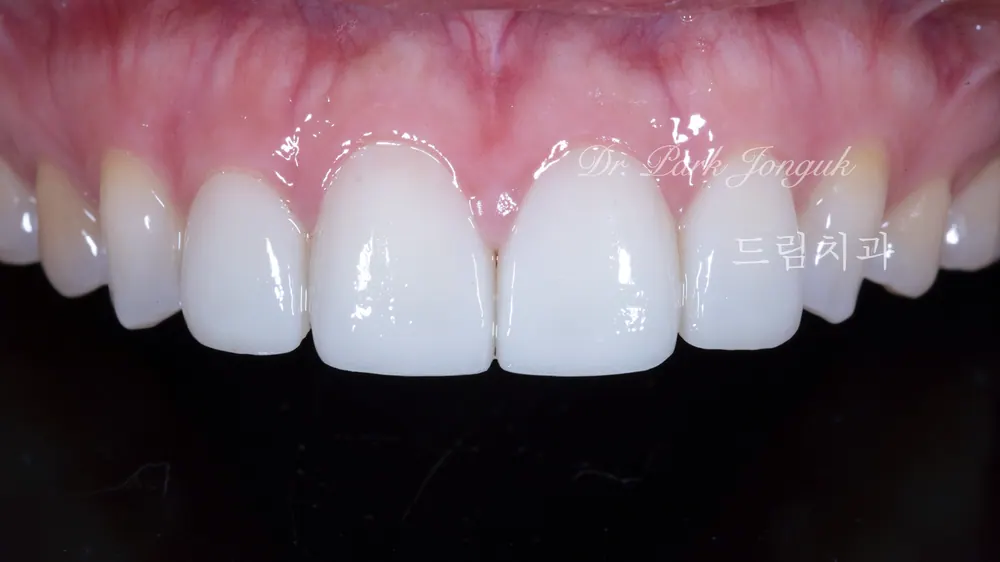
These are veneers made with the same-day method.
Recently, patients have occasionally come in for a redo
less than a month after getting veneers done this way, with the same-day method.
Everyone has a different standard of beauty,
but it seems hard to call veneers this flat and opaque beautiful.
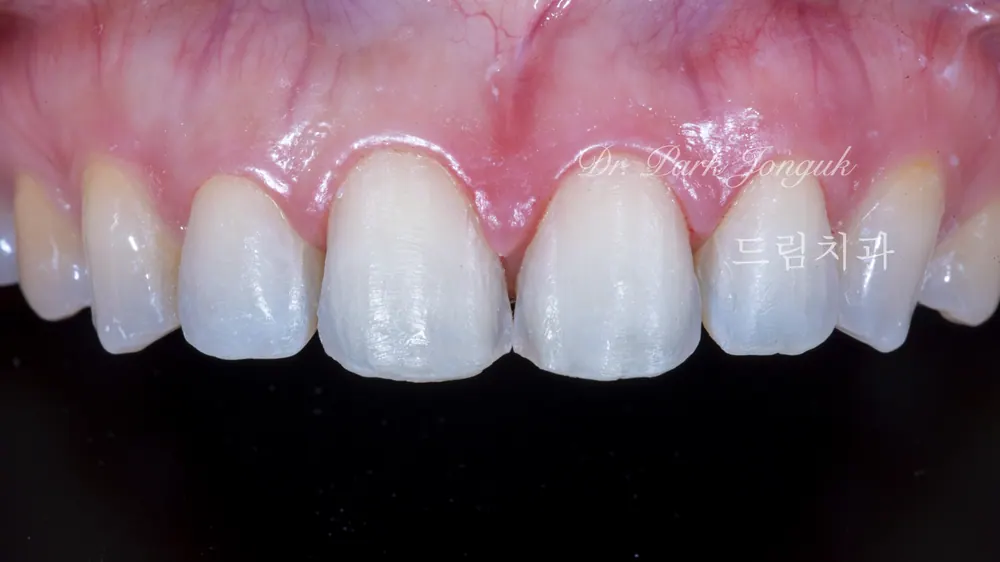
First, we removed the veneers.
They're removed using a laser,
and laser removal is a good method that can minimize damage to the tooth.
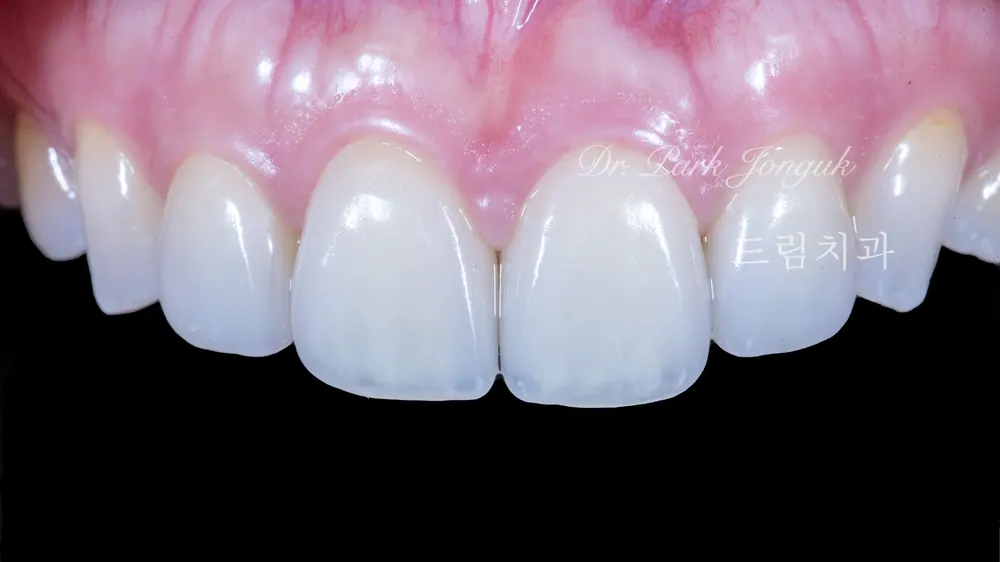
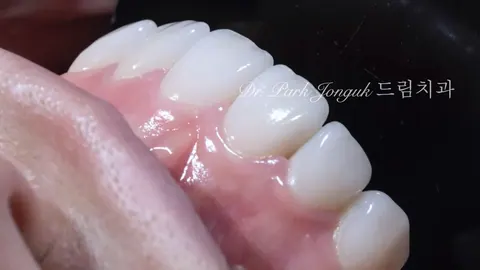
Being able to express this kind of natural, varied color and translucency is exactly the advantage of handmade veneers.
This isn't from this particular case,
but let's take a look at the build-up process,
which is the most important part of the handmade process.
Earlier I mentioned that the same-day method makes the veneer by having a machine mill ceramic.
The handmade method, by contrast, builds the ceramic up layer by layer.
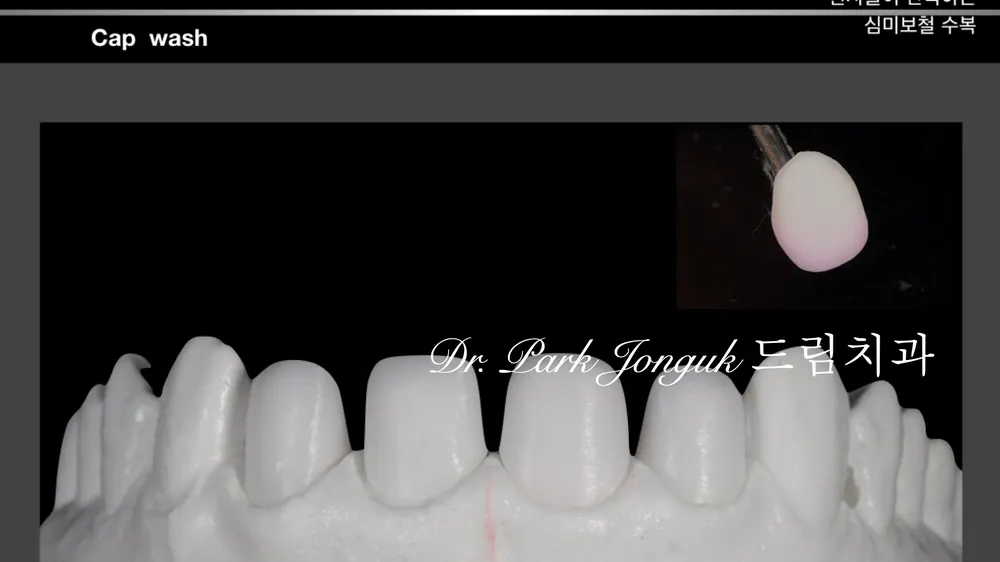
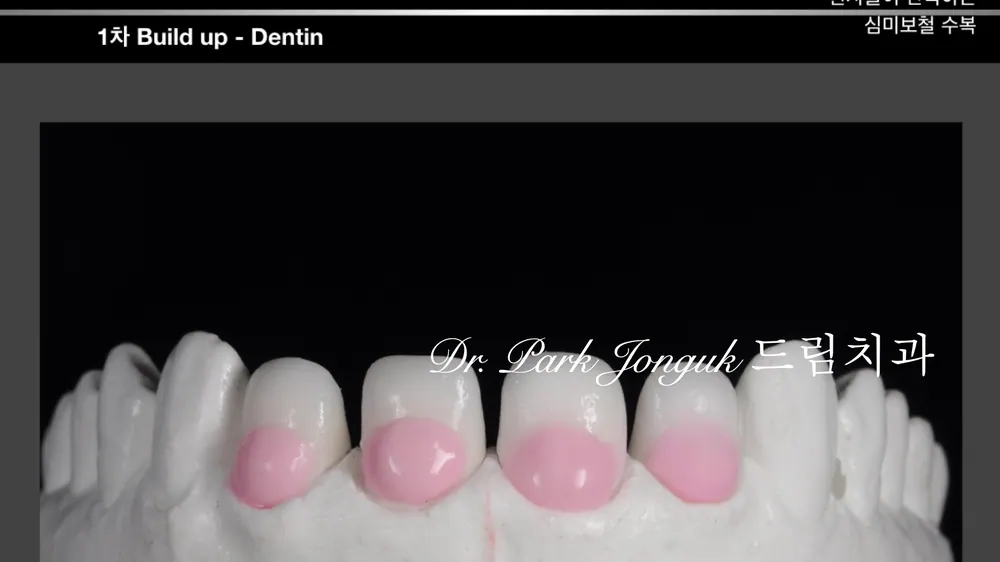
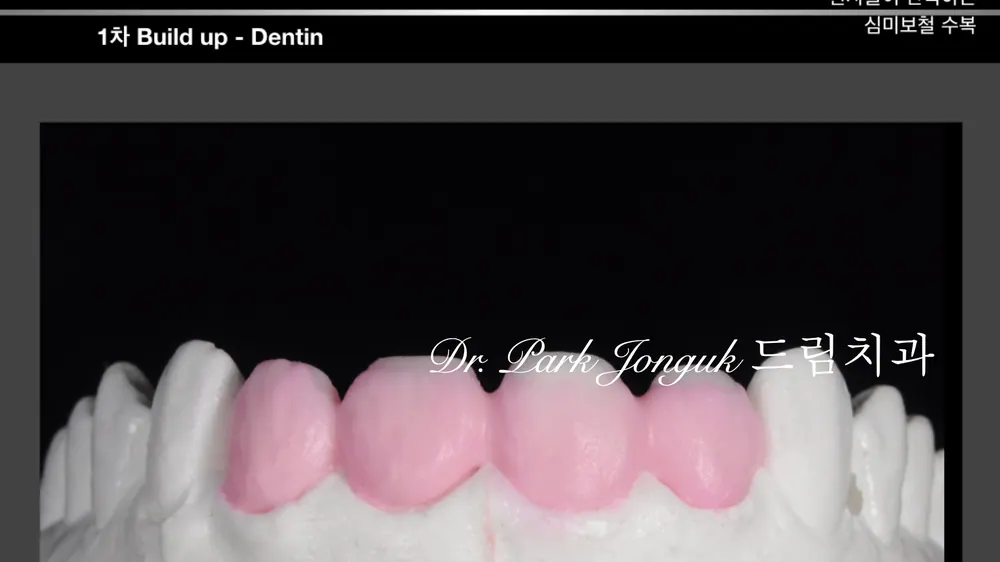
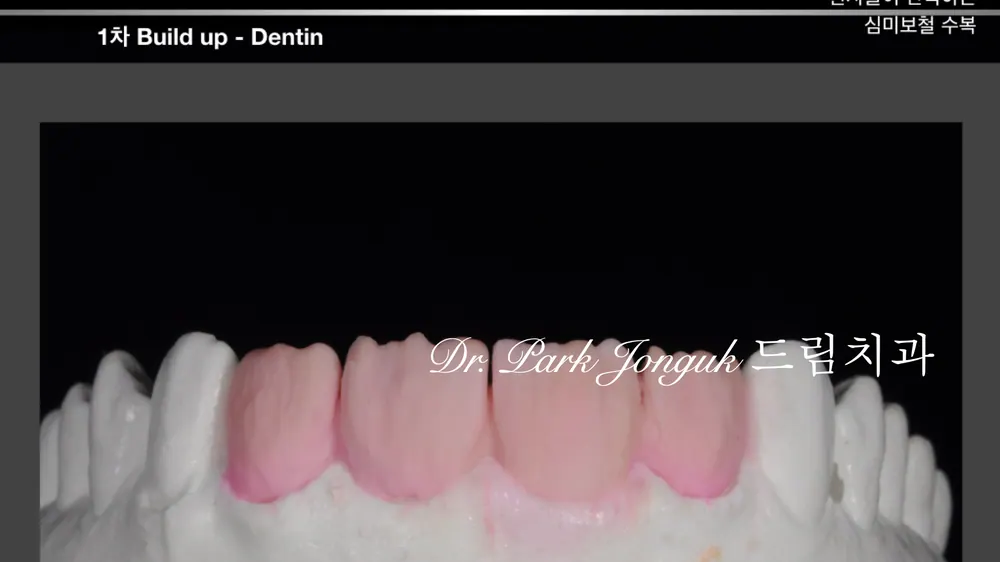
The ceramic is layered on one level at a time,
and it isn't done in a single pass —
it has to be repeated quite a number of times.
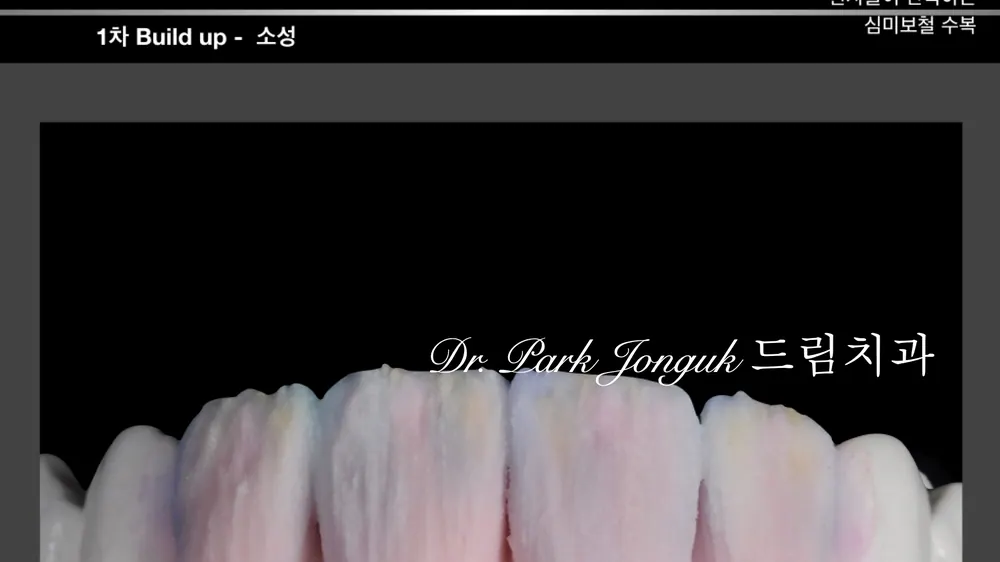
First, the basic shape is built up.
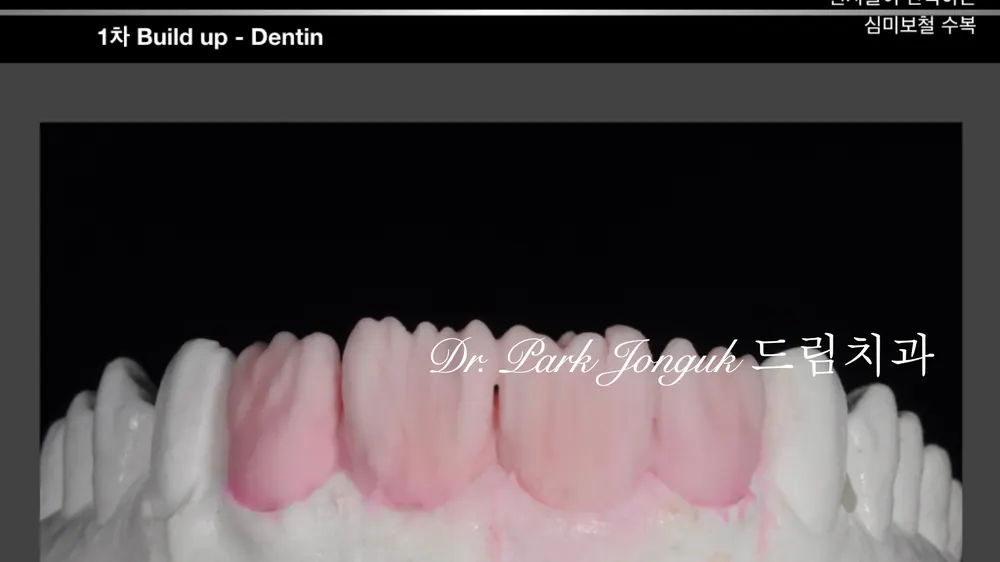
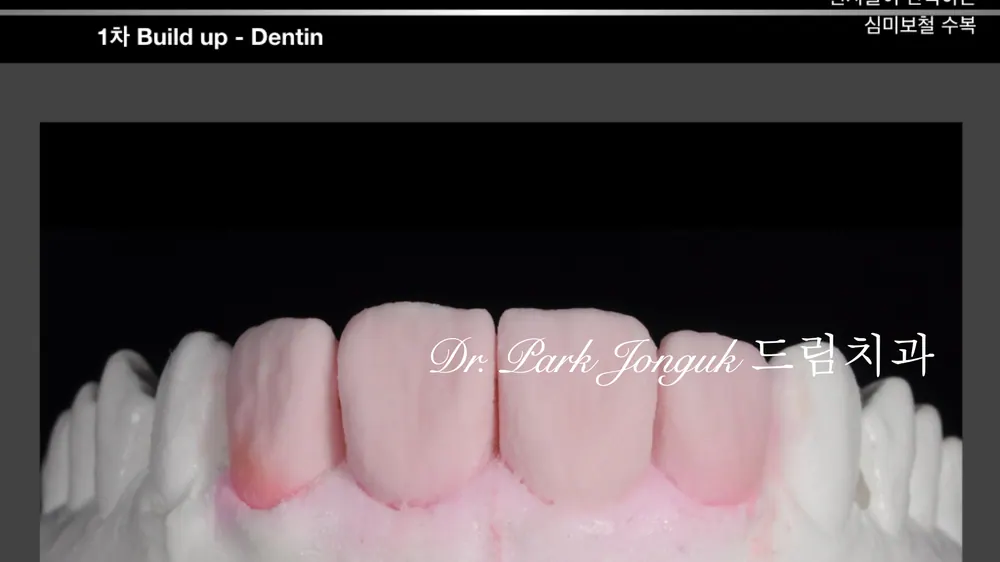
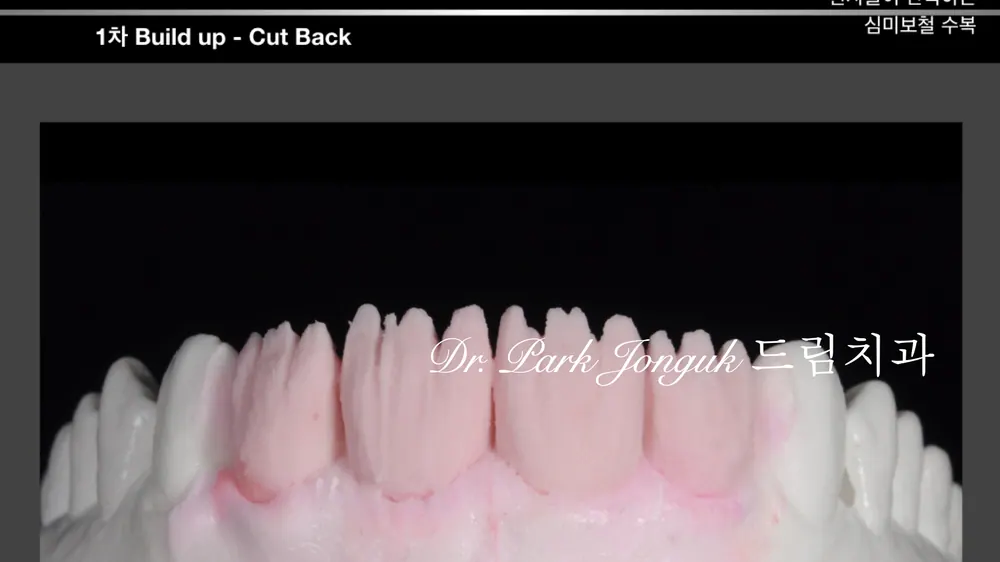
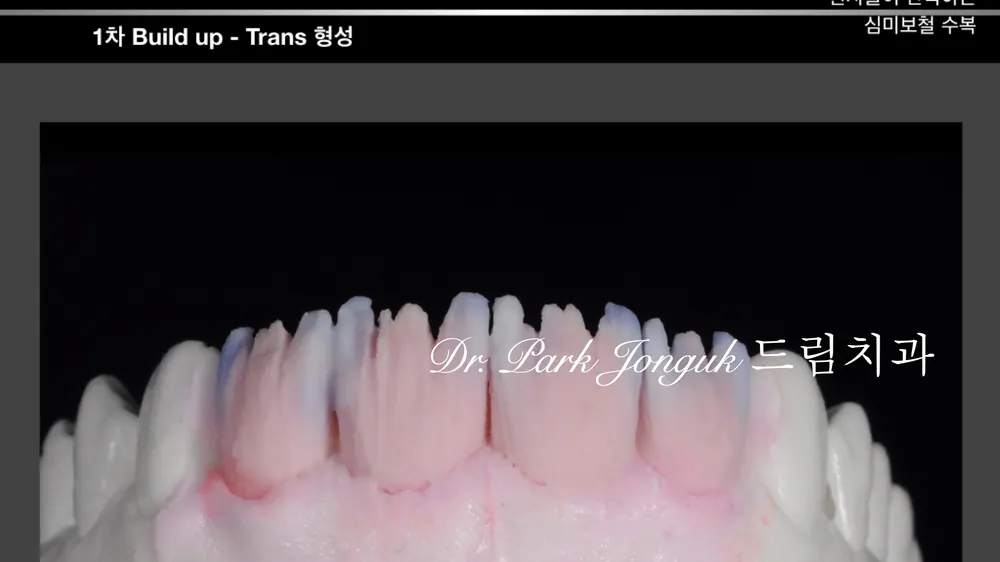
At this point, the shape of the tooth starts to become visible.
The inside of a tooth is made up of several different layers,
and you can think of this as recreating each of those layers, one by one, using ceramic.
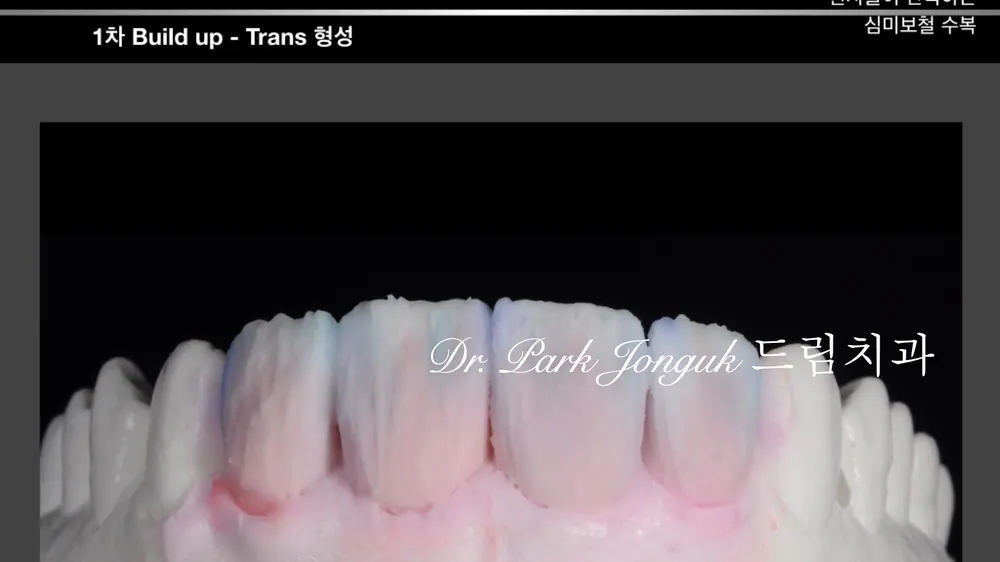
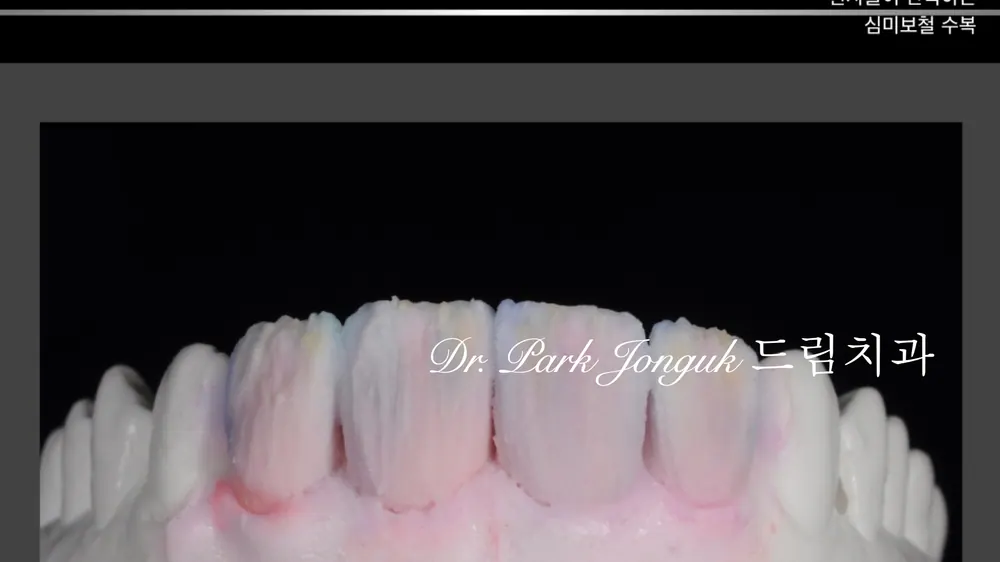
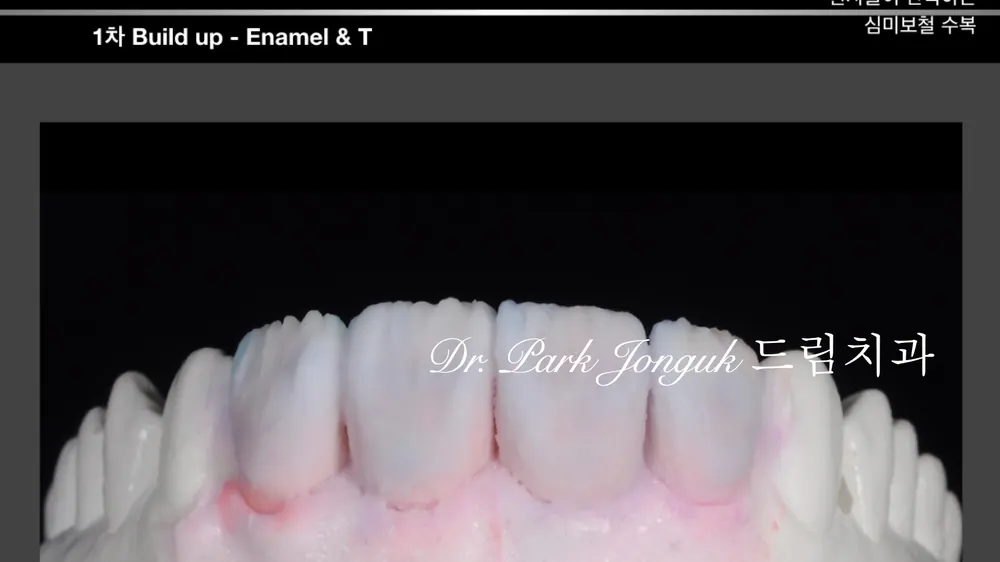
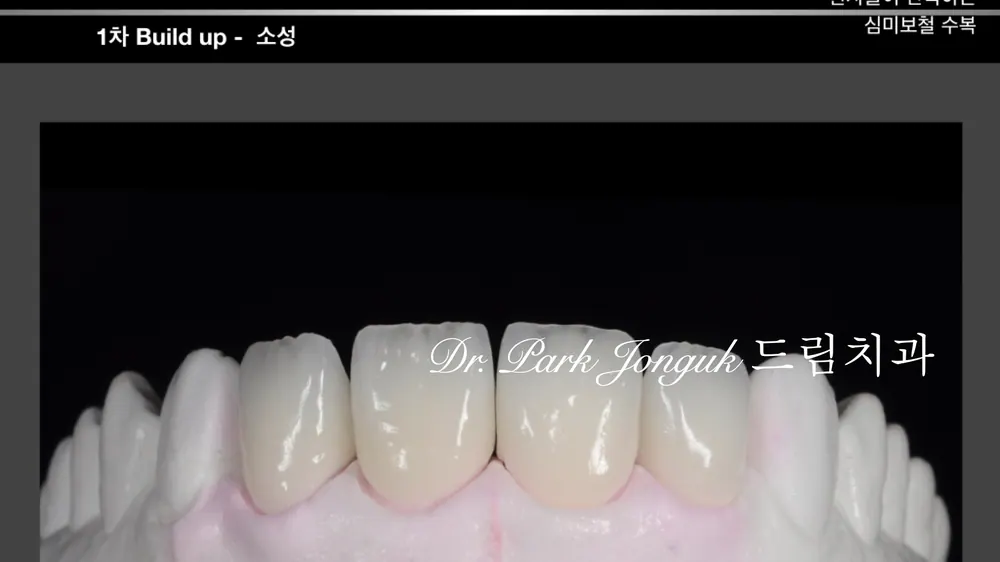
Ceramics with a variety of translucencies and shades
are mixed and used together like this.
Then it's fired once, like pottery, to check the shape.
Even just this step takes an enormous amount of time and effort.
Since several different shades and levels of translucency have already gone into each individual tooth,
that quality is clearly visible in the final result as well.
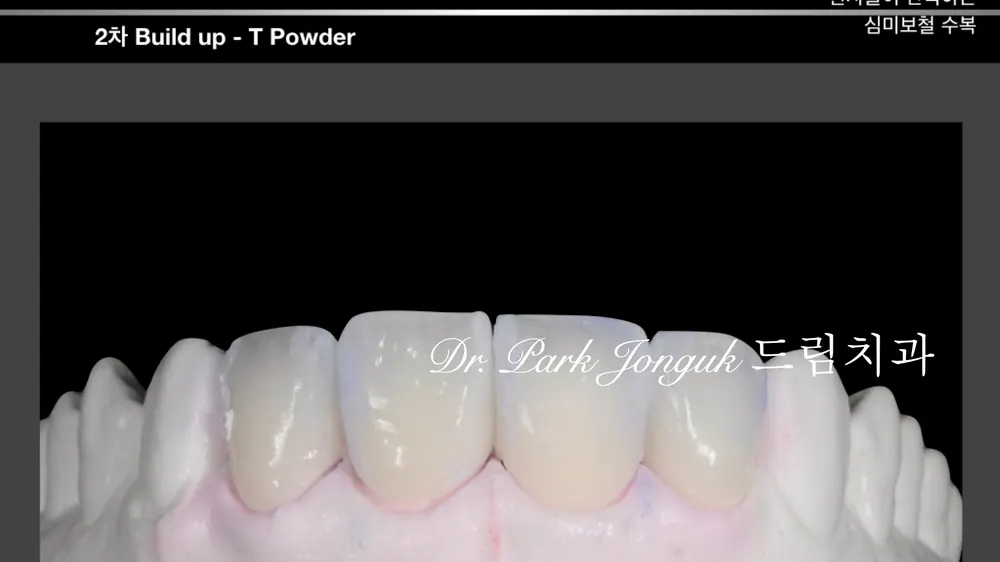
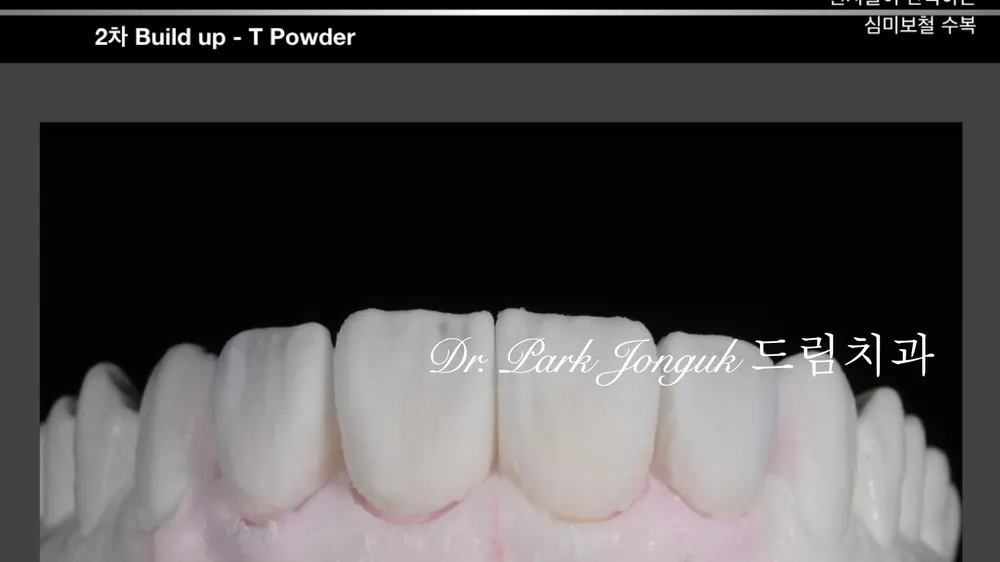
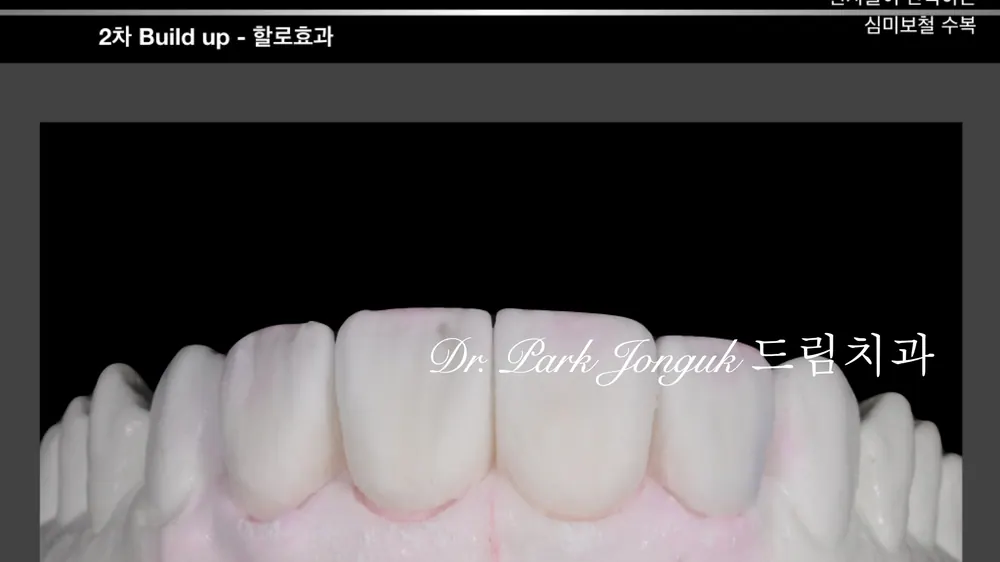
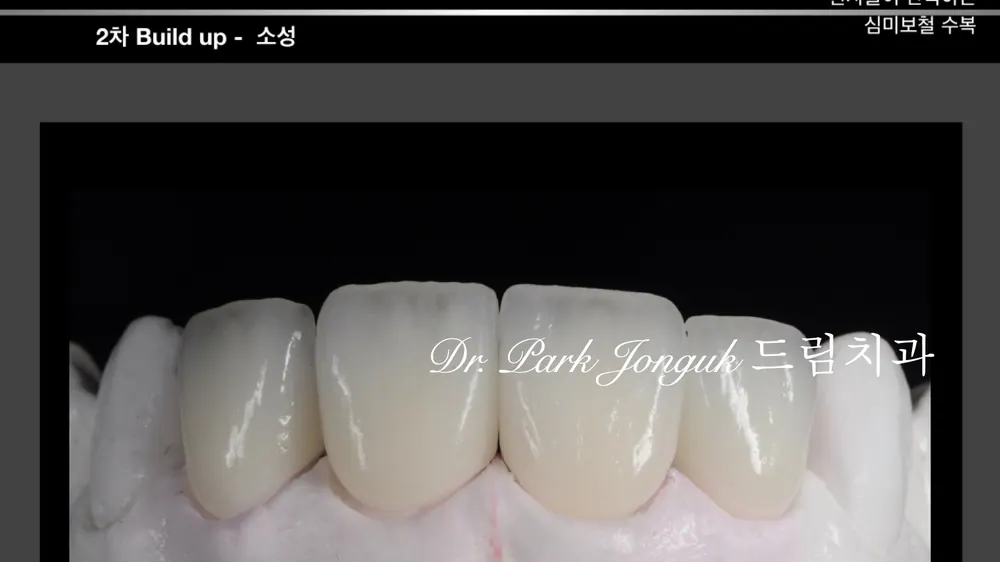
A variety of ceramics are then mixed and layered on top of that again.
As these varied shades and levels of translucency are built up,
you can see the shape starting to take form as well.
The tooth's sense of dimension is gradually coming to life.
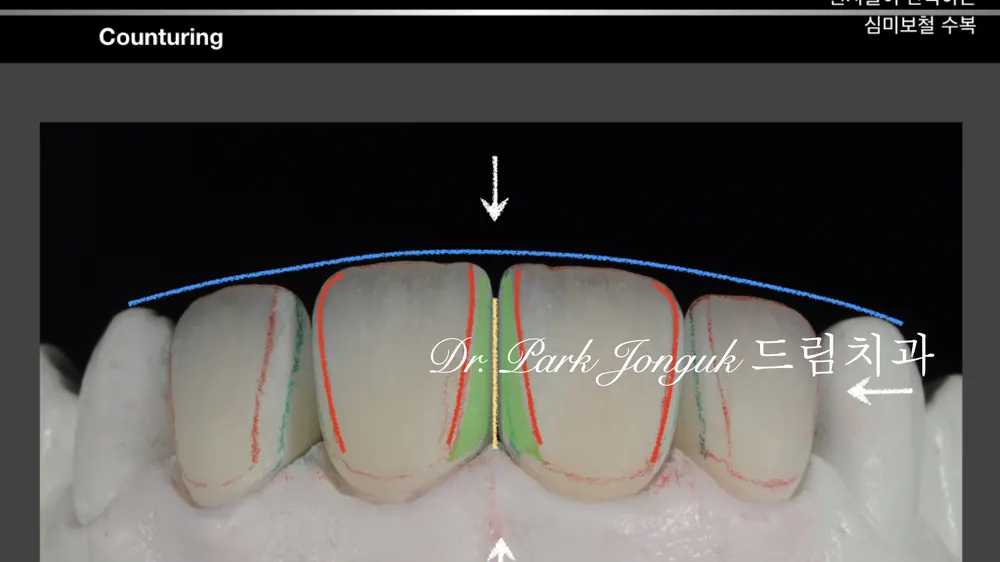
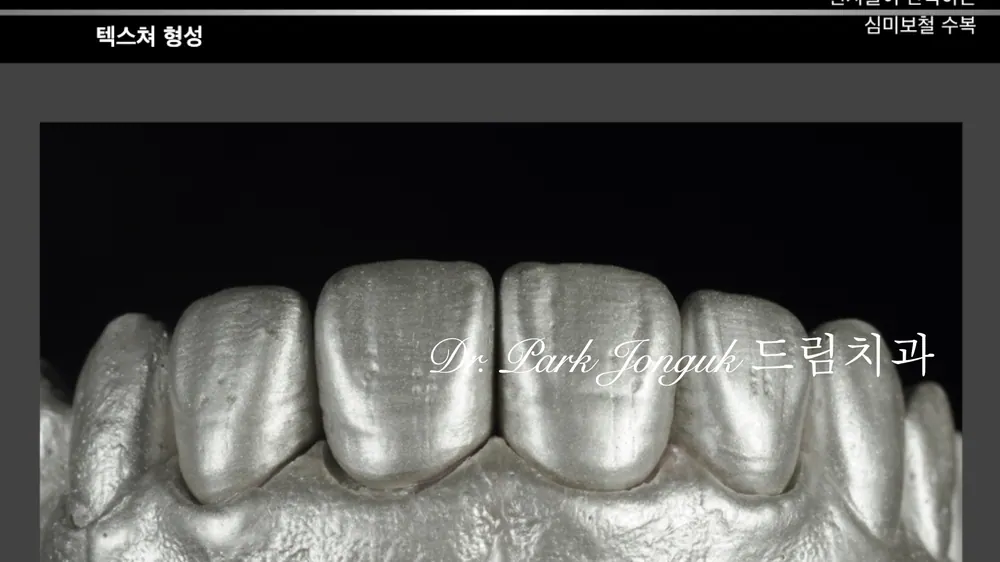
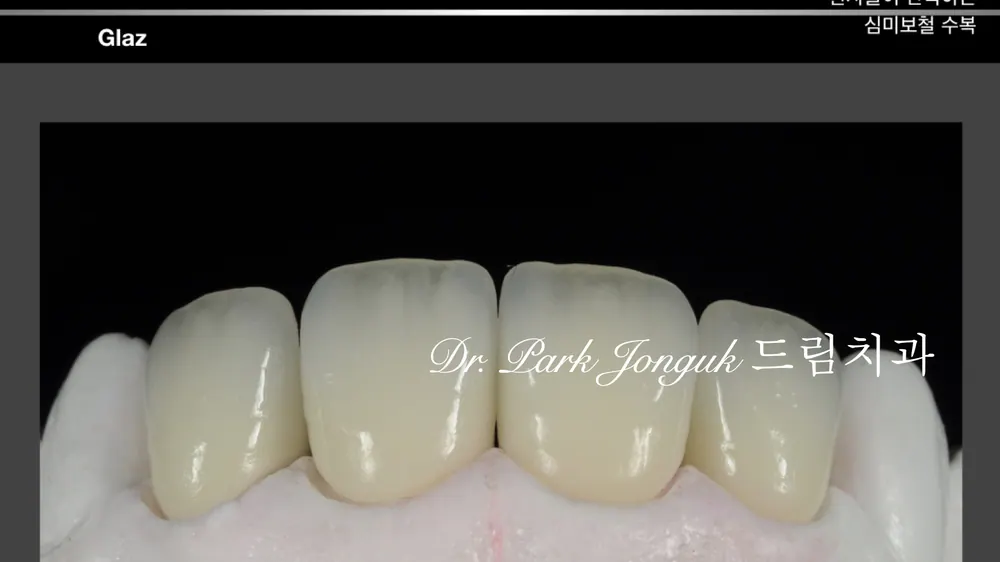
The three-dimensional shape is refined further.
On top of the ceramic, made up of these various layers,
the shape is drawn out gradually,
and the form has to be refined with increasing precision.
This is what brings the sense of dimension distinctly to life.
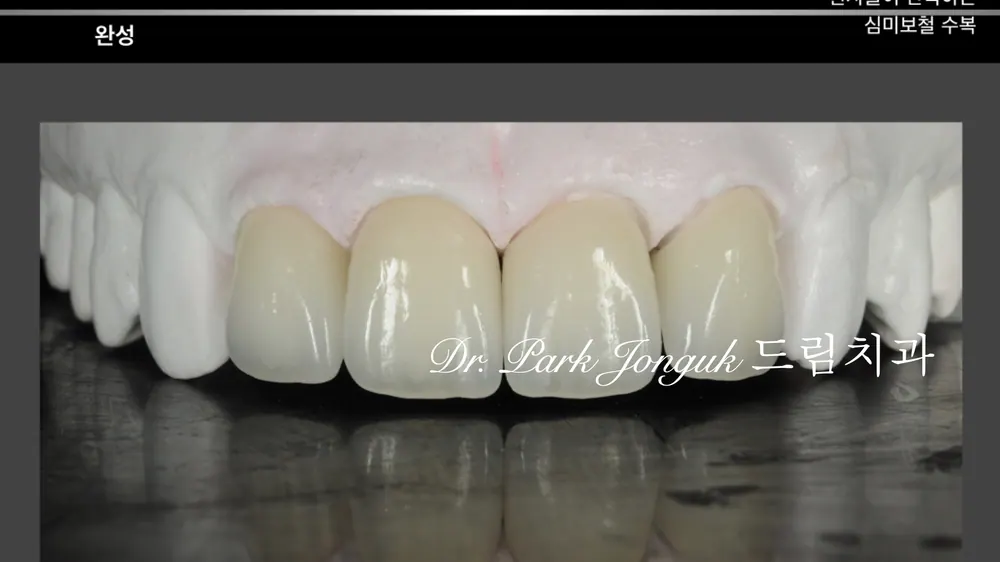
Veneers or all-ceramic crowns made this way
clearly retain the feel of a natural tooth while still looking beautiful.
This process is called build-up.
There are also handmade methods that skip the build-up process.
They're called handmade,
but this approach has none of the actual advantages of handmade work.
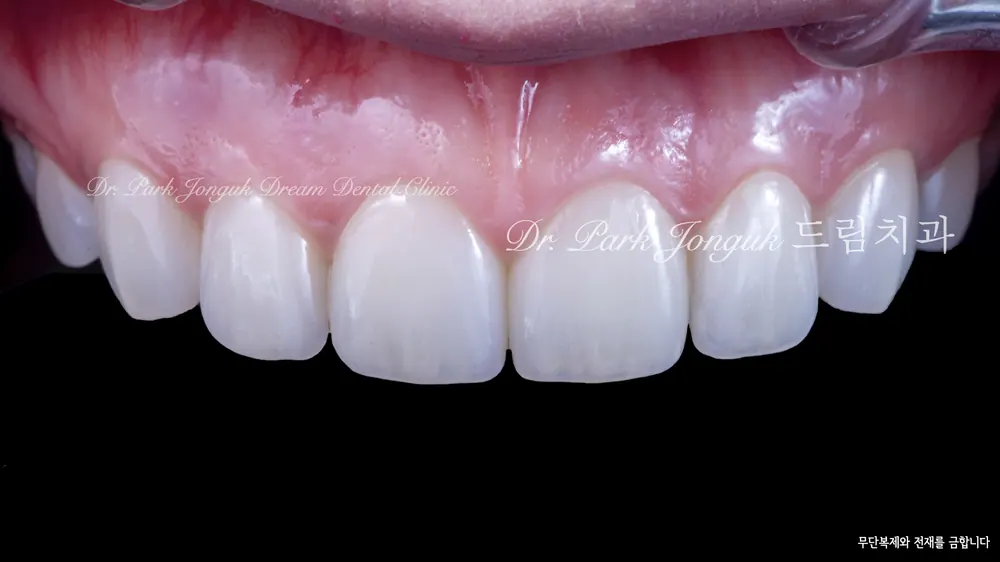
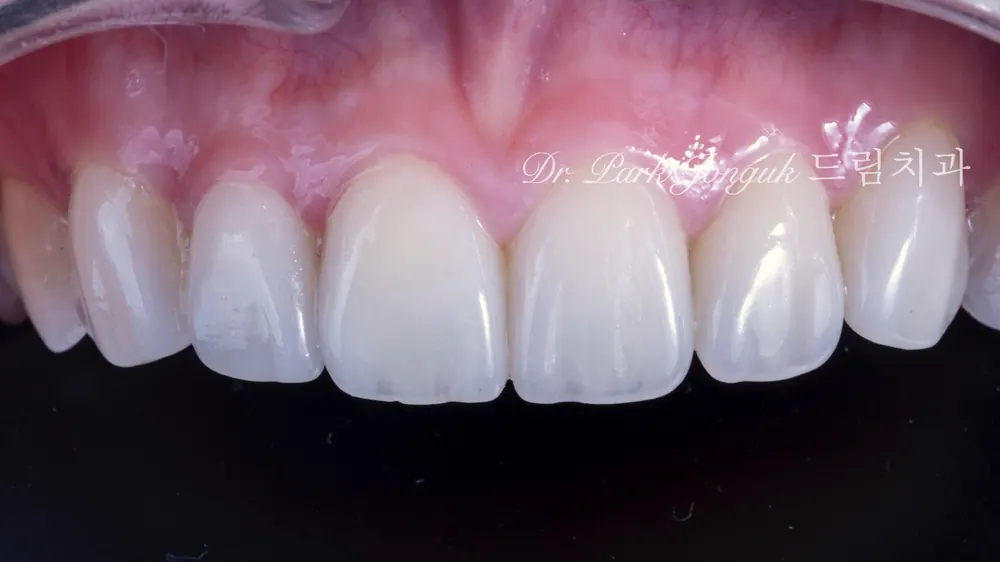
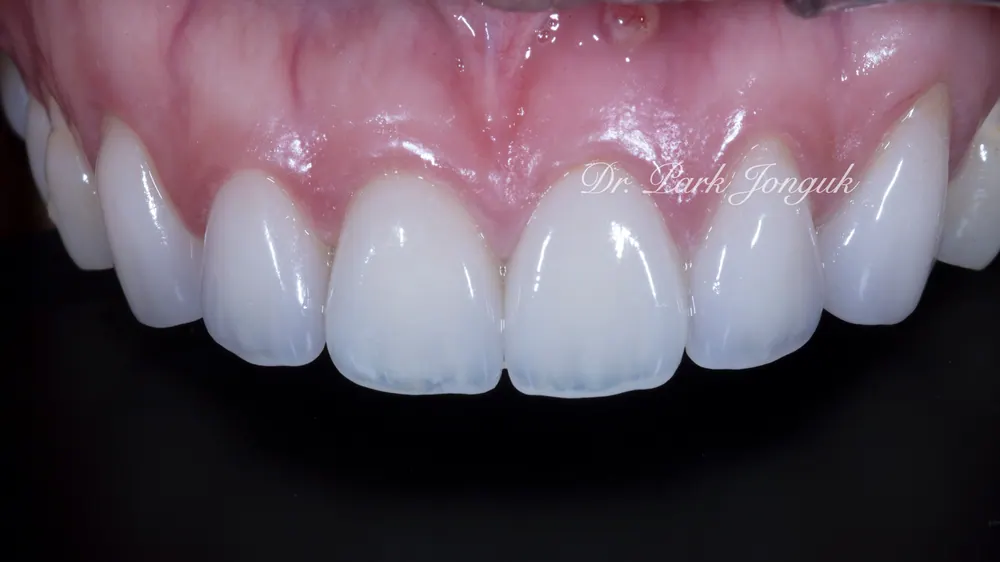
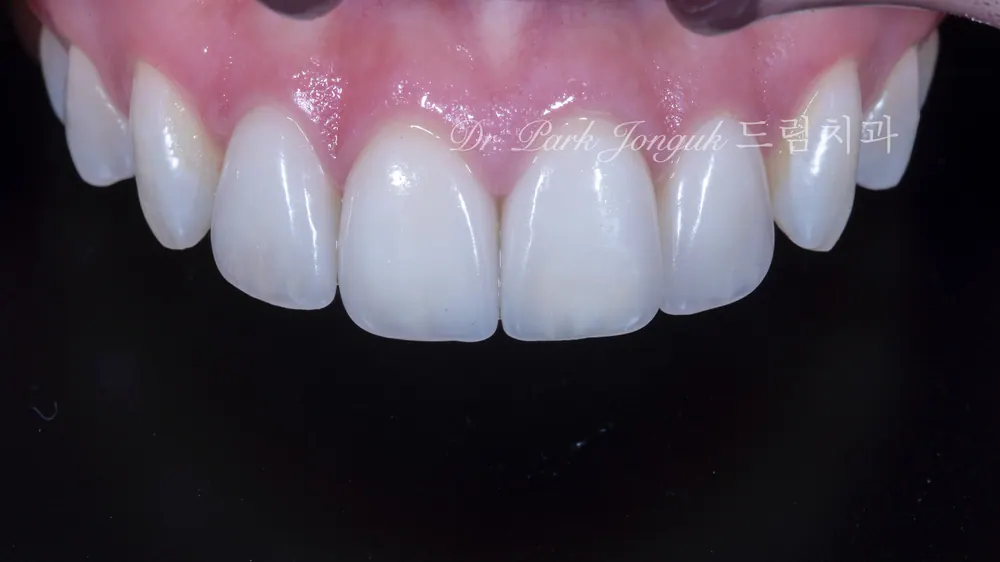
Veneers made with the handmade method, with this much build-up put into them,
can richly express a natural variety of color, shape, and translucency.
Regardless of face shape or skin tone,
unlike the same-day method, which turns out veneers like a mass-produced product,
through a long, demanding process of crafting a fine, luxury-level piece,
a veneer made just for you is created.
Here's what matters most.
In the handmade method,
the build-up process shown in the photos above is extremely important.
There are approaches that are handmade in name only, skipping the build-up or doing it in a very simplified way,
but we at Dream Dental Clinic place great importance on the build-up process.
To summarize handmade veneers made with proper build-up:
1. They look natural
2. Tooth reduction can be kept to a minimum
3. But it takes a long time
That's the way to think about it.
Recently, many clinics have given up on veneers made through this demanding process
and have largely shifted to veneers stamped out like a factory product.
Since they're using the same equipment and the same materials,
I notice a lot of clinics coming up with new names, as if it were a different treatment from a regular veneer.
Changing the name doesn't make it a new treatment.
Natural beauty
Since 2006, Dream Dental Clinic
This article is a clinical note written by Dr. Park Jonguk of Dream Dental Clinic, Gangnam; the original was published on his blog. The photographs shown are real cases he treated. Results vary with each patient’s condition, and every procedure carries the possibility of individual variation and side effects.
Quick Consult
Request a Callback
Leave your number and we will call you back during clinic hours.
Request Received
We will contact you during clinic hours. For urgent matters, please call +82-2-3448-0028.