
Balancing No-Prep and Prepped Veneers in the Same Case
Hello, I'm Dr. Park Jonguk, director of Dream Dental Clinic.
Veneer treatment presents many different challenges,
and one of them is correcting asymmetry into symmetry.
In particular, when tooth reduction is minimized
or a case goes fully no-prep,
correcting existing asymmetry
becomes an especially challenging treatment.
It requires careful, multi-angle analysis of the treatment,
and while fabricating the veneers in ceramic,
we have to try various approaches,
and multiple attempts are needed even during the seating stage.
When some teeth require reduction and others are left no-prep in the same case,
the treatment becomes even more demanding.
There's a reason so many clinics make most of their veneers
white, opaque, and awkward-looking.
It's because the treatment process and veneer fabrication become far simpler that way.
Making a translucent, natural-looking veneer is a genuinely demanding task.
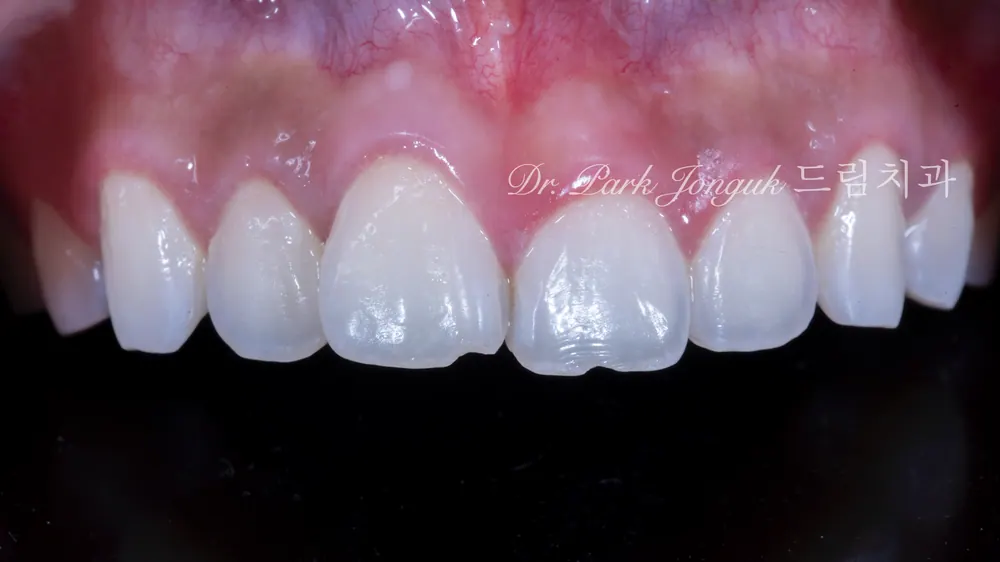
One of the front teeth was protruded.
It was a case that really called for orthodontics,
but the patient also wanted to change the shape of the other teeth,
and given time and cost constraints,
we decided to go with veneers instead.
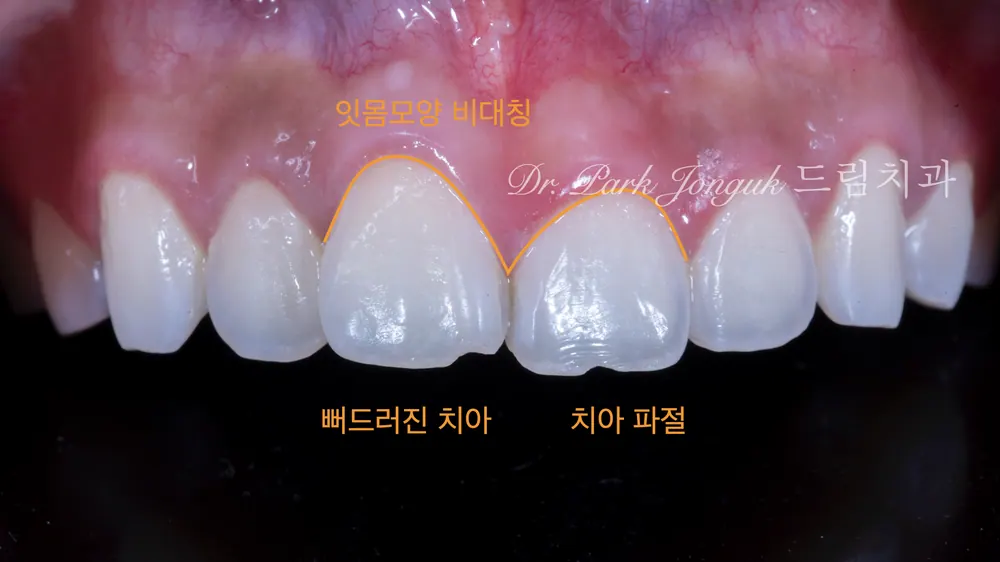
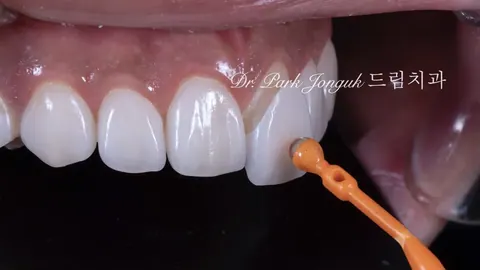
Looking only at the two front teeth,
because of the protruded tooth,
there was a difference in gum height,
and you can see that the tip of the tooth had fractured.
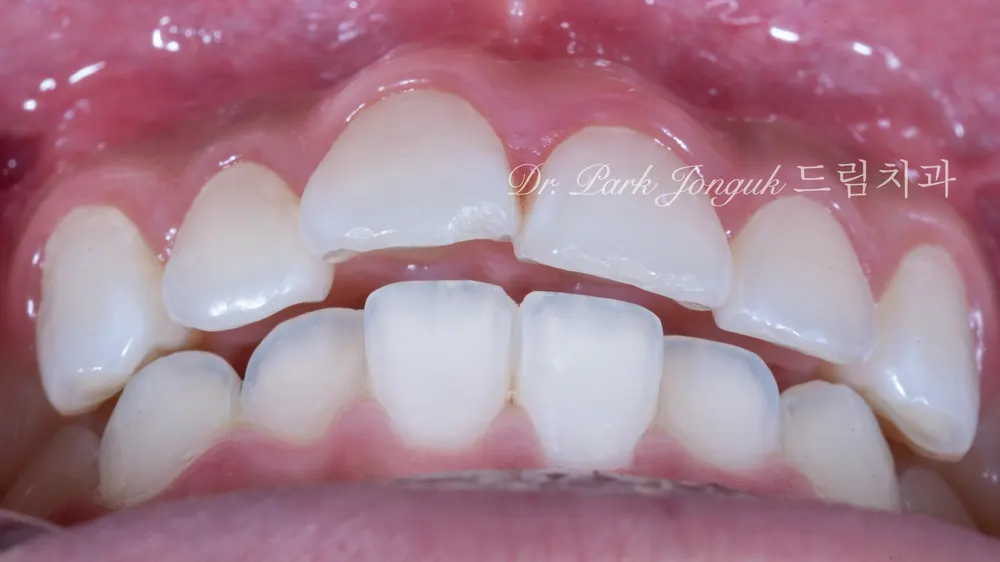
Since the degree of protrusion wasn't minor,
we explained that some amount of tooth reduction would be necessary
and built a plan for treatment accordingly.
However, only one tooth needed reduction,
while the rest could proceed as no-prep veneers,
making this a case where damage to the teeth could be minimized.
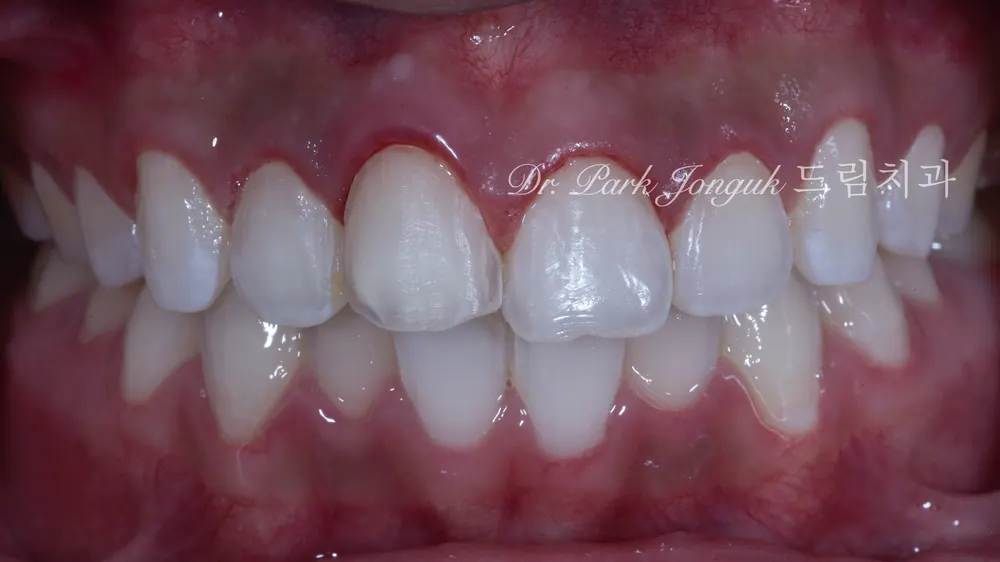
According to the treatment plan, only the one front tooth
received basic veneer reduction.
The other teeth proceeded as no-prep veneers.
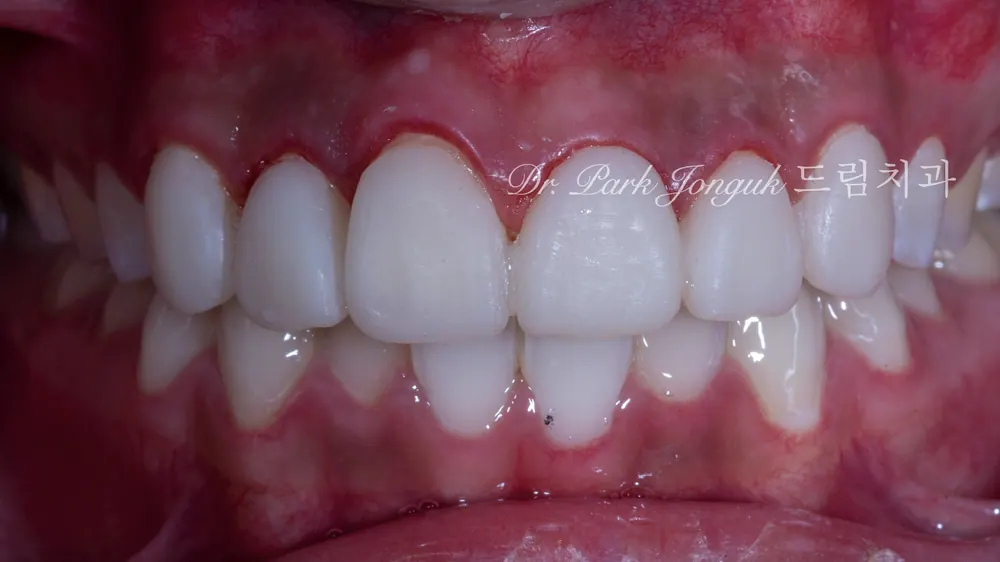
We fabricated temporary veneers.
This step is quite an important part of veneer treatment.
Whether a tooth is reduced or not,
making temporary veneers
lets us discuss the tooth shape with the patient in advance.
While it doesn't show every fine detail of the design,
it lets us preview the tooth size, proportion, and degree of protrusion beforehand.
In this treatment, starting from a state of asymmetry,
how to achieve symmetry mattered a great deal.
The difference in gum height
could be corrected through gum contouring,
but depending on the case, gum contouring isn't always the right choice.
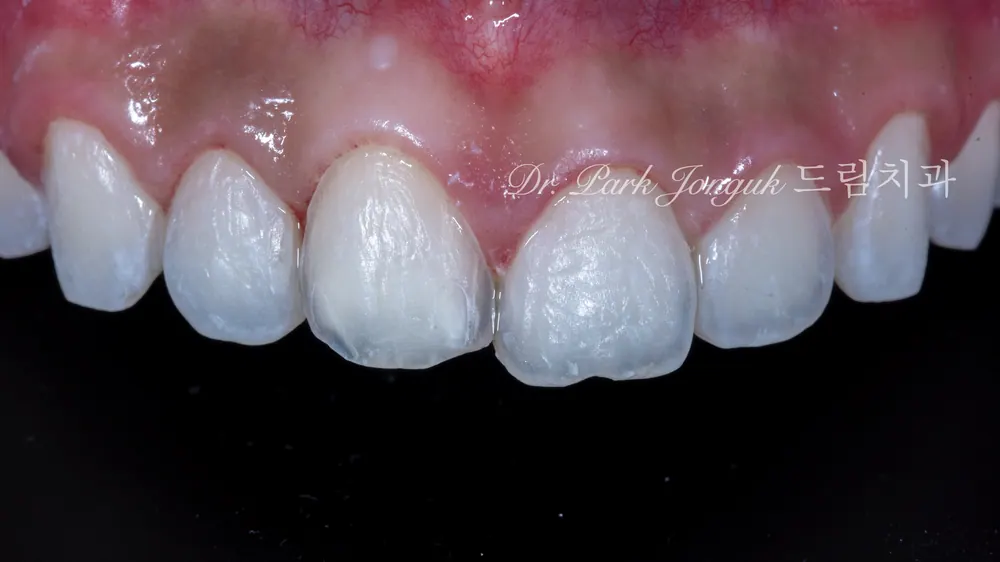
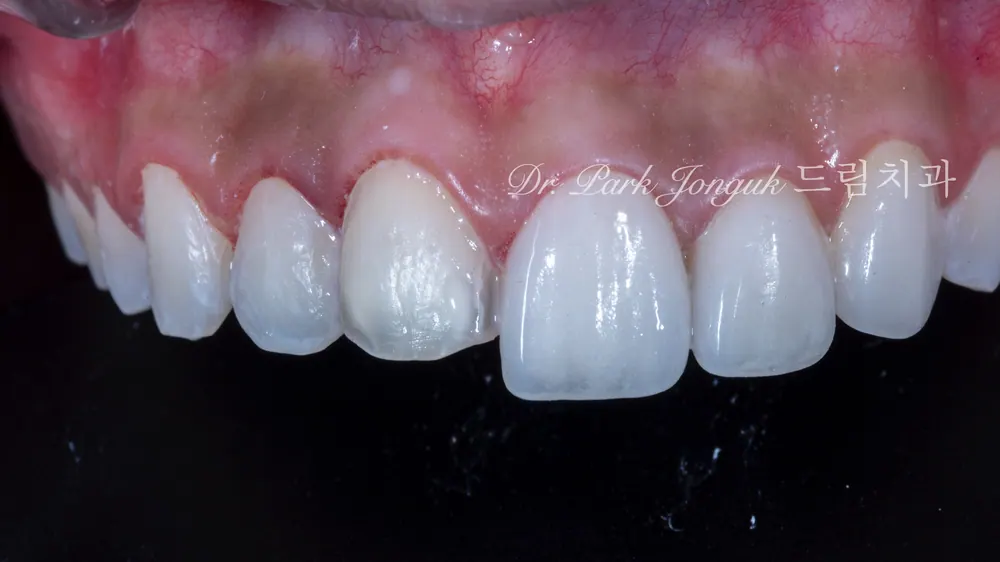
We placed the no-prep veneers on
and ran a seating test.
We compared the size relationship and color with the existing teeth.
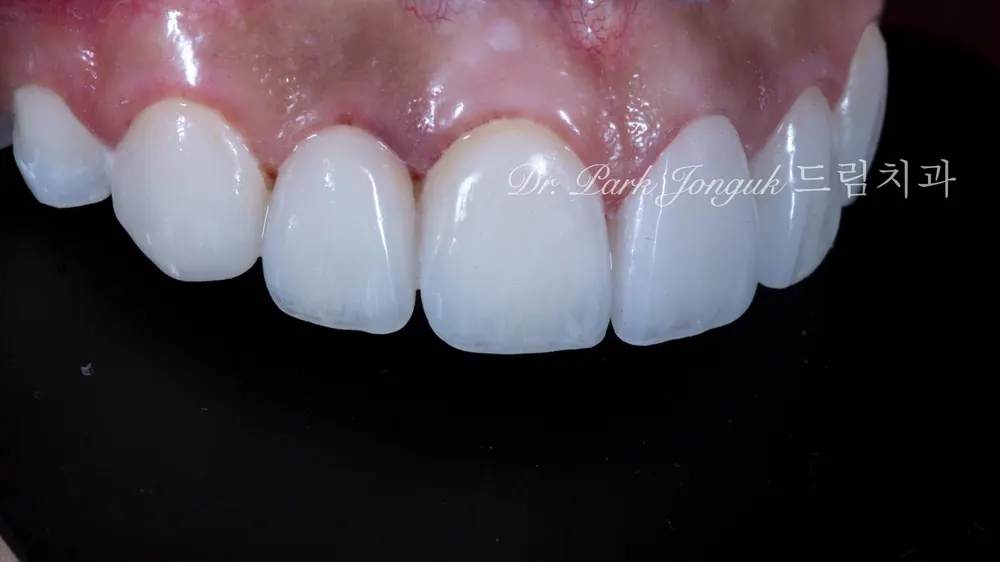
We also placed the veneer on the opposite side to check the shape.
Through extensive discussion with the patient at this stage,
we confirmed whether she liked the shape of the teeth,
and whether the protruded tooth had been brought in as much as she wanted through treatment,
checking these points together.
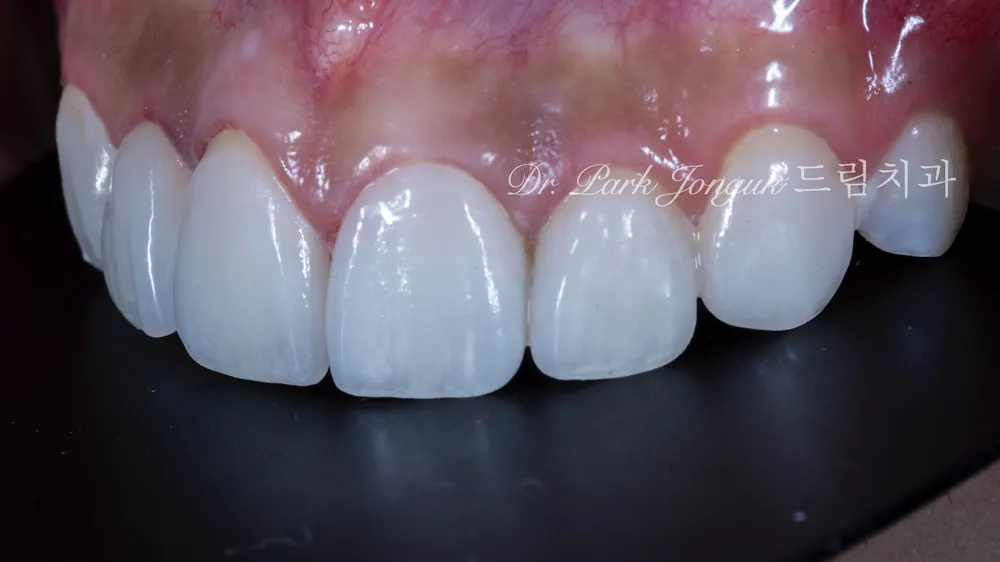
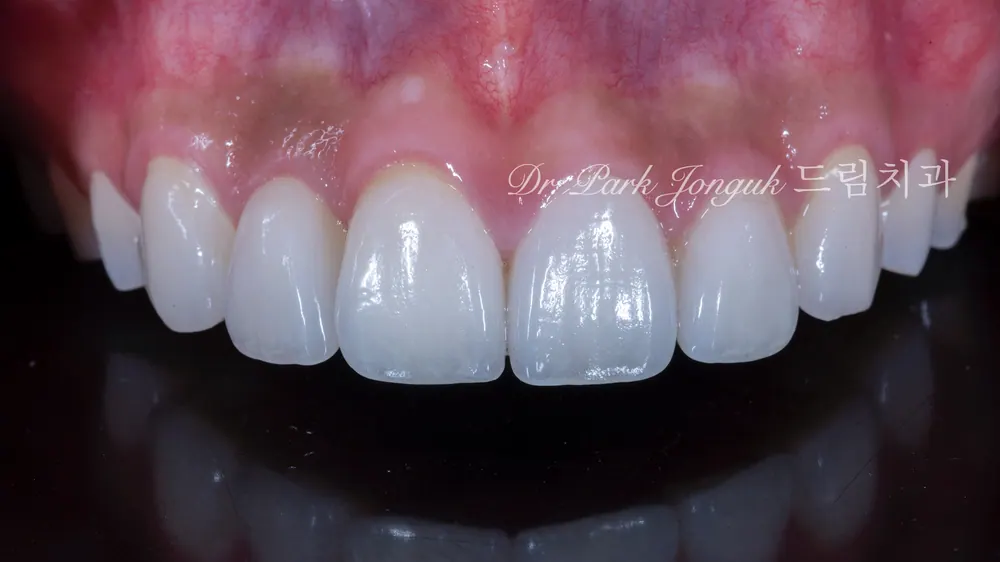
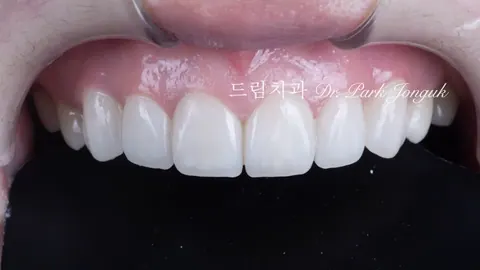
The treatment has been completed.
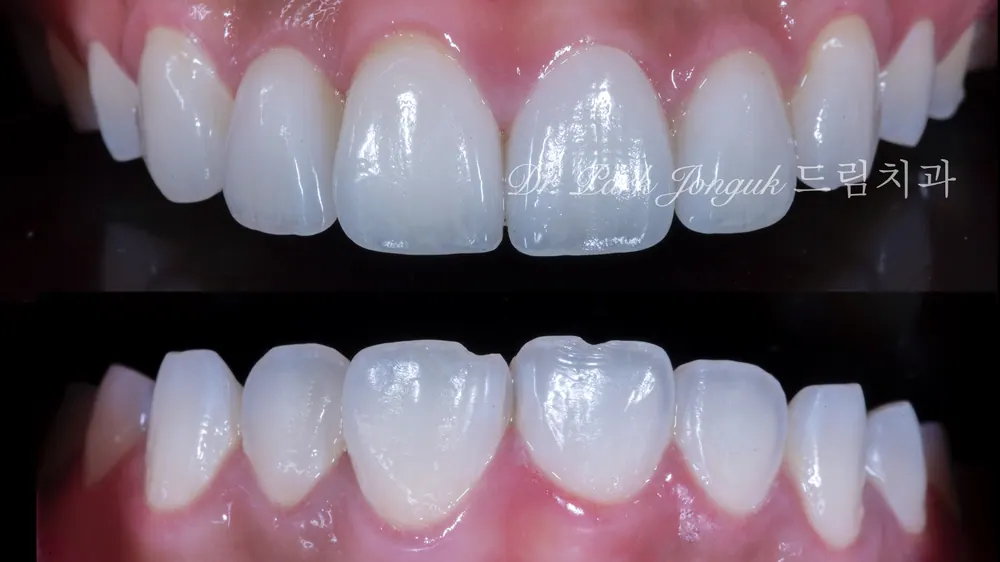
The teeth now look more even,
and you can see that the protrusion issue has been fully resolved as well.
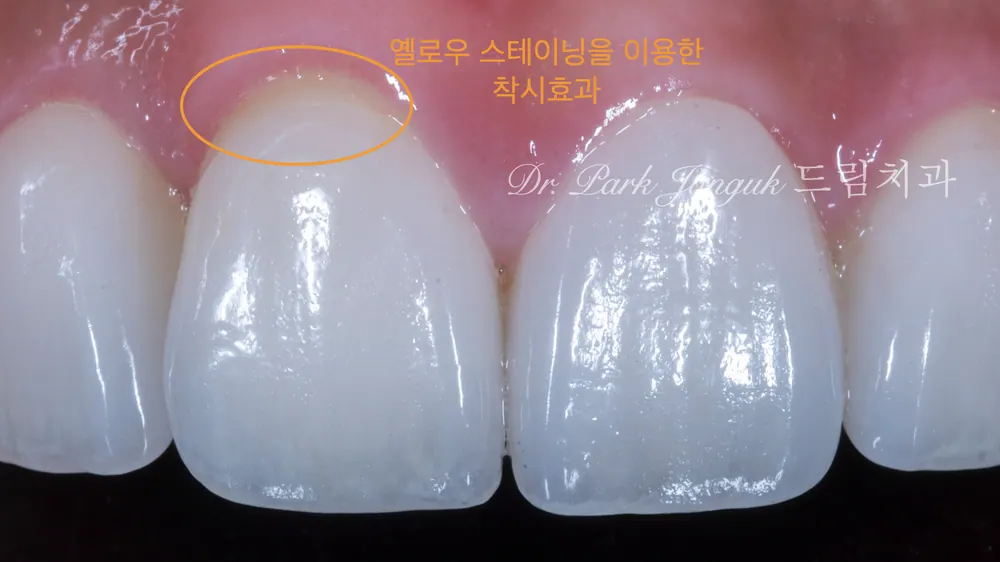
The difference in gum height was resolved
through detailed adjustments to the tooth design.
To raise the lower gum
up to match the other side through gum contouring
would have made every tooth look too long.
In this case, rather than gum contouring,
we resolved the issue through a detailed change in the design.
Using tooth shape and yellow staining,
we made the length appear shorter.
Natural beauty
Since 2006, Dream Dental Clinic
This article is a clinical note written by Dr. Park Jonguk of Dream Dental Clinic, Gangnam; the original was published on his blog. The photographs shown are real cases he treated. Results vary with each patient’s condition, and every procedure carries the possibility of individual variation and side effects.

Quick Consult
Request a Callback
Leave your number and we will call you back during clinic hours.
Request Received
We will contact you during clinic hours. For urgent matters, please call +82-2-3448-0028.